Works of prolific Russian-American writer Isaac Asimov include popular explanations of scientific principles, The Foundation Trilogy (1951-1953), and other volumes of fiction.
Isaac Asimov, a professor of biochemistry, wrote as a highly successful author, best known for his books.
Asimov, professor, generally considered of all time, edited more than five hundred books and ninety thousand letters and postcards. He published in nine of the ten major categories of the Dewey decimal classification but lacked only an entry in the category of philosophy (100).
People widely considered Asimov, a master of the genre alongside Robert Anson Heinlein and Arthur Charles Clarke as the "big three" during his lifetime. He later tied Galactic Empire and the Robot into the same universe as his most famous series to create a unified "future history" for his stories much like those that Heinlein pioneered and Cordwainer Smith and Poul Anderson previously produced. He penned "Nightfall," voted in 1964 as the best short story of all time; many persons still honor this title. He also produced well mysteries, fantasy, and a great quantity of nonfiction. Asimov used Paul French, the pen name, for the Lucky Starr, series of juvenile novels.
Most books of Asimov in a historical way go as far back to a time with possible question or concept at its simplest stage. He often provides and mentions well nationalities, birth, and death dates for persons and etymologies and pronunciation guides for technical terms. Guide to Science, the tripartite set Understanding Physics, and Chronology of Science and Discovery exemplify these books.
Asimov, a long-time member, reluctantly served as vice president of Mensa international and described some members of that organization as "brain-proud and aggressive about their IQs." He took more pleasure as president of the humanist association. The asteroid 5020 Asimov, the magazine Asimov's Science Fiction, an elementary school in Brooklyn in New York, and two different awards honor his name.
A story about a school in the future that makes you nostalgic about schools in the past. It looks down at what’s to come, especially with the overdependence on AI and underutilisation of human resources. The story won’t stun you, nor will it be a lifelong favourite, but it will certainly make you think.
I read The Fun They Had way back in middle school. I remember being fascinated with the idea of what school would look like in the future. I went home that day and talked about it for a long time with my dad, who loved Isaac Asimov.
Returning to the short story as an adult who is an educator, I have a different vantage point on the piece now. I still feel the same - it’s a fantastic piece. As a kid, I focused on Margie and how I would feel if school was at home and I had a robot teacher. How awful it would be! No friends. No fun. As an educator, I see Asimov’s deeper questions hiding under Margie’s youthful mourning for real school. Will technology progress to a point where we become isolated from each other? Will we put more faith into technology than we put in ourselves? Will our advancements eventually stamp out the things we should hold dear: human connection, collaboration, fun and play? Will we allow technology to shape humans into automatons? Asimov warned a great many things about our reliance upon technology. Creating it, using it - all good. Relying on it to the point of giving up control of our lives to technology- not so good. The Fun They Had hits these points with a light touch, which might cause some readers to devalue the short story. The story always makes me think long after I’ve finished it and that’s what makes it a classic.
Okay,this is what we call creative writing!The main reason I liked the story was its setting;the future.In here people didn't have to go to school anymore,they didn't have persons teaching them,they called televisions teachers and they didn't have to use books!At least printed on paper.Everything was technology. This book obviously had me thinking about the future.I mean how would the world have been like if we used technology only and nothing else?I think I'll freak out if I were to be still alive at that era!On the other hand,assuming I was born during that time,I might have been used to it. My favourite part of this book is when Tommy found a book printed on paper and when he and Margie where both surprised.They were actually amazed at the fact that people taught people,'centuries ago'.I also liked the fact that Margie really didn't like the 'teacher system',she actually liked the idea of going to school and according to the book,''she was thinking about The Fun They Had''referring to those who lived 'centuries' ago. I have nothing else to say...except good work done Isaac Asimov!
Sort of a nostalgic look back at school as we know it from a point in the future when paper books were unheard of. Triggered by a child's discovery of a paper book in the attic. Sort of fun, but certianly not profound.
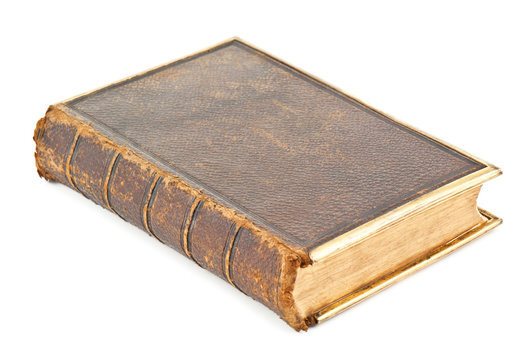
Margie and Tommy are two little kids marveled by a bewildering discovery... a book! A physical book! Home schooled by robots and monitors to read, the two are amazed by this prehistoric thing found in the house attic, and its perplexing topic: something called 'School'.
This was a fine and weird little shortie. Entertaining, and mildly thought-provoking. You can always count on good ol' Asimov to tell you a solid futuristic tale, and nearly always involving robots. And I say nearly always because I'd like to presume there are some that don't.
Margie y Tommy son dos niños pequeños deslumbrados por un descubrimiento increíble... ¡un libro! ¡Un libro físico! Educados en casa por robots y monitores para leer, los dos están maravillados por esta cosa prehistórica encontrada en el ático de la casa, y su tema desconcertante: algo llamado 'Escuela'.
Este fue un buen y raro corto. Entretenido, y ligeramente provocador. Siempre podés contar con el buen y viejo Asimov para contarte una sólida historia futurista, y casi siempre involucrando robots. Y digo casi siempre porque me gustaría suponer que hay alguna que no.
This prescient piece has now become a part of curricula, and deservedly so. Lockdown had taught all of us, how true these words are. It has also shown us how we are inexorably moving towards the scenario described in this short story. Essential Read.
I gave this book one star because it has haunted me throughout my life. This short story has showed up every two or three years and just APPEARS. The only thing I even remotely liked is how Asimov relates future school hatred with modern school hatred. Other than that, I only recommend this book if you like other works by Isaac Asimov.
Through centuries of human advancement, the education system has been a decisive apparatus for preparing generations for the working of the world.
Education is the device that supports progress. It is an enabler that authorizes humanity to bloom in the ever-dynamic planet where business and society both necessitate stakeholders that are decidedly skilled and well-equipped to contend with challenges.
For an apparatus to apprehend its purpose, it is significant for that apparatus to be appropriately conditioned for its goal.
For instance, an axe is used to hack a tree. The gizmo needs to be proficient i.e., pointed and tough and should have the perfect blueprint, fabric and construction to suit the intention and for any new challenges, such as chopping, splitting, chipping, and piercing, it should be exceedingly malleable.
In the same way, to carve out generations that are elastic and progressive, our existing education system must adapt to change.
It is this dialectical thought that forms the nucleus of this story.
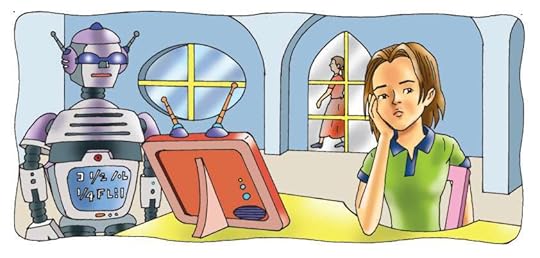
‘The Fun They Had’, more particularly, deals with the future of education which will become more and more Computerized and estranged from social interactions.
The author’s message is one of warning against the dangers of computerized homeschooling which deprives children of the benefits of the personal interactions between students and teachers, which help them to develop many social skills.
The title quite suits the story, “The Fun They Had”. Tommy and Margie find an old book and learn how the schools were different in the past from their time and how much fun the children studying in those school had. It also gives us a glimpse of future education.
The author’s message is one of warning against the perils of computerized homeschooling which keeps the children away from the advantages of the personal interactions between students and teachers, which help them, increase social skills as well as many more things.
So without criticizing the present schooling we should understand the value of the present lively education system and enjoy it to the fullest.
I see how this story could be really impactful to show students the privilege of school and having real human interaction. The failure of technology is ever present in this text and it definitely makes you think in this world of e-books and computers and electronics everywhere.
Las mejores 4 hojas que leí en mi vida. Un cuento que vale la pena leer, tan cierto y tan adelantado a su época. Asimov predijo en su época muchas cosas que suceden hoy en día...
this story was okay I guess?? sure, it definitely made me think about how schools in the future are bond to be in this era of artificial intelligence and all that but it was too short to be enjoyable.
A futuristic take on school and paper books makes me nostalgic about my own childhood and the paperbacks we seem to be discarding for electric mediums (kindles are not so far from Asimov's telebooks!). With a beautiful perspective and melancholic underlining, this short story is an enjoyable reflection that might make us wonder how much we want to give up to technology.
I thought the story was okay. It was too short to develop much of anything, but the predictions the author made were interesting to read about because of the accuracy of a lot of them.
La obra no dura ni un ajustar de engrane, pero en ese presto tiempo nos damos cuenta del ineludible paso que llevamos al sedentarismo que nos brinda el creciente campo de la robótica. La escuela puede que no sea tan mala, pero ¿los humanos pueden saber más que los maestros? Quiero decir, ¿es viable siquiera leer, o basta con insertar deberes en huecos presentes en aparatos u objetos que rozan los límites de la moral y el derecho? ¿Salir a jugar con amigos en el receso? ¿Amigos?
Collected in Earth Is Room Enough, 50 Short Science Fiction Tales and The Best of Isaac Asimov, Asimov has stated that this computerized homeschooling story is "probably the biggest surprise of my literary career." Protagonist Margie, like many children, hates school, taught by computer, at home, with no contact with other children. Until her friend, Tommy, brings an ancient book, about school.
Tommy looked at her with very superior eyes. "Because it's not our kind of school, stupid. This is the old kind of school that they had hundreds and hundreds of years ago." He added loftily, pronouncing the word carefully, "Centuries ago."
This story hit hard, because in 2019 we had the COVID-19 Pandemic, and as a result, most schools switched to remote learning for safety reasons, leading to a precipitous drop in effective learning as kids learned how to ignore the computer and skip homework.
I sometimes marvel at how prophetic Asimov's science fiction stories are. So, I'm giving this a 5⭐ rating because while this was written over half a decade ago in the 1950s the message is the same, and it resonates just as hard. Some kids may hate school, but school is where they learn the socialization skills and social norms required, to survive in the real world. And, perhaps, after being alone for a long time, children might end up wondering about the fun they could have had.
A real mind turning read. I Pikachu faced at the timestamp of year 2155 but then also got vibes of the setting similar to the famine-like culture in the film Interstellar. It's an interesting read for sure amidst what the pandemic has brought to light with the transition of education towards a digital technological modality. I read "The Last Question" before this and when Margie said "a man can't know as much as teacher" it reminded me about the relationship of humans v multivac v entropy and then me ironically laughing at the inevitably it befell. The differentiation between man and machine will always be indescribably intriguing. The fact that Margie continues to say "I wouldn't want a strange man in my house to teach me" also parallels the state of the current social climate, i.e. the digital presence of not only social media but livelihood. Obviously the beauty of technological integration are the aspects of personalization, and as Margie said, "teacher has to be adjusted to fit the mind of each boy and girl it teaches and that each kid has to be taught differently". It's a beautiful part of the progress, ideals, and value these advantages hold. Yet, I was really empathetic when Margie ended with the contrast that "all the kids from the whole neighborhood came, laughing and shouting in the schoolyard, sitting together in the schoolroom, going home together at the end of the day. They learned the same things so they could help one another. And the teachers were people...". Her perspective and the humanity it reveals is heartbreaking. Isn't knowledge about sharing it with others? This is the never ending struggle with "the future". There are benefits but what are the risks? Do they really outweigh each other? Is there a happy medium? This whole phase of change we're in right now is in a weird area of transition. Albeit disease has quite literally catapulted drastic change in recent years, screen time exposure is just as equally exponentially on the rise and can also even be warranted as its own sort of pandemic, but I digress.
Cuentito que rescaté del gran Asimov para mis clases, para decirles medio en broma y medio serio a mis alumnos cuán agradecidos deben estar de tenerme a mí, una profesora física con cuerpo y mente humana :) con quien pueden realmente dialogar y a veces hasta combatir, jajaja.
Es una gozada. Súper cortito, pero súper visionario. Escrito en los años '50, predice bastante directamente la futura existencia de chat GPT y el peligro - quizá - que se corre que al final se omita la parte social y que cada niño termine siendo educado por un super computador.
Me gustó también que, como siempre, es tierno y universal, las características de los niños, su manera de ser. Siempre me hace sonreír.
Lo pueden leer aquí, porque a estas alturas ya es gratis.
Hay sólo tres partes que no "envejecieron" bien, en el sentido de que, en un mundo realmente moderno, incluso en el mundo de hoy, no se harían así. Las pondré en spoiler a ver si las pillan. Ninguno de mis alumnos ha logrado pillar las tres (a lo más uno por niño/grupo).
Asimov was very prescient in 1951 concerning the way that technology would isolate us through the interface of the devices we use. Asimov didn't foresee PC's or cell phones but he foresaw that technology would limit face to face contact and interacting on a direct physical basis.
This made me think about the difficulty of predicting the actual advancement of technological devices. Asimov wrote many story concerning a super computer called Multivac. But to show the immensity of Multivac's abilities he used physical size. If I remember right he described it as a mile long and many stories high. Other SF writers of the time wrote of supercomputers that took up the space of whole planets. But what they did tend to get right (at least the better writers like Asimov) was the effect bigger and smarter computers would have on humankind.
Discussed this with my 11-year-old student today; I loved the perspective and questions he raised about this story. He was especially wondering why these future students didn’t just turn off their mechanical teachers or hack into their system so they wouldn’t have to worry about homework or lessons at all. Safe to say, we both agreed that mechanical teachers can never replace human teachers and that connections in education matter more than dry information. The story is precious—SO much to discuss about it.
Loved it. Especially after reading the prelude which spoke about the unique challenge of writing short(-short) sci-fi stories - https://raghavr.substack.com/p/sci-fi....
It's fascinating to see what Asimov chose to make futuristic and what he chose to retain - (spoilers ahead) the mode of teaching, adapted learning based each person's mind vs. little girls studying at regular hours for better retention.
This entire review has been hidden because of spoilers.
this book is good but i dont like it because it takes place in the future where a girl wants to go to school in 2018.but she cant her teacher is a robot that gives her to much home work.i dont like robots thats one reason i dont like it and the fact that robots are teaching us we should be teaching robots.
Just finished reading it for my English class and I absolutely loved it. In times like these, quarantined with online lessons, PDFS, and little to none teacher-student interaction, this story will blow your mind and make you wish you attend in person school again. Great way to reflect on how online education is affecting our children's emotions.
The Fun They Had, by Isaac Asimov Set on a day in the future, Nay 17th 2155. Margie and Tommy discover a 'real book' about what school used to be like. It is a reminder about how patronising and condescending the culture was back when written. E.g., describing the Inspector, "And he patted Margie's head again." (3 stars)