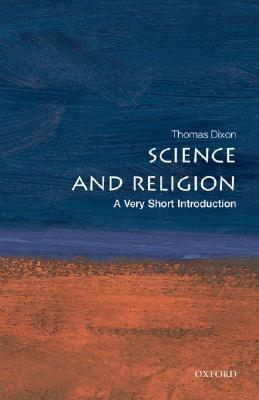
The debate between science and religion is never out of the news: emotions run high, fuelled by polemical bestsellers like The God Delusion and, at the other end of the spectrum, high-profile campaigns to teach "Intelligent Design" in schools. Yet there is much more to the debate than the clash of these extremes. As Thomas Dixon shows in this balanced and thought-provoking introduction, a whole range of views, subtle arguments, and fascinating perspectives can be found on this complex and centuries-old subject. He explores the key philosophical questions that underlie the debate, but also highlights the social, political, and ethical contexts that have made the tensions between science and religion such a fraught and interesting topic in the modern world. Dixon emphasizes how the modern conflict between evolution and creationism is quintessentially an American phenomenon, arising from the culture and history of the United States, as exemplified through the ongoing debates about how to interpret the First-Amendment's separation of church and state. Along the way, he examines landmark historical episodes such as the Galileo affair, Charles Darwin's own religious and scientific odyssey, the Scopes "Monkey Trial" in Tennessee in 1925, and the Dover Area School Board case of 2005, and includes perspectives from non-Christian religions and examples from across the physical, biological, and social sciences.
About the Series: Combining authority with wit, accessibility, and style, Very Short Introductions offer an introduction to some of life's most interesting topics. Written by experts for the newcomer, they demonstrate the finest contemporary thinking about the central problems and issues in hundreds of key topics, from philosophy to Freud, quantum theory to Islam.
Science And Religion In The Very Short Introduction Series
Author Thomas Dixon says that most books written about the relationship between science and religion aim to make the reader either more religious or less religious. Dixon claims that his book, "Science and Religion: A Very Short Introduction" (2008) has the goal of stepping back from the aim of changing the reader's mind and to show the reader instead what is at stake in the disagreement. Dixon, Senior Lecturer in History at Queen Mary, University of London, succeeds, in general, in offering an even-handed, insightful account of the debate about the relationship between science and religion.
If there is a single lesson to be drawn from the book, it is that the discussion about the relationship between science and religion has three rather than two elements. The third element is politics. The matter cannot be simply reduced and does not depend on a specific political commitment. Rather, the dispute arises typically when a person takes a position based ostensibly upon a strongly-held religious or scientific belief. A person opposing that belief may try to block it by arguing against its alleged religious or scientific base. To be a little more concrete, a person may argue that a particular war is justifiable/unjustifiable or that same sex marriage is right/wrong based on alleged religious grounds. One who disagrees may try to block the use of religious grounds to decide the issue. I think almost everyone is aware of claimed disputes between religion and science turning on such matters with political positions as the unspoken third element. In his book, Dixon offers further historical examples, ranging from Galileo to the Intelligent Design movement to show that politics often plays a large, unspoken role in the debate about science and religion.
Politics, of course, is not the full story of the matter. If "politics" is difficult to understand precisely, "religion", "science" and especially God are even more so. Dixon shows the shifting, complex character of both science and religion which make it hard at best to settle for phrases, short answers, and stereotypes on one side or the other. There are many sides and gradations. The parts of Dixon's discussion that I found most helpful in thinking about science and religion are his treatment of the broad philosophical positions of realism and anti-realism in both science and religion and his suggestion that God might well not be considered as involving claimed "gaps" in scientific teaching but as both more elusive and less immediately causal.
In successive chapters of his book, Dixon applies these broad considerations to discussing Galileo and the Catholic Church, the possibility of miracles, Darwin, evolution, and contemporary proponents of intelligent design, and mind-body in the light of neuroscience. He also considers the importance, or its lack, of science and religion to specific ethical/political issues. On both sides, this question presents an issue of "naturalism" or of the separate status of ethical questions. When viewed from a religious perspective, this issue is sometimes called the "Euthyphro" problem after Plato's dialogue of that name. (Dixon does not use the "Euthyphro" in discussing the question.) He argues that neither science nor religion provide sure answers to questions of ethics.
Dixon tries admirably to get readers to clarify their own thinking rather than to convert. He asks his readers to think less dogmatically and to be careful what they wish for. "Would [each reader] really prefer to live in a society where everyone agreed about the questions this book has been about? What sort of place would that be?"
Unlike, say, an introduction to chemistry, a "very short introduction" to science and religion will work on readers with various levels of background, from those who have thought about the matter a great deal to those readers with a more casual interest. Dixon's book will be valuable to readers of whatever level of study who wish to engage with the questions he raises. The book includes detailed notes and an especially good bibliography. Dixon has also prepared a "Readers Guide" to this book consisting of a series of provocative questions to aid in understanding. It is available on the OUP website.
نویسنده سعی میکنه بیطرف میان علم و دین مسحیت قضاوت کنه و به یه نتیجه بیطرف برسه ولی خب خیلی جاها تعریفات مسیحیت با اسلام درباره جهان متفاوته! البته مترجم نشر ماهی سعی داره در پراگراف ها با توضیحات کوتاه نظر اسلام رو بگه ولی خب پاراگراف ها خیلی کوتاست و فقط در سطح اسلام برای این حرف ها جواب داره و خیلی مترقیه، ست. یعنی یه تعریف تمجید آخوندی! در آخر هم نکته خوب و جالبی رو میگه که نه دین و نه علم نمیتونن در اخلاق رو سفید باشن و روند جهان داره به این سمت میره که علم میشه یکه تاز و دین به کل داره خارج میشه! و خب این خطرناکه. در آخر باید بگم ای کاش نویسنده ای پیدا بشه که بین علم و دین اسلام قضاوت کنه و کتابی بنویسه، البته بیطرف!
تامس دیکسون در علم و دین بر آن است که بیش و پیش از این که نبرد و مقابلهی تاریخی علم و دین، یک نبرد بنیادین باشد، یک نزاع سیاسی بر سر مرجعیت تولید و توزیع معرفت و دانش است. از محاکمهی گالیله در 1633 تا محاکمهی میمون (جان اسکوپس) در 1925، میتوان رد تلاش گروههای مختلف مذهبی و غیرمذهبی را برای تسلط بر مراجع پرنفوذ اجتماعی، فرهنگی و سیاسی در خلال اتفاقاتی دید که با نگاهی تقلیلگرایانه برچسب نبرد تاریخی علم و دین میگیرند. تقریبا عمدهی سرآمدان علم مدرن از ایزاک نیوتن، رابرت بویل، رنه دکارت، فرانسیس بیکن، گالیله هیچ هدفی در رد باور به کتاب مقدس نداشتهاند و کار خودشون رو بخشی از تلاش مذهبی برای فهم خلقت الهی میدونستن. از نیوتن پرسیدند که چرا سیارههایی که به دور خورشید میگردند به تدریج از حرکت نمیافتند تا به سمت خورشید کشیده شوند یا چرا ستارگان دوردست به سوی هم کشیده نمیشوند. فورا این فرضیه را مطرح کرد که خدا باید هر ازگاهی وارد شود و ستارهها و سیارهها را سر جای خود نگه دارد. پاسخی که واکنش کلامی و تعریضآمیز لایبنیتس را به همراه داشت که این چه خدایی است که از ابتدا بصیرت نداشته تا جهان را بی نقص خلق کند تا نیاز نباشد که هر از گاهی ساعتش را کوک و تر و تمیز یا تعمیر کند. این رویکرد همانی است که دراموند، متاله انجیلی اسکاتلندی، آن را خدای حفرهها میخواند که نه در دانش آدمی که در حفرههای جهلآدمی میتوان ردش را زد.
فصل دوم کتاب اختصاص به گالیله و محاکمهی او دارد و بسیار شیرین و بانمک است. پس از اختراع تلسکوپ در ابتدای قرن 17، گالیله با بهبودی که در طراحی تلسکوپهای موجود میدهد قدرت بزرگنمایی آنها را از 3 برابر به 20 برابر میرساند و میبیند آنچه را نباید! رصدهای گالیله دو اصل اساسی پارادایم فکری غالب را با چالش روبرو میکند. نگاه زمینمرکزی بطلمیوس و نظریهی ارسطو در تقسیم کیهان به دو بخش تحتالقمر ( که همه چیز در آن از آب و خاک و هوا و آتش ساخته شده بوده و محل فساد و تغییر است) و فوقالقمر ( که همه ارجام آسمانی در آن از اثیر یا عنصر پنجم ساخته شده و دور کامل دارند). این موارد گالیله را در زمره معدود دانشمندانی قرار میداد که در آن زمان به نظریه خورشیدمرکزی کپرنیک باور داشتند. اما پیش از این، هیئتی از سوی کلیسای کاتولیک که مامور تحقیق در باب نظریهی کپرنیک بود آن را خطا و بیمعنی و در مخالفت با کتاب مقدس اعلام کرد. چیزی که باعث ممنوعیت کتاب کپرنیک و باور به آموزه او شد. در 1616 به گالیله اخطار داده میشود که از نظریهی خورشیدمرکزی کپرنیک حمایت نکند.در 1623 باربرینی به عنوان پاپ اوربانوس هشتم انتخاب میشود. کسی که سالها حامی او و ستایندهی پیشرفتهای او در زمینهی تلسکوپ بود. او به گالیله اجازه میدهد که میتواند از نظریهی کپرنیک سخن بگوید مشروط به اینکه آن را تنها یک نظریهی موجود در کنار دیگر نظریهها بداند و بر ارادهی الهی که قادر به تغییر هر چیزی است امری را جبر و قطعی نشمارد. گالیله با خیال راحت کتابی مینویسد به اسم گفتگو در باب دو نظام عمدهی جهان. کتاب گفتگویی است میان سه نفر: یک ارسطویی، یک کوپرنیکی و یک فرد معمولی با عقل سلیم. شیطنتهای گالیله در این کتاب بسیار نمکین است. اولا به وضوح استدلالهای فرد کوپرنیکی بر فرد ارسطویی میچربد. ثانیا نام شخصیت ارسطویی سیمپلیچو است که از لحاظ معنایی به سادهلوحی هم پهلو میزند و ثالثا همان استدلالی را از زبان سیمپلیچو میکند که پاپ. کتاب در اوج بحران سیاسی و درگیریها با پرتستان و دیگران به رم میرسد و پاپ که در جایگاهی است که لازم است جبههی محافظهکاران را تقویت کند، بدون هیچ تساهل و تسامحی حکم به احضار گالیله به دادگاه تفتیش عقاید میدهد. به عبارتی محاکمهی گالیله بیشتر به واسطهی بدشانسی اون بود و شاید اگر یک سده قبلترمثلا پیش از برخی بحران ها از جمله بحران پروتستانها که در صدد سلب مرجعیت کلیسای کاتولیک در فهم متن کتاب مقدس بودند، چنین کتابی رو مینوشت با برخورد مومنانه همراه میشد!
«در واقع محکومیت گالیله، نه به سبب تلاش او برای فهم جهان طبیعی از راه مشاهده و استدلال، بلکه بیشتر به سبب نافرمانی از کلیسا بود»
فصل چهارم و پنجم کتاب به بحران دیگری در عصر ویکتوریایی و شکوفایی علم و دانش و صنعت میپردازد. ظهور داورین و دارونیسم. جالب آن که داروین هم در ابتدای جوانی پس از تلاش ناموفق برای خواندن پزشکی، به الهیات و ریاضی میپردازد تا در کلیسای انگلستان مشغول به خدمت شود. دست روزگار اما تقدیر دیگری را رقم میزند. جالبتر آنکه پس از درگذشتش علیرغم تردید در باورهای مذهبی وی، به پاس و گرامیداشت یک عمر مجاهدهی علمی و دستاوردهای نظری بینظیر وی فراخوانی برای حضور پرشور آحاد ملت از خرد و کلان برای حضور در کلیسای وستمینستر داده میشود تا در مراسم خاکسپاری وی در کنار سلف علمی همترازش، ایزاک نیوتن به خاک سپرده شود. قلم دیکسون، قلمی طنازانه است و این بر مفرح بودن کتاب میافزاید. قلم دکتر دهقانی مثل همیشه روان و عالی است گرچه زیرنویسهای کتاب در برائت از تاریخ اندیشهی بشر و اثبات دین اسلام، که کاملا مشخص است برای آرامساختن و محافظت روان سانسورچی از هیجان و بحران است کمی روی اعصابه.
amazing insight about the core of relation between science and religion what prevent some religious people from accepting evolution for instance ? is that because they fight against science altogether ? no , the main motivator is the perplexing questioning that resulted from evolution about human position in universe most of creationists and IDs i met simply don't know about evolution otherwise the know how to defend against it !! some of them , the well educated one simply doesn't accept it and try their best to distort the evidences by all ways they can to oppose the idea they can't accept not considering the idea and it's integrity but considering it's results to the human position in the universe this is a new history about this relationship that illuminate the way to see the problem from a different point of view being theist or atheist this book will change your look to this crucial problem that will seem to you after reading that it's a multi facet one and the author didn't spare an effort to illustrate these intricate prospective and factors (political mainly or authoritative of some religious institution) the author also demonstrate the scientific facts implications and interpretations that seem to be conflicted with religion beside all that the author is a good story teller he has an amazing anecdotal skill he ended the book with very eloquent , elaborate sentence " Looking to that future, there is every reason to believe that science and religion will both continue to flourish, to enlighten, to inspire; as well as to frustrate, to obfuscate, and to oppress. Some people may wish that one half of this essentially modern pairing could be disposed of, or could be persuaded to relinquish its troublesome claims to authority in some or other sphere of knowledge, morality, or politics. But such people should be careful what they wish for. Would they really prefer to live in a society where everyone agreed about the questions that this book has been about? What sort of place would that be? " enjoy the book :)
Science and Religion: A Very Short Introduction is a discussion of the relationship between these two areas of human thinking. When I checked this slim volume out of the local college library, I anticipated the author would either discuss how science and religion are integrated in the human mind, or else treat the subject as a conflict, a boxing match between two dominant modes of looking at the world. As a devout Christian who nonetheless has no problem with accepting the findings of science in describing the physcial universe, I was hoping the focus would be on integration. At the very beginning, author Thomas Dixon does state his intention to focus on integration, but to do so, he also has to discuss the historical conflict between religion and science. I was glad to read this, but I couldn’t help but notice in his discussion of the “war” between religion and science, his bias leans noticably to the side of science trumping religion. Or at least, that’s how it appears to me.
read this to write a book review & it was honestly pretty solid, i was impressed! “religion” feels generous, it should probably be called science & christianity because it only briefly mentions other religions, but the authors address that & it makes sense so im not too pressed. overall a really good overview of all kinds of science & religion conversations & how they’re not actually opposed. i really loved that throughout the book, they talk about how both science and religion are deeply social and political, and how the political element can actually cause more conflict than science & religion on their own. cool ideas, shockingly comprehensive!
Are there inherent conflicts between science and religion? Yes. But, as I suspected, there are also many similarities or points where the two can complement each other. I am convinced that there is place for both science and religion in today's world (and I am saying this as an atheist/agnostic).
These two systems IMO simply serve to different purposes. Science is best at describing the world we live in but, as opposed to religion, it cannot give us comfort or hope. Though I do not need to go outside the realms of our natural world in order to find meaning of life, I don't see any reason why others could not (as long as they do not force their views onto others).
As to the similarities, when reading (listening) the book it has become apparent that people referring to science may often infer what "ought to be" based on what "is" in the nature (e.g. in relation to ethics and morality). However, the nature is inherently telling us nothing of the sort. This is principally just the same as in case of religion providing guidance as to what "ought to be" based on what "is" written in the sacred scriptures. Structurally, at least as far as the effects are concerned, the two systems are quite similar. Is it possible that science is therefore also a religion of the sort? And that the "age of traditional religion" has advanced to the "age of science"?
From Galileo to Evolution
The author provides a concise introduction to the topic using the story of Galileo Galilei and his conflict with Catholic Church, as well as the quarrel between theory of evolution and that of intelligent design (creationist theory). It is very interesting and if nothing else, it illustrates how the topics such as these often show many layers of thought.
Is God to be found only in gaps or is it in everything around us? Is God basically indifferent to what is happening in the world (deism) or capable of interfering in human affairs, as well as natural laws, at its whim, or even be meddlesome at times (theism).
This is directly connected to a more philosophical question of what is God? A question leading to discussion which is far from having just two end points – either "there is no God" or "there is God and he is omnipotent". Without any deeper knowledge of the philosophical aspects of religion and building only on my perhaps quite simple and layman's thoughts unencumbered with voluminous actual research on the matter, I think that if we are to accept on a very basic level that the God (be it nature, principle, universe or whatever) is an (personified) abstraction of either unknown or known (or both), it sheds a new light to this entire discussion of how the science and religion could be reconciled.
Natural world to science, salvation to religion (but only for those who care for it)
Admittedly it is hard for me to understand notions of God which identify it with actual person or entity. This is the result of essentially taking what is in the scriptures (e.g. Bible) too literally, which leads me to the question of the nature of Bible.
I, for one, think of Bible as an interesting literary heritage. But should it be taken literally? No. However, this does not mean that it cannot contain certain wisdom coded into the lines featured therein. I like the idea that Bible is to be constantly interpreted (St. Augustine) since regard must be had to the fact that it was written at times of a historic and socio-economic context very much different from that of today's world. But I cannot help but thinking that relying on the revelations written therein in matters revolving around our understanding of the fabric of reality, is a bit outdated.
After all, as author provided in the book, already back in times of Galileo Galilei, the question was to what extent should Bible (and the Church) have to be relied upon when it comes to the matters revolving around our understanding of physical reality. Nowadays, it is more or less accepted, at least in the western part of the world, that the science should have the upper hand in that. But as I stated at the beginning of this review, I do not think that this should prevent religion of its purpose.
مختصر و مفید درباره تاریخچه و مسائل مطرح در "تقابل علم و دین". نتیجه کتاب اینه که دین و علم اگر درست تعریف بشن و مرزبندی شون مشخص بشه، تضاد و تقابلی با هم ندارن.
“Теза про конфлікт між наукою та релігією зʼявилася наприкінці ХІХ століття, коли кілька нових релігійних течій, а саме - свідки Єгови, вчені-християни та адвентисти, - в рамках своїх доктрин висунули такі положення про науку та здоровʼя, які суперечили домінуючим науковим поглядам, а деякі з найвідоміших тепер форм заперечення науки, зокрема, спіритуалізм та антиеволюціонізм були мотивовані надприродними ідеями або уявною загрозою, які наукові їдеі нібито становили для релігійної влади та авторитету”
“Зазвичай ми черпаємо знання про світ із чотирьох джерел: наших відчуттів, нашої здатності до раціонального мислення, зі свідчень інших людей та із памʼяті. Усі ці джерела ненадійні. Наші відчуття можуть уводити нас в оману, міркування можуть бути хибними, люди — свідомо чи випадково обманювати, і більшість із нас дуже добре знає, наскільки неповними та спотвореними можуть бути спогади. Весь проєкт сучасної науки можна коротко описати як спробу вплести всі ці окремі відносно слабкі нитки в більш стійке мереживо знань.”
A good and worthwhile introduction to some of the pertinent and persistent battles in the perceived clash between science and religion. The author does a great job of critiquing both sides and explaining both too in those arguments. I would definitely recommend this to study groups of students, and to teachers to help their students navigate through an unnecessarily polarized binary of science vs. religion.
Very interesting. Always been on the fence about the whole religion debate and this book shows both sides in an unbiased way and posits that the two CAN coincide. Definitely book that everyone should read.
I bought this book when I came to know that it claims “to offer an informative and even handed account of what is really at stake”. But after I read the book it was disappointing. It was not “even handed”, but biased. Writer should know more about philosophy of religion rather than repeating same complain again & again. I hoped an academic won’t conflate philosophical naturalism with methodological ones. But it seems to me he did. He just preached his own blind faith i.e ontological naturalism to bash religion in a modest way. By the way 1st, 3rd and 4th chapter were good. I enjoyed 3rd one more.
After or before reading this book you should read another book by academic philosopher, name: The Divine Reality. You will find your answers of you r sincere for knowledge.
عنوان و مقدمه کتاب در ابتدا جالب به نظر می رسد و خواننده را تا حدودی به خواندن کتاب ترغیب می کند اما در فصل های بعدی بیشار به تاریخچه و ریشه دعواهای تارخی بین کلیسا و دانشمندان می پردازد و به ادامه مباحث در قرن اخیر نپرداخته است.
Science and Religion - A Very Short Introduction by Thomas Dixon
Francis Bacon (1561-1626), in his book Advancement of Learning, had created a great metaphor about the relationship between science and religion. That is “God is the author of two books: the Nature and the Scripture, or the Bible”.
In this book, Dixon has beautifully narrated the relationship between science and religion with a wide range of examples such as, Galileo vs Catholic Church, Darwin evolution theory vs Intelligent Design theory, neuroscience vs dualism and many more. It was so surprised to me that “Creation Science”, another form of Intelligent Design theory, had been taught at schools in the US until 90s of the last century. Opinion polls continued to find that between 45 and 50% of the population of the USA believed that human beings were created by God in their present form at some time in the last ten thousand years.
I was very resonated with the conclusion that Dixon arrived at the last chapter of the book. Science and Religion both can provide people with concepts, beliefs, practices, rituals, and stories that can be used to piece together moral meanings. In the modern world, it seems as though science, technology, and medicine are increasingly dominating the attempts to make such moral meanings. Looking to that future, there is every reason to believe that science and religion will both continue to flourish, to enlighten, to inspire; as well as to frustrate, to obfuscate, and to oppress.
Concise, well written and very readable for non-expert, this book is recommended for anyone interested in the historical relationship between religion and science!
Sains dan agama selalu menjadi perbincangan menarik. Terlebih bagaimana situasi Covid-19 yang melanda dunia, memunculkan pertanyaan-pertanyaan penting: apakah sains satu-satunya cara untuk mengetahui kebenaran? Apakah sains perlu agama sebagai penuntun?
Dalam buku ini, Dixon dan Saphiro membawa kita kepada perspektif yang lebih luas. Pertikaian di antara sains dan agama, bukanlah semata-mata berada dalam lingkup filsafat dan teoritik belaka. Ada ruang yang belum banyak dieksplorasi seperti kaitannya dengan aspek politis, ideologis, dan bahkan kolonialisme.
Buku pengantar ini menjadi pembuka yang menarik untuk mengenalkan variabel-variabel baru yang ikut mempengaruhi narasi biner dan konfrontatif antara sains dan agama. Tak jarang, banyak pihak dengan mudahnya mengerdilkan peran pihak lain karena tidak memiliki gambaran utuh atas telos atau tujuan masing-masing.
Sebagai "pengenalan singkat", buku ini cukup berhasil menyajikan faktor-faktor dasar yang berkelindan di antara perbincangan sains dan agama. Sehingga, setelah menyelesaikan buku ini, pembaca diharapkan memiliki kepekaan untuk tidak semata-mata menilai "pertikaian" sains dan agama berada dalam ruang hampa, melainkan mampu melihat variabel-variabel lain untuk memungkinkan dialog yang sehat di antara keduanya.
Even though this is a short book but it raises some very pertinent questions about science, religion and what sort of questions the modern man should be asking. The book is short hence it allowed the author to cut straight to the point. Interactions of Darwinism, Neo Darwinism, Conservative theology and theories of Intelligent Designer have been explained with sufficient examples. Where this book truly shines is when it elaborates upon the different eras in human history where the common notions and ideas, previously seen through a religious lens, had undergone transformation owing to developing scientific knowledge and facts.
As the book is short, some very complex ideas had to be reduced to a single page. This could be mentally tiring for close readers because if one does not have the foreknowledge, the under discussion idea may seem completely alien.
Overall, reading this book was an enlightening experience. This is a sort of book which you know you should have read much earlier in life.
Balanced take on Science and Religion. It really changed my take on this issue. I was leaning much more on the incompatibilist view. Now I am leaning more on the compatibilist view. Although, I still think it is important to distinguish between the scientific method and the 'belief method.' It is clear which side values empiricism more.
I wrote three blog posts (a mini-series) on this topic on my blog if anyone wants some further reading:
This book is an engaging and straightforward overview of the relationship between science and religion. Thomas Dixon covers a wide variety of topics and issues in this book, from Galileo being put into house arrest by the Catholic Church, to the role of god in explaining nature as science becomes more advanced, the evolution vs creationism controversy in the United States, and the philosophical/religious implications of certain scientific discoveries. Reading this book was a huge nostalgia trip for me, as it reminded me of an era in which debates between atheists and religious fundamentalists were more prominent on the internet. I really recommend reading this book if you want to participate in the 'atheism vs religion' discourse.
Quite an interesting read. My only issue was how Dixon does not discuss the debate of whether science and religion can coexist enough, and did not make any predictions of whether they would be able to coexist in the coming decades - something that, in my opinion, is an absolutely vital thing to discuss when writing a book on 'science and religion', regardless of whether it's an introduction.
I particularly enjoyed his exploration of Darwin and his Origin of Species, and found this book to be great preparation for reading Darwin's publications (such as The Origin of Species).
I love these books! Here the author does an excellent job of touching on the highlights of the history and issues of science and religion. Discussing the basics of Galileo, evolution, creationism, and morality gets the reader excited and thirsting for more!
This series is brilliant for introducing all kinds of topics. The author in this volume demonstrates how the history of science can illuminate the complex issue of the relationship between science and religion.
"Neither science nor religion can determine, for some mythical neutral observer, which foundational maxims we should adopt. But they can provide concepts, beliefs, practices, rituals, and stories that can be used to piece together moral meanings. "