Translated from the Italian by Richard Sadleir. With: Biography, Detailed layout of the frescoes in the Scrovegni Chapel, Color Plates of Major Works (Assisi, Padua, Florence, Rimini, Bologna and Rome), 'Where to see Giotto?, 'Anthology of Comments' and Essential Bibliography. 38 plates in color and 6 b/w.
Stefano Zuffi (Milano, 24 maggio 1961) è uno storico dell'arte italiano.
Laureato alla Statale di Milano, è autore di numerosi volumi di divulgazione culturale, legati alla storia dell'arte soprattutto rinascimentale e barocca. Consulente editoriale per la casa editrice Electa, è stato responsabile di alcune collane di successo al grande pubblico, come gli Artbook e, dal 2002, I dizionari dell'arte.
Tra le sue pubblicazioni, una monografia su Dürer, Il Grande Atlante della Pittura (Electa) e il saggio Rinascimento (Mondadori): tradotte in più lingue, hanno raggiunto una tiratura di oltre un milione e mezzo di copie vendute in tutto il mondo.
Ha partecipato alla trasmissione Riguardiamoli condotta da Salvatore Maria Fares su RETEDUE della Radio Svizzera Italiana, curando una rubrica dedicata all' arte e alle mostre.
Ricopre l'incarico di responsabile culturale dell'Associazione Amici di Brera ed è presidente dell'Associazione Amici del Poldi Pezzoli.
È inoltre curatore della Pinacoteca Podesti di Ancona.
And it is considered that it was with Giotto’s brush that Renaissance painting began. The painter and biographer Vasari (1511-1574) marks two firsts. He is the first to present Giotto as the first in his The Lives of the Artists. Most accounts or courses of the history of Western painting have followed suit since then.
This book however begins with Dante.
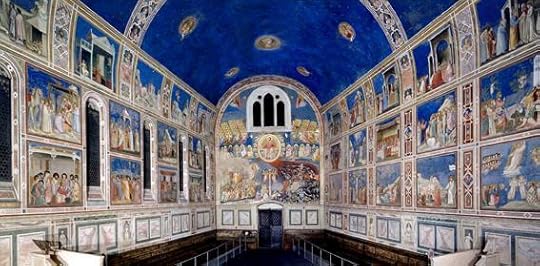
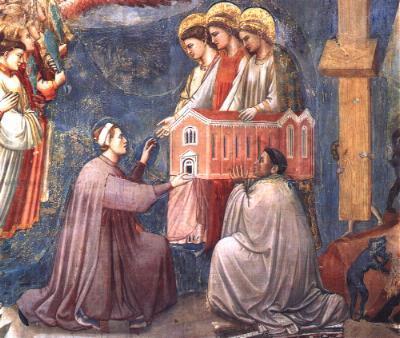
The magnate Arrico Scrovegni built the Chapel in the Arena area of Padua in atonement for his father’s dealings in money -- usury. It is his father, Reginaldo, who is represented in the Apse delivering the Church itself to the Saints. Dante, however, included a usurer in Canto XVII of the Inferno who carried an emblem, a blue sow against a white background, which has been identified as that of the Scrovegni family. This usurer who is quite rude to Dante the pilgrim, would also be Reginaldo.
The building of the Chapel in Padua was related to the celebration of the Christian Jubilee of 1300, event that also determined Dante’s trip to Rome, and the fall out with the Pope Boniface VIII that ensued.
Both the Divine Comedy and this splendorous chapel originate then with this Jubilee. Both artists were Florentines, born about the same time, and both were away from home when they produced their masterworks. The writer placed Reginaldo in Hell while Giotto put him in a Saintly area. Perfect contrapposto.
This is a picture book. The chapel is very simple but the cycle of frescoes inside make it an architectural jewel box. I got the book at the Tourist shop on my last visit to the unforgettable chapel. After Vasari a great deal more has been written on these paintings, but I wanted exactly what this book offers, the complete set of high quality illustrations, in a fair size, of ALL the paintings in this chapel.
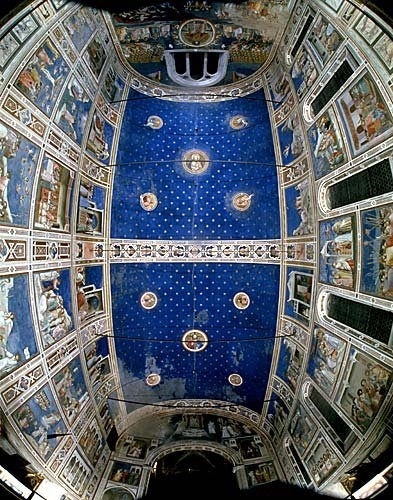
We went at night and reservations had to be obtained well before the visit. Time allotments are strict and each lot of visitors has to wait 15 minutes in a special room in which dehumidification takes place while being entertained by a video, before going in for another 15 minutes visit. When one finally enters, no matter how many times one has already looked at its gorgeous illustrations, one cannot help but exhale a series of WOWs upon entrance. The blinding blue that one has come to expect is completely unexpected due to the luminosity and saturation of the deep hue. Even if some of the vignettes have suffered through time. And then one feels the ticking of those limited and precious 15 minutes, and for which one has undertaken several hours of travelling, devoutly wishing one could record in one’s retina all that beauty -- for ever and ever. Sacred contemplation in silence.
Many aspects of Giotto’s art can be selected but his Naturalism and the novelty in the way he rendered some iconic scenes stand out. The chapel is spectacular also in its perfect composition. For this the best, second to going, is the series of brilliant documentaries at the Khan Academy.
But I will now post here just some selected scenes. At any other moment one could pick others. All details are eligible.
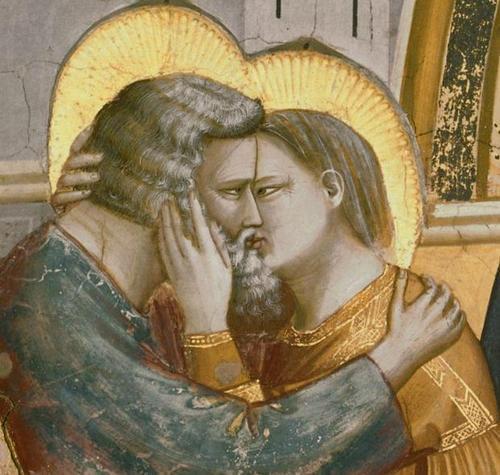
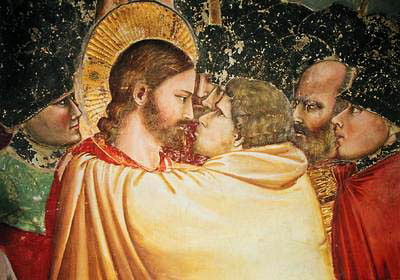
There is the story of kisses:
One sacred;
And one of yellow color.
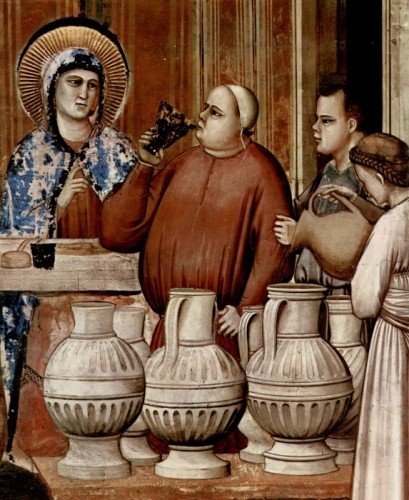
And some celebrations enjoyed by a bon vivant
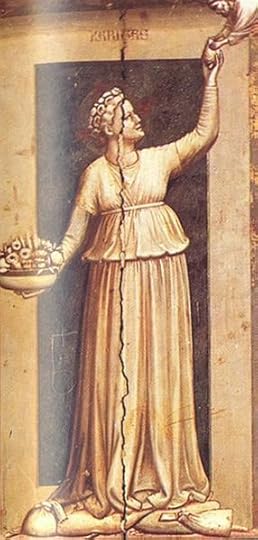
And finally, for Proustians, this chapel also holds a special place. Some of the images frame the multivolume work. Who does not remember the reference to one of the grisailles, the Carità, when the idiosyncratic Françoise is presented in the first book?
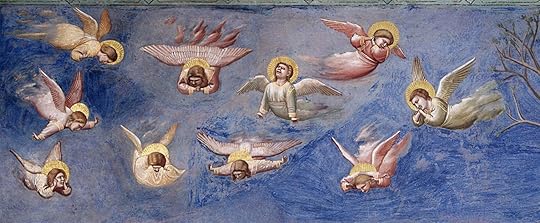
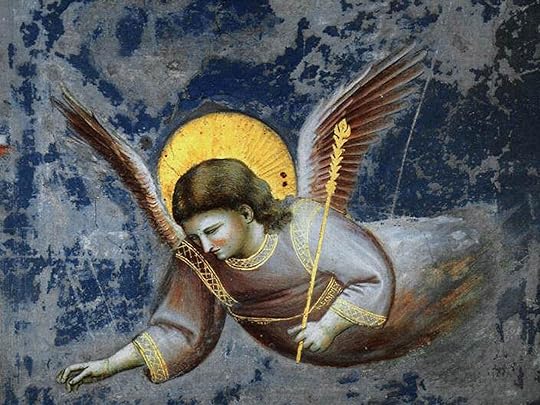
Or the angels of his last volume?
If I do go back to Padua, I will book a visit for two consecutive days.
Il bel volume curato da Stefano Zuffi sugli affreschi di Giotto nella Cappella degli Scrovegni è un'opera di valore che permette al visitatore di meglio comprendere le molte scene raffigurate, che si caratterizzano per innovatività, forza espressiva, uso della prospettiva, realismo e soluzioni originali mai adottate prima. Il libro tratta sia la parte tecnica e puramente artistica, sia le curiosità e gli aneddoti legati alla realizzazione della cappella. Oltre a tutto ciò, è una gioia per gli occhi poterlo sfogliare, poiché le immagini ampie e dai bei colori sono un tripudio di bellezza. D'altra parte, chi ha visitato la Cappella degli Scrovegni sa benissimo che ci troviamo di fronte ad un grande capolavoro della storia dell'arte, per cui vale la pena conoscerlo meglio anche attraverso un libro esplicativo.
Nice overview of the Scrovegni Chapel. The book’s focus is on providing high quality images of the frescoes, so the text is minimal, but it still contained some enlightening tidbits about the iconography. A perfect souvenir fit anyone who wants to actually remember the frescoes they were only allowed ten minutes to absorb in person.
This book serves as a wonderful introduction and guidebook to anyone visiting the Scrovegni Chapel, or who does not have the privilege of doing so. One of the seminal creations in the history of art, Giotto's frescoes which adorn the walls and ceiling of this amazing chapel must be seen to be believed. Wonderfully preserved, they represented a great leap forward in this history of art and a direct line between them and Michelangelo's Sistine Chapel can easily be drawn. This book contains a brief history of the chapel and of Giotto, and contains a large number of well-presented pictures of the frescoes. Anyone who appreciates fine art or art history would enjoy this book. I hope everyone gets the chance to see the Scrovegni Chapel in person.
Giotto fue un grande. Quizás uno de los pintores más importantes de la historia del arte. Es la raíz de un movimiento cultural posterior como lo es el renacimiento. Un revolucionario humilde que transformo la historia del arte a base de perspectiva, sentimiento, color y drama. Este libro es sencillo pero muy descriptivo con imágenes a color con sus respectivas explicaciones. Hace un viaje por los frescos de la Basílica de San Francisco de Asís entre otras obras. Totalmente recomendado.