

What do you think?

DEAR§
Liner notes to an anonymously improvised duet which will never, ever be heard; DEAR§ collects the letters of two unnamed correspondents. Contrasting and contradictory call-and-responses are slipped into dead-drop mailboxes and left on abandoned email servers. A new war in heaven is declared, fought, lost and won between salutations and sign-offs. Without anything but voice (which is, of course, all of it), the anonymous authors unfold their missives (how could they not), leaving behind double-blind epistles written for and to apocalypse (what else is left to us?), and beautifully scrawled collage.
132 pages, Unknown Binding
Published November 1, 2024
Ratings & Reviews
Friends & Following
Create a free account to discover what your friends think of this book!
Community Reviews
Displaying 1 - 5 of 5 reviews

November 12, 2024
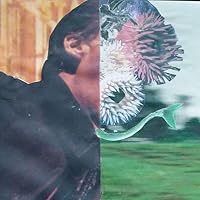
When the blind prophet Tiresias came upon a pair of mating snakes, he hit them with his staff. Consequently, the goddess Hera transformed him into a woman for seven years. Tiresias is a liminal figure and lives at the crossroads of all paths. Beneath a silver cloud, the body of the oracle splits in two. The novel DEAR§ from [x] and Elytron Frass employs the serpentine motif in its title, echoed once more in the cover art. The epistolary novel features a series of letters from two unknown figures that coil and unravel together beneath delirious night. They luxuriate in their anonymity, the shattering and reconstruction of self/other in an endless hall of mirrors, a game of masquerade flecked with wry and knowing humour. As Oscar Wilde writes in Salome: “Neither at things, nor at people should one look. Only in mirrors should one look, for mirrors do but show us masks.”
The two players taunt and push each other to descend further into self-dissolution, writing: “Allow your giddiness to spill into veins of tooth & malice the consider me as text.” Consider me as text. How does language construct and deconstruct the self? Jacques Derrida, the ashen-faced pallbearer of deconstruction, describes the “a” of différance, as opposed to difference, “(it) remains silent, secret and discreet as a tomb: oikesis.” One scribe in DEAR§ writes: “Each letter leaves us thinner, veins flooded with ink we pretend at with these spindled fingers,” which receives the following reply: “i entomb in the crypt of your anonymous sentence.” Derrida, furthering the ideas of Ferdinand de Saussure, argued that language contains no inherent meaning present to us but is endlessly deferred in an infinite chain. A word only means what it does because of its relationship, and difference, to all other words. Thus, the meaning of language shifts constantly like a spider hung inside an exquisite and deadly web. The scribes of DEAR§ are like two cloaked figures stood on the margins of a blank desert. Across many miles, they howl with laughter on these shifting sands. Language always contains its own murder, haunted by its own non-meaning, or as one of the scribes describes: “The soft thrill of the death of every word we’ve brought forth and discharge for the next breath, the measure, the next paragraph.” Each and every word must die.
Full review here: https://www.erratumpress.com/a-wordle...
The two players taunt and push each other to descend further into self-dissolution, writing: “Allow your giddiness to spill into veins of tooth & malice the consider me as text.” Consider me as text. How does language construct and deconstruct the self? Jacques Derrida, the ashen-faced pallbearer of deconstruction, describes the “a” of différance, as opposed to difference, “(it) remains silent, secret and discreet as a tomb: oikesis.” One scribe in DEAR§ writes: “Each letter leaves us thinner, veins flooded with ink we pretend at with these spindled fingers,” which receives the following reply: “i entomb in the crypt of your anonymous sentence.” Derrida, furthering the ideas of Ferdinand de Saussure, argued that language contains no inherent meaning present to us but is endlessly deferred in an infinite chain. A word only means what it does because of its relationship, and difference, to all other words. Thus, the meaning of language shifts constantly like a spider hung inside an exquisite and deadly web. The scribes of DEAR§ are like two cloaked figures stood on the margins of a blank desert. Across many miles, they howl with laughter on these shifting sands. Language always contains its own murder, haunted by its own non-meaning, or as one of the scribes describes: “The soft thrill of the death of every word we’ve brought forth and discharge for the next breath, the measure, the next paragraph.” Each and every word must die.
Full review here: https://www.erratumpress.com/a-wordle...
November 1, 2024
[not a review, just an FYI]
DEAR§, by [x] and Elytron Frass,
is available exclusively here: https://expatpress.com/product/dear%c...
DEAR§, by [x] and Elytron Frass,
is available exclusively here: https://expatpress.com/product/dear%c...

December 16, 2024
To read this book is demanding, it's like peering into the holes of reality, an experiment in occult scripture.
This is the correspondence between two anonymous characters who seem to be in a lengthy mystic conversation, a kind of monstrous martyrdom and self-inflicted descent into the deepest pits of ecstasy. The interesting part reading their letters is that sometimes you're wondering if they're some kind of Clive Barker-kind of cenobites, inflicting extremes tortures and surgeries to find apotheosis and sharing the results of their long experimentation and obscure contemplation, other times it seems they're just two bored persons writing to each other in occult non-existent symbolism, waiting perhaps that someone else will read them, to create an elaborate joke of the existence of some averse mystics practicing some hellish method of self-transfiguration, and even sometimes it seems that two inmates in some psychiatric hospital are sending letters to each other in a shared delirium (or perhaps it's just one person hallucinating it).
A very intense experiment in surrealist writing, this book is really one of a kind
This is the correspondence between two anonymous characters who seem to be in a lengthy mystic conversation, a kind of monstrous martyrdom and self-inflicted descent into the deepest pits of ecstasy. The interesting part reading their letters is that sometimes you're wondering if they're some kind of Clive Barker-kind of cenobites, inflicting extremes tortures and surgeries to find apotheosis and sharing the results of their long experimentation and obscure contemplation, other times it seems they're just two bored persons writing to each other in occult non-existent symbolism, waiting perhaps that someone else will read them, to create an elaborate joke of the existence of some averse mystics practicing some hellish method of self-transfiguration, and even sometimes it seems that two inmates in some psychiatric hospital are sending letters to each other in a shared delirium (or perhaps it's just one person hallucinating it).
A very intense experiment in surrealist writing, this book is really one of a kind
December 17, 2024
This fantastic collaboration is one of a kind. It is a dance, more than a conversation. It is a series of responses each of which takes the conversation along unsuspected vectors of being attempted through verbalizations. Words are not enough, yet much is made from them here. Beyond the words, these two opposing, yet deeply mutually admiring personalities take the reader into parallel universes, constantly shifting between them, and yet also being severely grounded in physicality, severely punished if the mind strays.
Unsuspected, and most beautifully, this work also contains a series of collages that extends, expands, and complements the densely written notes, which should give the attentive and sensitive reader hours and hours on end, weeks after weeks of coming back to digest, of an experience beyond entertainment, beyond conversation, and rather of sharing of states, or an opposition of states. Anything, really, if you know what to make of it for yourself, on your own. Always on your own.
You can find a more in-depth review of DEAR§ here: https://yperion.substack.com/p/dear
Unsuspected, and most beautifully, this work also contains a series of collages that extends, expands, and complements the densely written notes, which should give the attentive and sensitive reader hours and hours on end, weeks after weeks of coming back to digest, of an experience beyond entertainment, beyond conversation, and rather of sharing of states, or an opposition of states. Anything, really, if you know what to make of it for yourself, on your own. Always on your own.
You can find a more in-depth review of DEAR§ here: https://yperion.substack.com/p/dear
November 2, 2024
Finished reading this yesterday. It was very beautiful and small and large.
There’s a kind of narrative to it, in a strange, performative way. These two people or characters or whatever they are write to each other. Seemingly with some intent to become one or reach some kind of ecstatic state.
To me it’s clear they’re putting on an honest kind of act. They’re engaging in performance art. They write to each other as if they’re strange god-like figures, or occultic saints, but through these roles they speak out their inner lives, secretly — the personal emotional truth is betrayed as a byproduct of the project.
And occasionally they comment on the writing of the book itself, their emails to each other. And how the book might be received, or how the audience will never know of all that they did to prepare to begin writing this book. At times, I felt certain they were lying to me. Aware of the truthfulness that was coming through they’d double back and throw out something to obscure it. Part of what was great about it to me was that I felt I could experience them writing the book as I read it. So, at times, I felt I could sense the little ecstasies they must have felt writing these words, typing them out in an intense kind of rage against nothingness, against meaninglessness, not thinking on what was said, expressing freely within the mode of the book. And with their occasional comments on the writing process, it was fun trying to piece together what they were doing and how they were doing it. It made me think more deeply about the book and what was happening in it.
By the end of the book both of the authors started to come through to me, I started to see their relationship to one another and was sorrowful at the first dear seeming to think their project was falling away, becoming a failure, as the second dear seemed to rise up against the first, moving on and up beyond the other, rather than committing to their being one. If I’m correct, and this first dear is Elytron Frass rather than [x], then this seems very appropriate given that Elytron has stated, or at least heavily implied, that they will no longer be publishing works under that name.
Some things about the book reminded me of my BOATP, which made me happy. . My publisher, Nicholas Clemente, referred to the BOATP as something he called “hyper-literature or post-literature,” and he believes the future of literature in general will be “maximalistic and messianic.”
Having read Dears, I wonder if this might be a legitimate movement in literature that is beginning as an intuitive response to our world today.
The main similarities between Dears and BOATP have to do with the simultaneous effacement and embracement of the personal and writing as a performance art with a real-world end goal of self-creation and meaning making. Both also have an emphasis on the physical aspect of the book itself.
These qualities, to me, seem like a reaction to the hyper-informational, “post-modern” state of our society, along with all the strange and seemingly meaningful shifts that seem to be occurring in our society. The changing social dynamics, political shifts/events, reconsideration of identity and the self, etc.
With all that is now happening which is meaningful, and our connected world which makes information excessive and incomprehensible, destructive of meaning, we are realizing that we must intentionally create ourselves and create a kind of all-encompassing meaning in the world. Knowing the falsity inherent in this task (in the face of post-modernism) we are free to create ourselves as little Gods. And all the same, we can point to the narcissism and stupidity in this, and laugh!
Anyway, I loved the book. They’re both little cutie pies playing dress-up and making it something real. All of their emotions are so tender and sweet and genuine, to me (even when grandiose and violent). Often enough a visceral energy will come through, and the two of them will get in groove with each other and push forward, past some simple understanding, only to fall apart and fumble into something else just as beautiful. Most of the time the book didn’t make any “real” sense to me, but the sensation and feeling, and the return to clear statements, moved it along. The relationship held it all together. And I suspect if I read it again, more closely, I would find many more emotions and feelings and ideas which flew past me the first time, and my understanding of the book then could be completely different than it is now.
Also, thinking about it now, their goal in writing to each other is simply to write the book. And they are one through the creation of the book as a thing itself. A mortal, perishable thing, especially so because of the limited number of copies made.
There’s a kind of narrative to it, in a strange, performative way. These two people or characters or whatever they are write to each other. Seemingly with some intent to become one or reach some kind of ecstatic state.
To me it’s clear they’re putting on an honest kind of act. They’re engaging in performance art. They write to each other as if they’re strange god-like figures, or occultic saints, but through these roles they speak out their inner lives, secretly — the personal emotional truth is betrayed as a byproduct of the project.
And occasionally they comment on the writing of the book itself, their emails to each other. And how the book might be received, or how the audience will never know of all that they did to prepare to begin writing this book. At times, I felt certain they were lying to me. Aware of the truthfulness that was coming through they’d double back and throw out something to obscure it. Part of what was great about it to me was that I felt I could experience them writing the book as I read it. So, at times, I felt I could sense the little ecstasies they must have felt writing these words, typing them out in an intense kind of rage against nothingness, against meaninglessness, not thinking on what was said, expressing freely within the mode of the book. And with their occasional comments on the writing process, it was fun trying to piece together what they were doing and how they were doing it. It made me think more deeply about the book and what was happening in it.
By the end of the book both of the authors started to come through to me, I started to see their relationship to one another and was sorrowful at the first dear seeming to think their project was falling away, becoming a failure, as the second dear seemed to rise up against the first, moving on and up beyond the other, rather than committing to their being one. If I’m correct, and this first dear is Elytron Frass rather than [x], then this seems very appropriate given that Elytron has stated, or at least heavily implied, that they will no longer be publishing works under that name.
Some things about the book reminded me of my BOATP, which made me happy. . My publisher, Nicholas Clemente, referred to the BOATP as something he called “hyper-literature or post-literature,” and he believes the future of literature in general will be “maximalistic and messianic.”
Having read Dears, I wonder if this might be a legitimate movement in literature that is beginning as an intuitive response to our world today.
The main similarities between Dears and BOATP have to do with the simultaneous effacement and embracement of the personal and writing as a performance art with a real-world end goal of self-creation and meaning making. Both also have an emphasis on the physical aspect of the book itself.
These qualities, to me, seem like a reaction to the hyper-informational, “post-modern” state of our society, along with all the strange and seemingly meaningful shifts that seem to be occurring in our society. The changing social dynamics, political shifts/events, reconsideration of identity and the self, etc.
With all that is now happening which is meaningful, and our connected world which makes information excessive and incomprehensible, destructive of meaning, we are realizing that we must intentionally create ourselves and create a kind of all-encompassing meaning in the world. Knowing the falsity inherent in this task (in the face of post-modernism) we are free to create ourselves as little Gods. And all the same, we can point to the narcissism and stupidity in this, and laugh!
Anyway, I loved the book. They’re both little cutie pies playing dress-up and making it something real. All of their emotions are so tender and sweet and genuine, to me (even when grandiose and violent). Often enough a visceral energy will come through, and the two of them will get in groove with each other and push forward, past some simple understanding, only to fall apart and fumble into something else just as beautiful. Most of the time the book didn’t make any “real” sense to me, but the sensation and feeling, and the return to clear statements, moved it along. The relationship held it all together. And I suspect if I read it again, more closely, I would find many more emotions and feelings and ideas which flew past me the first time, and my understanding of the book then could be completely different than it is now.
Also, thinking about it now, their goal in writing to each other is simply to write the book. And they are one through the creation of the book as a thing itself. A mortal, perishable thing, especially so because of the limited number of copies made.
Displaying 1 - 5 of 5 reviews