Jump to ratings and reviews
Rate this book

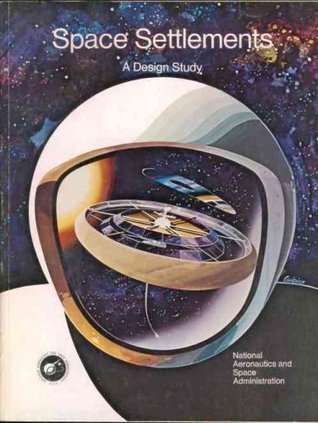
Space Settlements a Design Study SP 413

Rate this book
This report grew out of a 10-week program in engineering systems design held at Stanford University and the Ames Research Center of the National Aeronautics and Space Administration during the summer of 1975. The project brought together nineteen professors of engineering, physical science, social science, and architecture, and two co-directors. This group worked for ten weeks to construct a convincing picture of how people might permanently sustain life in space on a large scale. The goal of the summer study was to design a system for the colonization of space.

This report, like the design itself, is intended to be as technologically complete and sound as it could be made in ten weeks, but it is also meant for a readership beyond that of the aerospace community. Because the idea of colonizing space has awakened strong public interest, the report is written to be understood by the educated public and specialists in other fields. It also includes considerable background material.

The technical director, Gerard K. O'Neill of Princeton University, made essential contributions by providing information based on his notes and calculations from six years of prior work on space colonization and by carefully reviewing the technical aspects of the study.

199 pages, Paperback

First published January 1, 2004

6 people are currently reading
219 people want to read

About the author

Richard D. Johnson

9 books1 follower
NASA Ames Research Center

Ratings & Reviews

What do you think?
Rate this book

Friends & Following

Create a free account to discover what your friends think of this book!

Community Reviews

5 stars
17 (43%)
4 stars
13 (33%)
3 stars
6 (15%)
2 stars
2 (5%)
1 star
1 (2%)
Displaying 1 - 8 of 8 reviews
Profile Image for Kamakana.
Author 2 books414 followers
March 25, 2017
this i remember reading sometime in the 80s. this was the 'space settlement study' that seemed to follow up o'neill's ideas but then... i grew up, i moved on, i got skeptical, i sort of lost track of this original, inspirational, science-fictional, portrait of the future. tech has become integrated, become a part of our lives, no surprises, not enough big dreams. we have incredible tech, but have we lost the dreams? the ideas, the arguments, make sense in the long run...
59 reviews
April 27, 2014
Representing a detailed and comprehensive overview of the concept of the colonization of space, this volume was the product of a ten week programme in engineering systems design held at Stanford University and the NASA's Ames Research Center that took place during the summer of 1975.

We are taken on a quick tour of the basics of the concept as set out for example in previous works by Dr Gerard O'Neill and the general plan of constructing much of the colony from lunar material that is then transported using a mass driver to the L5 Lagrangian point. Once delivered this is then used for the construction of the space colony.

We are then plunged into a detailed overview of each step of the construction process including the materials required, the work force to be employed and the energy and money spent to achieve the goal. It is a fascinating insight into the complexity and detail of such an undertaking and perhaps represents one of the high points in the technical overview of space colony construction and use.

There is a discussion on the best configuration for a space colony, the nature of the lunar base needed to mine the material used to construct the colony, the workings of the mass driver and the net to catch the material once it arrives at L5. This is not a coffee table style general introduction into the subject but a thorough exposition into what might be required to implement the project. Of particular interest was a discussion on a shield that might be used to protect the inhabitants of the colony from cosmic rays.

At the same time, this study is also very clear on further work that needs to be undertaken including, for example, a better understanding of the Coriolis effect, whether humans living in space could tolerate slightly lower than 1g for long periods of time without ill effect and so on.

As with a number of authorities on the construction of the O'Neillian style space colonies, the main practical purpose for their construction is the building of space solar power satellites. This is also looked at and the energy creation that might arise as a result is studied.

Space solar power is a whole subject by itself but this study takes the view that space colonies are the best way for the widespread implementation of space solar power to proceed. This is because the construction of space solar power satellites using lunar materials processed at a colony will ultimately be cheaper and easier than fabricating them on Earth and placing them into orbit from Earth.

Satellite solar power stations provide, according to this book, the main commercial justification of the colony. The study also consider whether the microwave transmission of energy from the solar power stations in orbit is safe or at least non-hazardous and concludes that it is.

There is a lot of highly technical and mathematical information in this book which will be beyond the mainstream reader but nevertheless this is an excellent book to enrich the understanding of the concepts involved in space colonization once the classics such as the High Frontier and Colonies in Space have been digested. Re-prints of the original can now be purchased through Amazon and it can also be accessed online here: http://www.nss.org/settlement/nasa/75....

This review can also be found on my blog at http://projection3.blogspot.co.uk/201...
262 reviews3 followers
January 11, 2023
A fantastic book. Technical but not overwhelming. Covers a diverse range of technologies centered on building large space colonies. A must have book for those interested in space colonization. The only drawback is that it is almost fifty years old and has not been revised. Some of the information is out of date and it would be nice if this could be updated. For instance, additional work has been done on cosmic ray shielding and materials science in general. The section on mass drivers could probably be updated. Nevertheless, a must have book. Personally, I would have loved if this was produced in hardcover. Superior and more technical in nature to the more popular book Colonies in Space by Heppenheimer- though their audiences are different.
Profile Image for Scott Shjefte.
2,195 reviews74 followers
April 15, 2024
Excellent scientific analysis of what could develop in space activities in near future.
Profile Image for T..
Author 3 books8 followers
November 7, 2015
This book is a collection of essays commissioned by and for Nasa during 1977 on the subject of living in space. To be very honest I did not read the whole book, as I was more interested in the illustrations, which depict rotating-ring-style space stations. Artwork by Don Davis and Rick Guidice. This books is now available as a downloadable PDF from http://www.saintannsny.org/depart/com...
Profile Image for N.V. Binder.
Author 2 books35 followers
July 20, 2016
This book was a great buy and a real inspiration for my writing. I believe it is still in print; you can also buy "vintage" copies for a fairly low price. Published in 1977, presents an optimistic (and even fantastic) view of humanity's future in space.
Profile Image for Clive Warner.
Author 7 books17 followers
February 13, 2008
This is a NASA publication, the one I have bears no ISBN but the NASA tag SP 413. The graphics are excellent.
Displaying 1 - 8 of 8 reviews

Can't find what you're looking for?

Get help and learn more about the design.