

What do you think?

火
本书收入卡佛的短篇小说、随笔及诗歌。小说方面,卡佛特别不满意《纽约客》文学编辑利什对《洗澡》、《所有的东西都粘在他身上》和《咖啡先生和修理先生》的删节,他改了标题,大量修改内容,都收入《火》里。《谎话》、《木屋》等短篇小说则是首次有中译本。诗歌方面,收录《你们不知道什么是爱》《在克拉马斯河附近》《我父亲二十二岁时的照片》等著名作品。随笔方面,有《关于写作》《我父亲的一生》《火》等文学爱好者期待已久的篇目。
272 pages, Paperback
First published January 1, 1983
About the author
Raymond Carver
367 books5,292 followersCarver was born into a poverty-stricken family at the tail-end of the Depression. He married at 19, started a series of menial jobs and his own career of 'full-time drinking as a serious pursuit', a career that would eventually kill him. Constantly struggling to support his wife and family, Carver enrolled in a writing programme under author John Gardner in 1958. He saw this opportunity as a turning point.
Rejecting the more experimental fiction of the 60s and 70s, he pioneered a precisionist realism reinventing the American short story during the eighties, heading the line of so-called 'dirty realists' or 'K-mart realists'. Set in trailer parks and shopping malls, they are stories of banal lives that turn on a seemingly insignificant detail. Carver writes with meticulous economy, suddenly bringing a life into focus in a similar way to the paintings of Edward Hopper. As well as being a master of the short story, he was an accomplished poet publishing several highly acclaimed volumes.
After the 'line of demarcation' in Carver's life - 2 June 1977, the day he stopped drinking - his stories become increasingly more redemptive and expansive. Alcohol had eventually shattered his health, his work and his family - his first marriage effectively ending in 1978. He finally married his long-term parter Tess Gallagher (they met ten years earlier at a writers' conference in Dallas) in Reno, Nevada, less than two months before he eventually lost his fight with cancer.
Rejecting the more experimental fiction of the 60s and 70s, he pioneered a precisionist realism reinventing the American short story during the eighties, heading the line of so-called 'dirty realists' or 'K-mart realists'. Set in trailer parks and shopping malls, they are stories of banal lives that turn on a seemingly insignificant detail. Carver writes with meticulous economy, suddenly bringing a life into focus in a similar way to the paintings of Edward Hopper. As well as being a master of the short story, he was an accomplished poet publishing several highly acclaimed volumes.
After the 'line of demarcation' in Carver's life - 2 June 1977, the day he stopped drinking - his stories become increasingly more redemptive and expansive. Alcohol had eventually shattered his health, his work and his family - his first marriage effectively ending in 1978. He finally married his long-term parter Tess Gallagher (they met ten years earlier at a writers' conference in Dallas) in Reno, Nevada, less than two months before he eventually lost his fight with cancer.
Ratings & Reviews
Friends & Following
Create a free account to discover what your friends think of this book!
Community Reviews
Displaying 1 - 30 of 238 reviews

June 13, 2016
LO SCRITTORE COME MAESTRO E AMICO
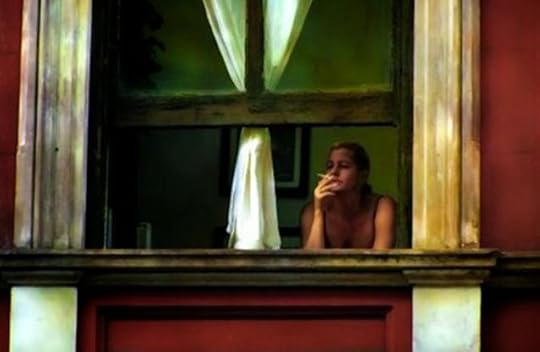
La gente era solita chinare la testa verso Carver, per sentirlo meglio.
Carver, più che parlare, mormorava, bisbigliava.
Un po’ per timidezza e un po’ per umiltà.
Un po’ per rispetto verso il linguaggio, che lo spingeva a maneggiare le parole, sia scritte che dette, con molta cautela.
Come se fosse quasi impossibile dire quello che si vuole.
Come se fosse addirittura pericoloso.
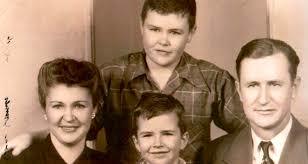
La famiglia Carver nel 1950.
Nonostante si sia mantenuto per anni insegnando scrittura creativa, sembrava negato per fare l’insegnante: non insisteva, non asseriva con forza, preferiva ascoltare che tenere lezioni, non prendeva neanche in considerazione l’idea che tra i suoi compiti ci fosse quello di scoraggiare uno studente non portato, non sapeva stroncare, era profondamente empatico con tutto quello che i suoi studenti gli sottoponevano.
Questo non gli impediva di essere rigorosamente analitico nel lavoro di revisione: passava ore e ore sugli elaborati prodotti dai suoi studenti, versione dopo versione, discutendo parola per parola, punti, virgole, spazi.
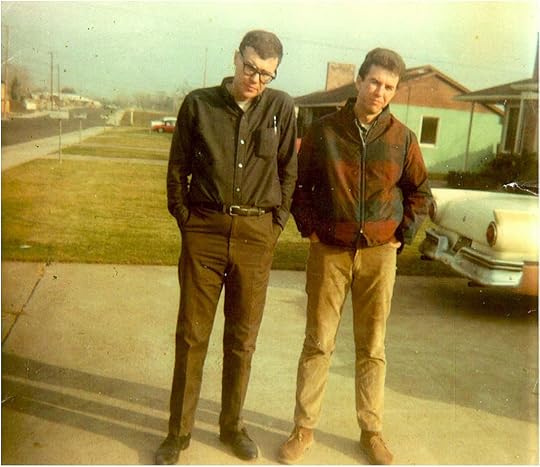
Raymond Carver nel 1972 col fratello James.
Il padre si chiamava Clevie Raymond Carver, per gli amici C.R. (Si Ar). Il figlio invece Raymond Clevie Carver Junior.
Carver odiava essere chiamato Junior (che diventa GeiAr). Andò bene finché suo padre lo chiamava Frog (ranocchio). Ma poi quando ranocchio sembrò davvero troppo vezzeggiativo, passarono a chiamarlo junior. La cosa a Carver proprio non piaceva e all’età di 13 o 14 anni annunciò che non avrebbe più risposto se fosse stato chiamato così.
Da quel momento, fino alla morte, per suo padre divenne Doc – oppure, figliolo.
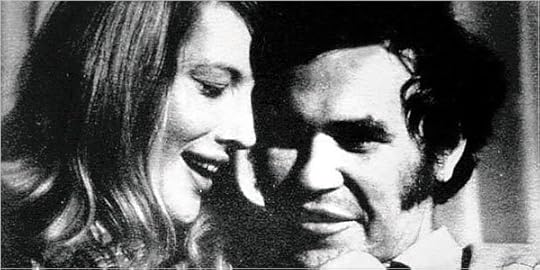
Raymond Carver con la prima moglie, Maryann Burk, nel 1972
Quello che segue in corsivo è riferito a suo padre.
Poi morì. Io stavo molto lontano, a Iowa City, e avevo ancora delle cose da dirgli.
Pensavo che avrei ricordato tutto ciò che veniva detto e fatto quel giorno e magari che avrei trovato il modo di dirlo una volta o l’altra. Ma non fu così. Dimenticai tutto, o quasi.
Padre, ti voglio bene,
ma come posso dirti grazie, io che pure non reggo l’alcol,
e che non conosco nemmeno i posti buoni per pescare?
I particolari della poesia sono autentici, a parte il fatto che papà morì in giugno e non in ottobre, come dice la prima parola della poesia.
Volevo una parola con più di una sillaba per rallentarla un po’.
Ma più ancora volevo un mese adeguato a ciò che provavo nel momento in cui scrissi la poesia, un mese di giornate brevi e di luce che svanisce, di fumo nell’aria, di cose che si consumano.
Giugno era giorni e notti d’estate, la maturità, il mio anniversario di nozze, il compleanno di uno dei miei figli. Giugno non era un mese in cui muoiono i padri.
Infatti, mio padre è morto a fine settembre, all’inizio dell’autunno.
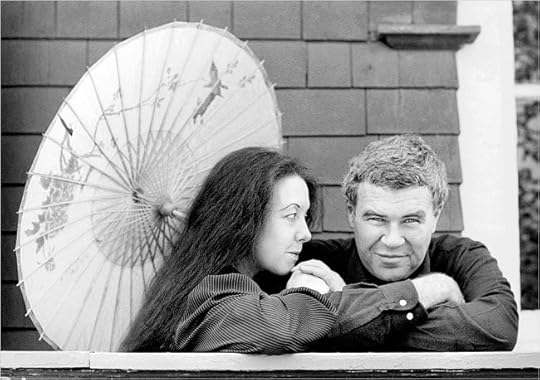
Raymond Carver con la seconda moglie, Tess Gallagher, poetessa e scrittrice, alla quale si deve la pubblicazione di “Principianti”, la versione originale della seconda raccolta di racconti di Raymond Carver, “Di cosa parliamo quando parliamo d'amore”, pubblicata nel 1981. In quell'occasione l'editor Gordon Lish aveva tagliato più del cinquanta per cento del testo, cambiando molti titoli e finali.
La gente era solita chinare la testa verso Carver, per sentirlo meglio.
Carver, più che parlare, mormorava, bisbigliava.
Un po’ per timidezza e un po’ per umiltà.
Un po’ per rispetto verso il linguaggio, che lo spingeva a maneggiare le parole, sia scritte che dette, con molta cautela.
Come se fosse quasi impossibile dire quello che si vuole.
Come se fosse addirittura pericoloso.
La famiglia Carver nel 1950.
Nonostante si sia mantenuto per anni insegnando scrittura creativa, sembrava negato per fare l’insegnante: non insisteva, non asseriva con forza, preferiva ascoltare che tenere lezioni, non prendeva neanche in considerazione l’idea che tra i suoi compiti ci fosse quello di scoraggiare uno studente non portato, non sapeva stroncare, era profondamente empatico con tutto quello che i suoi studenti gli sottoponevano.
Questo non gli impediva di essere rigorosamente analitico nel lavoro di revisione: passava ore e ore sugli elaborati prodotti dai suoi studenti, versione dopo versione, discutendo parola per parola, punti, virgole, spazi.
Raymond Carver nel 1972 col fratello James.
Il padre si chiamava Clevie Raymond Carver, per gli amici C.R. (Si Ar). Il figlio invece Raymond Clevie Carver Junior.
Carver odiava essere chiamato Junior (che diventa GeiAr). Andò bene finché suo padre lo chiamava Frog (ranocchio). Ma poi quando ranocchio sembrò davvero troppo vezzeggiativo, passarono a chiamarlo junior. La cosa a Carver proprio non piaceva e all’età di 13 o 14 anni annunciò che non avrebbe più risposto se fosse stato chiamato così.
Da quel momento, fino alla morte, per suo padre divenne Doc – oppure, figliolo.
Raymond Carver con la prima moglie, Maryann Burk, nel 1972
Quello che segue in corsivo è riferito a suo padre.
Poi morì. Io stavo molto lontano, a Iowa City, e avevo ancora delle cose da dirgli.
Pensavo che avrei ricordato tutto ciò che veniva detto e fatto quel giorno e magari che avrei trovato il modo di dirlo una volta o l’altra. Ma non fu così. Dimenticai tutto, o quasi.
Padre, ti voglio bene,
ma come posso dirti grazie, io che pure non reggo l’alcol,
e che non conosco nemmeno i posti buoni per pescare?
I particolari della poesia sono autentici, a parte il fatto che papà morì in giugno e non in ottobre, come dice la prima parola della poesia.
Volevo una parola con più di una sillaba per rallentarla un po’.
Ma più ancora volevo un mese adeguato a ciò che provavo nel momento in cui scrissi la poesia, un mese di giornate brevi e di luce che svanisce, di fumo nell’aria, di cose che si consumano.
Giugno era giorni e notti d’estate, la maturità, il mio anniversario di nozze, il compleanno di uno dei miei figli. Giugno non era un mese in cui muoiono i padri.
Infatti, mio padre è morto a fine settembre, all’inizio dell’autunno.
Raymond Carver con la seconda moglie, Tess Gallagher, poetessa e scrittrice, alla quale si deve la pubblicazione di “Principianti”, la versione originale della seconda raccolta di racconti di Raymond Carver, “Di cosa parliamo quando parliamo d'amore”, pubblicata nel 1981. In quell'occasione l'editor Gordon Lish aveva tagliato più del cinquanta per cento del testo, cambiando molti titoli e finali.

February 2, 2016

“That's all we have, finally, the words, and they had better be the right ones.”
― Raymond Carver
Back in the 1980s when this collection of essays, poems and stories was first published as part of the Vintage Contemporaries series, I read again and again. And after reading yet again this past week, I must say Carver's words get even better with age.
This book collects seven stories told with such care and tenderness, it is as if Raymond Carver lets us hold the warm, beating heart of each of his characters, woman or man, girl or boy, in our trembling hands. Crafted in clear, clean, sparse prose, one wonders how Ray can pull it off, but he does, his writing possessing that special something, that distinct, singular voice, that . . . well, let’s just call it Carver magic.
And for those readers who enjoy poetry, there are fifty-two Carver poems collected here, my very favorite poem capturing an evening with Charles Bukowski, where 51-year old Hank rants on about being madly in love with a 25-year-old beauty, a sassy lass who calls him Bukowski in her little voice; rants about how he’s the only one in the room who knows anything about life, about love; how he’s the one and only true living poet; how he shouldn’t start drinking the hard stuff or else he’ll throw everyone’s no-talent ass out the window. To be sure, a Raymond Carver poem worth the price of admission.
Thirdly, there are four short Carver essays: on life, on inspiration, on writing, on teaching. To provide a small taste, below are several quotes from John Gardner, Writer as Teacher along with my comments:
“I had this very strong desire to write, it was a desire so strong that, with the encouragement I was given in college, and the insight acquired, I kept on writing long after “good sense” and the “cold facts” – the “realities” of my life told me, time and again, that I ought to quit, stop the dreaming, quietly go ahead and do something else.”
Unfortunately, when our lives becomes overwhelming, the first thing that tends to go is our writing. Raymond Carver urges us to keep at it, not to quit, no matter how much the odds are stacked against us. Even if we only write a few lines in our diary or notebook once, twice, thrice every day, our dedication and perseverance will pay off.
“The truth is, in those days he looked and dressed like a Presbyterian minister, or an FBI man. He always wore a black suit, a white shirt, and a tie. And he had a crew cut. I’m saying that Gardner looked very square.”
Art and literature transcend haircuts, clothing, regional twangs, foreign accents and other such superficialities. When dealing with teachers and peers, let all these distracting inessentials go and focus on the writing.
“He knew I had a young family and cramped quarters at home. He offered me the key to his office. I see that gift now as a turning point.”
Very important to have a space where you can write undisturbed. Doesn’t matter if the space is small or even if the space is public, say, a quiet spot at your local library or neighborhood coffee shop, but you definitely need a space. If you don’t have one, find one.
“He believed in revision, endless revision; it was something very close to his heart and something he felt was vital for writers, at whatever stage of their development.”
Do you revise your writing as many times as needed to make every word as clear and elegant as you possibly can? If you do, that’s tremendous – your readers will appreciate your diligence and, in turn, take delight in reading.
“Any strategy that kept important and necessary information away from the reader in the hope of overcoming him by surprise at the end of the story was cheating.”
Raymond Carver has stated repeatedly how he hates tricks, any time he senses a writer attempts to trick the reader in any way, he runs for cover. I agree. Over the past weeks I’ve read a number of first rate American novels written back in the 1980s, authors such as Jay McInerney, Robert Russo, Richard Ford, Nicholson Baker, Andre Dubus, Fredrick Exley, Harold Brodkey. In all those hundreds of pages I’ve read, not one single trick.
“It was his conviction that if the words in the story were blurred because of the author’s insensitivity, carelessness, or sentimentality, then the story suffered from a tremendous handicap.”
This statement underscores how a writer who takes the craft of writing seriously will care enough to be as precise as possible. Recall Mark Twain: “The difference between the right word and the almost right word is the difference between lightning and a lightning bug.”
“A young writer certainly needs as much, I would even say more, encouragement than young people trying to enter other professions. And it ought to go without saying that the encouragement must always be honest encouragement and never hype.”
If you are a writer and meet up with anybody who discourages you, doesn’t matter if that person is a teacher, peer, family member or friend (so called), make it a point never to share you writing again with that person, no exceptions.

March 28, 2019
Once, when my son was about fifteen, he turned to me at a piano competition and said, “Mom, there are just so many people.”
I remember looking up from a book, looking around the room at a sea of sweaty competitors and then bringing in my gaze to stare at the terror in my son's face. Privately, I shared his terror. Who could do this? Who could memorize and then perform these required pieces in front of judges and peers? I find this aspect of my son's life bewildering, but I'm his mother and my job is to help him stay centered.
So, I shared something like, “Look. Everyone here has talent. Probably everyone here has worked hard, too. They had to, to get here, to this point. What's different about each of you is how you interpret your pieces. It's up to the judges to determine their favorite interpretations. You can't do anything about this now, but be yourself.”
This week, I found an essay, “On Writing” from this Raymond Carver collection that seemed to echo my sentiments to my son:
Some writers have a bunch of talent; I don't know any writers who are without it. But a unique and exact way of looking at things, and finding the right context for expressing that way of looking, that's something else. . . Every great or even very good writer makes the world over according to his own specifications. It's akin to style, what I'm talking about, but it isn't style alone. It is the writer's particular and unmistakable signature on everything he writes. It is his world and no other. This is one of the things that distinguishes one writer from another. Not talent. There's plenty of that around. But a writer who has some special way of looking at things and who gives artistic expression to that way of looking: that writer may be around for a time.
Wow. There it is. That advice, and so brilliant for all of us, always, to remember it. But, wait, there's more. . .
Mr. Carver then goes on, in his essay “Fires,” to capture my exact feelings on “the ferocious years of parenting” and manages to encapsulate my joy, my terror, and my guilt in wanting to give my children and my writing equal parts of my time. He points out that this is an impossible goal, and for those of us who have put our children first in our lives, all endeavors after will suffer, regardless of how much we want them to succeed.
A male writer expressing such thoughts. . . in the 1970s no less.
Who is this guy? My soul mate??
And, then. . . and, then. . . after his essays, he offers a section of some of his inspired verse. And, folks, if you don't get why this particular poem is great, then you'll probably never understand poetry:
The mallard ducks are down
for the night. They chuckle
in their sleep and dream of Mexico
and Honduras. Watercress
nods in the irrigation ditch
and the tules slump forward, heavy
with blackbirds.
Rice fields float under the moon.
Even the wet maple leaves cling
to my windshield. I tell you Maryann,
I am happy.
(Highway 99E From Chico)
Then he offers, at the end, seven works of short fiction, much of it forgettable for me (explaining here the four stars instead of five), but the collection ends with a bang with the brilliant "So Much Water So Close to Home." I'd prefer to revisit that story in What We Talk About When We Talk About Love at another time.
For now. . . Mr. Carver,
put down your beer
your cigarette, too.
I want nothing between your mouth
and me.
I'm a little in love, sir.
I remember looking up from a book, looking around the room at a sea of sweaty competitors and then bringing in my gaze to stare at the terror in my son's face. Privately, I shared his terror. Who could do this? Who could memorize and then perform these required pieces in front of judges and peers? I find this aspect of my son's life bewildering, but I'm his mother and my job is to help him stay centered.
So, I shared something like, “Look. Everyone here has talent. Probably everyone here has worked hard, too. They had to, to get here, to this point. What's different about each of you is how you interpret your pieces. It's up to the judges to determine their favorite interpretations. You can't do anything about this now, but be yourself.”
This week, I found an essay, “On Writing” from this Raymond Carver collection that seemed to echo my sentiments to my son:
Some writers have a bunch of talent; I don't know any writers who are without it. But a unique and exact way of looking at things, and finding the right context for expressing that way of looking, that's something else. . . Every great or even very good writer makes the world over according to his own specifications. It's akin to style, what I'm talking about, but it isn't style alone. It is the writer's particular and unmistakable signature on everything he writes. It is his world and no other. This is one of the things that distinguishes one writer from another. Not talent. There's plenty of that around. But a writer who has some special way of looking at things and who gives artistic expression to that way of looking: that writer may be around for a time.
Wow. There it is. That advice, and so brilliant for all of us, always, to remember it. But, wait, there's more. . .
Mr. Carver then goes on, in his essay “Fires,” to capture my exact feelings on “the ferocious years of parenting” and manages to encapsulate my joy, my terror, and my guilt in wanting to give my children and my writing equal parts of my time. He points out that this is an impossible goal, and for those of us who have put our children first in our lives, all endeavors after will suffer, regardless of how much we want them to succeed.
A male writer expressing such thoughts. . . in the 1970s no less.
Who is this guy? My soul mate??
And, then. . . and, then. . . after his essays, he offers a section of some of his inspired verse. And, folks, if you don't get why this particular poem is great, then you'll probably never understand poetry:
The mallard ducks are down
for the night. They chuckle
in their sleep and dream of Mexico
and Honduras. Watercress
nods in the irrigation ditch
and the tules slump forward, heavy
with blackbirds.
Rice fields float under the moon.
Even the wet maple leaves cling
to my windshield. I tell you Maryann,
I am happy.
(Highway 99E From Chico)
Then he offers, at the end, seven works of short fiction, much of it forgettable for me (explaining here the four stars instead of five), but the collection ends with a bang with the brilliant "So Much Water So Close to Home." I'd prefer to revisit that story in What We Talk About When We Talk About Love at another time.
For now. . . Mr. Carver,
put down your beer
your cigarette, too.
I want nothing between your mouth
and me.
I'm a little in love, sir.

February 18, 2025
In this volume, Carver offers four short stories, surprises, poems, and an extended reflection on the profession of a short story writer.
At 20, he is already married and the father of two children. He takes on odd jobs like moving. He doesn't have the time to devote himself to writing as he would like, nor does he have the time to expand. So, the short story is the format that suits him.
A profession he chose and defends. A short but precise format, with carefully chosen words that carry meaning. Words that he constantly reworks to purify them.
There are words to express love: love for the father and others, the meaning of life and its emptiness, the taste and power of alcohol and cigarettes, the pain of living for the little people, and their lack of hope.
His view of the world, his own and others, is filled with infinite sadness. But make no mistake: His empathy for these characters is immense and sincere. In human cracks, he plunges his pen to draw the magnificence of his writings. He is the painter of the little people excluded from American life.
At 20, he is already married and the father of two children. He takes on odd jobs like moving. He doesn't have the time to devote himself to writing as he would like, nor does he have the time to expand. So, the short story is the format that suits him.
A profession he chose and defends. A short but precise format, with carefully chosen words that carry meaning. Words that he constantly reworks to purify them.
There are words to express love: love for the father and others, the meaning of life and its emptiness, the taste and power of alcohol and cigarettes, the pain of living for the little people, and their lack of hope.
His view of the world, his own and others, is filled with infinite sadness. But make no mistake: His empathy for these characters is immense and sincere. In human cracks, he plunges his pen to draw the magnificence of his writings. He is the painter of the little people excluded from American life.

November 3, 2014
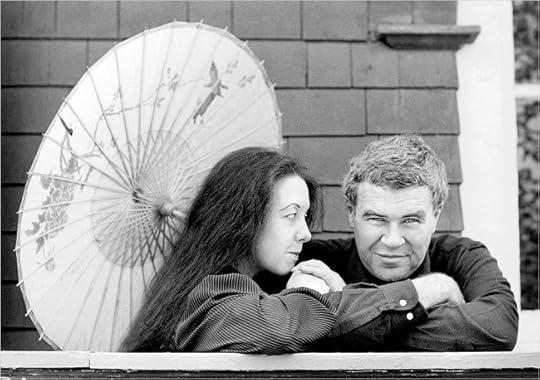
Tess Gallagher (n. 1943) (a quem "Fogos" é dedicado) e Raymond Carver (1938 – 1988) em 1984.
Raymond Carver (1938 – 1988) foi o escritor que me ensinou o prazer da literatura minimalista, os contos curtos como forma de arte literária única e indissociável da palavra meticulosa e angustiada, das vidas quotidianas descritas nas suas singularidades e nas suas idiossincrasias, geralmente num determinado contexto social e económico, com mulheres, homens e crianças, através das suas vivências próprias, marcadamente realistas, que vivem e sobrevivem no limiar da tristeza e da solidão, quase sempre pessoas comuns, isoladas ou marginalizadas.
Destaco a leitura indispensável de três das suas obras literárias: ” De Que Falamos Quando Falamos de Amor”, ” Queres fazer o favor de te calares?” e ” Catedral”.
”Fogos” é composto por um conjunto de Ensaios, Poemas e Narrativas. Nos Ensaios, Raymond Craver, descreve alguns episódios familiares e expõe algumas ideias sobre a sua escrita - ”Em meados dos anos 60, descobri que estava a ter dificuldade em concentrar a minha atenção na ficção narrativa longa. Durante algum tempo tive dificuldade em lê-la, bom como em escrevê-la. A minha capacidade de concentração tinha desaparecido; perdera a paciência de tentar escrever romances. (...) Mas sei que tem muito a ver com a razão pela qual, agora escrevo poemas e contos. Entrar e sair. Não ficar lá muito tempo. Seguir em frente. (…) Ambição e um bocadinho de sorte são coisas boas para um escritor ter consigo. Demasiada ambição e má sorte, ou nenhuma sorte, podem matar-te. Tem de existir talento.
Alguns escritores têm imenso talento; não conheço nenhum escritor que não o tenha. Mas uma coisa diferente é ter uma maneira única e exata de olhar para as coisas, e encontrar o contexto certo para expressar esse olhar para as coisas.” (Pág. 25); sobre as suas influências literárias, e, sobretudo, sobre a importância fundamental e decisiva que teve John Gardner o seu professor de Escrita Criativa no Chico State College, na Califórnia.
Segue-se um conjunto de Poemas, histórias curtas, que nos revelam a mestria da escrita de Raymond Carver, sobre a vida quotidiana americana e sobre outras paragens.
Na terceira parte - Narrativas - surgem um conjunto de sete contos de notável brilhantismo sobre vidas mundanas, mas onde Raymond Carver tem a capacidade de fascinar o leitor, relatando a ambiguidade e o desespero das personagens que povoam os seus contos – destaco: ”A Mentira”, ”A Morte de Harry” e o ”Onde É Que Estão Todos?”.

April 3, 2020
You know when you're in middle school, and there's this boy, you've seen him around and know he has a good reputation, so you arrange to spend some time with him, but then decide after all that you like him, but you don't like-like him? That's what my first Raymond Carver book felt like. This one has essays, poems and short stories, so I figured it was a good sampling of his work. I loved the essays, the poems were okay but no cold chills running up my spine, and the short stories were a bit uneven with ambiguous, abrupt endings. The last two stories almost made me change my mind and go steady with him. "Where Is Everyone" made me laugh, and I need a man with a sense of humor. "So Much Water So Close to Home" was perfectly chilling, and I saw a glimpse of what might could be ahead in our relationship. So for now we are on a break, but I'd like us to remain friends, and, who knows? Maybe another date down the road. It could happen.
March 19, 2019
Essays ⭐⭐⭐⭐⭐
Poems ⭐⭐⭐⭐
Stories ⭐⭐⭐⭐⭐
Can you imagine me rating poems four stars? This man is good, really good. I mean it! I think it's because his poems are like short stories. And I'm not even discussing the essays and stories.
I love Carver's writing. It's so sincere and real. It's life. Life happens.
Poems ⭐⭐⭐⭐
Stories ⭐⭐⭐⭐⭐
Can you imagine me rating poems four stars? This man is good, really good. I mean it! I think it's because his poems are like short stories. And I'm not even discussing the essays and stories.
I love Carver's writing. It's so sincere and real. It's life. Life happens.

June 9, 2015
Raymond Carver is that straight-to-the-point author who does not use too many flowery words to impress any reader. He keeps it short yet still exquisite, creative (sexy even). I think his application of real-life situations involving family and marriage issues could be relatable to both young adult and adult readers because of his easy writing style. But don't be fooled, because he also got me thinking to every short story ending. :)
A few poems fell flat but overall, essays and short stories in this collection won my heart. He just made it as one of my fave authors.
A few poems fell flat but overall, essays and short stories in this collection won my heart. He just made it as one of my fave authors.

August 7, 2022
“But if the writing can't be made as good as it I within us go make it, then why do it?”
“Must everyone witness their downfalli
This reduces us all.”
“Today, my heart, like the front door.
stands open for the first time in months.”
“I intend to take all the time in this world,
consider everything, even miracles,”
“Now for the other life. The one
without mistakes.”
“There's a question in those eyes
I can't answer.”
“prowess is not to be confused
with grace.”
"My God," she'd say. But God wasn't having any of it. He'd washed his hands of us.”
“did you ever wish you were some
body else, or else just nobody, nothing, nothing at all?"
“Must everyone witness their downfalli
This reduces us all.”
“Today, my heart, like the front door.
stands open for the first time in months.”
“I intend to take all the time in this world,
consider everything, even miracles,”
“Now for the other life. The one
without mistakes.”
“There's a question in those eyes
I can't answer.”
“prowess is not to be confused
with grace.”
"My God," she'd say. But God wasn't having any of it. He'd washed his hands of us.”
“did you ever wish you were some
body else, or else just nobody, nothing, nothing at all?"

March 5, 2008
In many ways, this selection of Raymond Carver’s essays, poems and stories is the perfect introduction to this iconic literary figure. Unlike other collections, where readers are only given his finely crafted fiction or poetry to decipher, here we are first presented with four essays in which Carver speaks about his development as a writer and the factors the drove him to create.
Next, we are given a sample of Carver’s poems, which although not too varied in style or trope, are nonetheless beautiful examples of a writer’s ability to take a plain spoken moment and open it up to universal themes, such as we see in the contemporary work of Kim Addonizio and Billy Collins.
Finally, in a most appropriate conclusion, we are left with Carver’s short stories, which are simply astonishing in their unadorned genius. Even though he claims his first teacher, John Gardner, gave him the invaluable advice “to have the right words saying what [he wants] them to say. Nothing vague or blurred, no smoked-glass prose” (37), his stories are actually absorbing studies of how to carefully give readers information by never saying too much and leaving enough space for the reader’s life to interact with the text. For example, in “The Lie” (141-143), he never tells us what the wife’s deception really is, although sexual infidelity is strongly implied, but instead concentrates on perfectly capturing the skewed power dynamics in a relationship being torn apart by deception. Consequently, he captures the emotional truth of the moment, without distracting the reader with the lurid tale of her lie, as well as allowing the story to be applicable to many different troubling points in a romantic relationship. The only misstep Carver makes is in the last story, “So Much Water So Close to Home,” by telling it from the wife’s first person perspective. Even though it is she who is telling the story, readers are still left with much more insight into the husband than the wife, and she is portrayed as a one-note character driven by an inexplicable paranoia. The writing is still flawless and the story intriguing as any mystery novel, but the point-of-view seems to miss the mark. Regardless, it is a small flaw in this stellar collection of work and again, just as the essays do, gives us a glimpse into Raymond Carver as a working writer, struggling like all of us to nail that scene, that line, that character, in the brief time our lives give us to create.
Next, we are given a sample of Carver’s poems, which although not too varied in style or trope, are nonetheless beautiful examples of a writer’s ability to take a plain spoken moment and open it up to universal themes, such as we see in the contemporary work of Kim Addonizio and Billy Collins.
Finally, in a most appropriate conclusion, we are left with Carver’s short stories, which are simply astonishing in their unadorned genius. Even though he claims his first teacher, John Gardner, gave him the invaluable advice “to have the right words saying what [he wants] them to say. Nothing vague or blurred, no smoked-glass prose” (37), his stories are actually absorbing studies of how to carefully give readers information by never saying too much and leaving enough space for the reader’s life to interact with the text. For example, in “The Lie” (141-143), he never tells us what the wife’s deception really is, although sexual infidelity is strongly implied, but instead concentrates on perfectly capturing the skewed power dynamics in a relationship being torn apart by deception. Consequently, he captures the emotional truth of the moment, without distracting the reader with the lurid tale of her lie, as well as allowing the story to be applicable to many different troubling points in a romantic relationship. The only misstep Carver makes is in the last story, “So Much Water So Close to Home,” by telling it from the wife’s first person perspective. Even though it is she who is telling the story, readers are still left with much more insight into the husband than the wife, and she is portrayed as a one-note character driven by an inexplicable paranoia. The writing is still flawless and the story intriguing as any mystery novel, but the point-of-view seems to miss the mark. Regardless, it is a small flaw in this stellar collection of work and again, just as the essays do, gives us a glimpse into Raymond Carver as a working writer, struggling like all of us to nail that scene, that line, that character, in the brief time our lives give us to create.

December 7, 2017
Raymond Carver' dan ortaya karışık bir eser. Deneme, şiir,öykü, röportaj... Carver' ı sevenleri onun dünyasına daha yakınlaştıracak henüz kalemi ile mest olmamış okurun ise ilk tanışma için tercih edebileceği bir çalışma. Ancak bu kitabı esas olarak yazı ile haşır neşir okura önermek isterim. Kitabın girişindeki ilk iki yazı ve son bölümdeki röportaj kısmında kendi yazma sürecine dair anlattıkları, özellikle yazıya yeni başlayanlar için önemli ipucları barındırıyor bence.
Carver'ı ilk kez okumanın tehlikeli bir yanı var. Onun öykülerini okurken arkadan hep şöyle bir düşünce geçer; " ne var ki bunu bende yazabilirim". Bu kitaptaki öykülerden birini okurken o " ne var ki"yi yine kurdum, sonra yav he he dedim ve geçti. Ben bu ne var ki yi ve ne olduğunu bir türlü anlayamamayı övgü olarak kullanıyorum ve halen merak ediyorum nasıl güzelleştiriyor bu adam sıradan olanı?
Carver'ı ilk kez okumanın tehlikeli bir yanı var. Onun öykülerini okurken arkadan hep şöyle bir düşünce geçer; " ne var ki bunu bende yazabilirim". Bu kitaptaki öykülerden birini okurken o " ne var ki"yi yine kurdum, sonra yav he he dedim ve geçti. Ben bu ne var ki yi ve ne olduğunu bir türlü anlayamamayı övgü olarak kullanıyorum ve halen merak ediyorum nasıl güzelleştiriyor bu adam sıradan olanı?

March 15, 2019
A conclusione di questa giornata, con proclami di rinnovata speranza nei giovani e nel mondo migliore, recupero questo libro, uno dei due che mi hanno fatto compagnia nei giorni scorsi. E lo faccio con il solo scopo di ricordare a tutta la mia generazione che quando avevamo 20 anni anche noi manifestavamo sulle note di We are the world. La fame nel mondo c'era e c'è ancora, ma è stato bello aver avuto l'illusione che un corteo o un concerto potessero cambiare le cose. Più nel profondo, però, sempre in quegli anni, imparavamo una grande lezione di vita, quella impartitaci sommessamente da Raymond Carver e dagli altri minimalisti americani che, nelle pagine dei loro libri, ci insegnavano che la cifra comune che lega tutti noi uomini e donne non è la fama, ma l'anonimato, non è l'eccezionalità, ma la mediocrità, non è il riscatto, ma l'assuefazione. Scritte da me, son robe detestabili. Scritte da Carver, sono una carezza sulla testa, una mano sulla spalla, una ventata di calore che illumina la nostra solitudine e la nostra disperazione, nell'unico modo in cui l'amore è capace di farlo. E' un amore senza giudizio- o meglio: è un amore che parte dal giudizio di se stessi e che in quello trova la forza di alzare gli occhi dalle nostre imperfezioni per rivederle negli altri e per trovare da qui, da questo bagaglio comune ammaccato e privo di lusinghe, la forza necessaria non per sopportarlo, ma per condividerne il peso. E farlo apparire, magari, anche più leggero.
Voi tenetevi i vostri influencer. Io mi leggo Carver, ogni giorno di più
Voi tenetevi i vostri influencer. Io mi leggo Carver, ogni giorno di più

November 29, 2018
My friend Landa and I have a theory. (It was Landa's first.) We think we like gentler, more thoughtful, more attentive men. But when the car breaks down or the hurricane is coming or the lawn needs to be mowed, we want burly competent men. These men. Competent. Strong. Fixers. Workers.
In his essays, poems, stories Carver writes about how real living, breathing men are like, a combination of characteristics, something way beyond the stereotypes. I particularly enjoyed the essays. I kept finding life-experience truth and finding that Carver tells stories within the essays in a style I understand. The voice is much like men I have known, all them of adult years by the 1980s. I got caught up in competence, articulation, awareness of body, mind, and spirit in these essays. A person who works with their body strength, muscle memory, amd tools would have to be aware like a yogi/yogini. And like yogis and yoginis--strong and competent. Yet different.
I could ponder up in this a long time.
In his essays, poems, stories Carver writes about how real living, breathing men are like, a combination of characteristics, something way beyond the stereotypes. I particularly enjoyed the essays. I kept finding life-experience truth and finding that Carver tells stories within the essays in a style I understand. The voice is much like men I have known, all them of adult years by the 1980s. I got caught up in competence, articulation, awareness of body, mind, and spirit in these essays. A person who works with their body strength, muscle memory, amd tools would have to be aware like a yogi/yogini. And like yogis and yoginis--strong and competent. Yet different.
I could ponder up in this a long time.

February 8, 2022
Ik wilde dit boek vooral voor de essays en gedichten lezen, maar was uiteindelijk ook wel benieuwd naar de verhalen. Ik heb vooral veel gelezen over mannen met een alcoholverslaving en vissen als hobby. Hoewel ik bij sommige verhalen op een gegeven moment een beetje afdwaalde door vaak wat vlakkere personages (elke keer iemand met een drankprobleem als karakter, dan ken je het op een gegeven moment wel), en alles een beetje over niets ging, ben ik uiteindelijk toch ook wel gecharmeerd door zijn stijl. Het laatste verhaal maakte ook wel veel goed, overigens. (En ik moest sowieso eens Raymond Carver gaan lezen)

April 8, 2021
OK stories. Weak poems. Essays offering cliched modernist view of the writer. (Some stories are recycled.)
October 26, 2024
Raymond Carver is a master at portraying human emotions and relationships so authentically. Every time I read a story of his the characters are so vivid, it feels like he is writing about real people.

August 21, 2011
Il panettiere
Poi Pancho Villa venne in città,
impiccò il sindaco
e invitò a cena il vecchio e debole
conte Vronsky.
Pancho gli presentò la sua nuova ragazza
Insieme con suo marito vestito d’un grembiule bianco,
mostrò la pistola a Vronsky,
poi chiese al conte di raccontargli
del suo infelice esilio in Messico.
Più tardi parlarono di donne e cavalli.
Entrambi ne erano esperti.
La ragazza ridacchiava e
si trastullò coi bottoni di madreperla
della camicia di Pancho finché
a mezzanotte spaccata Pancho si addormentò
con la testa sul tavolo.
Il marito si fece il segno della croce
e uscì di casa con gli stivali in mano
senza nemmeno un cenno
a sua moglie o a Vronsky.
Quell’anonimo marito a piedi nudi,
umiliato, lui, che cerca di salvarsi la vita,
è l’eroe di questa poesia.
Poi Pancho Villa venne in città,
impiccò il sindaco
e invitò a cena il vecchio e debole
conte Vronsky.
Pancho gli presentò la sua nuova ragazza
Insieme con suo marito vestito d’un grembiule bianco,
mostrò la pistola a Vronsky,
poi chiese al conte di raccontargli
del suo infelice esilio in Messico.
Più tardi parlarono di donne e cavalli.
Entrambi ne erano esperti.
La ragazza ridacchiava e
si trastullò coi bottoni di madreperla
della camicia di Pancho finché
a mezzanotte spaccata Pancho si addormentò
con la testa sul tavolo.
Il marito si fece il segno della croce
e uscì di casa con gli stivali in mano
senza nemmeno un cenno
a sua moglie o a Vronsky.
Quell’anonimo marito a piedi nudi,
umiliato, lui, che cerca di salvarsi la vita,
è l’eroe di questa poesia.

January 16, 2021
This is my introduction to Carver, so I don't wish to make oeuvristic generalisations, but I think it serves that purpose wonderfully. Fires includes essays, a small collection of short stories, and fifty poems.
By far, I think the essays are the highlight to this book - particularly Carver's reflections on writing. The essay concerning his father is also worth a look.
The poems are more variable. Some are tedious, but I do enjoy the more self-consciously literary attempts, particularly those that refer to other authors. With the major exception of the Bukowski poem, which was a real lowlight of this book.
Despite Carver's evasive remarks upon literary influence, the short stories are incredibly Faulknerian, only situated in a slightly later America. Reminded me of the wonderful Wim Wenders film Paris, Texas
By far, I think the essays are the highlight to this book - particularly Carver's reflections on writing. The essay concerning his father is also worth a look.
The poems are more variable. Some are tedious, but I do enjoy the more self-consciously literary attempts, particularly those that refer to other authors. With the major exception of the Bukowski poem, which was a real lowlight of this book.
Despite Carver's evasive remarks upon literary influence, the short stories are incredibly Faulknerian, only situated in a slightly later America. Reminded me of the wonderful Wim Wenders film Paris, Texas

April 25, 2009
Fires is a mix of Carver's essays, poems and early versions of short stories, some published in "What We Talk About When We Talk About Love," pieces that aren't really tied together but don't really fit with his other work. It's a great read and offers some real insight on Carver and his writing.
I especially liked the essays, which are all about writing and his influences, and offer some great advice for other writers and even inspiration, given that Carver was struggling to be a writer while working odd jobs and raising two kids with his wife. They're written in that realist, this-is-the-way-it-is, Carver style. Why did he choose short stories? He didn't have time or the focus for a novel.
They kind of remind me of Stephen King's "On Writing," and I'll have to look back to see if King refers to Carver in his influences. Both books have that intimate feel of the storyteller sitting behind the desk telling you anything you want to know about themselves. I only wish Carver had written even more.
There's this line in the essay "Fires," in which he writes about his influences, he tells a story of being at the laundromat one day and having one of those moments where you see all too clearly just who you are: "But I remember thinking at that moment, amid the feelings of helpless frustration that had me close to tears, that nothing - and, brother, I mean nothing - that ever happened to me on this earth could come anywhere close, could possibly be as important to me, could make as much difference, as the fact that I had two children."
No sentimentality, but breaks my heart.
In "On Writing," Carver gives us his philosophy of what makes for good writing: don't play tricks on the reader, do your best and take the time to choose the right word. The last piece seems particularly relevant these days when we have more places to express ourselves than ever before - texts, tweets, facebook updates, goodreads reviews, etc. - but are sloppy with the words we choose, making it almost meaningless.
"That's all we have, finally, the words, and they had better be the right ones with the punctuation in the right places so that they can best say what they are meant to say," he writes.
Words to live by.
I especially liked the essays, which are all about writing and his influences, and offer some great advice for other writers and even inspiration, given that Carver was struggling to be a writer while working odd jobs and raising two kids with his wife. They're written in that realist, this-is-the-way-it-is, Carver style. Why did he choose short stories? He didn't have time or the focus for a novel.
They kind of remind me of Stephen King's "On Writing," and I'll have to look back to see if King refers to Carver in his influences. Both books have that intimate feel of the storyteller sitting behind the desk telling you anything you want to know about themselves. I only wish Carver had written even more.
There's this line in the essay "Fires," in which he writes about his influences, he tells a story of being at the laundromat one day and having one of those moments where you see all too clearly just who you are: "But I remember thinking at that moment, amid the feelings of helpless frustration that had me close to tears, that nothing - and, brother, I mean nothing - that ever happened to me on this earth could come anywhere close, could possibly be as important to me, could make as much difference, as the fact that I had two children."
No sentimentality, but breaks my heart.
In "On Writing," Carver gives us his philosophy of what makes for good writing: don't play tricks on the reader, do your best and take the time to choose the right word. The last piece seems particularly relevant these days when we have more places to express ourselves than ever before - texts, tweets, facebook updates, goodreads reviews, etc. - but are sloppy with the words we choose, making it almost meaningless.
"That's all we have, finally, the words, and they had better be the right ones with the punctuation in the right places so that they can best say what they are meant to say," he writes.
Words to live by.

November 6, 2024
The essays and short stories were written brilliantly but the poetry was not so great, I’ve ordered two more books from this author after reading this one. Raymond Carver was that guy who wrote without any intention to impress the reader. Simple, clean, straight to the point.

December 10, 2019
This is the best collection if you want to get to know Carver. It starts with an essay on his father and then his mentor. There’s a lot of personal touch in these, followed by his poems. And Carver’s poems really are different from the usual poems I’ve read. In a shallow way to describe it, even his poems sound like his short stories.
The collection ends with some short stories that I’ve read before, but I reread them nonetheless. Having read three of his collections this year alone, and one last year, I think I’m officially taking a break from Carver and can finally claim that I’ve read most of his major works. Am I a fan? I don’t know. Will my future writing get influenced by his style? I don’t know. But I’ve read so many of his short stories, in fact almost all of them, so I’d like to believe they will be part of me in one way or another.
The collection ends with some short stories that I’ve read before, but I reread them nonetheless. Having read three of his collections this year alone, and one last year, I think I’m officially taking a break from Carver and can finally claim that I’ve read most of his major works. Am I a fan? I don’t know. Will my future writing get influenced by his style? I don’t know. But I’ve read so many of his short stories, in fact almost all of them, so I’d like to believe they will be part of me in one way or another.

January 4, 2019
Ada perbezaan cerpen2nya yang asal dengan cerpen yang telah dicantas editor menjadi minimal. Ia sedikit sebanyak mengubah mood cerita. Puisi2nya sederhana dan berbentuk prosa. Ada beberapa yang boleh tahan. Eseinya okey.

February 3, 2023
Certified bangers:
-Your Dog Dies
-Autumn
-Forever
Amazing stuff
-Your Dog Dies
-Autumn
-Forever
Amazing stuff

July 25, 2024
Not sure about Carver’s bona fides as a poet tbh, but the essays are uniformly brilliant and moving, and some of these stories are among his best. “Distance” — my god.

June 25, 2020
4 stars only cos the pomes weren't as strong as the rest.
Writers don't need trick or gimmicks or even necessarily need to be the smartest fellows on the block. At the risk of appearing foolish, a writer sometimes needs to be able to just stand and gape at this or that thing - a sunset or an old shoe - in absolute and simple amazement
Fires is a collection of 4 essays, about 50 poems and 7 short stories. The essays and stories are very very good, the poems some good some paled in comparison to the prose.
Three of those essays are about writing and the influences Carver had on his work - his teacher John Gardner and his own children. I think it is essential reading for anyone who wants to write, writes or wants to understand his work or any literary fiction better. It also sheds light to his own famously sparse style. And exactly as I suspected - revision is an essential part of it. Carver didn't make it big not before years of writing and he is the prime example of how talent alone does nothing at all, his style was crafted consciously.
There is also a very moving essay about his father. Like the characters in his own stories, his father was a simple working-class man. With that essay, I understood why some of his stories seem so tender to me. It is the intimate daily routines of men and women opposed to the harsh realities of getting by and making ends meet. Having a whiskey, smoking in bed, watching a TV set on a sunny day with the curtains drawn, wanting to have sex but being too lazy or tired for it but not minding either cos there is a warm familiarity that permits the lack of it. The home becomes this warm sanctuary where the characters hide from the world.
The stories in this collection were a bit more nervous and had more sinister undercurrents than the rest that I have read so far. I don't think this can be done any better. Maybe Shirley Jackson excels in it at the relatively same level. That the reader can feel the unsaid even more strongly than what is apparent. So Much Water So Close to Home was unforgettable in that regard but all the stories were brilliant.
I think having books like this makes it quite difficult to explore new authors with gusto because often even rereading Carver or any other writer at the same level by far surpasses reading anything contemporary.
Writers don't need trick or gimmicks or even necessarily need to be the smartest fellows on the block. At the risk of appearing foolish, a writer sometimes needs to be able to just stand and gape at this or that thing - a sunset or an old shoe - in absolute and simple amazement
Fires is a collection of 4 essays, about 50 poems and 7 short stories. The essays and stories are very very good, the poems some good some paled in comparison to the prose.
Three of those essays are about writing and the influences Carver had on his work - his teacher John Gardner and his own children. I think it is essential reading for anyone who wants to write, writes or wants to understand his work or any literary fiction better. It also sheds light to his own famously sparse style. And exactly as I suspected - revision is an essential part of it. Carver didn't make it big not before years of writing and he is the prime example of how talent alone does nothing at all, his style was crafted consciously.
There is also a very moving essay about his father. Like the characters in his own stories, his father was a simple working-class man. With that essay, I understood why some of his stories seem so tender to me. It is the intimate daily routines of men and women opposed to the harsh realities of getting by and making ends meet. Having a whiskey, smoking in bed, watching a TV set on a sunny day with the curtains drawn, wanting to have sex but being too lazy or tired for it but not minding either cos there is a warm familiarity that permits the lack of it. The home becomes this warm sanctuary where the characters hide from the world.
The stories in this collection were a bit more nervous and had more sinister undercurrents than the rest that I have read so far. I don't think this can be done any better. Maybe Shirley Jackson excels in it at the relatively same level. That the reader can feel the unsaid even more strongly than what is apparent. So Much Water So Close to Home was unforgettable in that regard but all the stories were brilliant.
I think having books like this makes it quite difficult to explore new authors with gusto because often even rereading Carver or any other writer at the same level by far surpasses reading anything contemporary.

January 17, 2016
Another excellent collection from Raymond Carver, this one a selection of 4 essays, 50 poems and 7 short stories.
I did not read this book in the "correct" order, reading the poems first, then the short stories, finishing with the essays, but I think it would be best to begin with the essays as it is here that Carver talks about his children, his father, his writing and his influences, giving a little context to the content of some of his poems and short stories. I particularly liked the section where he talks about being in a laundromat in Iowa City in the 60s, him and his wife struggling to make ends meet, and it dawns on him that nothing could be as important or make as much difference in his life as the fact that he was a father of two children.
The poems were good too, but as someone who is not all that into poetry they were not the strongest part of the collection for me. The themes here are comparable to those of Carver's fiction - marital issues, alcoholism, hunting and solitude (or lack of it).
I'd read somewhere that a couple of these short stories had been published in other collections before, that these were early drafts of those stories, but I only recognised the final one, "So much water so close to home". The other stories that stood out to me were "The pheasant", "The lie" and "The cabin", all brilliant examples of how Carver was an unparalleled master of the short story.
Fires might be a good introduction to Carver - you get to sample all types of his writing - but I think overall the stories in Will You Please Be Quiet, Please? remain the best. Still a great collection and well worth checking out!
I did not read this book in the "correct" order, reading the poems first, then the short stories, finishing with the essays, but I think it would be best to begin with the essays as it is here that Carver talks about his children, his father, his writing and his influences, giving a little context to the content of some of his poems and short stories. I particularly liked the section where he talks about being in a laundromat in Iowa City in the 60s, him and his wife struggling to make ends meet, and it dawns on him that nothing could be as important or make as much difference in his life as the fact that he was a father of two children.
The poems were good too, but as someone who is not all that into poetry they were not the strongest part of the collection for me. The themes here are comparable to those of Carver's fiction - marital issues, alcoholism, hunting and solitude (or lack of it).
I'd read somewhere that a couple of these short stories had been published in other collections before, that these were early drafts of those stories, but I only recognised the final one, "So much water so close to home". The other stories that stood out to me were "The pheasant", "The lie" and "The cabin", all brilliant examples of how Carver was an unparalleled master of the short story.
Fires might be a good introduction to Carver - you get to sample all types of his writing - but I think overall the stories in Will You Please Be Quiet, Please? remain the best. Still a great collection and well worth checking out!

July 13, 2009
"Fires: Essays, Poems, Stories" is nearly flawless, and highly recommended to anyone either coming to Raymond Carver for the first time or already a fan of his work. My friend Jennifer (thanks for lending it to me, Jennifer!) has already written a fine review at http://www.goodreads.com/review/show/.... so I won't write a long review here. I do, however, want to call attention to "You Don't Know What Love Is (an evening with Charles Bukowski)," which, I'm assuming, is pretty much a transcript of just that, in the form of a five-page poem. Though fans of either Carver or Bukowski won't need it, here's a brief excerpt to whet the appetite:
The poems, the essays (especially the one about Carver's father), and the stories -- the stories, my God, the stories -- in "Fires" are all simply brilliant. Less reading this review, more reading the book.
Bukowski this is the life I say
it's good to be poor it's good to have hemorrhoids
it's good to be in love
But you don't know what it's like
You don't know what it's like to be in love
If you could see her you'd know what I mean
The poems, the essays (especially the one about Carver's father), and the stories -- the stories, my God, the stories -- in "Fires" are all simply brilliant. Less reading this review, more reading the book.
November 29, 2025
A sacred text for the ‘less is more’ camp. Through razor-sharp language that declines to lean on extravagance, Carver taps those difficult, elusive truths about what it is to be human.

July 9, 2017
Out of all the wonderful pieces of work in this collection of essays, shorts and poems, The Cabin is perhaps THE example of quintessential Carver. Astonishingly vivid just a few words in, Carver chooses his words sparingly and lovingly like a painter selects his blends of colours and shades. Not much happens, yet everything is felt.
Fires also satisfied my curiosity to read his poetry, a mix of touching, abstract, ominous and-in the case of You Don't Know What Love is, an account of an evening spent with a fellow master of words Bukowski-razor-sharp funny as well.
His poems and his words opens worlds within one, inspire one to write, and beat with a pulsing of life as if to say: 'This could be your life, too'.
Fires also satisfied my curiosity to read his poetry, a mix of touching, abstract, ominous and-in the case of You Don't Know What Love is, an account of an evening spent with a fellow master of words Bukowski-razor-sharp funny as well.
His poems and his words opens worlds within one, inspire one to write, and beat with a pulsing of life as if to say: 'This could be your life, too'.
February 4, 2021
I was reading this book during an intense few weeks of 12+ hours work days at work. It was his writing that reminded me of the reality of the world when I was too exhausted to experience it: the stories in his books are often devastating in the small and ordinary ways, in the small and ordinary lives - the raw feelings disguised in the carefree attitudes, the subtle and often unfulfilled hopes and wishes, the relentlessness in each turn of life, the insignificant and undramatic events. None earth shattering, but all devastatingly real. It is the nuanced realness and authentic rawness that touched my heart in the midst of hectic work life, that reminded me that I was living.
Displaying 1 - 30 of 238 reviews