

What do you think?
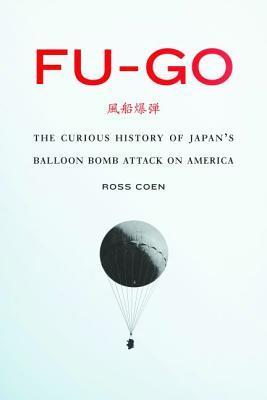
Fu-go: The Curious History of Japan's Balloon Bomb Attack on America
This story about a little-known failed military excursion by the Japanese will appeal to general history readers as well as military history buffs. —John Rodzvilla, Library Journal Near the end of World War II, in an attempt to attack the United States mainland, Japan launched its fu-go campaign, deploying thousands of high-altitude hydrogen balloons armed with incendiary and high-explosive bombs designed to follow the westerly winds of the upper atmosphere and drift to the west coast of North America. After reaching the mainland, these fu-go, the Japanese hoped, would terrorize American citizens and ignite devastating forest fires across the western states, ultimately causing the United States to divert wartime resources to deal with the domestic crisis. While the fu-go offensive proved to be a complete tactical failure, six Americans lost their lives when a discovered balloon exploded. Ross Coen provides a fascinating look into the obscure history of the fu-go campaign, from the Japanese schoolgirls who manufactured the balloons by hand to the generals in the U.S. War Department who developed defense procedures. The book delves into panic, propaganda, and media censorship in wartime. Fu-go is a compelling story of a little-known episode in our national history that unfolded virtually unseen.
280 pages, Hardcover
First published January 1, 2014
Ratings & Reviews
Friends & Following
Create a free account to discover what your friends think of this book!
Community Reviews
Displaying 1 - 17 of 17 reviews
May 15, 2021
This is a fascinating story on the Japanese program to develop balloons that would travel along the jet stream (which was not really undertsood at the time) to drop small - but powerful - bombs on the US.
There actually were deaths from one of these contraptions - the only WW2 civilian deaths within the continental US.
The story of how these were built in Japan, and how the US (and Canada) reacted to them, was hard to put down. It’s the perfect length for a book too - so I highly recommend.
There actually were deaths from one of these contraptions - the only WW2 civilian deaths within the continental US.
The story of how these were built in Japan, and how the US (and Canada) reacted to them, was hard to put down. It’s the perfect length for a book too - so I highly recommend.
February 28, 2015
Just dry, unfortunately.
January 3, 2021
A lot of this book is focused on the minutia of individual balloon sightings in the US and there is relatively little in the way of technical detail of the balloons themselves or the planning of the balloon campaign, which are the bits I was most interested in learning about. Those details are probably lost to history, unfortunately.
Solid three stars raised to four stars on the military history curve.
Solid three stars raised to four stars on the military history curve.

November 23, 2024
Having crewed a couple of years for my cousin's hot air balloon at the Albuquerque Balloon Fiesta in New Mexico, I found this book especially interesting. My only regret is that I did not know this bit of history while my dad and father-in-law—both World War II veterans—were still alive so I could ask them about their possible recollection of the balloons.

February 4, 2026
such a great book about a nearly-forgotten era of WWII. it’s so insane to see how may balloon events there were, how many fragments recovered, and learn about the Mitchell incident and still know that the balloon bomb attacks are about to slip into the cracks of history. the narrative was wittten brilliantly. brb gotta recommend this to everyone i know.
May 17, 2017
Very detailed, and interesting read. The author did he research into a little known attack on the USA during WWII.

April 14, 2020
Dry, but fascinating.

January 9, 2022
Did you know that during World War II, the western US was bombed repeatedly from the air by the Japanese? No? Then pick up the fascinating book about the widespread balloon bombardment in 1944-45.


February 19, 2016
An interesting story about a little-known attack on the US mainland by Japan towards the end of WWII. The author did a good job with the story although it did tend to bog down after a while with a repetitive list of sightings and recoveries.
I did however, really enjoy the in-depth discussion of the ATG (Alaska Territorial Guard) and its performance as a home guard force.
An interesting and unique bit of WWII history that I recommend.
I did however, really enjoy the in-depth discussion of the ATG (Alaska Territorial Guard) and its performance as a home guard force.
An interesting and unique bit of WWII history that I recommend.

December 31, 2014
Highly specific, esoteric subject. Aside from some wildly general claims about the Doolittle Raid and its relationship to the Battle of Midway, and a strange claim that Japan's wartime goals were somehow "Pan-Asian", there's a lot here to like. But you gotta really want it. Otherwise this subject is best left for a good magazine article.
August 26, 2015
Really great for about the first half, but then gets bogged down in fairly uneventful details of specific balloon sightings and military procedures. Still quite interesting to read about such a unique and relatively unknown aspect of WWII.

November 26, 2015
I'm a little torn on how to rate this. It's exhaustive and likely has everything you'll ever want or need to know on the subject. On the other hand, it was so exhaustive that it was hard to stay focused. There are some good parts. I don't really regret reading it.

April 23, 2015
A great book about a little known aspect of WWII. If you like history, specifically military history, you will like this book.

February 3, 2016
Really enjoyed learning about this little known piece of our history, especially so as I live in the Pacific Northwest.
April 7, 2017
I've been fascinated by this story since I heard that balloon bombs existed. This book was very factual, by which I mean it didn't have any gripping storyline that would cause me to recommend it to others, but if someone wants to learn more about fu-go, this is a concise review of the events of the campaign and includes maps created by the American military of balloon landing sites.
Spoilers but not really because these were actual historical events:
In summary, there were six civilians who died on American soil in WWII, and they were all the result of a single explosion, which was part of an enormous balloon bomb campaign carried out by the Japanese. The effort and skill that went into each balloon was astounding, and they were in fact the first Intercontinental Ballistic Missiles in history.
Balloons.
Balloons carrying bombs with strings over the entire Pacific Ocean.
The book gets into the science of it, which made me respect the skill it took, as well as being amused by the absurdity of the whole thing.
The book wraps up with a few pages of responses from the victims' families, as well as some Japanese women who were part of the balloon construction team, which was also interesting and touching. All in all, I liked it and I'm glad my library had it.
Spoilers but not really because these were actual historical events:
In summary, there were six civilians who died on American soil in WWII, and they were all the result of a single explosion, which was part of an enormous balloon bomb campaign carried out by the Japanese. The effort and skill that went into each balloon was astounding, and they were in fact the first Intercontinental Ballistic Missiles in history.
Balloons.
Balloons carrying bombs with strings over the entire Pacific Ocean.
The book gets into the science of it, which made me respect the skill it took, as well as being amused by the absurdity of the whole thing.
The book wraps up with a few pages of responses from the victims' families, as well as some Japanese women who were part of the balloon construction team, which was also interesting and touching. All in all, I liked it and I'm glad my library had it.
Displaying 1 - 17 of 17 reviews