Jump to ratings and reviews
Rate this book

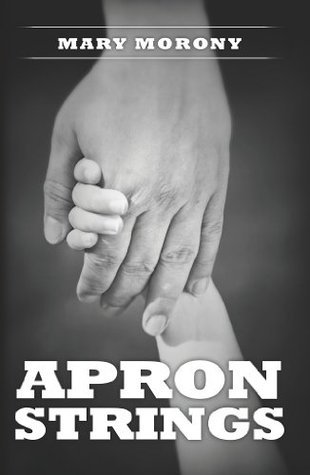
Apron Strings

Rate this book

When a grown-up tells you not to worry, you had better start—first rule of thumb, Sallee Mackey, age seven. She is already more than a little bit wary of the adults in her Jim Crow era, Southern world with good reason. Sallee’s mother Ginny is flat out dangerous; her father Joe is on his way out the door; and Mr. Dabney the bigoted neighbor seems to be just a little too interested with the goings on at Sallee’s house—like he knows something no one else does. The only adult to be trusted is Ethel, the family maid, who has known Sallee’s mother since Ethel and Ginny were both girls.


That complicated relationship started the day Ethel spied Ginny kissing the black stable boy years ago. While Ginny has conveniently forgotten that she even knew Ethel back then, Sallee has not as she constantly lobs questions at Ethel about her mother’s girlhood.


From Sallee’s oft times humorous and always guileless vantage, grownups have a most mixed up view of the world. What does skin color have to do with learning? Closing schools rather than have black and white children in the same classroom, what’s the sense of that?


Ethel gives her very own biased account of her shared history with Ginny while Sallee hones her vigilance and stealth, skills she and her brother and two sisters have acquired in an attempt to understand the drama that swirls around them. Rocks are thrown through windows, a car filled with angry white men shout racial slurs at the children at play and a tragic poisoning threatens the entire family’s sense of security.


When Joe Mackey asks Ethel to testify on his behalf in a custody suit, her conflicted loyalties throw the entire family into even more turmoil.

253 pages, Kindle Edition

First published March 5, 2014

76 people are currently reading
694 people want to read

About the author

Mary Morony

10 books84 followers
Mary Morony is a Southern Fiction Novelist and author of Apron Strings and Done Growed Up, the first two books in her Apron Strings Trilogy. She is also a contributing columnist for Albemarle Magazine and Keswick Life Magazine and she maintains a consistent and entertaining blog on her website http://marymorony.com

Mary delivers a tour de force of honest characters, lively humor, and heartbreaking tragedy. She writes her novels in a candid voice, refusing to sugarcoat anything. She brings Southern charm, irreverence and wit to bear against subjects as vast as racism and as personal as alcoholism, always with a heart and soul that makes her work undeniably appealing.

Her Apron Strings trilogy, a series of novels that moves from the South to New York City and back between the 1950s and the early 21st century, draws on the life she knew growing up in Charlottesville, Virginia, at a time when Virginia was still very much a part of the Jim Crow South.

One of six children, Mary was born into a family and a culture that would give her some of her best material. It was a time and place of segregated schools and water fountains, as well as restaurants and movie theaters that prohibited black customers. With five siblings in a household of dysfunctional adults Morony’s survival skills came to include a sharply honed sense of humor, which she herself has called her greatest talent and her biggest foible.

But amid the chaos, the woman who was the family servant also became Morony’s inspiration, teaching her love and acceptance with warmth, humor, and unending patience – and becoming the model, finally, for a central character in Apron Strings.

Morony has crammed more into one lifetime than most people would in five -- married four times by the age of 35, divorced three times and widowed once, she finds no shortage of material for her novels in the everyday lives around her. Keep your eyes open, she says, and you’ll find tragedy at a wedding and hilarity at a funeral.

Morony says she likes big projects, has a hard time reining herself in – “ask anybody who knows me” – and seldom does things in a conventional time frame. This may account for her not having finished her B.A. – in English, with a concentration in creative writing, from the University of Virginia – until she was in her forties, by then with four children: one in graduate school, one a sophomore in college, one in high school, and the youngest in nursery school.

“Funerals, you’d be surprised,” she says. “I see some of my favorite human interactions at a funeral – there’s an honesty there that you don’t find in other gatherings. My mantra is: If it doesn’t kill you, it will make a good story – and even if it does kill you, it will make a good story for someone! I can and have found things to laugh about in death, divorce, mental illness, and most of all, people’s pettiness – including my own.”
Telling stories, Morony says, became her lifeline for survival over a lifetime. With alcoholism and bipolar disorder in her family, with deaths and divorces, and children of her own to raise and educate, she says, “I have lived a life chock full of stories, and I do mean chock full.”

Her husband Ralph, of now almost 30 years, came into her life from Ireland – “I had to import him!” she jokes – between marriages. Like the four children he helped raise – three from her earlier marriages – and their menagerie of dogs, he is well acquainted with her relentless sense of humor – even if, she points out, she may be the only one laughing. A sense of humor, however, actually seems to be a shared family trait, since even after decades together, he still makes her laugh – “that is, when I don’t want to dismember him for some reason or another.”

Ratings & Reviews

What do you think?
Rate this book

Friends & Following

Create a free account to discover what your friends think of this book!

Community Reviews

5 stars
156 (19%)
4 stars
253 (32%)
3 stars
261 (33%)
2 stars
93 (11%)
1 star
25 (3%)
Displaying 1 - 30 of 92 reviews
Profile Image for Jackie.
1,040 reviews10 followers
June 25, 2014
I cannot recommend this book. There was no high..it was like going to church and listening to a looong sermon in mono tone.
Profile Image for Teena Stewart.
Author 7 books10 followers
June 5, 2014
Book Review: Apron Strings

Set in the south in the 1950’s the story is about a family of white children, their family dynamics, and the black maid who cares for them.
Author Mary Morony perfectly captures the attitude and social injustices towards blacks, and the dialects and culture as well. Sallee, the middle daughter, narrates her family’s part of the story and the remaining back story is told through the eyes of their black maid, Ethel.

I think the author intended to stir in us sympathy for the children whose lives are wedged between an alcoholic mother, who is more into tennis and social teas and inept and aloof when it comes to caring for her offspring, and a loving, entrepreneur of father who can no longer tolerate his wife’s short comings. The children end up, for the most part in the care of Ethel who is also an alcoholic.

The mother’s meanness never felt fully realized enough for me to really summon up any true feelings for Sallee or her siblings. I also felt that bouncing back and forth between Ethel’s narration and Sallee’s helped distance me from caring and that Ethel’s narrative wasn’t all that crucial to the story. I think it would have been stronger without. Of course, not everyone will agree we me. You may think it’s a 5 star book. I give it 3 out of 5 stars.
Profile Image for Melissa.
15 reviews
June 30, 2014
I have not read such a long drawn out book in a long time. I kept turning pages hoping all the while it was going to get better, it did not happen. There was no climatic ending, no finishing any of the characters stories, this book left me feeling annoyed at how the story line kept going without any real ending, I was seriously bored. I would not recommend to anyone.
Profile Image for Diane Wachter.
2,392 reviews10 followers
May 23, 2022
EBK-M, Kindle, @ 2011, Read 5/19/22. Fiction, Jim Crow South, Racism, Family Dysfunction. A 7 year old girl and her 3 siblings feel their way through the drama of a dysfunctional family, an alcoholic mother, a dad at his wit's end, nosy neighbors, racism and bigotry. They are learning they can't rely on many adults in their lives, only Ethel, their black maid, who has severe problems of her own. 3☆'s = Good.
250 reviews
February 29, 2020
A well written story of the racial prejudice in the '50's.


A well written story of racial prejudice in the 50's. Also delves into the issues of a self-centered parent and the effect it has on the children,alcoholism and divorce.


Profile Image for Judie.
792 reviews23 followers
July 22, 2014
In 1958 the Mackey family was comprised of Joe and Virginia Stuart Mackey and their children, daughters Stuart, Salley, and Helen, and son, Gordon. Ethel, the who was the family housekeeper, cook, and babysitter, was also part of the family having worked with Virginia’s family before her marriage.
Self-centered Ginny was a socialite who spent her time shopping, entertaining, and going to tea parties. Being a mother was not high on her list of priorities though she did expect her children to exhibit good manners and had very high standards for them. Joe had been a lawyer who decided to develop a shopping mall in their town, much to the consternation of many of their neighbors.
APRON STRINGS, told primarily from nine-year-old Sallee is a snapshot of events in Virginia during two years near the end of the decade. Family history, primarily about Ginny’s background and Ethel’s story, told mostly in narrative form by Ethel, are interwoven throughout the book. It covers love, racism, divorce and alcoholism.
Incidents are presented in an “as-it-happened” order, often lacking the insight one would expect from an adult. Usually, they are talked about, then dropped, as would be typical for a child’s rendition. For example, we hear about the behavior of the man living next door and while we can see the danger, Sallee is aware something is wrong but doesn’t know what or why she feels uncomfortable around him.
The story takes place while the south was segregated. The community closed its public schools when it was ordered to integrate them. While the Mackey family has an excellent relationship with Ethel and other Negroes who work for them, Sallee becomes aware of the extreme racism when she says that the cupcakes she brings to the school bake sale were made by Ethel and the way the other children react when their Negro yardman is told to drive the car pool because Ginny is unable to do so.
Based on Morony’s personal experiences, APRON STRINGS is honestly written with warmth and humor. Describing one of Ginny’s friends, Sallee noted, “She didn’t just spill out of everything she wore; she spilled on everything she wore, too.” When Gordy realized that “sausage is hog? I thought it was pork. It don’t want to eat a hog.”
Ethel commented about one of the men she knew, who could pass for white, that he was called “Black Sam.” She didn’t understand why “But the old folks had some ways that no amount of thinking could make sense of, so most times I didn’ even try. But it did cause a body to wonder.”
Morony paints some wonderful word pictures: “Daddy leapt from the rock where he and I were sitting and latched onto Gordy like a hawk on a mouse.” “[The sky] was deeper and bluer than any Crayola sky, no matter how hard you pressed the crayon to the paper.” “My mother blew around the house like a plastic bag in a parking lot.”
Frustrated with the talk about desegregation in Washington, Joe told Ginny “They are just monkeying around up there is Washington, using this whole race thing to keep people from focusing on the lack of jobs and the stalled economy.” When Ginny responded that she doesn’t talk to Ethel about current events, Joe said, “Current events? For Christ’s sake, it’s her life!”
And one excellent piece of advice: “When a grown-up told you not to worry, you had better start.”
It was sometimes hard to keep track of all the characters and often I wanted more information about incidents, but that wasn’t important to Sallee so I had to remember that it was her story, not mine.
This book was a free Amazon download.
Profile Image for A. Fae.
Author 5 books61 followers
January 13, 2015
Apron Strings
By Mary Morony


Apron Strings is a brilliantly written book by Mary Morony that is a must-read for everyone. This beautiful piece follows the lives of two people whose lives intertwine in rural Virginia in the 1950's. We meet Ethel, an African-American woman in the 1930's who makes a living doing domestic work and young, Caucasian Sallee in the 1950's. And although their stories are told from separateviewpoints, their lives intersect at some very significant points.

We meet Ethel as a teenager working as a domestic for Sallee's grandparents. Although she takes different jobs throughout the years we share with her, she is brought back full-circle to work again as a domestic for the same family when Sallee's parents, Ginny (the granddaughter of her initial employer) and Joe Mackey, get married and begin a family. What eventually becomes a family of four young ones, Ethel is everything to the Mackey children. She feeds them, clothes them, mothers them, loves them, and through all that seems to put her own life and happiness on hold.

As aforementioned, there is a 30 year gap between the telling of the two stories, yet we also see where they run parallel to one another – which I felt were the most significant moments. The tale of these two individuals keep me glued to the pages, unsure where I was going to go aside from possibly dealing with the friction (to put it mildly) that most African-Americans dealt with during such times. But the story was so much more than that because it put aside the obvious things that make us different and addressed the part of each of our lives that make us human – love, hate, family, loneliness, and loss and hardship to name a few.

Although the character of Sallee was definitely well-developed, I felt that Ethel was an extraordinary character to watch throughout the book. Apron Strings shows us how one woman gave up much of her own life for the lives of another woman's children. The sacrifices she made and the toll they took on her is not lost on the reader for even a moment. I think Ethel's mother, Bertha, summed up her daughter's plight quite well when she told Ethel, “A child's love is good for the soul, honey, and you's got a soul thas' a hurtin' an' needs that love.”

Apron Strings is brilliantly written and deserves more praise than I'm capable of through this keyboard. Ms. Morony's work is why I do what I do. To find a book so worthy of being in the spotlight is rare. I hope she will continue to write. I would definitely read another of her works without even a second thought about it.

A.Fae
Profile Image for J.b. Maynard.
Author 7 books2 followers
January 13, 2015
Apron Strings is a brilliantly written book by Mary Morony that is a must-read for everyone. This beautiful piece follows the lives of two people whose lives intertwine in rural Virginia in the 1950's. We meet Ethel, an African-American woman in the 1930's who makes a living doing domestic work and young, Caucasian Sallee in the 1950's. And although their stories are told from separate view points, their lives intersect at some very significant points.

We meet Ethel as a teenager working as a domestic for Sallee's grandparents. Although she takes different jobs throughout the years we share with her, she is brought back full-circle to work again as a domestic for the same family when Sallee's parents, Ginny (the granddaughter of her initial employer) and Joe Mackey, get married and begin a family. What eventually becomes a family of four young ones, Ethel is everything to the Mackey children. She feeds them, clothes them, mothers them, loves them, and through all that seems to put her own life and happiness on hold.

As aforementioned, there is a 30 year gap between the telling of the two stories, yet we also see where they run parallel to one another – which I felt were the most significant moments. The tale of these two individuals keep me glued to the pages, unsure where I was going to go aside from possibly dealing with the friction (to put it mildly) that most African-Americans dealt with during such times. But the story was so much more than that because it put aside the obvious things that make us different and addressed the part of each of our lives that make us human – love, hate, family, loneliness, and loss and hardship to name a few.

Although the character of Sallee was definitely well-developed, I felt that Ethel was an extraordinary character to watch throughout the book. Apron Strings shows us how one woman gave up much of her own life for the lives of another woman's children. The sacrifices she made and the toll they took on her is not lost on the reader for even a moment. I think Ethel's mother, Bertha, summed up her daughter's plight quite well when she told Ethel, “A child's love is good for the soul, honey, and you's got a soul thas' a hurtin' an' needs that love.”

Apron Strings is brilliantly written and deserves more praise than I'm capable of through this keyboard. Ms. Morony's work is why I do what I do. To find a book so worthy of being in the spotlight is rare. I hope she will continue to write. I would definitely read another of her works without even a second thought about it.
Profile Image for Jenna Owens.
191 reviews17 followers
July 16, 2014
I had the wonderful opportunity to meet Mary Morony in person at a small bookshop in my town where she was selling her book. I got to speak to her for about ten minutes before I purchased her book which she signed for me.

I will admit that I was a bit reluctant to read this book because the 1950's aren't exactly my favorite time period to read about (I'm much more into fantasy or dystopian novels). One thing I will say is that right away I was impressed with the author's writing, though it was a little hard for me to get into the story at first. But by page 100 or so the story started to pick up. So many things were happening that I couldn't wait to find out what happened. Yet, when I reached the end of the book, it almost felt to me like nothing was resolved. Though Ethel seemed to be better, her sobriety only felt temporary to me, and I only felt more sorry for the kids that things may not get any better for them.

I think that the cover of the book and the short blurb on the front gave me a false expectation of the story. I started reading the book thinking that I would be reading about the relationship between Ethel and Sallee. While their relationship was a part of the story, I don't think it was necessarily the main plot, and instead of watching their relationship get stronger throughout the novel, their relationship only got weaker, to the point where I started to dislike Ethel as a character. Though I really liked her character in the beginning of the story, by the end of the novel she had become more of an annoyance to me. The next-door neighbors were constantly giving dirty looks and yelling slurs about Ethel, but that storyline never really took off. Everything I read about the book beforehand made it sound like the biggest issue was racism, yet in the end I almost felt like the story could have done without Ethel. To me, the biggest issue was alcoholism and divorce, and how those things affect children.

Overall, I'd say that while I really enjoyed the author's writing, there were a lot of things in the story left unanswered that made the story feel too empty for me. However I hope to see more from this author soon.
Profile Image for Stacie.
Author 6 books100 followers
June 24, 2014
Apron Strings is a fascinating novel that is centered around the complicated life of a southern family and their maid, whom they've all come to depend on.

Sallee Mackey is an inquisitive young girl that builds a special bond with her maid and caretaker, Ethel. Ethel spends time answering all of Sallee's questions, whereas her mother is often cold and hostile towards her. Of course, when Sallee can't get answers she takes to eavesdropping.

The Mackey family loves Ethel as though she is one of the family, but many people in their neighborhood, including their next door neighbor, only see the color of Ethel's skin and judge her harshly. The children don't understand why the color of skin makes any difference and often stand up to others to defend Ethel.

Ginny Mackey is very self absorbed and her children fear her. Inevitable her marriage falls apart and she seeks custody if only to hurt their father. Sallee and her siblings are torn. They want to escape their unstable mother, but are afraid to be without Ethel. What is to become of the children and Ethel?

Apron Strings is a well thought out and effectively organized story. I was immediately drawn in and felt the same bond with Ethel as the children did. Through dialogue and setting, Mary Morony creates a beautiful and compelling story that captures your attention from beginning to end.

I highly recommend picking up a copy of Apron Strings.
Profile Image for Nancy.
1,310 reviews
June 23, 2014
"Rocks are thrown through windows, a car filled with angry white men shout racial slurs at the children at play and a tragic poisoning threatens the entire family’s sense of security." (from book description on Amazon) With scenes like this scattered throughout the book, one would think there would be a lot more about the racial tension of 1950s Virginia. The author brought up desegregation, but basically the biggest issue for the White children was having to be driven by the Black handyman to the schools set up in homes and churches to avoid going to public school with Black children. The car filled with angry White men is mentioned here and there, but nothing happens. Sexual abuse is alluded to but that story also goes nowhere. My main take-away is that all the adults dealt with their issues by drinking. Not quite a waste of time reading it, but not high on my list of books.
Profile Image for Maria.
446 reviews15 followers
January 9, 2020
I got this book for free on the Kindle. This just goes to show that if you are very selective and patient, once in a while you can find a gem amongst the mostly-forgettable free books on Kindle. I really liked this book, even though it took me forever to finish it, due to technical difficulties. Most of the story is told from the point of view of Salee, who is 7 years old at the beginning of the book. I'm not sure that 7-year-olds ponder things as much as she does. I'm sure some of them do. And I'm sure that some of them are nosy enough to eavesdrop on adults (I used to do it all the time!). It was open-ended at the finish, but isn't that how life really is? Nothing is ever wrapped up with a neat bow, and families of alcoholics suffer for a long time. It was slow-paced and well told. I really enjoyed it.
130 reviews
April 18, 2014
I love books that deal with help/slaves/etc in a positive light, like Gone with the Wind and The Help. I believe a friend's mother wrote this book, and the implication is that she drew some from her own upbringing to write this book. Having family that lives in Charlottesville, I am curious very much about the history of the shopping center and wish there was an afterward about what the conclusion of that was. I have to admit i was confused the first time the book changed perspectives even though many books do that, but I think it was because this book both jumped in timeline and perspectives at the same time.
Profile Image for Anne.
200 reviews1 follower
June 26, 2014
Blurb When a grown-up tells you not to worry, you had better start—first rule of thumb, Sallee Mackey, age seven. She is already more than a little bit wary of the adults in her Jim Crow era, Southern world with good reason. Sallee’s mother Ginny is flat out dangerous; her father seems to be withdrawing from the family and their maid, Ethel, is taking one too many sips from the broken cup she keeps hidden. But Ethel is their rock and protector and as Sallee's parents' marriage breaks up, who will love and take care of the children?

I enjoyed this book, but it left me with many questions and conflicted feelings. I debated quite a lot to decide what rating to give it.
Author 3 books5 followers
July 22, 2014
History coming to life

History coming to life

This is a very readable and accurate picture of how things were in Charlottesville Virginia in the late 50s and early 60s. I was not here then, but those I know who were, tell me that this is how it was. The racism described here is not exaggerated. I am sure that there were a lot of families who broke under the strain of coming to terms with new laws and new ways of thinking. The characters are vivid and most are likable. I recommend this book for anyone interested in life in the south during this changing time.
196 reviews
June 26, 2014
I actually started reading "Apron Strings" June 19, but couldn't update due to poor internet connection. This started out being such a good book, I thoroughly enjoyed it, but it had a weak ending. Again, this is a book told in the tense of a 9 year old child growing up in Charlotte, NC in the 1950's. The story would take s back into the '20's to establish the lives of the characters, but then when the book ended in current times, it only identified one character. What happened to the other significant characters. It had the potential for a much stronger book. I finished it June 24th.
1,194 reviews16 followers
September 26, 2014
A socialite marries and brings her black maid with her as she starts her own family. Set in the 50's

The Mother in my opinion does not spend a lot of time nurturing her children that is left to the maid.
She doesn't really want the children until divorce time and she will fight the father tooth & nail.
I really don't know how those children would have survived without their maid.

The maid is drunk just like their mother but the children worry more about the maid and how she must stop her drinking.
Profile Image for Victoria Murata.
Author 4 books16 followers
June 1, 2019
Some of the writing in this novel is amazing. Morony really knows how to turn a phrase; I enjoyed her imagery. For this reason alone, I'm giving my review 3 stars instead of fewer.
At first I was a little put off by the Black Southern dialect. It seemed contrived and inconsistent to me, but I got used to it.
Unfortunately, what stands out is the poor editing/proofreading, and the lack of plot and focus. The novel reads more like a two year slice of life from one family in the South in the 50's. The narration is mostly told by Sallee the middle daughter, and sometimes narrated by Ethel, the Black 'help'.
As far as the main character--or lack of one, it feels like Morony decided at the end that Ethel, the Black 'help' should be the main character and so the epilogue is about her. The epilogue itself came so quickly my head is still spinning. I thought maybe my book had somehow lost a few chapters at the end.
There were plot points that were left undeveloped, liked Ginny's pedophile brother. What did he have to do with the plot? Others were developed and then went nowhere like the building of the shopping center. That seemed to be a huge point of contention between Ginny and Joe, but it fizzled. After the divorce, Joe was mostly left out of the story.
At the end I was left feeling like I had been duped. Not a great way to leave a novel.
Profile Image for Nancy Mills.
220 reviews
September 9, 2022
This book was likened to “The Help” and “To Kill a Mockingbird” and it didn’t even come close to measuring up. While the book did explore what life in the south was like in the late 1950’s, the storyline falters. There are so many characters that you think may be part of a suspenseful finale, but you never find out how they are connected. Instead you get the story of two females who both have a drinking problem and the children that are in their charge. Such dysfunction!

This story could have had promise, but it didn’t meet the mark for me.

I read the Kindle edition of this book and Mary Morony should be upset with her publisher. So many grammatical errors and redundant verbiage. Does anyone read what has actually been typed?
Profile Image for Becky Cox.
227 reviews6 followers
January 20, 2021
Mary Morony truly understands the immeasurable and sacrificial contribution of the beloved maids, "the help" in the 1950's. During a time of cultural change and racial unrest, many blacks and whites learned that they needed each other; they learned to depend on each other, and they took care of each other. White families like the Mackeys treated black maids like Ethel as part of the family, and to many children their maids were surrogate mothers meting out wisdom, love, and acceptance. The Mackey family supported Ethel financially, and she supported them in all the ways that money can't buy. So it was with Sallee and Ethel. Outstanding! Truly outstanding!
Profile Image for Emily.
448 reviews5 followers
October 25, 2025
Sissy Spacek was flat out wrong when she said, “If you like To Kill a Mockingbird and The Help, you’ll love Apron Strings.” Yes, it tells the story of a family’s relationship with their black maid, and yes, it explores race relations, but it lacks depth and likable characters. The other two books actively engage the reader i. The issues. Apron Strings is more passive, just telling a story without insight. The reader ends up rooting against the injustices and bad decisions, but there’s nothing and no one to really root for. On a side note, if you’re going to have characters saying y’all, make sure you punctuate it properly.
Profile Image for J. A.  Lewis.
449 reviews5 followers
March 19, 2021
So enjoyed this story about four children, Stuart (girl), Gordon, Sallee and Helen, growing up in the 50's with an African American maid, a mean tempered and alcoholic mother (Ginny) and a loving dad (joe) who is involved with building a shopping center and ready to leave his wife. Ethel, their maid, provides the food, love and stability that the children need. Written between Sallee's viewpoint and Ethel's, each add a bit of story and history to the characters between pasts and present. Ethel's wisdom gives each of them something to treasure and hold onto.
1,221 reviews5 followers
May 30, 2020
Such an interesting story of family life in Virginia in alternating time periods of the late 1920s and the late 1950s. The story is told In turns by a 7 year old white girl and the Negro woman who works for the family. In some ways the little girl reminded me of Scout in “To Kill a Mockingbird” with her questions and her observations of life in the time of segregation in the south. Warning: there’s no happy ending but this book is part of a series which I didn’t realize as I was reading it.
Profile Image for Amanda.
354 reviews5 followers
March 25, 2018
This book was compared with 'The Help', but does not have the same social conscience nor drama of
the other. It captures the carelessness of the southern US treatment of their coloured servants, but I couldn't relate to any of the characters, especially not the feckless mother, and remains a domestic drama.
Profile Image for Brook McCann.
23 reviews
September 15, 2018
I can’t believe I finished this book! (It took me forever) I kept reading and reading, thinking that SOMETHING would happen.....but it never did. It never got interesting. It was so long and drawn out and doesn’t really have a plot. I rarely give only one star, but this story went absolutely nowhere.
2 reviews
May 13, 2020
A thoroughly delightful book

This book is so well written. You feel almost like you are sitting nearby watching and listening to the characters. Many laughs and some sad parts but not to make you cry. Just a heavy heart for the character. I can’t wait to read the next two off the trilogy.
8 reviews
October 24, 2017
Captivating characters, it's not sugarcoated but a really perfect characterisation of the Jim Crow Era South. Takes you through the whole gamut of emotions. The maid Ethel and Sallee are beautifully drawn characters!! Superb!!!!
Profile Image for Michelle.
1,575 reviews1 follower
June 17, 2018
Good book

You people should just read this book yourselves and write your own review on this novel yourself and I really enjoyed reading this book very much so. Shelley MA
Displaying 1 - 30 of 92 reviews

Can't find what you're looking for?

Get help and learn more about the design.