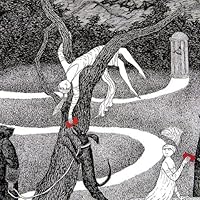
A tragedy of seemingly paranormal origin, hundreds died in the city of Strasbourg in 1518, from an unlikely culprit: dancing. What caused them to dance till they literally dropped has been clouded by the centuries passed and the sensational nature of the event. John Waller attempts to argue that this phenomenon was not due to anything paranormal. Instead, he posits that this was an event of mass hysteria, a break of psychological nature largely produced by the terrible tragedies of the time and the cultural beliefs steeped in religion and the occult.
John Waller does a fantastic job of exploring the context leading up to and after the events of 1518. He provides a critical recollection of the abuses lead by landlords and the Church alike, taking advantage of vulnerable lay folk whose lives were filled with sickness, tragedy, and poverty. He draws comparisons to similar events of uncontrollable dancing throughout history, and demonstrates the cultural basis necessary for severe psychological damage to manifest in such a specific way. He even describes how the Protestant Reformation likely led to such events dwindling in prevalence.
Overall the argument made for why this tragedy happened is convincing to me and speaks to the seemingly otherworldly ways that psychological damage can manifest in people. He draws comparisons to modern examples such as conversion disorder and somatiform disorders, arguing that presentations of these diseases have changed with changing cultural and religious beliefs/norms. One possibility that I wish he mentioned was that the decrease in drastic presentations of conversion disorder might also be due to some historical accounts misdiagnosing true neurological disorders as psychological in nature. But overall he did a fantastic job, and for a historical book it was incredibly engaging and well written.
This entire review has been hidden because of spoilers.
The Dancing Plague intrigued me when I saw it. What a curious disorder--people unable to stop dancing to the point of illness or death. John Waller documents cases of this "plague" in 1513 in Strasbourg (the Alsace region of France). A couple of earlier episodes are discussed as well, but this is the main one. Waller's repetitious descriptions don't add understanding. He reviews various theories tied to religious practices, or women wanting to escape their husbands (it mostly occurred with women), and a mold related to grain storage. To me the most plausible explanation involved viewing it as a response to the stress of the time. There were economic difficulties, illness, and battles. Although this is a short and easy-to-read book, it took me a while to finish it because it was monotonous by the end.
Well-written enough, but extremely repetitive and, despite its seemingly fascinating topic, somewhat dull. For instance, there's a long section about how some people on one side of the Rhine associated manic dancing with St. John the Baptist, but on the other side of the Rhine people associated manic dancing with St. Vitus. This section, and others like it, are about as interesting as they sound.
I think this history, short as it is, would have been much more effective as an article or a chapter; I don't think this topic is worthy of its own book.