

What do you think?

Albert Einstein’s “Why Socialism?": The Enduring Relevance of His Classic Essay
A contemporary look at Albert Einstein's classic call for socialism
First published more than seventy-five years ago in the inaugural issue of Monthly An Independent Socialist Magazine, Albert Einstein’s “Why Socialism?” is an unheralded classic. Written during the McCarthyite witch-hunt in the United States, it constituted an act of defiance, making a case for socialism unrivaled in its time or ours. Yet, its very existence has been an embarrassment to an establishment which has continually sought to downplay the significance of his iconoclastic essay, together with Einstein’s socialism itself.
This slim, elegant volume includes Einstein’s essay along with a detailed commentary on his essay by Monthly Review editor, John Bellamy Foster. Foster’s introduction tells the story of Einstein’s life-long commitment to socialism and the events leading to the publication of “Why Socialism?” and contextualizes the importance of his essay as we enter a time of planetary crisis and new threats of world war. Over the three-quarters of century since its publication, “Why Socialism?” is one of those rare statements whose power has only grown, reaching untold numbers of readers over the years. It is of crucial importance that―for the sake of the future of humanity―Einstein’s message continues to proliferate.
First published more than seventy-five years ago in the inaugural issue of Monthly An Independent Socialist Magazine, Albert Einstein’s “Why Socialism?” is an unheralded classic. Written during the McCarthyite witch-hunt in the United States, it constituted an act of defiance, making a case for socialism unrivaled in its time or ours. Yet, its very existence has been an embarrassment to an establishment which has continually sought to downplay the significance of his iconoclastic essay, together with Einstein’s socialism itself.
This slim, elegant volume includes Einstein’s essay along with a detailed commentary on his essay by Monthly Review editor, John Bellamy Foster. Foster’s introduction tells the story of Einstein’s life-long commitment to socialism and the events leading to the publication of “Why Socialism?” and contextualizes the importance of his essay as we enter a time of planetary crisis and new threats of world war. Over the three-quarters of century since its publication, “Why Socialism?” is one of those rare statements whose power has only grown, reaching untold numbers of readers over the years. It is of crucial importance that―for the sake of the future of humanity―Einstein’s message continues to proliferate.
104 pages, Hardcover
Published May 5, 2025
About the author
Albert Einstein
1,017 books9,757 followersSpecial and general theories of relativity of German-born American theoretical physicist Albert Einstein revolutionized modern thought on the nature of space and time and formed a base for the exploitation of atomic energy; he won a Nobel Prize of 1921 for his explanation of the photoelectric effect.
His paper of 1905 formed the basis of electronics. His first paper, also published in 1905, changed the world.
He completed his Philosophiae Doctor at the University of Zurich before 1909.
Einstein, a pacifist during World War I, stayed a firm proponent of social justice and responsibility.
Einstein thought that Newtonion mechanics no longer enough reconciled the laws of classical mechanics with those of the electromagnetic field. This thought led to the development. He recognized, however, that he ably also extended the principle to gravitational fields and with his subsequent theory of gravitation in 1916 published a paper. He continued to deal with problems of statistical mechanics and quantum theory, which led to his explanations of particle theory and the motion of molecules. He also investigated the thermal properties of light, which laid the foundation of the photon.
Best known for his mass–energy equivalence formula E = mc2, dubbed "the world's most famous equation," he received "for his services to theoretical physics, and especially for his discovery of the law of the photoelectric effect". The latter was pivotal in establishing quantum theory.
He visited the United States when Adolf Hitler came to power in 1933 and went not back to Germany. On the eve of World War II, he endorsed a letter, alerting Franklin Delano Roosevelt, president, to the potential development of "extremely powerful bombs of a new type" and recommending that the United States begin similar research. This recommendation eventually led to the Manhattan project. Einstein supported defending the Allied forces but largely denounced the idea of using the newly discovered nuclear fission as a weapon. Later, with Bertrand Russell–Einstein manifesto highlighted the danger of nuclear weapons.
After the rise of the Nazi party, Einstein made Princeton his permanent home as a citizen of United States in 1940. He chaired the emergency committee of atomic scientists, which organized to alert the public to the dangers of warfare.
At a symposium, he advised:
("Science, Philosophy and Religion, A Symposium," published by the Conference on Science, Philosophy and Religion in their Relation to the Democratic Way of Life, Inc., New York, 1941).
In a letter to philosopher Eric Gutkind, dated 3 January 1954, Einstein stated:
(The Guardian, "Childish superstition: Einstein's letter makes view of religion relatively clear," by James Randerson, May 13, 2008)
Great intellectual achievements and originality made the word "Einstein" synonymous with genius.
The institute for advanced study in Princeton, New Jersey, affiliated Einstein until his death in 1955.
More: http://en.wikipedia.org/wiki/Albert_E...
http://www.nobelprize.org/nobe
His paper of 1905 formed the basis of electronics. His first paper, also published in 1905, changed the world.
He completed his Philosophiae Doctor at the University of Zurich before 1909.
Einstein, a pacifist during World War I, stayed a firm proponent of social justice and responsibility.
Einstein thought that Newtonion mechanics no longer enough reconciled the laws of classical mechanics with those of the electromagnetic field. This thought led to the development. He recognized, however, that he ably also extended the principle to gravitational fields and with his subsequent theory of gravitation in 1916 published a paper. He continued to deal with problems of statistical mechanics and quantum theory, which led to his explanations of particle theory and the motion of molecules. He also investigated the thermal properties of light, which laid the foundation of the photon.
Best known for his mass–energy equivalence formula E = mc2, dubbed "the world's most famous equation," he received "for his services to theoretical physics, and especially for his discovery of the law of the photoelectric effect". The latter was pivotal in establishing quantum theory.
He visited the United States when Adolf Hitler came to power in 1933 and went not back to Germany. On the eve of World War II, he endorsed a letter, alerting Franklin Delano Roosevelt, president, to the potential development of "extremely powerful bombs of a new type" and recommending that the United States begin similar research. This recommendation eventually led to the Manhattan project. Einstein supported defending the Allied forces but largely denounced the idea of using the newly discovered nuclear fission as a weapon. Later, with Bertrand Russell–Einstein manifesto highlighted the danger of nuclear weapons.
After the rise of the Nazi party, Einstein made Princeton his permanent home as a citizen of United States in 1940. He chaired the emergency committee of atomic scientists, which organized to alert the public to the dangers of warfare.
At a symposium, he advised:
"In their struggle for the ethical good, teachers of religion must have the stature to give up the doctrine of a personal God, that is, give up that source of fear and hope which in the past placed such vast power in the hands of priests. In their labors they will have to avail themselves of those forces which are capable of cultivating the Good, the True, and the Beautiful in humanity itself. This is, to be sure a more difficult but an incomparably more worthy task... "
("Science, Philosophy and Religion, A Symposium," published by the Conference on Science, Philosophy and Religion in their Relation to the Democratic Way of Life, Inc., New York, 1941).
In a letter to philosopher Eric Gutkind, dated 3 January 1954, Einstein stated:
"The word god is for me nothing more than the expression and product of human weaknesses, the Bible a collection of honorable, but still primitive legends which are nevertheless pretty childish. No interpretation no matter how subtle can (for me) change this."
(The Guardian, "Childish superstition: Einstein's letter makes view of religion relatively clear," by James Randerson, May 13, 2008)
Great intellectual achievements and originality made the word "Einstein" synonymous with genius.
The institute for advanced study in Princeton, New Jersey, affiliated Einstein until his death in 1955.
More: http://en.wikipedia.org/wiki/Albert_E...
http://www.nobelprize.org/nobe
Ratings & Reviews
Friends & Following
Create a free account to discover what your friends think of this book!
Community Reviews
Displaying 1 - 11 of 11 reviews

August 29, 2026
Bro the essay is 4 pages how did the author pad this out for 70 pages. The essay itself is just regurgitated Marxist rhetoric. Nobody would remember it if anyone else had written it.

February 28, 2026
TLDR:
• Apolitical science is a myth: scientists are human, and humans are never entirely objective.
• Einstein is not a "harmless quirky genius": he was a radical the state actually feared enough to put under heavy surveillance.
• Passes the anti-capitalist check, fails the anarchist one: Spot-on critique of profit and bourgeois democracy, but his solution (centralized state planning)? Yikes..
• The Zionism question is messy: Fiercely anti-nationalist, rejected the presidency of Israel, and called early Zionist militants fascists. Still, his "cultural Zionism" looks incredibly naive in hindsight.
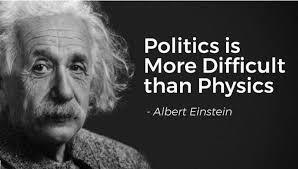
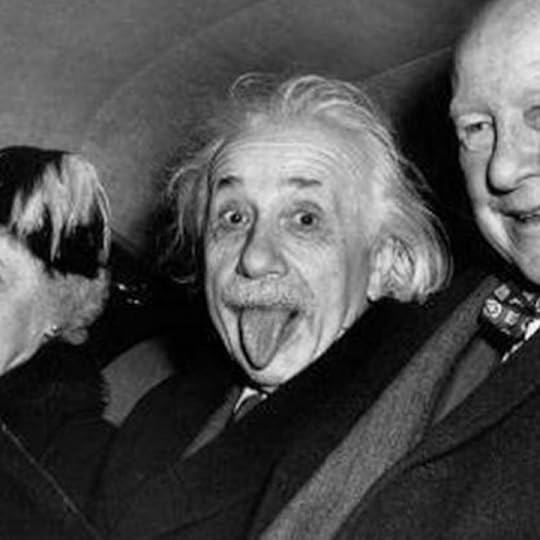
Watching Dr. Fatima's Video "Einstein Was A Socialist; Should We Care?" brought his essay "Why Socialism?" to my attention. The intersection between science and politics is frequently ignored as we are told that political biases must be removed and avoided completely from science. To evaluate this work properly, one must strip away the mythological aura that surrounds Einstein and his "genius". John Bellamy Foster's contextualization of the essay helped provide some of the historical and political background to understand why Einstein wrote this work and what his general political legacy was. It is important to note that at the time of publication, the "Red Scare" was in full effect with anti-communist hysteria rising with figures such as McCarthy contributing to the witch hunt fever. Foster discusses the heavy surveillance that was put on Einstein by the FBI, reminding us that Einstein was radical enough to be feared by the state apparatus. Foster discusses how Einstein explicitly supported Henry Wallace’s Progressive Party and stood in solidarity with figures like Paul Robeson and W.E.B. Du Bois against the intertwined forces of white supremacy and capitalism. So why and how did Einstein get reduced to a harmless cultural icon, a mad genius with crazy hair and his tongue out. Society of the spectacle strikes again!!
Epistemology of Politics and Science
As I have been binging Dr Fatima's work for a week or so I wrestled with a question that she constantly poses and discusses in her videos: can science truly be objective if scientists are inherently subjective biased beings? No matter how rigorous or scientifically pure a paper is, the scientist behind it chose to research this topic, shaped their arguments and finalized their interpretations with biases. This might seem true only to social sciences, psychology, etc. but it can even apply to the so called "hard sciences". The topics that are chosen for study are usually directed and funded by private firms and governmental institutions that have economic and political interests in mind. For example, topics that seem highly theoretical at first glance such as aerodynamics or atomic theory were targeted by physicists or chemists during WWII and the Cold War, for geopolitical reasons and to advance military technology. The cultural and contextual background of a scientist can shape their conceptual imagination when forming a hypothesis. Certain views and stances can make a scientist lean towards reductionism and determinism while another scientist might lean towards systems thinking and chaos theory. Furthermore, while the raw data (like a wave function in quantum mechanics) is objective, what it means often involves philosophical leanings. The Copenhagen interpretation vs. Many-Worlds theory is a classic example where a physicist's personal worldviews can decide which "reality" they prefer to advocate for, as the math kind of supports both. In the presentation of the conclusion and in the literature review, scientists may use persuasive language to frame their findings in a way that aligns with current social trends or institutional mandates. For example, a physicist might frame a discovery in "green energy" terms to appeal to modern political climate goals, even if the primary discovery is purely abstract. All of this and I haven't even began to discuss racial and gender institutional biases within academia, gatekeeping, citation cartels, positive results bias, language bias, p-hacking, etc. Thus, before we go around attacking Einstein and asking "Who is he to discuss politics?" let us instead celebrate his sharing of his political views. For all scientists are biased and subjective, but not all of them write political essays and articles that comprehensively detail their political views (hmmm maybe we should require them to do so..).
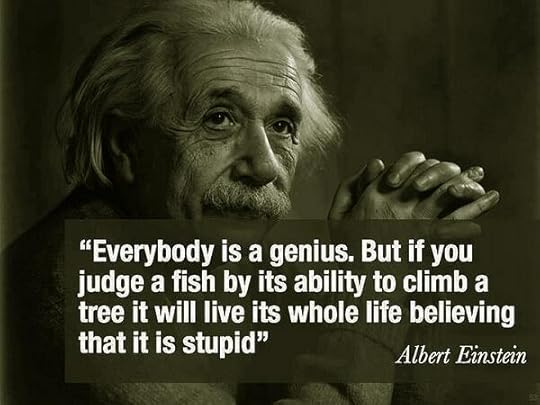
Einstein's Materialist Analysis
Einstein’s core argument in "Why Socialism?" centers on the internal contradictions and dysfunctions of the capitalist mode of production. He diagnoses the "economic anarchy of capitalist society" as the absolute root of contemporary evil (sadly using anarchy to mean chaos there, *tsk**tsk*). Setting semantics aside, he critiques the capitalist tendency to promote the relentless pursuit of profit rather than use-value. I felt that his materialist analysis is sharp enough (although nothing really special or unique in that regard). Anyway, he continues his analysis by pointing out that profit accumulation leads to an "oligarchy of private capital," the enormous power of which cannot be checked even by a democratically organized political society. So Einstein does point out the illusion of bourgeois democracy. Also, he notes that the members of legislative bodies are selected by political parties, which are largely financed or otherwise influenced by private capitalists (oh man he would've hated modern lobbying groups). Consequently, the representatives of the people do not adequately protect the interests of the underprivileged. Furthermore, he discusses how capitalists inevitably control, directly or indirectly, the main sources of information (press, radio, education). It is therefore extremely difficult for the individual citizen to come to objective conclusions and make intelligent use of their political rights. This "crippling of individuals" is what he sees as the "worst evil of capitalism" (sorry for the ableist language there, quoting him directly). Students are educationally conditioned in a way to prevent the development of collective solidarity and class consciousness. The system instead teaches obedience and conformity, reducing people to cogs in the machinery of capitalist production. This critique of education as an institution designed to produce disciplined little cogs reminded me of Eloise Rickman's It's Not Fair. Specifically, the idea that adultism is the first hierarchy that children are socialized and "educated" into as a template for the other hierarchies that they will fall under later in life (I discuss this in detail in my review of that work).
Does His Essay Survive an Anarchist Critique?
Nope. It does not. For Einstein's socialist dream is that of a "socialist" economy and a "socialist" educational system. In this "planned economy" centralized statist control seems to be what he is promoting rather than any kind of decentralized or horizontal structure. He is aware that this planned economy "is not yet socialism" and continues to ask "how is it possible, in view of the far-reaching centralization of political and economic power, to prevent bureaucracy from becoming all-powerful and overweening? How can the rights of the individual be protected and therewith a democratic counterweight to the power of bureaucracy be assured?" Well good job Einstein, that is why we generally don't advocate for central planning and control. Oh my! You really should have read some Kropotkin and Goldman. A planned economy maintains the hierarchical relationship between the manager and the managed. Kropotkin would point out that instead of a planned economy we should advocate for the complete expropriation of resources by the masses, the decentralization of industry, and the free distribution of goods based on need, entirely devoid of state interference. Goldman would have addressed that the right of the individual are never protected by a central power, but that personal liberty is diametrically opposed to any kind of statism. Basically, his analysis passes the anti-capitalist check but falls short at the anti-statism check. Furthermore, Einstein was a committed pacifist and thus, despite his calling for revolutionary change, would refuse to advocate for any kind of violence to achieve it. As I like to remind readers constantly of Peter Gelderloos' quote: "nonviolence is an inherently privileged position in the modern context… it ignores that violence is already here; that violence is an unavoidable, structurally integral part of the current social hierarchy; and that it is people of color who are most affected by that violence." It is a bit strange to assume that this all powerful "oligarchy of private capital" that Einstein describes will voluntarily surrender its power simply because a population requests it peacefully. I do agree with his suggestions surrounding education as a tool for organizing and for radicalization. But, is it enough on its own to achieve radical aims? To be fair, given how short the work is maybe I should not expect it to lay out a critique of capitalism, a vision of socialism and a revolutionary praxis manual all at once. But then again isn't that what Malatesta does in his relatively short book?
Time to Discuss Zionism
Einstein’s views on Palestine and the establishment of a Jewish state complicate his legacy, but a close examination of his writings reveals a somewhat consistent anti-nationalist and anti-imperialist stance. Einstein identified strictly as a "cultural Zionist," explicitly stating, "I am in favor of Palestine being developed as a Jewish Homeland but not as a separate State". He advocated for a secured bi-national status in Palestine with free immigration, arguing that it was common sense not to ask for political rule over a territory where two-thirds of the population were not Jewish. He aligned himself with figures like Judah Magnes, who promoted a bi-national Palestine where equal rights would be shared by all. Einstein's universalism and pacifism put him in direct conflict with the militant wings of the Zionist movement. He wanted to eliminate nationalistic sentiments entirely, erasing political borders and instituting an international government to prevent war. He famously referred to nationalism as an "infantile disease" and the "measles of mankind". The most clear evidence of Einstein’s materialist, anti-fascist consistency is the open letter he co-authored to the New York Times in 1948. Co-signed by Hannah Arendt and other prominent Jewish intellectuals, the letter was written to protest the visit of Menachem Begin, the leader of the Herut Party and the former head of the Irgun terrorist organization. He describes the Herut party as "a political party closely akin in its organization, methods, political philosophy and social appeal to the Nazi and Fascist parties". When Einstein was officially offered the presidency of Israel in 1952 by Prime Minister David Ben-Gurion, he rejected it. His underlying ideological opposition to the trajectory of the militarized state was clear. He would not lend his moral authority to an entity built upon the violent expulsion of the indigenous Arab population and the militarization of Jewish identity. I don't know what to say about "cultural Zionism" or the ideas of a bi-national Palestine because with hindsight it seems like a ludicrous suggestion at best. Maybe an independent (non-British) Palestine or a united Arab country could have welcomed Jewish people in mass to Judea in a peaceful and non-colonial manner but migrating to a colonized country without any "permission" from the ingenious people seems like a ticking time bomb. But, I digress.
Ultimately, reading "Why Socialism?" and exploring Einstein's broader political life forces us to confront the reality that the establishment desperately wants us to ignore: scientists are inherently political actors, and science is a deeply political arena. While Einstein’s reliance on centralized state planning absolutely fails the anarchist check, and his idealistic "cultural Zionism" reads as dangerously naive through the lens of modern decolonial history, his foundational anti-capitalist critique remains incredibly sharp. He correctly identified capitalism as an inherently violent system that harms the individual, corrupts democracy, and demands mindless conformity. By stripping away the sanitized, harmlessly eccentric caricature that the spectacle has forced upon him, we recover a radical, flawed, and deeply engaged thinker. My call to action is: let us demand scientists and academics to write down political essays that detail their view and fight the myth of objectivity and purity.
• Apolitical science is a myth: scientists are human, and humans are never entirely objective.
• Einstein is not a "harmless quirky genius": he was a radical the state actually feared enough to put under heavy surveillance.
• Passes the anti-capitalist check, fails the anarchist one: Spot-on critique of profit and bourgeois democracy, but his solution (centralized state planning)? Yikes..
• The Zionism question is messy: Fiercely anti-nationalist, rejected the presidency of Israel, and called early Zionist militants fascists. Still, his "cultural Zionism" looks incredibly naive in hindsight.
Watching Dr. Fatima's Video "Einstein Was A Socialist; Should We Care?" brought his essay "Why Socialism?" to my attention. The intersection between science and politics is frequently ignored as we are told that political biases must be removed and avoided completely from science. To evaluate this work properly, one must strip away the mythological aura that surrounds Einstein and his "genius". John Bellamy Foster's contextualization of the essay helped provide some of the historical and political background to understand why Einstein wrote this work and what his general political legacy was. It is important to note that at the time of publication, the "Red Scare" was in full effect with anti-communist hysteria rising with figures such as McCarthy contributing to the witch hunt fever. Foster discusses the heavy surveillance that was put on Einstein by the FBI, reminding us that Einstein was radical enough to be feared by the state apparatus. Foster discusses how Einstein explicitly supported Henry Wallace’s Progressive Party and stood in solidarity with figures like Paul Robeson and W.E.B. Du Bois against the intertwined forces of white supremacy and capitalism. So why and how did Einstein get reduced to a harmless cultural icon, a mad genius with crazy hair and his tongue out. Society of the spectacle strikes again!!
Epistemology of Politics and Science
As I have been binging Dr Fatima's work for a week or so I wrestled with a question that she constantly poses and discusses in her videos: can science truly be objective if scientists are inherently subjective biased beings? No matter how rigorous or scientifically pure a paper is, the scientist behind it chose to research this topic, shaped their arguments and finalized their interpretations with biases. This might seem true only to social sciences, psychology, etc. but it can even apply to the so called "hard sciences". The topics that are chosen for study are usually directed and funded by private firms and governmental institutions that have economic and political interests in mind. For example, topics that seem highly theoretical at first glance such as aerodynamics or atomic theory were targeted by physicists or chemists during WWII and the Cold War, for geopolitical reasons and to advance military technology. The cultural and contextual background of a scientist can shape their conceptual imagination when forming a hypothesis. Certain views and stances can make a scientist lean towards reductionism and determinism while another scientist might lean towards systems thinking and chaos theory. Furthermore, while the raw data (like a wave function in quantum mechanics) is objective, what it means often involves philosophical leanings. The Copenhagen interpretation vs. Many-Worlds theory is a classic example where a physicist's personal worldviews can decide which "reality" they prefer to advocate for, as the math kind of supports both. In the presentation of the conclusion and in the literature review, scientists may use persuasive language to frame their findings in a way that aligns with current social trends or institutional mandates. For example, a physicist might frame a discovery in "green energy" terms to appeal to modern political climate goals, even if the primary discovery is purely abstract. All of this and I haven't even began to discuss racial and gender institutional biases within academia, gatekeeping, citation cartels, positive results bias, language bias, p-hacking, etc. Thus, before we go around attacking Einstein and asking "Who is he to discuss politics?" let us instead celebrate his sharing of his political views. For all scientists are biased and subjective, but not all of them write political essays and articles that comprehensively detail their political views (hmmm maybe we should require them to do so..).
Einstein's Materialist Analysis
Einstein’s core argument in "Why Socialism?" centers on the internal contradictions and dysfunctions of the capitalist mode of production. He diagnoses the "economic anarchy of capitalist society" as the absolute root of contemporary evil (sadly using anarchy to mean chaos there, *tsk**tsk*). Setting semantics aside, he critiques the capitalist tendency to promote the relentless pursuit of profit rather than use-value. I felt that his materialist analysis is sharp enough (although nothing really special or unique in that regard). Anyway, he continues his analysis by pointing out that profit accumulation leads to an "oligarchy of private capital," the enormous power of which cannot be checked even by a democratically organized political society. So Einstein does point out the illusion of bourgeois democracy. Also, he notes that the members of legislative bodies are selected by political parties, which are largely financed or otherwise influenced by private capitalists (oh man he would've hated modern lobbying groups). Consequently, the representatives of the people do not adequately protect the interests of the underprivileged. Furthermore, he discusses how capitalists inevitably control, directly or indirectly, the main sources of information (press, radio, education). It is therefore extremely difficult for the individual citizen to come to objective conclusions and make intelligent use of their political rights. This "crippling of individuals" is what he sees as the "worst evil of capitalism" (sorry for the ableist language there, quoting him directly). Students are educationally conditioned in a way to prevent the development of collective solidarity and class consciousness. The system instead teaches obedience and conformity, reducing people to cogs in the machinery of capitalist production. This critique of education as an institution designed to produce disciplined little cogs reminded me of Eloise Rickman's It's Not Fair. Specifically, the idea that adultism is the first hierarchy that children are socialized and "educated" into as a template for the other hierarchies that they will fall under later in life (I discuss this in detail in my review of that work).
Does His Essay Survive an Anarchist Critique?
Nope. It does not. For Einstein's socialist dream is that of a "socialist" economy and a "socialist" educational system. In this "planned economy" centralized statist control seems to be what he is promoting rather than any kind of decentralized or horizontal structure. He is aware that this planned economy "is not yet socialism" and continues to ask "how is it possible, in view of the far-reaching centralization of political and economic power, to prevent bureaucracy from becoming all-powerful and overweening? How can the rights of the individual be protected and therewith a democratic counterweight to the power of bureaucracy be assured?" Well good job Einstein, that is why we generally don't advocate for central planning and control. Oh my! You really should have read some Kropotkin and Goldman. A planned economy maintains the hierarchical relationship between the manager and the managed. Kropotkin would point out that instead of a planned economy we should advocate for the complete expropriation of resources by the masses, the decentralization of industry, and the free distribution of goods based on need, entirely devoid of state interference. Goldman would have addressed that the right of the individual are never protected by a central power, but that personal liberty is diametrically opposed to any kind of statism. Basically, his analysis passes the anti-capitalist check but falls short at the anti-statism check. Furthermore, Einstein was a committed pacifist and thus, despite his calling for revolutionary change, would refuse to advocate for any kind of violence to achieve it. As I like to remind readers constantly of Peter Gelderloos' quote: "nonviolence is an inherently privileged position in the modern context… it ignores that violence is already here; that violence is an unavoidable, structurally integral part of the current social hierarchy; and that it is people of color who are most affected by that violence." It is a bit strange to assume that this all powerful "oligarchy of private capital" that Einstein describes will voluntarily surrender its power simply because a population requests it peacefully. I do agree with his suggestions surrounding education as a tool for organizing and for radicalization. But, is it enough on its own to achieve radical aims? To be fair, given how short the work is maybe I should not expect it to lay out a critique of capitalism, a vision of socialism and a revolutionary praxis manual all at once. But then again isn't that what Malatesta does in his relatively short book?
Time to Discuss Zionism
Einstein’s views on Palestine and the establishment of a Jewish state complicate his legacy, but a close examination of his writings reveals a somewhat consistent anti-nationalist and anti-imperialist stance. Einstein identified strictly as a "cultural Zionist," explicitly stating, "I am in favor of Palestine being developed as a Jewish Homeland but not as a separate State". He advocated for a secured bi-national status in Palestine with free immigration, arguing that it was common sense not to ask for political rule over a territory where two-thirds of the population were not Jewish. He aligned himself with figures like Judah Magnes, who promoted a bi-national Palestine where equal rights would be shared by all. Einstein's universalism and pacifism put him in direct conflict with the militant wings of the Zionist movement. He wanted to eliminate nationalistic sentiments entirely, erasing political borders and instituting an international government to prevent war. He famously referred to nationalism as an "infantile disease" and the "measles of mankind". The most clear evidence of Einstein’s materialist, anti-fascist consistency is the open letter he co-authored to the New York Times in 1948. Co-signed by Hannah Arendt and other prominent Jewish intellectuals, the letter was written to protest the visit of Menachem Begin, the leader of the Herut Party and the former head of the Irgun terrorist organization. He describes the Herut party as "a political party closely akin in its organization, methods, political philosophy and social appeal to the Nazi and Fascist parties". When Einstein was officially offered the presidency of Israel in 1952 by Prime Minister David Ben-Gurion, he rejected it. His underlying ideological opposition to the trajectory of the militarized state was clear. He would not lend his moral authority to an entity built upon the violent expulsion of the indigenous Arab population and the militarization of Jewish identity. I don't know what to say about "cultural Zionism" or the ideas of a bi-national Palestine because with hindsight it seems like a ludicrous suggestion at best. Maybe an independent (non-British) Palestine or a united Arab country could have welcomed Jewish people in mass to Judea in a peaceful and non-colonial manner but migrating to a colonized country without any "permission" from the ingenious people seems like a ticking time bomb. But, I digress.
Ultimately, reading "Why Socialism?" and exploring Einstein's broader political life forces us to confront the reality that the establishment desperately wants us to ignore: scientists are inherently political actors, and science is a deeply political arena. While Einstein’s reliance on centralized state planning absolutely fails the anarchist check, and his idealistic "cultural Zionism" reads as dangerously naive through the lens of modern decolonial history, his foundational anti-capitalist critique remains incredibly sharp. He correctly identified capitalism as an inherently violent system that harms the individual, corrupts democracy, and demands mindless conformity. By stripping away the sanitized, harmlessly eccentric caricature that the spectacle has forced upon him, we recover a radical, flawed, and deeply engaged thinker. My call to action is: let us demand scientists and academics to write down political essays that detail their view and fight the myth of objectivity and purity.
August 21, 2026
“The economic anarchy of capitalist society as it exists today is — in my opinion — the real source of evil.”

November 20, 2025
The unseen, less-read and even lesser discussed part of Einstein's thoughts!

December 5, 2025
“the economic anarchy of capitalist society as it exists today is, in my opinion, the real source of the evil.”
very easy read. i was honestly unfamiliar with albert einstein’s political beliefs until recently (i’d assumed he was left wing but did not ever research specifics of his ideology).
his actual essay is the heart of the book. my only qualm with it is that the first half is a bit wordy and uses a lot of inaccessible language, which quite differs from the second half of the essay which is easy to read and straightforward. his “why socialism?” sets up a nice introduction to anyone who wants to explore socialism as an ideology but it does not delve into definitions on how socialism actually works.
the clearest (and frankly, the only) paragraph in his essay that explicitly states how einstein personally feels and envisions his perfect vision for society is this:
“i am convinced there is only one way to eliminate these grave evils, namely through the establishment of a socialist economy, accompanied by an educational system which would be oriented toward social goals. in such an economy, the means of production are owned by society itself and are utilized in a planned fashion. a planned economy, which adjusts production to the needs of the community, would distribute the work to be done among all those able to work and would guarantee a livelihood to every man, woman, and child. the education of the individual, in addition to promoting his own innate abilities, would attempt to develop in him a sense of responsibility for his fellow men in place of the glorification of power and success in our present society.”
and that’s the point. the essay is not for einstein to elaborate on his personal political beliefs but to set open the reader up to exploring the socialist magazine in which his essay was featured.
all in all, i’d recommend this to anyone interested in either exploring socialist ideology or exploring a side of albert einstein that is rarely talked about, but should be. he was a lifelong radical and contributed greatly to activist causes; that work just happens to overshadowed by his brilliant contributions to the scientific field.
very easy read. i was honestly unfamiliar with albert einstein’s political beliefs until recently (i’d assumed he was left wing but did not ever research specifics of his ideology).
his actual essay is the heart of the book. my only qualm with it is that the first half is a bit wordy and uses a lot of inaccessible language, which quite differs from the second half of the essay which is easy to read and straightforward. his “why socialism?” sets up a nice introduction to anyone who wants to explore socialism as an ideology but it does not delve into definitions on how socialism actually works.
the clearest (and frankly, the only) paragraph in his essay that explicitly states how einstein personally feels and envisions his perfect vision for society is this:
“i am convinced there is only one way to eliminate these grave evils, namely through the establishment of a socialist economy, accompanied by an educational system which would be oriented toward social goals. in such an economy, the means of production are owned by society itself and are utilized in a planned fashion. a planned economy, which adjusts production to the needs of the community, would distribute the work to be done among all those able to work and would guarantee a livelihood to every man, woman, and child. the education of the individual, in addition to promoting his own innate abilities, would attempt to develop in him a sense of responsibility for his fellow men in place of the glorification of power and success in our present society.”
and that’s the point. the essay is not for einstein to elaborate on his personal political beliefs but to set open the reader up to exploring the socialist magazine in which his essay was featured.
all in all, i’d recommend this to anyone interested in either exploring socialist ideology or exploring a side of albert einstein that is rarely talked about, but should be. he was a lifelong radical and contributed greatly to activist causes; that work just happens to overshadowed by his brilliant contributions to the scientific field.

January 15, 2026
Unknown to me was Einstein, the radical. No teacher in school mentioned his socialist ideas, nor the fact that the FBI had a file on this man. Furthermore, Einstein was a champion of racial justice, revolution, and constructing a more human society. The historical introduction at the beginning by John Bellamy Foster and the afterword by John J. Simon elucidated the context and arguments of Einstein, and you can tell how much Karl Marx and Thorstein Veblen influenced his views. This essay and the contents of this edition were fascinating and deeply moved me. 10/10

May 11, 2026
Well written, short, and relevant today in his criticisms of capitalism and Zionism alike. Smarter than he was given credit for more often than not. I get the impression that people would often be in awe of his intellect and then when he went his own way rather than agreeing with their arguments they turned on him quickly and vociferously and venomously. It is rare to find someone who spoke their mind from a sense of morality as much as he did.

July 10, 2026
I have read Einstein’s “Why Socialism” many times before, but I appreciate the context this work provides surrounding the article. Einstein was a complicated man with flaws and contradictions when it comes to his world view expressed in “Why Socialism” but he still possessed a clarity on many issues that was decades ahead of his time.

November 14, 2025
I read the John Bellamy Foster print and I have to say while the essay was good John’s addition and historical contextualisation was so interesting 🧐

December 30, 2025
Down the rabbit hole I go after watching Oppenheimer 🐇🕳️

Read
January 14, 2026what a cool dude
Displaying 1 - 11 of 11 reviews