

What do you think?

India: 5,000 Years of History on the Subcontinent
A dazzling new history of the Indian subcontinent and its diverse peoples in global context—from antiquity to today
Much of world history is Indian history. Home today to one in four people, the subcontinent has long been densely populated and deeply connected to Asia, Africa, Europe, and the Americas through migration and trade. In this magisterial history, Audrey Truschke tells the fascinating story of the region historically known as India—which includes today’s India, Pakistan, Bangladesh, and parts of Afghanistan—and the people who have lived there.
A sweeping account of five millennia, from the dawn of the Indus Valley Civilization to the twenty-first century, this engaging and richly textured narrative chronicles the most important political, social, religious, intellectual, and cultural events. And throughout, it describes how the region has been continuously reshaped by its astonishing diversity, religious and political innovations, and social stratification.
Here, readers will learn about Hinduism, Buddhism, Jainism, Islam, and Sikhism; the Vedas and Mahabharata; Ashoka and the Mauryan Empire; the Silk Road; the Cholas; Indo-Persian rule; the Mughal Empire; European colonialism; national independence movements; the 1947 Partition of India; the recent rise of Hindu nationalism; the challenges of climate change; and much more. Emphasizing the diversity of human experiences on the subcontinent, the book presents a wide range of voices, including those of women, religious minorities, lower classes, and other marginalized groups.
You cannot understand India today without appreciating its deeply contested history, which continues to drive current events and controversies. A comprehensive and innovative book, India is essential reading for anyone who is interested in the past, present, or future of the subcontinent.
Much of world history is Indian history. Home today to one in four people, the subcontinent has long been densely populated and deeply connected to Asia, Africa, Europe, and the Americas through migration and trade. In this magisterial history, Audrey Truschke tells the fascinating story of the region historically known as India—which includes today’s India, Pakistan, Bangladesh, and parts of Afghanistan—and the people who have lived there.
A sweeping account of five millennia, from the dawn of the Indus Valley Civilization to the twenty-first century, this engaging and richly textured narrative chronicles the most important political, social, religious, intellectual, and cultural events. And throughout, it describes how the region has been continuously reshaped by its astonishing diversity, religious and political innovations, and social stratification.
Here, readers will learn about Hinduism, Buddhism, Jainism, Islam, and Sikhism; the Vedas and Mahabharata; Ashoka and the Mauryan Empire; the Silk Road; the Cholas; Indo-Persian rule; the Mughal Empire; European colonialism; national independence movements; the 1947 Partition of India; the recent rise of Hindu nationalism; the challenges of climate change; and much more. Emphasizing the diversity of human experiences on the subcontinent, the book presents a wide range of voices, including those of women, religious minorities, lower classes, and other marginalized groups.
You cannot understand India today without appreciating its deeply contested history, which continues to drive current events and controversies. A comprehensive and innovative book, India is essential reading for anyone who is interested in the past, present, or future of the subcontinent.
712 pages, Hardcover
Published June 3, 2025
About the author
Audrey Truschke
8 books172 followersAudrey Truschke is assistant professor of South Asian history at Rutgers University, Newark.
Ratings & Reviews
Friends & Following
Create a free account to discover what your friends think of this book!
Community Reviews
Displaying 1 - 30 of 42 reviews

July 10, 2025
I would give it 4 because as a student of South Asian history, I didn't find anything new. It's a grand narrative and well written. An additional +1 star to Ms. Truschke for holding her ground and pushing back against the IT Cell trolls and other bigots who want to rewrite history.

July 29, 2025
If you want to cover history of India from Indus Valley civilization to present day, it is a mammoth task indeed. Therefore I would give A+ for effort. Reading through 600 plus pages, it became clear to me that calling it 5,000 years of history is wrong. It is rather a work of narrative nonfiction as it omits key elements of history of Kushan, Gupta, Pandya, Rashtrakuta, Chalukya and most importantly Vijaynagar empires. Omission or scant coverage of the latter in particular disqualifies it a treatise of Indian history.
I read someplace that most important attribute of a good journalist is empathy, in addition to intellectual curiosity. I would think, it equally applies to scholars and academics of history and social sciences. Based on this narrative and her frequent postings on social media X (Twitter), it is clear to me that the author not just lacks empathy, but carries a latent bias towards that culture. If one does not appreciate or admire the object of one’s scholarship, why pursue that field at all.
At best, this is not a book on history, but a political and social commentary. At that it is generally accurate to the degree of the authors bias. To call it history would be perversion of meaning of the term.
If a reader wants to learn about India’s history, I would recommend books by Willam Dalrymple.
I read someplace that most important attribute of a good journalist is empathy, in addition to intellectual curiosity. I would think, it equally applies to scholars and academics of history and social sciences. Based on this narrative and her frequent postings on social media X (Twitter), it is clear to me that the author not just lacks empathy, but carries a latent bias towards that culture. If one does not appreciate or admire the object of one’s scholarship, why pursue that field at all.
At best, this is not a book on history, but a political and social commentary. At that it is generally accurate to the degree of the authors bias. To call it history would be perversion of meaning of the term.
If a reader wants to learn about India’s history, I would recommend books by Willam Dalrymple.

December 21, 2025
Good read and an eye-opener. Some 500 odd pages, to fill approximately 5000+ years of history is not easy. But Audrey has managed to present substantial point for each major era.
For a person born in India, and fed history that is usually muddled with patriotic jingoism, religious exuberance and most importantly "we found it first" attitude, there is a lot to learn or think in this book.
First thing i realized a while back, about history books, is onion, or rather peeling of it! There are layers, muddled truth, lies, fictitious conclusions and whole lot of zealotry in history telling. It is important to read multiple versions. And from that perspective this was a good read.
I had started Romila Thappar's book, but misplaced it on a flight. I will be starting it again soon.
For a person born in India, and fed history that is usually muddled with patriotic jingoism, religious exuberance and most importantly "we found it first" attitude, there is a lot to learn or think in this book.
First thing i realized a while back, about history books, is onion, or rather peeling of it! There are layers, muddled truth, lies, fictitious conclusions and whole lot of zealotry in history telling. It is important to read multiple versions. And from that perspective this was a good read.
I had started Romila Thappar's book, but misplaced it on a flight. I will be starting it again soon.
January 18, 2026
This book covers thousands of years of history with a particular focus on gender, class, and power. I enjoyed this book and thought it was provocative, though I would have liked more time spent on India and South Asia in the Cold War. I guess this is a relatively short amount of time (out of 5,000 years) though I think it does help to explain a lot in the present. Truschke is sharply critical of Hindutva and presents South Asia in a global context as a region with a diverse history involving Hindus, Muslims, Sikhs, Jains and other religious and ethnic groups who created a complex and multilayered society.

January 15, 2026
I started listening to this book while travelling through India, and it was such a treat. Hearing the stories of who built these incredible monuments and why while actually standing in front of them made the experience even more special. Feeling deeply blessed and grateful to be connected to such a rich and layered history.
The book itself is a great overview of Indian history without getting bogged down in too many details. It’s very digestible, yet it sparks curiosity to dig deeper into different events and eras. A perfect starting point if you want to begin learning about India.
It’s heartbreaking to realize that ethnic cleansing has been a recurring part of our history and sadly, still is today.
When will we ever learn?
The book itself is a great overview of Indian history without getting bogged down in too many details. It’s very digestible, yet it sparks curiosity to dig deeper into different events and eras. A perfect starting point if you want to begin learning about India.
It’s heartbreaking to realize that ethnic cleansing has been a recurring part of our history and sadly, still is today.
When will we ever learn?

July 22, 2026
O escopo do livro é exagerado tanto no tempo quanto no espaço. Inevitavelmente, a autora acaba caindo no que se propôs a escapar: uma história do continente centrada no norte da Índia. É irônico que o livro melhora muito quando chega na história moderna da Índia, ficando a sensação de que poderia ser um livro 5 estrelas se fosse simplesmente uma história moderna da Índia.

August 25, 2025
Audrey Truschke’s book attempts what few have dared: to compress the sprawling, tangled forest of India’s 5,000-year history into a single, accessible volume. In doing so, it fills a much-needed gap on the bookshelf—a reliable reference that does not shy away from representing the entire subcontinent, including regions like the South and the Northeast, which too often vanish into the footnotes of other histories.
The book is anchored in rigorous scholarship, evident in its rich bibliography and meticulous references. One cannot help but admire the sheer depth of research that underpins its pages. It is a map drawn with care, offering readers a bird’s-eye view of millennia without losing sight of crucial details.
That said, the structure wavers in its later chapters, particularly from Chapter 19 onward. The crisp, neutral tone of a historian—so well maintained for most of the journey—begins to fray. Here, the narrative feels rushed, less polished, and occasionally colored by the author’s personal frustrations. One can sense the shadow of the fierce personal attacks Truschke has faced, seeping, however subtly, into her prose.
For a general reader, the book sometimes feels more like a scholarly archive than a flowing story. History, after all, is not just a ledger of facts—it is also a grand epic waiting to be told. A more narrative-driven style could have transformed this from a solid reference work into an immersive, unforgettable journey through time.
Still, despite these shortcomings, this book deserves a place on the shelf. Until a more seamless and engaging single-volume history of India emerges, India: 5000 Years of History on the Subcontinent remains a valuable compass for anyone seeking to navigate the vast oceans of the subcontinent’s past.
The book is anchored in rigorous scholarship, evident in its rich bibliography and meticulous references. One cannot help but admire the sheer depth of research that underpins its pages. It is a map drawn with care, offering readers a bird’s-eye view of millennia without losing sight of crucial details.
That said, the structure wavers in its later chapters, particularly from Chapter 19 onward. The crisp, neutral tone of a historian—so well maintained for most of the journey—begins to fray. Here, the narrative feels rushed, less polished, and occasionally colored by the author’s personal frustrations. One can sense the shadow of the fierce personal attacks Truschke has faced, seeping, however subtly, into her prose.
For a general reader, the book sometimes feels more like a scholarly archive than a flowing story. History, after all, is not just a ledger of facts—it is also a grand epic waiting to be told. A more narrative-driven style could have transformed this from a solid reference work into an immersive, unforgettable journey through time.
Still, despite these shortcomings, this book deserves a place on the shelf. Until a more seamless and engaging single-volume history of India emerges, India: 5000 Years of History on the Subcontinent remains a valuable compass for anyone seeking to navigate the vast oceans of the subcontinent’s past.

April 25, 2026
Great book. From the subject matter I expected the generally ignored Northeastern region to find a place in this book, but unfortunately apart from few mentions of Assam, I couldn't find mentions of any other parts.

February 4, 2026
To attempt the telling of a five-thousand-year history of a subcontinent that contains nearly a fifth of the world’s population is a commendable challenge, and Audrey Truschke deserves due credit for attempting to do so. Presenting such a history in a way that satisfies every reader is all but impossible, yet the author makes what can fairly be called a sincere attempt, even if not entirely free of bias.
It is only natural that in compressing material so vast and varied into some seven hundred pages, certain matters, even important ones, are left out. This omission is often cited as a criticism of the book, but that judgment feels misplaced. The work is not meant to be an encyclopedia of the subcontinent’s history. It is intended as a point of entry, offering the curious reader a broad narrative rather than exhaustive detail.
From the very beginning of the book, it is clear that the author is intent on foregrounding the voices of the historically oppressed - women, lower-caste communities, religious minorities, and others often pushed to the margins. In service of this aim, she avoids undue reverence toward historical figures and makes a conscious effort to avoid reverential narrative and hagiographies are only when deemed absolutely necessary.
The book, however, is not without its faults, for the author’s own leanings do begin to seep into the narrative over time. Though the impulse may be well meant, to counter the populist narrative that plagues today’s India, the result is not always a careful or reasoned critique. At times, it reads instead as a counterstatement drawn from the opposite end of the political spectrum. While many of my own views align with the author’s, I remain uneasy with history when it appears too closely colored by them.
Taken as a whole, the book succeeds best when read with clear expectations. It is not a final word, nor does it pretend to be one. It is best approached as an appetizer, an invitation to read further and more widely. For the reader willing to engage critically, it offers a useful beginning, setting the stage for the far richer and more demanding feast that is South Asian history.
It is only natural that in compressing material so vast and varied into some seven hundred pages, certain matters, even important ones, are left out. This omission is often cited as a criticism of the book, but that judgment feels misplaced. The work is not meant to be an encyclopedia of the subcontinent’s history. It is intended as a point of entry, offering the curious reader a broad narrative rather than exhaustive detail.
From the very beginning of the book, it is clear that the author is intent on foregrounding the voices of the historically oppressed - women, lower-caste communities, religious minorities, and others often pushed to the margins. In service of this aim, she avoids undue reverence toward historical figures and makes a conscious effort to avoid reverential narrative and hagiographies are only when deemed absolutely necessary.
The book, however, is not without its faults, for the author’s own leanings do begin to seep into the narrative over time. Though the impulse may be well meant, to counter the populist narrative that plagues today’s India, the result is not always a careful or reasoned critique. At times, it reads instead as a counterstatement drawn from the opposite end of the political spectrum. While many of my own views align with the author’s, I remain uneasy with history when it appears too closely colored by them.
Taken as a whole, the book succeeds best when read with clear expectations. It is not a final word, nor does it pretend to be one. It is best approached as an appetizer, an invitation to read further and more widely. For the reader willing to engage critically, it offers a useful beginning, setting the stage for the far richer and more demanding feast that is South Asian history.
September 8, 2025
I picked up this book wanting a sweeping history of India, and it largely delivered. Written in an accessible style, it presents a broad overview of the subcontinent’s past with a focus on specific stories and overlooked voices rather than grand theories or trends. The author challenges conventional narratives by emphasizing the experiences of South Asians themselves, which gives the book a fresh and relatable perspective.
That said, the book isn’t fully balanced. In covering neglected histories, parts of India’s political past have been trimmed, and important questions — such as how a large portion of the subcontinent became Muslim or why Buddhism declined — remain insufficiently explored. Again, the complexity of Muslims’ attitudes towards Partition could have been better understood with a discussion on the Deoband School. Still, the notes on Ambedkar and caste complexities stood out as a thoughtful exploration of emotionally charged historical issues. I found myself agreeing with much of the analysis, as these complexities are central to understanding the region’s past.
There may be occasional factual oversights, such as the typo on page 335, where Sirajuddaulah’s attack on Fort William is dated 1856 instead of 1756. However, such errors are likely few and don’t undermine the book’s value.
This book is approachable and suited for general readers. While the language is easy to follow, certain themes are underrepresented. The central takeaway is that India’s history isn’t a single story but a tapestry of many interwoven narratives. Overall, Truschke has done a good job making complex histories accessible, and I would recommend it to anyone interested in learning more about India’s past — its diversity, struggles, and resilience.
That said, the book isn’t fully balanced. In covering neglected histories, parts of India’s political past have been trimmed, and important questions — such as how a large portion of the subcontinent became Muslim or why Buddhism declined — remain insufficiently explored. Again, the complexity of Muslims’ attitudes towards Partition could have been better understood with a discussion on the Deoband School. Still, the notes on Ambedkar and caste complexities stood out as a thoughtful exploration of emotionally charged historical issues. I found myself agreeing with much of the analysis, as these complexities are central to understanding the region’s past.
There may be occasional factual oversights, such as the typo on page 335, where Sirajuddaulah’s attack on Fort William is dated 1856 instead of 1756. However, such errors are likely few and don’t undermine the book’s value.
This book is approachable and suited for general readers. While the language is easy to follow, certain themes are underrepresented. The central takeaway is that India’s history isn’t a single story but a tapestry of many interwoven narratives. Overall, Truschke has done a good job making complex histories accessible, and I would recommend it to anyone interested in learning more about India’s past — its diversity, struggles, and resilience.
August 14, 2026
This is an ambitious book that largely achieves what the author sets out to do. I listened to the audiobook and the author narrates it really well (unlike the horrible narrator for her other book on Aurangzeb). I would highly recommend you read it, and as the author suggests, let it be one of several books you invest in on the subject. The rewards will be immense.
I docked one star because I felt a little more focus was needed on post independence India, and the social dynamics of South Asia. This was clearly a choice; the author does say she picked an arbitrary point to stop at. A more detailed history of the past 40 to 60 odd years can only be written when they are properly in the rear view.
But let's celebrate what this book IS, rather than lament what it is not.
It is a very clear-eyed, no-nonsense, fact-driven history that chooses to not retread the usual ground. It instead throws light on some dusty closets (and their skeletons), and some forgotten nooks and crannies of sub-continental history. You can immediately see why the current majoritarian regime would hate it, and perhaps that makes it controversial today, but it won't be a couple of decades on when India's authoritarian fever breaks.
In lending voice to the average Indian through the ages, in avoiding the usual view of history through religious/ racial/ caste tinted lenses, it is quite a refreshing take that broke a few myths that I had taken to be established fact. Its analysis of the Gupta "golden era" (not), of the rise of successive kingships and the Mughal Emperors in Delhi, and of the rise of Hindu nationalism in the last couple of centuries is incredibly topical if you know what's happening in India now.
Also I am perpetually grateful to the author for introducing me to Fahmida Riyaz's poignant poem "Tum Bilkul Hum Jaise Nikle". That was one delightful bonus feature of the book - the author citing some really good excerpts from various (to me) unknown voices.
I laughed, I cried, I thought a lot in reading this book. Thank you Audrey Truschke!
I docked one star because I felt a little more focus was needed on post independence India, and the social dynamics of South Asia. This was clearly a choice; the author does say she picked an arbitrary point to stop at. A more detailed history of the past 40 to 60 odd years can only be written when they are properly in the rear view.
But let's celebrate what this book IS, rather than lament what it is not.
It is a very clear-eyed, no-nonsense, fact-driven history that chooses to not retread the usual ground. It instead throws light on some dusty closets (and their skeletons), and some forgotten nooks and crannies of sub-continental history. You can immediately see why the current majoritarian regime would hate it, and perhaps that makes it controversial today, but it won't be a couple of decades on when India's authoritarian fever breaks.
In lending voice to the average Indian through the ages, in avoiding the usual view of history through religious/ racial/ caste tinted lenses, it is quite a refreshing take that broke a few myths that I had taken to be established fact. Its analysis of the Gupta "golden era" (not), of the rise of successive kingships and the Mughal Emperors in Delhi, and of the rise of Hindu nationalism in the last couple of centuries is incredibly topical if you know what's happening in India now.
Also I am perpetually grateful to the author for introducing me to Fahmida Riyaz's poignant poem "Tum Bilkul Hum Jaise Nikle". That was one delightful bonus feature of the book - the author citing some really good excerpts from various (to me) unknown voices.
I laughed, I cried, I thought a lot in reading this book. Thank you Audrey Truschke!

January 31, 2026
There is much to be gained from our attempts to understand the other side of the world. Lay readers should appreciate all the academic work that has gone into the development of this history and the fact that it is available to them in this finished form for only a few dollars and the devotion of some reading time.
The problem with this book is synonymous with the essential problem of India itself which is the impossibility of consolidating too much diversity into a single nation. The broad diversification and expansive size of India have rendered it difficult to govern, subject to foreign intrusion, and culturally fragmented. These problems persist into modernity.
One unique thing I especially liked about Truschke’s history is the periodic insertion of portions of the actual historical documents she has studied. Truschke wants the reader to see and discern the history for themselves, as opposed to simply spoon feeding it. Although Truschke documents her work extensively, with copious notes and bibliography, she writes with a casualness that allows someone outside of academia to digest the text. Further, Truschke includes extensive mapping exhibits, pictures, and illustrations throughout this book, which are extremely helpful for those more inclined to graphical presentation.
Indian Religions
Reading this, I am struck by how primitive and coarse religions were in pre-modern India, as they seem prone to idolatry and fraught with sexual promiscuity. They also seem to blend easily into one another. Too little has been provided in Truschke’s work to authenticate any sort of deep spirituality within the Indian religions, although I know of it from other readings. The reader might hypothesize that it may be the author’s lack of deep spirituality that lends itself to an absence of deep spirituality within this text, but that is merely speculation.
Nevertheless, Indian history can’t be written without religious explanations, as Truschke well knows, and certainly early religious structure in India is not easy to understand. Truschke portrays it as an eclectic mix of Hindu, Buddhist, Jain and Muslim interactions, like a boiling cauldron of religious diversification. But Truschke seems rather shy to speak much about religion beyond what is historically necessary, and the reader gains a sense that she prefers framing her history within a more secular context.
I suppose it is natural for a westerner like me to sense deep idolatry when reading about Indian religions. But truly, all religions tend to be fraught with idolatry. There is an absence here of the more mystical contemplations of God that depart from idolatry, but this is not inconsistent with the sort of fundamentalism that seems to dominate most religions today.
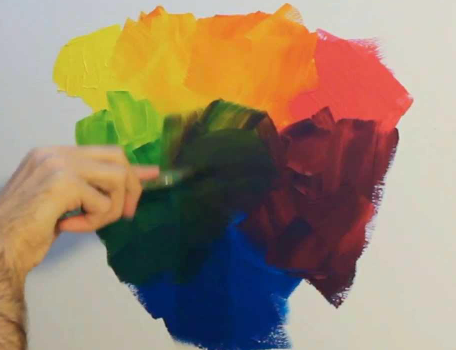
What we see in Truschke’s portrayal of India is that humans, in seeking to find the infinite essence of God, tend to create god in the medium of their own finitude, most often in art. But art falls short of successfully defining the ineffable. It is somewhat frustrating to read about the twisting, turning, and stirring of diversified religions that occupy Indian history because of their blending and instability, much like how mixing a wide variety of paints leaves one with only black.
Because the incessant mixing of religions, cultures, and races will inevitably result in a generic population that is less conductive to creativity and diversity of thought, we must ask ourselves: Do we really want universal equality? Do we really want everyone on the same page? Do we really want to blend all our ethnicities into one generic blob? Healthy evolution necessitates diversity and we should encourage diversity instead of trying to press everyone into a single mold. Otherwise, we end up with only black.
I sense that the prominent idea of reincarnation in Indian culture works as a catalyst for sustaining its religious diversification because it incorporates evolving religious deities. Vishnu reincarnates as Krishna, Rama, and even Akbar, the Mughal ruler. This sort of interchange of deities in and out of human form is a unique way of personifying them and is not without similarities in other religions, which identify men with God or as God.
The cauldron of highly diversified religions that constitute India made me think of R. F. Kuang’s recent novel Katabasis wherein she challenges the specters of hell to define “the good”. Kuang recognizes that “the good” is not definable because it is infinitely rendered within varying and specific contexts. God is not definable no matter how many times we may seek to reincarnate Him within a newly evolved religious structure. Likewise, the perfect life of self-sacrifice is seemingly impossible for most of us; that is, to live for the benefit of others, to work to aid in the elimination of poverty, to participate in the rehabilitation of criminals, to love unconditionally, to resist pathological accumulation, gluttony, and substance abuse; to exist with the bare minimum in order to use those resources to help others in need, and to dedicate all life-effort to the good development of human society. Indeed, most westerners have very little concept of this degree of sacrifice, and certainly no concept of extreme religious asceticism.
Nonviolence
I found it interesting to learn that nonviolence was not the brainchild of Mohandus Ghandi but preexisted within early Indian prehistory for hundreds of years. Perhaps nonviolence is the greatest gift to the world from the Indian continent, and it is too rarely recognized within the essential message of Christ in the West.
Religious violence occurs because of dogma, mythology, and rituals; and mass attempts to make these static. In his rebuke of the religious leaders of his time, Jesus stood against such attempts to solidify God within a cage of human construction. God is dynamic and capable of meeting humans within an infinite variety of contexts.
Religion must be individual and is only authenticated within an individual’s conscience. We err to attempt overriding that conscience with indoctrination. Religion can be communal without being coercive and it is in this way that “the good” is freed from dogma so that it may manifest most powerfully in the varied contexts of human circumstances.
Many in academia seem to think the dismissal of religions altogether is the way to world peace, but this is a not true and will only lead to greater conflagrations. Instead, religions must come to recognize that monotheism means there is one God, not that there is only one path to God. God is not incapable of an infinite variety of manifestations.
The Socially Disadvantaged
Throughout the book, Truschke periodically alludes to the problems of minorities, and she is particularly sensitive of female disadvantages. No one can dispute the fact that white, male people have historically exerted social and political dominance in the world. And yet, the disadvantaged are always present, whether they be women, people of color, immigrant minorities, smaller people, or even just uglier people. Human nature bears an essentially selfish element that often prioritizes self-aggrandizement or clique-driven separatism, and this lends itself to segregation.
Truschke exerts a gallant effort to include women in her history even through the obvious paucity of ample historical documentation evidencing same. One can’t help but wonder where humanity would be today if it operated with a level playing field such that the most capable always had an avenue forward. The tendency to elevate based upon special favors, nepotism, caste, or gender had obviously foiled many opportunities for the advancement of humanity. Diversification gives us a greater range of insight that we can only utilize by listening to all sides. Perhaps that is one particular lesson we can gain in accepting God in all It’s colorful manifestations.
Conclusion
Thanks to Truschke’s work, today, as I adapt the namaste gesture within my fitness and yoga training, I can remember that it dates back more than 4,000 years to the early Indus civilization. Similarly, many other aspects of her history manifest relevance in modernity.
Looking at history is like looking at yourself. This is true not only for personal history, but also for world history, which is a window into the essence of the human species: What have we stood for? What have we accomplished? What have we held on high?
Certainly, there is no better way to gain perspective then to become cognizant of where we are in history. We owe it to ourselves to enhance our perspective beyond the blindness and ignorance of everyday routine by examining history. A whole new world of conscious awareness opens when we arrest our everyday routines to ask who, what, and why have we existed.
-End-
The problem with this book is synonymous with the essential problem of India itself which is the impossibility of consolidating too much diversity into a single nation. The broad diversification and expansive size of India have rendered it difficult to govern, subject to foreign intrusion, and culturally fragmented. These problems persist into modernity.
One unique thing I especially liked about Truschke’s history is the periodic insertion of portions of the actual historical documents she has studied. Truschke wants the reader to see and discern the history for themselves, as opposed to simply spoon feeding it. Although Truschke documents her work extensively, with copious notes and bibliography, she writes with a casualness that allows someone outside of academia to digest the text. Further, Truschke includes extensive mapping exhibits, pictures, and illustrations throughout this book, which are extremely helpful for those more inclined to graphical presentation.
Indian Religions
Reading this, I am struck by how primitive and coarse religions were in pre-modern India, as they seem prone to idolatry and fraught with sexual promiscuity. They also seem to blend easily into one another. Too little has been provided in Truschke’s work to authenticate any sort of deep spirituality within the Indian religions, although I know of it from other readings. The reader might hypothesize that it may be the author’s lack of deep spirituality that lends itself to an absence of deep spirituality within this text, but that is merely speculation.
Nevertheless, Indian history can’t be written without religious explanations, as Truschke well knows, and certainly early religious structure in India is not easy to understand. Truschke portrays it as an eclectic mix of Hindu, Buddhist, Jain and Muslim interactions, like a boiling cauldron of religious diversification. But Truschke seems rather shy to speak much about religion beyond what is historically necessary, and the reader gains a sense that she prefers framing her history within a more secular context.
I suppose it is natural for a westerner like me to sense deep idolatry when reading about Indian religions. But truly, all religions tend to be fraught with idolatry. There is an absence here of the more mystical contemplations of God that depart from idolatry, but this is not inconsistent with the sort of fundamentalism that seems to dominate most religions today.
What we see in Truschke’s portrayal of India is that humans, in seeking to find the infinite essence of God, tend to create god in the medium of their own finitude, most often in art. But art falls short of successfully defining the ineffable. It is somewhat frustrating to read about the twisting, turning, and stirring of diversified religions that occupy Indian history because of their blending and instability, much like how mixing a wide variety of paints leaves one with only black.
Because the incessant mixing of religions, cultures, and races will inevitably result in a generic population that is less conductive to creativity and diversity of thought, we must ask ourselves: Do we really want universal equality? Do we really want everyone on the same page? Do we really want to blend all our ethnicities into one generic blob? Healthy evolution necessitates diversity and we should encourage diversity instead of trying to press everyone into a single mold. Otherwise, we end up with only black.
I sense that the prominent idea of reincarnation in Indian culture works as a catalyst for sustaining its religious diversification because it incorporates evolving religious deities. Vishnu reincarnates as Krishna, Rama, and even Akbar, the Mughal ruler. This sort of interchange of deities in and out of human form is a unique way of personifying them and is not without similarities in other religions, which identify men with God or as God.
The cauldron of highly diversified religions that constitute India made me think of R. F. Kuang’s recent novel Katabasis wherein she challenges the specters of hell to define “the good”. Kuang recognizes that “the good” is not definable because it is infinitely rendered within varying and specific contexts. God is not definable no matter how many times we may seek to reincarnate Him within a newly evolved religious structure. Likewise, the perfect life of self-sacrifice is seemingly impossible for most of us; that is, to live for the benefit of others, to work to aid in the elimination of poverty, to participate in the rehabilitation of criminals, to love unconditionally, to resist pathological accumulation, gluttony, and substance abuse; to exist with the bare minimum in order to use those resources to help others in need, and to dedicate all life-effort to the good development of human society. Indeed, most westerners have very little concept of this degree of sacrifice, and certainly no concept of extreme religious asceticism.
Nonviolence
I found it interesting to learn that nonviolence was not the brainchild of Mohandus Ghandi but preexisted within early Indian prehistory for hundreds of years. Perhaps nonviolence is the greatest gift to the world from the Indian continent, and it is too rarely recognized within the essential message of Christ in the West.
Religious violence occurs because of dogma, mythology, and rituals; and mass attempts to make these static. In his rebuke of the religious leaders of his time, Jesus stood against such attempts to solidify God within a cage of human construction. God is dynamic and capable of meeting humans within an infinite variety of contexts.
Religion must be individual and is only authenticated within an individual’s conscience. We err to attempt overriding that conscience with indoctrination. Religion can be communal without being coercive and it is in this way that “the good” is freed from dogma so that it may manifest most powerfully in the varied contexts of human circumstances.
Many in academia seem to think the dismissal of religions altogether is the way to world peace, but this is a not true and will only lead to greater conflagrations. Instead, religions must come to recognize that monotheism means there is one God, not that there is only one path to God. God is not incapable of an infinite variety of manifestations.
The Socially Disadvantaged
Throughout the book, Truschke periodically alludes to the problems of minorities, and she is particularly sensitive of female disadvantages. No one can dispute the fact that white, male people have historically exerted social and political dominance in the world. And yet, the disadvantaged are always present, whether they be women, people of color, immigrant minorities, smaller people, or even just uglier people. Human nature bears an essentially selfish element that often prioritizes self-aggrandizement or clique-driven separatism, and this lends itself to segregation.
Truschke exerts a gallant effort to include women in her history even through the obvious paucity of ample historical documentation evidencing same. One can’t help but wonder where humanity would be today if it operated with a level playing field such that the most capable always had an avenue forward. The tendency to elevate based upon special favors, nepotism, caste, or gender had obviously foiled many opportunities for the advancement of humanity. Diversification gives us a greater range of insight that we can only utilize by listening to all sides. Perhaps that is one particular lesson we can gain in accepting God in all It’s colorful manifestations.
Conclusion
Thanks to Truschke’s work, today, as I adapt the namaste gesture within my fitness and yoga training, I can remember that it dates back more than 4,000 years to the early Indus civilization. Similarly, many other aspects of her history manifest relevance in modernity.
Looking at history is like looking at yourself. This is true not only for personal history, but also for world history, which is a window into the essence of the human species: What have we stood for? What have we accomplished? What have we held on high?
Certainly, there is no better way to gain perspective then to become cognizant of where we are in history. We owe it to ourselves to enhance our perspective beyond the blindness and ignorance of everyday routine by examining history. A whole new world of conscious awareness opens when we arrest our everyday routines to ask who, what, and why have we existed.
-End-

March 12, 2026
Writing a single-volume history of India is an intimidating undertaking. The subcontinent’s past stretches across millennia and encompasses an extraordinary range of cultures, languages, religions, and political formations. Any attempt to tell that story in one book inevitably requires difficult choices about emphasis and interpretation. Audrey Truschke’s India: 5,000 Years of History on the Subcontinent is a lively attempt at such a synthesis. It works well as an accessible introduction for general readers, particularly Western audiences encountering Indian history for the first time. Yet the book is also shaped by a clear interpretive agenda, and at times that agenda affects the balance of the narrative.
At its best, the book succeeds in doing what a survey history should do: it gives readers a sense of the long sweep of the subcontinent’s past and introduces the major political and cultural turning points along the way. Truschke writes clearly and confidently, moving briskly from the Indus Valley Civilization through the Vedic period, the classical empires of the Mauryas and Guptas, the rise of Islamic polities, the Mughal Empire, and finally the colonial and modern eras. The prose is readable and the narrative flows easily. For someone looking for a first orientation to Indian history, the book provides a useful chronological map.
But the project is not simply descriptive. The book also reads, at times quite clearly, as an intervention in contemporary debates about India’s past. Truschke has long argued against what she sees as nationalist distortions of medieval Indian history, and this perspective shapes much of the interpretation here. There is nothing inherently wrong with that (historians inevitably write with particular questions in mind) but it does mean the narrative is not entirely neutral.
The compression required by a single-volume survey inevitably leads to uneven coverage, and the earliest periods of Indian history feel particularly abbreviated. The Indus Valley Civilization, the Vedic period, and the classical age of Sanskrit culture are treated rather briefly. Likewise the Maurya and Gupta empires, whose political and intellectual achievements played a foundational role in shaping the civilization of the subcontinent, pass by quickly. One is left wishing for a fuller sense of the philosophical, literary, and religious creativity that characterized early Indian civilization.
This brevity is most noticeable in the treatment of classical Sanskrit culture. The great flowering of philosophical systems, epic literature, temple architecture, and devotional traditions during this era is one of the most remarkable chapters in the intellectual history of the world. Yet it appears here only in outline, sketched rather than explored.
The interpretive tensions of the book become most visible in its discussion of the medieval period, particularly the centuries of Islamic rule in northern India. Truschke clearly wishes to challenge the idea, common in some modern political narratives, that medieval India can be understood simply as a story of civilizational conflict between Hindus and Muslims. In pushing back against that view, however, the book sometimes leans too heavily in the opposite direction.
Episodes of temple destruction and religious violence, which are well documented in both contemporary chronicles and modern scholarship, are often contextualized in ways that risk minimizing their significance. Historians are right to emphasize that temple desecration in premodern India often had political as well as religious motivations: temples could symbolize royal authority and wealth, and their destruction sometimes functioned as a statement of conquest. But that political context does not erase the religious dimension altogether. Contemporary sources themselves frequently framed such acts in explicitly religious terms.
The result is that the book occasionally seems overly dismissive of experiences that clearly mattered deeply to many communities. A more satisfying account would acknowledge both sides of the historical reality: the complexity of Indo-Islamic interactions on the one hand, and the fact that genuine religious tensions and violence did exist on the other.
Where the book is strongest is in its treatment of the later medieval and Mughal periods. This is Truschke’s area of scholarly expertise, and the narrative here feels more confident and nuanced. The Mughal Empire is presented not simply as a foreign imposition but as a sophisticated political system deeply embedded in the social and cultural life of the subcontinent. The court culture, administrative structures, and patterns of patronage that defined the Mughal world are described with clarity and depth.
The later chapters, dealing with the transition from Mughal rule to British colonial dominance and the emergence of modern India, provide a clear if necessarily concise overview of the period. As elsewhere in the book, the narrative moves quickly, sometimes leaving readers wanting more detail, but the broad historical trajectory remains intelligible.
In the end, India: 5,000 Years of History on the Subcontinent works best as an introduction. It is readable, engaging, and often stimulating. At the same time, its interpretive choices mean that it should probably be read alongside other histories of the subcontinent that offer different emphases, particularly when it comes to early Indian civilization and the complexities of medieval religious conflict.
The book therefore stands as a good but imperfect survey, a useful starting point for readers new to Indian history, but not the last word on the subject. If it encourages readers to explore the deeper and richer historiography of the subcontinent, it will have served a valuable purpose.
At its best, the book succeeds in doing what a survey history should do: it gives readers a sense of the long sweep of the subcontinent’s past and introduces the major political and cultural turning points along the way. Truschke writes clearly and confidently, moving briskly from the Indus Valley Civilization through the Vedic period, the classical empires of the Mauryas and Guptas, the rise of Islamic polities, the Mughal Empire, and finally the colonial and modern eras. The prose is readable and the narrative flows easily. For someone looking for a first orientation to Indian history, the book provides a useful chronological map.
But the project is not simply descriptive. The book also reads, at times quite clearly, as an intervention in contemporary debates about India’s past. Truschke has long argued against what she sees as nationalist distortions of medieval Indian history, and this perspective shapes much of the interpretation here. There is nothing inherently wrong with that (historians inevitably write with particular questions in mind) but it does mean the narrative is not entirely neutral.
The compression required by a single-volume survey inevitably leads to uneven coverage, and the earliest periods of Indian history feel particularly abbreviated. The Indus Valley Civilization, the Vedic period, and the classical age of Sanskrit culture are treated rather briefly. Likewise the Maurya and Gupta empires, whose political and intellectual achievements played a foundational role in shaping the civilization of the subcontinent, pass by quickly. One is left wishing for a fuller sense of the philosophical, literary, and religious creativity that characterized early Indian civilization.
This brevity is most noticeable in the treatment of classical Sanskrit culture. The great flowering of philosophical systems, epic literature, temple architecture, and devotional traditions during this era is one of the most remarkable chapters in the intellectual history of the world. Yet it appears here only in outline, sketched rather than explored.
The interpretive tensions of the book become most visible in its discussion of the medieval period, particularly the centuries of Islamic rule in northern India. Truschke clearly wishes to challenge the idea, common in some modern political narratives, that medieval India can be understood simply as a story of civilizational conflict between Hindus and Muslims. In pushing back against that view, however, the book sometimes leans too heavily in the opposite direction.
Episodes of temple destruction and religious violence, which are well documented in both contemporary chronicles and modern scholarship, are often contextualized in ways that risk minimizing their significance. Historians are right to emphasize that temple desecration in premodern India often had political as well as religious motivations: temples could symbolize royal authority and wealth, and their destruction sometimes functioned as a statement of conquest. But that political context does not erase the religious dimension altogether. Contemporary sources themselves frequently framed such acts in explicitly religious terms.
The result is that the book occasionally seems overly dismissive of experiences that clearly mattered deeply to many communities. A more satisfying account would acknowledge both sides of the historical reality: the complexity of Indo-Islamic interactions on the one hand, and the fact that genuine religious tensions and violence did exist on the other.
Where the book is strongest is in its treatment of the later medieval and Mughal periods. This is Truschke’s area of scholarly expertise, and the narrative here feels more confident and nuanced. The Mughal Empire is presented not simply as a foreign imposition but as a sophisticated political system deeply embedded in the social and cultural life of the subcontinent. The court culture, administrative structures, and patterns of patronage that defined the Mughal world are described with clarity and depth.
The later chapters, dealing with the transition from Mughal rule to British colonial dominance and the emergence of modern India, provide a clear if necessarily concise overview of the period. As elsewhere in the book, the narrative moves quickly, sometimes leaving readers wanting more detail, but the broad historical trajectory remains intelligible.
In the end, India: 5,000 Years of History on the Subcontinent works best as an introduction. It is readable, engaging, and often stimulating. At the same time, its interpretive choices mean that it should probably be read alongside other histories of the subcontinent that offer different emphases, particularly when it comes to early Indian civilization and the complexities of medieval religious conflict.
The book therefore stands as a good but imperfect survey, a useful starting point for readers new to Indian history, but not the last word on the subject. If it encourages readers to explore the deeper and richer historiography of the subcontinent, it will have served a valuable purpose.

November 13, 2025
A Clear, Evidence-Based Narrative in a Time of Revisionism
I approached India: A 5,000-Year History as someone largely unfamiliar with the earliest periods of the subcontinent. My own interest in Sub-Continent history has always centered on the Muslim dynasties, Sultanates, and Muslim regional principalities—their politics, cultural worlds, and social issues. I have zero interest in other areas but recent socio-political events, interactions with the South Asian diaspora in the U.S., and the visible tensions between caste groups, regions, and religious communities have pushed me to understand the deeper historical roots of contemporary hardline attitudes. In that sense, this book has proved extremely valuable. Truschke’s account of the early evolution of Hindu thought, social structures, and regional variations helped me understand today’s dynamics with far greater clarity.
Audrey Truschke is among the leading historians of South Asia today. Whatever disagreements one may have with her conclusions, her work is consistently grounded in extensive multilingual sources—Sanskrit, Persian, Urdu, and modern scholarship alike. Her citations are thorough, transparent, and academically defensible. In a time when politicized attempts to rewrite Sub-Continent history has lead to obvious distortions, her insistence on evidence-based analysis stands out. The backlash she receives, often personal rather than scholarly, reflects the current climate more than it reflects the merit of her research.
Some critics argue that the book privileges certain themes—migration, contestation, marginality—over continuity or civilizational unity. However, this criticism overlooks an essential point: no single-volume history spanning five millennia can achieve perfect symmetry. Any macro-history must choose a narrative through-line. Truschke has chosen a social-historical approach, and within that framework, selective emphasis is not a flaw but a methodological necessity. Expecting absolute balance across every dynasty, region, or interpretive school is unrealistic. The more relevant question is whether her chosen framework is applied consistently and supported by evidence—on that measure, the book succeeds.
For readers unfamiliar with Truschke’s previous work or with the debates surrounding South Asian historiography, the Afterword and Historiography sections are indispensable. They explain her interpretive stance, respond to common objections, and outline the pressures that shape discussions of Indian history today. These sections are so clarifying that some readers may choose to begin with them.
Overall, this is a compelling and ambitious work about a region that did not exist as a single political entity until 1947 yet shares millennia of intertwined histories, migrations, and intellectual traditions. The book offers a coherent, accessible entry point into the complexities of South Asia’s past and the forces that continue to shape its present.
This is, in every sense, a magnum opus.
Highly recommended.
I approached India: A 5,000-Year History as someone largely unfamiliar with the earliest periods of the subcontinent. My own interest in Sub-Continent history has always centered on the Muslim dynasties, Sultanates, and Muslim regional principalities—their politics, cultural worlds, and social issues. I have zero interest in other areas but recent socio-political events, interactions with the South Asian diaspora in the U.S., and the visible tensions between caste groups, regions, and religious communities have pushed me to understand the deeper historical roots of contemporary hardline attitudes. In that sense, this book has proved extremely valuable. Truschke’s account of the early evolution of Hindu thought, social structures, and regional variations helped me understand today’s dynamics with far greater clarity.
Audrey Truschke is among the leading historians of South Asia today. Whatever disagreements one may have with her conclusions, her work is consistently grounded in extensive multilingual sources—Sanskrit, Persian, Urdu, and modern scholarship alike. Her citations are thorough, transparent, and academically defensible. In a time when politicized attempts to rewrite Sub-Continent history has lead to obvious distortions, her insistence on evidence-based analysis stands out. The backlash she receives, often personal rather than scholarly, reflects the current climate more than it reflects the merit of her research.
Some critics argue that the book privileges certain themes—migration, contestation, marginality—over continuity or civilizational unity. However, this criticism overlooks an essential point: no single-volume history spanning five millennia can achieve perfect symmetry. Any macro-history must choose a narrative through-line. Truschke has chosen a social-historical approach, and within that framework, selective emphasis is not a flaw but a methodological necessity. Expecting absolute balance across every dynasty, region, or interpretive school is unrealistic. The more relevant question is whether her chosen framework is applied consistently and supported by evidence—on that measure, the book succeeds.
For readers unfamiliar with Truschke’s previous work or with the debates surrounding South Asian historiography, the Afterword and Historiography sections are indispensable. They explain her interpretive stance, respond to common objections, and outline the pressures that shape discussions of Indian history today. These sections are so clarifying that some readers may choose to begin with them.
Overall, this is a compelling and ambitious work about a region that did not exist as a single political entity until 1947 yet shares millennia of intertwined histories, migrations, and intellectual traditions. The book offers a coherent, accessible entry point into the complexities of South Asia’s past and the forces that continue to shape its present.
This is, in every sense, a magnum opus.
Highly recommended.
This entire review has been hidden because of spoilers.

June 18, 2026
No single volume attempting to chronicle five thousand years of history across the vast Indian subcontinent could ever hope to be entirely comprehensive or perfectly free from bias. For a reader originating from the country, like this reviewer, there is bound to be a significant amount of material that does not sit comfortably.
However, the book deserves credit for its boldness in tackling multiple controversial subjects. The author lays out the relevant details well on the topics selected. Even when the accompanying subjective interpretations feel unsettling or disagreeable, they consistently provide plenty of intellectual material worth pondering. The text is heavily populated with intriguing factoids that will be entirely new to many who were brought up strictly on the curriculum taught in Indian classrooms. Examples would include off-the-cuff mention of when the term "Hindu" began to be used self-referentially, or the lives lost during the integration of Hyderabad. Dozens of such details find their way through the book, and even if some prove disputed, they are sure to make curious readers think and dig more.
Where the narrative falters, and the underlying biases begin to jangle loudly, is in its deliberate omission of recent national positives. It is absolutely necessary for a modern historical account to discuss systemic issues like casteism, religious violence, sexism, and environmental risks in profound detail. Yet, completely ignoring topics that every future historian will undoubtedly analyze, such as the monumental rise of the Indian service sector or traumatic national episodes like the 26/11 attacks, represents a glaring oversight. To offer an analogy, it is the direct equivalent of writing a modern history of the United States without ever mentioning the events of September 11 or the transformative rise of Silicon Valley.
Ultimately, these clear biases interfere heavily with the discussion of modern affairs. Because most readers picking up the volume will already be intimately familiar with the realities of recent decades, these conspicuous omissions inadvertently end up casting a shadow of doubt over some of the rigorously argued historical topics presented earlier in the text.
However, the book deserves credit for its boldness in tackling multiple controversial subjects. The author lays out the relevant details well on the topics selected. Even when the accompanying subjective interpretations feel unsettling or disagreeable, they consistently provide plenty of intellectual material worth pondering. The text is heavily populated with intriguing factoids that will be entirely new to many who were brought up strictly on the curriculum taught in Indian classrooms. Examples would include off-the-cuff mention of when the term "Hindu" began to be used self-referentially, or the lives lost during the integration of Hyderabad. Dozens of such details find their way through the book, and even if some prove disputed, they are sure to make curious readers think and dig more.
Where the narrative falters, and the underlying biases begin to jangle loudly, is in its deliberate omission of recent national positives. It is absolutely necessary for a modern historical account to discuss systemic issues like casteism, religious violence, sexism, and environmental risks in profound detail. Yet, completely ignoring topics that every future historian will undoubtedly analyze, such as the monumental rise of the Indian service sector or traumatic national episodes like the 26/11 attacks, represents a glaring oversight. To offer an analogy, it is the direct equivalent of writing a modern history of the United States without ever mentioning the events of September 11 or the transformative rise of Silicon Valley.
Ultimately, these clear biases interfere heavily with the discussion of modern affairs. Because most readers picking up the volume will already be intimately familiar with the realities of recent decades, these conspicuous omissions inadvertently end up casting a shadow of doubt over some of the rigorously argued historical topics presented earlier in the text.

April 7, 2026
An excellent history of India from the beginnings to the present. The author is a skilled writer and, unlike many scholars, figured out how to write for a general readership without dumbing anything down. She had done a great job of writing a comprehensive and comprehensible history. She has taken a complex history of a massive bit of humanity and woven all the strands into a book that both makes sense and that does justice to Indian History. Some may criticize her deemphasis on political history, and I myself wanted a bit more, but I think she pulled off her culture-focused narrative with an aplomb that few could manage.
But she has blindspots. She is a leftie academic deeply wedded to the postcolonial theory common in the academy. This means she gets some basic things wrong and misses other things.
At one point, she makes a bold claim that Indo-European was discovered not by William Jones, as every linguistics student is taught, but rather by Indic thinker Khan-i Arzu, and that this is suppressed only because of “the persistent privileging of Western traditions and the ongoing devaluation of premodern Indian knowledge.” I dug into her sources and found that her argument is bullshit. The sources that she herself cites do not say that Khan-i Arzu did anything like discovering the Indo-European language family and the connection between Latin, Greek, German and Sanskrit. Instead, it only says that he “does not explicitly posit a common origin for Sanskrit and Persian but rather leaves it to the reader to infer the cause of the linguistic similarity,” something quite different from what Jones did.
Of course, Truschke makes this mistake because, as a leftist scholar, she wants to believe that there is a great White conspiracy suppressing Indian knowledge, something that she, the hero of a new history, will rectify.
This racism extends into the broader conceptual framework of the book. For Truschke, colonialism is a Whites-only enterprise. Moghuls, a Central Asian people speaking the language of the Uyghurs and Uzbeks, descended down into India, conquered it and ruled over it as a privileged class, but she never refers to that as colonialism. Instead, colonialism is something that only white Europeans engage in.
Despite these blindspots, there is a lot of good research and scholarship in this book. Definitely worth the read.
But she has blindspots. She is a leftie academic deeply wedded to the postcolonial theory common in the academy. This means she gets some basic things wrong and misses other things.
At one point, she makes a bold claim that Indo-European was discovered not by William Jones, as every linguistics student is taught, but rather by Indic thinker Khan-i Arzu, and that this is suppressed only because of “the persistent privileging of Western traditions and the ongoing devaluation of premodern Indian knowledge.” I dug into her sources and found that her argument is bullshit. The sources that she herself cites do not say that Khan-i Arzu did anything like discovering the Indo-European language family and the connection between Latin, Greek, German and Sanskrit. Instead, it only says that he “does not explicitly posit a common origin for Sanskrit and Persian but rather leaves it to the reader to infer the cause of the linguistic similarity,” something quite different from what Jones did.
Of course, Truschke makes this mistake because, as a leftist scholar, she wants to believe that there is a great White conspiracy suppressing Indian knowledge, something that she, the hero of a new history, will rectify.
This racism extends into the broader conceptual framework of the book. For Truschke, colonialism is a Whites-only enterprise. Moghuls, a Central Asian people speaking the language of the Uyghurs and Uzbeks, descended down into India, conquered it and ruled over it as a privileged class, but she never refers to that as colonialism. Instead, colonialism is something that only white Europeans engage in.
Despite these blindspots, there is a lot of good research and scholarship in this book. Definitely worth the read.

May 30, 2026
“India: 5000 years of history of the subcontinent” is definitely an interesting read. For a book that calls itself a history book, there is more social commentary of the history of the subcontinent and less detailed history. So, if you’re someone who’s looking for detailed history of India, then this book isn’t for you.
However, this book is quite fascinating as it tracks down the deep rooted casteism and misogyny that have existed in Indian societies throughout the history. And it’s more important than ever, in the current climate of far right political fanaticism that we read and acknowledge the reality of our past and our history. The cultural diversity of the country of India was very rich throughout the history and yet the exact things that threatened that diversity since the creation of various empires in this country is being brought back again.
In my opinion, everyone should read this book to differentiate between the claims of the current populist movement and the actual historical reality.
However, that being said , I must say that the author has purposefully focused on just the negative sides of Indian history. There’s nothing wrong in it though, if you really want to write a book about the flaws of the societies of various empires that ruled this land but passing it as “A book of history” where you only focus on the flaws is probably not a very good idea. Maybe the book could’ve been named something else or maybe the author did it intentionally, I’ll never know.
However, this book is quite fascinating as it tracks down the deep rooted casteism and misogyny that have existed in Indian societies throughout the history. And it’s more important than ever, in the current climate of far right political fanaticism that we read and acknowledge the reality of our past and our history. The cultural diversity of the country of India was very rich throughout the history and yet the exact things that threatened that diversity since the creation of various empires in this country is being brought back again.
In my opinion, everyone should read this book to differentiate between the claims of the current populist movement and the actual historical reality.
However, that being said , I must say that the author has purposefully focused on just the negative sides of Indian history. There’s nothing wrong in it though, if you really want to write a book about the flaws of the societies of various empires that ruled this land but passing it as “A book of history” where you only focus on the flaws is probably not a very good idea. Maybe the book could’ve been named something else or maybe the author did it intentionally, I’ll never know.

June 1, 2026
This is barely a history of India. She totally ignores many of the most important people and events, while giving a great deal of space to the experience of the marginalized. As such, if it were called 5000 Years of History of the Marginalized in India (“subcontinent” doesn’t really fit either, since she has in the first 250 pages mentioned Sri Lanka once and that’s it, a record only marginally improved in the next 250 pages), then I might be able to get behind the book a bit more. That is certainly a history I would like to read, but that’s not how this book presents itself.
Given her focus, it should be obvious that she wears her wokeism on her sleeve. She complains about people being deadnamed after switching religions, devoting far more time to huffing and puffing about that than even mentioning the seminal southern figure Krishnadevaraya, who received barely a line of text. She takes at face value even the most circumstantial evidence of interreligious harmony in Indian history, while casting doubt on the credibility of explicit historical discussions of sectarian disharmony. She never misses an opportunity to lay bare her political biases, something that as an historian she should be attempting to put aside, not magnify, making the work more polemical than just about any other history book I’ve ever read.
As a rather staunch leftist, I don't necessarily disagree with her politics. The problem is that they belong in a polemical text, not an unbiased history. It's hard to take the totality of the text seriously when she revels in her biases.
Even though she says she tried to avoid falling into the typical Indian historian’s trap of treating north India as India, she only gives fleeting references to south India and she barely mentioned the Northeast - Assam, Nagaland, Sikkim, Manipur, etc., the most interesting part of India for someone like me who has read copiously on Tibet.
The narrative improves as it grows less spread-out and more dense in the last maybe 150 pages as she deals with the 1800s and 1900s. She becomes less polemical, too, oddly. But, in all, her history feels exceedingly small. I just finished Mote's Imperial China. Sure, it's twice the number of pages, but each and every page provided new insights and food for thought. This entire book provided a meagre meal, not the copious banquet Mote offers in each chapter.
Given her focus, it should be obvious that she wears her wokeism on her sleeve. She complains about people being deadnamed after switching religions, devoting far more time to huffing and puffing about that than even mentioning the seminal southern figure Krishnadevaraya, who received barely a line of text. She takes at face value even the most circumstantial evidence of interreligious harmony in Indian history, while casting doubt on the credibility of explicit historical discussions of sectarian disharmony. She never misses an opportunity to lay bare her political biases, something that as an historian she should be attempting to put aside, not magnify, making the work more polemical than just about any other history book I’ve ever read.
As a rather staunch leftist, I don't necessarily disagree with her politics. The problem is that they belong in a polemical text, not an unbiased history. It's hard to take the totality of the text seriously when she revels in her biases.
Even though she says she tried to avoid falling into the typical Indian historian’s trap of treating north India as India, she only gives fleeting references to south India and she barely mentioned the Northeast - Assam, Nagaland, Sikkim, Manipur, etc., the most interesting part of India for someone like me who has read copiously on Tibet.
The narrative improves as it grows less spread-out and more dense in the last maybe 150 pages as she deals with the 1800s and 1900s. She becomes less polemical, too, oddly. But, in all, her history feels exceedingly small. I just finished Mote's Imperial China. Sure, it's twice the number of pages, but each and every page provided new insights and food for thought. This entire book provided a meagre meal, not the copious banquet Mote offers in each chapter.

November 23, 2025
One of the best books on the history of the Indian Subcontinent I have read in a long time. Rich and diverse archives, historical rigour in presenting evidence and building narratives; a focus on historical subjects so far neglected in a grand narrative story of history like the emergence of anti-caste consciousness, women saints, sufi movements, the growth of Sikhism, indentured labourers, workers who build some of India's finest monuments, communities that contributed to the cultural flourishing of the subcontinent, adivasi perspectives, and broad cultural trends such the reception of literary texts like Panchatantra or Mahabharata.
I also really appreciate the historians mentioned at the end of the chapters, whose works are worth diving into for an even more in depth understanding such V Geetha, Urvashi Butalia, Romila Thapar, Irfan Habib, Ayesha Jalal, Francesca Orsini and countless others. Even the essay on Historiography is worth reading before heading into book for it's informative stance on the historical method and the treatment of South Asian History far; explaining why the author made the choices that she did.
PS - I was pleasantly surprised to have the book end on a discussion of climate change; a much overlooked aspect of our contemporary moment when we attempt to think how our histories will be told.
I also really appreciate the historians mentioned at the end of the chapters, whose works are worth diving into for an even more in depth understanding such V Geetha, Urvashi Butalia, Romila Thapar, Irfan Habib, Ayesha Jalal, Francesca Orsini and countless others. Even the essay on Historiography is worth reading before heading into book for it's informative stance on the historical method and the treatment of South Asian History far; explaining why the author made the choices that she did.
PS - I was pleasantly surprised to have the book end on a discussion of climate change; a much overlooked aspect of our contemporary moment when we attempt to think how our histories will be told.
October 28, 2025
Excellent overview of South Asian history
Prof. Truschke is obviously a gifted teacher. She assumes the reader has a basic knowledge of world history and points out how the story she is telling connects with what one already knows. By doing this, she avoids exoticizing South Asian history, even as she documents the ways in which it is unique. Because she is mindful of her readers' interests and historical framework, she avoids antiquarian, orientalist, abd historiographic digressions commonly found in South Asian historical accounts and instead devotes about half the book to the period after 1500 and throughout the book emphasizes topics familiar to anyone who has read a world-history textbook: trade, slavery, evolving forms of social control and political administration, warfare, the role and position of women at key historical moments, religious movements, art, internal migrations, deforestation, colonialism, the development of modern political movements, the diaspora, post-colonial politics, and the social and political role of modern media. Every chapter begins with a map. Many of them deliberately challenge Westerners' understanding of India's place in the world.
Prof. Truschke is obviously a gifted teacher. She assumes the reader has a basic knowledge of world history and points out how the story she is telling connects with what one already knows. By doing this, she avoids exoticizing South Asian history, even as she documents the ways in which it is unique. Because she is mindful of her readers' interests and historical framework, she avoids antiquarian, orientalist, abd historiographic digressions commonly found in South Asian historical accounts and instead devotes about half the book to the period after 1500 and throughout the book emphasizes topics familiar to anyone who has read a world-history textbook: trade, slavery, evolving forms of social control and political administration, warfare, the role and position of women at key historical moments, religious movements, art, internal migrations, deforestation, colonialism, the development of modern political movements, the diaspora, post-colonial politics, and the social and political role of modern media. Every chapter begins with a map. Many of them deliberately challenge Westerners' understanding of India's place in the world.

December 17, 2025
Misleading, inaccurate & biased History - not recommended by or for people wanting to read History as such
This book is a guised attempt at being honest while in reality it has an extreme bias towards anti-caste and anti-Hindu outlook. And this is seen not because of the facts but despite them. Twisting the facts to side with perpetrators of violence like Aurangzeb, while demeaning great kings like Shivaji for being shrewd opportunists, this book definitely doesn't put Indian history in the correct light. Where it surprisingly declares about the false claims of the location of a temple at Ayodhya, the birth place of Shri Ram, it shamelessly equates Aurangzeb's actions with traditions of Mahabharat. And all of this without bothering to dive into the facts. I definitely can say that it has a hidden motive or agenda of demeaning what was sacred to India while upholding the intruders and invaders in general.
All through it, there are obsessive references to where the so called lower castes rose and opposed the upper castes.
This book is a guised attempt at being honest while in reality it has an extreme bias towards anti-caste and anti-Hindu outlook. And this is seen not because of the facts but despite them. Twisting the facts to side with perpetrators of violence like Aurangzeb, while demeaning great kings like Shivaji for being shrewd opportunists, this book definitely doesn't put Indian history in the correct light. Where it surprisingly declares about the false claims of the location of a temple at Ayodhya, the birth place of Shri Ram, it shamelessly equates Aurangzeb's actions with traditions of Mahabharat. And all of this without bothering to dive into the facts. I definitely can say that it has a hidden motive or agenda of demeaning what was sacred to India while upholding the intruders and invaders in general.
All through it, there are obsessive references to where the so called lower castes rose and opposed the upper castes.

April 12, 2026
An excellent, scholarly narrative of the history of India. The author, being a Sanskrit scholar and knowing the language, has drawn directly from the original texts of India. She has told the story of India not only from the perspective of the elite but also included the marginalized and Dalits. The story covers the entire South-East Asia, from Afghanistan to Cambodia.
Starting with Out-of-Africa migration of humans, she traces the history of India through Indus Valley Civilization, Aryan migration, Buddhism, Jainism, Vedic religion, Mauryan Empire, Hinduism, Sikhism, Decani empires, Mughals and finally the British. The coverage is comprehensive and told purely from the written and verifiable texts and evidences.
The entire History of India is written from a fresh-eye view, based on solid evidence, without any ideological agenda. The book has more than 100 pages of bibliography and references and is a solid scholarly research work. The written language is easy to read with no complex words or grammar and is super-fast read.
Starting with Out-of-Africa migration of humans, she traces the history of India through Indus Valley Civilization, Aryan migration, Buddhism, Jainism, Vedic religion, Mauryan Empire, Hinduism, Sikhism, Decani empires, Mughals and finally the British. The coverage is comprehensive and told purely from the written and verifiable texts and evidences.
The entire History of India is written from a fresh-eye view, based on solid evidence, without any ideological agenda. The book has more than 100 pages of bibliography and references and is a solid scholarly research work. The written language is easy to read with no complex words or grammar and is super-fast read.

April 24, 2026
Audrey Truschke's India is an admirable overview of the infinitely complex history of South Asia. The cultural, political and social dynamics within what are now India, Pakistan, Sri Lanka and Bangladesh are explored in a chronological structure starting in pre-history and ending in 2023. Truschke meets this challenge as the text rarely bogs down in detail or succumbs to academic-speak. Most admirably, the focus remains on South Asians rather than colonizers between the seventeenth and twentieth centuries. The chapter on historiography is for those interested in the process of historical analysis and writing itself, as well as blossoming researchers who aspire to create works such as this. Additional content on the growing South Asian diasporas post-1990 would have been welcome. This is highly recommended for armchair historians and students looking for a broad yet detailed history of South Asia.

July 16, 2026
Utterly fantastic, I need more books about South Asian history from Audrey Truschke immediately (I know she has one on Aurangzeb, and I am already there, trust me).
I knew I’d love this book from the moment I started the introduction. The author has a clear idea of the benefits and limitations of a single volume history and expresses them from the beginning and throughout the book. Nevertheless, India: 5,000 years of history on the sub-continent is a towering achievement. It’s sweeping and grand without ever losing sight of the humanity and agency of the many millions throughout history who have shaped the sub-continent. John Keay only wishes he could write South Asian history with such panache and scholarly rigor (disclaimer: I’ve never actually read Keay’s India: A History, and I’m sure its lovely).
This was amazing non-fiction. The author should be immensely proud and seriously consider writing more books in a similar vein.
I knew I’d love this book from the moment I started the introduction. The author has a clear idea of the benefits and limitations of a single volume history and expresses them from the beginning and throughout the book. Nevertheless, India: 5,000 years of history on the sub-continent is a towering achievement. It’s sweeping and grand without ever losing sight of the humanity and agency of the many millions throughout history who have shaped the sub-continent. John Keay only wishes he could write South Asian history with such panache and scholarly rigor (disclaimer: I’ve never actually read Keay’s India: A History, and I’m sure its lovely).
This was amazing non-fiction. The author should be immensely proud and seriously consider writing more books in a similar vein.

June 22, 2025
An Excellent Work covering India's 5000 years of History:
Many Indian History readers do not make the effort to engage with the content, methods of the Historian. As of now, I have not seen a reader share how the historian is wrong, other than calling someone Hindu, Marxist, Communal is not going to make it false.
The Author has covered entire Indian History in 514 pages.
This work will be accessible to all, as there’s not much specialist words even-though this is academic.
I am still absorbing, pondering over my own questions over this excellent work.
I enjoyed the references for each chapter.
I cover full review of this work, here
Outline
1. Indus Valley Civilization, 2600–1900 BCE
2. Ancient Migrants and Vedic Practices
3. Building and Renouncing Cities, 550–325 BCE
4. Ashoka’s Mauryan Empire
5. Mahabharata: A Tale of Ancient India
6. South Asians Traveling, 200 BCE–300 CE
7. Inequality, Pleasure, and Power in Early India
8. India in the World, ca. 700 CE
9. Medieval South India
10. Indo-Persian Rule and Culture, 1190–1350
11. The Long Fifteenth Century
12. Seeking God or Fame, 1500–1550
13. Ordinary and Extraordinary Lives in Early Modern India
14. Religious Communities and Elite Culture, 1600–1650
15. Aurangzeb’s Empire and Two Shudra Lineages
16. Regional Flourishing, 1720–1780
17. Company Bahadur
18. Sepoy Rebellion and Dawn of the British Raj
19. Knowing India and Indians, 1860–1900
20. Indians on the Move, 1880–1920
21. Advocating for Independence, Nationalism, and Equal Rights
22. Dividing India in 1947
23. New Nation-States, 1947–1990
24. Everyday Life in Contemporary South Asia
I would recommend this work for everyone.
Many Indian History readers do not make the effort to engage with the content, methods of the Historian. As of now, I have not seen a reader share how the historian is wrong, other than calling someone Hindu, Marxist, Communal is not going to make it false.
The Author has covered entire Indian History in 514 pages.
This work will be accessible to all, as there’s not much specialist words even-though this is academic.
I am still absorbing, pondering over my own questions over this excellent work.
I enjoyed the references for each chapter.
I cover full review of this work, here
Outline
1. Indus Valley Civilization, 2600–1900 BCE
2. Ancient Migrants and Vedic Practices
3. Building and Renouncing Cities, 550–325 BCE
4. Ashoka’s Mauryan Empire
5. Mahabharata: A Tale of Ancient India
6. South Asians Traveling, 200 BCE–300 CE
7. Inequality, Pleasure, and Power in Early India
8. India in the World, ca. 700 CE
9. Medieval South India
10. Indo-Persian Rule and Culture, 1190–1350
11. The Long Fifteenth Century
12. Seeking God or Fame, 1500–1550
13. Ordinary and Extraordinary Lives in Early Modern India
14. Religious Communities and Elite Culture, 1600–1650
15. Aurangzeb’s Empire and Two Shudra Lineages
16. Regional Flourishing, 1720–1780
17. Company Bahadur
18. Sepoy Rebellion and Dawn of the British Raj
19. Knowing India and Indians, 1860–1900
20. Indians on the Move, 1880–1920
21. Advocating for Independence, Nationalism, and Equal Rights
22. Dividing India in 1947
23. New Nation-States, 1947–1990
24. Everyday Life in Contemporary South Asia
I would recommend this work for everyone.

November 29, 2025
Having read umpteen number of History books on India - ancient, medieval and modern - I was slightly skeptical about what fresh perspectives I will be able to garner through this book. However, I found this book to be extremely absorbing to read with author’s approach to the elements of history to focus upon, her inferences and conclusions about Indian History of various periods (many of them are fresh and unique and especially relevant when there is an attempt by recent dispensation in the country to fob off myths as history). Especially relevant is to read the historiography section that narrates why she omitted certain events which we regarded as describing important events in Indian History and also the basis for her conclusions about historical events.
October 3, 2026
Probably more 2.5. I might have appreciated it more had I more knowledge of India; this race through its history at times was hard to follow, some tantalizing throw aways but too many "it happened so I'll mention it" with no details or context other than the time. Particularly annoying to me was the all too frequent "for an example", "such as," "for instance." Can't believe the editor didn't realize how tedious having two or three or more such phrases on the same page could be (and there were some on every page),
May 3, 2026
Doesn’t feel like a proper academic history book. If the author’s primary objective is to hunt for “discrimination and marginalization” (which is a valid goal), then the title feels like a bait-and-switch. This reads more like a "thematic history" or survey than a detailed historical account, and it omits a lot of nuance. A title like "A History of Social Stratification in India" would better reflect the book’s tone and focus.
June 18, 2026
A concise, clear and thoroughly readable account of Indian history! Truschke cuts through the confusion to present a well-rounded version of Indian history, nowadays heavily contested. By sticking to the evidence, the author paints a balanced picture of South Asia while also shining a light on the brutality of our society. I highly recommend this book!
September 20, 2026
A different viewpoint of India by the lens of South Asian historian - Audrey Truschke which shows the social, cultural development of unheard India, it also covers a short but important histories of post Independent India. Moreover, this book has a promising start with its difficult English words, which might be difficult for the readers.
Displaying 1 - 30 of 42 reviews