

What do you think?
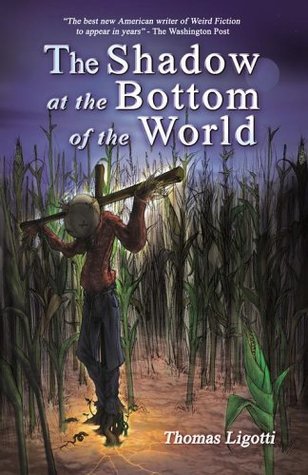
The Shadow at the Bottom of the World
A longtime Lovecraft devotee, who has extended the weird tale to the next level via the likes of Borges and Burroughs, Thomas Ligotti is usually published as part of a general anthology of horror writers. But now Ligotti has pulled together a collection of his favorite fiction, both old and new, representing his best and most characteristic works. Thomas Ligotti's stories are perhaps best described as dark magical realism. Many of his stories center on the distorted perspective of a frequently doomed narrator. The title story, "The Shadow at the Bottom of the World," reimagines a kind of Bradbury-like small town that encounters the appearance of a kind of existential darkness, written with a sharp imagery like that of William S. Burroughs. In story after story in this collection, Ligotti does not merely present his readers with isolated incidents of supernatural horror - he challenges them to confront nightmares that are entwined in the very fabric of life itself. Ligotti avoids the explicit violence common in some contemporary fiction, preferring instead to establish an intensely disquieting atmosphere through the use of subtlety and repetition. Often compared favourably with Edgar Allan Poe, Jorge Luis Borges, Franz Kafka and H.P. Lovecraft, the "New York Times Book Review" wrote "If there were a literary genre called 'philosophical horror' Thomas Ligotti would easily fit within it".
256 pages, Paperback
First published June 14, 2005
About the author
Thomas Ligotti
196 books3,313 followersThomas Ligotti is a contemporary American horror author and reclusive literary cult figure. His writings, while unique in style, have been noted as major continuations of several literary genres—most prominently Lovecraftian horror—and have overall been described as works of "philosophical horror", often written as philosophical novels with a "darker" undertone which is similar to gothic fiction. The Washington Post called him "the best kept secret in contemporary horror fiction"; another critic declared "It's a skilled writer indeed who can suggest a horror so shocking that one is grateful it was kept offstage."
Ratings & Reviews
Friends & Following
Create a free account to discover what your friends think of this book!
Community Reviews
Displaying 1 - 30 of 46 reviews

June 15, 2007
A fine anthology of Ligotti's works, from his first characteristic masterpiece ("Last Feast of the Harlequin") to many of the best works contained in "Teatro Grottesco." In most horror stories, the forces of evil or chaos intrude upon a world of goodness and order, and are eventually--if only temporarily--defeated. Ligotti, however, gives us something much different: a malevolent pantheism in which reality is nothing but a series of masks, people nothing but a series of puppets, while an ever-shifting miasma of nothingness and foulness writhes and seethes beneath.
These stories don't just give you nightmares: they are nightmares in and of themselves. Highly recommended for those who like their horror bleak, uncompromising and existential.

Read
November 23, 2021
“Before there occurred anything of a truly prodigious nature, the season had manifestly erupted with some feverish intent. This, at least, was how it appeared to us, whether we happened to live in town or somewhere outside its limits.”
Thomas Ligotti places his short-story, The Shadow at the Bottom of the World, under the heading The Voice of Our Name, most appropriate since, as in the above opening lines, the tale is told by a narrator speaking in first-person plural, that is, as “we” and “us” and “our.” It is this title story I will make the focus of my review.
Personally, I'm put on my guard when anybody takes on the role of spokesperson for an organization or crowd. Call me a skeptic, but I sense some element of personal dignity is forfeited when an individual assumes the identity of a group.
I'm also alerted to something strange afoot when the narrator tells us “the season had manifestly erupted with some feverish intent” and immediately talks about a dark, abysmal presence in crisis or that something “perhaps had been secretly invoked by small shadowy voices calling out in the midst of our dreams.” He also speaks of a bitter scent in the air, the "hysteric brilliance” of trees and the “intemperate display” of flowers, shrubs and plants.
If this isn't enough, the narrator alludes to the stars in the night sky growing delirious and taking on "the tints of an earthly inflammation.” And, finally, there's that scarecrow in an open field, a field refusing to turn cold when the season turned from autumn into early winter.
Ah, that scarecrow. In addition to the lurid description of the natural world appearing to have gone on some weird acid trip, the tale's narrator expresses concern over a scarecrow seemingly caught between opposing forces – its head slumps as if in “a grotesque slumber” yet its arms extend as if in an “incredible gesture toward flight,” its head nods as if trapped in a bad dream as its overalls flap and flannel shirt flutters as if in a strong wind. But, gulp, there is no wind; all else in field and trees remains completely still.
Does all this bizarreness creep out the men and women who witness what has happened to their otherwise reliable, predictable world? You bet it does. But there's a glimmer of comprehension in the person of a Mr. Marble whose been making his own detailed observations, studying signs and uttering prophecies.
Sidebar: Some Thomas Ligotti irony on display here in his calling this man Mr. Marble, as in those common expressions - “losing one's marbles” and “scrambled marbles” since attributes of a tribal shaman frequently include crazy wisdom along with a deep connection to the Earth and an ability to journey to realms beyond the purely physical, qualities, as we come to learn, possessed in abundance by strange Mr. Marble.
Such an incredible tale probing the human psyche, the dynamics of groupthink and the very nature of reality. Here are several clips from what could be a Shadow at the Bottom highlight reel -
One – The narrator reports many individuals were nudged from their beds, called as witnesses to what he terms “an obscene spectacle.” The scarecrow appears to be a living creature (“appears” and “seems” are terms the narrator uses repeatedly, as if they're all being tricked into seeing what they see). Beholding the scarecrow, some claim it “actually raised its arms and its empty face to the sky, as though declaring itself to the heavens” while others saw “its legs kick wildly, like those of a man who is hanged.” Of course, what's so freaky about scarecrows is how similar they are to humans, adding a special sting to the night's “obscene spectacle.”
Two – The following day, they all revisit the field and the scarecrow. In his account, the narrator uses terms like pilgrim, augur, idol, avatar, revelation, congregation, terms closely associated with religion. The narrator reflects, “Our congregation was lost in fidgeting bemusement.” However, there is an exception: Mr. Marble “whose eyes...were gleaming with perceptions he could not offer us in any words we would understand.” Their inability to understand is predictable - after all, their worldview is probably a combination homespun pragmatism and fundamentalist Christianity. Anything outside their limited sphere of belief and comprehension would be far too removed from even the first step in appreciating and understanding what someone like Mr. Marble had to offer.
Three – Standing in that field, the narrator recounts there wasn't sufficient sunlight to “burn off the misty dreams of the past night.” He also observes “radiant leaves possessed some inner source of illumination or stood in contrast to some deeper shadow which they served to mask” and the group's impeded efforts to come to terms with their fears. Also, how “odd droning noises that filled the air could not be blamed on the legions of local cicadas but indeed rose up from under the ground.” Oh, how all of what's spoken here relates to tribal ritual and shamanism – dreams, shadows, masks and, of course, that continuous cicada-like droning noise we can liken to a didgeridoo, sacred instrument of the Australian Aboriginal peoples.
Four – When the farmer who owns the field tries to tear the scarecrow apart, he and everyone else are in for a shock: after the straw and rag clothes are discarded, rather than two crosswise planks as to be expected, there was something “black and twisted in the form of a man, something that seemed to come up from the earth.” The narrator describes the gruesome particulars and concludes with “All of this was supported by a thick, dark stalk which rose from the earth and reached into the effigy like a hand into a puppet.” Ligotti fans will be brought to attention by this last statement - puppets controlled by a malignant outside presence serving as a major theme for the author.
And what happens when they try to hack away and destroy that stalk rising from the earth? And what happens thereafter (I've only highlighted the opening scenes)? For Thomas Ligotti to tell.
The Shadow at the Bottom of the World prompts us to ask a number of philosophic questions. Will this community's worldview be shattered when nature appears to violate its own rules? Is anybody truly open to messages that might be contained in their dreams? What's with Mr. Marble and what will he do under these seemingly horrific circumstances? Are these people connected or disconnected to the Earth? Do these freakish happenings threaten a traditional Christian view of God? What, if anything, is nature herself trying to communicate to these men and woman? Might there be a kind of Zoroastrian dualism at play here?
The questions continue. Have a read yourself. I'm confident you'll come up with some humdingers on your own.

American author Thomas Ligotti, born 1953

March 23, 2014
I have to say I was overjoyed when the creator of the popular--and critically acclaimed--TV show True Detective cited as an influence various masters of the weird tale, such as Thomas Ligotti. That brought these writers a well deserved exposure to a mass audience.
I suggest this book for those who might want to read Ligotti's fiction. This book is a "best of" kind of book. Most of the stories here appeared previously in other anthologies.
These are well written stories of metaphysical horror. Behind appearances lie a disturbing reality.
The contents:
Foreword by Douglas Anderson
Introduction: Horror Stories: A Nightmare Scenario by Thomas Ligotti
The Last Feast of Harlequin
Dr. Voke and Mr. Veech
Alice's Last Adventure
Vastarien
Dr. Locrian's Asylum
The Mystics of Muelenburg
The Spectacles in the Drawer
The Strange Design of Master Rignolo
The Shadow at the Bottom of the World
Nethescurial
The Cocoons
The Tsalal
The Bungalow House
Teatro Grotessco
The Red Tower
Purity
I suggest this book for those who might want to read Ligotti's fiction. This book is a "best of" kind of book. Most of the stories here appeared previously in other anthologies.
These are well written stories of metaphysical horror. Behind appearances lie a disturbing reality.
The contents:
Foreword by Douglas Anderson
Introduction: Horror Stories: A Nightmare Scenario by Thomas Ligotti
The Last Feast of Harlequin
Dr. Voke and Mr. Veech
Alice's Last Adventure
Vastarien
Dr. Locrian's Asylum
The Mystics of Muelenburg
The Spectacles in the Drawer
The Strange Design of Master Rignolo
The Shadow at the Bottom of the World
Nethescurial
The Cocoons
The Tsalal
The Bungalow House
Teatro Grotessco
The Red Tower
Purity

February 12, 2008
The Shadow at the Bottom of the World is a collection of short stories that absolutely reek of bleakness and sheer horror, but not horror in the same sense of the more mainstream type of horror novels. Ligotti connects all of his stories with an overaching theme of evil that "may show itself anywhere precisely because it is everywhere and is as stunningly set off by a foil of sunshine and flowers as it is by darkness and dead leaves." (145) This is probably one of the darkest collections of horror I've ever encountered, but the stories contained within this book are truly excellent. These aren't the kind of horror stories you're going to find on supermarket shelves, though, but more of a thinking person's horror. I think you have to read them to understand, because I think each reader is going to find something that resonates on an individual level. The other overall statement that I want to make about this book is that it is clear that while Ligotti is an excellent writer, there are shades of influence in her from writers like HP Lovecraft and others, that allow the darkness to take you in its grip right away. Very well done, and highly recommended, although mainstream horror readers may not like it because there are no gory parts or whatever it is that a lot of modern horror fiction readers are looking for.
In the list of what I would consider excellent stories:
"the last feast of harlequin,"
"dr. locrian's asylum"
"vastarien"
"the spectacles in the drawer"
"the shadow at the bottom of the world,"
"nethescurial"
"the bungalow house"
The others are good, too, but these were my favorites.
Very highly recommended; if you read Lovecraft,you will appreciate this one very much.
In the list of what I would consider excellent stories:
"the last feast of harlequin,"
"dr. locrian's asylum"
"vastarien"
"the spectacles in the drawer"
"the shadow at the bottom of the world,"
"nethescurial"
"the bungalow house"
The others are good, too, but these were my favorites.
Very highly recommended; if you read Lovecraft,you will appreciate this one very much.

February 6, 2015
Ligotti is one of the downright strangest writers I've encountered, but at his best, he legitimately is one of the all-time greats of literary horror. His prose has a hypnotic quality that cannot be compared to anyone else I'm aware of. Plot is minimal (but used to good effect at times), while an atmosphere of gloomy dread reigns supreme, and a dark undercurrent of pessimism flows beneath decaying cityscapes and dust-choked towns. At times his writing degenerates into gibberish, but even his "failed experiments" (such as "Dr. Voke and Mr. Veech" and "The Red Tower" in this volume) are unique.
This book is a sort of "sampler platter" of Ligotti's work, containing a few rather "meh" stories, but most of them fall in the good-to-outstanding range. Indeed, the high-quality stories more than make up for the rather dull likes of "The Mystics of Muelenburg" and "The Shadow at the Bottom of the World". The magnificent "Last Feast of Harlequin", the terrifying "Nethescurial", and the enigmatically ultra-disturbing "Purity" are simply among the best horror stories ever written. "The Spectacles in the Drawer" and "The Cocoons" are perhaps the most "conventional" tales, yet both grow creepier and more fascinating in the mind the more I think about them. Finally we have the all-but-unclassifiable "Vastarien", "The Bungalow House", and my personal favorite, "Dr. Locrian's Asylum", the reading of which is like being put into a trance and sent to some bizarre alternate dimension.
Weird fiction that is truly weird, and, though not very accessible to the average pop-fiction reader, will still be being talked about when death-worshiping clown-maggots devour all trends.
This book is a sort of "sampler platter" of Ligotti's work, containing a few rather "meh" stories, but most of them fall in the good-to-outstanding range. Indeed, the high-quality stories more than make up for the rather dull likes of "The Mystics of Muelenburg" and "The Shadow at the Bottom of the World". The magnificent "Last Feast of Harlequin", the terrifying "Nethescurial", and the enigmatically ultra-disturbing "Purity" are simply among the best horror stories ever written. "The Spectacles in the Drawer" and "The Cocoons" are perhaps the most "conventional" tales, yet both grow creepier and more fascinating in the mind the more I think about them. Finally we have the all-but-unclassifiable "Vastarien", "The Bungalow House", and my personal favorite, "Dr. Locrian's Asylum", the reading of which is like being put into a trance and sent to some bizarre alternate dimension.
Weird fiction that is truly weird, and, though not very accessible to the average pop-fiction reader, will still be being talked about when death-worshiping clown-maggots devour all trends.

May 25, 2017
Earlier this year I had a chance to read two of the most recent projects by horror writer Thomas Ligotti -- contemporary corporate novella My Work Is Not Yet Done and his nonfiction primer on "pessimistic philosophies," The Conspiracy Against the Human Race -- and found both of them to be excellent, really dark and unique stuff that appealed to me as a non-fan of this genre. So I thought I'd take a chance and read up on a bunch of his short fiction too (Ligotti has never actually written a single novel in the thirty years he's been publishing, confining himself exclusively to the short-story format), and ended up picking just the first three books to become available through my local library system -- his very first book, Songs of a Dead Dreamer (covering pieces from the late 1980s), his newest book, The Spectral Link (featuring stories just from the 2010s), and the best-of collection The Shadow at the Bottom of the World (featuring a curated selection of pieces from the beginning of his career up to 2005).
Unfortunately, though, the disappointing news is that these stories for the most part aren't nearly as good as the two full-length books I had read before, and in fact most of them are surprisingly dated to a specific time and place even just a couple of decades after their original publication; that specific time and place being the "emo goth" scene of the early 1990s, the same people who back in the day were obsessive fans of Neil Gaiman's Sandman and the music of Tori Amos, Kate Bush, Dead Can Dance and others. As a former industrial kid back in college, I had a sort of tangential relationship to this community, so I don't exactly fault them their pop-culture loves (my favorite band of those years, Skinny Puppy, was upon hindsight not much more than an emo goth caught on a bad day); but even then, and especially now, my tolerance is short for all the endless descriptions of lit candles and flowing curtains and masquerade masks and skinny pale dudes pondering the universe.
A huge amount of Ligotti's work features exactly this, much of it written in the style of someone explaining a dream (and we all know how much fun it is to sit and listen to someone describe one of their dreams); and that really surprised me, given Ligotti's reputation as a "writer's writer" and "the horror author all the other horror authors wished they were," especially disappointing after reading his Work and Conspiracy and seeing what he's capable of as a clear-eyed author of non-sentimental, coldly chilling looks at the black depths inside the human soul. As his reputation suggests, the best pieces in his oeuvre always tend to be when he's doing pastiches of HP Lovecraft, the main thing he's known for among casual fans of the horror genre; unfortunately, though, my recommendation today is to pick your way through these pieces to find those best ones, not necessarily to plow through it all indiscriminately and expect it to be great, as his diehard fans claim. A recommendation today, but a cautious one.
Unfortunately, though, the disappointing news is that these stories for the most part aren't nearly as good as the two full-length books I had read before, and in fact most of them are surprisingly dated to a specific time and place even just a couple of decades after their original publication; that specific time and place being the "emo goth" scene of the early 1990s, the same people who back in the day were obsessive fans of Neil Gaiman's Sandman and the music of Tori Amos, Kate Bush, Dead Can Dance and others. As a former industrial kid back in college, I had a sort of tangential relationship to this community, so I don't exactly fault them their pop-culture loves (my favorite band of those years, Skinny Puppy, was upon hindsight not much more than an emo goth caught on a bad day); but even then, and especially now, my tolerance is short for all the endless descriptions of lit candles and flowing curtains and masquerade masks and skinny pale dudes pondering the universe.
A huge amount of Ligotti's work features exactly this, much of it written in the style of someone explaining a dream (and we all know how much fun it is to sit and listen to someone describe one of their dreams); and that really surprised me, given Ligotti's reputation as a "writer's writer" and "the horror author all the other horror authors wished they were," especially disappointing after reading his Work and Conspiracy and seeing what he's capable of as a clear-eyed author of non-sentimental, coldly chilling looks at the black depths inside the human soul. As his reputation suggests, the best pieces in his oeuvre always tend to be when he's doing pastiches of HP Lovecraft, the main thing he's known for among casual fans of the horror genre; unfortunately, though, my recommendation today is to pick your way through these pieces to find those best ones, not necessarily to plow through it all indiscriminately and expect it to be great, as his diehard fans claim. A recommendation today, but a cautious one.

August 19, 2017
I had trouble getting this collection and instead read the collections that contained these stories originally--Songs of a Dead Dreamer, Grimscribe, Noctuary, and Teatro Grottesco. I'm adding this collection to my books read for the completion of a reading list; I'm that kind of nerd.
...
Reading Ligotti for the first time has been one of the more remarkable reading pleasures of this year. I can only state that rereading his work will be another.
...
Reading Ligotti for the first time has been one of the more remarkable reading pleasures of this year. I can only state that rereading his work will be another.
March 11, 2008
This collection is amazing. a true master of horror. Be sure to have a birthday party or something after you read this..these stories get under your skin..into your head..and make you think...unsettling..

April 20, 2020
Outstanding. My first exposure to Ligotti, and what an introduction. Every story plays like an unholy amalgam of deeply nihilistic philosophy, poetic prose, and fantastic genre storytelling, every one of which bleeds into the effectiveness of the others to create the most deeply affecting and unforgettable collection of shorts I've read since I picked up King's Night Shift when I was 9.
RANKED:
EXCELLENT
Teatro Grottesco
- the perfect sweet spot of all the characteristics above.
Dr. Voke and Mr. Veech
- terrifying. Feels like a cursed German expressionist film
The Tsalal
- mesmerizing with a haunting ending
Dr. Locrian's Asylum
- haunting EVERYTHING. Atmosphere to die for.
Nethescurial
- pit-in-your-gut dread. Maybe the scariest of the bunch. A meta-commentary on cosmic horror stories that functions as a perfectly frightening cosmic horror story
The Last Feast of the Harlequin
- creepy small town jam
The Shadow at the Bottom of the World
- perfectly creepy midwestern-autumn vibes. Should have been 5-10 pages longer, but great nonetheless
REALLY GOOD
The Bungalow House
- eerie!
The Red Tower
- this mostly just has haunting imagery to offer, but MAN what imagery it is
The Spectacles in the Drawer
- disturbing and great. The final reveal is horrifying.
Alice's Last Adventure
- one of his most subtle, and very creepy. The most chilling ending in the collection (and that's saying something).
Vastarien
- Just a well-spun weird tale. Engaging from beginning to end.
The Cocoons
- great atmosphere and a great gross-out reveal.
SOLID
Purity
- maybe his most literary work here? The only one that feels like it's really a commentary on something. Quite disturbing and interesting, and I'm always a sucker for a sardonic Eyes Wide Shut-style ending.
The Strange Design of Master Rignolo
- some good visuals, but mostly forgettable
The Mystics of Muelenburg
- not bad; just blends in with the rest
RANKED:
EXCELLENT
Teatro Grottesco
- the perfect sweet spot of all the characteristics above.
Dr. Voke and Mr. Veech
- terrifying. Feels like a cursed German expressionist film
The Tsalal
- mesmerizing with a haunting ending
Dr. Locrian's Asylum
- haunting EVERYTHING. Atmosphere to die for.
Nethescurial
- pit-in-your-gut dread. Maybe the scariest of the bunch. A meta-commentary on cosmic horror stories that functions as a perfectly frightening cosmic horror story
The Last Feast of the Harlequin
- creepy small town jam
The Shadow at the Bottom of the World
- perfectly creepy midwestern-autumn vibes. Should have been 5-10 pages longer, but great nonetheless
REALLY GOOD
The Bungalow House
- eerie!
The Red Tower
- this mostly just has haunting imagery to offer, but MAN what imagery it is
The Spectacles in the Drawer
- disturbing and great. The final reveal is horrifying.
Alice's Last Adventure
- one of his most subtle, and very creepy. The most chilling ending in the collection (and that's saying something).
Vastarien
- Just a well-spun weird tale. Engaging from beginning to end.
The Cocoons
- great atmosphere and a great gross-out reveal.
SOLID
Purity
- maybe his most literary work here? The only one that feels like it's really a commentary on something. Quite disturbing and interesting, and I'm always a sucker for a sardonic Eyes Wide Shut-style ending.
The Strange Design of Master Rignolo
- some good visuals, but mostly forgettable
The Mystics of Muelenburg
- not bad; just blends in with the rest

April 13, 2026
The horror GOAT.

June 10, 2019
Something of a best-of collection, I think I've read all of these stories before but I would recommend just about any of them.
November 12, 2021
Eh. I wanted more spookums.

April 18, 2025
"Doesn't have arms, but he knows how to use them. Doesn't have a face, but he knows where to find one." !!!!!!!!!!!!!!!!!!!!!!!!!!!!!!!!!!!!!!!!!!!!!!!!!!!!
"His dreams had always reached much deeper than ours. So we buried him deep in a bottomless grave".
"Evil, beloved and menacing evil, may show itself anywhere precisely because it's everywhere and its as stunningly set off by a foil of sunshine and flowers as it is by darkness and dead leaves".
En conjunto es una muy buena colección de relatos para iniciarse en el autor, su filosofía y sus temáticas predilectas quedan muy bien reflejadas en el conjunto. Tiene algunos cuentos increíbles, de lo mejorcito de terror que he leído, aunque la mitad de ellos más o menos son un poco repetitivos, trabajando una y otra vez las mismas temáticas (que bueno, son el centro del trabajo del autor, pero se hace un poco pesado).
"In the universe of Ligotti's fiction, the natural and the supernatural merge into the same nightmare, to distinguish them is meaningless and no salvation is to be found in this world or any other. Many of his stories focus on those anomalous moments in which a character's perception of his world is shaken and he is forced to confront a frightening and essentially chaotic universe. Which is, in its way, realism of the highest order."
Los cuentos que incluye son:
- The last feast of harlequin: este es sin duda mi favorito. Brutal la creación del pueblo y sus tradiciones, a la vista las aceptables y las ocultas y terribles que son su otra cara. "¿Qué se entierra antes de morir?", el culto antiguo, los túneles bajo tierra, devorar a la reina de invierno, la fertilidad vs el culto a lo infértil... Un horror folk muy extravagante y buenísimo
- Dr Voke and Mr Veech: nada destacable. Un artesano hace marionetas grotescas y terribles, Mr Veech va a pedirle ayuda y acaba siendo víctima de sus propios deseos.
-Alice's last adventure: este me gustó algo más. Una autora de cuentos infantiles sobre lo caótico y terrible del mundo que tienen por protagonista a su mejor amigo de la infancia, tras la muerte de este, se ve acosada por una presencia. Me gusto la sensación de fragilidad y vulnerabilidad de la vejez.
-Vastarien: aquí empiezan los cuentos más explícitos y con menos elaboración de trama a mayores sobre el tema central del autor. Un hombre encuentra un libro extraño en una librería, un desconocido lo paga por él, empieza a tener sueños extraños con un mundo caótico y horroroso pero a la vez fascinante, se vuelve loco, piensa que el extraño le regaló el libro para robarle sus sueños.
-Dr Locrians asylum: otro cuento repitiendo el mismo esquema entorno al tema central. Un asilo en el que se busca la locura de los internos como forma de conocer y alimentar el mundo caótico, horroroso y fascinante.
-The mystics of Muelenbur: otro cuento repitiendo el mismo esquema entorno al tema central. Una ciudad en la que poco a poco empieza a abrirse paso una fuerza del caos que lo va deformando todo mientras los habitantes, fascinados e impotentes, se dejan hacer, para después de que todo pase no recordar nada.
-The spectacles in the drawer: otro cuento repitiendo el mismo esquema entorno al tema central. Un mago le da a su aprendiz unas gafas a través de las cuales el mundo se revela en su forma verdadera, caos y horrores, pero que acaban siendo fascinantes para él y su objeto de deseo.
-The strange design of Master Rignolo: este es un poco diferente. Dos hombres visitan a un pintor que hace pinturas extrañas de paisajes conocidos, caóticas y que dan miedo. Una pintura suya se manifiesta en realidad: una cabeza de gigante enterrada en un campo, que se acaba comiendo al pintor, mientras los otros dos escuchan los gritos terribles y se marchan.
-The shadow at the bottom of the world: esta es de nuevo el mismo esquema entorno al tema central pero me pareció el cuento más trabajado de estos y el que mejor lo transmitía. Como en The mystics of Muelenburg, el caos y la oscuridad empiezan a alterar sutilmente el día a día de un pueblo campesino, los vecinos descubren que viene de un espantapájaros que ha sido tocado por una sombra negra que asciende desde la profundidad de la tierra. El afilador de cuchillos parece haberse vuelto loco y predica frases extrañas por el pueblo. Todo acaba cuando dos desconocidos aparecen en el pueblo y parece que son sacrificados por el afilador. El mal vuelve adentro de la tierra.
-Nethescurial: otro cuento repitiendo el mismo esquema entorno al tema central. Un investigador lee sobre una isla con un ídolo. Consigue el ídolo, y el mundo empieza a alterarse y volverse extraño y caótico. Trata de destruir el ídolo, sin resultado, el conocimiento que tiene le persigue y altera toda su percepción de la realidad, a ese mundo extraño que es el Nethescurial.
-The cocoons: un médico trata de curar a un paciente que se entiende es extremadamente neurótico, metiéndolo en el caos de lleno, dándole unas "pastillas" que son huevos de una criatura que te va comiendo por dentro hasta estallarte el cráneo y salir por ahí.
-The Tsalal: misma temática que Vastarien y Nethescurial, pero me gustó mucho más el desarrollo. Un hombre conoce un culto a una deidad oculta, la que trae el caos y el horror al mundo, participa en este culto, escribe un libro (el Tsalal), y engendra un hijo para que sea la encarnación del Tsalal. Luego se arrepiente, trata de evitar que lo que tiene que pasar pase. Si el hijo se queda mucho tiempo en un lugar, todo comienza a cambiar y alterarse hasta consumirse totalmente. Vuelve a su pueblo de nacimiento, donde su padre intentó acabar con el, congrega a los vecinos en la iglesia, los vecinos se lo comen para que su semilla no crezca, "bendita sea la semilla que se queda en la oscuridad", la oscuridad de dentro de sus cuerpos.
-The bungalow house: este fue uno de mis favoritos!!! Un hombre escucha unas grabaciones, dream recordings, en una galería de arte, en los que se describen paisajes vacíos y desolados. Encuentra gran consuelo en ellos, pues él siempre ha vivido pensando que no hay nada que hacer, ningún lugar adonde ir y nadie a quien conocer, y las grabaciones le acompañan en este sentimiento. Tratando de descubrir quién es el artista detrás de las grabaciones, acabamos descubriendo que es él mismo, sin recordarlo.
- Teatro grottesco: es el mismo tema que Tsalal, Nethescurial, the shadow at the bottom of the world... todos en general, pero presentado en una forma más original. Una agrupación llamada teatro grotesco contacta con artistas y les cambia hasta el punto de que ya no son capaces de crear nada más. Un artista se propone contactar con el teatro y destruirlo, acaba siendo chantajeado y absorbido por él. Tiene una estética surrealista y grotesca de los personajes, el teatro y su función muy chula.
-The red tower: una fábrica en la que se producen objetos extraños y horrorosos que nadie sabe muy bien cómo funciona ni su objetivo. Buen relato, raro, me recordó a uno de Negro tal vez, la máquina de color rojo.
-Purity: muy chulo!!! Un niño vive en un barrio horrible, su padre hace extraños experimentos en los que trata de extraer la fé o las creencias del cerebro de la gente por considerarlos "impuros". Las impurezas son: los países, la religión y la familia. El niño hace amistad con una mujer extraña en una casa horrible, pasa el tiempo con ella... Es un cuento muy raro pero con una ambientación muy buena y un punto final loco loco
"His dreams had always reached much deeper than ours. So we buried him deep in a bottomless grave".
"Evil, beloved and menacing evil, may show itself anywhere precisely because it's everywhere and its as stunningly set off by a foil of sunshine and flowers as it is by darkness and dead leaves".
En conjunto es una muy buena colección de relatos para iniciarse en el autor, su filosofía y sus temáticas predilectas quedan muy bien reflejadas en el conjunto. Tiene algunos cuentos increíbles, de lo mejorcito de terror que he leído, aunque la mitad de ellos más o menos son un poco repetitivos, trabajando una y otra vez las mismas temáticas (que bueno, son el centro del trabajo del autor, pero se hace un poco pesado).
"In the universe of Ligotti's fiction, the natural and the supernatural merge into the same nightmare, to distinguish them is meaningless and no salvation is to be found in this world or any other. Many of his stories focus on those anomalous moments in which a character's perception of his world is shaken and he is forced to confront a frightening and essentially chaotic universe. Which is, in its way, realism of the highest order."
Los cuentos que incluye son:
- The last feast of harlequin: este es sin duda mi favorito. Brutal la creación del pueblo y sus tradiciones, a la vista las aceptables y las ocultas y terribles que son su otra cara. "¿Qué se entierra antes de morir?", el culto antiguo, los túneles bajo tierra, devorar a la reina de invierno, la fertilidad vs el culto a lo infértil... Un horror folk muy extravagante y buenísimo
- Dr Voke and Mr Veech: nada destacable. Un artesano hace marionetas grotescas y terribles, Mr Veech va a pedirle ayuda y acaba siendo víctima de sus propios deseos.
-Alice's last adventure: este me gustó algo más. Una autora de cuentos infantiles sobre lo caótico y terrible del mundo que tienen por protagonista a su mejor amigo de la infancia, tras la muerte de este, se ve acosada por una presencia. Me gusto la sensación de fragilidad y vulnerabilidad de la vejez.
-Vastarien: aquí empiezan los cuentos más explícitos y con menos elaboración de trama a mayores sobre el tema central del autor. Un hombre encuentra un libro extraño en una librería, un desconocido lo paga por él, empieza a tener sueños extraños con un mundo caótico y horroroso pero a la vez fascinante, se vuelve loco, piensa que el extraño le regaló el libro para robarle sus sueños.
-Dr Locrians asylum: otro cuento repitiendo el mismo esquema entorno al tema central. Un asilo en el que se busca la locura de los internos como forma de conocer y alimentar el mundo caótico, horroroso y fascinante.
-The mystics of Muelenbur: otro cuento repitiendo el mismo esquema entorno al tema central. Una ciudad en la que poco a poco empieza a abrirse paso una fuerza del caos que lo va deformando todo mientras los habitantes, fascinados e impotentes, se dejan hacer, para después de que todo pase no recordar nada.
-The spectacles in the drawer: otro cuento repitiendo el mismo esquema entorno al tema central. Un mago le da a su aprendiz unas gafas a través de las cuales el mundo se revela en su forma verdadera, caos y horrores, pero que acaban siendo fascinantes para él y su objeto de deseo.
-The strange design of Master Rignolo: este es un poco diferente. Dos hombres visitan a un pintor que hace pinturas extrañas de paisajes conocidos, caóticas y que dan miedo. Una pintura suya se manifiesta en realidad: una cabeza de gigante enterrada en un campo, que se acaba comiendo al pintor, mientras los otros dos escuchan los gritos terribles y se marchan.
-The shadow at the bottom of the world: esta es de nuevo el mismo esquema entorno al tema central pero me pareció el cuento más trabajado de estos y el que mejor lo transmitía. Como en The mystics of Muelenburg, el caos y la oscuridad empiezan a alterar sutilmente el día a día de un pueblo campesino, los vecinos descubren que viene de un espantapájaros que ha sido tocado por una sombra negra que asciende desde la profundidad de la tierra. El afilador de cuchillos parece haberse vuelto loco y predica frases extrañas por el pueblo. Todo acaba cuando dos desconocidos aparecen en el pueblo y parece que son sacrificados por el afilador. El mal vuelve adentro de la tierra.
-Nethescurial: otro cuento repitiendo el mismo esquema entorno al tema central. Un investigador lee sobre una isla con un ídolo. Consigue el ídolo, y el mundo empieza a alterarse y volverse extraño y caótico. Trata de destruir el ídolo, sin resultado, el conocimiento que tiene le persigue y altera toda su percepción de la realidad, a ese mundo extraño que es el Nethescurial.
-The cocoons: un médico trata de curar a un paciente que se entiende es extremadamente neurótico, metiéndolo en el caos de lleno, dándole unas "pastillas" que son huevos de una criatura que te va comiendo por dentro hasta estallarte el cráneo y salir por ahí.
-The Tsalal: misma temática que Vastarien y Nethescurial, pero me gustó mucho más el desarrollo. Un hombre conoce un culto a una deidad oculta, la que trae el caos y el horror al mundo, participa en este culto, escribe un libro (el Tsalal), y engendra un hijo para que sea la encarnación del Tsalal. Luego se arrepiente, trata de evitar que lo que tiene que pasar pase. Si el hijo se queda mucho tiempo en un lugar, todo comienza a cambiar y alterarse hasta consumirse totalmente. Vuelve a su pueblo de nacimiento, donde su padre intentó acabar con el, congrega a los vecinos en la iglesia, los vecinos se lo comen para que su semilla no crezca, "bendita sea la semilla que se queda en la oscuridad", la oscuridad de dentro de sus cuerpos.
-The bungalow house: este fue uno de mis favoritos!!! Un hombre escucha unas grabaciones, dream recordings, en una galería de arte, en los que se describen paisajes vacíos y desolados. Encuentra gran consuelo en ellos, pues él siempre ha vivido pensando que no hay nada que hacer, ningún lugar adonde ir y nadie a quien conocer, y las grabaciones le acompañan en este sentimiento. Tratando de descubrir quién es el artista detrás de las grabaciones, acabamos descubriendo que es él mismo, sin recordarlo.
- Teatro grottesco: es el mismo tema que Tsalal, Nethescurial, the shadow at the bottom of the world... todos en general, pero presentado en una forma más original. Una agrupación llamada teatro grotesco contacta con artistas y les cambia hasta el punto de que ya no son capaces de crear nada más. Un artista se propone contactar con el teatro y destruirlo, acaba siendo chantajeado y absorbido por él. Tiene una estética surrealista y grotesca de los personajes, el teatro y su función muy chula.
-The red tower: una fábrica en la que se producen objetos extraños y horrorosos que nadie sabe muy bien cómo funciona ni su objetivo. Buen relato, raro, me recordó a uno de Negro tal vez, la máquina de color rojo.
-Purity: muy chulo!!! Un niño vive en un barrio horrible, su padre hace extraños experimentos en los que trata de extraer la fé o las creencias del cerebro de la gente por considerarlos "impuros". Las impurezas son: los países, la religión y la familia. El niño hace amistad con una mujer extraña en una casa horrible, pasa el tiempo con ella... Es un cuento muy raro pero con una ambientación muy buena y un punto final loco loco

May 6, 2020
I don’t read much horror, but Ligotti was recommended as supposedly deeper and more philosophical than average genre fiction. If by philosophy you mean incomprehensible postmodernist nonsense then you might like him. The stories are quite shallow and pointless, full of clichés, and don’t really present any unsettling philosophical ideas. Some of them are so ridiculous, nonsensical and over-the-top that they could be classified as surrealist humor rather than horror.
There aren’t really any deeper themes, except maybe this "disappearance of reality", although it seems to be a phrase the author vaguely uses just to describe unconvincing supernatural events. Such events usually work as tools to keep the story going without bothering much with logical structure or scientific explanations. Ligotti doesn’t use them sparingly so you don’t have a feeling that the stories are set in the "real" world – which is suddenly threatened by some incomprehensible horror – but instead you already imagine that the stories are set in some kind of surreal magical world and then you just wait to see what kind of magical monster will appear. This removes a lot of the shock value, and most of the stories are formulaically aiming for shock by creating spooky atmosphere and then ending with some disturbing revelation, murder, insanity, etc.
Lovecraft wrote a lot of average stories, but he also wrote quite a few great ones, and most of his work contains interesting and original themes. Ligotti is obviously influenced by him, but he mostly copies his writing style (which wasn’t really that great) and story/setting elements (which are by now clichés). For Ligotti horror stories are not a medium to express any interesting ideas and even when it seems that he is trying to approach some serious topic it’s not accomplished in any clever or impressive way. It’s a collection of cheap horror stories. I guess that people who read horror fiction for fun can find Ligotti’s works interesting – it is not worse than any average horror movie – but if you’re expecting anything deeper he is really not worth reading. Mostly boring, maybe a few readable stories, overall a disappointment.
There aren’t really any deeper themes, except maybe this "disappearance of reality", although it seems to be a phrase the author vaguely uses just to describe unconvincing supernatural events. Such events usually work as tools to keep the story going without bothering much with logical structure or scientific explanations. Ligotti doesn’t use them sparingly so you don’t have a feeling that the stories are set in the "real" world – which is suddenly threatened by some incomprehensible horror – but instead you already imagine that the stories are set in some kind of surreal magical world and then you just wait to see what kind of magical monster will appear. This removes a lot of the shock value, and most of the stories are formulaically aiming for shock by creating spooky atmosphere and then ending with some disturbing revelation, murder, insanity, etc.
Lovecraft wrote a lot of average stories, but he also wrote quite a few great ones, and most of his work contains interesting and original themes. Ligotti is obviously influenced by him, but he mostly copies his writing style (which wasn’t really that great) and story/setting elements (which are by now clichés). For Ligotti horror stories are not a medium to express any interesting ideas and even when it seems that he is trying to approach some serious topic it’s not accomplished in any clever or impressive way. It’s a collection of cheap horror stories. I guess that people who read horror fiction for fun can find Ligotti’s works interesting – it is not worse than any average horror movie – but if you’re expecting anything deeper he is really not worth reading. Mostly boring, maybe a few readable stories, overall a disappointment.

August 28, 2018
I was hooked ever since I read Ligotti’s philosophical treatise The Conspiracy Against the Human Race. You see, Nothingness was a concept that struck me to the very core of my being. His stories have that quality to them, drawing on the terror of emptiness and nothingness. This is something most horror writers don’t touch with ten-foot poles. Having said that, I jumped into his short story compilation with trepidation, not knowing what to expect. Color me impressed: his stories caused me nightmares.
You see, Ligotti doesn’t really do the whole black vs. white story of good winning over evil. In his world, evil isn’t something tangible, rather it’s a philosophy that permeates our very existence. It’s the nothingness and the foulness in our very beings, lurking just beneath the veneer of humanity we put up on display daily.
He finds horror in the bleakness, the pointlessness of existence. It could be a day full of sunshine and flowers, or a dark, stormy night alone in a mansion. It doesn’t matter.
His horror is expressed through the idea of the self, which is enhanced through his academic prose. It causes the reader to go into a sort of trance, focusing not just on the words but the feelings behind them. It slithers its way to the very core of your being. It fills you with a sense of unease, a dread that claws its way into you. It’s the sense of isolation, of being disconnected from the world, feeling completely empty and devoid of meaning.
Of course, there’s the external horror too, and by the gods, they’re fantastic. There are malevolent gods who reward the banality of existence, monsters who hatch out of your head, and a pan dimensional entity who literally tears apart the fabric of reality.
If you’re looking for weird fiction that’s going to truly weird you out, then you’re in the right place. Go read this right now and have some sweet, sweet nightmares.
You see, Ligotti doesn’t really do the whole black vs. white story of good winning over evil. In his world, evil isn’t something tangible, rather it’s a philosophy that permeates our very existence. It’s the nothingness and the foulness in our very beings, lurking just beneath the veneer of humanity we put up on display daily.
He finds horror in the bleakness, the pointlessness of existence. It could be a day full of sunshine and flowers, or a dark, stormy night alone in a mansion. It doesn’t matter.
His horror is expressed through the idea of the self, which is enhanced through his academic prose. It causes the reader to go into a sort of trance, focusing not just on the words but the feelings behind them. It slithers its way to the very core of your being. It fills you with a sense of unease, a dread that claws its way into you. It’s the sense of isolation, of being disconnected from the world, feeling completely empty and devoid of meaning.
Of course, there’s the external horror too, and by the gods, they’re fantastic. There are malevolent gods who reward the banality of existence, monsters who hatch out of your head, and a pan dimensional entity who literally tears apart the fabric of reality.
If you’re looking for weird fiction that’s going to truly weird you out, then you’re in the right place. Go read this right now and have some sweet, sweet nightmares.

February 1, 2009
Re-reading this one again. Stories from throughout his writing career. Excellent.
"Dr. Voke and Mr. Veech":
Probably the closest we ever come to a love tale by this modern master of the macabre, Thomas Ligotti. And this love-story-with-revenge story is not your average, romantic tale!;-)
Mr. Veech visits the strange, eerie Dr. Voke because he has a (bizarre, some would add) heartache--some other man has the affection of the woman he loves; the Dr. finally promises to help... But certainly not in the way Veech probably imagined. And afterwards, Veech is going for a revenge which is, hm, quite atypical and just as strange as the rest of the story.
Very atmospheric all around. A very nice story.
February 7:
"The Strange Design of Master Rignolo":
I have no doubt that it is not the intention of the author, but I always think of this story as a reversed "Pickman's Model" (by H. P. Lovecraft). Says something about my way of thinking; how I try to make sense of things, I am sure;-)
A strange appearance of a face in a landscape turns out to have a very real (if su-real) connection with the genius artist, Master Rignolo.
Ligotti's eerie sense of atmosphere & bizarre images combined with his unique imagination is here demonstrated in full. I'd rate it a perfect tale if not for the ending, which to me is somewhat of a let-down. A rare experience to have with a Ligotti story.
More reviews coming...
"Dr. Voke and Mr. Veech":
Probably the closest we ever come to a love tale by this modern master of the macabre, Thomas Ligotti. And this love-story-with-revenge story is not your average, romantic tale!;-)
Mr. Veech visits the strange, eerie Dr. Voke because he has a (bizarre, some would add) heartache--some other man has the affection of the woman he loves; the Dr. finally promises to help... But certainly not in the way Veech probably imagined. And afterwards, Veech is going for a revenge which is, hm, quite atypical and just as strange as the rest of the story.
Very atmospheric all around. A very nice story.
February 7:
"The Strange Design of Master Rignolo":
I have no doubt that it is not the intention of the author, but I always think of this story as a reversed "Pickman's Model" (by H. P. Lovecraft). Says something about my way of thinking; how I try to make sense of things, I am sure;-)
A strange appearance of a face in a landscape turns out to have a very real (if su-real) connection with the genius artist, Master Rignolo.
Ligotti's eerie sense of atmosphere & bizarre images combined with his unique imagination is here demonstrated in full. I'd rate it a perfect tale if not for the ending, which to me is somewhat of a let-down. A rare experience to have with a Ligotti story.
More reviews coming...
This entire review has been hidden because of spoilers.

December 25, 2009
A read that asks readers to fully involve themselves. The prose is dense, very much in the vain of Poe and Lovecraft -- which many critiques have stated -- but with modern highlights, such as sharp dialogue and present day, urban settings. These stories cannot be skimmed, and readers must remove themselves from this world to investigate the deep and peculiar lands of Ligotti. His environments and topics can be described as supernatural, but they are written as though they are as natural as the midnight hour. These stories reveal that nightmares can be of our own design and also of their own.
There are many worthwhile tales in this collection, but the title story and "The Tsalal" resonate loudest with me.
There are many worthwhile tales in this collection, but the title story and "The Tsalal" resonate loudest with me.

May 5, 2015
Ligotti creates my favourite kind of horror: a vague, alien menace that is omnipotent, incomprehensible, and intrudes on the normal functioning of the world. This sort of completely overwhelming force establishes a great sense of nihilistic dread.
Still, as good as Ligotti is at creating this force, his characters are mostly vague, shadowy, and not very interesting. Add to that the lack of plot in most of the stories, and you're left with a very effective evil that doesn't have much to do.
Ligotti creates great setpieces, and some of the stories are incredible. I just wish other times he would do something with the horror he creates rather than just have it sit there, brooding.
Still, as good as Ligotti is at creating this force, his characters are mostly vague, shadowy, and not very interesting. Add to that the lack of plot in most of the stories, and you're left with a very effective evil that doesn't have much to do.
Ligotti creates great setpieces, and some of the stories are incredible. I just wish other times he would do something with the horror he creates rather than just have it sit there, brooding.

July 24, 2007
what i learned from this book: thomas ligotti is a f*cking WEIRDO. some bizzare, terrifying, spooky, otherworldy stuff. short stories w/hints of poe and lovecraft but far more haunting and unsettling. master of the weird.

May 1, 2008
Anyone interested in horror lit, or more exactly Weird lit, should read everything by this contemporary master.
July 15, 2012
A unique blending of Lovecraft and Borges, King and Barker, with a dash of Huysmans. Bleak, unsettling, as infectious as a half-remembered nightmare.
April 2, 2021
DRUDGERY is the word that best describes this author. There is a good writer somewhere in there, but he's very good at snuffing it out.
Reading this felt like a chore.
Reading this felt like a chore.

July 12, 2017
It's…it's fine.
The problem with this collection is that Ligotti spends too much time in the Lovecraftian mold: cults, old gods, that kind of thing. Which is okay, I guess, but leaves you feeling like you've read it before. And on the occasions when he steps out of the mold, it doesn't always work. He's at his best in stories like "The Red Tower", about a malevolent factory, or the titular story, about…well, something evil coming out of the earth. These stories are less narrative and more tone poem, horror unmoored from plot and set adrift to collide freely with small fears you didn't know you had. They don't explain themselves; you don't know what's happening; you just understand enough to be afraid.
But there's a larger problem, a reason I can't fully embrace what's, overall, a pretty solid collection. Ligotti feels a lot like that guy we all knew in school, the guy who has his own idiosyncratic view of the world and is determined to make it heard: in class, in the hall, on social media, anywhere. And it gets pretty old. I can only read so many paragraphs of "what if…the universe is just evil, man" before I want to bang my head against a wall. There's a kind of Dark Dudebro feel to some of the stories, where huge and unfounded philosophical pronouncements are made as if there can be no argument.
And I don't like it when I sit down to read a horror story and am subjected to lectures that have nothing to say but take forever to say it.
Your mileage, as always, may vary.
The problem with this collection is that Ligotti spends too much time in the Lovecraftian mold: cults, old gods, that kind of thing. Which is okay, I guess, but leaves you feeling like you've read it before. And on the occasions when he steps out of the mold, it doesn't always work. He's at his best in stories like "The Red Tower", about a malevolent factory, or the titular story, about…well, something evil coming out of the earth. These stories are less narrative and more tone poem, horror unmoored from plot and set adrift to collide freely with small fears you didn't know you had. They don't explain themselves; you don't know what's happening; you just understand enough to be afraid.
But there's a larger problem, a reason I can't fully embrace what's, overall, a pretty solid collection. Ligotti feels a lot like that guy we all knew in school, the guy who has his own idiosyncratic view of the world and is determined to make it heard: in class, in the hall, on social media, anywhere. And it gets pretty old. I can only read so many paragraphs of "what if…the universe is just evil, man" before I want to bang my head against a wall. There's a kind of Dark Dudebro feel to some of the stories, where huge and unfounded philosophical pronouncements are made as if there can be no argument.
And I don't like it when I sit down to read a horror story and am subjected to lectures that have nothing to say but take forever to say it.
Your mileage, as always, may vary.

October 7, 2025
**Relato tañido de campana** (Reto Sustos Club Clasico es leerte)
Relato: The Tsalal- II. A meeting in Moxton
" What everyone did remember was that late the same night the bels started ringing up in the tower o this churh (...)"
"The bell in the tower began to ring, sounding in thattered echoes. The resonan cacophony of voices swelled within the church"
Este libro en general tiene cuentos increibles! escritos de una forma que te atrapa, muy elegante la verdad. descripciones vividas, situaciones en donde te sientes atrapado, preocupado y puedes incluso llegar a percibir olores. Disfrute mucho alguno de sus relatos.
Me gusto mucho:
*The Mystics Of Muelenburg
Que creo que tiene frases lindisimas, esta en prosa y fue tan agradable leerlo
aqui una " He appeared at any given moment to be on the verge of an amazing disintegration, his particular complex of atoms ready to go shooting off into the great void like a burst of fireworks"
*The shadow at the bottom of the world (el relato por el cual le da nombre al libro)
Es un relato que me tuvo igual intrigada, asqueada y a su vez no asustada pero sí, incómoda.
Tengo pensado terminar los relatos y actualizar este review.
De momento, te lo recomiendo sin duda alguna por esos 3 relatos que leí!
No hay perdida!
Relato: The Tsalal- II. A meeting in Moxton
" What everyone did remember was that late the same night the bels started ringing up in the tower o this churh (...)"
"The bell in the tower began to ring, sounding in thattered echoes. The resonan cacophony of voices swelled within the church"
Este libro en general tiene cuentos increibles! escritos de una forma que te atrapa, muy elegante la verdad. descripciones vividas, situaciones en donde te sientes atrapado, preocupado y puedes incluso llegar a percibir olores. Disfrute mucho alguno de sus relatos.
Me gusto mucho:
*The Mystics Of Muelenburg
Que creo que tiene frases lindisimas, esta en prosa y fue tan agradable leerlo
aqui una " He appeared at any given moment to be on the verge of an amazing disintegration, his particular complex of atoms ready to go shooting off into the great void like a burst of fireworks"
*The shadow at the bottom of the world (el relato por el cual le da nombre al libro)
Es un relato que me tuvo igual intrigada, asqueada y a su vez no asustada pero sí, incómoda.
Tengo pensado terminar los relatos y actualizar este review.
De momento, te lo recomiendo sin duda alguna por esos 3 relatos que leí!
No hay perdida!

January 24, 2019
For the longest time, Thomas Ligotti was a collector's nightmare: a cult hero whose stories and "original" collections were difficult to track down without buying expensive used versions. An equally rare omnibus version, 'The Nightmare Factory," collected his near-complete output, but this smaller and more manageable collection serves as "Thomas Ligotti's Greatest Hits." Summing up his output from the early and overtly Poe-influenced "Songs of a Dead Dreamer," up to his increasingly concrete and Kafka-esque modern horrors in "Teatro Grottesco," "The Shadow at the Bottom of the World" is a litmus test for how a curious reader feels about one of the more divisive figures in modern genre fiction.

July 4, 2023
Very good weird horror
Lovecraft only quite different.
Mostly more conceptual than body-horror, definitely weird and unsettling, certainly not cliched.
A friend pointed out, based on the stories in another Ligotti collection but also true of this one, that while Lovecraft's narrators are usually a normal human reporting on their contact with the weird and uncanny and mind-bending, Ligotti's narrators are more likely to be part of the weird and uncanny and mind-bending themselves, even if for the first few sentences we don't realize it.
And that's an important difference.
Definitely worth reading; what more can be said?
Lovecraft only quite different.
Mostly more conceptual than body-horror, definitely weird and unsettling, certainly not cliched.
A friend pointed out, based on the stories in another Ligotti collection but also true of this one, that while Lovecraft's narrators are usually a normal human reporting on their contact with the weird and uncanny and mind-bending, Ligotti's narrators are more likely to be part of the weird and uncanny and mind-bending themselves, even if for the first few sentences we don't realize it.
And that's an important difference.
Definitely worth reading; what more can be said?
December 22, 2022
There are some real gems in this collection. My favorites are the Red Tower, Dr. Locrian's Asylum and Dr. Voke and Mr. Veach. The final story in this collection, Purity, was somehow very disturbing, yet I don't exactly know why. If you are already a fan of Ligotti, and you somehow haven't quite gotten around to reading this collection, wait no longer. If you haven't read any Ligotti, and you are a fan of weird fiction, well, this is about as good a place as any to start.
November 14, 2020
a bit inaccessible, I guess I'd have enjoyed it more if I was already a fan of nihilist horror or if I shared the authors outlook. I enjoyed the last 5 stories a lot more than the earlier ones.

April 7, 2023
A mixed bag, but the good ones are good.

Read
April 24, 2024Reading Ligotti makes me feel like I've had a nightmare. Just a straight drop into the abyss.
Displaying 1 - 30 of 46 reviews