It's 1947, and London, having toughed out the War, is being half-crippled by the Peace. It's the coldest winter in living memory, everything from bread to soap to underwear is rationed, and even beer, by official order, is watered down. No wonder the Black Market is thriving. But Jethro doesn?t bother complaining much. As a jewel thief, he needs all his wits about him when engaged in redistributing the wealth of the upper classes. And the demands on Jethro's wits only increase when his thieving skills attract some unwelcome interest, first from London's thuggish crime-lords and then from His Majesty's Secret Service, which wants him to pull a little job on the Soviet Embassy. You wouldn?t believe what an honest Cockney cat burglar has to do to survive sometimes.
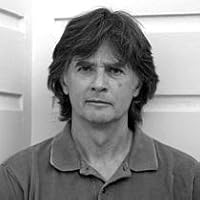
Tony Broadbent was an art student in London in the late Sixties.
He then worked as copywriter and creative director at some of the best advertising agencies in London, New York, and San Francisco, before opening his own agency.
He's now a consulting brand strategist, planner, and ideator for clients in the U.S. and Europe.
Tony is married and lives in Mill Valley, California.
An entertaining mystery/caper/crime novel that takes place in a rarely visited setting: London immediately after WWII. A tad heavy-handed, occasionally predictable, but it kept me turning the pages. Jethro, the narrator and main character, is a cat thief that gets unintentionally involved in the emerging espionage war between the West and the Soviets. Don't read it for the plot: read it for Jethro's smart ass commentary and introduction to the London criminal underground of the late 1940s.
The Smoke is the first book in the Jethro, cat burglar series set in post-war London. Jethro is a Cockney likely-lad who’s day job is working as a theatre stagehand, but he makes his real money stealing expensive jewellery. He’s a skilled thief who always spends time casing his target, works alone and uses a single trusted fence to minimize the risk of being caught. In this outing, he breaks into the Soviet embassy to steal the jewels of the ambassador’s wife. His escapade makes him the target of the soviets, the London mob, the police and MI5 and he gets into scrapes with them all, eventually agreeing to return to the embassy for more thievery on behalf of MI5. While the story is reasonably entertaining, I didn’t really warm to it. Written in the first person, I never really connected with Jethro’s voice and perspective. The main issue though was the plot, which just didn’t feel credible enough and was a little uneven in pacing. Yes, it’s a caper tale involving Soviet officials, the mob, police and secret services, but even allowing for that, it felt too contrived and over-the-top while lacking the humour to offset. Overall, the detail on the thefts was interesting, and the story had its moments, but I never felt vested in the story.
Post-war London's greatest jewel thief finds himself caught between gangsters, killers, and spies both foreign and domestic in an overstuffed novel. The narrator's 'cheeky chappie' voice can be fun, but the first two hundred enjoyable pages (where we're told repeatedly that Jethro is a modern-day Raffles, a brilliant tactician and a master of disguise) don't really gel with the last two hundred, where he becomes completely inactive, hearing about things happening offstage, watching things happening around him, and playing absolutely no role in the third act (and the far-too-long climax) of his own story. The whole thing could use a little more focus and a lot of trimming.
This entire review has been hidden because of spoilers.
You will enjoy this book if you find yourself fascinated by postwar London, Cockney slang, and the technical aspects of being a cat burglar (or “creeper,” as our hero Jethro would say). You will find it off putting if uncritical Cold War attitudes, stereotypical villains and femmes fatales , and descriptions of torture are not your cup of tea. I couldn’t put it down, but I will not pick up the next in the series.
Well written, great character development, not too too violent, and a very likable protagonist. Nuanced characters fully developed, and an interesting story that seemed well researched and was nicely paced. Lots of loose ends, but that’s what the sequel is for.
An extremely enjoyable post-WWII caper/espionage novel starring a clever veteran thief who gets himself into hot water with foreign officers, the London police, assorted crime lords, and the British Secret Service.
3.5 stars. In November, my friend and I stumbled across a mystery book store in Seattle. We decided that we needed to (somewhat) randomly select a book to buy. I ended up buying "Shadows in the Smoke," not realizing it was the third book in a series. I started to read it and while I probably could have read it as a stand alone novel, I decided to start at the beginning.
"The Smoke," takes place in London after the end of WWII in a time when food, services and goods are still being rationed. The main character, Jethro, or Jeffro as he is often called by friends, family and other acquaintances, makes his living as a cat burglar/jewel thief.
The book starts with Jethro preparing to pull off a heist at the Embassy. A lot of detail went into explaining his life as a "creeper" and the preparations that went into this heist. I found this part fascinating. When the heist hit a bit of a snag, I found myself wanting to look ahead to see if/how he got out of it! So from that respect, I was sucked in early on.
It turns out there was a lot more going on in the Embassy than just some high profile guests with fancy jewels staying there, and Jethro ends up stealing a couple of black books that bring him and his dear friend and fence, Ray, to the attention of MI5, who then recruit Jethro to do the one thing he as a burglar never does: hit the same place twice.
When not thieving, to look like an honest citizen, Jethro also works as a stagehand at the local theaters, never staying at one for too long before moving on to the next. It's because of this that partway through the book, Jethro started to compare all the characters to actors in plays and movies and all that was going on around him to acts in a play. Being that I'm not well versed in British actors of the 1930's and 1940's these comparisons were lost on me so that did take away from the book.
Despite his profession, Jethro is actually a very likeable main character. He wasn't necessary complex and certainly didn't struggle with the morality of his actions (much-he didn't steal things that he deemed irreplaceable or of high emotional value like wedding and engagement rings) and he tried to do right by those he most cared about, particularly his sister and her husband.
I did feel this book had too many secondary characters and they were hard to keep track of. I've always thought of London as a beautiful place I'd love to visit someday so I was intrigued by the descriptions of it as a dirty, rundown place everyone can't wait to leave. "The Smoke" is actually London itself. Even though this was an interesting story that I did enjoy, I also found my mind wandering a lot and felt it took forever to read. However, I do look forward to reading the second and third books to see what scrapes Jethro manages to get into-and out of.
The Smoke, Tony Broadbent’s maiden effort, can boast an uncommon setting – postwar Austerity Britain – and an equally unusual lead character. Unfortunately, it doesn’t pay off as well as I’d hoped.
Jethro isn’t yet another DCI-with-a-troubled-life; he’s a cat burglar. He thinks he has all the fiddles sussed in 1947 London and is doing well for himself. Then he decides to burgle the Soviet Embassy and everything comes apart in a storm of spies, MI5 agents and rival bands of gangsters, all of whom want a piece of him (sometimes literally).
An educated Cockney who spent WWII having merchant ships sunk from under him, Jethro’s voice is generally breezy and he’s an easy character to get along with. Whether he’s working his night job or his cover job (as a stagehand), he gives us enough detail to see what he’s doing but not so much that we’re reading a how-to manual. The settings are sketched just enough to build our own picture of the scene, although some familiarity with London and postwar British society wouldn’t go amiss here. The black fogs, queues, lingering damage from the Blitz and the daily grind of rationing all make their appearances.
I really wanted to like this book more than I did. I’ve enjoyed Alan Furst’s and Philip Kerr’s forays into interwar and immediate postwar Europe, watched every episode of Foyle’s War and The Hour, and have been waiting for a British crime novel set in just this timeframe that doesn’t involve manor houses. So what went wrong here?
For one thing, the story takes its own time, which is code for “deliberate,” which is code for “slow.” Jethro has a lot of downtime between scrapes with the Old Bill or one mob or another; sometimes he ruminates on the state of things, sometimes he just fiddles about. We get more of Jethro’s philosophy than we need under the circumstances. His new friend Seth hangs about for no apparent reason other than he’s convenient to have on hand. Jethro goes all moony over a young lady he meets on business in a truly over-the-top way that doesn’t seem grounded in his character as presented up to that point. But the deus ex machina ending – straight out of a Bulldog Drummond novel – knocks a full star off my rating. Its resolution comes from out of the blue, another example of a development that’s less “what a great twist!” than “WTF??”
The Smoke, suitably tightened up and with some of the more troublesome plot issues fixed, has all the makings of a Masterpiece Mystery two-parter. If that sounds like a good time to you, go for it – just don’t expect to read it quickly.
An evocative setting and a charismatic protagonist. As a Londoner who grew up watching the rebuilding of the city, and playing cops and robbers in its rubble-strewn bomb sites, I found the author's depiction of post-World War II London to be accurate and evocative. If anything had fifty shades of grey it was that drab, foggy, smoky city at that time. Rationing was still in place years after the war ended, and the black market was supplied by spivs and crooks — simpler, less violent villains than today — trying to outwit coppers who were always unarmed.
The protagonist, a 'cat-burglar' named Jethro, justifies his thieving by robbing only the wealthy and sharing his loot with those less fortunate — including, of course, himself. Jethro is a Cockney, ostensibly someone who is born within the sound of the bells of the church at Bow in the East End. As such, he uses a lot of cockney slang, which was devised so that outsiders (initially the police) wouldn't understand what was being said. Sometimes the use of this patter is extensive, and the author has supplied a glossary which will no doubt be welcomed by many.
Without giving the game away, this book's caper has Jethro unwillingly seconded into the Government's clandestine efforts to stop a foreign plot against the country. I found the story-telling to be solid and entertaining. And I look forward to reading the sequels. If they live up to their promise I think Mr Broadbent has a franchise on his hands.
Surname-less cat burglar Jethro gets in over his head by swiping the wrong person's stuff in the course of a "creep" at an unspecified Eastern European embassy and soon finds himself at odds with both Eastern Bloc and British intelligence, a rival cat burglar, and various factions of postwar London's criminal underworld. While the plot is hardly original and the ending is weak the book really shines in its depiction of its setting: a London that's still adjusting to a peacetime scarcely less austere and depressing than the war that preceded it. And Jethro, through whose eyes we see it, is an able guide to "the Smoke": a charismatic Cockney antihero whom I could easily see being played onscreen by Michael Caine in his younger days. This novel is its author's first and it appears that he has at least two sequels planned, so I imagine any weaknesses of this book may be ironed out in the future.
PROTAGONIST: Jethro, cat burglar SETTING: 1947 London SERIES: #1 of 3 RATING: 3.25 WHY: Jethro is a master cat burglar who has never been caught by the authorities. He has only one fence, "Buggy Billy" aka Ray Karmin. He's just had a successful "creep" (burglary) at the Embassy. The cops have taken in Ray and now negotiate with Jethro to rob the Embassy again, mostly to spirit away a young woman. It seems like he's in everyone's crosshairs--crime lord Darby Messima wants to use his skills; two other villains have the same in mind. One of his competitors pulls him off the street and tortures him; that scene and his attempted rescue are quite violently drawn. I prefer to see Jethro in action as a cat burglar and find those bits fascinating. When politics comes into the narrative, it slows the action and isn't all that interesting.
An absolutely wonderful read, told from the point of view of a jewel thief dragooned into Her Majesty's service for a diplomatically sensitive job. He has no special skills other than as a jewel thief, which makes the book even more enjoyable. I loved it - the description of London in the post-war years, the familiarity with the criminal argot and underworld generally and the elegance of the plot are all terrific.
A very good mystery/thriller set in post-WWII London, with an unusual protagonist -- a cat burglar -- and very well written with an eye to detail. It's not for the squeamish, however, but if you want a very smart mystery that doesn't talk down to the reader, or relies on cliches, this is one you'll enjoy. There is a sequel, Spectres in the Smoke as well.
Tony Broadbent’s admirable caper novel “The Smoke” convincingly steeps us in the post-war London underworld, with roguish and glib cat burglar Jethro as our guide and narrator. While the episodic plot and coincidences make the book stagger a bit as it travels through London’s streets, markets, pubs and back alleys, Jethro’s language, wit, aplomb and criminal ethics carry the day. An accomplished recreation of a drab yet beguiling London and a buoyant working class milieu.
Finished 11/16/2012. I loved this book. It has highs and lows and the writing is not sophisticated, but it isn't intended to be since the hero (?) Jethro is a Cockney jewel thief. He is a highly thought of "creeper" and is drafted by a high brow thug, the thug's boss, another crime lord and MI5. He has befriended a guitar player and singer while working at the Palladium and Seth twice delivers him from sure death. +
Wonderfully detailed post-WW2 London setting and a hero as charming as he is devious made for a terrific, exciting read. The plot is almost secondary to the characters and the world, which is not to say that it is not also great. Shades of Hitchcock, Dickens, and the theatre enhanced the high-action caper-turned-spy-story.
This book had all the intrigue of period black and white movie. The setting is post-war London. The lead character Jethro, a crack jewel thief, was completely likeable, and I hoped that the author would write a sequel so I could spend more time with him. (He did... Spectres in the Smoke.)
This is definitely a Jason Statham Film. Very Film Noire with a great laid back style of writing. Funny in lots of ways. But the character is very likeable.
Very put off by the definitions of rhyming slang. Every time he explained what he had just said, I disliked Jethro even more. Kept thinking I would suffer through, but kept getting side tracked away from it. Two-thirds of the way through and just not worth it.
I really liked the main character -- a cat burglar with a great voice. I did see some of the plot points coming but the characters were mostly likable and real. London itself is a character and perhaps the best drawn of them all.
This is a clever book, but a bit "guy" for my taste. Lots of violence, including torture. But the narrator is a likable voice, with a Cockney accent and an eye for the ladies. The mental part of the story, planning and executing heists, is fun. The physical parts, less so.
A better-than-average crime/spy story in the well-utilized backdrop of post-WWII Britain. Good use of the dialect and culture of the time and place without overdoing it.
Always liked books set in historical eras and especially like WWII and the aftermath. This was supposed to be both a good mystery and funny. It was neither. I found it extremely boring.