A classic novel of Vietnam and its aftermath from Philip Caputo, whose Pulitzer Prize-winning memoir A Rumor of Waris widely considered among the best ever written about the experience of war.
At thirty-three, Nick DelCorso is an award-winning war photographer who has seen action and dodged bullets all over the world–most notably in Vietnam, where he served as an Army photographer and recorded combat scenes whose horrors have not yet faded in his memory. When he is called back to Vietnam on assignment during a North Vietnamese attempt to take Saigon, he is faced with a defining should he honor the commitment he has made to his wife not to place himself in any more danger for the sake of his career, or follow his ambition back to the war-torn land that still haunts his dreams? What follows is a riveting story of war on two fronts, Saigon and Beirut, that will test DelCorso’s faith not only in himself, but in the nobler instincts of men.
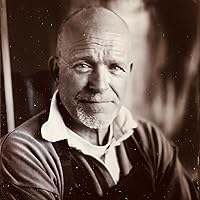
Author and journalist Philip Caputo died on May 7, 2026, from cancer at his home in Norwalk, Connecticut. He was 84. Best known for his Vietnam War memoir "A Rumor of War", he also shared a Pulitzer Prize for investigative reporting during his tenure at the Chicago Tribune.
He served as a U.S. Marine Corps lieutenant and was among the first American combat troops deployed to Vietnam. His experiences there, shifting from patriotic idealism to deep disillusionment, were the basis for his memoir.
Following his military service, Caputo transitioned to a career in journalism. Working as a foreign correspondent and investigative reporter for the Chicago Tribune, he covered conflicts globally, survived being held hostage by Palestinian militants, and was shot in Beirut. He later covered the fall of Saigon in 1975 before retiring from daily reporting to write 19 books, including the acclaimed novel "Horn of Africa". Caputo is survived by his wife, Leslie Ware, his sons, Geoffrey and Marc, and three granddaughters.
Recently, I read The Lotus Eaters (published in 2010) by Tatjana Soli, a story about photojournalists covering the war in Vietnam. To the best of my recollection it is only the second novel that I have ever read about this branch of journalism.
The first was DelCorso’s Gallery by Philip Caputo . Since it was published in 1980 and I read it so many years ago and I didn’t remember much about it I decided to give it another look.
In 1964, Caputo graduated from Loyola University in Chicago with a degree in English and then, he says, in order to escape the boredom of suburban life he enlisted in the Marine Corps. He shipped out for Vietnam just as the U.S. was going on the offensive in that conflict. His first book is his best known, A Rumor of War (1977), a memoir of his experiences as a lieutenant commanding a platoon. To date, it has sold over two million copies and has been published in fifteen languages. It was also filmed as a two-part TV movie that received good reviews.
After serving three years in the Marines, Caputo became a journalist. Ten years after he deployed to Vietnam as a Marine he returned in 1975 as a correspondent to cover the fall of Saigon. From there he moved on to Beirut to cover the civil war that was occurring Lebanon.
Caputo was able to use his experiences in Vietnam and Beirut as a basis for DelCcorso’s Gallery, which was his second novel. It explores much the same territory as Soli’s later book, with some exceptions. Soli featured a female photographer as one of her primary protagonists, but none makes an appearance in Caputo’s book. And whereas The Lotus Eaters ends with the collapse of the South Vietnamese government, Caputo’s story moves on to Beirut, just as he had in real life.
Caputo wrote that “being a correspondent in the Vietnam war for me was about exposing myself to danger but it wasn’t completely self-serving. I felt that there were these dark places of the earth, were dark things happening and people should know about them. Call it my moral obligation to go and see them and report them.”
His fictional character, Nicholas DelCorso, also a Vietnam veteran, became a war photographer who wanted to use the camera to accomplish the same objectives that Caputo the correspondent wanted to accomplish. And like Caputo, DelCorso transferred to Beirut after the fall of Saigon.
Caputo seems to be more comfortable writing about DelCorso’s war experiences than he is when writing about the domestic conflicts that arise as a result of DelCorso’s pursuit of his profession. When the story moves into domestic territory I sense that Caputo wants to make points that he believes are important, but that he also wants to get them out of the way so that he (and DelCorso) can get back to the war.
It is possible to understand the essence of Caputo's (and DelCorso's) quest to present the truth about war and its impact on all concerned by reading what Caputo has said about the subject in interviews and has written about in his nonfiction. Here are some samples:
“The Vietnam war has three dubious distinctions: It was the longest and most unpopular war in American history and the only war America ever lost." (Times have changed. It was true when Caputo stated them, but at least two of the distinctions no longer apply.)
“The unraveling that I experienced much earlier in the Vietnam war than many people think, was due to the immediate foxhole experiences. But once I got back home and began to follow the war on TV and in the press I began to see this enormous con game - I can't think of any other word for it - that government and the military was foisting on the American people, especially on the young men of my generation, and even worse, the young men of my generation who weren't particularly economically or intellectually privileged.”
“In wartime, the degree of patriotism is directly proportional to distance from the front.”
“I guess every generation is doomed to fight its war...suffer the loss of the same old illusions, and learn the same old lessons on its own.”
I am a big fan of Philip Caputo but I found this book depressing and overly detailed. Usually I like detail but it rambles on for pages of internal angst and wartime details that got tiresome. I also did not find myself liking or even respecting the main characters, war photographers and correspondents. For those who want to be impressed by the gory details of the wars in Vietnam and Beirut, there is much to be learned here, although one must expect to dwell on the most horrific experiences. There are long paragraphs of exposition and description that in my opinion would have had more impact if more concise, as it made me want to skip over some of the material, but then I would have missed what I really wanted to know. In other words, less is more in this case. However, I did learn a lot, and I trusted that the writer was telling it like it really was. I didn’t understand the disrespect the characters showed each other and felt their personal relationships could have been handled with more sensitivity. However, I’m glad I read it for the realistic picture it gave me.
This novel tells the story of Nick Del Corso, a war photographer, as he pursues his craft during the Fall of Saigon and later in Beirut during the mid-1970s. The book explores the question about what is the right way to take photographs during war time, as Del Corso's former mentor works to capture the glory of war, while Del Corso works on capturing its harsh realities. Good, but he seems to become a minor character during the second half of the book.
Update: 26 April 2019: Having reread this, I think it appropriate to upgrade it a bit. Why? The imagery over the past nine or ten months has remained strong. The novel has a presence that outweighs the tortured tough guy talk. Still, the Vietnam portion is far better than the Lebanese one. Caputo has created a startlingly unsympathetic character in Nick Delcorso. ================
Original Review:
Despite the impact and immediacy of his Vietnam memoir, A Rumor of War, Philip Caputo is at best a mediocre novelist. Delcorso's Gallerly exemplifies all his weaknesses. It's filled with trite tough guy talk and clunky, awkward attempts at hardboiled similes that make Mickey Spillane sound like Shakespeare. Nor does the form of the novel redeem the story. The first part, set in 1975, describes the fall of Saigon and the final days of the Vietnam War. Part two, then, after mirroring the first part's focus on Delcorso's trouble-filled marriage, then alights in Beirut for the beginning of the Lebanese Civil War in 1976. The separation is ragged and unsatisfying. The reader needs to reset once again, after being virtually cut off from any resolution of events in Saigon.
The portions of the novel devoted to Delcorso's relationship with his wife, Maggie, are particularly hard to take. They are shallow and cliched. More than anything else, they disrupt the flow of the story. Not to mention, it is often in these passages that Delcorso fantasizes about his dead-end career as a boxer. Throughout the book, all I could think of is Marlon Brando and On the Waterfront. So it was no surprise when Caputo pulled out a reference to the film and its most famous lines, "I couldda been a contender." It's one thing to see this imagery continually plastered over the face of Delcorso from the very beginning of the story. But it's hamfisted when the author feels so insecure that he needs to spell it out to the reader specifically.
I suppose that is the weakness of this novel. Its insistence on "truth," in the end, becomes a preachy sort of literalism that leaves little room for the reader's imagination, something that is much needed, because Caputo does an especially poor job of establishing a sense of fictional space. Whether in Saigon, New York City, or Beirut, there is no atmosphere but the one mainly wrapping itself around Delcorso's inner mindscape.
One thing Caputo does do well is capture the tone and feeling of the decade in which the book was written, the 1980s, and not when it was set, in the 1970s. Caputo himself had helped usher in the subgenre of Vietnam War literature. And you can feel the spirit of the times flow through the pages. The simultaneous need for redemption and the utter distrust of the folly that sent Americans to the Southeast Asia to fight an unwinnable war--at least as Caputo sees it. The novel is a masterpiece of revealed cynicism that is even cynical about its own cynicism.
Finally, it is worth comparing Delcorso's Gallery with Christopher Koch's Highways to a War. Both novels have as their main protagonist a war photographer caught up in Saigon in the closing days of the war. And both use multiple perspectives from other war photographers and correspondents to tell part of the story. They also plop their heroes down into another civil war immediately after the fall of Saigon. And, finally, both main protagonists suffer similar fates at books' ends. The difference is that Koch's work is an underrated and largely unknown literary masterpiece of this genre. His sweep and scope is epic. And his sense of setting and atmosphere is so sensual and overwhelming that readers feel they are in Southeast Asia or Tasmania. It is a vast journey of physical, psychological, and moral travails. It's everything that Caputo tried but failed to do in Delcorso's Gallery, although it should be noted that Delcorso's Gallery was first published in 1983, some twelve years before Highways to a War. So, if there is any direct influence or connection, it would be Delcorso's Gallery on Hgihways to a War, not the other way around.
I enjoyed this novel, though not quite as much as Horn of Africa. DelCorso himself is a very unlikeable character, seeing himself as a crusader for truth. In fact, he is intensely self-centred. The theme of his running away from himself and trying to atone for his guilt over taking part in and photographing a massacre in Vietnam comes straight out the pages of Conrad, and DelCorso regards himself as being on a mission to awaken and punish the public by portraying war with an unvarnished ugliness, and so to make up for his past sins. The portrayal of DelCorso's marriage also takes up a considerable part of the book, and overall, this is well drawn, but sad; the result of his obsessive self-atonement is that he neglects and pushes away everybody else.
DelCorso's counterpart is the character of Dunlop, who comes from a passing generation of photographers who see war as noble and capable of revealing the best in us. The irony of Dunlop is that he sees himself as principled and honourable, yet despises and tries to destroy DelCorso. In the final analysis, neither DelCorso nor Dunlop are completely wrong or completely right in their assessment of war and its meaning, and neither is interested in the truth but rather in portraying the truth in whatever way they think best.
Neither DelCorso nor Dunlop are quite as compelling as the central characters in Horn of Africa; I found the most interesting character in this book to be Bolton, the jaded wire service bureau chief who is faking stories to satisfy his editors while being unable to resist the temptation to pursue genuine and dangerous exclusives. This highlights another motif, which is the motivations and desires of the news-consuming public. DelCorso sees them as complicit in the sordid wickedness that he photographs; Bolton sees them as entertainment-hungry consumers who want a vicarious thrill. In reality, of course, both perspectives are valid, and the power of the book is in how it turns the wickedness the journalists are documenting back onto the reader. Near the end of the book, DelCorso realises that one of the things he finds most disturbing is when normality and order are thrown into chaos and touched by evil; the unstated implication is that everything and everyone is touched by evil. The final third, which is set in war-torn Beirut, emphasises the unravelling of order and basic decency into chaos and wickedness that results when human depravity runs unchecked. Like Horn of Africa, Delcorso's Gallery is a modern fable that is seeking to shine a light on the reality of human depravity, and the fact that none of us is free from it. While Caputo isn't as great a writer as Joseph Conrad or Cormac McCarthy, his work does bear comparison to theirs. Like them, he doesn't shy away from the sordid reality of evil in the world. And like them, he doesn't see this as evidence of chaos and meaninglessness, as the world Caputo creates is still a moral one where evil can be recognised as such. His characters might be cynical and jade,d but they cannot hide from that reality, and neither can we.
Caputo was in Vietnam as a soldier, and later as a journalist, so he has no shortage of authority on his topic. But his Pulitzer was for a memoir; this novel isn’t anywhere near that league. It’s just plain clumsy.
Former combat photographer Nick DelCorso has retired into a quieter career in commercial photography, but that old itch refuses to fade. When he’s offered a job covering the final NorthVietnamese assault on Saigon, he can’t pass it up. Off he goes, leaving wife and family, to battle what the cliché mongers sell as “personal demons” in the streets of Saigon. DelCorso can’t rest until he atones for his past.
How clumsy can it get? Consider this, as the press corps huddles in a hallway during an air raid: “The terrifying noises had stripped them of the mask of cynical nonchalance war correspondents usually wear to conceal their true feelings, if they have any.”
Sentences like this abound.
There is no point Caputo is unwilling to drive home with a sledgehammer. When he isn’t telling us how things are, he’s explaining his characters’ improbably lucid thoughts. And when his characters aren’t thinking, they’re making little speeches to each other, such as this conversation, in a brothel:
“First it’s Biafra this, Belfast that, then it’s so many piasters for a short-time, so many for all night. It’s all bullshit.”
“Exactly what is bullshit?”
“This is, we are. We call ourselves photographers, photojournalists when we get high-toned about it, but what are we really? Mercenaries who carry cameras instead of guns.”
Wilson rolled his eyes.
So did the reader, reflecting that “This is, we are” was a fine bit of technical flash: the characters commenting on the author’s text. It’s a postmodern masterpiece!
Perhaps not.
Unfortunately, Caputo can’t find ways to dramatize his ideas effectively. Everything must be explained; nothing arises through the action itself. It’s too bad, because the novel tries to explore war photography and our changing attitudes towards war in an interesting way.
DelCorso seems to be a composite of Don McCullin and Philip Jones Griffiths, two of the new wave of war photographers that arose out of Vietnam. His arch-rival and former mentor, Dunlop, recalls David Douglas Duncan (who is never mentioned in the text), whose career took off in an earlier era.
Dunlop’s war looks heroic, DelCorso’s squalid and ugly; Dunlop is an artifact of WWII, and DelCorso belongs indisputably to Vietnam. Dunlop wants to find meaning in war, and show it to the reader. DelCorso wants to assault the reader’s complacent assumptions. To DelCorso, Dunlop is a fossil; to Dunlop, our hero is a pornographer.
The novel continually touches on all the questions that plague war photography: exploitation, responsibility, the pornography of violence. It’s unfortunate that it can’t find a more effective dramatic footing.
Amazing, harsh and brutal. If you ever thought you might be a "War" journalist, then you ought to read this book before you get your ass shot off.* *Another readers synopsis I elected to use because I'm too numb to comment.
This reads almost like historical fiction or a creative non-fiction. Caputo packs so much detail and so many facts into the story that you can't help but think it's a true story. It is an excellent book that tells the story of a war photographer who can't give up the thrills and adrenaline rushes associated with photographing conflicts despite his wife's pleas for him to stay at home. A subplot of the book deals with the photographer's struggle to evolve as an artist. Whereas other photojournalists view photography as a job, the protagonist in this story sees it as an art form. Consequently, Caputo spends a good deal of time discussing art and art criticism.
This book, though it is a novel, felt almost autobiographical to me, and I suspect Caputo drew heavily from his own experience as a war journalist. That makes the ending of it all the more tragic. I generally love Caputo's books. One reason is he generally has a good balance of how his characters turn out- some come out better, some come out worse. My rating comes from the fact that this book was just too tragic and dark for me personally (which is saying something considering the dark nature of many of Caputo's books). Caputo has written some of my favorites- books I think I will revisit in years to come. This is not one of them.
Vietnam war historical fiction should have held my interest; did not.
I like Caputo's way with words which made me sad when I gave up on reading it.
"DelCorso wished she would scream at him, or throw the brush at him, play the fiery Irish maid and vent her anger now; otherwise it would fester inside her for weeks, growing into an abscess that would burst in a fit of unrestrained fury."
I started this last summer, put it down, and never picked it up again. I should give it another shot, as Caputo's Vietnam memoir A Rumor of War is a classic. But I'm not sure he's cut out to be a novelist; I remember this book as plodding, clumsy, and unsubtle.
DelCorso’s Gallery tells the story of Nick DelCorso, a 32-year-old photographer who grew up in the rough neighborhoods of Chicago. At first, he thought boxing would be his ticket out and up. But when that career path closes to him, he joins the Army and, through one of the odd quirks of military wisdom, is sent to photography school, then to Vietnam. He is taken on and mentored by Paul Dunlop, a seasoned war correspondent. But Dunlop and DelCorso are as different as men as their styles of photography are. Dunlop is always searching for the dignity and nobility in the scenes he captures with his camera. Anything that does not measure up to his standards of propriety, class, and style repels, disgusts, and infuriates him. DelCorso, knowing at a gut level the struggles that dwell in every human being, and understanding how anger, shame, and desire can blend into a powerful fuel that motivates people, also understands the brutality we can commit against one another. He is not reflective or introspective by nature; he shies away from examining his heart and mind too closely, especially when thinking of his beautiful, brittle wife, Margaret. But DelCorso is uncompromising about his desire to portray the truth, to look every detail of war squarely in the face without flinching, even if it means sacrificing the “better angels” of the people around him who don’t share his allegiances. DelCorso and many of the other characters in this novel are unpleasant, unlikable people. Still, Caputo’s honest portraits of them compel the reader to keep turning pages. At heart, these people all hold true to their various principles, and that is admirable, whether we agree with those principles or not.