Jump to ratings and reviews
Rate this book

The Baphomet

Rate this book
In this erotic, metaphysical, and theological novel, the spirits of medieval Templar monks gather on the anniversary of their Grand Master's torment and execution. Together they commit the sexual perfidies and blasphemous acts of which they had been forced to accuse one another before a tribunal.

176 pages, Hardcover

First published March 26, 1965

23 people are currently reading
1632 people want to read

About the author

Pierre Klossowski

98 books133 followers
Pierre Klossowski (August 9, 1905, Paris – August 12, 2001, Paris) was a French writer, translator and artist. He was the eldest son of the artists Erich Klossowski and Baladine Klossowska, and his younger brother was the painter Balthus.

Ratings & Reviews

What do you think?
Rate this book

Friends & Following

Create a free account to discover what your friends think of this book!

Community Reviews

5 stars
89 (32%)
4 stars
81 (29%)
3 stars
66 (23%)
2 stars
23 (8%)
1 star
17 (6%)
Displaying 1 - 30 of 42 reviews
Profile Image for Vit Babenco.
1,784 reviews5,791 followers
April 7, 2025
The Baphomet is a chronicle from beyond the tomb – a metaphysical and mystical novel turned into some sort of gothic absurdist comedy. There surely is no other book like this…
All the book characters are the disembodied spirits of the dead participating in their spiritual happenings.
Of this soul so many times shattered by aspirations, quarrels, compromises, jealousies, and anxieties shared with spirits to which by turns it had been joined over the centuries, there remained but the sterile vibration of an intention drained of motive.

The Knights Templar’s rites, Masonic ceremonies, satanic masses, cases of metempsychosis are represented as the distorted parodies in which libido, secret desires and dark eroticism dominate everything.
“As the next day dawned, they called loudly upon Baphometh; and we prayed silently in our hearts to God, then we attacked and forced all of them outside the city walls.”
This is the first mention of Baphomet in July 1098 in a letter by the crusader Anselm of Ribemont
And nobody knows who or what Baphomet really is. All the images of him and description of his nature are eclectically synthetic and all of them were invented long after the last of The Knights Templar was dead.
Pierre Klossowski managed singlehandedly to create an experimental eschatological myth, flowery hierographic extravaganza, heretical treatise and Gnostic fable – call it as you please, there are no analogues in literature.
Some things just can’t become known.
Profile Image for Orsodimondo.
2,459 reviews2,435 followers
August 11, 2024
VADE RETRO


Il Bafometto

Strano libro, che mi ha richiesto due letture, solo la seconda completa: e nessuna delle due è approdata a un punto fermo, sono tuttora incerto e confuso (ma non felice).

Pierre Klossowski era il fratello di Balthazar Klossowski, meglio noto come Balthus. Anche mamma e papà erano artisti, entrambi pittori.
Scrittore, saggista, e pittore a sua volta, ha tradotto Hölderlin, Kierkegaard, Nietzsche, Kafka, Benjamin, Wittgenstein, Heidegger, frequentava Deleuze e Foucault.
Autori che indicano una sua predilezione per la filosofia, il pensiero, la speculazione.
E quindi, anche se questo piccolo libro è immerso nel Medioevo, coinvolge i Templari, e narra di un idolo adorato dai cavalieri “Poveri compagni d’arme di Cristo e del tempio di Salomone” (altra definizione di Templari) attraverso le vicissitudine del paggio efebico Ogier, miscuglio di austerità erotica e dissolutezza teologica, non dovrei stupirmi che l’intreccio sia solo un espediente per parlare d’altro.


Pierre Klossowski preparò dei disegni per la trasposizione teatrale curata da Carmelo Bene che sarebbe dovuta andare in scena durante la Biennale Teatro 1989-90 di cui Bene era direttore: ma Bene si dimise, e la messa in scena non è mai avvenuta.

Il problema nasce dal fatto che non sono sicuro che questo “altro” mi interessi davvero.
Ma perfino maggior problema è il fatto che Klossowski non ha intenti di parodia, di contaminazione, d’incrociare generi e di giocare con le loro regole: è invece dannatamente serio, anzi, direi, quasi tragico. E si prende mortalmente sul serio. Pur avendo intento dissacratorio, che con me funziona sempre bene.

Lo stesso titolo, Bafometto, questo presunto idolo, ha significato e perfino etimologia oscura: legato alla simbologia del Graal e dell’eterno femminino, secondo alcuni studiosi deriverebbe da Maometto, secondo altri dal greco “Baphé meteos” che incrocia i termini “battesimo” e “iniziazione”; per Klossowski scaturirebbe dalla composizione delle parole “Basileus philosophorum metallicorum”, riferindosi alla tradizione gnostica e al processo alchemico.

Tra Templari e Anticristo, Filippo il Bello e santa Teresa d’Avila, salti temporali dal Medioevo al 1964, gnosi metempsicosi ed eterno ritorno nietzschiano, io mi sono perso entrambe le volte. Senza divertirtimento.


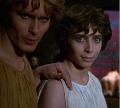
Pierre Klossowski: Ogier seduto accanto al Grande Maestro.
Profile Image for None Ofyourbusiness Loves Israel.
877 reviews174 followers
September 12, 2025
Look, I tried. I really did. I sat there with my coffee, thinking I was about to embark on some profound intellectual journey with Klossowski's "Le Baphomet." The historical prologue lured me in like free cheese at a mousetrap, and then, WHAM! I was trapped in what might be the literary equivalent of watching someone's acid trip while they explain Freemasonry to you.

Where do I even start? Perhaps with the "timeless realm" where disembodied Templar souls float around waiting for judgment. Sounds cool, right? Wrong. It's like being cornered at a party by that one guy who just discovered conspiracy theories and won't shut up about them.

Then Saint Teresa of Avila shows up – because why not? – shifting us from gothic horror to baroque nonsense. At this point, I started checking how many pages were left every three minutes.

The real kicker? Friedrich Nietzsche appears AS AN ANTEATER. Let that sink in. One of history's most influential philosophers reduced to a long-snouted mammal. Was Klossowski high, trolling us, or both?

The writing style? Imagine someone swallowed a thesaurus, chased it with archaic grammar textbooks, then vomited words onto paper. The vocabulary isn't just challenging, it's deliberately obscure, like the author is smirking behind the page, whispering "I'm smarter than you" as you reach for your dictionary for the fiftieth time.

Every so often, Klossowski throws in an erotic scene, presumably to wake you up before you fall into a coma from all the "philosophical discourse." Nothing says intellectual quite like random horniness interrupting conversations about mysticism!

Who is this book even for? The three people on Earth who have advanced degrees in Catholic mysticism, Gnostic heresy, AND a fetish for philosophical anteaters? The obscurity feels less like depth and more like a kid throwing everything into the soup pot thinking it makes them a chef.

I kept waiting for the payoff, that moment where it all clicks and I'd think, "Ah, NOW I get it!" That moment never came. Instead, I closed the book feeling like I'd been pranked by the French literary establishment.

Maybe something beautiful got lost in translation. Maybe in French, this bizarre jumble of ideas reads like poetry instead of pretentious word salad. Or maybe, just maybe, Emperor Klossowski has no clothes, and we're all too embarrassed to admit we can't see the genius everyone else is raving about.

If you're the one person who genuinely enjoyed this book and found meaning in it, please explain yourself. I'm truly curious what you saw that I missed, besides 6 hours of my life I'll never get back.
Profile Image for Tijana.
866 reviews287 followers
Read
March 5, 2020
Možda je najbolje da počnem usklikom koji mi se oteo za vreme jednog prepričavanja ove knjige u kafani, tako da se i kelnerica štrecnula: Nema perverzije kao što je francuska perverzija!
Bitno je znati unapred neke stvari o autoru; recimo, da je brat slikara Baltusa (čije su slike još jedan prilog mojoj tezi); da je u ranoj mladosti bio sekretar Andrea Žida a za to mesto ga je preporučio Rilke, inače dečko njegove mame umetnice; da je u životu prošao više verskih kriza i proveo koju godinu u dominikanskom manastiru; da je prevodio razne Nemce od pomenutog Rilkea i Helderlina pa preko Ničea do Hajdegera; da je pisao esejističko-teorijske tekstove koje su cenili njegovi savremenici u rasponu od Blanšoa preko Bataja do Fukoa; i da je pisao... ovakve stvari.
Za roman „Bafomet“ sam čula zbog sjajnog filma „Hipoteza o ukradenoj slici“ koji se njime ozbiljno inspirisao ali je usput (i hvala bogu) postao nešto sasvim drugo. Tako sam knjizi prišla očekujući manje-više ono što sam dobila od filma, atmosferu mračne tajne i suptilne dekadencije. E pa... i da i ne.
Ovaj engleski prevod ima dva predgovora solidne dužine, od kojih je jedan Fukoov. I posvetu Fukou. To je valjda već dovoljno upozorenje. Onda krene sam roman.
Prvih trideset i nešto strana radnja samo pršti i deluje kao da je neko čitao, šta ja znam, Ajvanha i Svetu krv, sveti gral, pa rešio da od toga napravi pornić. Sa satanističkim gej orgijama i obredima sa zlatnim maskama i prelepim paževima i zlim hermafroditskim tetkama i masovnim pokoljem na kraju. E, to je prolog.
Glavnina knjige je... s jedne strane drugačija... a s druge strane baš i ne. Naglo se prebacujemo u sadašnje vreme, dok se duhovi templara viju po napuštenoj opatiji. Autor (ili prevodilac?) insistira na tome da ih zove „dahovi“, što bi u nekom našem prevodu lepo došlo do izražaja. I tu se zapravo sukobljavaju dve različite autorske težnje.
Jedna je ozbiljna blasfemija. Iz cele knjige se vidi da je Klosovski morao biti izrazito religiozan jer se inače ne bi ovako strasno posvećivao svetogrđu, i pritom ne mislim na banalne stvari tipa crne mise i pljuvanje po krstu nego upravo na beskrajno zakučaste teološke rasprave koje razvija u ovom delu knjige o tome kako na grešne duše utiče reinkarnacija (reinkarnacija. U hrišćanstvu. Da.) i kako se duše pokojnika stapaju čekajući Strašni sud, po njih nekoliko (isto u hrišćanstvu), ili kako se uzajamno uvlače u greh jer im nije moguće da sakriju jedne od drugih svoje najintimnije misli i sećanja pa prenose grešnost jedna na drugu kao kijavicu. Sve to u vrlo zapletenim i često repetetivnim rečenicama od kojih posle nekog vremena taman počnete da krvarite na oči ali onda izbije ona druga autorska težnja, mnogo manje ozbiljna, u vidu, NA PRIMER, scene u kojoj se prepiru veliki templarski majstor i sveta Tereza oko toga kako se ona usuđuje da oživljava nečije grešno telo. Pa ga ona pretvori u stršljena koji onda krene da se erotski naslađuje tim istim telom. Ili scena s mravojedom Fridrihom koji je u stvari Antihrist (uzgred, tri Bambija za Jelenu koja je odmah shvatila da je to Niče). Ili neka obredna samounižavanja i rasprave o tome da li je pljuvanje na krst znak grešnosti ili ultimativno sjedinjavanje sa Hristom (to je poduži komad teksta koji ni uz najbolju volju nisam uspela u potpunosti da shvatim). I naravno epilog koji se ničim izazvan prebacuje u prvo lice i pruža nam... kao... nekakvo... poluobjašnjenje.
Drugim rečima: ova knjiga koja ozbiljno nije za svakoga (iskreno mislim da bi se neko stvarno religiozan vrlo rastužio nad Klosovskim kao izgubljenom dušom) i mnogo je zabavnija u prepričavanju nego dok se čita, uprkos kratkoći. Može da se svrsta zajedno s Batajem i De Sadom u „sadomazohističku erotiku za ljubitelje Fukoa“ što NAŽALOST znači da ja ispadam iz ciljne grupe, ali nudi niz istinski bizarnih dosetki i slika i nekoliko teoloških začkoljica za one koji to vole.
Profile Image for Nate D.
1,654 reviews1,254 followers
May 29, 2012
What is this? A metaphysical novel, often far more metaphysics than novel, concerning various theological and gnostic questions on the fate of souls post-body, eternal return, whether identity is inherently unchangeable (across lives, even) or is circumstanial and corruptible. The writing is generally dense and theoretical, with arguments wound to and fro in long inextricable sentences, to the point of either requiring multiple re-readings, or just surrender to confusion for pages on end. (To be fair, I recall similar experiences with certain philosophical texts which were far beyond me in the past. Pure theory is often a stretch for me.)

Who was this written for, anyway? Check the dedication:
To Michel Foucault
Oh. Ooooooh. Never mind.

Not that my ability to understand anything is in any way a standard of quality, but I have to wonder how many readers are likely to put in the work on a text of abstract theology about debaucherous Templar souls awaiting Judgement. Though the weirdness of the latter does make for some pretty memorable moments. I was all but throwing up my hands when suddenly I hit a bit about a reincarnated fly exploring a hermaphroditic body in ecstasy, and later an extended dialogue with an anteater antichrist. The sheer weirdness strung throughout brings this up from a ponderous two-star theological text to a snappier three-star curiosity of inventive heresy.

But not exactly recommended to general interest. Personally, I'm mostly here because I've read that Klossowski was friends with Raul Ruiz, and helped adapt this into Ruiz's film The Hypothesis of the Stolen Painting. Ruiz is philosophically dense enough on his own (though in a more digestible and playful manner) so I feel that some background familiarity is warranted before approaching that work.

...

Prior notes during reading (some likely now redundant):

Only prologue'd so far. It's 1307 and black rites, homoeroticism, and internal schisms are contributing to the collapse of the Templars. The actual story here is entirely entertaining, but the rather stilted, circumspect delivery (translation?), and my general lack of knowledge of the Templars and their historical context has a tendency to keep me pretty far out of the narrative. I actually had to re-read most of the prologue to make out fully which intrigues and scandals were in effect here, but on that second pass they were delectably lurid. Having established the opening pretty well, though, and knowing we're about to move forward from antiquity, I have high hopes for this.

...

Okay, I'm about halfway. When I finally found a copy of this, it caught my eye in passing tucked into the theory and philosophy shelves at my favorite used book store. I thought that, given it's a novel, it had been miss-shelved. Not so. Klossowski's concerns here seem to fall entirely withing theoretical theology, dealing with the metaphysical problems of expired breaths -- ie souls -- churning in immaterial space as they await a Judgement Day seemingly eternally deferred. Things he seems to care about:
-if a soul (post death and divorced from physicality) is pure intention without physicality, then any impulse it feels, even anything it percieves, is the whole of its existence. Thus the potential for sin after death is far greater and more sullying than in life, when simply not acting upon impulses lessens their gravity.
-If souls get bored of awaiting judgement and resurrects in a new body along with the new soul originally slated for that body, how to tease apart which soul is now responsible for the acts of that body?
-and if 7 or 8 souls all resurrect in one body?!
-and if one fallen soul, in eternal return, resurrects endlessly without actually changing in nature (is it even possible change in nature in eternal return-type scenarios?), what will happen to all these other souls endlessly degraded by association?
-And what does it mean if God allows such a thing?
-etc
Honestly, these apparently burning issues are, to me, entirely fantastical and meaningless. I imagine that Klossowski, given his apparent earnestness, is addressing some tradition of theological doctrine which I know nothing about. But which frames these with some vital weight and significance, and some kind of underlying intimation of reality (possibly a completely blasphemous one, even). But jeez. Not even all the weird psychosexual craziness can keep me fully engaged with this. Did I mention that it's still incredibly work-intensive to parse out these convoluted arguments and theories? It is. I can re-read and re-read, and still not unravel the threads here. Raul Ruiz and Milan Kundera both spring to mind as clever people who have comprehensible things to say about Eternal Return, Kundera through deft simplicity, Ruiz, through convoluted thoughts that are extremely fun to scrutinize. This is just really tough, not so much fun, dubiously rewarding.

That said, this isn't really all that long, and weird enough to keep me vaguely curious. it's not often you find someone who wants to write serious theological discussion about homoerotic templars ghosts. So I'll keep going. But in no way would I consider this a successful work of fiction for any normal purposes. I suppose it wasn't ever intended to be one.

Profile Image for Andrew.
2,258 reviews933 followers
Read
October 16, 2010
What the hell was that? Monk blowjobs, that's what. And Nietzsche as an anteater.

I don't know who likes to overhype transgressive French writers more. Other transgressive French writers, or American critics who wish they were French.

Klossowski wishes wishes wishes he was as talented as Georges Bataille. Even though Bataille wrote weird pornos, he managed to pair the eroticism with a rigorous theoretical perspective. I felt like in The Baphomet, you were supposed to just admire the theory and not care about how the author approached it. Which, while I'm even more interested in Klossowski's critical works now, doesn't exactly make me want to read more of his fiction.
Profile Image for Viktoria.
Author 3 books101 followers
Read
January 17, 2025
3.5

Книга-съновидение, или теологичните търсения на душите след смъртта, под камуфлажа на абсурдистки, исторически роман. Безкрайността на Уробороса срещу единството на Кръста. Вечното завръщане срещу Второто пришествие.


„Върху тази постъпка на отречение, останала в историята, върху това предизвикателство към измамната очевидност на този следсмъртен еретичен интервал между тогавашното време и ортодоксалната вечност — ето върху това дори паметта му опираше възпоменателното честване на мъките му.“


„Носена сред сноповете от тези спирали, разпилявайки блясъка си в безчестието, само Бог знаеше с какви странни снопове — в които най-добрата ѝ част се смесваше с части от най-лошото в другите — тя също бе създавала тези временни „струпвания“ в междинните региони между гниещите светове на плътта и висшите небеса.“

„Следователно тъкмо като дихание то се нуждае от привикване към затворено пространство, към обиталище, за да се върне отново от разпръснатата си интензивност към състоянието си на намерение , и колкото да е уседнало или вихрещо се навсякъде, да премине от вой към шепот.“

„… и срамът на душите стана неговата храна...“

Profile Image for Ogier.
18 reviews4 followers
October 3, 2014
It helps to know something of Pierre Klossowski to begin to appreciate this book as taken by itself a casual reader will be confronted with some esoteric theological arguments told in a dense convoluted style. Having been raised Catholic helps too.
As a boy Pierre met Andre Gide in the Klossowski home and sealed a friendship with Andre by sharing with him his collection of Moroccan postcards featuring images of young boys. Gide offered to pay for Pierre's education and advised him to study philosophy. As Gide had revealed himself as a pederast in an amendment to his autobiography of his early life, the pederastic aspects of the prologue of Le Baphomet are no surprise and are not subtle.
The central theme of the novel is a theological argument and speculation on the nature of identity of the deceased assuming that the soul lives on after death and as a hypothesis the souls of the monks of the Knights Templar, executed in 1312 by the King of France, discover that the gates to heaven are closed as the number of the elect has been reached. So, will the souls of the dearly departed remember their temporal lives are will they gradually subsume into something like the Body of Christ?
All this speculation takes place in the presence of the incorruptible body of the central character, the boy Ogier de Beauseant who is introduced in the prologue as a page in the service of the Knights who seduces the monks to pederasty and who is hanged, naked, accidentally, during a ceremony by the monks in a secret worship and summons of the Baphomet, the Sabbatic Goat representation of Satan.
The theological arguments at this point in history relative to a secular world reduces the novel to a quaint relic enlivened only by the erotic setting.
Profile Image for Francesca Maccani.
215 reviews38 followers
February 25, 2018
Il Bafometto
L’origine del nome Bafometto non è chiara. Sembra che si tratti di una combinazione di due parole Greche baphe e metis che significano “assorbimento della conoscenza”. Il Bafometto è stato anche chiamato “Caprone di Mendes” o “Capra Nera”.
La storia antica sul Bafometto ebbe inizio con i Cavalieri Templari. Il Bafometto a quei tempo era venerato come un idolo, rappresentato da un teschio umano, una testa umana o una testa di legno o di metallo con capelli neri ricci, o a volte con un gatto nero. Si diceva che l’idolo fosse adorato dai Templari negli ultimi dei loro giorni, come fonte di fertilità e di benessere.
Il Bafometto di Klossowski è un’opera compessa e che si presta a diverse chiavi di lettura. La prosa è ricercata, per molti versi criptica e rispecchia in pieno la poetica di questo autore poliedrico. Nell’opera si mescolano erotismo e sacralità, perversione e trascendenza. Avarizia, calcolo, vizi capitali, sodomia. Non manca nulla in questo romanzo denso e di non facile approccio.
In un monastero trecentesco, trovano dimora i soffi, ossia, le anime dei cavalieri finiti al rogo, e si nasconde il segreto de Il Bafometto, essere androgino in cui si incarnano gli opposti: vergine e prostituta, peccato e salvezza.
Una santa si appropria del corpo di un ragazzetto quattordicenne e fa di lui il Bafometto, il principe delle metamorfosi, colui che infrange l’illusione umana dell’Unico Sé. L’essere umano, in perpetuo oblio, si reincarna in numerosi corpi e perpetuamnte cede alla seduzione del Bafometto. Così condannato ad un eterno ritorno nietzschiano, l’uomo non fa che esplorare ogni volta e con piacere e angoscia a un tempo le essenze più basse della propria natura umana.
Gli spiriti, o per meglio dire i soffi che si rincorrono dentro e fuori dai corpi sono spiriti illuminati che cercano la reincarnazione non si sa se per espiare (e quindi per purificarsi e glorificare l'unico dio rimasto), o se per sporcarsi ancora di più, per svilire ed affondare maggiormente quel briciolo di umanità residua.
I gesti ora misurati, ora eccessivi dei protagonisti ricordano quelli dei neonati che ancora non hanno preso le misure sul proprio corpo: è un gioco a nascondino "totale", il cui campo di azione non è la stanza dei giochi, ma la vita e la morte. Forse Dio supervisiona, forse si rode di non poter partecipare al gioco; citato molto, sta però distante, sullo sfondo, disorientato dalle bestemmie che vengono pronunciate in suo nome.
La lingua è estremamente ricercata, ricorda lo stile delle chanson de geste medievali. È pennellata ad hoc su un’opera complessa e sfaccettata, esoterica e filosofica. Nietzche riecheggia più volte.
Personalmente sono sempre stata attratta dall’esoterismo che qui assume una veste nuova e diversa rispetto a molte opere che mi è capitato di leggere. Qui il genio provocatore e dissacrante dell’autore assume i contorni di un demiurgo che tesse i fili di tutte le vicende, con una vorticosa capacità creatrice e generatrice.

(per questo post mi sono rifatta in due passaggi più ostici ad alcune recensioni pubblicate su Anobii)
Profile Image for Michael A..
422 reviews94 followers
November 21, 2017
unique idea for a book with interesting philosophical themes and implications. it was admittedly hard for me to follow for the most part but what I did understand I really enjoyed. for me it was more of an "experience" than a coherent narrative, though that is not to say there wasn't one, most likely it just went over my head. "The Prose of Actaeon", the essay by Foucault at the beginning of the book, was an interesting analysis of Klossowski's themes across his oeuvre, but I cannot say I got a ton out of it since I have only read The Baphomet.
Profile Image for Keith [on semi hiatus].
175 reviews57 followers
December 31, 2020
A screenplay for a sexually-charged, erotic and moral nightmare, of which I think and am equally thankful, that the secret society consisting of Georges Bataille, Roger Caillois, Pierre Klossowski, Jules Monnerot, Jean Rollin, Jean Wahl, the artist André Masson and the Vitruvian Man work by Leonardo da Vinci - all of which surround the Acéphale work of the 1930s - played a part in the creation of this seductive and contemplative work of literary art.
Profile Image for Shadi.
11 reviews
Read
June 13, 2025
haunting and liberating. how the search for the One ends in the seeker. “what is a body to a breath if not its dissimulation?”
Profile Image for Alex Lee.
953 reviews142 followers
September 17, 2015
Klossowski writes beyond our sense of realism, to bring about meditations on life, death, morality and so on, from the depths of gnostic heresy. The mix of breaths reveals the hallucinatory experience wherein hermeneutic literalness exceeds our sense of self. This is the gap inherent within language and the gap inherent within ourselves brought to page.

It's difficult to write about this book, since it defies any sense of genre. Obviously people would say this is experimental. But it succeeds in convincing us that this view -- of the intermix of personal, interpersonal, political, social, and so on -- that reality is interconnected with knowledge and morality. How we live and exist among others is not an actual reality the way most of us believe, but an intermix within the gap inherent between us and others, within us and within others. We navigate this interstice often with blind faith. When we start to question the fundamentals of an ideology, or when we expect that within a view the truth will be apparent, that is where we become more lost than ever.

Although this book is a fiction it shows us something of how we are by showing us how we illicitly exist within the gaps of our knowledge by extending everything at once and contradicting itself in the point of the other.
245 reviews6 followers
April 22, 2020
A difficult read. Part of the blame may be the translation--it's entirely possible Klossowki's text has a more natural flow and is more comprehensible in the original French--but I doubt it. Klossowski's ideas--and there are so, so many ideas--seem to outpace his pen much of the time. Religious theory, metaphysics, reincarnation, shifting perspectives and timelines, and some strange bits of transgressive erotica all come together for one phenomenally weird book, ephemeral and inscrutable.

As other reviewers have remarked, Neitzsche as an anteater was pretty cool though.
Profile Image for Anthony.
181 reviews55 followers
May 25, 2010
unusual erotic/religious novel that begins with the knights templar in medieval france and moves from there into a region where notions of time, space, body and identity become vague at best, into a swirl of intermingling "breaths". centering around an alluring hermaphroditic pageboy, "the baphomet" is a kind of pornographic Ivanhoe that takes on nietzsche, blanchot, gnosticism and theories of simulacra. indebted to bataille, to be sure, but the debt is fully repaid.
Profile Image for Alex Obrigewitsch.
497 reviews149 followers
September 25, 2015
A very interesting read. Theological theorizing couched in a tale that transcends time and traditional notions of character, with some Nietzsche sprinkled on top.
Exactly what I expected from Klossowski. I agree with the other reviewer who said that it helps to have an idea of Klossowski's work coming in, but the introduction by Ponce and "the Prose of Actaeon" by Foucault help to give any reader a pathway into the ideas within this work.
Profile Image for Ryan.
274 reviews14 followers
February 20, 2008
Really wanted to enjoy it much more than I did. Couldn't get into the complete abstraction of it ... I guess homo-erotic Templar porn just isn't my genre.
Profile Image for Teodora Terziyska.
17 reviews2 followers
April 8, 2025
I get the philosophical idea about the afterlife (which is in fact the only thing I did like), the religious references, the historical events and other mambo jambo were okay,

but boyyyy I was feeling like I was on drugs, having a fever dream and a stroke at the same time while reading it.

Some parts (most parts) were absolutely obnoxious and gruesome.

"Някога, жадно търсещо ужаса, любопитството му не бе успяло да надмогне погнусата, но сега бе свободно от това чувство на отвращение."
Profile Image for Daniele Sannipoli.
Author 2 books10 followers
January 6, 2021
Questa estate mi è capitato di leggere prose e stili molto complessi, a tratti misteriosi: dai virtuosismi cubisti di Faulkner, al melodioso barocco di Virginia Woolf, fino alla scrittura indocile, primordiale, amazzonica di Clarice Lispector, ma mai come qui ho dubitato delle mie capacità di comprensione. Klossowski scrive un libro particolarismo, un pastiche letterario che salda insieme generi diversi: dal giallo-mistico-documentaristico del lungo prologo (che inganna con la sua facilità di lettura), alle criptiche, oscurissime dissertazioni della parte centrale, fino ai toni francamente parodistici della parte finale. Quale sia la natura di questo libro, ancora mi sfugge, ma certo rispecchia il gorgo centrale attorno a cui ruota tutto il romanzo: il Bafometto, entità multiforme, prometeica, tesa in continua metamorfosi, emblema di una forza ineluttabile come il divenire incessante delle cose, ma, contemporaneamente, vessillo di una cultura alchemica, sotterranea, massonica, che scopre la divinità solo nell’abiezione più turpe. A complicare il quadro, già criptico per chi, come me, è digiuno di conoscenze gnostiche (come Carpocrate e altri cui spesso si fa riferimento),c'è il mondo immaginato da Klossowski, fatto di corpi che, dopo la morte, diventano soffi, vuoti e trasparenze, preda di un vorticoso peregrinare, che si uniscono e disciolgono e che infine tornano corpi e ancora si dissolvono nell’aria, nell’attesa di quel Giudizio Universale che ricongiungerà le anime alla carne. Questa rarefazione dei personaggi comporta il passaggio ad un linguaggio aereo, con cui è necessario prendere confidenza e che continuamente si infrange nelle allusioni difficilissime dei monologhi dei personaggi. Non contento, Klossowski annulla il tempo e fa incontrare personaggi distantissimi: al Gran Maestro dell’ordine dei templari, si affianca una inedita e inintelligibile Teresa d’Avila, a Filippo delle Due Sicilie si affianca Federico l’Anticristo, dal medioevo al seicento e infine al pieno novecento.

Questa peculiare visione del tempo si rifà, non a caso, alla filosofia nietzschiana (di cui Klossowski è cultore) dell’eterno ritorno: l’idea cioè che dopo la morte di Dio professata dal filosofo, è l’uomo fattosi oltre-uomo, nell’infinto imperio della propria volontà di potenza, ad aver deciso ogni azione così da trasformare quello che è stato in un “così volli che fossi” e a portare così il peso di un eterno ripetersi dell’uguale che non è altro che l’eternità di ogni istante. Così, nella dissoluzione della linea del tempo, Klossowski confonde passato e futuro, si avviluppa in concettose discussioni e costringe il lettore ad uno sforzo intellettuale enorme. Per altro Nietzsche compare anche in una delle scene più riuscite del libro, come enorme formichiere che si professa Anticristo (celebre opera da lui scritta), ma che viene scambiato con un altro Anticristo, Federico di Svevia. In questo credo di cogliere una ragione peculiare del romanzo: la parodia infinita dei modelli, il giocoso mescolare secoli e visioni filosofiche, il gusto teatrale per scene che finiscono per essere un enorme Satyricon.

Da ultimo, ma non per importanza, il perno di tutta la storia: il ragazzo appena quattordicenne che seduce i Templari col suo corpo, lo stesso in cui decide di penetrare Teresa d’Avila, lo stesso che diventa incarnazione del Bafometto, androgino e poi ermafrodito, che più volte viene impiccato, spogliato, usato come tramite di oblio e perdizione. Un ragazzo dai lineamenti efebici che fa da base per le numerose scene di porno-teologia del libro, tra latte e seme, seni e falli. Non so, e probabilmente non ho compreso, il fondo di questo libro; sicuramente un romanzo che richiede conoscenze culturali forti, una buona dose di pazienza e anche un certo disincanto per non dare troppo peso a quelle molte scene che, mi sia concesso, sono di un trash quasi raccapricciante e non adatte, immagino, a tutte le sensibilità. Per i coraggiosi, c’è una bellissima descrizione della famosa statua del Bernini raffigurante l’estasi di Santa Teresa e un uso del linguaggio metaforico a tratti geniale.
639 reviews10 followers
January 30, 2021
This novel is very much in line with the whole Paris art-school and university elite of the mid twentieth century kind of writing: thousands of words signifying nothing. That is both a description and statement of intent. Klossowski hung out with all the leading French intellectuals and artists of the time - Gide, Bataille, Foucault, Breton, and so on - and drunk deep of their post-Hegel viewpoint that everything but everything was a contest of ideas (or words) vying for supremacy in some metaphysical space above and beyond the ability of "language" to name or describe it. Thus, the book is a long demonstration of the thesis that language signifies nothing, both in the sense that language can only signify nothing and that language cannot signify. Klossowski puts these pointless musings in the form of a kind of non-novel in which non-characters muse and speculate over various fine points of Gnostic and medieval Catholic theology, while reliving the same scenario in various different tableaux. Klossowski is primarily an artist rather than novelist, and so exercises here his notion of creating a simulacrum of a work of art (another simulacrum) in words. Thus, "The Baphomet" is a kind of recreation of the experience of seeing the same religious subject in different works of art, as if looking at the Michaelangelo version then the Titian version then the Giotto version and so on. The subject of this particular form of artistic musing is an imagined incident among the Knights Templar days before the King of France destroys the order. A young nobleman of exquisite beauty (he's thirteen) being used by various people in the machinations of and around the Templars gets hanged in an obscene ritual. The beginning of the novel tells of the events in more or less standard novelistic fashion. The rest revisits these events from the perspective of "breaths," the final exhalations of certain characters that contain the disembodied spirits of these persons. These parts of the novel are long-winded (a standard feature of final breaths apparently), vaguely philosophical, and make somewhat tiresome reading as the sentences drag along. Fans of French post-structuralism may find all this to their taste. I found it to be as tedious and pointless as all the rest of French post-structuralism.
Profile Image for Eric Phetteplace.
517 reviews71 followers
February 25, 2009
Interesting and very difficult to follow, which is something I normally don't mind (not like Joyce is easy, exactly...) but sort of tainted this book because of the circularity and redundancy going on. It was somewhat salvaged by Nietzsche appearing in the guise of an anteater later, which is undeniably awesome, and the general craziness of the heresies going on, like the ideas behind spitting on the cross. The Foucault prologue was unbelievably boring, surprisingly, and Klossowski's explanations appendix also sort of destroyed some of the mysteries of the whole thing (i.e. I would've liked not knowing that the Templars' ideas about breath weren't really true in the book's world, and the Baphomet/Antichrist explanations were also sort of disappointing). After reading this, I probably won't end up investigating more of his works, but it was definitely a worthwhile read. Also, the focus on humans and souls isn't great for me; as Foucault notes, Klossowski tends to only have characters and their props in his novels, no scenery, which means that there are less interesting images than there could have been.
Profile Image for Sue Dounim.
175 reviews
April 6, 2020
The readers who "don't get it" and those who "completely get it" are both correct, but you have to calibrate your expectations and approach the work as basically "art in which the medium is writing" than what you normally think of as fiction.
Outside of that I can't add anything useful to what others have written in their reviews of this work.
However let me just make a couple of comments. I'm not sure if the other editions contain Klossowski's drawings, but they do add to the experience of what he is trying to convey.
Also, the translator deserves kudos since this must have been an utter ordeal to translate from the French, and yet keep such an ineffable, arcane, gossamer tone. I would be interested in a bilingual reader's opinion of how "faithful" the translation is.
5 reviews
August 10, 2009
You'd think ritual child sacrifice, undead transvestites, anteater anti-christ blow-jobs, and medieval pedophiles would be more exciting. This is written in such an esoteric and self-referential manner that it isn't fun to read and the difficulty doesn't ever really pay off.
Profile Image for Gui.
88 reviews45 followers
Read
August 26, 2013
This book is so insane, I'm not even going to rate it because, honestly, I don't even know what to make of it.
Profile Image for jonathan ☆.
13 reviews
June 16, 2024
very weird and complicated because of verrrrrryyyy looong sentences. but themes and theology is interesting and the dark atmosphere is really good. but very weird.
Profile Image for Murat Ünal.
5 reviews2 followers
November 28, 2020
İtinâyla yazılmış bir günah öyküsü Baphomet. Ey Klossowski, bu korkunç düşünceler senin miydi? Kitap bitince belleğin hüznü değil istencin ıstırabı kalıyor. Bir tür hayali bengi dönüş. İnsansalın alt-bengisini soluyor uzak sevgililer. Nietzsche'deki sonsuz dönüşle, babası "Sin" olan Şamaş'ın, Tiamat'ın, Ganymed'in, Eros ve Anteros'un yıllanmamış sevgilileri işliyor günahları. Ve Gılgameş'in Enkidusundan Lautréamont'nun hünsasına, "Ben" aynı kalmışsa, günahı da "o" işleyecektir. Bekleyişin tanığının tek bir edimi vardır: Bengi dönüş yani solipsistik bekleyişte -günahı- unutuş.

Eros ve Anteros, tapınakta gizlenen hayali sevgililerdir. Bir tür tapınak ambiyansı oluştururlar. Doğuya özgü felsefesel âşkın çatısının altında göğüs göğse savaşır şövalye hünsa ve hünsa şövalye. İşkence ise bu iki Ben'in düşmanlık beslemeden konuşabilmesinin imkânsızlığının bir sonucudur. Çeviriye içkin "soluk" sözcüğü bu tür bir kayıp hâzla ilgilidir.

Aklımda kalan bazı tümceler: Üç soluk sarhoşluktan sendeliyordu (...) Kendi sonunu yok eden şeyin amblemi böyle istiyor (...) Toz halindeki görünümüme yakarıyordu.
Profile Image for thevibe300.
92 reviews5 followers
November 9, 2024
il ador pe Klossowski. il ador. posibil sa recitesc cartea asta pe viitor desi daca chiar as vrea sa inteleg ceva din ea mi-ar iesi spume de la gura. Iubesc sa citesc o aberatie debilitanta si sa imi f*** creierii in cel mai dezgustator mod ca la final sa imi dea un capitol intreg de explicatii ale autorului care incearca sa ma convinga ca ce am citit nu a fost doar o psihoza indusa de diverse substante, ci chiar are legatura cu istoria medievala, gnosticismul si dualitatea spirit/corp. cel mai bun fanfic cu ritualuri obscure ale cavalerilor templieri, st teresa, nietzsche posedand un furnicar, si un personaj care e kind of self insert al autorului de cand era un baiat de 14 ani care descoperea homosexualitatea
faptul ca michel foucault a scris o prefata pentru asa ceva ma nelinisteste teribil
Displaying 1 - 30 of 42 reviews

Can't find what you're looking for?

Get help and learn more about the design.