The Spanish edition of our Mexican-flavored Stone Soup story, Cactus Soup.
When a group of hungry soldiers ride into San Miguel, the townspeople don’t want to share their food. They hide their tortillas, tamales, beans, and flour and put on torn clothes to look poor. But the Capitán is not fooled. He asks for a cactus thorn to make some cactus soup, and before long he has tricked the townspeople into giving him salt and chilies, vegetables, and a chicken as well! Whimsical watercolors by Phil Huling add to the humor in this southwestern twist on the classic Stone Soup tale.
Eric A. Kimmel is an American author of more than 150 children's books. His works include Caldecott Honor Book Hershel and the Hanukkah Goblins (illustrated by Trina Schart Hyman), Sydney Taylor Book Award winners The Chanukkah Guest and Gershon's Monster, and Simon and the Bear: A Hanukkah Tale. Kimmel was born in Brooklyn, New York and earned a bachelor's degree in English literature from Lafayette College in 1967, a master's degree from New York University, and a PhD in Education from the University of Illinois in 1973. He taught at Indiana University at South Bend, and at Portland State University, where he is Professor Emeritus of Education. Kimmel lives with his wife, Doris, in Portland, Oregon.
Hungry soldiers ride into the town of San Miguel to eat and rest but the townspeople hide their food and pretend to be very poor. The captain asks for a cactus thorn and he begins to make cactus soup. The townspeople are tricked into adding salt, pepper, vegetables, and meats into the soup and soon enough the town of San Miguel is transformed into a lively fiesta. The colorful, detailed southwestern style illustrations do a nice job of representing the time period and avoiding cultural stereotypes.
Cactus Soup is the Mexican version of the story "Stone Soup". There are a variety of versions of this story across many cultures and they could all be used to discuss/celebrate diversity in a classroom of nearly any age group. I value Eric Kimmel’s supplementary features, such as, an author’s note that shares information about the Mexican Revolution and a glossary that defines many of the Spanish words used in the story. I enjoyed this book and believe it can be useful in the classroom, however; I feel that it is at the lowest level (contributions approach) of the multicultural hierarchy because it does not engage readers in Mexican culture.
This seemed so familiar as I read along. When other reviewers mentioned "Stone Soup," the story came back to me. This version is also enjoyable. The tale holds messages about sharing and togetherness.
Cactus Soup is an interesting retell of Stone Soup. This version of the story takes place in San Miguel during the Mexican Revolution with a group of cunning soldiers riding into a stingy town. The cunning soldiers trick the townspeople into participating in a potluck style making of cactus soup. This book teaches the morality of helping one another and shows Mexican culture throughout. This book could be used to introduce the topic of the Mexican Revolution and to teach about Mexican culture. Students could also discuss the importance of helping one another in times of need. Students could participate by making their own stone soup by finding materials around the classroom. Spanish words could also be talked about among students and context clues could be used to find the meanings of the words. The book effectively shows the author, Eric Kimmel's, culture with beautiful bright illustrations by Phil Huling and the usage of Spanish words throughout the book. Kimmel beautifully retells the story by putting an interesting Mexican spin on it.
“Stone Soup” is a very old folktale with variations and retellings set in countries around the world, in various historical periods, and featuring different characters. Most versions feature hungry strangers who persuade locals to share their resources, and often there is a lesson of cooperation and generosity, even in times of hardship and scarcity.
In my preschool classroom (of 3 to 5 year olds), we spent several weeks investigating a series of illustrated children's books based on this folktale about making soup from stones (or cactus needles or nails). Through focused engagement with geographically-, culturally-, and historically-specific retellings of the folktale, we have been able to integrate literacy, geography, cultural studies, cooking, dramatic and constructive play, and scientific inquiry into our classroom life.
I enjoyed having Eric Kimmel's Cactus Soup in the series, both for the gorgeous illustrations and for allowing me to include an historical, Mexican retelling (with references to the Mexican Revolution for those who would recognize them).
This story is based on the classic tale, Stone Soup, but is set in Mexico in the early twentieth century. I thought it was a wonderful version of the story and I liked the author's note at the end of the book, explaining his inspiration for the story. The liberal use of spanish words sprinkled throughout the tale in italics works really well. The narrative is entertaining and we liked the colorful, almost exaggerated illustrations. We really enjoyed reading this book together.
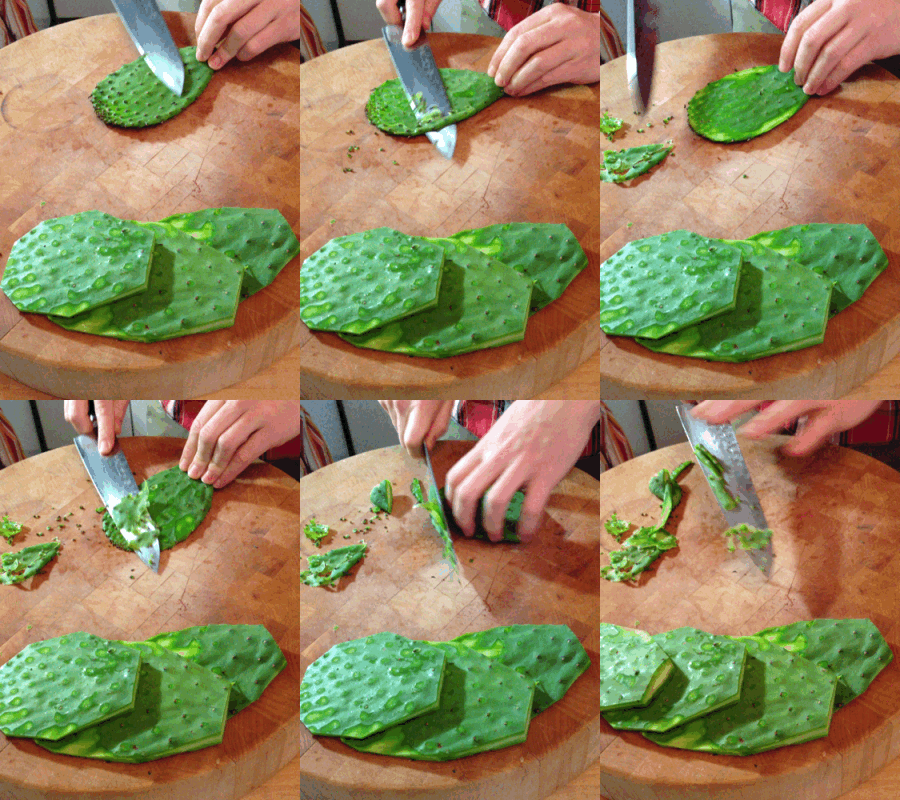
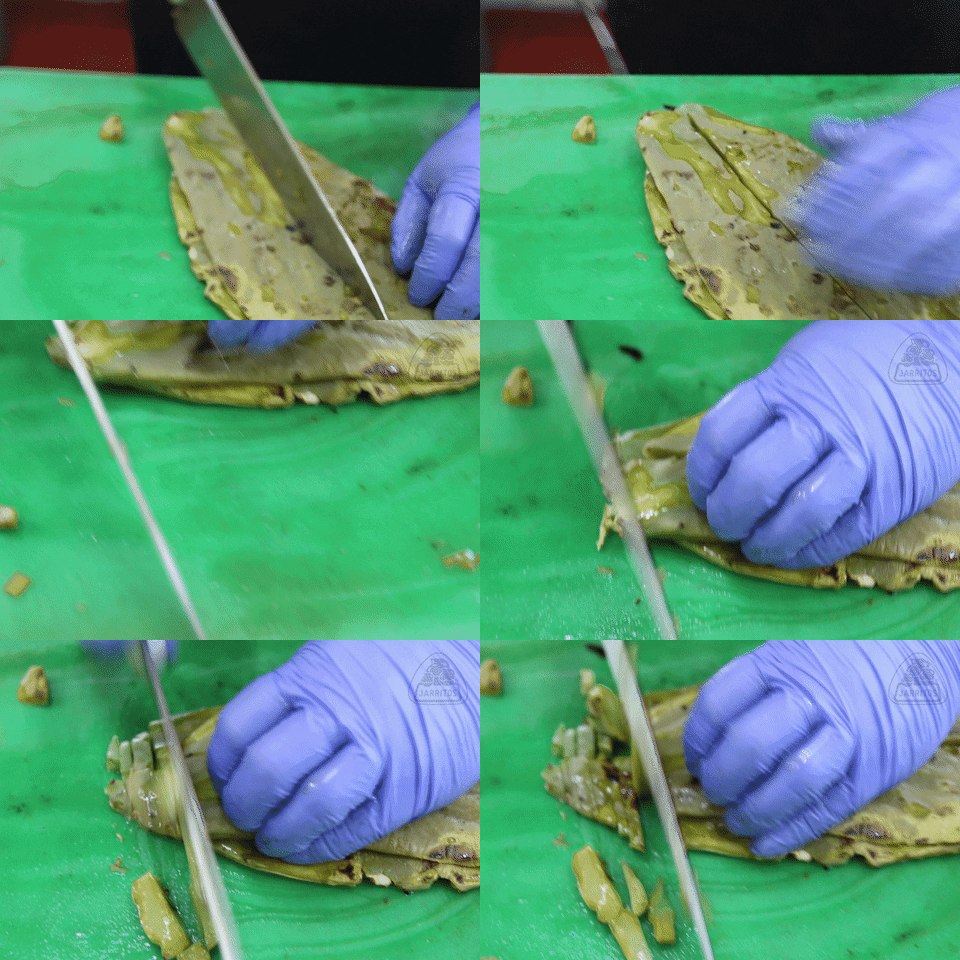
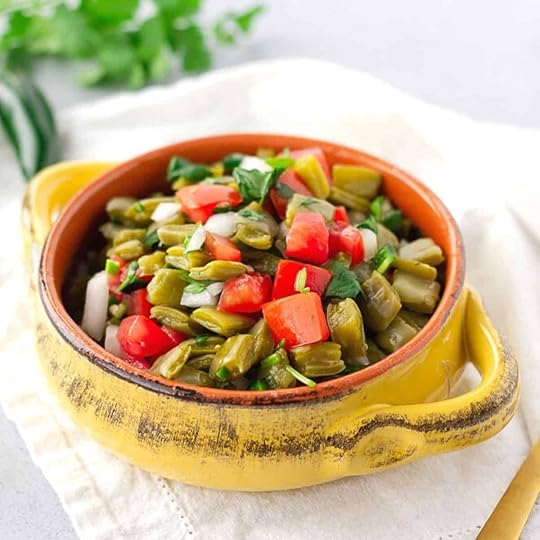
I get that they are trying to make another version of the "Stone Soup" story but as a Mexican person who still eats nopales (cactus) this did not resonate well with me. I get that this is a fictional story and I probably should not get so worked up about it but... here we are. Anyways, in the story they don't even eat the nopales but a big thorn of a nopalera. If you are using the name of "cactus soup" shouldn't it have cactus?? And, they put a big thorn in the soup shouldn't they take it out because it can get lodged in somebodies throat? I read the book and I looked throughout it and I did not see it that they take it out so I'm assuming its in there waiting for somebody to try and eat it I guess. They could have cut the nopales...like so: And, then add the rest of the ingredients! Mexican people have been eating nopales for a long time without the thorns so why include the thorns and not just the nopales? Also, it makes it seem like the characters are all puzzled about the big thorn soup when clearly nopales would've been enough with the rest of the ingredients. To me, it just seems like this story could have been better and resonate more with Mexican people if they had excluded the thorn and just added the nopales. It makes me upset because nopales is a big staple in my culture where nopales can be added with any other kind of ingredients and make it a great dish but this just felt like it wasn't enough and it did not represent Mexican people well. Like... we don't eat the thorns?? Plus, its a fictional and also kind of educational book that can share information with people that are not of the same culture and now they might think: Mexican poeple eat cactus and I guess the thorns too? Or maybe just the thorns? I might be thinking too hard and the authors maybe didn't mean for this to happen but that's just how I feel about it.
The people of San Miguel are not about to share their food with the soldiers headed their way. They hide every bit of food in any spot they can find from the treetops to their bathtubs and dress in worn clothing. The captain is not fooled and with the help of a cactus, thorn tricks them into bringing out item after item to improve the taste of the cactus soup. Before they know it the town and the soldiers are in the middle of a grand fiesta. A wonderful retelling of the story of stone soup.
The book has several Spanish words worked into the text along with a glossary in the back adding a fun cultural depth to the story. The watercolor and ink on watercolor illustrations are bright in warm colors reminiscent of the Hispanic culture and add to the fun of the book. Appropriate for all ages this book would be primarily targeted towards self readers ages 8-10 or read aloud to readers of younger ages.
Summary: This version of Stone Soup is set during the revolution in Mexico. A group of hungry soldiers run into this town and ask for food. The towns people slowly give them more and more food as they become intrigued by the idea of cactus soup. Evaluation: This book does a great job in including the definitions of the words the students may not know and information about the revolution in Mexico. Though it is a good interpretation of Stone Soup, it does not embody the Mexican Culture well due to the overabundance of stereotypes. Teaching Idea: I would use this book in a read aloud along with stone soup to open up the topic of comparing and contrasting texts. After, the students would create a Venn Diagram to compare and contrast the two stories. For students who are at a higher level, I would include another version of the same story.
I first discovered Eric Kimmel when I read his novel-length Russian Folktale, “I Know Not What, I know Not Where”, and have enjoyed several of his other books including “Herschel and the Hanukkah Goblins”. “Cactus Soup” is a re-imagined version of the classic “Stone Soup” but set around the Mexican Revolution. There is a small glossary of Spanish words that are used in the story and some historical background about the Mexican Revolution. The illustrations are unusual and go well with the story.
Does the captain find a way to feed himself and his soldiers?
I'm not sure of whither I thought this was a great book or not for this age level as they may decide to try to be as clever as this captain was of deceiving a small town's mayor as he did? Quite brilliantly illustrated picture book so I will rate it as a five star ebook. Would also like to recommend this for those ages 6-8 and or may be in grades 1-3. I received this for free using KU, in return, here is my honest review. Super work Eric! By Sunny.
When soldiers come into the town of San Miguel, the mayor advises everyone to hide their food and to go around looking hungry. The mayor was scared that the soldiers would eat all of their food, but instead the soldiers offered to make Cactus soup for everyone. Eventually the soldiers ask for more things to put in the soup, like carrots and peppers and the town manages to give it to them. The soldiers create a huge feast for everyone in the town. Beautiful illustrations!
I have heard of the tale of stone soup before but I enjoyed this new spin on it. I think it is neat that it has Hispanic context to it which is great for diversity of books in a classroom. This books also has the underlying theme of community and how when people work together they can accomplish much more then alone which is always great to bring into the classroom setting. I would definitely add this to my future classroom library.
I remember a specific lesson when I was in 3rd grade involving stone soup, where we read the story and then made stone soup as a class to eat. It was cool to have the lights off and watch something cook as a class, very communal. So why not use this story instead, and add a bit of geography, culture, and (literal & metaphorical) spice? This would be a fun way to highlight a culture as well as talk about ways to contribute to the good of everyone with SEL standards. Good for grades 2-5.
I randomly grabbed this at the library and my 4 almost 5 year old LOVES it! We own the Asian version ‘Stone Soup’ and she didn’t much care for it. After reading it the first time she asked me to reread it immediately and after we finished she wanted it a third time. I enjoyed the story but was very surprised at how much she enjoyed it.
Cactus Soup was interesting and entertaining. It provided insight into the cultures of the town San Miguel. It was also informative and had a theme that readers could learn from the story. Spanish language was also incorporated into the story and character's dialogue.
Cactus Soup is a a Mexican twist on an old tale known by many as Stone Soup. As the story begins, a troop of soldiers come riding toward the town of San Miguel. But the people of town weren't at all happy to learn of their arrival. They then plot to hide their food and tell the soldiers they've nothing to give them in hopes that this would encourage the soldiers not to stay. It's quite interesting to learn how and where all the food is hidden out of sight from the strangers. And to take things even further, the townspeople tore & ripped their clothes as well as smeared mud all over their faces to appear like poor hungry people.
Ah, but the Capitán in this story is not at all tricked! He then asks for a cactus thorn to make cactus soup. The townspeople are a bit more than willing to add to the soup by the charm of the stranger. Things gathered from those hiding places included chiles, salt, onions, garlic, beans, carrots, tomatoes, & stewing hens. His wit and the curiousness of the townspeople resulted in a fiesta that was enjoyed by everyone. Oh yes, more than just the Cactus Soup was enjoyed by everyone but tamales, sweet potatoes, and roasting pigs as well!
My children age 2 1/2 and 5 years old have heard other renditions of this story but equally loved this one too. I really loved the Mexican version because it's given me an opportunity to teach my children about other cultures. My daughter was quite curious about the attire as well as the food that was included into the cactus soup.
The watercolored and ink illustrations fit the story perfectly and capture the time and the place in Mexico during the Mexican Revolution quite well. Though not mentioned in the story, readers can learn a little bit of history in the Author's note in the back of the book. There's also a glossary that explains all of the Spanish words used but there's not a pronunciation guide which would have been helpful.
There's obviously a strong message behind this story. The message basically teaches not to be greedy with what you have and obviously the outcome of giving resulted in a feast enjoyed by all. I'm sure the townspeople felt pretty silly hiding all their food and going to the extremes of ripping their own clothes and smearing mud upon their faces shortly thereafter.
Overall my entire family quite enjoyed this book and we'll be reading it again. Just be warned that you shouldn't read it on an empty stomach and you may be wanting to throw together your own Cactus soup shortly thereafter.