

What do you think?

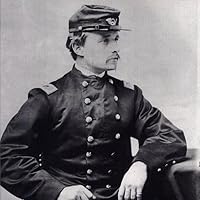
Blue-Eyed Child of Fortune: The Civil War Letters of Colonel Robert Gould Shaw
On the Boston Common stands one of the great Civil War memorials, a magnificent bronze sculpture by Augustus Saint-Gaudens. It depicts the black soldiers of the Fifty-fourth Massachusetts Infantry marching alongside their young white commander, Colonel Robert Gould Shaw. When the philosopher William James dedicated the memorial in May 1897, he stirred the assembled crowd with these "There they march, warm-blooded champions of a better day for man. There on horseback among them, in the very habit as he lived, sits the blue-eyed child of fortune."
In this book Shaw speaks for himself with equal eloquence through nearly two hundred letters he wrote to his family and friends during the Civil War. The portrait that emerges is of a man more divided and complex―though no less heroic―than the Shaw depicted in the celebrated film Glory . The pampered son of wealthy Boston abolitionists, Shaw was no abolitionist himself, but he was among the first patriots to respond to Lincoln's call for troops after the attack on Fort Sumter. After Cedar Mountain and Antietam, Shaw knew the carnage of war firsthand. Describing nightfall on the Antietam battlefield, he wrote, "the crickets chirped, and the frogs croaked, just as if nothing unusual had happened all day long, and presently the stars came out bright, and we lay down among the dead, and slept soundly until daylight. There were twenty dead bodies within a rod of me."
When Federal war aims shifted from an emphasis on restoring the Union to the higher goal of emancipation for four million slaves, Shaw's mother pressured her son into accepting the command of the North's vanguard black regiment, the Fifty-fourth Massachusetts. A paternalist who never fully reconciled his own prejudices about black inferiority, Shaw assumed the command with great reluctance. Yet, as he trained his recruits in Readville, Massachusetts, during the early months of 1963, he came to respect their pluck and dedication. "There is not the least doubt," he wrote his mother, "that we shall leave the state, with as good a regiment, as any that has marched."
Despite such expressions of confidence, Shaw in fact continued to worry about how well his troops would perform under fire. The ultimate test came in South Carolina in July 1863, when the Fifty-fourth led a brave but ill-fated charge on Fort Wagner, at the approach to Charleston Harbor. As Shaw waved his sword and urged his men forward, an enemy bullet felled him on the fort's parapet. A few hours later the Confederates dumped his body into a mass grave with the bodies of twenty of his men. Although the assault was a failure from a military standpoint, it proved the proposition to which Shaw had reluctantly dedicated himself when he took command of the that black soldiers could indeed be fighting men. By year's end, sixty new black regiments were being organized.
A previous selection of Shaw's correspondence was privately published by his family in 1864. For this volume, Russell Duncan has restored many passages omitted from the earlier edition and has provided detailed explanatory notes to the letters. In addition he has written a lengthy biographical essay that places the young colonel and his regiment in historical context.
In this book Shaw speaks for himself with equal eloquence through nearly two hundred letters he wrote to his family and friends during the Civil War. The portrait that emerges is of a man more divided and complex―though no less heroic―than the Shaw depicted in the celebrated film Glory . The pampered son of wealthy Boston abolitionists, Shaw was no abolitionist himself, but he was among the first patriots to respond to Lincoln's call for troops after the attack on Fort Sumter. After Cedar Mountain and Antietam, Shaw knew the carnage of war firsthand. Describing nightfall on the Antietam battlefield, he wrote, "the crickets chirped, and the frogs croaked, just as if nothing unusual had happened all day long, and presently the stars came out bright, and we lay down among the dead, and slept soundly until daylight. There were twenty dead bodies within a rod of me."
When Federal war aims shifted from an emphasis on restoring the Union to the higher goal of emancipation for four million slaves, Shaw's mother pressured her son into accepting the command of the North's vanguard black regiment, the Fifty-fourth Massachusetts. A paternalist who never fully reconciled his own prejudices about black inferiority, Shaw assumed the command with great reluctance. Yet, as he trained his recruits in Readville, Massachusetts, during the early months of 1963, he came to respect their pluck and dedication. "There is not the least doubt," he wrote his mother, "that we shall leave the state, with as good a regiment, as any that has marched."
Despite such expressions of confidence, Shaw in fact continued to worry about how well his troops would perform under fire. The ultimate test came in South Carolina in July 1863, when the Fifty-fourth led a brave but ill-fated charge on Fort Wagner, at the approach to Charleston Harbor. As Shaw waved his sword and urged his men forward, an enemy bullet felled him on the fort's parapet. A few hours later the Confederates dumped his body into a mass grave with the bodies of twenty of his men. Although the assault was a failure from a military standpoint, it proved the proposition to which Shaw had reluctantly dedicated himself when he took command of the that black soldiers could indeed be fighting men. By year's end, sixty new black regiments were being organized.
A previous selection of Shaw's correspondence was privately published by his family in 1864. For this volume, Russell Duncan has restored many passages omitted from the earlier edition and has provided detailed explanatory notes to the letters. In addition he has written a lengthy biographical essay that places the young colonel and his regiment in historical context.
480 pages, Paperback
First published September 30, 1992
Ratings & Reviews
Friends & Following
Create a free account to discover what your friends think of this book!
Community Reviews
Displaying 1 - 20 of 20 reviews

Want to Read
March 23, 2013"Describing nightfall on the Antietam battlefield, he wrote, 'the crickets chirped, and the frogs croaked, just as if nothing unusual had happened all day long, and presently the stars came out bright, and we lay down among the dead, and slept soundly until daylight. There were twenty dead bodies within a rod of me.' "


June 29, 2021
I suspect that very few people under forty know who Robert Gould Shaw was. Those older may remember the 1989 film Glory, which told his story. That movie could never be made today (and will probably soon be disappeared, as has been 1964’s Zulu). After all, Shaw’s is an out-and-out “white savior” story, and now that everyone has been educated that the African reality is actually Wakanda, we realize that black people don’t need, and have never needed, a man such as Shaw. Yet even though the Left has racialized all of American life and shrieks ever louder for a race war (something I failed to predict, silly me), I will only touch lightly on race in this review, and will focus on heroism, the traditional center of Shaw’s story. To race, we will return another day.
"Where Death and Glory Meet" is a short book, written in 1999, which is really just a very modest expansion of the long biographical preface written by the author, Russell Duncan, for his 1992 book compiling Shaw’s Civil War letters, Blue-Eyed Child of Fortune. If you’re interested in Shaw, just buy the latter book. Reading letters, from back when people wrote letters, is always an excellent way (especially if there are good editor’s notes, as there are in Blue-Eyed Child) to understand a person and a time. Shaw’s biography is short because his life was short—he died, cast into a mass grave with his men, at twenty-six, and his body lies there still, now beneath the waves off Charleston. But once he was among the most famous heroes in American history, whose name was known to every child, and whose deeds were taught as exemplars of virtue. This was entirely appropriate, as we will see, but is now sadly lost.
Who is a hero? The word has been stripped of nearly all meaning, through promiscuous use to describe those unworthy of the term. It is now often attached to those whose actions have at best a modest heroic tinge, and even more often used to elevate, usually for ideological reasons, those who are not heroes at all. Such cheapening was no doubt inevitable; the nature of heroism, which by definition means that one person is lifted above the average, the mass, is that some receive recognition, honors, and prestige, based on their accomplishments, while others do not. This cannot be tolerated by the levelers who have wholly taken over American culture, and most importantly for these purposes, American education, for the past fifty years.
Why do the levelers see the old view of heroes as unjust? Part of it is no doubt envy—the types of people who push levelling are the types of people who lack the virtues and talents that tend to result in being heroic and receiving honors. Most levelers, after all, are parasites and malingerers. Part of it, closely related, is temporarily-ascendant Left ideology—forced egalitarianism is one of the two core doctrines of the Left (the other being total emancipation), and allowing one person to rise above others, and worse, to be perceived by all as doing so, cuts against this fundamental Left ideology. Rather than have no heroes at all, though, levelling is accomplished by pulling down, obscuring, and denying real heroes, and substituting people chosen from Left-preferred groups, even though they never accomplished any heroic action, and in fact usually deserve scorn.
But that still doesn’t answer who is a hero. A hero is someone who accomplishes notable deeds that benefit others, at significant risk or cost to himself, while exemplifying some key virtue or virtues. Thus, obviously, someone who wins a lottery is not a hero. He has accomplished nothing, taken no risk, shown no virtue. Less obviously, someone who, through hard work and talent, makes a major scientific advance is not necessarily a hero—it depends on the risk and the cost. Mere hard work is not enough. And as far as the benefit to others that is necessarily a part of heroism, it may be incidental, and not the intended main effect—the hero is often not a nice person. Achilles, for example, mostly sought personal glory, rather than the resulting benefit to his countrymen, yet his deeds were great, the risk and cost high, and his courage exemplary. Yet someone who imposes excessive costs on others even in the achievement of a noble goal is not a hero; the direct and foreseeable risks and costs must primarily be borne by the hero. (This is why terrorists, to the extent their actions harm innocents, can never be heroes, whatever their bravery and the justice of their cause).
You don’t have to fight to be a hero, or even struggle. Maximilian Kolbe was a hero, and he never lifted a finger against man or beast. But if you’re just doing your job, even if it’s risky, you’re not a hero. Not every soldier is a hero. Closer to home for most of us, and contrary to a claim often heard today, neither are most doctors. If, say, the Wuhan Plague had actually been notably dangerous to anybody other than a narrow group of easy-to-define people (the old; those with infirm lungs; the fat; male homosexuals), a doctor or nurse who attended plague patients would not have been a hero. If he failed to attend patients, he’d certainly be a coward, but bearing the risks attendant in your chosen line of work is merely what a society should expect, and what every person should expect of himself. It is not heroism. (Along similar lines, as with teachers, those who work in healthcare aren’t sacrificing at all by choosing that profession to begin with, and deserve no admiration for the mere fact of their choice.) To take the most prominent recent example, and leaving aside that Britain’s National Health Service is a disgrace on every level, the creepy recent requirement in Britain not only that people mouth praise for NHS workers as supposed heroes, but actually step out of their houses and show their literal obeisance to this crazy belief, as if they lived in North Korea, made a complete mockery of real heroism.
Sure, there can be a large gray area. A hero to one person or to one society is not always to another, and it’s often hard to recognize heroism in one’s enemies (the British, before they hit the skids, did it far better than the Americans do; witness Rudyard Kipling’s “The Ballad of East and West” compared to the Bush-ites who annoyingly and stupidly call jihadis “cowards”). Who is a hero is therefore in practice determined by an informal vote of the members of any given culture, if that culture is sound, and naturally someone acclaimed a hero in the moment may lose that status as emotions subside. Thus, to truly qualify for hero status, you probably have to keep it until most or all of those who originally acclaimed you a hero are dead.
All this matters because heroes, real heroes, are crucial to a society; they bind it together by providing object lessons and teaching everyone, in particular the young, for what to strive. They create true myth, and it is myths that make a society. Thus the erosion and cheapening of heroes in the modern West is yet another harm to our societies that must be reversed to move forward; studying Shaw is a reasonable place to start. We’ll get back to him, I promise.
What I discuss above are what might be called “public heroes.” But the same definition of hero can just as well fit “private heroes,” those without any spectacular achievement, or whose achievements may be completely overlooked, or even held in contempt until some later date (usually because of a change in perceived benefit to others, or in what is held to be virtue), when they may ultimately become public heroes. No surprise, public heroes are, in every society, always very heavily weighted toward men; it is in the nature of men to seek glory and resultant public honors, and that search frequently leads to heroic, often spectacular, action. Women simply lack that drive (and given the hyper-feminization of our society, this is another reason why real public heroes are denigrated, often replaced with risible female substitutes). But the woman who gives up all her free time to daily tend an aged relative in a nursing home is a hero in the strict definition, not only sacrificing but pushing back against the Zeitgeist, which holds that personal self-actualization and autonomy is the only rational way to live. She’s just a private hero; her actions will never have the impact of a public hero, but she should be honored nonetheless. Private heroes are no doubt more common, and although their deeds may only influence a family, or a small group, they still also serve a crucial role in binding a society together and in transmitting important lessons.
So where does Shaw fit into this? He didn’t start off as a hero, or seem to be a hero in waiting. That’s true for most heroes; who is a hero is usually partly the product of circumstance. Born in 1837, he was the scion of an extremely important and extremely rich Boston family, back when America had a decent ruling class. He had eighty-five first cousins, a sign of a confident, expanding society. His family was very antislavery—his parents, and their circle, were close friends, for example, with the abolitionist William Lloyd Garrison, who was too radical for many in the North. We should remember that abolitionism was regarded as distasteful fanaticism by the majority in the North, especially by most of the ruling classes and nearly all of the moneyed interests, in the same way as, say, being pro-life is today viewed (and, after all, the evil of abortion is an exact philosophical analog for that of slavery, except that far more people have been killed by abortion). It was not the case, as sometimes put about later, that most in the North were abolitionists; far from it.
Despite his upbringing, Shaw himself was never an abolitionist, quite. He was an ardent American patriot (even though much of his schooling was conducted in Europe), and that tendency was what drove most of his thinking on slavery, which took second place to thoughts of girls and vague thoughts of doing something worthwhile with his life. Before the war, when he talked about slavery, his thoughts were that slavery was distasteful, disruptive, and reflected poorly on America on the international stage. But he didn’t agonize about whether the South left or stayed, as long as the annoying national tension subsided. During the war, he just wanted the conflict to come to an acceptable, honorable conclusion; ending slavery never became his main focus, although as with most Northerners, it assumed more importance in his thinking as the war ground on.
I say Shaw came from a decent ruling class, but the seeds of today’s ruling class perniciousness are evident in hindsight. His parents had substituted the social gospel for the real gospel, and though the objects of their attention were far more worthy than the objects of progressives today, emotivism as a driving characteristic of elite political focus was clearly aborning. His father was a dilettante, abandoning the mercantile pursuits of his forbears to read and scribble simplistic thoughts about capital and labor. He was a Unitarian, naturally (who, as it is said, believe in one God at most), and associated with men like Ralph Waldo Emerson, pushing the silliness of Transcendentalism, and women like Margaret Fuller, pushing the feminism that has ended in disaster for us today. In short, he was a tool. His mother was a strong but maudlin woman convinced of the total justice of her every goal, and she tried to maintain a tight grip on her son, hampered by his often being in Europe and liking to party.
As soon as the war began, Shaw volunteered. He had joined a unit of the New York National Guard beforehand, while national tensions mounted, back when the National Guard was actually a militia controlled by the states, rather than a mere extension of the federal government, as it sadly is now. But, again, ending slavery wasn’t his goal. Mostly, he wanted to prove his manhood by showing his courage, the usual reason men volunteer for the military, or did before economic benefits loomed larger and death loomed smaller.
He was, given his class and connections, quickly commissioned an officer, in the Second Massachusetts Infantry. Nobody ever said he was more than an adequately competent officer—he was brave, but somewhat inconsistent in his leadership, as often with introspective men, sometimes a martinet, sometimes a softie. He fought at Antietam, in late 1862. He was promoted to captain, but did not seek more promotions, content to remain with the Second. Thus he could have spent the whole war, had not circumstance intervened.
Black men were not initially enrolled in the Union army. Southerners nearly all thought the idea of black men fighting was both stupid and beneath contempt, but such sentiments were common enough in the North as well. Some prominent voices in the North, such as Frederick Douglass, who had Lincoln’s ear, nonetheless pushed to enlist blacks. Therefore, shortly after the Emancipation Proclamation, in January 1863, with the war going poorly and seeing a need for creative solutions to advance the Union cause, especially given the violent opposition to conscription, the Army began to enlist blacks, both free Northern blacks and freed Southern blacks.
The governor of Massachusetts, abolitionist John Andrew, had long been interested in raising black regiments. This goal had some unlikely supporters—the self-interested business class, whose heirs today can be found in the odious Chamber of Commerce. They were very rarely abolitionist, but they were keen to have as few of their factory workers, nearly all white, drafted as possible. (For this same reason, the business classes supported the Emancipation Proclamation.) As a result of this confluence of interests, Andrew decided, when authorized in early 1863 by the Secretary of War, Edwin Stanton, to raise regiments which “may include persons of African descent,” to form the Fifty-Fourth Massachusetts Infantry, an all-black regiment, of about a thousand men, commanded by white officers.
Among others, Shaw’s name was suggested as a possible commander. Andrew’s focus was not merely on creating additional fighting forces; he, and those around him, were keenly aware that the success or failure, real or perceived, of the Fifty-Fourth would have enormous impact on public views of the fitness and worth of black Americans to be full citizens of postwar America. Andrew approached Shaw through his father, knowing that Shaw was far from certain to jump at the chance, and that his father’s (and mother’s) opinions carried great weight with him. Even so, Shaw at first turned down the offer, to be promoted to colonel and lead the regiment. He was loyal to his existing regiment and his friends in it, living and (many) dead, and since he was never a particularly ambitious man, perhaps he was afraid of the responsibility inherent in the position and that some would think less of him for leading black men (he explicitly referred to not wanting to be the “Nigger Colonel”). Very soon he thought better of his refusal, and telegrammed an acceptance.
Black men flocked to the new regiment. Douglass recruited; his son Lewis signed up. Some of this was due to an aggressive advertising campaign by Andrew, and some black men, including some prominent ones, rejected the very idea of black men fighting before they had first been granted political equality (a logical position, but not a practical one). Still, the regiment was able to be very selective, choosing only healthy men deemed eager to fight. Training was rigorous; morale was high. Shaw, whose caring for blacks was abstract until this daily contact with his new black men, mostly ended his previous not-infrequent ridicule and disdain for blacks and stopped laughing at stereotypical black traits. He no longer called those of African descent “niggers.” And while running the new regiment, he got married, in May 1863, to Anna Hagerty, a social peer in the Boston elite, with whom he had continued to mingle while training his new men.
After three months of drill, however, it was time to, as the metaphor went back then, “see the elephant.” The vast majority of black men who volunteered for the 54th served with exemplary courage and competence. They knew the stakes, and they fought not only for the end of slavery, but to earn a maximized place for black people as American citizens in the postwar world. Men in that day, black and white, took the actions they took in open pursuit of virtues that today are denigrated, or taken as covers for “real motivations.” For the men of the Fifty-Fourth, those were duty, honor, and country (with women encouraging and coercing these motivations, in the usual partnership between men and women in well-run societies). All of this was acknowledged by the soldiers and the populace; as Duncan notes, when the Fifty-Fourth was sent off to war, the symbology was of “nation, state, manhood, home, Christianity, and higher law.”
A great deal rode on the Fifty-Fourth’s success—not just the political career of men such as Andrew, but the weight of the entire abolitionist argument, made by both black and white. Opposing abolition, and black rights, were not only Southerners, but many Northerners, including most notably Boston’s Irish, who as low men on Boston society’s totem pole disliked the idea of competing with black labor, or of black people crowding them on the totem pole at all. Success by the Fifty-Fourth could defeat this opposition. The Fifty-Fourth’s road was not expected to be easy; it was a long way from the universal high spirits that were widespread early in the war. Robert E. Lee had won a brilliant battle at Chancellorsville and was moving on to Gettysburg, though Ulysses Grant was rolling up the western edge of the Confederacy at Vicksburg. It was far from clear the Union would win, and if it did, it was obvious the cost was heavy and growing. And what the regiment did was under a microscope—the actions of the Fifty-Fourth were widely covered in the newspapers. Shaw’s parents even published some of his letters home, until he asked them to refrain from doing so.
The Fifty-Fourth sailed, or rather steamed . . . [Review completes as first comment.]
"Where Death and Glory Meet" is a short book, written in 1999, which is really just a very modest expansion of the long biographical preface written by the author, Russell Duncan, for his 1992 book compiling Shaw’s Civil War letters, Blue-Eyed Child of Fortune. If you’re interested in Shaw, just buy the latter book. Reading letters, from back when people wrote letters, is always an excellent way (especially if there are good editor’s notes, as there are in Blue-Eyed Child) to understand a person and a time. Shaw’s biography is short because his life was short—he died, cast into a mass grave with his men, at twenty-six, and his body lies there still, now beneath the waves off Charleston. But once he was among the most famous heroes in American history, whose name was known to every child, and whose deeds were taught as exemplars of virtue. This was entirely appropriate, as we will see, but is now sadly lost.
Who is a hero? The word has been stripped of nearly all meaning, through promiscuous use to describe those unworthy of the term. It is now often attached to those whose actions have at best a modest heroic tinge, and even more often used to elevate, usually for ideological reasons, those who are not heroes at all. Such cheapening was no doubt inevitable; the nature of heroism, which by definition means that one person is lifted above the average, the mass, is that some receive recognition, honors, and prestige, based on their accomplishments, while others do not. This cannot be tolerated by the levelers who have wholly taken over American culture, and most importantly for these purposes, American education, for the past fifty years.
Why do the levelers see the old view of heroes as unjust? Part of it is no doubt envy—the types of people who push levelling are the types of people who lack the virtues and talents that tend to result in being heroic and receiving honors. Most levelers, after all, are parasites and malingerers. Part of it, closely related, is temporarily-ascendant Left ideology—forced egalitarianism is one of the two core doctrines of the Left (the other being total emancipation), and allowing one person to rise above others, and worse, to be perceived by all as doing so, cuts against this fundamental Left ideology. Rather than have no heroes at all, though, levelling is accomplished by pulling down, obscuring, and denying real heroes, and substituting people chosen from Left-preferred groups, even though they never accomplished any heroic action, and in fact usually deserve scorn.
But that still doesn’t answer who is a hero. A hero is someone who accomplishes notable deeds that benefit others, at significant risk or cost to himself, while exemplifying some key virtue or virtues. Thus, obviously, someone who wins a lottery is not a hero. He has accomplished nothing, taken no risk, shown no virtue. Less obviously, someone who, through hard work and talent, makes a major scientific advance is not necessarily a hero—it depends on the risk and the cost. Mere hard work is not enough. And as far as the benefit to others that is necessarily a part of heroism, it may be incidental, and not the intended main effect—the hero is often not a nice person. Achilles, for example, mostly sought personal glory, rather than the resulting benefit to his countrymen, yet his deeds were great, the risk and cost high, and his courage exemplary. Yet someone who imposes excessive costs on others even in the achievement of a noble goal is not a hero; the direct and foreseeable risks and costs must primarily be borne by the hero. (This is why terrorists, to the extent their actions harm innocents, can never be heroes, whatever their bravery and the justice of their cause).
You don’t have to fight to be a hero, or even struggle. Maximilian Kolbe was a hero, and he never lifted a finger against man or beast. But if you’re just doing your job, even if it’s risky, you’re not a hero. Not every soldier is a hero. Closer to home for most of us, and contrary to a claim often heard today, neither are most doctors. If, say, the Wuhan Plague had actually been notably dangerous to anybody other than a narrow group of easy-to-define people (the old; those with infirm lungs; the fat; male homosexuals), a doctor or nurse who attended plague patients would not have been a hero. If he failed to attend patients, he’d certainly be a coward, but bearing the risks attendant in your chosen line of work is merely what a society should expect, and what every person should expect of himself. It is not heroism. (Along similar lines, as with teachers, those who work in healthcare aren’t sacrificing at all by choosing that profession to begin with, and deserve no admiration for the mere fact of their choice.) To take the most prominent recent example, and leaving aside that Britain’s National Health Service is a disgrace on every level, the creepy recent requirement in Britain not only that people mouth praise for NHS workers as supposed heroes, but actually step out of their houses and show their literal obeisance to this crazy belief, as if they lived in North Korea, made a complete mockery of real heroism.
Sure, there can be a large gray area. A hero to one person or to one society is not always to another, and it’s often hard to recognize heroism in one’s enemies (the British, before they hit the skids, did it far better than the Americans do; witness Rudyard Kipling’s “The Ballad of East and West” compared to the Bush-ites who annoyingly and stupidly call jihadis “cowards”). Who is a hero is therefore in practice determined by an informal vote of the members of any given culture, if that culture is sound, and naturally someone acclaimed a hero in the moment may lose that status as emotions subside. Thus, to truly qualify for hero status, you probably have to keep it until most or all of those who originally acclaimed you a hero are dead.
All this matters because heroes, real heroes, are crucial to a society; they bind it together by providing object lessons and teaching everyone, in particular the young, for what to strive. They create true myth, and it is myths that make a society. Thus the erosion and cheapening of heroes in the modern West is yet another harm to our societies that must be reversed to move forward; studying Shaw is a reasonable place to start. We’ll get back to him, I promise.
What I discuss above are what might be called “public heroes.” But the same definition of hero can just as well fit “private heroes,” those without any spectacular achievement, or whose achievements may be completely overlooked, or even held in contempt until some later date (usually because of a change in perceived benefit to others, or in what is held to be virtue), when they may ultimately become public heroes. No surprise, public heroes are, in every society, always very heavily weighted toward men; it is in the nature of men to seek glory and resultant public honors, and that search frequently leads to heroic, often spectacular, action. Women simply lack that drive (and given the hyper-feminization of our society, this is another reason why real public heroes are denigrated, often replaced with risible female substitutes). But the woman who gives up all her free time to daily tend an aged relative in a nursing home is a hero in the strict definition, not only sacrificing but pushing back against the Zeitgeist, which holds that personal self-actualization and autonomy is the only rational way to live. She’s just a private hero; her actions will never have the impact of a public hero, but she should be honored nonetheless. Private heroes are no doubt more common, and although their deeds may only influence a family, or a small group, they still also serve a crucial role in binding a society together and in transmitting important lessons.
So where does Shaw fit into this? He didn’t start off as a hero, or seem to be a hero in waiting. That’s true for most heroes; who is a hero is usually partly the product of circumstance. Born in 1837, he was the scion of an extremely important and extremely rich Boston family, back when America had a decent ruling class. He had eighty-five first cousins, a sign of a confident, expanding society. His family was very antislavery—his parents, and their circle, were close friends, for example, with the abolitionist William Lloyd Garrison, who was too radical for many in the North. We should remember that abolitionism was regarded as distasteful fanaticism by the majority in the North, especially by most of the ruling classes and nearly all of the moneyed interests, in the same way as, say, being pro-life is today viewed (and, after all, the evil of abortion is an exact philosophical analog for that of slavery, except that far more people have been killed by abortion). It was not the case, as sometimes put about later, that most in the North were abolitionists; far from it.
Despite his upbringing, Shaw himself was never an abolitionist, quite. He was an ardent American patriot (even though much of his schooling was conducted in Europe), and that tendency was what drove most of his thinking on slavery, which took second place to thoughts of girls and vague thoughts of doing something worthwhile with his life. Before the war, when he talked about slavery, his thoughts were that slavery was distasteful, disruptive, and reflected poorly on America on the international stage. But he didn’t agonize about whether the South left or stayed, as long as the annoying national tension subsided. During the war, he just wanted the conflict to come to an acceptable, honorable conclusion; ending slavery never became his main focus, although as with most Northerners, it assumed more importance in his thinking as the war ground on.
I say Shaw came from a decent ruling class, but the seeds of today’s ruling class perniciousness are evident in hindsight. His parents had substituted the social gospel for the real gospel, and though the objects of their attention were far more worthy than the objects of progressives today, emotivism as a driving characteristic of elite political focus was clearly aborning. His father was a dilettante, abandoning the mercantile pursuits of his forbears to read and scribble simplistic thoughts about capital and labor. He was a Unitarian, naturally (who, as it is said, believe in one God at most), and associated with men like Ralph Waldo Emerson, pushing the silliness of Transcendentalism, and women like Margaret Fuller, pushing the feminism that has ended in disaster for us today. In short, he was a tool. His mother was a strong but maudlin woman convinced of the total justice of her every goal, and she tried to maintain a tight grip on her son, hampered by his often being in Europe and liking to party.
As soon as the war began, Shaw volunteered. He had joined a unit of the New York National Guard beforehand, while national tensions mounted, back when the National Guard was actually a militia controlled by the states, rather than a mere extension of the federal government, as it sadly is now. But, again, ending slavery wasn’t his goal. Mostly, he wanted to prove his manhood by showing his courage, the usual reason men volunteer for the military, or did before economic benefits loomed larger and death loomed smaller.
He was, given his class and connections, quickly commissioned an officer, in the Second Massachusetts Infantry. Nobody ever said he was more than an adequately competent officer—he was brave, but somewhat inconsistent in his leadership, as often with introspective men, sometimes a martinet, sometimes a softie. He fought at Antietam, in late 1862. He was promoted to captain, but did not seek more promotions, content to remain with the Second. Thus he could have spent the whole war, had not circumstance intervened.
Black men were not initially enrolled in the Union army. Southerners nearly all thought the idea of black men fighting was both stupid and beneath contempt, but such sentiments were common enough in the North as well. Some prominent voices in the North, such as Frederick Douglass, who had Lincoln’s ear, nonetheless pushed to enlist blacks. Therefore, shortly after the Emancipation Proclamation, in January 1863, with the war going poorly and seeing a need for creative solutions to advance the Union cause, especially given the violent opposition to conscription, the Army began to enlist blacks, both free Northern blacks and freed Southern blacks.
The governor of Massachusetts, abolitionist John Andrew, had long been interested in raising black regiments. This goal had some unlikely supporters—the self-interested business class, whose heirs today can be found in the odious Chamber of Commerce. They were very rarely abolitionist, but they were keen to have as few of their factory workers, nearly all white, drafted as possible. (For this same reason, the business classes supported the Emancipation Proclamation.) As a result of this confluence of interests, Andrew decided, when authorized in early 1863 by the Secretary of War, Edwin Stanton, to raise regiments which “may include persons of African descent,” to form the Fifty-Fourth Massachusetts Infantry, an all-black regiment, of about a thousand men, commanded by white officers.
Among others, Shaw’s name was suggested as a possible commander. Andrew’s focus was not merely on creating additional fighting forces; he, and those around him, were keenly aware that the success or failure, real or perceived, of the Fifty-Fourth would have enormous impact on public views of the fitness and worth of black Americans to be full citizens of postwar America. Andrew approached Shaw through his father, knowing that Shaw was far from certain to jump at the chance, and that his father’s (and mother’s) opinions carried great weight with him. Even so, Shaw at first turned down the offer, to be promoted to colonel and lead the regiment. He was loyal to his existing regiment and his friends in it, living and (many) dead, and since he was never a particularly ambitious man, perhaps he was afraid of the responsibility inherent in the position and that some would think less of him for leading black men (he explicitly referred to not wanting to be the “Nigger Colonel”). Very soon he thought better of his refusal, and telegrammed an acceptance.
Black men flocked to the new regiment. Douglass recruited; his son Lewis signed up. Some of this was due to an aggressive advertising campaign by Andrew, and some black men, including some prominent ones, rejected the very idea of black men fighting before they had first been granted political equality (a logical position, but not a practical one). Still, the regiment was able to be very selective, choosing only healthy men deemed eager to fight. Training was rigorous; morale was high. Shaw, whose caring for blacks was abstract until this daily contact with his new black men, mostly ended his previous not-infrequent ridicule and disdain for blacks and stopped laughing at stereotypical black traits. He no longer called those of African descent “niggers.” And while running the new regiment, he got married, in May 1863, to Anna Hagerty, a social peer in the Boston elite, with whom he had continued to mingle while training his new men.
After three months of drill, however, it was time to, as the metaphor went back then, “see the elephant.” The vast majority of black men who volunteered for the 54th served with exemplary courage and competence. They knew the stakes, and they fought not only for the end of slavery, but to earn a maximized place for black people as American citizens in the postwar world. Men in that day, black and white, took the actions they took in open pursuit of virtues that today are denigrated, or taken as covers for “real motivations.” For the men of the Fifty-Fourth, those were duty, honor, and country (with women encouraging and coercing these motivations, in the usual partnership between men and women in well-run societies). All of this was acknowledged by the soldiers and the populace; as Duncan notes, when the Fifty-Fourth was sent off to war, the symbology was of “nation, state, manhood, home, Christianity, and higher law.”
A great deal rode on the Fifty-Fourth’s success—not just the political career of men such as Andrew, but the weight of the entire abolitionist argument, made by both black and white. Opposing abolition, and black rights, were not only Southerners, but many Northerners, including most notably Boston’s Irish, who as low men on Boston society’s totem pole disliked the idea of competing with black labor, or of black people crowding them on the totem pole at all. Success by the Fifty-Fourth could defeat this opposition. The Fifty-Fourth’s road was not expected to be easy; it was a long way from the universal high spirits that were widespread early in the war. Robert E. Lee had won a brilliant battle at Chancellorsville and was moving on to Gettysburg, though Ulysses Grant was rolling up the western edge of the Confederacy at Vicksburg. It was far from clear the Union would win, and if it did, it was obvious the cost was heavy and growing. And what the regiment did was under a microscope—the actions of the Fifty-Fourth were widely covered in the newspapers. Shaw’s parents even published some of his letters home, until he asked them to refrain from doing so.
The Fifty-Fourth sailed, or rather steamed . . . [Review completes as first comment.]

May 23, 2009
What an amazingly well put together collection of the letters of Colonel Robert Gould Shaw, who led the first black contingent of soldiers, the Mass 54th , during the Civil War. Excellent read.
June 30, 2023
Three segments of this book combine to make it an outstanding work. First is the extended biographical essay about Shaw's life and times. Secondly, the letters themselves, written by a well-educated and literate young man who struggled at times with his duty, but never shirked it. And third, the footnotes to the letters, which are incredibly informative. All of this speaks to a heavy-duty amount of scholarship by editor Russell Duncan. Through the letters and notes we happen to get sketches of Shaw's family, in particular his mother, who could apparently be quite pushy. It was her dedication to the abolition of slavery, though, that ultimately caused Shaw to accept leadership of the first all-Black regiment, the 54th Massachusetts. The text is accompanied by a fine selection of photographs.
March 1, 2025
A compelling read that shows the man behind the myth. Duncan's additions provide context and are a great addition to the letters. While some of the letters are decidedly dry and not that interesting, they help paint the picture of Shaw the man, flaws and all. Especially poignant are his observations following the battle of Antietam and the change in his tone and belief in black soldiers the more time he spends with them. A worthwhile read for those looking to see more of the man in his own words.

September 18, 2022
Fantastic collection of letters from a very famous American figure. The essay beforehand is also very good and worth the read on its own. Would recommend to anyone studying the life of a civil war officer. His perspective on his USCT reg was also extremely interesting to read about, and is the principal reason a civil war buff should read this collection.

May 29, 2018
Even though it took me a very long time to read, it is an excellent book! I loved the history and reading his personal accounts of things that went on during the war. I personally feel he lead a very sad life which centered around the war & the military.

August 11, 2023
COMPLETED SEPTEMBER 2019. ⭐⭐⭐⭐/☆
⨯ . ⁺ ✦ ⊹ ꙳ ⁺ ‧ ⨯. ⁺ ✦ ⊹ . * ꙳ ✦ ⊹
I already knew the story of Colonel Robert Gould Shaw from the movie Glory, but I wanted it in his own words. This book is from his collection of letters to his parents, fiancée, & various leaders within the military on the Northern side while he was camped around the South or fighting during the American Civil War.
What I really, really loved about this book is the way he grew as the story evolves. He takes command of the 54th about three years into the war — because of a vague sense that he should. Courage is often like that I think — more noticeable in aftermath than in the moment. He is encouraged to take the command by his father and other high commanders, but he dislikes leaving the friends in his former regiment with whom he has fought, bled, struggled, & survived up to this point. There’s a clear desire to cling to what is known & comfortable that I think any of us could understand. When he does accept the command, it’s with some trepidation & uncertainty, for he’s definitely taking a risk with his life & career. But it feels right, & notably, he thinks it all over & makes this decision on his own rather than capitulating to outside pressure.
When he meets the men of his regiment, his attitude is definitely paternal: he is kind but clearly expects them to be unruly & harder to manage than the white regiments. His letters quickly change their tune when he meets black men for the first time in his life & finds in them depth, courage, commitment, & humanity.
I love this book because it is a true story of humanity rising up to meet the call of its times. Shaw was imperfect, but he went in anyway. He chose to change history.
:¨ •.• ¨:
`• . ꔫ
⨯ . ⁺ ✦ ⊹ ꙳ ⁺ ‧ ⨯. ⁺ ✦ ⊹ . * ꙳ ✦ ⊹
I already knew the story of Colonel Robert Gould Shaw from the movie Glory, but I wanted it in his own words. This book is from his collection of letters to his parents, fiancée, & various leaders within the military on the Northern side while he was camped around the South or fighting during the American Civil War.
What I really, really loved about this book is the way he grew as the story evolves. He takes command of the 54th about three years into the war — because of a vague sense that he should. Courage is often like that I think — more noticeable in aftermath than in the moment. He is encouraged to take the command by his father and other high commanders, but he dislikes leaving the friends in his former regiment with whom he has fought, bled, struggled, & survived up to this point. There’s a clear desire to cling to what is known & comfortable that I think any of us could understand. When he does accept the command, it’s with some trepidation & uncertainty, for he’s definitely taking a risk with his life & career. But it feels right, & notably, he thinks it all over & makes this decision on his own rather than capitulating to outside pressure.
When he meets the men of his regiment, his attitude is definitely paternal: he is kind but clearly expects them to be unruly & harder to manage than the white regiments. His letters quickly change their tune when he meets black men for the first time in his life & finds in them depth, courage, commitment, & humanity.
I love this book because it is a true story of humanity rising up to meet the call of its times. Shaw was imperfect, but he went in anyway. He chose to change history.
:¨ •.• ¨:
`• . ꔫ
September 17, 2012
A throughly good read. I remember watching the film 'Glory' as a youngster which first got me interested in the story of Robert Gould Shaw and the men of the 54th.
Having read this book I am astounded at just how significant the trial of the 54th, especially the fatal charge on Fort Wagner, would impact the future for all African-Americans. With the South wanting to put them all back into slavery and even some sections of Northern society doubting whether they could be considered equals, including RGS initially, it was vital for the 54th to prove themselves worthy, and that they did with unwavering bravery which changed the course of American history.
The story of Robert Shaw himself is a tragic one, a newlywed of just a couple of months dying with his men on the approach to Fort Wagner. A man committed to his family, especially his mother, and eventually eager to fulfill the goal of both his parents, who were staunch abolitionists, by making the 54th a success story. Sadly he wouldn't live to see the outcome of his parents vision. The change seen in Shaw from his first taking the colonelcy of the 54th to the fateful day at Wagner is astounding. From initially been sceptical about Black soldiers he experiences a change in feelings as he gets to know the soldiers and starts to comprehend their way of life. He goes from been a stranger in their eyes to been a leader well respected by all. The sacrifice made by him and his soldiers would go on to turn the tide of the civil war and change to the course of history.
These letters give a good insight into the life of RGS and the making of the 54th, well worth reading if your interested in this field.
Having read this book I am astounded at just how significant the trial of the 54th, especially the fatal charge on Fort Wagner, would impact the future for all African-Americans. With the South wanting to put them all back into slavery and even some sections of Northern society doubting whether they could be considered equals, including RGS initially, it was vital for the 54th to prove themselves worthy, and that they did with unwavering bravery which changed the course of American history.
The story of Robert Shaw himself is a tragic one, a newlywed of just a couple of months dying with his men on the approach to Fort Wagner. A man committed to his family, especially his mother, and eventually eager to fulfill the goal of both his parents, who were staunch abolitionists, by making the 54th a success story. Sadly he wouldn't live to see the outcome of his parents vision. The change seen in Shaw from his first taking the colonelcy of the 54th to the fateful day at Wagner is astounding. From initially been sceptical about Black soldiers he experiences a change in feelings as he gets to know the soldiers and starts to comprehend their way of life. He goes from been a stranger in their eyes to been a leader well respected by all. The sacrifice made by him and his soldiers would go on to turn the tide of the civil war and change to the course of history.
These letters give a good insight into the life of RGS and the making of the 54th, well worth reading if your interested in this field.
September 15, 2008
If you want to understand what the American Civil War was about, then this book gives you a very good insight. You discover that the gulf between abolitionists and supporters of slavery was not as great as you might imagine. What was remarkable about Shaw was how he grew as a person once in the company of his black soldiers.
Soldiers know each other as people and not as topics for polite conversation or intellectual debate. Shaw discovered something important about people and was willing to die for it. Buried with his men on that Charleston beach was supposed to have dishonoured him, but is was probably the greatest honour he could have been awarded.
Shaw's letters are so important because they are 'ordinary'. Had he led a white regiment they would be unremarkable. Because he led the 54th he changed and he grew and his letters record this.
A must read for everyone.
Soldiers know each other as people and not as topics for polite conversation or intellectual debate. Shaw discovered something important about people and was willing to die for it. Buried with his men on that Charleston beach was supposed to have dishonoured him, but is was probably the greatest honour he could have been awarded.
Shaw's letters are so important because they are 'ordinary'. Had he led a white regiment they would be unremarkable. Because he led the 54th he changed and he grew and his letters record this.
A must read for everyone.
December 4, 2020
I love this collection of letters from Colonel Robert Gould Shaw to his family. The notes at the end of each letter were very informative and useful to understand some of his writing to family.
Even though Robert was a member of the Boston aristocracy, he felt a strong sense of duty to enlist in the Union cause. I liked his quote: " If the raising of coloured troops proved such a benefit to the country, and to the blacks, as many people think it will, I shall thank God a thousand times that I was led to take my share it it." He served his country well as he commanded the 54th Massachusetts, the nation's first all-black regiment. There stands today, the Shaw Memorial, which was dedicated on 31 May 1897 on the Boston Common, in Boston, MA.
Even though Robert was a member of the Boston aristocracy, he felt a strong sense of duty to enlist in the Union cause. I liked his quote: " If the raising of coloured troops proved such a benefit to the country, and to the blacks, as many people think it will, I shall thank God a thousand times that I was led to take my share it it." He served his country well as he commanded the 54th Massachusetts, the nation's first all-black regiment. There stands today, the Shaw Memorial, which was dedicated on 31 May 1897 on the Boston Common, in Boston, MA.

May 3, 2012
I read this book years ago, but have always thought fondly of it. I first saw the movie Glory, and then saw this book and had to read it. It gave a deeper understanding to Shaw and what exactly he did…and it was fairly monumental. For anyone interested in the Civil War, I recommend this book without hesitation.
January 23, 2016
A fascinating look at the letters of Robert Gould Shaw. This is particularly interesting as it spends more time during the almost two years Shaw spent with the 7th NY Militia and 2nd Mass Vol Inf, rather than the (admittedly more significant) six months he spent with the 54th Mass Vol Inf. A solid read for the American Civil War buff.

February 3, 2008
I read this mostly because I knew it was one of the sources for the film _Glory_. The colonel's letters were only so-so overall. However, Civil War enthusiasts may find the book more interesting than I did.

May 3, 2011
The letters to his family and friends are very sweet. You really get into his thoughts about the boredom, confusion, and stress associated with his post. It's also rewarding to witness his growth as a human being through his letters.

November 28, 2010
Great book; really helped me understand Shaw and the time he lived in.

February 22, 2011
It is is good book. This was the view from the inside events of a Civil War.

March 16, 2014
Incredible. Glad to have found this title on Goodreads. All Americans should read this book about a Colonel who gave everything for freedom. Wish I could give it six stars.
Displaying 1 - 20 of 20 reviews