

What do you think?

Radical Love: Five Novels
Radical Love gathers five of Fanny Howe's Nod, The Deep North, Famous Questions, Saving History, and Indivisible, previously out-of-print and hard to find classics whose characters wrestle with serious political and metaphysical questions against the backdrop of urban, suburban, and rural America.
640 pages, Paperback
First published January 1, 2006
About the author
Fanny Howe
93 books171 followersFanny Quincy Howe was an American poet, novelist and short story writer. She was raised in Cambridge, Massachusetts. Howe wrote more than 20 books of poetry and prose. Her major works include poetry such as One Crossed Out, Gone, and Second Childhood; the novels Nod, The Deep North, and Indivisible; and collected essays such as The Wedding Dress: Meditations on Word and Life and The Winter Sun: Notes on a Vocation.
Howe received praise and official recognition: she was awarded the 2009 Ruth Lilly Poetry Prize by the Poetry Foundation. She also received the Gold Medal for Poetry from the Commonwealth Club of California. In addition, her Selected Poems received the 2001 Lenore Marshall Poetry Prize from the Academy of American Poets for the most outstanding book of poetry published in 2000. She was a finalist for the 2015 International Booker Prize. She also received awards from the National Endowment for the Arts, the National Poetry Foundation, the California Arts Council, and the Village Voice. She was professor of writing and literature at the University of California, San Diego and lived in Cambridge, Massachusetts.
Howe received praise and official recognition: she was awarded the 2009 Ruth Lilly Poetry Prize by the Poetry Foundation. She also received the Gold Medal for Poetry from the Commonwealth Club of California. In addition, her Selected Poems received the 2001 Lenore Marshall Poetry Prize from the Academy of American Poets for the most outstanding book of poetry published in 2000. She was a finalist for the 2015 International Booker Prize. She also received awards from the National Endowment for the Arts, the National Poetry Foundation, the California Arts Council, and the Village Voice. She was professor of writing and literature at the University of California, San Diego and lived in Cambridge, Massachusetts.
Ratings & Reviews
Friends & Following
Create a free account to discover what your friends think of this book!
Community Reviews
Displaying 1 - 12 of 12 reviews

Read
March 10, 2023I rate the novels individually and provide brief thoughts on each of them below, with the exception of Indivisible, which I didn't finish. By that point, I was getting a bit weary of Howe's meandering style. If I actually owned this book as opposed to having gotten it from the library, I'd probably finish Indivisible at some point because it does feature a couple of characters in common with other novels in the collection—an element that stoked my interest. There are also common locations across the novels (Ireland, Boston, southern California), which I think strengthens their connections to each other. Place seems important to Howe; it is woven tightly into each of the novels here. I’ve been trying to think of the best way to describe her style, and words like slapdash, haphazard, sprawling, etc. keep coming to mind. As she is primarily known for her poetry, it would be easy to just chalk this up to these being so-called 'poet’s novels' and move on. But she’s written a lot of fiction, so I don’t think it’s that simple…
Nod: An American ex-pat family is living in Ireland during the years leading up to WWII. Despite the simmering political tensions, the parents leave to flit artsily around mainland Europe, while the two teenage girls are left alone with a local woman to watch over them. A man from the mother’s past arrives and creates a lot of tension, especially around the older girl, Irene. The story is told in third-person omniscient view but mostly follows the younger girl, Cloda. She’s at an uncomfortable age and trying to figure out a lot of the world all at once. I can’t explain exactly why I liked this novel, but I think it has a lot to do with the feeling of place, the way Howe conjures atmosphere, and her language. She’s also good at developing tension, although it is not always in expected places, and it does not always resolve itself. (4 stars)
The Deep North: This one left me feeling pretty cold, which was jarring after what I felt to be the relative narrative warmth of Nod. Again it is about a family, one that feels similar to the one in Nod, except the two children are a boy and a girl instead of two girls. The family’s story is somewhat interesting at first and again spans two continents, but then it shrinks down to mostly follow the girl who is back in Boston. Howe appears to be attempting some commentary about race here, but it all gets kind of garbled and I think she fails to make any meaningful points. I don’t know…maybe it’s just dated. Howe comes across here like a privileged white ‘60s liberal vaguely against racism but not up to the task of addressing it in fiction. (2.5 stars)
Famous Questions: Though the family in this one has roots in Boston, they are currently residing in southern California. The setting gives the story a different vibe than the previous novels, bringing in some West Coast flavor and lifestyle. The family is also nontraditional, as compared to those in the previous books. It comprises a divorced woman with a son by her first husband—who had become ill and moved back to Ireland shortly after the birth of the son, never to return to the states—and her long-time boyfriend who has basically raised the boy as his own. The son is (as I recall) not quite a teenager and does not figure prominently in the story. As with all of these books, there is a sprawl of family history that Howe somewhat randomly doles out the details of throughout the narrative. Sometimes I found this annoying, but other times when I had sufficiently sunk into the Howe Zone, it made organic sense to me. The gist of the book is that the couple somewhat randomly picks up a young woman who appears down on her luck and brings her back to the fancy house they’re renting. From that point on it becomes a somewhat familiar interloper story except written by an experimental poet, so not always straightforward. I really enjoyed this novel; it was probably my favorite of the four that I read. (4 stars)
Saving History: As I noted in one of my status updates, I found this to be the most difficult of the novels in the collection. I say that because the relationships between the characters are murky, and it’s tough to sort out exactly what’s going on for much of the book. Some truly bizarre happenings occur involving equally strange characters. Everything that happens feels pretty random at first, although eventually certain events and connections between people shed some of their ambiguity. Howe again makes attempts to say some things about race, but again I don’t think she succeeds in saying much at all. She seems particularly interested in interracial relationships and about people ‘passing’ as various other ethnicities. But the way she writes often eschews clarity, which means these themes are left to flounder in a poetic haze. I think the lack of narrative cohesion in this one left me wanting, even though there were points where I was pretty caught up in the story. (3.25 stars)
Final thoughts: I wonder if I would have felt any differently about these novels if I had been more familiar with Howe’s poetry before reading them. For example, having only read a few of her poems, I have no idea if there is a connection between her poetic voice and her voice in fiction or if there is any thematic crossover. I do think she’s a unique writer, though, and I enjoyed a lot of the writing in this collection. But at times it felt like a little too much to be reading these novels one after another, despite their relative brevity. I can’t recommend attempting that, but I do recommend reading them individually spaced out over time.
Nod: An American ex-pat family is living in Ireland during the years leading up to WWII. Despite the simmering political tensions, the parents leave to flit artsily around mainland Europe, while the two teenage girls are left alone with a local woman to watch over them. A man from the mother’s past arrives and creates a lot of tension, especially around the older girl, Irene. The story is told in third-person omniscient view but mostly follows the younger girl, Cloda. She’s at an uncomfortable age and trying to figure out a lot of the world all at once. I can’t explain exactly why I liked this novel, but I think it has a lot to do with the feeling of place, the way Howe conjures atmosphere, and her language. She’s also good at developing tension, although it is not always in expected places, and it does not always resolve itself. (4 stars)
The Deep North: This one left me feeling pretty cold, which was jarring after what I felt to be the relative narrative warmth of Nod. Again it is about a family, one that feels similar to the one in Nod, except the two children are a boy and a girl instead of two girls. The family’s story is somewhat interesting at first and again spans two continents, but then it shrinks down to mostly follow the girl who is back in Boston. Howe appears to be attempting some commentary about race here, but it all gets kind of garbled and I think she fails to make any meaningful points. I don’t know…maybe it’s just dated. Howe comes across here like a privileged white ‘60s liberal vaguely against racism but not up to the task of addressing it in fiction. (2.5 stars)
Famous Questions: Though the family in this one has roots in Boston, they are currently residing in southern California. The setting gives the story a different vibe than the previous novels, bringing in some West Coast flavor and lifestyle. The family is also nontraditional, as compared to those in the previous books. It comprises a divorced woman with a son by her first husband—who had become ill and moved back to Ireland shortly after the birth of the son, never to return to the states—and her long-time boyfriend who has basically raised the boy as his own. The son is (as I recall) not quite a teenager and does not figure prominently in the story. As with all of these books, there is a sprawl of family history that Howe somewhat randomly doles out the details of throughout the narrative. Sometimes I found this annoying, but other times when I had sufficiently sunk into the Howe Zone, it made organic sense to me. The gist of the book is that the couple somewhat randomly picks up a young woman who appears down on her luck and brings her back to the fancy house they’re renting. From that point on it becomes a somewhat familiar interloper story except written by an experimental poet, so not always straightforward. I really enjoyed this novel; it was probably my favorite of the four that I read. (4 stars)
Saving History: As I noted in one of my status updates, I found this to be the most difficult of the novels in the collection. I say that because the relationships between the characters are murky, and it’s tough to sort out exactly what’s going on for much of the book. Some truly bizarre happenings occur involving equally strange characters. Everything that happens feels pretty random at first, although eventually certain events and connections between people shed some of their ambiguity. Howe again makes attempts to say some things about race, but again I don’t think she succeeds in saying much at all. She seems particularly interested in interracial relationships and about people ‘passing’ as various other ethnicities. But the way she writes often eschews clarity, which means these themes are left to flounder in a poetic haze. I think the lack of narrative cohesion in this one left me wanting, even though there were points where I was pretty caught up in the story. (3.25 stars)
Final thoughts: I wonder if I would have felt any differently about these novels if I had been more familiar with Howe’s poetry before reading them. For example, having only read a few of her poems, I have no idea if there is a connection between her poetic voice and her voice in fiction or if there is any thematic crossover. I do think she’s a unique writer, though, and I enjoyed a lot of the writing in this collection. But at times it felt like a little too much to be reading these novels one after another, despite their relative brevity. I can’t recommend attempting that, but I do recommend reading them individually spaced out over time.

January 3, 2017
A few lines and passages from Radical Love:
All people seek great difficulty, no doubt about that; they seek and even create the situation which will be insurmountably problematic. It would be a strange person who did not know that suffering is a way to stay alive.
The night before she dreamed she had won the Nobel Prize for Despair.
From the beginning he held the tragic position that the only revolution was the eternal revolution – an inexhaustible struggle for something already lost.
Weak desires protect you from disappointment. But nothing keeps you safer than being a visible ruin.
Some people use the word affliction when they mean infliction. They think that making other people suffer is painful to them because someone else made them suffer first. Libby never blamed her life on her father interfering with her but she wished she was not the drunk that her mother was. She experienced her addictions not as afflictions but as weeds that grow in certain gardens wild. No matter how you tugged and pulled, you couldn’t ever get them all out of the ground.
His work was his obscurity. You can actually work in opposition to fame.
I was an existentialist, then I noticed how words could make things happy again. Many of the most lost people used the loveliest language in order to laugh.
The dialectic of the 20th century (determinism versus choice) is as old as the hills. But today I realized that a choice can be wrong. I used to think otherwise. Now I see that choices are so difficult because people know that they can make the wrong ones. But I think that if a choice is made against you to reject you, your work or your love for instance – it can’t be wrong. It can’t be wrong because it would always come to that, anyway. Sooner or later, you would be rejected by that party. And you would suffer throughout the whole process. So in a way what happens to you is pre-determined, but what you do is a choice.
What is sad to discover is that events in this world are both pre-determined and whipped up at the moment they are occurring. People are bewildered by this paradox unless they can grasp the difference between time and timing. It is like the way they write out their calendar, make predictions and watch events unfold according to plan… and then it all goes wrong and a choice becomes necessary.
.
All people seek great difficulty, no doubt about that; they seek and even create the situation which will be insurmountably problematic. It would be a strange person who did not know that suffering is a way to stay alive.
The night before she dreamed she had won the Nobel Prize for Despair.
From the beginning he held the tragic position that the only revolution was the eternal revolution – an inexhaustible struggle for something already lost.
Weak desires protect you from disappointment. But nothing keeps you safer than being a visible ruin.
Some people use the word affliction when they mean infliction. They think that making other people suffer is painful to them because someone else made them suffer first. Libby never blamed her life on her father interfering with her but she wished she was not the drunk that her mother was. She experienced her addictions not as afflictions but as weeds that grow in certain gardens wild. No matter how you tugged and pulled, you couldn’t ever get them all out of the ground.
His work was his obscurity. You can actually work in opposition to fame.
I was an existentialist, then I noticed how words could make things happy again. Many of the most lost people used the loveliest language in order to laugh.
The dialectic of the 20th century (determinism versus choice) is as old as the hills. But today I realized that a choice can be wrong. I used to think otherwise. Now I see that choices are so difficult because people know that they can make the wrong ones. But I think that if a choice is made against you to reject you, your work or your love for instance – it can’t be wrong. It can’t be wrong because it would always come to that, anyway. Sooner or later, you would be rejected by that party. And you would suffer throughout the whole process. So in a way what happens to you is pre-determined, but what you do is a choice.
What is sad to discover is that events in this world are both pre-determined and whipped up at the moment they are occurring. People are bewildered by this paradox unless they can grasp the difference between time and timing. It is like the way they write out their calendar, make predictions and watch events unfold according to plan… and then it all goes wrong and a choice becomes necessary.
.

May 22, 2013
When I read one of these novels many years ago -- The Deep North, in its Sun & Moon edition -- I felt an uncommon affinity with the writing--so when I saw this huge collection of five novels at the Nightboat table at the 2013 AWP I had no choice but to buy it. (I resist those purchases, so many books, so many presses, but the ones I give in to turn out to be so often the best reads of the year.) I love this book, these five short novels, not only for the affinities I still feel with the writing and sensibility, but for the clarity, breadth and depth of vision, vast expanse discovered and revealed in ordinary troubled lives. Howe is so brilliant, so luminous in the darkness. These are the kinds of novels that renew my confidence that wisdom and truth can be realized in literary forms. At the same time I doubt large numbers of people, even readers, will agree with me, or will have the opportunity to agree or disagree--where will they find the book in the first place? How will they know where to look for it, or even to try? (We're lucky who go to AWP--and even there, so many books, so little time.) These novels were published originally by wonderful small literary presses and are brought together again and offered by another wonderful small literary press. There are so many such presses, bringing out so many wonderful titles, year after year, and so many of them nearly vanishing. Great thanks to Nightboat for collecting and reissuing in this big volume.

September 11, 2010
Five Novels that will totally kick your motherfucking ass.

ongoing
July 26, 2025I thought of Fanny Howe as a poet and, therefore, was happily surprised to learn from her recent obituary that there are five novellas of hers that were published, all of them in this recent omnibus edition. The first, "Nod," is a one-of-a-kind, off-kilter tale with prose that sometimes rises to great beauty without being lyrical (making it not what people call “a poet’s novel”). Its only weakness is some of its dialogue, especially the machine-gun passages, but those can easily be skimmed. A 5 star.
"Famous Questions," the third novella, is equally original and off-kilter, but without the beauty and with too many annoying relationship issues. A 3.5 star.
I merely tasted the second novella, "The Deep North," whose long italicized passages went way over my head. I’ll get to the last two novellas another time.
"Famous Questions," the third novella, is equally original and off-kilter, but without the beauty and with too many annoying relationship issues. A 3.5 star.
I merely tasted the second novella, "The Deep North," whose long italicized passages went way over my head. I’ll get to the last two novellas another time.

December 6, 2021
I
She had a spidery room with a sagging double bed
and pink bureaus
and the children
had a doubledecker bed on a glass porch in back
ate chickens greens and rice which she cooked with
authority
throwing around garlic and onion and spices with
tiny efficient hands
12-inch television with poor reception could not dampen
the joy of the children at having
a place to call their own
during the day the military performed acrobatic aviation exercises
in bat-shaped planes riding out from the camp in the desert and over the sea
whiteness of far sky
Felicity and Tom were relaxing with each other
against his will
their quarrels repeated history, he was revolted by her stories
which she insisted on telling, no matter what it did to him
the stars were winks and jokes twinkling...
II
Are you in a way the instigator?
The most confusing situation is to be a ghost
who sees terrible things and can't report it.
Sometimes I think that God witnesses events sideways
and doesn't stop
because it all goes by so fast
and God can't believe what God just saw
so it is important to tell you everything, God.
To let the memories disperse and vaporize
all over the mansion
would be to lose them as the sleeping shepherd
loses the sheep;
it is like the shape of a tall brooding mountain
smeared with shadow and black bracken
and how it seems to be the last shape the dream might build
before it is covered by sun.
Yet, I don't mind dying and joining them!
Not that there is a choice
but the world and living can be at odds;
only religion
while I am alive
can span the two conditions—
Ask God:
THE SANCTUARY IS THE SPACE THAT OPENS INTO DEATH.
She had a spidery room with a sagging double bed
and pink bureaus
and the children
had a doubledecker bed on a glass porch in back
ate chickens greens and rice which she cooked with
authority
throwing around garlic and onion and spices with
tiny efficient hands
12-inch television with poor reception could not dampen
the joy of the children at having
a place to call their own
during the day the military performed acrobatic aviation exercises
in bat-shaped planes riding out from the camp in the desert and over the sea
whiteness of far sky
Felicity and Tom were relaxing with each other
against his will
their quarrels repeated history, he was revolted by her stories
which she insisted on telling, no matter what it did to him
the stars were winks and jokes twinkling...
II
Are you in a way the instigator?
The most confusing situation is to be a ghost
who sees terrible things and can't report it.
Sometimes I think that God witnesses events sideways
and doesn't stop
because it all goes by so fast
and God can't believe what God just saw
so it is important to tell you everything, God.
To let the memories disperse and vaporize
all over the mansion
would be to lose them as the sleeping shepherd
loses the sheep;
it is like the shape of a tall brooding mountain
smeared with shadow and black bracken
and how it seems to be the last shape the dream might build
before it is covered by sun.
Yet, I don't mind dying and joining them!
Not that there is a choice
but the world and living can be at odds;
only religion
while I am alive
can span the two conditions—
Ask God:
THE SANCTUARY IS THE SPACE THAT OPENS INTO DEATH.
November 29, 2007
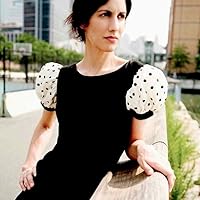
the cover alone--of fanny howe's wonderful young face--makes the book worth getting. but really, these interconnected novels contain everything one could ever ask from writing. howe's books are treasures.

November 25, 2012
Have only read three of the five so far (Nod, Famous Questions, Indivisible), but enjoyed them immensely. So glad they're all collected here.

January 2, 2023
If a person arrives on earth for no reason at all, and no one really cares if she continues or not, then that person's adaptation to her body's irrelevance gives her courage. I think the creatures who are the least adapted to their own extinction are the ones who are most full of soul and beauty. Fear is their loveliest feature. Yes, I am sure that it was weakness, not fitness, that won the physical race to survive in this world. "You sound like an atheist," Tom said. I told him there was an atheist idea in me, alive and well, but you can't really be any kind of "ist" unless you are living out the terms of this idea in your daily life. Marxist, Thomist, feminist, existentialist, Christian or physicist... those are generally just thoughts parading as effective gestures.

June 30, 2025
Really enjoyed Nod, Saving History, and Famous Questions. It's early but it's starting to feel like Fanny Howe summer.

September 21, 2019
Nod and Saving History are best.
mass typos in this book. sometimes funny, like the character's name changing to "raisin" for a page or two. sometimes bad enough to create confusion about the intended content.
4 stars
mass typos in this book. sometimes funny, like the character's name changing to "raisin" for a page or two. sometimes bad enough to create confusion about the intended content.
4 stars

July 26, 2026
It makes more sense to rate these as individual novels, though they are bound together. They are united in tone, though not always in style which is relevant to my evaluation of individual titles. Basically, I believe that most readers should look for individual copies of Famous questions and maybe Nod. The other three are for die hard Howe fans.
Nod: ⭐️⭐️⭐️
In this novel, a seventeen year old gets together with a guy in his thirties. It is told from her point of view however, and to the extent that she can consent in that context, she does. As such, it is a strong opening novel in a collection titled “Modern Love”. The author is also able to lower the readers defences by telling the story from the girl’s point of view. We are not forced to inhabit the mind of a monster as in the case of Lolita (true, the age gap is bigger there but as a novel about age inappropriate relationships it’s at least a comparison in kind, if not in degree). The dismal depictions of the Irish moors ad to the atmosphere of this novel, while it also establishes a central motif in these novels: the breakdown of family structures and what follows. There is good dialogue here and it is a shame that does not hold true for all of these novels.
The Deep North: ⭐️
This novel is set after the previous one, but before the next. As such the first three novels chronicle 40 years of American/Irish history, from the late 30s to the 70s. This one treats the Vietnam war and follows alternative communities on the east coast. That’s all I can remember about it, and so my rating mostly reflects the fact that the other four managed to be more memorable. I recognise that this is a poor basis for a review, but hey: publish five novels in one book and this is bound to happen.
Famous questions: ⭐️⭐️⭐️⭐️
The best novel in the collection, because it blends poetry and prose in the most seamless way. Poetry brings a stylistic emphasis to significant passages without interrupting the narrative, which is the case in other novels in this collection.
Saving History: ⭐️⭐️
This novel is memorable for its tender and poetic description of the phenomenology of pregnancy. It’s not rated any higher because this is one of the novels were I feel that Howe does not integrate poetry with prose, but instead interrupts the narrative with suggestive and dreamy passages that don’t advance the plot. I guess they provide mood, but they are also a drag on the author’s exploration of character and theme.
Indivisible: ⭐️⭐️⭐️
Characters from previous novels in this collection appear here in a way that is elegant at least from an editorial standpoint — it is the novel that ends the collection. It has the strongest opening of any novel I’ve read this year: ”I locked my husband in a closet one fine winter morning.” I love that use of “fine”. Delicious! Unfortunately, the novel doesn’t elaborate on this opening scene until the very final pages, and any potential suspense built by the author’s refusal to explain why said husband was locked in a closet, is killed by longwinded religious musings.
Nod: ⭐️⭐️⭐️
In this novel, a seventeen year old gets together with a guy in his thirties. It is told from her point of view however, and to the extent that she can consent in that context, she does. As such, it is a strong opening novel in a collection titled “Modern Love”. The author is also able to lower the readers defences by telling the story from the girl’s point of view. We are not forced to inhabit the mind of a monster as in the case of Lolita (true, the age gap is bigger there but as a novel about age inappropriate relationships it’s at least a comparison in kind, if not in degree). The dismal depictions of the Irish moors ad to the atmosphere of this novel, while it also establishes a central motif in these novels: the breakdown of family structures and what follows. There is good dialogue here and it is a shame that does not hold true for all of these novels.
The Deep North: ⭐️
This novel is set after the previous one, but before the next. As such the first three novels chronicle 40 years of American/Irish history, from the late 30s to the 70s. This one treats the Vietnam war and follows alternative communities on the east coast. That’s all I can remember about it, and so my rating mostly reflects the fact that the other four managed to be more memorable. I recognise that this is a poor basis for a review, but hey: publish five novels in one book and this is bound to happen.
Famous questions: ⭐️⭐️⭐️⭐️
The best novel in the collection, because it blends poetry and prose in the most seamless way. Poetry brings a stylistic emphasis to significant passages without interrupting the narrative, which is the case in other novels in this collection.
Saving History: ⭐️⭐️
This novel is memorable for its tender and poetic description of the phenomenology of pregnancy. It’s not rated any higher because this is one of the novels were I feel that Howe does not integrate poetry with prose, but instead interrupts the narrative with suggestive and dreamy passages that don’t advance the plot. I guess they provide mood, but they are also a drag on the author’s exploration of character and theme.
Indivisible: ⭐️⭐️⭐️
Characters from previous novels in this collection appear here in a way that is elegant at least from an editorial standpoint — it is the novel that ends the collection. It has the strongest opening of any novel I’ve read this year: ”I locked my husband in a closet one fine winter morning.” I love that use of “fine”. Delicious! Unfortunately, the novel doesn’t elaborate on this opening scene until the very final pages, and any potential suspense built by the author’s refusal to explain why said husband was locked in a closet, is killed by longwinded religious musings.
This entire review has been hidden because of spoilers.
Displaying 1 - 12 of 12 reviews