"Qu'avaient vu, jusqu'en 1900, ceux dont les réflexions sur l'art demeurent pour nous révélatrices ou significatives, et dont nous supposons qu'ils parlent des mêmes oeuvres que nous (... )? Deux ou trois grands musées, et les photos, gravures ou copies d'une faible partie des chefs-d'œuvre de l'Europe. [...] Aujourd'hui, un étudiant dispose de la reproduction en couleurs de la plupart des oeuvres magistrales, découvre nombre de peintures secondaires, les arts archaïques, les sculptures indienne, chinoise, japonaise et précolombienne des hautes époques, une partie de l'art byzantin, les fresques romanes, les arts sauvages et populaires. (...) nous disposons de plus d'oeuvres significatives, pour suppléer aux défaillances de notre mémoire, que n'en pourrait contenir le plus grand musée. Car un Musée Imaginaire s'est ouvert, qui va pousser à l'extrême l'incomplète confrontation imposée par les vrais musées: répondant à l'appel de ceux-ci, les arts plastiques ont inventé leur imprimerie".
Malraux was born in Paris during 1901, the son of Fernand-Georges Malraux and Berthe Lamy (Malraux). His parents separated during 1905 and eventually divorced. He was raised by his mother and maternal grandmother, Berthe and Adrienne Lamy in the small town of Bondy. His father, a stockbroker, committed suicide in 1930. Andre had Tourette's Syndrome during his childhood, resulting in motor and vocal tics.
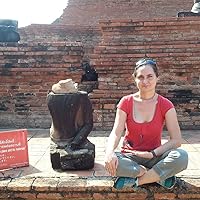
At the age of 21, Malraux left for Cambodia with his new wife Clara Goldschmidt. In Cambodia, he undertook an exploratory expedition into the Cambodian jungle. On his return he was arrested by French colonial authorities for removing bas-reliefs from one of the temples he discovered. Banteay Srei (The French government itself had removed large numbers of sculptures and artifacts from already discovered sites such as Angkor Wat around this time). Malraux later incorporated the episode into his second novel La Voie Royale.
Malraux became very critical of the French colonial authorities in Indochina, and during 1925 helped to organize the Young Annam League and founded a newspaper Indochina in Chains.
On his return to France, he published The Temptation of the West (1926) which had the format of an exchange of letters between a Westerner and an Asian comparing aspects of the two cultures. This was followed by his first novel The Conquerors (1928), then by The Royal Way (1930) which was influenced by his Cambodian experience, and then by Man's Fate (La Condition Humaine). For La Condition Humaine, a novel about the 1927 failed Communist rebellion in Shanghai, written with obvious sympathy for the Communists, he won the 1933 Prix Goncourt.
During the 1930s, Malraux was active in the anti-Fascist Popular Front in France. At the beginning of the Spanish Civil War he joined the Republican forces in Spain, serving in, and helping to organize, their small air force. His squadron, called "España", became something of a legend after his claims of nearly annihilating part of the Nationalist army at Medellín.
According to Curtis Cate, his biographer, he was slightly wounded twice during efforts to stop the Falangists' takeover of Madrid, but the British historian Hugh Thomas denies this. He also toured the United States to raise funds for the Spanish Republicans. A novel influenced by his Spanish war experiences, Man's Hope, (L'Espoir) was published during 1938.
At the beginning of the Second World War, Malraux joined the French Army. He was captured in 1940 during the Battle of France but escaped and later joined the French Resistance. He was captured by the Gestapo during 1944 and underwent a mock execution. He later commanded the tank unit Brigade Alsace-Lorraine in defence of Strasbourg and in the attack on Stuttgart (Germany). He was awarded the Médaille de la Résistance, the Croix de Guerre. He was also awarded the British Distinguished Service Order for his work with British liaison officers in Corrèze, Dordogne and Lot, and after Dordogne had been liberated, leading a battalion of former resistance fighters to Alsace-Lorraine where they fought alongside the First Army.
During the war he worked on a long novel, The Struggle with the Angel based on the story of the Biblical Jacob. The manuscript was destroyed by the Gestapo after his capture in 1944. A surviving first part titled The Walnut Trees of Altenburg, was published after the war. He would never write another novel.
Malraux and his first wife divorced during the 1940s. His daughter from this marriage, Florence (b.1933), married the filmmaker Alain Resnais.
Malraux had two sons by his second wife Josette Clotis: Pierre-Gauthier (1940-1961) and Vincent (1943-1961). During 1944, while Malraux was fighting in Alsace, Josette died when she slipped while boarding a train. His two sons were killed during 1961 in an automobile accident.
After the war, Malraux served in a variety of government p
An underappreciated gem, that one starts dreaming of reading for the second time while still in the middle of the book. Erudite doesn't begin to describe it: Malraux deconstructs art history and glues it back together in a way that exposes new angles of settled art theory concepts under everyone's noses. The book connects the dots I never knew could be connected and gives a philosophical and humanistic perspective to the way seeing affects one's thinking. The art history will never seem lineal again after reading this piece of art philosophy, which, in a truly futuristic way gains back it's relevance in the digital era.
P.S. I especially recommend it to those who are already familiar with writings by Walter Benjamin or John Berger on how photography and film affect the meaning of the original masterpiece.
que dire franchement c'est décousu, ampoulé, indigeste, le mec fait un catalogue des œuvres qu'il connaît toutes les 2 phrases (très pertinent de comparer en même temps Delacroix Corot Cézanne Botticelli Constable Raphael bravo) en plus il cite tjrs les mêmes exemples j'ai des envies de meurtre
discours en plus assez simpliste et réducteur, jamais étayé avec des exemples concrets (source : crois moi sur parole)
que dire sur ses biais racistes, prendre l'Afrique pour un pays, comparer l'art des cavernes à l'art océanien et j'en passe... j'ai grincé des dents
bref on pourrait dire pour l'excuser que ça a mal vieilli et qu'il faut remettre en contexte mais je m'avance nonobstant en disant que c'est juste un gros con prétentieux
Dieu merci j'ai pas lu ça comme préconisé sur LA LISTE DE LECTURES RECOMMANDÉES EN 1A à l'entrée de l'école du Louvre mais bien avec mes 2 M2 dans les dents sinon j'aurais tout plaqué pour faire un CAP plomberie une Business School ou l'ENA (en plus vazy l'EDL vous faites les suceurs mais g juré si qqn rendait une disserte comme ça ce serait redoublement sans passer par la case rattrapage)
jsp si je préférerais relire cette bouse ou manger du foie de veau et vrmt faudrait me tuer pour que je mange du foie de veau
Ce livre est un incontournable dans le domaine de l’histoire de l’art. Cet essai de Malraux déborde d’idées et de thèses sur l’histoire de l’art et est agrémenté de reproductions pour illustrer ses idées. D’après Malraux, « le musée est un des lieux qui donnent la plus haute idée de l’homme » et son érudition et amour de l’art et des musées transparaissent clairement dans ce livre.
J’ai particulièrement aimé ses analyses sur l’art moderne qui ne raconte pas avec des artistes individualistes ; l’importance de la reproduction et le fait qu’elle ne rivalise pas avec les originaux ; ses écrits sur le cinéma, la tapisserie ou les vitraux ; la relation entre l’art visuel et la poésie ou la musique ; la métamorphose des oeuvres quand elles rentrent au musée ou encore l’intellectualisation croissante de l’histoire de l’art.
J’ai toutefois trouvé le livre difficile à lire car je le trouve mal organisé, décousu et ses analyses ne sont pas toujours formulées très clairement.
Baskısı, resimlerin kalitesi ve çeşitliliği oldukça göz doyurucu. Uzun süredir sanata ve sanata dair okumalara dalmış biri olarak Malraux'u anlamakta çok zorlandım. Belki dikkat dağınıklığı, odaklanamama, belki sanata dair kuramsal yorumlarını anlayamama sebep oldu. Birkaç sanat kitabının üstüne tekrar dönüp okumak istiyorum. En azından sevdiğim ressamlardan bahsettiği bölümleri. Yine de bazen bazı kitaplar okunup anlaşılamamış olarak kalabiliyor öyle değil mi(:
Çok sayıda sanat eserinin iyi basılmış fotoğrafları için dahi tekrar tekrar ele alınacak bir kitap… Metnin içine girmek çok kolay değil. Metinden/çeviriden kaynaklı olabilir, belki de eserlerle metni birlikte izlemek sorunlu…
An essay that details the subtle brilliances all art forms can take. The melody one can hear from every piece. The messages behind the colours. André Malraux’s Le Musée Imaginaire seems like a hidden gem, you’d find by chance in a library when you weren’t even looking. One phrase to summarise it?
C’est mauvais, son fil de pensé est complètement décousue, il revient de temps en temps à l’idée de musée mais franchement il est juste la pour prouver qu’il en sait plus que nous et placé 9083490 noms d’artistes à chaque trois phrases enough !
Tu m'ennuies à vrai dire Malraux c'était indigeste Puis par pitié lâche la veste de Titien un peu pq tu le mentionnes à tout bout de champ comme ça on en peut plus
The museum without walls has been a long influence on my creative work as an artist, and is the founding point of many an interesting art theoritical propositions.
A fascinating, centuries-spanning, global art history book of ideas. What I encountered challenged and pleased me in its given form, and I wish I could visit a major museum with walls soon, to be in the presence of a few masterpieces and muse upon/process what I've just read. Unable to do that, I'll be flipping through art books at home this weekend.
While Malraux and his publishers generously illustrated the book* with 172 photographs of works (many more sculptures than paintings), it would be well-served with a 21st century edition, an interactive e-book in which one could hover over any of the hundreds of works, artists, and cities named to see an image or summary descriptive text. That would make it more approachable for more readers, given the vast range of references Malraux cites.
*I read the 252-page Doubleday hardcover 1967 edition titled Museum Without Walls, which doesn't appear to be currently listed.
Well... I guess you shouldn't read this book if you have no basic knowledge about art, like being able to make the difference between Rembrandt and Rubens. And since I don't and the only painter I can recognize is Picasso because he's so crazy, it was ... Greek to me! Though there were a few ideas that I liked and to which I subscribe, for example the one that a work of art is more than proportions and technique and that for example a religious art craft will be soulless if the artist is not a believer, if the purpose of creating it is to make art and not to make a worship object. But ... since I still can't differentiate Rubens from Rembrandt ... it only gets 3 stars from me :)
Non franchement c’était dur de l’écouter parler. Moi aussi je sais énumérer des chefs d’œuvre, j’en fais pas un ouvrage. Le take vraiment vraiment intéressant par contre c’était la question de l’art au sein d’un musée, c’est à dire la façon dont ça transforme un objet « banal » ou crée simplement, mais au final il est mis dans un musée et perd totalement sa fonction parce qu’il est plus dans son environnement de création.
J’ai du mal à cerner André Malraux, je sais que c’est un homme qui a fait beaucoup pour la culture mais j’ai l’impression qu’il y a des parts d’ombre.
Although the language might be a bit difficult for the general readers to decipher this is one of my favorite books I read this year.
The funny thing, I saw this one in a museum book store. After reading, it made me reflect a bit on Orhan Pamuk’s The Innocence Museum. This was an inspiring read and I will be contemplating on it for a while.
PS: Reading “The Innocence Museum” first is the better route imho. Framing things afterward is preferable.
Ouvrage qui m'avait été conseillé par mon école juste avant de commencer mes études d'histoire de l'art et d'archéologie. Je l'avais débuté et je n'y comprenais rien. Trois ans après, c'est beaucoup plus clair car je connais dorénavant les références qu'il évoque et ses idées apparaissent comme d'éclatantes évidences.
super interessant sur tout pleins de sujets et bien écrit, mais parfois un peu compliqué à suivre car les paragraphes peuvent parler de choses très différentes sans rien pour nous prévenir, sauf un blanc typographique aussi utilisé pr d’autres trucs (donc bon
I first read this book in the 60s and thought it might be interesting to re-read it. The concept is that museums have determined what is art, what are masterpieces, and have excluded pivotal genres which would have greatly enhanced museums. Thus, the "museum without walls" includes comparisons between styles and genres and one would not normally associate. I think this is a very important book for all art historians, and I'm glad I re-read it.
"Marii noștri solitari, de la Baudelaire la Rimbaud, sunt totodată oameni ai cafenelelor literare; refractarul Gauguin se duce la primirile de marți din casa lui Mallarmé – a unui Mallarmé apropiat lui Manet, așa cum Baudelaire fusese apropiatul lui Delacroix: și iată că nu niște teoreticieni, ci niște poeți, tocmai Baudelaire și Mallarmé sunt cei care dovedesc instinctul cel mai sigur față de pictura vremii lor. (...) Astfel se extinde o grupare pasionată, înverșunată să-și transmită valorile mult mai mult decât să și le impună; conferind sfinților ei, dar și personajelor ei grotești un fel de alegere; mai satisfăcută decât o recunoaște – ca toate sectele – de clandestinitatea ei; și capabilă de sacrificiu pentru obscurul și imperiosul ei adevăr. Grupări pot fi găsite aici până la sațietate..." p. 74
This book is about how André Malraux looked at art and art collections. It is a bit dry but very erudite and contains quite a lot of insight into how art has entered the public conscience in the 20th C.