

What do you think?
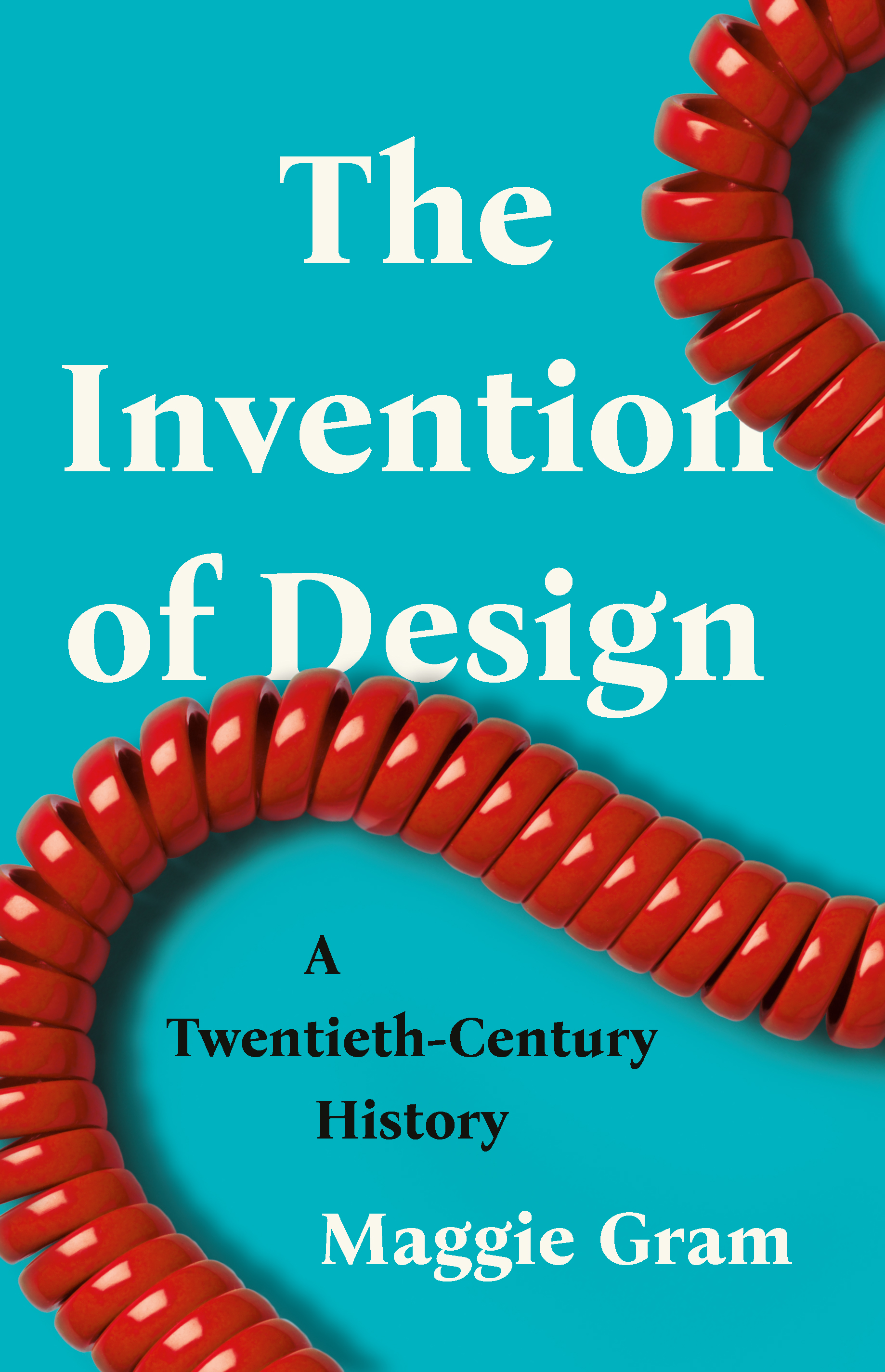
The Invention of Design: A Twentieth-Century History
A critical history of the idea of design—and its utopian promise
Design has penetrated every dimension of contemporary society, from classrooms to statehouses to corporate boardrooms. It’s seen as a kind of mega-power, one that can solve all our problems and elevate our experiences to make a more beautiful, more functional world.
But there’s a backstory here. In The Invention of Design, designer and historian Maggie Gram investigates how, over the twentieth century, our economic hopes, fears, and fantasies shaped the idea of “design”—then repeatedly redefined it. Nearly a century ago, resistance to New Deal–era government intervention helped transform design from an idea about aesthetics into one about function. And at century’s end, the dot-com crash brought us “design thinking”: the idea that design methodology can solve any problem, small or large. To this day, design captures imaginations as a tool for fixing market society’s broken parts from within, supposedly enabling us to thrive within capitalism’s sometimes violent constraints.
A captivating critical history, The Invention of Design shows how design became the hero of many of our most hopeful stories—dreams, fantasies, utopias—about how we might better live in a modern world.
Design has penetrated every dimension of contemporary society, from classrooms to statehouses to corporate boardrooms. It’s seen as a kind of mega-power, one that can solve all our problems and elevate our experiences to make a more beautiful, more functional world.
But there’s a backstory here. In The Invention of Design, designer and historian Maggie Gram investigates how, over the twentieth century, our economic hopes, fears, and fantasies shaped the idea of “design”—then repeatedly redefined it. Nearly a century ago, resistance to New Deal–era government intervention helped transform design from an idea about aesthetics into one about function. And at century’s end, the dot-com crash brought us “design thinking”: the idea that design methodology can solve any problem, small or large. To this day, design captures imaginations as a tool for fixing market society’s broken parts from within, supposedly enabling us to thrive within capitalism’s sometimes violent constraints.
A captivating critical history, The Invention of Design shows how design became the hero of many of our most hopeful stories—dreams, fantasies, utopias—about how we might better live in a modern world.
336 pages, Hardcover
Published June 3, 2025
Ratings & Reviews
Friends & Following
Create a free account to discover what your friends think of this book!
Community Reviews
Displaying 1 - 19 of 19 reviews

October 6, 2025
The lack of a clear thesis made this tiresome. Maggie Gram shares short biographies of an assortment of rather random Western designers and tries to make a few assertions about capitalism and design thinking, but nothing really landed for me. Was hoping for a lot more.
February 24, 2026
Interesting book about how the concept of design in the 20th century moved from simply making a product look more attractive to buyers to deep study of how the object was to function, and ways to make it function better for the people using it. Each chapter focuses on one or two leading designers in the era, and the ways they changed how designers, product creators, and even governments looked at design.

July 20, 2025
Tracing how design moved from curved handles on tea pots to recommending that a city burdened by wealth inequality and systemic racism change its logo.

October 28, 2025
According to the French philosopher and social scientist Bruno Latour, “Design has been extended from the details of daily objects to cities, landscapes, nations, cultures, bodies, genes, and nature itself.”
Designer and historian Maggie Gram explores how the concept of "design" evolved since the onset of the 20th century, driven by economic forces, political movements, and technological shifts, ultimately transforming from an idea of aesthetics into a seemingly all-powerful problem-solving methodology. Gram argues that design was used to make the social and economic landscape appear more rational and to suggest that capitalism's problems could be fixed from within. She traces this history from the New-Deal-era government interventions to the rise of "design thinking" after the dot-com crash, showing how design became a tool for coping with the modern world's challenges.
The book consists of six numbered chapters (“Beauty,” “Function,” “Problem Solving,” “Human-Centeredness,” “Experience,” “Thinking”), sandwiched between “Introduction” and “Afterword.
Before presenting 45 pages of notes for her meticulously-researched book, Gram quotes design-research leader Dana Chisnell, who takes comfort in designs that make material progress toward building the world we want to live in, adding that she is happiest when she works on audacious goals to chip away at wicked problems. Gram then concludes thus: “Chipping away at wicked problems—using broadly participatory methods—is how communities build social power and building social power is how communities make structural change. Design can contribute to that project, and it should” [p. 257].
Designer and historian Maggie Gram explores how the concept of "design" evolved since the onset of the 20th century, driven by economic forces, political movements, and technological shifts, ultimately transforming from an idea of aesthetics into a seemingly all-powerful problem-solving methodology. Gram argues that design was used to make the social and economic landscape appear more rational and to suggest that capitalism's problems could be fixed from within. She traces this history from the New-Deal-era government interventions to the rise of "design thinking" after the dot-com crash, showing how design became a tool for coping with the modern world's challenges.
The book consists of six numbered chapters (“Beauty,” “Function,” “Problem Solving,” “Human-Centeredness,” “Experience,” “Thinking”), sandwiched between “Introduction” and “Afterword.
Before presenting 45 pages of notes for her meticulously-researched book, Gram quotes design-research leader Dana Chisnell, who takes comfort in designs that make material progress toward building the world we want to live in, adding that she is happiest when she works on audacious goals to chip away at wicked problems. Gram then concludes thus: “Chipping away at wicked problems—using broadly participatory methods—is how communities build social power and building social power is how communities make structural change. Design can contribute to that project, and it should” [p. 257].

July 27, 2026
I've always loved and appreciated good design. From the original Macintosh to today's iPhone, Apple's products have always appealed to me because of the thought that goes into both their form and function. So when I came across Maggie Gram's The Invention of Design, I was curious to learn more about how our modern understanding of design came to be.
Gram argues that what we think of today as "design"—beauty, function, problem-solving, human-centered thinking, experience, and more—is really a twentieth-century invention. It's an interesting premise, and I definitely came away with a new perspective on how the concept has evolved over time.
This is a thoroughly researched book with extensive footnotes, and it's clear the author knows her subject. I learned quite a bit along the way. That said, I had a hard time getting through it. For me, it read much more like a college textbook than a book I could settle in and enjoy. I kept reading because I wanted to understand the author's complete argument, not because I was eager to turn the page. By the end, I was thinking less about the design of products and more about how our understanding of design has evolved over the last century.
I think this book will appeal most to students of design or design history, or anyone studying the subject academically. General readers interested in design may find the ideas worthwhile, but should be prepared for a dense, textbook-like read.
Thank you, NetGalley and Basic Books, for providing me with an advance review copy.
Gram argues that what we think of today as "design"—beauty, function, problem-solving, human-centered thinking, experience, and more—is really a twentieth-century invention. It's an interesting premise, and I definitely came away with a new perspective on how the concept has evolved over time.
This is a thoroughly researched book with extensive footnotes, and it's clear the author knows her subject. I learned quite a bit along the way. That said, I had a hard time getting through it. For me, it read much more like a college textbook than a book I could settle in and enjoy. I kept reading because I wanted to understand the author's complete argument, not because I was eager to turn the page. By the end, I was thinking less about the design of products and more about how our understanding of design has evolved over the last century.
I think this book will appeal most to students of design or design history, or anyone studying the subject academically. General readers interested in design may find the ideas worthwhile, but should be prepared for a dense, textbook-like read.
Thank you, NetGalley and Basic Books, for providing me with an advance review copy.

September 11, 2025
The flagship state university I work for has a College of Design, which has the following departments: Apparel Design, Architecture, Graphic Design, Human Factors & Ergonomics, Interior Design, Landscape Architecture, Product Design, Retail & Customer Studies, and User Experience (UX) Design. This book tries to explain 1) how "design" became a field of endeavor in its own right, and 2) how all of these activities came to be encompassed within it.
As other reviewers have noted, it's a quick read--I expected it to be denser than it was. Gram usually introduces a period/phase of "design thinking" via a case study of a person or firm that exemplified it (Eva Zeisel, Walter Teague, Paul Rand, etc.). Sometimes, that exemplar also illustrates the shift in design thinking that occurred while they were active in the field.
Gram is an engaging writer and is clear-eyed about both the promise of "design" and its pitfalls. She both works in the field and teaches the history of design, so she is very conversant in the subject matter, including the societal/political ramifications of different conceptions of design. If you've ever wondered how "design" became "a thing," this book is a good place to start.
As other reviewers have noted, it's a quick read--I expected it to be denser than it was. Gram usually introduces a period/phase of "design thinking" via a case study of a person or firm that exemplified it (Eva Zeisel, Walter Teague, Paul Rand, etc.). Sometimes, that exemplar also illustrates the shift in design thinking that occurred while they were active in the field.
Gram is an engaging writer and is clear-eyed about both the promise of "design" and its pitfalls. She both works in the field and teaches the history of design, so she is very conversant in the subject matter, including the societal/political ramifications of different conceptions of design. If you've ever wondered how "design" became "a thing," this book is a good place to start.

January 26, 2026
The Invention of Design: A Twentieth-Century History by Maggie Gram
Maggie Gram explores the complex relationship between design and cultural history throughout the twentieth century. As a cultural historian, she highlights how design is a vital tool. Gram paints a vivid picture of design evolution and showcases both the grand promises and the setbacks that designers can face.
By looking at key historical moments, such as the rise of "design thinking" after the dot-com crash, and how these events shape our expectations of design in addressing societal issues.
Thanks to NetGalley and Basic Books for this eARC. I recommend The Invention of Design by Maggie Gram to fellow design nerds and to anyone interested in how design influences daily life. It will have you rethinking your relationship with design.
#Thumbsup
#TheInventionofDesign #NetGalley #booksdeevaareads #2026bookshelf
Maggie Gram explores the complex relationship between design and cultural history throughout the twentieth century. As a cultural historian, she highlights how design is a vital tool. Gram paints a vivid picture of design evolution and showcases both the grand promises and the setbacks that designers can face.
By looking at key historical moments, such as the rise of "design thinking" after the dot-com crash, and how these events shape our expectations of design in addressing societal issues.
Thanks to NetGalley and Basic Books for this eARC. I recommend The Invention of Design by Maggie Gram to fellow design nerds and to anyone interested in how design influences daily life. It will have you rethinking your relationship with design.
#Thumbsup
#TheInventionofDesign #NetGalley #booksdeevaareads #2026bookshelf
March 17, 2025
Many thanks to NetGalley for this ARC! I am a huge nerd of engineering and design so I was so excited to the chance to read this. The author Maggie Gram is a fantastic writer. She is so compelling to read. This was a relatively short read (vs my normal door-stoppers). If the history of "design" in the larger sense of this word (beyond pure product design) is interesting to you, you will eat this up.

April 11, 2026
A significant way of looking at Euro-American cultural history of the last 125 years. Reasonably well written, i.e. engaging and informative.
I almost gave it a lower rating for the section on multi-culturalism. I skirted very closely to political correctness but worse, it gave no examples of work that was informed by or failed to be informed by perspectives from other cultures/ethnicities. I was about to call "identity politics" but it didn't go that far, but did seem a bit pro-forma.
I almost gave it a lower rating for the section on multi-culturalism. I skirted very closely to political correctness but worse, it gave no examples of work that was informed by or failed to be informed by perspectives from other cultures/ethnicities. I was about to call "identity politics" but it didn't go that far, but did seem a bit pro-forma.

June 25, 2026
An important history of how design became the vocation / career it is today: moving from decorative to functional to experiential and finally to a way of thinking. I think it could have benefited from a bit more of a cohesive telling of the story, but I appreciated how the author not only told the history of design but of capitalism more broadly since the late 17th century. Reads a bit like a dense textbook.

July 5, 2026
Turns out even design is political.
The writer sees design in the 20th century as an attempt at "resolving the contradictions or repairing the damages wrought by capitalism." Here I thought great design was about beauty and functionality - and it's about Fighting The Power. Who knew?
So the story of design in this book lives alongside the story of politics, of "late-late-stage" capitalism. I'll take the design, and spare me the political theory.
Though we get a rundown of designers and the trends they either created or followed, I feel the point of this book is less about why design is good than why capitalism is bad.
The writer sees design in the 20th century as an attempt at "resolving the contradictions or repairing the damages wrought by capitalism." Here I thought great design was about beauty and functionality - and it's about Fighting The Power. Who knew?
So the story of design in this book lives alongside the story of politics, of "late-late-stage" capitalism. I'll take the design, and spare me the political theory.
Though we get a rundown of designers and the trends they either created or followed, I feel the point of this book is less about why design is good than why capitalism is bad.
August 30, 2025
A very well done, albeit cursory (which to be fair, makes it quite readable), examination of how design, and the changes in perception of how design should be used to solve problems, evolved during the 20th century.

September 14, 2025
The book is a bit frustrating because it feels like there are two different books mixed in: the one editors and most people want or expect and the one she is more enthusiastic about writing. Her intentions seem a bit disingenuous. Nonetheless, most book parts are good and compensate for that.
February 14, 2026
Must read for anyone working in experience design, system architecture or considering design thinking. Maggie Gram uses an easy framework to talk about how design as we know it today has evolved over the last century

February 21, 2026
Starts promisingly with its unflinching (though evenhanded) critique of design, but then loses some nerve once it gets closer to the specific design methods and practices of the author. Kudos, though, for providing rich historical context where there is usually very little.
August 20, 2025
a great treatise on how to humanely and sanely conduct business, grat fodder for a college seminar on how to work with purpose and inclusiveness

September 3, 2025
I’m not the audience for this book, apparently. It’s the history of the concept of design as told through the stories of specific designers, generally one per chapter.

December 10, 2025
Amazingly researched and written!

January 2, 2026
review to come
Displaying 1 - 19 of 19 reviews