

What do you think?
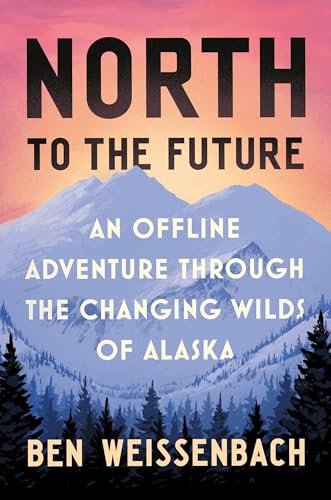
North to the Future: An Offline Adventure through the Changing Wilds of Alaska
Ben Weissenbach—an L.A. native with little prior wilderness experience—treks through the Alaskan tundra with a series of eccentric environmental scientists, and returns with a new perspective on technology and a revitalized sense of wonder for the natural world.
At the age of twenty-one, college student Ben Weissenbach set out into the Alaskan wilderness armed with little more than inspiration from his literary heroes and a growing interest in climate change. What meets him there is a landscape both stark and awe-inspiring—a part of the world seen by few outside a small contingent of scientists with big personalities.
There’s Roman Dial, the larger-than-life field scientist who leads him on a five week journey into the Alaskan backcountry. There’s Kenji Yoshikawa, the isolated researcher who leaves Ben alone for eleven days to care for his remote cabin, where temperatures at night drop to -49 degrees Fahrenheit. And there’s Matt Nolan, the independent glaciologist who flies planes onto glaciers.
As Ben’s mental and physical resilience is tested, he discovers far more than his own limits; struck by the landscape’s staggering beauty and sheer indifference to humanity, Ben emerges from each experience with a new perspective on our modern relationships to technology—and a deep sense of wonder for our natural world.
At the age of twenty-one, college student Ben Weissenbach set out into the Alaskan wilderness armed with little more than inspiration from his literary heroes and a growing interest in climate change. What meets him there is a landscape both stark and awe-inspiring—a part of the world seen by few outside a small contingent of scientists with big personalities.
There’s Roman Dial, the larger-than-life field scientist who leads him on a five week journey into the Alaskan backcountry. There’s Kenji Yoshikawa, the isolated researcher who leaves Ben alone for eleven days to care for his remote cabin, where temperatures at night drop to -49 degrees Fahrenheit. And there’s Matt Nolan, the independent glaciologist who flies planes onto glaciers.
As Ben’s mental and physical resilience is tested, he discovers far more than his own limits; struck by the landscape’s staggering beauty and sheer indifference to humanity, Ben emerges from each experience with a new perspective on our modern relationships to technology—and a deep sense of wonder for our natural world.
320 pages, Hardcover
Published July 15, 2025
Ratings & Reviews
Friends & Following
Create a free account to discover what your friends think of this book!
Community Reviews
Displaying 1 - 30 of 65 reviews

July 30, 2025
Thank you to #GrandCentralPub for a beautiful hardback copy of this book!
I felt as though I were on an adventure beside the author, like he was chatting with me as he explored. I appreciated the Alaskan journey, the invitation to think critically about my relationship with technology, and the role that the changing climate is having on one of the last wilderness locations on Earth. Weissenbach’s choice to write first person for this non-fiction narrative was a fantastic approach because it read like a conversation and invited readers to be part of the experience. With his connections to scientists (field scientists, glaciologists, and researchers), Weissenbach has an opportunity to share with the reader so that they, too, gain access to skilled outdoorspeople.
I loved reading, among many, many other things, about his quest to find the northernmost tree, how mares' tails are formed, and why the Arctic is warming 3X faster than the rest of the world. I binge-read about his time alone in an isolated cabin and his (and Sue's) interactions with a bear.
I was most interested in the way that his tech detox (unplugging) affected him and in awe of his humility in the presence of greatness. I think we all need to put a greater importance on experiencing the world firsthand, not through a screen. We are missing out on so much …
"A man who keeps company with glaciers comes to feel tolerably insignificant." - Mark Twain
"Trying to translate a glacier to a screen is a bit like trying to teach Buddhist meditation techniques over TikTok, or attempting a nuanced discussion over the platform formerly known a Twitter. It doesn't work."
I highly recommend this non-fiction book!
I felt as though I were on an adventure beside the author, like he was chatting with me as he explored. I appreciated the Alaskan journey, the invitation to think critically about my relationship with technology, and the role that the changing climate is having on one of the last wilderness locations on Earth. Weissenbach’s choice to write first person for this non-fiction narrative was a fantastic approach because it read like a conversation and invited readers to be part of the experience. With his connections to scientists (field scientists, glaciologists, and researchers), Weissenbach has an opportunity to share with the reader so that they, too, gain access to skilled outdoorspeople.
I loved reading, among many, many other things, about his quest to find the northernmost tree, how mares' tails are formed, and why the Arctic is warming 3X faster than the rest of the world. I binge-read about his time alone in an isolated cabin and his (and Sue's) interactions with a bear.
I was most interested in the way that his tech detox (unplugging) affected him and in awe of his humility in the presence of greatness. I think we all need to put a greater importance on experiencing the world firsthand, not through a screen. We are missing out on so much …
"A man who keeps company with glaciers comes to feel tolerably insignificant." - Mark Twain
"Trying to translate a glacier to a screen is a bit like trying to teach Buddhist meditation techniques over TikTok, or attempting a nuanced discussion over the platform formerly known a Twitter. It doesn't work."
I highly recommend this non-fiction book!

September 19, 2025
3.5 stars. Enjoyable. I appreciated his balance of idealism and pragmatism. Ben was honest and really gifted in his writing. It was a little rambling, a little long. But on the whole I liked it.

June 15, 2025
This was an interesting read about the author’s time in Alaska studying the environment (with no background or training) with some interesting individuals both scientists and experiential sho present a different view of what is happening to the tundra and wilderness than what is commonly believed today. While this book may not be for everyone, I found it a worthwhile read.
I received a free Kindle copy of this book courtesy of Net Galley and the publisher with the understanding that I would post a review on Net Galley, Goodreads, Amazon and my nonfiction book review blog.
I received a free Kindle copy of this book courtesy of Net Galley and the publisher with the understanding that I would post a review on Net Galley, Goodreads, Amazon and my nonfiction book review blog.
August 6, 2025
I read a lot of books but don’t write many reviews, so the fact that I am doing one on "North to the Future" is notable. I Really liked this book! I came away from this single, fairly modest-length volume with a feeling for a young man’s personal development through some very challenging personal adventures, a better sense of Alaska and what is so unique, compelling and humbling about it, and a much clearer understanding of the scope of the geological, cultural, biological and - I think I would have to say – philosophical implications of climate change/global warming. I have read various books on each of these broad topics, but by skillfully weaving them into the same narrative, "North to the Future" satisfied my desire to learn more about each of those constituent themes but in the context of a compelling personal story.

September 1, 2025
This memoir follows the real life adventures of the author as he explores the isolated regions of Alaska and runs into all sorts of dangers: bears and clouds of mosquitoes, injuries and food rationing, landslides and extreme temperatures at -40 F. These vivid descriptions may bring the expeditions to life (and the science) but the real message in this book is about nature... How you can be out in the woods or be at the beach but you aren't really there because your brain is thinking of the things you have to do later, like the laundry and you need to get those items at the store. Then you pause to check your phone or your tablet. You walk past blooming plants without seeing them. You don't know the trees around you or the types of clouds overhead. Worse you don't understand what the things you see actually mean. Because somewhere through the many generations you lost that knowledge. And only the electronics are important. But maybe you're living in a flood plain without knowing it because you don't know it when you see it. You don't know a storm is coming because you can't read the clouds. The environment is changing around you but you don't notice.
This is the type of wake-up call the author got in here: that he saw things but had no idea what he was actually looking at. And that was IF he could actually manage to pay attention. Because it's hard to put those devices down. They take over our brains. And we get addicted to seeing the world through the screen of a phone or the lens of a camera.
This well written book is about the changes that are going on in Alaska. It comes in four sections. I thought the science in here was very well explained although I did Google a few things on my own for a better understanding. And I must admit some of the things I never would have guessed - like snow keeps the ground warm. Who would ever think that?? Snow is cold!
But what I truly loved is reading the adventures the author went on in here and the descriptions of the wild places. And he certainly wasn't any expert at this stuff. Often he felt clumsy and a bit embarrassed about his lack of skills. That shines through in the writing. And the fear about being followed by various bears. Those bears are clever and apparently circle around you to sneak up from the other direction! And this group only had the one gun. So yes, moments of anxiety in here.
1. The author goes on a long, grueling hike with Roman as they search for tree saplings. It may sound weird but this tells how the forests are spreading to new areas. I found this to be exciting and there are bears too. And tussocks. Wolves. I had to Google to actually see a tussock - it's a pity the book has no photos. I just love learning about these different land forms.
2. Ben stays many days in January with Kenji at a very isolated cabin.. I learned about permafrost (and I also asked Google lots of questions so I could understand it better) and reindeer. Ben has to care for Kenji's reindeer while he is away but he has no experience with this. I actually found the reindeer quite fascinating as I was comparing them to what I know about horses. I actually never read about real reindeer so can't say I know anything about them. Makes me wonder what their intelligence level is.
3. This third part was extremely short and involves a plane trip with the pilot Matt. Matt also studies glaciers and has developed new techniques to map them. The most intriguing thing in here was how being in the plane changed the author's viewpoint of the mountains: and he was now smart enough to notice it.
4. And he is back with Roman again doing another grueling eleven week hike in more dangerous, desolate, wild areas. And the bear threat is more severe. Once again they search for trees but also catalog other plants. The green is spreading rapidly.
This is very readable. It's all vivid descriptions and wonderful story telling. Not dry in any manner.
I would add it's more adventure than climate change. Yes, they are searching for tree saplings but the journey itself is the forefront of the book.
More people definitely need to read this.
This is the type of wake-up call the author got in here: that he saw things but had no idea what he was actually looking at. And that was IF he could actually manage to pay attention. Because it's hard to put those devices down. They take over our brains. And we get addicted to seeing the world through the screen of a phone or the lens of a camera.
This well written book is about the changes that are going on in Alaska. It comes in four sections. I thought the science in here was very well explained although I did Google a few things on my own for a better understanding. And I must admit some of the things I never would have guessed - like snow keeps the ground warm. Who would ever think that?? Snow is cold!
But what I truly loved is reading the adventures the author went on in here and the descriptions of the wild places. And he certainly wasn't any expert at this stuff. Often he felt clumsy and a bit embarrassed about his lack of skills. That shines through in the writing. And the fear about being followed by various bears. Those bears are clever and apparently circle around you to sneak up from the other direction! And this group only had the one gun. So yes, moments of anxiety in here.
1. The author goes on a long, grueling hike with Roman as they search for tree saplings. It may sound weird but this tells how the forests are spreading to new areas. I found this to be exciting and there are bears too. And tussocks. Wolves. I had to Google to actually see a tussock - it's a pity the book has no photos. I just love learning about these different land forms.
2. Ben stays many days in January with Kenji at a very isolated cabin.. I learned about permafrost (and I also asked Google lots of questions so I could understand it better) and reindeer. Ben has to care for Kenji's reindeer while he is away but he has no experience with this. I actually found the reindeer quite fascinating as I was comparing them to what I know about horses. I actually never read about real reindeer so can't say I know anything about them. Makes me wonder what their intelligence level is.
3. This third part was extremely short and involves a plane trip with the pilot Matt. Matt also studies glaciers and has developed new techniques to map them. The most intriguing thing in here was how being in the plane changed the author's viewpoint of the mountains: and he was now smart enough to notice it.
4. And he is back with Roman again doing another grueling eleven week hike in more dangerous, desolate, wild areas. And the bear threat is more severe. Once again they search for trees but also catalog other plants. The green is spreading rapidly.
This is very readable. It's all vivid descriptions and wonderful story telling. Not dry in any manner.
I would add it's more adventure than climate change. Yes, they are searching for tree saplings but the journey itself is the forefront of the book.
More people definitely need to read this.

March 23, 2026
I learn something new from every environmental book I read. North to the Future only hammers home the point that we need to take climate change seriously. I'm not an outdoorsy person, but I love nature. And animals. I'm one to pull over and grab the turtle before another car comes along and runs it over. That said, I'll leave it up to Ben Weissenbach and Roman and Julia and whoever else to traipse through the wilds of Alaska. I enjoyed this adventure story for its information, close calls and the humor.
June 26, 2025
As someone who loves the natural world but is no expert in paying attention to it, I found this book fascinating. It was incredibly relatable, fun to read, and covers ideas and feelings that I think everyone should be thinking about, especially in a world where we all have screen addictions. I don’t usually read adventure books or books about climate change, but this book felt like a perfect combination of gripping, insightful and an opportunity to learn about climate change in a non preaching way.

Read
August 15, 2025North to the Future
Because of a few twists of fate, Ben set off to discover, document, and in a sense, become one with the land - that land being northern Alaska.
Observing climate change in real time, learning more about life, Mother Nature, and himself, Ben went on the adventure of a lifetime. I loved his writing, sense of adventure, and his appreciation for the world around him. If adventure and the outdoors is your thing, this memoir may be for you.
Because of a few twists of fate, Ben set off to discover, document, and in a sense, become one with the land - that land being northern Alaska.
Observing climate change in real time, learning more about life, Mother Nature, and himself, Ben went on the adventure of a lifetime. I loved his writing, sense of adventure, and his appreciation for the world around him. If adventure and the outdoors is your thing, this memoir may be for you.
October 22, 2025
Inspiring debut from a promising young author
January 9, 2026
Interesting and rambly in equal measure. Would have been 3.5 stars and didn’t want to round down as the author is very likeable.

February 9, 2026
This book makes me want to put down my phone, look around, and for the first time, notice every little detail. I wish we, people, cared more about things that matter

January 21, 2026
I thought this book did a great job of showing a young man’s growth while he sees the changing climate. I thought the way the two went together throughout made this book as solid as it is. On top of that, he takes his interviews from scientists and make it fit in so well. I thought this book was highly readable.
Thank you Grand Central Publishing and Net Galley for a copy of this ebook.
Thank you Grand Central Publishing and Net Galley for a copy of this ebook.

January 13, 2026
The first book I finished in 2026, while the world seems to be burning around me. Maybe this is a good sign. At least, there is hope.
I've only been to Alaska once and how I loved the experience. It's about nature, and us -- we are just a small piece in nature -- significant, likely; but still. Similar to the fact that everyone will die, human species will also likely go extinct someday. And nature would still be there, one way or the other. And I found some peace in that.
I've only been to Alaska once and how I loved the experience. It's about nature, and us -- we are just a small piece in nature -- significant, likely; but still. Similar to the fact that everyone will die, human species will also likely go extinct someday. And nature would still be there, one way or the other. And I found some peace in that.

July 13, 2025
A remarkable debut from a young author and scholar — a digital native who explores the importance of reconnecting with the natural world in wake of climate catastrophe.
While you will find great adventures and epic landscapes here, this is much more than a travelogue of the Alaskan wilderness. "Being part of the first generation to go through adolescence with front-facing cameras" and having a "perennially distracted mind," as he describes himself, he has a very accurate understanding of the challenges that young people face:
„Our ancestors honed their senses to navigate the land in search of sustenance and shelter; by the time my friends and I entered the world, our attention had become a battleground for marketers seeking to exploit every cognitive foible, every evolutionary tic. And by the time we started high school, this battle no longer stopped at the front door. That was 2011—four years after Apple put the whole world in our pockets, a year and a half after Facebook created the Like button, and the same year Snapchat showed adolescents how to “live in the moment ;).” Almost overnight, the new digital culture flooded our lives, and only those things engineered to reach out and grab us—by our amygdalas, our dopamine receptors, our gonads—had a chance of getting through. Say what you will about the petabytes of vapid and often demoralizing content we consumed, but what about all we learned to ignore?”
He makes an impressive effort to find that out, including living off the grid for weeks or months at a time while accompanying famous scientists slash explorers. And it pays off. I love the mood described in this excerpt:
„In the evening we make camp on a gravel island and wash ourselves in the river. Then we build a fire and watch the smoke rise, and the water pass, and the tundra bow in the wind. After several hours Allen breaks the silence. “Does anyone know what time it is?” he asks. “No,” replies Julia. “No,” I say. “Good,” says Allen, and we return to our watching.”
As somebody from an older generation who grew up without digital devices or the internet, I cannot imagine how difficult it must be for people immersed in the attention economy from an early age to find this kind of focus and awareness of the world around them. However, this book made me hopeful that it's possible.
Thanks to the publisher, Grand Central Publishing, and NetGalley for an advanced copy of this book.
While you will find great adventures and epic landscapes here, this is much more than a travelogue of the Alaskan wilderness. "Being part of the first generation to go through adolescence with front-facing cameras" and having a "perennially distracted mind," as he describes himself, he has a very accurate understanding of the challenges that young people face:
„Our ancestors honed their senses to navigate the land in search of sustenance and shelter; by the time my friends and I entered the world, our attention had become a battleground for marketers seeking to exploit every cognitive foible, every evolutionary tic. And by the time we started high school, this battle no longer stopped at the front door. That was 2011—four years after Apple put the whole world in our pockets, a year and a half after Facebook created the Like button, and the same year Snapchat showed adolescents how to “live in the moment ;).” Almost overnight, the new digital culture flooded our lives, and only those things engineered to reach out and grab us—by our amygdalas, our dopamine receptors, our gonads—had a chance of getting through. Say what you will about the petabytes of vapid and often demoralizing content we consumed, but what about all we learned to ignore?”
He makes an impressive effort to find that out, including living off the grid for weeks or months at a time while accompanying famous scientists slash explorers. And it pays off. I love the mood described in this excerpt:
„In the evening we make camp on a gravel island and wash ourselves in the river. Then we build a fire and watch the smoke rise, and the water pass, and the tundra bow in the wind. After several hours Allen breaks the silence. “Does anyone know what time it is?” he asks. “No,” replies Julia. “No,” I say. “Good,” says Allen, and we return to our watching.”
As somebody from an older generation who grew up without digital devices or the internet, I cannot imagine how difficult it must be for people immersed in the attention economy from an early age to find this kind of focus and awareness of the world around them. However, this book made me hopeful that it's possible.
Thanks to the publisher, Grand Central Publishing, and NetGalley for an advanced copy of this book.

December 20, 2025
This is a recount of the time the author spent in Alaska, both as an undergrad and shortly after graduating college, conducting fieldwork to study climate change with scientists. Despite not living in Alaska and not especially having all the skills needed to survive on his own there, he somehow was convincing enough to be added to the field team and got a crash course in survival in isolated regions of Alaska. The book chronicles the fieldwork they did, the author's difficulties at times adjusting to a non-digital world, and the hardships that are present in these areas of Alaska where few people travel, let alone live.
This sounded promising. I was interested in learning about the more isolated parts of Alaska and what it was like to experience them. For me, those were the parts that were strongest in this book. I enjoyed the descriptions of how many mosquitoes there were and how the "slap test" (seeing how many mosquitos you kill in a single slap to your arm) was the real indicator of how bad they were. It was also interesting to read about how the field crew camped in such a desolate area and did their best to protect their food by doing the opposite of what's typically recommended (sleeping with the food in the tent, since there was no way to safely store it otherwise and protect it from bears). My favorite part of the entire book was a chapter or two in which the author described house sitting for someone who lived off-grid and the absolute insanity that he encountered there, such as the man trying to train reindeer to pull a sled.
For me, although parts of this book were interesting, there were also a lot of parts that I ended up skimming. Although this book was billed as an adventure in trying to stay offline, the actual parts that discussed this seemed to only be surface-level and did not actual take a complex look at the topic. There also seemed to be a lot of day-by-day plays (especially about the second journey he made) that just didn't seem to hold my interest and caused me to start skimming.
I do feel like there were interesting parts to this, and it's clear that the author enjoyed his time exploring Alaska despite the hardships, but something felt lacking from this book. There were parts I liked, but as a whole, this didn't feel as compelling to me as it should have.
This sounded promising. I was interested in learning about the more isolated parts of Alaska and what it was like to experience them. For me, those were the parts that were strongest in this book. I enjoyed the descriptions of how many mosquitoes there were and how the "slap test" (seeing how many mosquitos you kill in a single slap to your arm) was the real indicator of how bad they were. It was also interesting to read about how the field crew camped in such a desolate area and did their best to protect their food by doing the opposite of what's typically recommended (sleeping with the food in the tent, since there was no way to safely store it otherwise and protect it from bears). My favorite part of the entire book was a chapter or two in which the author described house sitting for someone who lived off-grid and the absolute insanity that he encountered there, such as the man trying to train reindeer to pull a sled.
For me, although parts of this book were interesting, there were also a lot of parts that I ended up skimming. Although this book was billed as an adventure in trying to stay offline, the actual parts that discussed this seemed to only be surface-level and did not actual take a complex look at the topic. There also seemed to be a lot of day-by-day plays (especially about the second journey he made) that just didn't seem to hold my interest and caused me to start skimming.
I do feel like there were interesting parts to this, and it's clear that the author enjoyed his time exploring Alaska despite the hardships, but something felt lacking from this book. There were parts I liked, but as a whole, this didn't feel as compelling to me as it should have.

July 17, 2025
North to the Future by Ben Weissenbach is an engaging and thought-provoking debut that blends adventure, environmental reflection, and cultural critique in a way that feels fresh and relevant. While at first glance it might seem like a travelogue about Alaska’s wilderness, this book offers much more—a deeply personal exploration of what it means to unplug from a hyper-digital world and reconnect with nature in an era dominated by distraction.
What stood out most to me was the author’s vulnerability and insight as he reflects on growing up in the attention economy and the challenges of carving out mental stillness when our devices are designed to keep us hooked. His observations about how our ancestors used their senses for survival versus how modern life hijacks our attention were fascinating and, frankly, sobering.
The sections describing his time in Alaska—completely off-grid and immersed in vast, wild landscapes—were beautifully written. You can almost feel the cold river water and see the tundra bowing in the wind. These moments contrasted powerfully with the digital noise most of us experience daily and made the author’s journey feel meaningful and restorative.
While the book occasionally meanders, the mix of memoir, environmental commentary, and philosophical insight kept me engaged. It left me not only thinking about climate change but also about the personal cost of disconnection from the natural world—and how necessary it is to seek out wonder in our lives.
A remarkable and hopeful debut that I’d recommend to anyone curious about the intersection of nature, technology, and human resilience.
Thank you to Grand Central Publishing and NetGalley for providing an advance copy of this book in exchange for an honest review.
What stood out most to me was the author’s vulnerability and insight as he reflects on growing up in the attention economy and the challenges of carving out mental stillness when our devices are designed to keep us hooked. His observations about how our ancestors used their senses for survival versus how modern life hijacks our attention were fascinating and, frankly, sobering.
The sections describing his time in Alaska—completely off-grid and immersed in vast, wild landscapes—were beautifully written. You can almost feel the cold river water and see the tundra bowing in the wind. These moments contrasted powerfully with the digital noise most of us experience daily and made the author’s journey feel meaningful and restorative.
While the book occasionally meanders, the mix of memoir, environmental commentary, and philosophical insight kept me engaged. It left me not only thinking about climate change but also about the personal cost of disconnection from the natural world—and how necessary it is to seek out wonder in our lives.
A remarkable and hopeful debut that I’d recommend to anyone curious about the intersection of nature, technology, and human resilience.
Thank you to Grand Central Publishing and NetGalley for providing an advance copy of this book in exchange for an honest review.

May 24, 2026
This book annoyed me at first. The author, who narrated first person, came across as humorless and overly earnest, navel-gazing, and a bit like your smart but inexperienced little brother who doesn't know how to shut up and listen even when he knows he's out of his depth. It also bothered me that he got this book contract in the first place, and I wrote it off to his Princeton privilege. Why did all of these scientists answer his calls and emails and let him journey with them, untried, through the Alaskan wilderness (and in one case housesit for him)? That's not something just any college student can achieve, no matter how talented. But this one had the John McPhee card. I also found his ruminating about how his tech habits impact his attention span silly. Just turn off the phone and don't look at it. Do that often. It's not really that difficult.
But this was all unfair, at least to an extent (getting off the screens actually is difficult, for all of us), and, in the end, I liked the book's point about getting out into the world and working hard to pay attention to it, physically, in order to understand the stakes both for the warming planet and for oneself. The author really did mature through his adventures in Alaska, and he's good at description (especially of Alaska's formidable insects and what they can do to large animals; shudder). His bio says he's off to get a PhD in polar studies. Having more scientists out there who can write is a good thing.
But this was all unfair, at least to an extent (getting off the screens actually is difficult, for all of us), and, in the end, I liked the book's point about getting out into the world and working hard to pay attention to it, physically, in order to understand the stakes both for the warming planet and for oneself. The author really did mature through his adventures in Alaska, and he's good at description (especially of Alaska's formidable insects and what they can do to large animals; shudder). His bio says he's off to get a PhD in polar studies. Having more scientists out there who can write is a good thing.

June 13, 2026
I purchased this book for my own collection.
I picked this book up on my trip to Alaska. The title called to me, especially the subtitle — An Offline Adventure Through the Changing Wilds of Alaska. I was in Alaska for ten days and found that I didn’t want to be online during that time, but out in nature, hiking and soaking up the beauty that was around me. This was the perfect book to extend that feeling and I got a lot out of it…sometimes the right book finds you at the right time.
I loved the way this book was written – in first person, almost as if Ben was having a conversation with us, the reader. It was like he wanted us to take part in his journey, and for me, having just been there, and starting this book on the plane home, I couldn’t have felt more connected to the conversation.
I loved how this book not only will have you thinking about climate change but also about just how important it is to disconnect from technology and be present in our lives, especially in nature. There is so much beauty around us, if only we took the time to look up and see and explore it.
My reviews can also be found on my blog: Always With A Book
I picked this book up on my trip to Alaska. The title called to me, especially the subtitle — An Offline Adventure Through the Changing Wilds of Alaska. I was in Alaska for ten days and found that I didn’t want to be online during that time, but out in nature, hiking and soaking up the beauty that was around me. This was the perfect book to extend that feeling and I got a lot out of it…sometimes the right book finds you at the right time.
I loved the way this book was written – in first person, almost as if Ben was having a conversation with us, the reader. It was like he wanted us to take part in his journey, and for me, having just been there, and starting this book on the plane home, I couldn’t have felt more connected to the conversation.
I loved how this book not only will have you thinking about climate change but also about just how important it is to disconnect from technology and be present in our lives, especially in nature. There is so much beauty around us, if only we took the time to look up and see and explore it.
My reviews can also be found on my blog: Always With A Book
July 30, 2025
Ben Weissenbach’s North to the Future is far more than a travelogue—it’s almost a buldingsroman of personal development and a profound exploration of nature.
As a young adult, I most resonated with Ben’s journey into the wild as a digital native. His work explored what it meant to remove yourself from your phone screen and plunge yourself into the natural environment, replete with grizzly bears, wolves, and fierce storms.
Weissenbach’s lack of outdoor experience makes the book all the more compelling for a general audience. He takes the readers so close that they can hear the “glassy crackling as the glaciers recede.” His own wonder at the natural world is infectious.
North to the Future was a remarkable debut, and one that left me hopeful: that we can still find meaning, still rediscover awe, and still choose to pay attention—if we’re willing to unplug and listen. I highly recommend this book for any readers interested in travelogues, adventure narratives, coming of age stories, or meditations on our relationship with the natural world.
As a young adult, I most resonated with Ben’s journey into the wild as a digital native. His work explored what it meant to remove yourself from your phone screen and plunge yourself into the natural environment, replete with grizzly bears, wolves, and fierce storms.
Weissenbach’s lack of outdoor experience makes the book all the more compelling for a general audience. He takes the readers so close that they can hear the “glassy crackling as the glaciers recede.” His own wonder at the natural world is infectious.
North to the Future was a remarkable debut, and one that left me hopeful: that we can still find meaning, still rediscover awe, and still choose to pay attention—if we’re willing to unplug and listen. I highly recommend this book for any readers interested in travelogues, adventure narratives, coming of age stories, or meditations on our relationship with the natural world.
August 19, 2025
When you delve into subjects such as climate change, you are going to learn a few things about the character of the people that are doing the research. This young guy who went out into the Alaskan wilderness with 5 different people to learn about permafrost, was witness to pioneers in the field who were each so different in approach, but their goal was the same. The conditions these researchers endure on a daily basis, very willingly is beyond imagination. What I loved in addition to the passion the author acquired throughout his journey, was also some touching realizations regarding family. Without the distraction of screens, he tunes into nature and the beauty finds its way into his heart bringing emotional thoughts of what is important.
August 27, 2025
4.5 stars. What a brilliant and brightly observant book; I appreciated Weissenbach's honest style (reminiscent of Litt's in IT'S ONLY DROWNING) and to-the-point narration. His notes about attention, our escape to the digital world, and abstracting ourselves into nothingness felt especially profound (even though they are things you think you'd already know). It brought my own awareness of my surroundings into question in a more meaningful way than I've explored before.
What does it mean to be present? He didn't seek to answer--more so understand these questions and their possibilities--which brought his nature writing into clearer focus. I only wish he would challenge subjects further and spend more time on them than he did. This is one of those books that has a purpose beyond itself.
What does it mean to be present? He didn't seek to answer--more so understand these questions and their possibilities--which brought his nature writing into clearer focus. I only wish he would challenge subjects further and spend more time on them than he did. This is one of those books that has a purpose beyond itself.

September 1, 2025
Interesting and wonderful combination of outdoor adventure and illustration of how climate change affects permafrost and the tree line. I very much appreciate that this is written by a younger person, a digital native as he refers to himself. Having spent time in the Brooks Range, this was also a trip to a place that was soothing to me in the past. We did see what we thought was the farthest north tree in the Canning River Valley as of 2006. It would probably stun me again to see those places now. Very well written. A bonus for me were the references to my favorite book of all time, Brooks Range Passage by David Cooper, and the author even met him! If I were still teaching geology and physical geography, I would find a way to get students to read this.

December 28, 2025
Rich in self based research and intimate insights!
This book reflects heavy on nature observations and reflections, which will appeal to readers who enjoy slow, contemplative writing. I appreciated the depth of research and the way the author connects new clues from science and nature to ideas about how species may evolve in the future—that aspect was genuinely fascinating. I did also thoroughly enjoy the human aspect of the text with how honest the authors feelings were intellectually and emotionally honest. However, the journal-style format often felt better suited to a podcast or audio essay, where the reflections might feel more engaging and conversational. Overall, interesting book and solid research!
This book reflects heavy on nature observations and reflections, which will appeal to readers who enjoy slow, contemplative writing. I appreciated the depth of research and the way the author connects new clues from science and nature to ideas about how species may evolve in the future—that aspect was genuinely fascinating. I did also thoroughly enjoy the human aspect of the text with how honest the authors feelings were intellectually and emotionally honest. However, the journal-style format often felt better suited to a podcast or audio essay, where the reflections might feel more engaging and conversational. Overall, interesting book and solid research!
April 25, 2026
The author had interesting stories of his time in Alaska and interesting facts about the land. He seems very confused about his point of view when it comes to technology and real life experiences. It appears to me that he was writing to please a certain audience, while he was slowly coming to believe that their view points have lots of holes.
He seems so close to breaking out of his predisposed ideology. He even discusses how multiple scientists who he highly respects, that have lived in Alaska for years don't subscribe to the wildly held beliefs of those who have never set foot in Alaska. He is critical of those who only research from afar, but then untilmately spouts the same beliefs. He ends the book by telling us to eat less meat.
He seems so close to breaking out of his predisposed ideology. He even discusses how multiple scientists who he highly respects, that have lived in Alaska for years don't subscribe to the wildly held beliefs of those who have never set foot in Alaska. He is critical of those who only research from afar, but then untilmately spouts the same beliefs. He ends the book by telling us to eat less meat.

July 31, 2026
2.5 stars
Half this book was interesting and the other half was not. His first trip he describes in Alaska with Roman Dial was engaging because I felt like I was with him hiking in Alaska. I also think Roman made it interesting because he knew what he was doing, but the parts of the book without Roman being there seemed to be about nothing.
It seemed like the author didn’t know what to talk about so he kept plugging facts about Alaska and the cultures of the native people when possible, but sometimes I felt lost wondering why he just can’t get on with his story.
I did learn that there’s so many mosquitoes in Alaska because of the annual freeze/thaw cycle of the permafrost creating a lot of standing water.
This was pretty good if you wanna take a quick hike in Alaska.
Half this book was interesting and the other half was not. His first trip he describes in Alaska with Roman Dial was engaging because I felt like I was with him hiking in Alaska. I also think Roman made it interesting because he knew what he was doing, but the parts of the book without Roman being there seemed to be about nothing.
It seemed like the author didn’t know what to talk about so he kept plugging facts about Alaska and the cultures of the native people when possible, but sometimes I felt lost wondering why he just can’t get on with his story.
I did learn that there’s so many mosquitoes in Alaska because of the annual freeze/thaw cycle of the permafrost creating a lot of standing water.
This was pretty good if you wanna take a quick hike in Alaska.
September 19, 2026
This is another book about Alaska that my recent vacation there prompted me to read. It provides excellent discussions of several aspects of our changing climate — the northward migration of boreal forests, thawing permafrost, and changing glaciers. The author weaves explanations of the science through tales of his adventures on four different research expeditions. Despite living, traveling, and working under conditions that seemed quite miserable at times (mosquitoes, rain, temperatures that ranged from cold to hot, injuries, heavy backpacks, field food, river fording, and more), the work that the researchers did, the things they saw, and the experiences they had were absolutely amazing. I almost wish I could have been on the trips myself — minus the hardships!

December 7, 2025
I’ve always wanted to go to Alaska (not quite like the author experienced it) so I was intrigued! This is a non-fiction fish out of water story—a memoir of a man who travels from Los Angeles to Alaska. What a wild adventure. The author recounts—below freezing temperatures, ice, grizzly bears, wildlife encounters, climate warming, detoxing from the digital world, and more. Ben learns from an ecologist, glaciologist, and shares their knowledge with us throughout the book.
What I took away from this memoir was to remain present and aware of my surroundings and spend time away from screens to live and experience the changing world around me.
What I took away from this memoir was to remain present and aware of my surroundings and spend time away from screens to live and experience the changing world around me.

January 17, 2026
I enjoyed this book. I felt like I learned quite a bit about scientific research in Alaska in the day to day routine without being super boring. There was a lot that was eye opening about oil, environmentalism and the economy for the people of Alaska, especially the focus on Native people.
I also liked that I had read Roman Dahl’s memoir before this since he is a main mentor to the author. I did feel like I wanted more of an emotional connection and there was also a few times where I wanted more detail into the background of certain relationships, but overall, I liked how the book was structured and written.
I also liked that I had read Roman Dahl’s memoir before this since he is a main mentor to the author. I did feel like I wanted more of an emotional connection and there was also a few times where I wanted more detail into the background of certain relationships, but overall, I liked how the book was structured and written.
July 6, 2026
One of the best books I've read in a long time, a touching coming of age story, meets adventure, with a sub-story about climate change. It was exactly what I wanted to read at the end of a long work day, wasn't a depressing "environmental book" (although I cringe at that phrase since I love environmental stories). The writing is exceptional, it's a fast paced book that also helps call to question our relationship to digital devices and the importance of practicing being present.
This book reminds me of Cleaning House by Dahl, another non-fiction memoire easy to read, funny authentic author's tone and a book with a larger mission. Going to buy a few copies of this for my family.
This book reminds me of Cleaning House by Dahl, another non-fiction memoire easy to read, funny authentic author's tone and a book with a larger mission. Going to buy a few copies of this for my family.
September 9, 2025
A captivating read with a poetic narrative of the Alaskan wild—its beauty, its ruthlessness, and its enduring spirit. The people Weissenbach meets and follows into the remote tundra are fascinating, deeply experienced, and a joy to learn about. Having grown up reading Krakauer and other adventure classics, I enjoyed this book as much as any of the best in the genre. Most compellingly, the author poignantly captures the modern disconnection from nature and reflects on his own journey, exploring the profound effects of immersing himself back into the wild.
Displaying 1 - 30 of 65 reviews