

What do you think?

Tir Tanagiri #1
The King's Peace
Sulien ap Gwien was seventeen when the Jarnish raiders came. Had she been armed when they found her, she could have taken them all. As it was, it took six of them to subdue her. She will never forgive them. Thus begins her story--a story that takes her back to her family, with its ancient ties to the Vincan empire that once ruled in Tir Tanagiri, and forward to Caer Tanaga, where the greatest man of his time, King Urdo, struggles to bind together the squabbling nobles and petty princes into a unified force that will drive out the barbarian invader and restore the King's Peace.Ringing with the clash of arms and the songs of its people, rich with high magic and everyday life, The King's Peace begins an epic of great deeds and down-to-earth people, told in language with the strength and flexibility of sharpened steel.At the Publisher's request, this title is being sold without Digital Rights Management Software (DRM) applied.
548 pages, Kindle Edition
First published October 1, 2000
About the author
Jo Walton
90 books3,174 followersJo Walton writes science fiction and fantasy novels and reads a lot and eats great food. It worries her slightly that this is so exactly what she always wanted to do when she grew up. She comes from Wales, but lives in Montreal.
Ratings & Reviews
Friends & Following
Create a free account to discover what your friends think of this book!
Community Reviews
Displaying 1 - 30 of 123 reviews

November 2, 2010
It took me a while to get into The King's Peace -- I knew from the first few chapters that it would be a slow burn. Which is was, but I ended up loving it. It's an alternate history -- think like Guy Gavriel Kay's A Song for Arbonne, I suppose: the places and people are given different names, but all the same you can trace it back to real events in our history -- with touches of fantasy. It explores the Arthurian mythology, without ever using those names (e.g. Arthur is Urdo, Guinevere is Elenn), and it explores an alternate theology and the meeting of different peoples and gods.
One warning -- the novel pretty much opens with a rape, and the issues that arise from that rape are revisited quite a few times. I didn't find it particularly graphic or upsetting, and I thought it was reasonably well-handled, but still, it is a theme.
Anyway, it's narrated by an original character, Sulien. She is a female warrior who rises to lead Urdo's own troops. The story follows her as she joins the ranks and fights for the peace Urdo so desperately desires. It took me a while to become attached to the characters -- and I think constantly comparing them to Arthurian characters and trying to figure out who was who was a barrier to that -- but I came to believe in Urdo and his kingdom, his hopes and dreams. I believed in Sulien, very much, and in her awkward relationships with her family and her son.
I enjoyed that Sulien was not a sexual being. Sex is part of her world, but she has no desire for it, and according to her statements at the beginning of the book, she's never coaxed into liking it by any man. She simply doesn't want to, and that's that.
I'll be going straight onto The King's Name, at speed. The book ends at a most unfair time.
One warning -- the novel pretty much opens with a rape, and the issues that arise from that rape are revisited quite a few times. I didn't find it particularly graphic or upsetting, and I thought it was reasonably well-handled, but still, it is a theme.
Anyway, it's narrated by an original character, Sulien. She is a female warrior who rises to lead Urdo's own troops. The story follows her as she joins the ranks and fights for the peace Urdo so desperately desires. It took me a while to become attached to the characters -- and I think constantly comparing them to Arthurian characters and trying to figure out who was who was a barrier to that -- but I came to believe in Urdo and his kingdom, his hopes and dreams. I believed in Sulien, very much, and in her awkward relationships with her family and her son.
I enjoyed that Sulien was not a sexual being. Sex is part of her world, but she has no desire for it, and according to her statements at the beginning of the book, she's never coaxed into liking it by any man. She simply doesn't want to, and that's that.
I'll be going straight onto The King's Name, at speed. The book ends at a most unfair time.

May 21, 2009
I really, really liked this book. However, I am reluctant to recommend it to anyone because it was NOT an easy read. It is an alternative telling of the legend of King Arthur, complete with Welsh nomenclature, such as the term "caer" for identifying cities/town, e.g. Caer Sacramento, and the naming of people after their fathers with the "ap" form, e.g. Glee "ap Stanley". Plus the story breaks several conventions with the "traditional" Arthurian lengends. So for a long time reading the book, it felt just a little "off" as my brain tried to translate...e.g. "Isarnagan" is this world's term for Ireland, "Vincans" are Romans etc. It is both rich and dense at once -- somewhat like reading Lord of the Rings -- you just have to adapt to the nomenclature to get into it.
That being said, it is a fascinating world, and describes the conflicts and efforts of King Urdo (Arthur) to reconcile two cultures -- early Christianity with a variety of well-established paganism, all of which are very rooted in the physical aspects of the land.
If you are a sucker for Arthurian legend, early (roughly 6th century) English history, and the military aspects of early greathorse cavalaries, this is your book. If not, probably not your book. I am eagerly awaiting the second in this series to show up at Belle Coolidge for my checkout.....
That being said, it is a fascinating world, and describes the conflicts and efforts of King Urdo (Arthur) to reconcile two cultures -- early Christianity with a variety of well-established paganism, all of which are very rooted in the physical aspects of the land.
If you are a sucker for Arthurian legend, early (roughly 6th century) English history, and the military aspects of early greathorse cavalaries, this is your book. If not, probably not your book. I am eagerly awaiting the second in this series to show up at Belle Coolidge for my checkout.....
April 4, 2009
After reading The Prize in the Game, I had really high hopes for Walton's debut novel. Perhaps, too high. I made it to page 286/416, before finally deciding to put the book down.
The writing was wordy, at times, & clunky. The plot jumped from one war to the next and was full of very flat characters. Part way through, I searched online for a list of characters but to no avail. I couldn't keep the characters & his/her relationships straight. Perhaps, if they had been more fully developed, it wouldn't have been so difficult. Nonetheless, I started making my own list. To give you an idea, in a matter of 1-2 chapters, I came across over 75 characters with many more to come.
I really wanted to like this book, but it really didn't engage me. I'm very glad I read The Prize in the Game first, as I would've never picked it up after reading this book.
The writing was wordy, at times, & clunky. The plot jumped from one war to the next and was full of very flat characters. Part way through, I searched online for a list of characters but to no avail. I couldn't keep the characters & his/her relationships straight. Perhaps, if they had been more fully developed, it wouldn't have been so difficult. Nonetheless, I started making my own list. To give you an idea, in a matter of 1-2 chapters, I came across over 75 characters with many more to come.
I really wanted to like this book, but it really didn't engage me. I'm very glad I read The Prize in the Game first, as I would've never picked it up after reading this book.

September 15, 2009
It does get rather dull: the book covers sixteen years or so, most of which are spent on horseback traveling between places named Caer Something that I could never keep straight. I liked the stuff about the horses, and how war horses differ from regular horses, and the breeding of horses, and how many horses it takes to support how many people, and so forth. If military logistics don't interest you, or horses, the book won't hold much appeal.
As a feminist version of Arthurian saga there are things I quite liked about it: the integrated military, the fight training, the farm management (just typing this makes me feel like the dullest person ever). I really liked that Sulien ap Gwien is such a prickly character, who only gets along with other people in a bluff, military sort of way. She's very good at what she does, and she's smart enough to recognize a trap, and she's smart enough to stay well away from the politics and religion and relationships that don't appeal to her.
But still, that's a hell of a long time to be slogging around a small rainy island waiting for things to happen. I'll read the next book just to see what she does with it, but I can't imagine these will ever be my favorite Walton books.
Library copy
As a feminist version of Arthurian saga there are things I quite liked about it: the integrated military, the fight training, the farm management (just typing this makes me feel like the dullest person ever). I really liked that Sulien ap Gwien is such a prickly character, who only gets along with other people in a bluff, military sort of way. She's very good at what she does, and she's smart enough to recognize a trap, and she's smart enough to stay well away from the politics and religion and relationships that don't appeal to her.
But still, that's a hell of a long time to be slogging around a small rainy island waiting for things to happen. I'll read the next book just to see what she does with it, but I can't imagine these will ever be my favorite Walton books.
Library copy

July 27, 2007
Before I read this, I wouldn't have believed such an original take on Arthur was possible. It's sort of an AU of Arthur (called Urdo in this) told by one of his knights, a woman - this is where the AU part comes in; the set-up of the world has women and men equal, one of the many things I liked about it. The world-building proceeds logically from some really interesting premises, which are sprinkled through the story with an impressively light touch for a new writer, as Walton was when she wrote this. I like the world's religion, which plays a big enough part in the story that I'd classify this as alternate theology, like Lois McMaster Bujold's Chalion books, as well as alternate history. I've put it in glbt because there are a couple of queer characters, but there's no major queer theme.

July 31, 2013
This was lousy. I don't say that because it took a woman's view. Read the excellent Paksarnarion books and you know that we can find women heroic figures.
The reason that this was such tripe was manifold. And herein lie spoilers. I had this on my to purchase list for a long time and regret that I spent the money for it now. And that time of my life reading far too much of it.
Firstly our hero is raped in the first few pages. That sets up the drama, right? Well her rape is such that she will forgive the rapist, forgive the rapist who also killed her brother when he tried to rescue her.
Forgive a man who turns her off men and sex for ever. All of which conspire to make the hero unbelievable.
Further what makes this a difficult read is that all the names of places are long winded and unfamiliar without a map reference, so you never know really where you are and where it is in relation to anywhere else.
And then all the people. Each of whom needs to be named when they are on stage for a second. Why not just call so and so, a warrior. We'll never see him again. And those that show up twice, there are so many that you are confused. So a list of names and their relations to each other in the story could have sorted this out. But with a garbled mouthful to read past each time some minor character impacts the hero, getting lost amongst all the people for countless pages also occurs.
I stuck with it well beyond 80% until I realized I didn't care. I had invested my life in a character that I could not care about. That had no redeeming humanity. All she cared about was her being a great warrior. She didn't care about anything else, and that was boring. The thing about our characters and making us want to empathize with them is to give us emotion to relate to. Sulien, the main character was so lacking, and her hooks to humanity so subtly left behind that I didn't care how it ended, and that there were more books to follow. I have much better fantasy to delve into then reading a series that is so bad. Or I can reread some much better fantasy then give any more hours to this.
The King's Peace qualifies as a NEVER AGAIN.
The reason that this was such tripe was manifold. And herein lie spoilers. I had this on my to purchase list for a long time and regret that I spent the money for it now. And that time of my life reading far too much of it.
Firstly our hero is raped in the first few pages. That sets up the drama, right? Well her rape is such that she will forgive the rapist, forgive the rapist who also killed her brother when he tried to rescue her.
Forgive a man who turns her off men and sex for ever. All of which conspire to make the hero unbelievable.
Further what makes this a difficult read is that all the names of places are long winded and unfamiliar without a map reference, so you never know really where you are and where it is in relation to anywhere else.
And then all the people. Each of whom needs to be named when they are on stage for a second. Why not just call so and so, a warrior. We'll never see him again. And those that show up twice, there are so many that you are confused. So a list of names and their relations to each other in the story could have sorted this out. But with a garbled mouthful to read past each time some minor character impacts the hero, getting lost amongst all the people for countless pages also occurs.
I stuck with it well beyond 80% until I realized I didn't care. I had invested my life in a character that I could not care about. That had no redeeming humanity. All she cared about was her being a great warrior. She didn't care about anything else, and that was boring. The thing about our characters and making us want to empathize with them is to give us emotion to relate to. Sulien, the main character was so lacking, and her hooks to humanity so subtly left behind that I didn't care how it ended, and that there were more books to follow. I have much better fantasy to delve into then reading a series that is so bad. Or I can reread some much better fantasy then give any more hours to this.
The King's Peace qualifies as a NEVER AGAIN.
October 20, 2008
Like Paula Volsky's books (especially
Illusion
) this is a fantasy take, in another world, of historical events. Kinda :-)
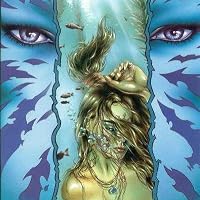
This is the first book in this trilogy, with a gorgeous cover by Julie Bell. Oddly enough, though it's billed as a trilogy, the third book is actually a prequel
Jo Walton is the nicest lady, too... I met her at the World Fantasy Convention in Mesa couple years ago and she and I sat down and had a nice long chat.
Every once in a while, my habit of picking books just because they have beautiful covers pays out!
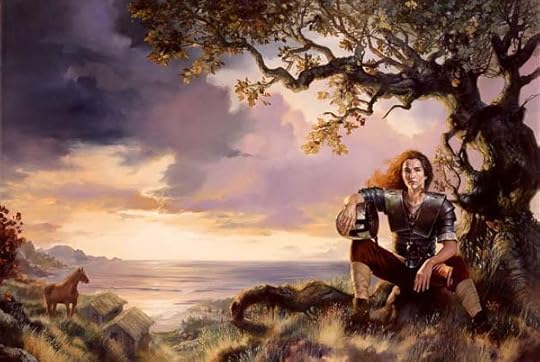
This is the first book in this trilogy, with a gorgeous cover by Julie Bell. Oddly enough, though it's billed as a trilogy, the third book is actually a prequel
Jo Walton is the nicest lady, too... I met her at the World Fantasy Convention in Mesa couple years ago and she and I sat down and had a nice long chat.
Every once in a while, my habit of picking books just because they have beautiful covers pays out!

April 18, 2008
I can agree with some of the other comments listed about the book. A really enjoyable and subtle Arthurian fantasy style, done in a whole other world. I also agree with some of the comments on it being clunky and jerky. It basically covers about 15 years in the first book. However, I personally did enjoy it. I liked the strong woman main character and actually the fairly well-balanced men and women equality through-out.
January 2, 2015
This review originally appeared on my blog, Books Without Any Pictures:
http://bookswithoutanypictures.com/20...
Do you ever have one of those books that you just know you’ll love, but they you start reading it and it seems to drag on and on without reason? I was incredibly excited to read The King’s Peace after reading Walton’s ethereal and introspective novel Among Others (seriously, if you haven’t read it, go do so, this instant!), about a child who discovers the worlds of classic science fiction and fantasy novels as she goes through hard times in her life. Unfortunately, The King’s Peace contains none of the magic of Among Others.
The story itself is a retelling of the legend of King Arthur. Now, I’m a huge sucker for King Arthur stories. Let that be known. And to make it even more fascinating, it’s set in a world where men and women are equal and either can have strong and successful military careers. I have a thing for kickass female heroines, which is one more reason why I really ought to have loved this book.
The protagonist, Sulien, is a young women whose village gets sacked. Bad things happen to her, and nothing is left to the imagination. Somehow she survives and makes it back to what’s left of her village, and she’s sent to ride for help. She encounters a skirmish, where she joins in the fighting and helps turn the tide. Turns out that Urdo, the High King (aka King Arthur) is leading the battle, and he makes Sulien an arminger. She begins a long career of being a badass and saving the kingdom.
I had so many issues with this book that I don’t even know where to begin. I think my biggest problem with The King’s Peace is that I have a hard time identifying with Sulien. She never feels like a real person to me. The book is narrated in the passive voice, and Sulien’s character is flat. She cares about battles and not much else, but the battles are boring. I want to scribble in the margins, “Show, don’t tell!” Then there’s the fact that all of the names in the book are Welsh, and all are different enough from the names used in most versions of King Arthur stories that it’s really hard to keep track of everyone. This wouldn’t be a problem if we were given the opportunity to bond with any of the characters, but because of the issues with the passive voice and the general pacing, it feels like you’re reading a history textbook rather than a novel.
The only scene in the book that had any sort of emotion or resonance at all was a weird scene in which a slightly older Sulien comes to meet her son whom she left at a monastery for nine years and never visited. It was hella awkward, because she didn’t know how to act around him, but even that felt forced. And the sad part is, Sulien’s character could have been so interesting. For one thing, she is asexual, which you don’t see very often in literature. Having a character who isn’t interested in romance can be refreshing if it’s done right. But instead, Sulien was so inacessible that you couldn’t really connect with her character. She has no depth, and seemed like a placeholder to tell the stories of other people, but those people weren’t fleshed out either.
I made it about 45% of the way through the book (which is around 200 pages), at which point I just couldn’t take it anymore. The story had so much potential, and I should have loved it, but it was dry and boring and couldn’t hold my attention. The thought of finishing the book was torture, let alone continuing the series. It was even more disappointing coming from an author whom I’ve read and loved in the past, because I know she’s capable of so much more than this. :(
Jo Walton is one of those people who can write so well that you will be filled with nostalgia, with tears, with the sheer joy of reading, so I wouldn’t let this review discourage you from trying some of her other titles. I’ve got several on my shelf that I’m excited to read.
Verdict: Skip this one, and read one of her other novels instead.
http://bookswithoutanypictures.com/20...
Do you ever have one of those books that you just know you’ll love, but they you start reading it and it seems to drag on and on without reason? I was incredibly excited to read The King’s Peace after reading Walton’s ethereal and introspective novel Among Others (seriously, if you haven’t read it, go do so, this instant!), about a child who discovers the worlds of classic science fiction and fantasy novels as she goes through hard times in her life. Unfortunately, The King’s Peace contains none of the magic of Among Others.
The story itself is a retelling of the legend of King Arthur. Now, I’m a huge sucker for King Arthur stories. Let that be known. And to make it even more fascinating, it’s set in a world where men and women are equal and either can have strong and successful military careers. I have a thing for kickass female heroines, which is one more reason why I really ought to have loved this book.
The protagonist, Sulien, is a young women whose village gets sacked. Bad things happen to her, and nothing is left to the imagination. Somehow she survives and makes it back to what’s left of her village, and she’s sent to ride for help. She encounters a skirmish, where she joins in the fighting and helps turn the tide. Turns out that Urdo, the High King (aka King Arthur) is leading the battle, and he makes Sulien an arminger. She begins a long career of being a badass and saving the kingdom.
I had so many issues with this book that I don’t even know where to begin. I think my biggest problem with The King’s Peace is that I have a hard time identifying with Sulien. She never feels like a real person to me. The book is narrated in the passive voice, and Sulien’s character is flat. She cares about battles and not much else, but the battles are boring. I want to scribble in the margins, “Show, don’t tell!” Then there’s the fact that all of the names in the book are Welsh, and all are different enough from the names used in most versions of King Arthur stories that it’s really hard to keep track of everyone. This wouldn’t be a problem if we were given the opportunity to bond with any of the characters, but because of the issues with the passive voice and the general pacing, it feels like you’re reading a history textbook rather than a novel.
The only scene in the book that had any sort of emotion or resonance at all was a weird scene in which a slightly older Sulien comes to meet her son whom she left at a monastery for nine years and never visited. It was hella awkward, because she didn’t know how to act around him, but even that felt forced. And the sad part is, Sulien’s character could have been so interesting. For one thing, she is asexual, which you don’t see very often in literature. Having a character who isn’t interested in romance can be refreshing if it’s done right. But instead, Sulien was so inacessible that you couldn’t really connect with her character. She has no depth, and seemed like a placeholder to tell the stories of other people, but those people weren’t fleshed out either.
I made it about 45% of the way through the book (which is around 200 pages), at which point I just couldn’t take it anymore. The story had so much potential, and I should have loved it, but it was dry and boring and couldn’t hold my attention. The thought of finishing the book was torture, let alone continuing the series. It was even more disappointing coming from an author whom I’ve read and loved in the past, because I know she’s capable of so much more than this. :(
Jo Walton is one of those people who can write so well that you will be filled with nostalgia, with tears, with the sheer joy of reading, so I wouldn’t let this review discourage you from trying some of her other titles. I’ve got several on my shelf that I’m excited to read.
Verdict: Skip this one, and read one of her other novels instead.

January 30, 2015
Many, many times I thought I’d put this book aside. I didn’t, I finished it; but it’s no Tooth and Claw or Among Others.
I hadn't read anything about this book before reading it, unusually for me. I read it because it is by Jo Walton. It took me a ridiculously long time to figure out that this is a retelling of Arthurian legend, sort of. It's Arthurian legend with men and women doing the soldiering together. Where being gay or lesbian isn't remarkable. Where not marrying or not having children isn't the end of the world. The characters' names and places threw me, and once I’d read about the characters and places, I couldn’t retain them. Sulien ap Gwien is the main character, she’s 17 when the Jarnish raiders come, and before she can tell her mother that she has been gang-raped, she is sent off to get help from the king, King Urdo.
She eventually becomes his greatest warrior, his Praefecto, in charge of his ala, his fighting cavalry. I wish there had been a glossary and a list of characters, with lineage, and a map in the copy I read. I’ve requested the next book in the series from the library, but I’m not sure I’ll read it. Except that every other book of Jo Walton’s I’ve loved, so maybe this was debut author-itis, or me. I requested this book from Interlibrary loan.
I hadn't read anything about this book before reading it, unusually for me. I read it because it is by Jo Walton. It took me a ridiculously long time to figure out that this is a retelling of Arthurian legend, sort of. It's Arthurian legend with men and women doing the soldiering together. Where being gay or lesbian isn't remarkable. Where not marrying or not having children isn't the end of the world. The characters' names and places threw me, and once I’d read about the characters and places, I couldn’t retain them. Sulien ap Gwien is the main character, she’s 17 when the Jarnish raiders come, and before she can tell her mother that she has been gang-raped, she is sent off to get help from the king, King Urdo.
She eventually becomes his greatest warrior, his Praefecto, in charge of his ala, his fighting cavalry. I wish there had been a glossary and a list of characters, with lineage, and a map in the copy I read. I’ve requested the next book in the series from the library, but I’m not sure I’ll read it. Except that every other book of Jo Walton’s I’ve loved, so maybe this was debut author-itis, or me. I requested this book from Interlibrary loan.

December 17, 2009
A hard slog; takes itself too seriously. I believed in Tir Tanagiri all right, but it was like swimming through half-set jello to read.
Jo Walton's recent novels of speculative fiction are excellent.
Jo Walton's recent novels of speculative fiction are excellent.

May 17, 2013
The King's Peace is a novel set in an alternative Britain, where the events leading to Arthurian myths are playing out.
I'm not sure if I am the ideal reader: my knowledge of Arthurian stuff is limited to a few movies and TV shows. Then again, perhaps the book is aimed exactly at people who aren't Arthur fanatics - it transposes everything to a different world. I'm not sure why, but perhaps Jo Walton wanted creative freedom without getting historians and mythohistorians to come after her with torches and pitchforks.
The novel is told from the perspective of a woman who, late in life (in her nineties), decides to write down a chronic of events, in a language no one speaks any more, and written in a world that has become illiterate. Being born the daughter of a minor king, the story starts with a raid of invaders, who rape her and kill her brother. She survives and searches the King of kings, to seek help for her family's kingdom.
I could be wrong, but I think the basic transposing is...
Tir Tanagiri = Britain / Camelot
Romans = Vincans
Urdu = Uther Pendragon, or possibly Arthur.
Jarnsmen = Anglo Saxons
White God = Jesus Christ
Pebble = Crucifix
etc.
We get a lady in the lake, an evil oracle, etc., too, so Arthurian motifs are certainly making an appearance.
I found the book quite hard going: there are so, so, so many named characters. That is undoubtedly authentic (a noble person would have had to know, and know of, many many other nobles, and encounter many in their lifetime), but it makes reading the book quite difficult at times. The writing style is very matter-of-fact. Even the rape at the start, which is meant to be a kind of ultimate horror, is told almost as if it were reportage.
In a way, the book feels more like a thought experiment than a novel. Our narrator is very loyal and a devout follower of Urdu, almost right from the moment she meets him. Urdu, meanwhile, is drawn as a kind of ideal leader, an almost-God in terms of his wisdom and leadership. The bits of the book that feel most like thought experiments are all about gender roles, open-mindedness, tolerance, and religion. We're presented with a world where women can lead armies, attitudes towards sex are relaxed and open-minded, gay people have little to fear. And we're presented with a version of how Christianity / the White God's creed spread through the island, like an infection of the minds and souls of people.
I found some things fascinating. The Gods of the land are presented in a way which reminded me of the movie Princess Mononoke, and a lot of the pre-White-God beliefs of the people have that sort of atmosphere about them. This felt unusual to me - and interesting to read.
There is much to appreciate about the book. It has been clearly written with much thought. A huge amount of research must have gone into it - it is complex and detailed and always convincing. The writing, while quite dry, works well enough. Our narrator is a likeable, admirable character, and I enjoyed her conceptually and in fact. (I was less keen on too-squaky-clean Urdu, and too-snarling-evil Murtho etc.)
But, despite all that, it is too bogged down, too full of too many characters, and somewhat lacking in fun. It reads too much like a history textbook, and not enough like an adventure novel.
I'm not sure if I am the ideal reader: my knowledge of Arthurian stuff is limited to a few movies and TV shows. Then again, perhaps the book is aimed exactly at people who aren't Arthur fanatics - it transposes everything to a different world. I'm not sure why, but perhaps Jo Walton wanted creative freedom without getting historians and mythohistorians to come after her with torches and pitchforks.
The novel is told from the perspective of a woman who, late in life (in her nineties), decides to write down a chronic of events, in a language no one speaks any more, and written in a world that has become illiterate. Being born the daughter of a minor king, the story starts with a raid of invaders, who rape her and kill her brother. She survives and searches the King of kings, to seek help for her family's kingdom.
I could be wrong, but I think the basic transposing is...
Tir Tanagiri = Britain / Camelot
Romans = Vincans
Urdu = Uther Pendragon, or possibly Arthur.
Jarnsmen = Anglo Saxons
White God = Jesus Christ
Pebble = Crucifix
etc.
We get a lady in the lake, an evil oracle, etc., too, so Arthurian motifs are certainly making an appearance.
I found the book quite hard going: there are so, so, so many named characters. That is undoubtedly authentic (a noble person would have had to know, and know of, many many other nobles, and encounter many in their lifetime), but it makes reading the book quite difficult at times. The writing style is very matter-of-fact. Even the rape at the start, which is meant to be a kind of ultimate horror, is told almost as if it were reportage.
In a way, the book feels more like a thought experiment than a novel. Our narrator is very loyal and a devout follower of Urdu, almost right from the moment she meets him. Urdu, meanwhile, is drawn as a kind of ideal leader, an almost-God in terms of his wisdom and leadership. The bits of the book that feel most like thought experiments are all about gender roles, open-mindedness, tolerance, and religion. We're presented with a world where women can lead armies, attitudes towards sex are relaxed and open-minded, gay people have little to fear. And we're presented with a version of how Christianity / the White God's creed spread through the island, like an infection of the minds and souls of people.
I found some things fascinating. The Gods of the land are presented in a way which reminded me of the movie Princess Mononoke, and a lot of the pre-White-God beliefs of the people have that sort of atmosphere about them. This felt unusual to me - and interesting to read.
There is much to appreciate about the book. It has been clearly written with much thought. A huge amount of research must have gone into it - it is complex and detailed and always convincing. The writing, while quite dry, works well enough. Our narrator is a likeable, admirable character, and I enjoyed her conceptually and in fact. (I was less keen on too-squaky-clean Urdu, and too-snarling-evil Murtho etc.)
But, despite all that, it is too bogged down, too full of too many characters, and somewhat lacking in fun. It reads too much like a history textbook, and not enough like an adventure novel.

December 25, 2022
Well, it is very much early fiction for Walton - there's weird pacing, and transitions between scenes don't always work, and the slow burn of the first 2/3 is a little slower than necessary (I basically read the first 200 pages for two and a half weeks and the last 300 pages in a day), but then the axes are all in the air, waiting to fall, and it becomes so utterly gripping. And Sulien is such a wonderful protagonist, too.
I meant to only read this volume and leave the next for 2023, but now I'm not sure I'll be able to do that, because that ending has me on tenterhooks.
I meant to only read this volume and leave the next for 2023, but now I'm not sure I'll be able to do that, because that ending has me on tenterhooks.

October 3, 2013
If this hadn't been Walton's first novel, I'm not sure how I'd have felt about it. She sees fit, in her notes, to say "this is not our world, and this is not our history", but what it very clearly is is a retelling of the Arthurian legend with the names changed (and not all of them changed very much).
Well, that's not a bad thing: I've read a lot of Arthurian retellings over the years and this is as good as most, and better than many. It just feels somehow dishonest to take one of the best known stories in British history and disguise it.
She's also changed the sexes of many of the characters, to give a much better gender balance, which I have to agree is an improvement on the older versions.
However I felt about disguising its sources, I still find it an amazingly good first novel. It's got flaws: the protagonist, Sulien ap Gwien, can invoke magic to heal near-fatal wounds, clean poisoned wells, or even summon the Lady of the Lake; and others can do the same, but there's actually almost no magic in this world. It's treated by the characters as a commonplace, while it's obvious that there's nothing common about it. That really needed to be explained better. There are hints that such powers could be tied to nobility, which would certainly limit them, except that Sulien's groom, Garah, who is certainly a commoner, had to teach Sulien the spell to clean the well.
The very idea that an unmarried woman can only get pregnant if the gods will it so would have been laughable if it wasn't so creepy. In any case, it was completely unnecessary to the plot.
The tale is redeemed by the characters. Sure, they were created by such as Malory and Chretien de Troyes and Giraldus Cambrensis, but one of the things that's kept people retelling the story for more than a millenium is that there's always more room to put flesh on those bones, and the characters that Walton creates are wonderful.

August 2, 2012
I see this is a novel that divides readers. For myself, I loved it from about ten pages in, and that didn't change until I put it down in tears.
I've read a few Arthurian fantasies before, as well as various historical novels about the equivalent period, but this is the first that has really gripped me emotionally and intellectually to such an extent. I've spent the past few days engrossed in Sulien's world, and I want to dive straight into the next book (but I won't!) and continue my immersion.
Sulien ap Gwien is trained as a warrior, but unarmed when ambushed and raped in the opening pages of the novel. (For me, this is the most triggery part of the novel, and it was done with enough sensitivity that I managed to keep reading, without feeling that Sulien's experience was glossed over.) This experience colours, but does not overwhelm, the rest of the book, as Sulien rides to seek the support of King Urdo, soon to become the High King of the island.
Walton deftly flexes the Arthurian legend to fit a world in which women, too, are warriors, but in which they are also still women: they can bear children (or not); they can be raped, but this is not seen as an inevitable fact, as it (necessarily) is in many historical novels of the period. There are politics and sexual politics. The presence of many other interesting female characters with agency in the novel means that the evil character of the king's half-sister, sorceress and mother of Mordeth, is not quite so glaring.
Sulien is the perfect fit for Lancelot, Arthur's "parfit knight", and the gender change does fascinating things to the dynamics of the story. No longer is Lancelot a remote, near-asexual knight who gazes uncomprehendingly upon the hapless Elaine, but a living, breathing woman with hopes and fears for herself and her family, who also happens to love fighting and be Urdo's/Arthur's most loyal knight.
I'm going to be thinking about this one for a while. Highly recommended!
I've read a few Arthurian fantasies before, as well as various historical novels about the equivalent period, but this is the first that has really gripped me emotionally and intellectually to such an extent. I've spent the past few days engrossed in Sulien's world, and I want to dive straight into the next book (but I won't!) and continue my immersion.
Sulien ap Gwien is trained as a warrior, but unarmed when ambushed and raped in the opening pages of the novel. (For me, this is the most triggery part of the novel, and it was done with enough sensitivity that I managed to keep reading, without feeling that Sulien's experience was glossed over.) This experience colours, but does not overwhelm, the rest of the book, as Sulien rides to seek the support of King Urdo, soon to become the High King of the island.
Walton deftly flexes the Arthurian legend to fit a world in which women, too, are warriors, but in which they are also still women: they can bear children (or not); they can be raped, but this is not seen as an inevitable fact, as it (necessarily) is in many historical novels of the period. There are politics and sexual politics. The presence of many other interesting female characters with agency in the novel means that the evil character of the king's half-sister, sorceress and mother of Mordeth, is not quite so glaring.
Sulien is the perfect fit for Lancelot, Arthur's "parfit knight", and the gender change does fascinating things to the dynamics of the story. No longer is Lancelot a remote, near-asexual knight who gazes uncomprehendingly upon the hapless Elaine, but a living, breathing woman with hopes and fears for herself and her family, who also happens to love fighting and be Urdo's/Arthur's most loyal knight.
I'm going to be thinking about this one for a while. Highly recommended!
January 4, 2019
I think it's unfortunate that some people find this book dry, or don't understand some of her choices in building the setting. Having only recently gotten back into reading, I'm finding it nearly impossible to stick with boring books, but this was one I had little trouble with at all (aside from remembering the names of important but not central characters.) Walton's retold Arthurian world that she has built is fascinating, and just idyllic enough to still have conflict to get caught up in. Just because a character is introduced with a name doesn't mean that we (or the main character) needs to come to know them all that well, and I think that's a good example of people nitpicking about the book not following conventions or staying within their comfort zone rather than reading it with an open-mind and allowing themselves to like something that may not be familiar. I found Sulien more stoic, self-controlled, and forgiving than I would have expected from most characters, but it only added to the book and furthered the moral of peace, acceptance and forgiveness that was already put forth.

March 15, 2008
This was a OK read. Better than some but not great. It had so many characters coming and going that I had a hard time keeping up. The war scenes were very well researched and were pretty good. I had a hard time relating to most of Walton's characters because they were so flat. Towards the end though, the characters were getting better (I automaticly liked Rigg, Elen and Conal when they were introduced). Some small bit of magic, lots of action and politics. A different fantasy novel, based on war. It's Walton's first novel, I hope that the rest of the series improves.

April 16, 2013
Jo Walton has been my new favorite in the sci-fi and fantasy world recently, but this book just didn't do it for me. Let's face it, retelling Arthurian legends is nothing new in the fantasy world. Walton changes names and incorporates interesting elements of Welsh mythology, but it basically is the same old story. Even so, I probably would have finished it if it hadn't been for the main character. She seemed to be lifted straight from Elizabeth Moon's The Deed of Paksenarrion and though I didn't like those books I liked Paks better than her stunt double Sulien.

July 10, 2007
Not my cup of tea. I couldn't relate to Sulien; just couldn't care about the story.
January 6, 2014
To be honest, I never did finish this. I’m not sure why. It wasn’t bad. I just don’t know. All I do know is I don’t feel guilty not reading till the end.
March 2, 2016
Entertaining retelling of the King Arthur myth with excellent characterization and wonderful story telling.

May 28, 2024
Wat zal ik van dit boek zeggen. Ik vond het lange tijd te veel van alles. Té veel veldslagen en té veel personages (ik had graag een lijst gehad). Als er niet gevochten werd dan waren ze wel op weg naar een gevecht. Vaak heb ik gedacht om het maar op te geven, maar het was voor mijn RL-Forumchallenge dus doorzetten maar. En toen na 3 kwart van het boek werd het in eens wel onderhoudend om te lezen. En nu zit ik enorm te twijfelen of ik deel 2 dan ook maar zal lezen om te weten hoe het afloopt.
October 11, 2025
Has to be one of the worst endings I’ve ever read

July 4, 2020
Мир в Королевстве
"Слабость монархии обусловлена ее зависимостью от свойств короля" - писал лосский философ Аристотель тысячу лет назад. "The weakness of monarchy lies in the character of the king” the Lossian philosopher Aristokles wrote almost a thousand years ago
Джо Уолтон из тех авторов, кого читаю независимо от того, насколько далека от меня тема очередной книги. Она хочет рассказывать об этом, значит стану слушать. А недостающую информацию доберу по ходу. Так было с Философской трилогией, тогда прочла платоново "Государство", чтобы лучше понимать; а для "Клыка и когтя" - "Фремлейский приход" Троллопа. Просто расширяешь горизонты.
Для Трилогии Сулиен по-хорошему нужен бы цикл Короля Артура, но тут, признаюсь, не озаботилась дополнительным чтением, довольствуясь тем, что уже было в памяти. А между тем, это довольно непросто и требует пояснений к основной концепции. Итак, за основу взят цикл артуровых легенд, и в этом смысле The King's Peace низкое фэнтези.
Но действие переносится в Уэльс, с соответствующим смещением понятийного вектора. Автор валлийка, не скрывает своей приверженности корням, и не исключаю, что этот ее цикл - своего рода бескровная жертва памяти предков, ответ пеплу Клааса, что бьется в грудь всех потомков, некогда покоренных народов.
Еще несколько слов об особенностях книги: имена и географические названия здесь валлийские, что создает при чтении дискомфорт у человека, ориентированного на англоязычие. И стилистически ощущается некоторая непривычность, нестандартность при достаточно простой лексике. Мне, неспециалисту, трудно объяснить, но определенный читательский дискомфорт присутствует.
Одновременно это очень феминистский в самой сути роман, да и весь цикл, потому что героиня женщина-воин (армигер) на службе короля Урдо - здешняя ипостась Артура. Сулиен ап Гвьен королевская дочь. Ну, вы примерно представляете, какие королевства в Уэльсе XII века. Замок - очень большая ферма с тростниковыми циновками, в подчинении некоторое количество арендаторов.
Девушка рослая и сильная, она с детства на равных участвовала в играх братьев и наравне с ними обучалась владению оружием. И, конечно, это не спасло, когда во время пиратского набега на ферму одного из их арендаторов тот кинулся на подмогу своим и был убит, а Сулиен семеро мужиков изнасиловали и кинули подыхать на ячменном поле.
Она выживет, залижет раны и на всю оставшуюся жизнь радости секса останутся для нее тайной за семью печатями. А на "бить мужиков" это не распространится и Сулиен завербуется на службу к королю Урдо, гораздо больше похожему на короля в нашем понимании, и станет предводительницей его алы - конного эскадрона.
Но прежде родичи отправят девушку в монастырь, потому что от того страшного, что с ней случилось, внутри зародится дитя, и нужно будет родить без шума. Родит своего Дариэна, избежит страшной смерти с младенцем, благодаря божественному вмешательству. Потому что, это немаловажный аспект - "Мир в Королевстве" - это еще и роман, где христианство с Белым богом внедряется в жизнь острова, повсеместно тесня старых языческих богов, которые не просто достаточно сильны, но и являют чудеса.
Книга стильная и крутая, как все у Уолтон. Но битвы, сражения, энциклопедического уровня сведения о лошадях: что едят, чем болеют, за какое время преодолевают какое расстояние под вооруженным всадником и со вьюками, а за какое налегке - все это не совсем мое.
Come little warrior, duck your head,
Fast, little shieldman, fast or dead.
"Слабость монархии обусловлена ее зависимостью от свойств короля" - писал лосский философ Аристотель тысячу лет назад. "The weakness of monarchy lies in the character of the king” the Lossian philosopher Aristokles wrote almost a thousand years ago
Джо Уолтон из тех авторов, кого читаю независимо от того, насколько далека от меня тема очередной книги. Она хочет рассказывать об этом, значит стану слушать. А недостающую информацию доберу по ходу. Так было с Философской трилогией, тогда прочла платоново "Государство", чтобы лучше понимать; а для "Клыка и когтя" - "Фремлейский приход" Троллопа. Просто расширяешь горизонты.
Для Трилогии Сулиен по-хорошему нужен бы цикл Короля Артура, но тут, признаюсь, не озаботилась дополнительным чтением, довольствуясь тем, что уже было в памяти. А между тем, это довольно непросто и требует пояснений к основной концепции. Итак, за основу взят цикл артуровых легенд, и в этом смысле The King's Peace низкое фэнтези.
Но действие переносится в Уэльс, с соответствующим смещением понятийного вектора. Автор валлийка, не скрывает своей приверженности корням, и не исключаю, что этот ее цикл - своего рода бескровная жертва памяти предков, ответ пеплу Клааса, что бьется в грудь всех потомков, некогда покоренных народов.
Еще несколько слов об особенностях книги: имена и географические названия здесь валлийские, что создает при чтении дискомфорт у человека, ориентированного на англоязычие. И стилистически ощущается некоторая непривычность, нестандартность при достаточно простой лексике. Мне, неспециалисту, трудно объяснить, но определенный читательский дискомфорт присутствует.
Одновременно это очень феминистский в самой сути роман, да и весь цикл, потому что героиня женщина-воин (армигер) на службе короля Урдо - здешняя ипостась Артура. Сулиен ап Гвьен королевская дочь. Ну, вы примерно представляете, какие королевства в Уэльсе XII века. Замок - очень большая ферма с тростниковыми циновками, в подчинении некоторое количество арендаторов.
Девушка рослая и сильная, она с детства на равных участвовала в играх братьев и наравне с ними обучалась владению оружием. И, конечно, это не спасло, когда во время пиратского набега на ферму одного из их арендаторов тот кинулся на подмогу своим и был убит, а Сулиен семеро мужиков изнасиловали и кинули подыхать на ячменном поле.
Она выживет, залижет раны и на всю оставшуюся жизнь радости секса останутся для нее тайной за семью печатями. А на "бить мужиков" это не распространится и Сулиен завербуется на службу к королю Урдо, гораздо больше похожему на короля в нашем понимании, и станет предводительницей его алы - конного эскадрона.
Но прежде родичи отправят девушку в монастырь, потому что от того страшного, что с ней случилось, внутри зародится дитя, и нужно будет родить без шума. Родит своего Дариэна, избежит страшной смерти с младенцем, благодаря божественному вмешательству. Потому что, это немаловажный аспект - "Мир в Королевстве" - это еще и роман, где христианство с Белым богом внедряется в жизнь острова, повсеместно тесня старых языческих богов, которые не просто достаточно сильны, но и являют чудеса.
Книга стильная и крутая, как все у Уолтон. Но битвы, сражения, энциклопедического уровня сведения о лошадях: что едят, чем болеют, за какое время преодолевают какое расстояние под вооруженным всадником и со вьюками, а за какое налегке - все это не совсем мое.
Come little warrior, duck your head,
Fast, little shieldman, fast or dead.
October 29, 2019
Every now and then, bits of this were a pretty good book. I'm a sucker for Welsh-inspired retellings of Arthurian legend. Jo Walton does some interesting things with all the old stories, and when the actual main characters were talking with each other, the novel was alive and interesting. But chapters and chapters of it were just very dull descriptions of the main character plodding about by herself, interacting with very bland tertiary characters with barely any dialogue. And there were so many named characters and places that it was impossible to keep them straight.
Altogether, the whole novel felt like Walton either threw in a couple hundred extra pages of extraneous matter to reach the required length for a fantasy novel or she cut out a few hundred pages that were supposed to make all the "Sulien went to Caer Wherever and talked to ap So-and-so" bits more relevant and interesting.
And this is mostly just a quibble on my part, but I'm awfully bored of fantasy books that use thinly veiled names and cultures to represent actual civilizations. The novel wouldn't have been impacted in any way if she just called Vincans Roman and Isarnagan Ireland, and it would've meant less clunky names to keep track of.
Altogether, the whole novel felt like Walton either threw in a couple hundred extra pages of extraneous matter to reach the required length for a fantasy novel or she cut out a few hundred pages that were supposed to make all the "Sulien went to Caer Wherever and talked to ap So-and-so" bits more relevant and interesting.
And this is mostly just a quibble on my part, but I'm awfully bored of fantasy books that use thinly veiled names and cultures to represent actual civilizations. The novel wouldn't have been impacted in any way if she just called Vincans Roman and Isarnagan Ireland, and it would've meant less clunky names to keep track of.

March 18, 2023
I’ve always liked Jo Walton’s writing (and Arthuriana), so it’s exciting to be able to read some of her backlist. A traumatic encounter with Jarnish raiders at seventeen kills Sulien’s brother and leads her to seek out a position in King Urdo’s army as one of his new mounted horse warriors. From there, the old familiar stories unfold in ways both recognizable and with Walton’s particular spin on them.
There were some parts of this adaptation I liked. Walton sets up the groundwork for a very interesting take on Mordred here. Morgause, on the other hand, is dealt with in a summary and unsatisfying way. Sulien is explicitly aroace, but I have mixed feelings on how this is tangled in the graphic rape she experiences in the first chapter. Also, it’s very much a historian’s choice to set her book in a world modeled after early post-Roman Britain, but fantasized and with different names (less damage done to real historical facts, this way.) Unfortunately, I’m much more attached to Malory’s medieval version than an Arthurian story set earlier.
However, despite quite a few interesting points, the fact remains that this book is ninety percent play by play of battles. (Probably the one thing which is true to Malory). But as someone who is bored silly by action scenes, I found this slow going. It doesn’t help that the narrative is bogged down by so many minor characters who are hard to keep straight. If you can’t remember who a guy is, his death in chapter 17 rings hollow.
Glints of interesting ideas, but that’s far too much fight scene to be an interesting book, alas. I probably won’t read the other two books in the trilogy, presuming they are written similarly.
There were some parts of this adaptation I liked. Walton sets up the groundwork for a very interesting take on Mordred here. Morgause, on the other hand, is dealt with in a summary and unsatisfying way. Sulien is explicitly aroace, but I have mixed feelings on how this is tangled in the graphic rape she experiences in the first chapter. Also, it’s very much a historian’s choice to set her book in a world modeled after early post-Roman Britain, but fantasized and with different names (less damage done to real historical facts, this way.) Unfortunately, I’m much more attached to Malory’s medieval version than an Arthurian story set earlier.
However, despite quite a few interesting points, the fact remains that this book is ninety percent play by play of battles. (Probably the one thing which is true to Malory). But as someone who is bored silly by action scenes, I found this slow going. It doesn’t help that the narrative is bogged down by so many minor characters who are hard to keep straight. If you can’t remember who a guy is, his death in chapter 17 rings hollow.
Glints of interesting ideas, but that’s far too much fight scene to be an interesting book, alas. I probably won’t read the other two books in the trilogy, presuming they are written similarly.

January 10, 2018
An alternative take on the Arthurian mythos starring warrior woman. But very slow paced. So slow paced I was surprised to discover it was published in 2000. I'd have placed it at least a decade earlier. There is plenty of archaic, formal language and ancient naming conventions. It reminds me a little of The Shining Company by Rosemary Sutcliff (novel inspired by Y Gododdin).
I appreciated a story where having women in combat was common and there were offhand references to random scout being female. I like having an honour based society without overt misogyny. There are also references to men sharing blankets, so minor characters are gay/bixexual but with a vast cast it's hard to keep track of them.
The beginning is slightly cliched. There's a sexual assault early on but I guess it's not gratuitous as it has important plot resonance later on. Characters other than Sulien are thinly fleshed out. The narrative picks up pace near the end only to come to an abupt but dramatic conclusion
I like the world-building; the mixture of history, mythology and imagination. Some of the parallells such as the White God for Christianity are obvious. Others, such as the myriad place names are harder to figure out. I imagine most of the action taking place in Wales or Cornwall.
Who would I reccomend it to? If you love Jo Walton, Arthurian myths, and the purple prose of high fantasy, than this could be for you. If you want a more modern fast paced prose style than this is not for you.
I appreciated a story where having women in combat was common and there were offhand references to random scout being female. I like having an honour based society without overt misogyny. There are also references to men sharing blankets, so minor characters are gay/bixexual but with a vast cast it's hard to keep track of them.
The beginning is slightly cliched. There's a sexual assault early on but I guess it's not gratuitous as it has important plot resonance later on. Characters other than Sulien are thinly fleshed out. The narrative picks up pace near the end only to come to an abupt but dramatic conclusion
I like the world-building; the mixture of history, mythology and imagination. Some of the parallells such as the White God for Christianity are obvious. Others, such as the myriad place names are harder to figure out. I imagine most of the action taking place in Wales or Cornwall.
Who would I reccomend it to? If you love Jo Walton, Arthurian myths, and the purple prose of high fantasy, than this could be for you. If you want a more modern fast paced prose style than this is not for you.

February 8, 2008
This and its sequel, The King's Name, are an excellent reworking of the Matter of Britain (i.e., King Arthur and all that) set in a different world from ours. I use the word "reworking" rather than "retelling" simply because the books aren't a straight retelling of the Arthurian legends; the world is different (largely in that magic and the gods are real), and although there are certainly parallels, the events and characters are sufficiently different to make this more than a retelling.
The narrator is Sulien ap Gwien, the king's greatest warrior; I suppose you could say that she is analogous to Lancelot in that role, but certainly not in any other - she is her own character, not a reflection of a character from the legend as it's usually told. (In fact, another character in the novel, who can see into alternate universes, tells her that she is unique and has no "shadows" in other worlds.) Her narrative voice is distinctive and completely convincing as that of a practical, honorable, military woman, if a bit dry and unemotional.
I had a hard time getting into the books at first, and I'm not sure why. Perhaps it was the amount of time spent in describing battles, which has never been my cup of tea. I ended up liking them very much, though.
The narrator is Sulien ap Gwien, the king's greatest warrior; I suppose you could say that she is analogous to Lancelot in that role, but certainly not in any other - she is her own character, not a reflection of a character from the legend as it's usually told. (In fact, another character in the novel, who can see into alternate universes, tells her that she is unique and has no "shadows" in other worlds.) Her narrative voice is distinctive and completely convincing as that of a practical, honorable, military woman, if a bit dry and unemotional.
I had a hard time getting into the books at first, and I'm not sure why. Perhaps it was the amount of time spent in describing battles, which has never been my cup of tea. I ended up liking them very much, though.

February 18, 2008
When Sulien's village is attacked by Jarnish raiders, her father sends her to the king for help. She immediately proves her courage and worth as a warrior to Urdo, who is setting himself up as the new High King. She rises through the ranks of his army, while all around her the various factions and tribes fight for land and power. Only the High King has the vision and the might to unite them all, but he needs all the help he can get against the encroaching chaos.
This is a fantastic retelling of the myth of King Arthur. It is by far the most believable version I've read--White and Mallory should take notes. I hate how the Victorians screwed up the entire mythos of King Arthur and made it entirely about forbidden sex (oh noes!). Walton takes back the myth from their damp hands and sets it once more into a time as brutal as it is honorable, with characters as pragmatic as they are brave.
This is a fantastic retelling of the myth of King Arthur. It is by far the most believable version I've read--White and Mallory should take notes. I hate how the Victorians screwed up the entire mythos of King Arthur and made it entirely about forbidden sex (oh noes!). Walton takes back the myth from their damp hands and sets it once more into a time as brutal as it is honorable, with characters as pragmatic as they are brave.

November 26, 2012
Part of me liked what Walton was trying to do here, but I couldn't get into it. I did appreciate the clash of cultures (thinly veiled Roman-Celtic-Anglo-Saxon interaction) even though my knowledge of Arthurian legend is pretty sparse. My biggest problems were that the main character wasn't very relatable, I couldn't keep track of the other characters, and it's hard to discern any over-arching plot. It reads kind of like this: "Sulien did this, and then she did that, and then she did another thing, and then she met So-and-so ap So-and-so and killed So-and-so Such-and-suchsson, and then she really loved being a warrior for Urdo, but such-and-such happened at Caer Blah Blah, and then she rode some horses and did some more stuff." Some people who are really into Arthurian legends and/or early middle ages British history might be engaged enough in the basic idea to overlook these problems, but for me the problems outweighed the interesting idea.
Displaying 1 - 30 of 123 reviews