Jump to ratings and reviews
Rate this book

مأساة مترجم

Rate this book
في مدينة لم يذكر اسمها عام 1920، يتجول المترجم في أرجائها تقوده أفكاره الغاضبة والفوضوية عن حبيبته التي تركته، عن مدينته الكئيبة وحياته التي يعدها سلسلة لا نهائية من الخيبات والأزمات المتلاحقة. يفكر في أصحاب العمل الذين يفقدون ترجماته معناها، جيرانه الذين لا يحترمون مهنته؛ إذ ليس له مواعيد ثابتة أو زي رسمي يجعل منه موظفًا يستحق الاحترام في المجتمع، وصحته المتهالكة بسبب عقله الذي لا يهدأ.
نخوض مع المترجم رحلة يحاول فيها أن يتمالك نفسه ويبحث عن طريقة يستعيد بها عروسه وسببه الوحيد للبقاء على قيد الحياة.
ستجد في رحلته المذهلة وخواطره الذاتية المواساة. إنها جزء من رحلة كل شخص يحيا في زمن تسوده الفوضى واللاجدوى.

144 pages, Paperback

First published May 1, 2015

16 people are currently reading
1310 people want to read

About the author

João Reis

108 books613 followers
João Reis (1985) is a Portuguese writer and literary translator. His books are published in Portugal, the USA, Brazil, Serbia, Georgia, Egypt and Greece. He writes both in Portuguese and English.

The Translator's Bride was his first work to be translated into English, and his novel Bedraggling Grandma with Russian Snow was longlisted for the 2022 Dublin Literary Award.

He's also the author of The Devastation of Silence (longlisted for Prémio Oceanos 2019, published in English in November 2022), Quando Servi Gil Vicente (shortlisted for Prémio Fernando Namora 2020), Se com Pétalas ou Ossos (2021), Cadernos da Água (2022, shortlisted for Prémio Fernando Namora and Prémio Fundação Eça de Queiroz), and An Atavic Fear of Hailstorms (2023).

Ratings & Reviews

What do you think?
Rate this book

Friends & Following

Create a free account to discover what your friends think of this book!

Community Reviews

5 stars
183 (36%)
4 stars
201 (40%)
3 stars
83 (16%)
2 stars
27 (5%)
1 star
7 (1%)
Displaying 1 - 30 of 142 reviews
Profile Image for Jim Fonseca.
1,163 reviews8,486 followers
August 5, 2023
The cover gives a good overview of the story so I posted that as the paragraph below so I don't give any additional spoilers:

At the start of The Translator’s Bride, the translator’s bride has left him. But if he can only find a way to publish a book, and buy a small house, maybe he can win her back…These are the obsessive thoughts that pervade the translator’s mind as he walks around an unnamed city full of idiots, trying to figure out how to put his life back together – his employers aren’t paying him, he’s trying to survive a woman’s unwanted advances, and he’s trying to make the best of his desperate living conditions - all while he struggles with his own mind and angry and psychotic ideas, filled with longing and melancholy. Darkly funny, filled with acidic observations and told with a frenetic pace, The Translators Bride is an incredible ride – whether you’re a translator or not!

description

His bride’s leaving has soured him on life, so much so that the main character’s attitude toward the city and its inhabitants reminds me a bit of Reis’ countryman, Antonio Lobo Antunes. In Antunes' stories every character is deeply flawed; every cup is cracked; every window is grimy; every spoon is greasy. In fact, greasy peas cooked in fat are a specialty of the boarding house where he and his wife live! The boarding house uses candles and a crust of ice forms on the wash basin. No wonder his bride left him!

Old women have mustaches and giant warts. Young kids have already lost their teeth. The translator becomes obsessed with shouting a foreign word at people he is aggravated with; the word may or may not be obscene. He also becomes obsessed with foul smells: dung, urine, mud, burning, sulfur. He seeks out a fortune-teller to help him.

description

We are not told the time frame of the story, but we are given clues. There are autos but still horses and mules (and an abundance of equine dung); men wear hats; ships have funnels and someone bought a new gadget - typewriter.

I very much liked the humor; some examples:

[A student boarder in the house says he is studying law] “…though I’m more inclined to think he studies the bottom of wine glasses, in itself a deep and serious field of study, a complex science, a comprehensive system involving repetition, eternal return, history within itself, a true wonder, the cup empties itself and is refilled…”

“…she says she has many suitors but spends every evening locked in her room, she must surely communicate with all these gentlemen by letter, which is fine, much more hygienic too, a girl as cold as she is barely needs the warmth of physical contact…”

“…in this country there are two kinds of people, the overly intellectualized and the illiterate, there’s no middle ground…”

“…improvements clash directly with the nation’s essence…”

A great story and excellent writing. The book is translated from the Portuguese and the style is mostly run-on paragraphs with thoughts separated by commas. A novella as much as a novel (117 pages). Very Kafka-esque and highly recommended.

João is a good friend of mine on GR and I appreciate his sending me a copy of this book.

description

João Reis, born in 1985, is a Portuguese writer and a literary translator of Scandinavian languages (Swedish, Danish, Norwegian, and Icelandic). He studied philosophy and has lived in Portugal, Norway, Sweden, and the UK. Reis's work has already been compared to that of Bernhard, Hamsun and Kafka, and represents a literary style unseen in contemporary Portuguese writing. The novel "The Translator's Bride" is his first work to be translated into English.

The author has two other novellas translated into English that I read and enjoyed: Bedraggling Grandma with Russian Snow and The Devastation of Silence.

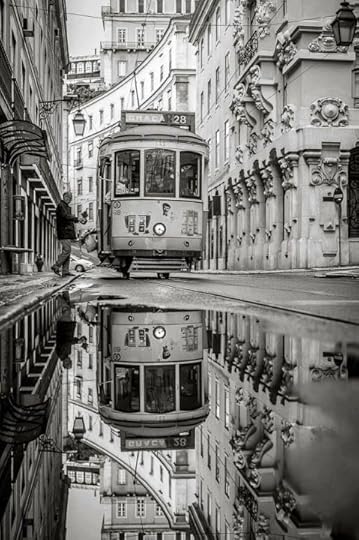
Top photo of Lisbon by Carol Japp from images.fineartamerica.com
Middle photo, Reflection-Lisbon from http://rebloggy.com/
The author from Goodreads

[Edited 8/5/23]
Profile Image for Vit Babenco.
1,781 reviews5,776 followers
October 29, 2021
The Translator’s Bride is a troubled stream of consciousness of the miserable nonentity…
…why do I have such a sorrowful life, I burn everything around me, I’m hoarfrost, and all this thinking about her makes me want to feel something palpable, I open the closet and search for her scarf in the drawer, it still has her smell, hold it close to my nose, the scent of stewed peas fills my nostrils with the acrid tallow in which they marinate…

His bride had sailed away and the translator’s life literally turned into a classical blues: “My baby left me… And she left me high and dry.”
He is full of the utter despondency and he roams the streets seeing the world as a huge dunghill… And his poor head is jammed to capacity with misanthropic thoughts…
…we live in a gross world, wallow in the mud, there are no friends, only self-seekers, they suck us dry, break our bones and gulp down the marrow, it’s a delicacy, if your job is as so and so they remember you, if you stop working as so and so, they never acknowledge you, they’re true thugs…

Loosers keep loosing but they are sure that all their misfortunes are brought by those who surround them…
Profile Image for Glenn Russell.
1,511 reviews13.3k followers
Read
May 5, 2020


Back in the days when I attended poetry readings, each time I'd walk into a room of poets (only people who signed up to read their poetry attend such events), there they all were: scruffy, gruff, snarly, drinking their beer and smoking their cigarettes, an entire room chock-full of the sparsely talented who aspired to write poetry like Charles Bukowski.

In a somewhat similar spirit, I can imagine many young would-be novelists sitting at their writing desk, attempting to mold a story in a way to give expression to their intense emotions and feelings. If only they had real talent like João Reis. And let me tell you, João Reis is a talented writer, in turns funny, ironic, waggish, caustic, roguish, tender, expressive.

Did I say young novelist? The Translator’s Bride was originally published in 2013, when João Reis was age twenty-eight. The first English edition of the novel, translated from the original Portuguese by the author himself, is made available now in 2019. I can’t read Portuguese but I’m confident the translation is a good one - after all, João Reis has been working as a translator for a good number of years, mostly translating literary works written in Swedish, Danish, Norwegian and Icelandic.

Turning to The Translator's Bride itself, we meet our unnamed first-person narrator, similar to the author, a translator of literary works, on his return to his rented flat in his home city. Although the city is also unnamed, I envision his rented flat in Lisbon, on a street with a streetcar like the one in the above photo.

The distinctive narrative voice hits a reader right from the first sentence: “My return trip is gloomy, rain falls relentlessly and I stick a hand out of the window, the streetcar moves slowly, someone crosses the rails in a hurry, there’s shouting and swearing, these people are so wearisome, I bring a hand to my face, get it wet in a disgusting fashion, the woman in front of me turns her head away, there's nothing else she can do, my face is damp, maybe it's obscene to wet one's face in front of a lady one doesn't know from Adam, I'm ignorant of such issues . . . .” Actually, this is only a fraction of the sentence – it becomes immediately obvious why João Reis counts Thomas Bernhard, the master of the expressive long sentence, as among his prime influences.

The narrator has various encounters with wretched examples of humanity (his characterization), such personages as his old, fat landlady who is so cheap she gives him candles for his room in lieu of electricity, a miserly publisher, an eccentric author and an ancient fortune teller reminding one of the old pawnbroker from Fyodor Dostoevsky’s classic (João Reis also counts the great Russian novelist as an influence).

However, irrespective of interlocutor or situation, at all times and on all occasions, our young translator gushes forth, as if a member of the virtual realists, one of those wild avant-garde poets right off the pages of Roberto Bolaño’s The Savage Detectives, but a poet and translator who has decided to break from the group and move through life solo. Well, almost solo. There’s Helena, his love, his heartthrob, his passion who has sailed across the wide sea and left him stranded. The translator’s pounding heart pounds faster every time he recollects beautiful Helena with her dark eyes and dark hair, her fair skin that easily blushes, the dimple when she smiles. Ah, to be a sensitive, poetic soul madly in love and have your lover sailing far, far away.

Since so much of the elegance and beauty of this short novel revolves around authorial voice, I will let João Reis have the last word in the form of a sentence. Again, it is a long expressive sentence but a sentence speaking to the joys a reader can look forward to in The Translator’s Bride:

"I sign the papers, my hand shakes mysteriously, a trembling caused by the shivers down my spine, were the money stolen I wouldn’t be in a worse mood and less presentable, a degraded and degrading life wears me down, without Helena I perish in the eternal fire that consumes our world, fire whirlwinds feeding upon human flesh drag me, deafening screams and cries reverberate all around, the pen slips out of my hand, my name was signed with no zeal, twice!, probably a sign of faintness, I’d be wiser if I ate something, but then I’m not able to do it, food is irrelevant, an indestructible creature shouldn’t need it, however, I’m a poor translator, not worth the air I breathe, treated like trash, they want to see me at the bottom of the dunghill, maybe they’re right and I’m not respectable enough to make remarks on others, I suffer the same ailments, am a true son of my face, knowing no other perspective I center the world on me, see the world with my eyes only, if possible I would merge with Helena, would be her skin, spleen, a kidney, would be always with her and would neither commit mistakes nor make decisions, I will perhaps trip someone, burn their head, kill them, and finally be sentenced to the ship galleys, which I would gladly accept, want to be made a captive and sent to the colonies, scorch my brain there, die of fever after drinking filthy water, to be jailed can be a blessings, no decision made as the time passes by, one can’t fail, we’re always the crystallized image of the last time we were seen, words, written on letters fail less than spoken words, Helena said I’m crazy, life together was unbearable, the cashier stares at me, compares signatures, he doesn’t seem particularly pleased, thinks I’m mad, can see it in his eyes, Helena was right regarding my intolerable presence, I’m a plague of fire, can’t I end all this?, my God, the only thing is to give her a small yellow house, yes, afterward I can be shredded into pieces, wouldn’t mind it, the cashier takes back the papers.”


Portuguese author and literary translator João Reis, born 1985
Profile Image for Lori.
386 reviews545 followers
December 3, 2020
I'm grateful I saw reviews by GR friends of this gem by Portuguese writer and translator Joao Reis; it's his only book in English. He's a great writer who has done a terrific job creating an extremely unlikeable character's narrative voice consistently and with great skill throughout. The result is hilarious.

The narrator is a translator and his new bride has left him, on a ship. He's a boarder in a house where the sight and odor of the landlady's meals nauseate him. So do many aromas. He smells sulfur at odd times. He's lost his hat on the trolley. He doesn't like the publisher he works for. He has two friends he doesn't like. He sees a yellow house and he's convinced if he can only buy it for his bride she'll come back. He goes to a fortuneteller, he goes to the bank, he walks the streets -- everyone and everything disgusts him. He obsesses about the most horrid things, real or imagined. He's out of his mind, but you knew that by now.

Those are the bones and they can't begin to convey the superb voice the author sustains via the ruminations of this miserable guy, which are so fun to read. It's very clever, his thoughts are so bleak but Reis serves them to the reader with great humor and wit. It's short and though I had to be in the mood to spend time with this lunatic, I picked it up months later in the place I left off and absorbed, entertained, finished it quickly. Joao Reis, I need more of your books translated into English, please! This translator's novel is a triumph.

A taste:

"the high seas must be dreadful at night, one can't see a thing, perhaps only stars"

"her name is written on a little plaque under the doorbell, 'Madame Rasmussen -- Cartomancer, Fortune Teller & Paraphysicist,' damn, this woman has an impressive background"

"I close the door, walk past the secretary, who is sitting, she's still fixing her bangs, madam, don't wear that hairdo, it doesn't suit everybody"

"The weasel drags his fingertips over the desk and collects the bread crumbs, stares at me, doesn't notice I'm looking askance at the great publisher's miserable dessert, the situation is deplorable, in this dark little room one lives mankind's worst moments since we abandoned life in caves"
Profile Image for Foz ☀️.
151 reviews48 followers
November 17, 2025
رواية عن مُترجم و عن معاناته مع دور النشر وفراق خطيبته وجيرانه الذين لا يحترمونه ولا يحترموا مهنته، والمستأجرة التي تحشر أنفها ، وحالته الصحية، يأخذنا هذا الكاتب البرتغالي في رحلة مع معاناة هذا المترجم وهو أدب ساخر، استمتعت فيه في كل فكرة ولحظة، صوت المترجم وكلماته الداخلية أبلغ من أي عمل كان بوده نشره وترجمته لأنني فهمت بعد قراءة هذا العمل أن الكلمات أيضاً لها روح ومشاعر وقراءة رواية بلا روح ومشاعر كإنسان فارق الحياة، وماذا عسى الميّت بأن يخبرنا إذا فارقت روحُه جسدَه؟ والترجمة ممتازة تُرجمت عن البرتغالية للمترجمة فاطمة محمد.

"فذلك الرجل مازال يعيش في القرن الماضي، لديه حساب بنكي ممتلئ للغاية، ويضم دفتر شيكاته عدد صفحات يعادل عدد صفحات الكتاب المقدس، .. أراهن أنه لا يتناول الغداء ليوفر المال"

"كيف يكون الماء والنار تأثير متشابه على الرغم من أنهما يطفئان بعضها البعض؟"

تمت
11/17/25
Profile Image for Luís.
2,370 reviews1,358 followers
September 7, 2024
Action from the past and present, the mayor of the future. It is a timeless script with a sharp edge. It is a personal tragedy embedded in human tragedy, an apology for self-sincerity, and the struggle of the self against the whole, devoid of the hypocrisy of happy endings. Sometimes hilarious, sometimes sad, always surprising.
Profile Image for Cláudia Azevedo.
394 reviews217 followers
April 13, 2020
É impressionante como o João Reis sabe contar uma história, sobretudo uma história tão trágica e significativa, fazendo com que pareça fácil.
Não é fácil, de todo, contar o desmoronamento de um homem, o seu confronto com os outros e consigo mesmo, a sensação de impossibilidade perante a incerteza, mas também perante a esperança (porque é preciso saber o que fazer com a esperança), convocando para isso todos os nossos sentidos.
Este é o terceiro livro que leio do autor e só vem confirmar o que já sabia sobre o seu talento, sensibilidade e sabedoria.
Obrigada, João Reis, pela oportunidade de o ler.
Profile Image for Rosie.
459 reviews56 followers
March 31, 2022
Confesso que estava muito empolgada para ler os livros de João Reis dadas as excelentes opiniões. Previa que seria algo especial.
Este foi o meu baptismo.
E é ... "de se lhe tirar o chapéu"!

Pois bem, sinto-me aturdida, sacudida... alto lá, isto é vertiginoso!
Os dados estavam lançados.
Corro atrás da torrente de palavras, do seu desassossego, dos seus impropérios, instigado pela incredulidade da vida que decorre em seu redor quando o seu mundo parou naquele instante em que Helena parte e nem olha para trás para uma última despedida.
É assim que começa e mais não queremos parar. Numa crueza sem pudor desfila um rosário de considerações. Uma sátira bem construída com um delicioso humor negro.
O final, frio como o aço, incisivo, deixou-me sem ar. Era o fim possível.

Admirei a coragem deste registo audaz.

O mestre é o escritor, quem sou eu para descrever esta forma tão peculiar de escrita? Comprovem-no vós próprios.

Votos de que sejam dadas todas as oportunidades que merece. Que as editoras sejam mais criteriosas nas escolhas que fazem e que privilegiem o que é nosso! Ficaremos todos a ganhar.
Profile Image for David.
1,682 reviews
February 10, 2020
Kartofler!

What a brilliant funny book. It seems like a blending of Fernando Pessoa (that hat) with James Joyce. The wit is very much witty; the underlying tone of nastiness and anger abounds and yet we can see the poor translator going deeper into madness.

Things happen to our poor translator. He lost his bride and in a bid to buy a yellow house to win her back, all sorts of things happen. His spirit is broken and yet he lunges forth with reckless abandon.

This could be a very dark novel but João Reis spins his words to weave humour throughout keeping it moving to its climax. Although it is a short book, it packs a punch. I was very impressed and now wanting to read more. A very entertaining read.
Profile Image for Nelson Zagalo.
Author 15 books466 followers
July 24, 2017
A escrita é bastante particular, elaborada mas acessível, dotada de uma pontuação intensiva, com ênfase na vírgula, que pauta o ritmo das frases e conduz o sentir da experiência de leitura, aproximando-a do tempo da ação. São 48 horas em 100 páginas, durante as quais pouco acontece ainda que pareça muito pela velocidade imprimida no modo como o pensar do protagonista vai brotando dessas páginas.

Não falo de género, não é um thriller, mas é antes o estilo adotado pelo autor que lhe permite desta forma criar um acesso ao interior do personagem, levando-nos no sequenciamento do idear, mas numa forma distinta do tradicional “fluxo de consciência”, no sentido em que as palavras não parecem brotar diretamente do não-consciente, do eu automático, mas antes do limiar do consciente, uma espécie de sinais pré-verbais.

De algum modo, este Tradutor atira-nos para os interiores de Gregor Samsa (Kafka) ou Rodion Raskólnikov (Dostoiévski), até porque a estes não é também alheio a visão mais negra do mundo em que vivem. O nosso Tradutor fica sem a Noiva e na busca por a ter de volta e tudo fazer para lhe agradar, entra por uma espécie de universo fantástico adentro, uma espécie de realidade alternativa de um passado europeu de há 100 anos, no qual o real se exagera e a sensibilidade se amplia, permitindo ao autor criar momentos de grande comicidade e simultaneamente questionamento existencialista.

"A velha aproxima-se, eu debruço-me sobre o corrimão, estou curvado no segundo degrau, molho o tapete, todo o meu corpo escorre água, tirito de frio, não consigo evitá-lo, é mais forte do que eu, terei de consultar um especialista sobre estes fenómenos, terá de existir uma explicação, a gorda viúva estica o pescoço, aproximo o meu rosto, sinto-lhe o hálito dos pesados assados de domingo, ainda não os digeriu, a noite não foi suficiente, ela aguarda ansiosamente, eu grito-lhe ao ouvido."

Gostei muito de ler o autor, por tudo o que disse acima, mas também e apesar de não ser grande apreciador de comédia literária, pelo modo subtil, em que tudo se vai apresentando tão natural, mas simultaneamente ríspido, com os modos cruéis com que se vão desqualificando os vários personagens, criando assim uma teia negra mas cómica que tece o mundo do livro. Na tradição deste tipo de obras não é expectável fechamentos significativos, interessa mais o processo, mas neste caso posso dizer que me surpreendeu, a cena final preencheu-me, insuflou-me o sentir.


Publicado no VI
https://virtual-illusion.blogspot.com...
Profile Image for Bogdan.
134 reviews80 followers
April 19, 2025
At a certain level, this novella is an extended oxymoron: a homage in parody to Sult (Hunger). To create such a paradox, it’s not enough to simply know Knut Hamsun's novel well and to be a talented writer. João Reis, who translated the Norwegian master into Portuguese is although a kindred spirit to him, certainly also a kinder man. This kindness is João's touch of grace, it allows him to cool the misanthropic pathos (very hot in Hamsun) and channel it into the more democratic purpose of making light caricatures out of all the figures that poison the narrator's life. Where Sult features an “old cripple” who walks like a “large hobbling insect” (“gamle Krøbling”, “et stort humpende Insekt”), João's characters, at worst, suffer from the mild physical impediment of obesity - more a sign of their plenitude than anything else. They are literally the fat of the land. Whereas Sult singles out one insect-like episodic character, exposing it under the narrator’s loupe of disgust, The Translator’s Bride presents a much wider variety of metamorphoses, making the book more inclusive. Despite the narrator’s invectives, the motley array of figures almost gives the narrative the inoffensiveness of a fable. The characters range from common zoology to prestigious mythology and beyond: a proglottid, an amoeba, a tapeworm, some flies, a slug, moving up the food chain to rats, a weasel, a swine, a few hairless monkeys, and a city full of “minor demons,” as well as a bacchant, a nymph, a sybil, a goddess, Beelzebub, and a Valkyrie, but also a flower (the bride) and “an amorphous substance” (the translator).


The Translator's Bride is also—if I’m not exaggerating—a warped sequel to Hunger. The latter ends with the narrator sailing away from Kristiania, leaving everything behind, including the woman of his dreams. In the former, it’s the bride who sails away from the translator, who himself may be, in part, the same nameless stranger of the first-person narrative, transmuted to another edge of Europe (perhaps Portugal, though it’s never mentioned) and also to another time, language, and narrative. In short, he is a migrant, in the metafictional sense, from Hamsun's novel to João's novella.


Certain motifs that emerged from the feverish fantasy of Hamsun's hunger artist become mundane in the imagination of João's hungry translator—they are transformed. Thus, for example, "kuboå" (from Hunger) becomes "kartofler" (in The Translator's Bride). The first word was invented by Hamsun. It doesn't mean anything; it bursts out of the narrator’s subconscious when he is locked in total darkness, in a shelter for the homeless or drunkards. It is a dark revelation of sorts:


Jeg gjorde de mest fortvivlede Anstrængelser, forat finde et Ord, der var sort nok til at betegne mig dette Mørke, et Ord så grusomt sort, at det kunde sværte min Mund, når jeg nævnte det.

I made the most desperate efforts to find a word black enough to signify this darkness for me, a word so horribly black that it would dirty my mouth when I uttered it.


By contrast, the word used by the translator really exists in Danish. It simply means "potato". Its only strangeness is that it’s left untranslated in this book, where it is known - though he struggles up to the end to recollect its meaning - only by the main character. He shouts it at his opponents to release some of his nervous pressure: “Kartofler, kartofler, kartofler!” With this, he leaves the others stunned. It thus even serves a practical function: it’s defensive and clownishly soothing, besides being as concrete and trivial as it gets. It is the total opposite of the nonce word ”kuboå”, which might be just a desperate hapax definition of the metaphysical, or at least of the indefinite inner life, the subconscious:


Nej, egentlig var Ordet egnet til at betyde noget sjæleligt, en Følelse, en Tilstand - om jeg ikke kunde forstå det?

No, the word was really suited to mean something spiritual, a feeling, a state of mind—couldn’t I understand that?


In Hunger, the hero only fantasizes about the heroine, whom he gives a fairytale name before even meeting her: Ylajali. In the other tale, the translator's bride goes by the earthly name of Helena. More precisely, she goes away, as her name befits her. The Hunger hero imagines seducing Ylajali in an opulent palace, while the poor translator only hopes to lure his bride back by buying a modest house—but, due to his low-paid work, even this pragmatic dream remains as unattainable as the other one. When the anonymous Hunger artist gets physical with Ylajali, it all unfolds in a clumsy, anxiety-ridden, proto-Antonionian fashion. More laconic, between the translator and his Helena, there is the sea; otherwise, nothing. He is left alone and sleeps with her scarf—a surrogate of the sea and a fetish that only marks her absence.


Since, while learning Danish, I read Sult (in Norwegian Bokmål) innumerable times and almost know it by heart, I could draw more parallels between these two works, but I'll stop here. No reason to get exegetical—especially because I might be too subjective and thus wrong. I will only add that just like the city Kristiania in Hunger's first paragraph, Hamsun’s prose leaves a "mark" on his readers, translators, and the writers who happen to be his distant inheritors. This mark is, in the best cases, an impulse, which I believe João Reis not only received but also honored subtly and playfully, by creating, in part, a parody homage to Hunger that is by no means obvious, while the whole is, in fact, original enough to make The Translator’s Bride an autonomous book (as much as books can be)—a creation well beyond its potential influences, that can, of course, be enjoyed in its own right, without the slightest knowledge of Hunger, and even on a full stomach.
Profile Image for L.S. Popovich.
Author 2 books459 followers
November 1, 2020
In prose which demands to be read quickly, the text of this novel is in constant motion. The first person narrator's brain never stops churning. Language is the malleable medium illustrating his ecstatic imagination and superimposing it on his luscious environment. Strange observations gallop one after another in a stream of intriguing imagery, stitching together a skewed world of humorous satire, pathos, and rich literary description, while also giving us a glimpse into the narrator's psyche.

Each sentence is a large, symphonic accumulation, composed of staccato strings, swallowing environmental details into the interior monologue, and it does not collapse into a full stop until it has consumed all of the prevalent features of its surroundings. This method works not only to keep the locale in focus, but to create an intimate connection with the translator (the narrator). Recursive objects emerge in the boiling accretion of language, which flows onward unabated as our main character encounters a plethora of well-spoofed personages.

These liberated, grasping sentences are somehow addictive. They convey the difficulty of modern existence in the face of such diverse sources of modern aggravation as constantly barrage the observant mind. There is a medieval quality to the narrator's perambulations, imparted by the Mythic influences acting on his psyche.

Helena, his muse, gets him through the day. Thoughts of her bring him out of the depths of despond. The scenery and the inanimate objects and caricatures that compose his existence inspire him with dread: The daily tribulations of a translator, a nobody by his own admission, skirting the edge of a Kafkaesque society, but in truth, the breathless, all-encompassing, vivid evocations of his world provide a modus operandi, a method of living and creating out of the greasy gears of the exterior world. With this constant internalization, the translator imposes judgement with his gaze, and we see the world through his mental "translation." We are given a luscious interpretation of the perpetually discomfiting nameless city.

The level of detail conveys an uncanny darker version of reality. The world presents grotesqueries in an unending parade. Nonetheless, confronting these obstacles represents a post-modern mini-odyssey.

I look forward to the author's next work to appear in English.
Profile Image for Silvéria.
498 reviews241 followers
April 25, 2019
Dos três livros do autor já publicados até agora, este é, sem dúvida, o meu preferido. Contudo, admito que esta minha preferência possa não ser unânime.
Este tradutor é uma personagem e tanto! Ri-me muito com ele e com a sua rabugice, revi-me na sua falta de esperteza apesar da inteligência (algo que só quem leu entenderá totalmente), e não pude deixar de sorrir perante uma série de coincidências infelizes, porém engraçadas. Rir da desgraça alheia é sempre marcante e hilariante.
Mais um exemplo de que vale a pena ler os nossos, reconhecendo-lhes o mérito autoral preferencialmente em vida...coisa que o "tuga" raramente faz.
Profile Image for Ana.
746 reviews114 followers
January 29, 2018
Se me dissessem que cerca de 100 páginas de monólogo interior, intercalado com apenas alguns diálogos, poderiam converter-se num "page turner", eu acharia que me estavam a enganar. Mas não, gostei muito deste livro, apesar de ter adivinhado o final, porque é daqueles que se destacam, não pela história, mas pela escrita - impecável, irónica, cáustica, divertida e dramática ao mesmo tempo, por retratar tão bem a evolução/deterioração psicológica do protagonista. Recomendo. E pela minha parte, João Reis, vai ser certamente um autor a revisitar.
Profile Image for Nick Voro.
Author 12 books269 followers
July 21, 2023
Disclaimer: This review is not a true review. It is more of a summary composed of the author’s own words. Call it an enthusiastic proclamation. I leave reviewing to the real reviewers. I am simply sharing my enthusiasm for the work with this summary / prose collage.

*

Since conventional reviews are a thing of the past. Let us begin with an interpretation. This reviewer’s take on a set of events that will capture the reader’s attention:

Relentless rain falls. I wet my face. Is it obscene to wet one’s face in front of others, especially if a lady is present? A lady who has a very tempting little nose I would like to nibble. A nose with a striking resemblance to a radish, or so I think as my mouth fills with too much saliva. A toothless fidgety ginger boy laughs nearby with a face that generates a desire for violence. A respectable lady’s bag suddenly breaks open, scattering rolling heads on garlic on the floor. I find myself on a streetcar, public transport, a den of bestiality, with a driver who is a vile destroyer of umbrellas. I do not focus on them, just her, I think only about her, the departure, a waveless sorrowful farewell.

And just as the true review begins, we encounter the protagonist, soaked and miserable, trying to pull himself together from a pitiful state, a state of mental obscenity, broken down and unfulfilled, wanting only the return of his Helena.

A tortured soul, born at the wrong time, for he could have been a figure from Greek mythology, a god fallen into disgrace, a condemned eternal sufferer facing the absurd.

Instead, he is a feeble bronchitis-sufferer of the present age who translates the scribbles of others for a living if it could be called that. Working tirelessly in a room without heat. A dark and cold room with just a bed, a chair, a closet, a desk covered with papers and books, a basin filled with water and the complete absence of natural light. He works by candlelight. Candles he has to beg his landlady for, a shrewd woman with sinister facial contractions every observer of human nature would love to study.

He navigates a city, a den of rubbish, a sewer with an everlasting reek while worrying about contraction of double pneumonia and the meaning of the mysterious word that keeps popping into his head: Kartofler. All the while longing for her, for his Helena. Helena with her dark eyes and dark hair, a dimple that appears on her left cheek when she smiles. But she is aboard a disembarked ship heading elsewhere, and far, far away from him.

He is alone. Without her, his immediate environment resembles a freak show, a circus. He cannot help but to stare askance. He encounters warted women, misers, stingy publishers, rogues with goatees and twisted mouths, aberrations-batting eyelashes, scoundrels, diabolic entities with mummified reptile hands who don’t know the meaning of a proper handshake.

They all inhabit a city, his city, his country. The country that has gone to the dogs. To the way of general coarseness. What remains is the pestilent stench of urine, tar and filth, the stench of concentrated humanity. Is the protagonist the only normal person left, the only one able to smell the burning sulfurous smell as he walks through the cobblestoned streets of a country still stuck in the Stone Age?

And all he wants is Helena. His solution to life. To gain redemption through her. She who can absolve him by locking away his pain. Close the doors to the antechamber to hell and retrieve his lost outer conscience.

Root for him, dear readers, this trembling match flame of a human on a cold, windy, wintry night. To get his Helena, to purchase that little pink house of his dreams. He demands his money. Demands his respect. Wants to seize visiting one den of ignominy after another. He wants to stop being a wretched man, with a greasy tie, a tramp presenting himself in disarray, dirty, hatless, eating peas and mushy rice for the rest of his miserable existence.

For he is wittiness personified. A one-man show. A Bernhardian character fighting the good fight against the bootlickers and the sellouts, those disgraceful parasites inhabiting a rotten, dismal land. The gruesome comedy of life. But a life worth living. For there is always redemption to be had, joy to be found, love waiting for its cue and curtain reveal.

João Reis has undeniable talent. This book is undoubtedly a great success. You feel the pain, you will laugh uproariously, you will be awestruck by the mesmeric prose, you might put this book down after completing it, but I guarantee that much time won’t lapse before you will reach for the Dublin Literary Award nominated Bedraggling Grandma with Russian Snow from corona/samizdat.

- Nick Voro
Profile Image for Paul Fulcher.
Author 2 books1,952 followers
January 2, 2020
The Translator’s Bride has been translated from the original Portuguese by the author himself, João Reis, who normally translates from Scandinavian languages into Portuguese, amongst other the works of Jón Kalman Stefánsson, Karl Ove Knausgård and (most relevantly for this work) Knut Hamsun.

He comments on the oddity of the process of translating himself and out-of rather than to his own language as part of this video: https://www.youtube.com/watch?v=kRG0K...

The first-person narrator of this book is also a translator. As the slim (110 page) novel opens, his bride has left the country on a boat for a job overseas, and he is on a streetcar, travelling back to his humble lodgings. When he arrives there:

Darkness has taken over this house, Mrs Lucrécia saves on expenses, not even a measly candle is lit, how can one live in such conditions, the miser disconnected the electricity, claims what she receives from her tenants doesn’t allow for such a luxury, I work by candlelight in the winter, strain my eye in my obscure and musty little room, there’s no respect for a man’s work, oh no, translation is not a profession a reputable person would have, after all, why on earth would someone pay me to scribble a few sentences on a page, to render business letters, invoices, first-class literary works into our noble language, forget about that my good man, grab a hoe instead, become a doctor in the medical arts, then you wouldn’t have to sleep in this sordid room rented from Mrs Lucrécia, a widow who sucks her tenants dry and speak of the devil there she is coming down the stairs, the crone looks like an elephant, a rhinoceros, those fat paws make the whole floor tremble, she’s a hippopotamus, a genuine ungulate beast, what an ugly mug!, she hasn’t reached the bottom of the stairs yet and is already gasping for air, a human kettle ready to explode, what she saves in light bulbs is more than enough to fill that paunch, all day long my room is invaded by the odors of cooking, I’m only entitled to three thrifty meals but his huge batrachian braises, roasts, and fries from morning till evening, when she passes us by we get a whiff of the stench of fries, I’m not allowed to smoke indoors, the smoke bothered her, she couldn’t enjoy the smell of her stews, the flabby carcass has just come down the stairs and before I can greet her a word comes to my mind, damn, I forget what language it is and what it means, kartofler, yes, but how terrible, what a mental obscenity, right when I have Mrs Lucrécia before me.

Although when they speak, Mrs Lucrécia politely enquires as to his well-being, having missed his presence at breakfast, and he replies equally (perhaps excessively) politely.

The novel follows the narrator over the next few days in his bedsit, and his wanderings through the city to meet his former publisher (in search of monies owed) and a possible new one (in the hope of new commissions) as well as a fortune teller, Madame Rasmussen.

Various images and obsessions reoccur in his rather fevered thoughts: his hat, left on a tram in the opening chapter (an incident to which he traces all his misfortunes), that word “kartolfler” (Danish for potatoes), an uneaten orange in his pocket, a diabolical whiff of sulphur which he senses in various places, a cough which he fears may be early-stage bronchitis, Madame Rasmussen's prognostications, the smell of stew, an editor who wants to change all mentions of ‘snow’ in his most recent translation to ‘rain’ on the grounds that it doesn’t snow in their country, and above all a quaint yellow house with a small front garden: he convinces himself that somehow, if he buys it, using his pitiful earnings from translation, his bride will return to him.

A darkly humorous tale, with echoes of Dostoevsky, Bernhard and Hamsun - and a great start for my 2020 reading.
Profile Image for MJ Nicholls.
2,274 reviews4,848 followers
May 28, 2019
In this Portuguese novella, a translator who smells sulphur, whose bride has left him, who has not been paid for a translation, whose poet friends are irritating, who suspects he is being shafted by a publisher, who has premonitions about the world burning, who resents his swindling landlady, coddiwomples across 117 pages, his thoughts unspilling like this, in short hiccuping clauses ensnuggled in commas, in a book that resembles the comedies of Muriel Spark or J.P. Donleavy, with their rooming houses and vagabond writers, with their old-world charm and formal speech, and their strangely picturesque view of publishers and writers all living in vague proximity to one another, and their squandered youthful hopes, and their amusing neuroses and resentments, although one sometimes wishes, that at some point, the author might end a sentence, in a more timely, and less rambling manner, and that the internal monologue technique, wasn’t wielded so aggressively, for the entire book. Phew.
Profile Image for Célia Loureiro.
Author 30 books960 followers
December 28, 2018
4,5

Um romance de apenas cem páginas que condensa, com habilidade, o desconcerto, a frustração e a repugnância de um misantropo perante a realidade na qual se vê inserido, e a tragédia de ser, também ele, parte pútrida dessa sociedade.
"Não há civismo neste país, é uma pocilga, nem um Estado consegue ser, é um remendo, um trapo desgastado pelo tempo que vive de ilusões sobre uma passada grandeza, habitado por um povo que mais depressa parte do que muda, assim vivemos por aqui, sou descendente desta raça, gosto do país mas não gosto do país."
"A Noiva do Tradutor" alimenta-se destas e de outras assunções pungentes a propósito de um país não denominado, e das suas gentes. Para um descendente de Camões, não é difícil entender que nesta pequena obra literária residem os desgostos de um homem perante o seu país à deriva, e que esse país é Portugal.

O retrato é nítido, grotesco e estranhamente actual, por muito que se respire a atmosfera dos anos 20 no contexto histórico-social deste pós-guerra, que se evidencia também nos costumes, nos relógios de corda, nos chapéus, nas viagens de eléctrico e nos cheques bancários. A época torna-se parte do mal-estar da personagem, aprofunda-o, invade-lhe o peito com tosses convulsas e infiltra-se-lhe nas narinas com vapores de enxofre e queimado. De tanto se ver rodeado de excrementos de animais, de ter de traduzir à luz das velas e de se alimentar de guisados gordurosos, o narrador faz uma viagem ao interior de si mesmo, acidentada, vertiginosa, sem filtro, que nos catapulta, com mestria, para o seu sufoco e para as suas ânsias existenciais. O leitor torna-se parte da vivência claustrofóbica do tradutor, experimenta a mesma apneia da ausência de soluções e do abismo espiralado que lhe consome a mente (kartofler!) e lhe distorce os gestos. É um grito de angustiada revolta de uma personagem sem nome, que se crê subserviente, mas que vai resistindo como pode no país que não se governa, nem se deixa governar.

Há rumores de que haverá uma nova edição deste livro (esgotado) para breve (2019). Vale muito a pena prestar atenção a esta voz literária.

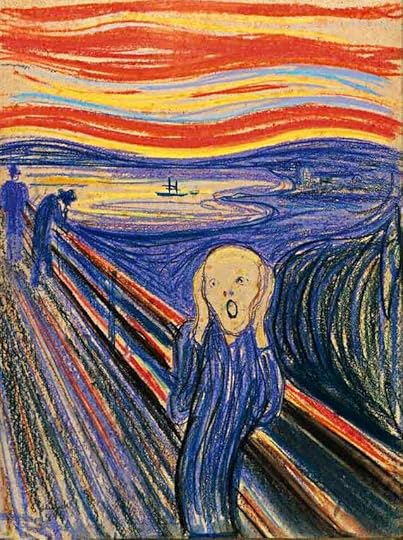
A atribuir-lhe um rosto, seria este:
description
(O Grito, Edvard Munch @ 1893)
Profile Image for Brendan Monroe.
684 reviews189 followers
August 24, 2019
There's a publishing house I discovered last year called Open Letter Books that only publishes authors in translation, which is to say, foreign fiction, something I especially love, so I bought a subscription and now, each month, I get a new book in the mail, books and mail, two other things I happen to love, all of which goes someway towards explaining why I'm writing in nothing but run-on-sentences, which is the style of this month's book, "The Translator's Bride", a masterful little Portuguese novel, only 117 pages, by João Reis, who not only wrote the book, but also translated it all himself, and while I haven't read a great deal of Portuguese fiction in my time, or perhaps I have and am simply forgetting it, this highly eccentric novel makes for an excellent debut, yes, the run-on-sentences and Reis' apparent hatred of periods, that'd be full stops to you British folk, do take some getting used to, even for me I initially found this to be a case of style over substance, but after a couple of chapters I found myself so swept away by the narrator's wildly amusing inner thoughts that I hardly noticed the lack of periods, but was instead reminded of other books with unique styles, books like Erlend Loe's Naïve. Super, or Céline's Journey to the End of the Night, the latter of which seems to have certainly served as an inspiration to João Reis when writing this book, which shares something of Céline's bleak tone though it is, thankfully, enlivened by a wicked sense of humor throughout, at the expense it must be said of the inhabitants of this Portuguese, is it Lisbon? is it even Portuguese?, city, who our protagonist, the titular translator, portrays as dimwits and the city itself as a festering dunghill choked with unbearably rancid odors, though this is certainly colored by the fact that our translator's bride has just left him aboard a ship across a great expanse of ocean which may or may not be the Atlantic, if the city is in fact Portuguese, her departure at any rate casts our translator into an unbearable funk that sees him screaming the word "kartofler" at the comic figures he comes across, though he can't remember what the word means or even what language it's from, for the record, it's Danish for potatoes, and the way these characters seem to cower in the face of this insult is really amusing, reminiscent of a time or of other books in which words truly did have great power connected with them, in short, if one massive run-on-sentence such as this could ever be called short, this is a very fun, very readable little novel well worth picking up, don't let the lack of proper punctuation dissuade you.
Profile Image for Manuel Alberto Vieira.
Author 67 books178 followers
April 11, 2017
Tarefa difícil, esta de trabalhar no fio da navalha sem em momento algum afrouxar a firmeza do punho. Mas é o que aqui acontece, fruto de apurado engenho e leituras sólidas.
Vejo neste livro uma dança num ringue de boxe, sem pugilistas porém, os nossos medos, angústias, fúrias a fazerem-lhes as vezes.
Um compromisso entre o punho cerrado e a mão leve, tão arrojada quanto contida, para que nunca se abra por inteiro a cortina. Ela apenas é soprada pela subtileza do branco humor negro.
Uma novela notável.
Profile Image for Lee Klein .
911 reviews1,055 followers
October 23, 2019
This book is really a snack-sized, delightful, Euro Lit joke. It’s set in the early 20th century, time of the brooding boarding-house bros, the kind they're spreading lies about or traducing (depending on your translation). It’s easy to imagine Kafka’s K. or Roth’s holy drinker living down the hall from this short novel's narrator, translator without hat, with soiled tie, whose bride done left him, who’s just getting by on mushed peas, dreaming of buying a house or leaving the country, who primarily refers to people as scoundrels and smells sulfur when around pretty much anyone. Even when a publisher agrees without issue to make good on a late payment for his translation services the agreeable act results in curses and -- like “you dropped your books” in Hamsun’s Hunger when a young lady has not dropped her books at all -- semi-psychopathic enunciation of the novel’s mysterious keyword, kartofler, which seemed to me to suggest “flowery letter” but ultimately is revealed to mean something unexpectedly bathetic (in Danish, per Google). Throughout it all there’s an expectation that period-less paragraphs of ranting (is stringing sentences together with commas instead of periods a la Saramago particularly Portuguese?) will relent in the end and our hat-less translator hero will have a change of heart about humanity etc but alas -- Zeus! -- instead he , undermining the expectation, releasing the pressure, thereby eliciting a final silent yet satisfying laugh from this reader. Despite all the bile and belligerent spew, it's a fun read when considered as a sort of serious or believable (not exaggerated or slapstick) parody of those troubled young male artist novels of pre-WWII Europe. Also interesting in that it’s translated by the author -- the language often comes off like an early 20th-century translation, perfectly befitting the world of the story.
Profile Image for Os Livros da Lena.
298 reviews319 followers
July 13, 2021
Opinião A Noiva do Tradutor, de João Reis

Não bastava a noiva ter o melhor nome que existe: Helena (sim, um momento egomaníaco como o nosso Tradutor nos ensinou), o João oferece-nos neste livro tudo aquilo a que nos habitua na sua restante obra em geral, e no livro Se Com Pétalas ou Ossos, em particular. Aqui, o cunho do autor está apuradíssimo. Senão vejamos.

Sob pena de me tornar repetitiva, saibam que o sentido de humor, a ironia, e a acidez da escrita do João são algo irrepreensíveis, como não podia deixar de ser, também neste livro.

“ - Ora, não exageremos.
- Mas qual exagero, olhe para si, pronta a servir Odin, toda vaporosa, bem acima dos reles humanos!
(…)
- E eu? - consegue, a custo, grunhir o estudante.
- Você é um duende. Um daqueles duendes, um fauno, talvez um dos servidores de Baco. sim, você é um pequeno bácoro.
- Ah, sou um bácoro.”

A crítica e o desdém a um país obsoleto mas que se crê grande, em que o nosso Tradutor vive? Confere.

“aqui vive um povo que não se governa nem se deixa governar, um povo criado para partir”

“o nosso povo aprecia uma boa desgraça, é um povo dado a chorar, tem pouco sentido de humor, gosta somente de brejeirices, a subtileza é-lhe desconhecida, assim é este povo, boçal e ignorante”

“neste país (…) tudo gira ao contrário, somos primitivos mas não faz mal, come-se bem por cá, dizem”

A crítica ao mundo da tradução literária (a par com a crítica ao mundo da escrita literária de Se Com Pétalas Ou Ossos)? Confere. Aqui, com personagens desenvolvidas e vívidas como Valido, um “proglótide, uma ténia”, e Szarowsky, pobre coitado que “não chega a ameba, com sorte poderia ser uma varejeira”.

“O imbecil pergunta-me o que me traz por cá, como se não existissem motivos suficientes para o visitar todos os dias até morrer (…)”

O protagonista egomaníaco, atormentado com o que ele próprio é, e a sua capacidade de lidar com o mundo que o rodeia, em muito semelhante a Rodrigo, o escritor de Se Com Pétalas Ou Ossos? Confere.
A relação com a comida e a fome, a náusea, a vertigem? Confere, também.

E a dona Lucrécia e as ervilhas! Que maravilha o carinho odioso na relação com dona Lucrécia!

Querem saber mais? Vão ler o livro. Não tem uma palavra supérflua (também confere), e abunda em inteligência e conhecimento do comportamento humano. Cada vez fica mais difícil ter um favorito de entre os livros do João. Para quem não for ler, e para quem for também, só tenho uma coisa a dizer: Kartofler, Kartofler, Kartofler!!!

Deixo-vos a playlist habitual no Spotify, com o título do livro.
Profile Image for jeremy.
1,202 reviews309 followers
January 20, 2019
the debut novel from portuguese author and translator joão reis, the translator's bride (a noiva do tradutor) is the darkly charming tale of a cantankerous, misanthropic translator and his quixotic quest to win back his betrothed (all the while having to endure the utter exhaustion that is other people). reis's witty story is enlivened with black humor and a singular portrait of a man trying to contend with a world that seems altogether aligned against him. the translator's bride is a neurotic little gem: fast, fun, frenzied, and feisty.
we live in a gross world, wallow in the mud, there are no friends, only self-seekers, they suck us dry, break our bones and gulp down the marrow, it's a delicacy, if your job is as so and so they remember you, if you stop working as so and so, they never acknowledge you, they're true thugs, if one travels abroad they're flattering, want to know where one's been traveling to, if one travels a few miles they're not in the least interested, they want to know nothing, even if one's seen a dragon spitting fire over a stunning landscape, these people cherish mere shells, the pretend-to-be illusions of their peers, they live with inner traumas never dealt with, i'm no different, i'm part of this cursed species, i was born a man, cannot stop being who i am, maybe i can, at the most, be less a man and a bit more a person

*translated from the portuguese by the author himself (!)

4.5 stars
Profile Image for Paula Fialho Silva.
224 reviews117 followers
April 29, 2019
Adorei o tradutor rezingão que com o seu humor sarcástico critica o mal que vê à sua volta. Que poder libertador tem por não ser politicamente correto.
Profile Image for João Reis.
Author 108 books613 followers
Read
May 17, 2021
Além do livro físico, a editora brasileira DBA disponibiliza «A noiva do tradutor» também em formato e-book.
Já disponível em várias plataformas online.
Profile Image for Maria Ferreira.
227 reviews50 followers
July 29, 2017
Conheci esta noiva há algum tempo, pela mão de Jorge Navarro, meu colega de profissão, embora de áreas diferentes. Jorge faz um paralelismo, entre esta obra de João Reis, e a obra de Patrick Süskind, o "O Perfume", sendo esta para mim uma das melhores obras que já li, e que guardo na memória.

“á também uma ligação muito forte e bem conseguida à obra mais emblemática do escritor alemão Patrick Süskind "O Perfume". Dificilmente o leitor mergulha em "A Noiva do Tradutor" sem se recordar do primeiro capítulo de "O Perfume", pejado e intenso de odores nauseabundos que refletem não só a sociedade em si, mas a forma como a mesma funciona.” Jorge navarro in “O tempo entre os meus livros”

Eis que surge novamente a noiva, agora trazida pelo braço de Nelson Zagalo, cujo discurso tanto me encanta, pela sua forma da escrita, eloquente e bela, não resisti, tive que ler “A noiva do Tradutor”.

O tradutor é um personagem honesto, desorientado, desprovido de bens materiais e financeiros, tem dificuldade em afirmar-se profissionalmente, e para cúmulo, o único apelo a uma vida aprazível foi embora. Na tentativa de dar algum significado à sua pobre existência, alimenta a esperança de encontrar a sua noiva.
É um homem intelectual, galanteador e perspicaz, observa o mundo à sua volta, mas só enxerga a doença, não do corpo, mas sim da mente: da ignorância, da falsidade, da avareza, do xico-espertismo, da corrupção e da ladroagem.

“- Claro, dona Lucrécia, uma cozinheira tão boa, uma senhora tão altruísta, um coração de ouro puro, maciço, nesta sala de jantar entro numa genuína cena mitológica, uma valquíria diante de mim (…)." (p. 25)”


O tempo e o espaço

Disse-o algures por aqui, que cada leitor cria um desenho e realiza um filme diferente perante a mesma obra. Para Nelson, esta história teria como cenário o inicio do século XX, para o Jorge, o drama dar-se-ia no após 2ª guerra mundial, para mim seria o presente, apesar do progresso e avanço tecnológico, não conseguimos ainda erradicar esta doença que nos infecta a mente e prejudica o corpo. Quanto ao espaço, todos concordamos com o continente europeu, apesar do Jorge e eu identificarmos muitos destes traços, senão todos, nos rostos do povo português.

“se entrasse no banco sem gravata diriam que roubava o cheque, enquanto um homem como o Szarowsky, impecavelmente aprumado da cabeça aos pés, deve dinheiro a meio mundo,….mas quando o senhor advogado lhe pede mais fato, nunca o recusa, este povo verga-se facilmente, é dócil, mata-se entre si mas nunca olha para o alto, Helena partiu e estará melhor no seu destino, esta terra está condenada, desde o inicio dos tempos, aqui vive um povo que não governa nem se deixa governar, um povo criado para partir, pululam como ratazanas num monte de estrume, estou rodeado de esterco, o que faço aqui?” (p. 64)”


Helena partiu, como partem todos os anos milhares de pessoas em busca de oportunidade, deixando para trás o conforto da casa, o contacto e o carinho diário da família, sendo explorados e remetidos a sofrer em silêncio, no recanto da sua solidão. Mas, há também, os que não precisam de partir, esses, filhos dos bem-aventurados, que por uma questão de berço, e nada mais, não sentem estas preocupações, têm o futuro garantido. E outros, que por talento e engenho do xico-espertismo conseguem singrar na vida.

“Sim, as referências, não há nada como ter uma boa referência para progredir na vida, nesta cidade uma referência tem mais valor do que o trabalho, a honestidade, as competências, o esforço, é assim que as coisas são(…)." (p. 92)”

A obra e o autor

Uma obra fabulosa, com uma escrita baseada no pensamento e sentires do personagem, de forma não linear e bem-humorada, que nos envolve rapidamente na trama e não nos deixa sossegar enquanto não chegarmos à ultima página. Um bom livro, sem duvida, para ser incorporado no Plano Nacional de Leitura como leitura obrigatória, no 3º ciclo.
É um autor que promete dar que falar como refere o Jorge Navarro:

"A Noiva do Tradutor" apresenta-se como um pequeno grande livro que traz consigo uma lufada de ar fresco no que respeita ao panorama editorial português do momento, afirmando-se como uma excelente proposta de leitura que dificilmente se esquecerá.

Nota: deixo uma hiperligação para o sitio onde se encontra a exposição completa do Jorge Navarro a esta obra.
http://otempoentreosmeuslivros.blogsp...
Displaying 1 - 30 of 142 reviews

Join the discussion

Can't find what you're looking for?

Get help and learn more about the design.