The internationally bestselling author of The Anarchy returns with a sparkling, soaring history of ideas, tracing South Asia's under-recognized role in producing the world as we know it. For a millennium and a half, India was a confident exporter of its diverse civilization, creating around it a vast empire of ideas. Indian art, religions, technology, astronomy, music, dance, literature, mathematics and mythology blazed a trail across the world, along a Golden Road that stretched from the Red Sea to the Pacific.
In The Golden Road, William Dalrymple draws from a lifetime of scholarship to highlight India's oft-forgotten position as the heart of ancient Eurasia. For the first time, he gives a name to this spread of Indian ideas that transformed the world. From the largest Hindu temple in the world at Angkor Wat to the Buddhism of China, from the trade that helped fund the Roman Empire to the creation of the numerals we use today (including zero), India transformed the culture and technology of its ancient world – and our world today as we know it.
Librarian Note: There is more than one author by this name in the Goodreads database.
William Dalrymple was born in Scotland and brought up on the shores of the Firth of Forth. He wrote the highly acclaimed bestseller In Xanadu when he was twenty-two. The book won the 1990 Yorkshire Post Best First Work Award and a Scottish Arts Council Spring Book Award; it was also shortlisted for the John Llewellyn Rhys Memorial Prize.
In 1989 Dalrymple moved to Delhi where he lived for six years researching his second book, City of Djinns, which won the 1994 Thomas Cook Travel Book Award and the Sunday Times Young British Writer of the Year Award. From the Holy Mountain, his acclaimed study of the demise of Christianity in its Middle Eastern homeland, was awarded the Scottish Arts Council Autumn Book Award for 1997; it was also shortlisted for the 1998 Thomas Cook Award, the John Llewellyn Rhys Prize and the Duff Cooper Prize. A collection of his writings about India, The Age of Kali, won the French Prix D’Astrolabe in 2005.
White Mughals was published in 2003, the book won the Wolfson Prize for History 2003, the Scottish Book of the Year Prize, and was shortlisted for the PEN History Award, the Kiryama Prize and the James Tait Black Memorial Prize.
William Dalrymple is a Fellow of the Royal Society of Literature and of the Royal Asiatic Society, and is the founder and co-director of the Jaipur Literature Festival.
In 2002 he was awarded the Mungo Park Medal by the Royal Scottish Geographical Society for his ‘outstanding contribution to travel literature’. He wrote and presented the television series Stones of the Raj and Indian Journeys, which won the Grierson Award for Best Documentary Series at BAFTA in 2002. His Radio 4 series on the history of British spirituality and mysticism, The Long Search, won the 2002 Sandford St Martin Prize for Religious Broadcasting and was described by the judges as ‘thrilling in its brilliance... near perfect radio’. In December 2005 his article on the madrasas of Pakistan was awarded the prize for Best Print Article of the Year at the 2005 FPA Media Awards. In June 2006 he was awarded the degree of Doctor of Letters honoris causa by the University of St Andrews “for his services to literature and international relations, to broadcasting and understanding”. In 2007, The Last Moghal won the prestigous Duff Cooper Prize for History and Biography. In November 2007, William received an Honourary Doctorate of Letters, honoris causa, from the University of Lucknow University “for his outstanding contribution in literature and history”, and in March 2008 won the James Todd Memorial Prize from the Maharana of Udaipur.
William is married to the artist Olivia Fraser, and they have three children. They now live on a farm outside Delhi.
Walking down the streets of Bangalore with a Thai colleague, we came across a house with Sharda Nilayam written on a plate in English. “Sharda’s house?” she asked. I was impressed. There was a movie poster with the name Swami. “Does Swami mean husband?” she asked.
Bewildered, I nodded Yes! How did a Thai girl who’d just flown in to India for the first time, have such amazing language skills, I wondered.
Later as my work took me to Thailand and further Eastwards I discovered the answer. My Thai colleagues had a mother tongue based on Sanskrit. They believed that the Ramayana was actually staged in their land. Rama was the king of Authhaya and Sita was kidnapped by a demon king in the South. “So where is this Lanka where Sita was taken to?” I challenged. Langkawi in Malaysia came the prompt answer.
I visited the Bramha temple in Bangkok (Para Bramha becomes Phra Phrom in Thai) and the locals gave me very strange looks as I prayed at the Ganesha temple in Silom (Vignesh becomes Pikaner in Thai, loves prasadam of fried fish and Coca Cola complete with a drinking straw).
I discovered an Indonesian colleague who had a beautifully classical Indian name - Vidyastuti. Not just East Asia. I realized across my travels in the Middle East, Central Asia and Africa that Indian travellers, teachers and traders had been there centuries before Christ.
William Dalrymple’s latest magnum opus The Golden Road: How Ancient India Transformed The World talks about this concept of the Indosphere.
Having pre-booked the tome, it just got delivered to my Kindle. I have just dipped into the book and already past a few dozen pages, and I am loving what I have read so far. It is classic Dalrymple – meticulously researched with accurate word portraits depicting historical events. These are supported by delving in to the modern discoveries that unearthed these facts.
I am a self-confessed Dalrymple fan-boy and am looking forward to reading more of the book. This weekend is going to be wonderful, methinks!
It is a good book, but not great. You already know what you are going to get by just looking at the title - the case for India being a more important culture exporter than China, more than has been acknowledged in the past. However, it comes across as too argumentative and unbalanced.
To William’s credit, he has highlighted a lot of research (such as eye opening statistic that the Red Sea port of Berenike probably contributing to almost a third of the Roman empire’s revenue); found fascinating individuals (like Vajrabodhi the Buddhist merlin); and shone the light on non-intuitive connections (Buddhism came to dominate China as a result of a woman’s desire for power).
However that said, it also reads like a one-sided rhetorical argument, instead of being a balanced historical account. After reading the book, one would be forgiven for thinking that peoples who interacted with Indian science, philosophy, and religion were dumb oafs, tabula rasas, who merely took the Indian sciences and replicated it. Such as Javans making a replica (albeit larger) temple in Borobudur, or Buddhism in China being a direct transplant from India.
There isn’t enough written in the book about how Indian culture itself came about by its interactions with the outside world. And the fact that Indian culture wasn't concocted in a sealed Petri dish. Further, there isn’t too much colour on how the rest of the world took Indian ideas added their own insights and made these ideas stronger than they were when in India. For example, the idea of Indian numbers being incorporated by the Arab is true, but on reading the book one gets the sense that the Arabs did nothing other than copy the Indian texts and later passed it on to the Europeans. However, it is also true that Arabs advanced the ideas of algorithms, chemistry that used Indian numerals and science, but reached greater heights than the Indians had managed to do. This context consistently gets missed in the book.
This one-sided discourse in the book tilts the balance towards it coming across as a (very well researched) rhetorical essay, as opposed to being a balanced historical evaluation of India’s place in Eurasian achievements.
The book would have been stronger, if it has made more of an effort to acknowledge that knowledge and ideas ricochet between peoples and get richer and better with more interaction, and it wasn’t a one-way export from India, even during India’s Golden Age.
Fascinating look at India's massive cultural influence on the ancient world. I had no idea that Arabic numerals in fact came from India, and there's a ton of interesting stuff about trade routes and the spread of religions. Well written as always and very knowledgeable.
“Many of these advances took place under the rule of one of India’s most celebrated dynasties, the Guptas, who presided over large swathes of the Gangetic plain of north India from the early fourth to the late sixth century ce. This was a moment of supreme self-confidence in Indian civilisation, when its arts, philosophy and learning were most widely admired.” Dalrymple is here looking at the history and influence of India (or the Indosphere, the term Dalrymple uses) up to about the thirteenth century. He explodes a few myths and explains some basic historical facts we should all know. For example the enormous amount of trade between India and the Roman Empire. Literally tons of Roman coinage has been found in India and luxury goods from India found their way to the rich in Rome (cloth, spices, pepper, jewellery, ivory, hardwoods, oils and glass). Ideas also moved as India was also a religious and philosophical superpower. Dalrymple charts how Buddhist ideas affected Greek and Roman thought. Buddhist monks certainly reached Europe and were most likely around in the Middle East throughout the Roman period. The spread of scientific ideas was equally important: many of our most basic mathematical and astronomical ideas come from India: the decimal system, algebra, trigonometry, the algorithm, modern number systems, even chess all come from India. Eventually all of these ideas reached even the backward Christian Europe, often via Moorish Spain or the Arab civilisations of the Middle East. Dalrymple explodes the myth of the Silk Road between China and the West as well: “The existence of the ‘Silk Road’ is not based on a single shred of historical or material evidence. There was never any such ‘road’ or even a route in the organisational sense, there was no free movement of goods between China and the West until the Mongol Empire in the Middle Ages, silk was by no means the main commodity in trade with the East and there is not a single ancient historical record, neither Chinese nor classical, that even hints at the existence of such a road. The arrival of silk in the West was more the result of a series of accidents than organised trade. Chinese monopoly and protectionism of sericulture is largely myth. Despite technology existing in ancient China far in advance of anything in the West, most of it did not reach the West until the Middle Ages (usually via the Mongols) when much of it was already up to a thousand years old. Both ancient Rome and China had only the haziest notions of each other’s existence and even less interest, and the little relationship that did exist between East and West in the broadest sense was usually one-sided, with the stimulus coming mainly from the Chinese. The greatest value of the Silk Road to history is as a lesson – and an important one at that – at how quickly and how thoroughly a myth can become enshrined as unquestioned academic fact.” There is a great deal in here and it is an excellent book which debunks a number of myths we have in the West, illustrating how much the West is influenced by the Indosphere.
If you’ve ever wondered about where our numeral and decimal systems come from, or why we came to use negative numbers, or how Buddhism became so prevalent in East Asia, or why the largest Hindu (and religious) structure in the world is located in Cambodia, it would be hard to find a better place to start than this book.
There are a number of general histories of India, and we also have histories of the Persianate age, the Mughal era, and British India. But there was a huge gap in the market for a focused history of the era from around 300 BC to 1250 AD. Dalrymple has finally filled it in what is perhaps his most ambitious work yet. His previous books mainly focused on the Mughal and British periods, but it’s clear from reading The Golden Road that his interest in ancient and medieval India goes back decades.
The book is particularly good at illuminating active debates among historians. I had assumed, for instance, that Gandhara art was mainly influenced by the Indo-Greeks in places like Bactria. Not so, argues Dalrymple, who points out that the art emerged almost 200 years after the last Bactrian kings reigned. He suggests that Gandhara art owes more to the Romans than to the Greeks. Dalrymple also challenges the prominence of the ‘Silk Roads’ thesis, following Warwick Ball in positing that the Indo-Roman maritime trade was far more important to the world economy than the overland silk routes. In the acknowledgments, he notes that he has had spirited disagreements with his Oxford colleague Peter Frankopan, the author of Silk Roads.
As for the things I knew a little about, the author adds a lot of substance. For example, his description of Xuanzang’s long journey to and subsequent stay at the university at Nalanda is exquisite, as is his fascinating account of how Buddhism became particularly popular among the merchant classes in ancient India (who then spread the religion on their travels). Dalrymple’s elucidation of the alliance between the Chola and Khmer empires, and their mutual interest in weakening the Srivijaya confederation’s control over the Strait of Malacca, added colour to what I knew about the Cholan expansion into south-east Asia.
There was perhaps less on some topics (particularly the history of medicine) than I was hoping for, but the book was already so sweeping. Indeed, the beginning or end of each chapter might have benefited from a summary or timeline of key events (or, for that matter, sources such as mathematical manuscripts and graffiti left by traders in Red Sea caves). The breadth of the book does also inevitably mean that some parts will be more interesting than others to many readers. Overall, however, whether the reader is interested in the history of trade, religion, art, architecture, mathematics or all of the above, there’s something for everyone.
I've resolved to read William Dalrymple over the next year.I have read only one book of his so far, his travelogue of Delhi, The City of Djinns
His latest book is a treat, tracing the spread of Indic culture through Southeast Asia and China as well as the dispersion of Indic science through the Arab world and, ultimately, Europe.
Starts with the origin story of Buddhism as one among the many of the heterodox religions that sprouted as a reaction to the Vedic practices of ritualization and animal sacrifice and its ascent under Ashoka.
Establishes the trading routes to Basra and more importantly, Roman Egypt's port of Berenike where the author claims that imports from southern India could have made as much as 1/3rd of the tax revenues of the Roman empire uptil 1st century CE.
Illustrates the fortuitous spread of Buddhism in northwestern China due to the ascension of unconventional Empress Wu Zeitan in the 7th century CE, who ultimately made Buddhism the state religion of the empire.
Reveals the growth & adoption of Buddhism among the coastal kings and populace of Southeast Asia from the 4th century CE onwards.
Covers the origins of the kingdoms behind the two most remarkable preserved Indic structures, the Buddhist Borobudur & Hindu Angkor Wat temple complexes.
Shows the diffusion & widespread adoption of advanced mathematical texts written in India, primarily during the rule of the Gupta dynasty, towards the Abbasid caliphate and to the wider Islamic world.
And eventually, traces these translated manuscripts as they make their way to Europe via the established of Christendom in Toledo, where Indians manuscripts translated by Islamic scholars were further translated into Latin.
The one minor pet peeve I had while reading this book is the comparative references to European equivalents, such as Library of Alexandria when discussing Nalanda's library.
I can understand why the author does so as it provides a frame of reference for the reader.
However, I think the ancient and medieval history of the subcontinent can stand on its own without requiring allusions to their European counterparts.
In 1877, a Prussian geographer named Baron von Richthofen (grandfather of the World War I flying ace the ‘Red Baron’) was given the task of planning a railway line between Berlin and Beijing, with a view to expanding German influence eastward. Richthofen plotted a route, which he dubbed die Seidenstraßen, ‘the Silk Roads’. Richthofen may (or may not) have coined the term, but it became a popular one to describe the spread of culture, knowledge, art and commerce that came to be associated with China and its relationship with the west.
In The Golden Road: How Ancient India Transformed the World, however, historian William Dalrymple sets out to prove that well before China was regarded as the cultural powerhouse of the world, it was India that claimed this epithet. Moving in roughly chronological order, from the time India was a ‘sinkhole’ for Rome’s gold, to many centuries down the line, through spaces as wide apart as Europe and Cambodia, China and the Middle East, Dalrymple traces India’s impact on the world. Through religion, through culture, through knowledge. At times an impact that literally translated into gold: the gold flowing into India through its flourishing trade with the West, or through the gold India mined in South-East Asia. Equally often, though, that ‘gold’ is a metaphor, an indication of the preciousness of the knowledge, the aesthetics, the skill that flowed out from India and across the globe. The ‘Golden Road’, as Dalrymple calls it.
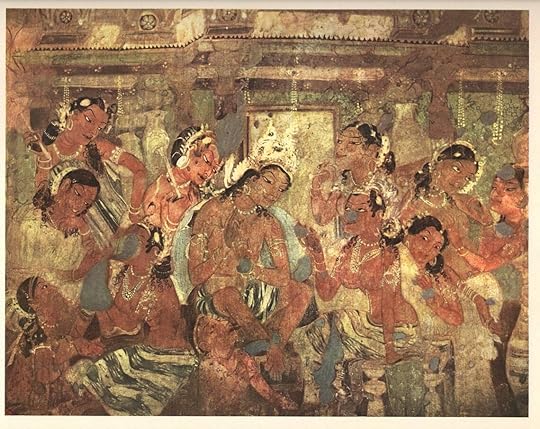
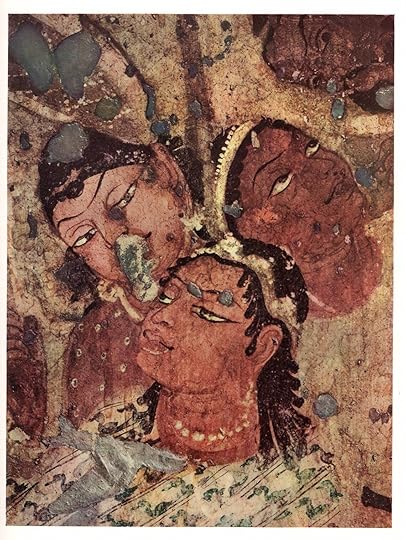
After the introduction to the book, Dalrymple begins with a stirring account of the discovery (in April 1819) of the caves of Ajanta near Aurangabad, and uses this to pole-vault into a discussion on the origins and development of Buddhism in India. He ties this into some factors that led to the spread of Buddhism outside India: the travels of Buddhist traders, for instance, and the proselytization by monks. This story of Buddhism as an export comes into its own later in the book, when Dalrymple discusses the close connections between ancient China and India as a result of Buddhism: the life and times of the famous Xuanzang, who travelled, a fugitive from Tang China to Nalanda to study at the university; and Xuanzang’s later patroness, the ambitious Empress Wu Zetian, whose work to propagate Buddhism was a major factor in its spread in China.
Woven in, too, are descriptions of the trade with Europe: with the Greeks, and with the Roman Empire, importing everything from ‘Indian ivory mirrors, boxes and carved furniture’, to wild animals, spices, and pepper: expensive luxuries that drained (according to Pliny) the Empire of ‘at least fifty-five million sesterces’ a year. India and its goods were all the crack in Rome, and in the areas dotting the sea route between India and the Mediterranean.
With the collapse of the Roman Empire, this trade declined, but Dalrymple explains how, in the meantime, India’s links with South-East Asia strengthened, both through flourishing trade networks as well as through the dissemination of Hinduism. This, combined with the impact of Indian influences on art, language, architecture, etc, created an Indosphere that is palpable even to this day.
Among the most interesting, and far-reaching, effects of India on the world, however, is what Dalrymple ends the book with: the gift of mathematics, and of its related field of astronomy. How zero made its way West, how Indians were once acclaimed far and wide as the best mathematicians around, and how, in essence, India’s contribution to accountancy helped facilitate commerce in Europe.
Dalrymple, of course, is known not just as a historian but a storyteller par excellence; and both qualities are on display in The Golden Road. The research is mind-bogglingly wide-ranging, taking into its ambit not just India but much of the Old World as well: through archaeological evidence, documents, and more. While the author does a very good job of collating the facts, his ability to put those facts together in a lucid and interesting manner is what makes this book so absorbing. There are interesting bits of trivia here (Caligula’s consort Lollia Paulina, for example, wore forty million sesterces’ worth of Indian emeralds and pearls, and carried around the receipts to prove it). Of particular note is the way Dalrymple works into his text the lives of key individuals—Xuanzang, Wu Zetian, Mahendravarman Pallava, Khalid ibn Barmak, the Holy Roman Emperor Frederick II among them—who were instrumental in the spread of Indian knowledge.
At a time when there are many tall claims about India’s glorious past, this book is invaluable: because it shows, through solid historical research, what India’s actual contributions to the world were. And what we should really be proud of.
This book is the story of how the Indian subcontintent had a huge influence on the cultural, religious, and intellectual development of Asia. Buddhism spread form India to become a major force in China and other Asian countries through centers of learning like Nalanda visited by great men like Xuanzang whose name is still revered today. Hindu influence can be found at Ankgor Wat with the stories of the Hindu religion depicted in the impressive artworks. A more significant contribution to world civilization can be found in mathemathics that can to Europe through the Islamic scholars that brought it to Spain and then past to European centers of learning. The Italian Fibonacci wrote a book that showed the Italian merchants the advantages of Indo-Arabic numerals over the Roman numerals. converting weights and measures, converting currencies, and making calculating sums faster. This book also had a section on the wealth had the Buddhist monastaries that existed in India which seems incongrous with a religion that always seemed to reject material gain. Those early adherents included merchants that spread the religion through trade and being rich was the sign of good karma. This does not seem like a spiritual path to me. Overall this was a great book for someone seeking to study an un explored area of history like I was.
While informative with a well constructed narrative, this is more of a tedious read than the other Dalrymple books I have read. Sentence for sentence, Dalrymple is one of the best historians writing today. It pains me to give his latest book only three stars, but it lacks the narrative punch that 'Return of a King' has. This book is for history nuts who are fascinated by the spread of religion, or the building of temples, or the establishment of new trade routes. I found much of it interesting, but I recognize it is a dry read at times as well. Solid three stars. Please go read 'Return of a King' though. It is one of my favorite history books I have ever read.
William Dalrymple's essential thesis is that there existed an Indosphere roughly "from about 250 BCE to 1200 CE when India was a confident exporter of its own diverse civilisation, creating around it an empire of ideas which developed into a tangible 'Indosphere' where its cultural influence was predominant." Citing the congruence of various significant highpoint of the Indosphere he declares 664 CE as when Indospehere reached its peak. According to him this entire sphere of Indian influence has been hiding in plain sight and that the Golden Road all these diverse forms and geographies (that indicate the presence of the Indospehere) has never been recognised and named as a link connecting all these different places and ideas to each other. The Golden Road of the Open Oceans, he calls it. The "seductively Sinocentric concept of the Silk Road," he points as a 19th century construct and in many ways his The Golden Road concept both complements and upstages The Silk Road which he deems less persuasive for more reasons than one.
Divided into chapters that chronicle, assess, bring out and propose far-reaching Indosphere's diverse impact on religion, political systems, science and culture both eastwards and westwards, The Golden Road in many ways enriches our understanding of that time. Comprising of sea routes governed by the monsoon as well as land routes that were the passageways of this outward export of commerce and ideas Dalrymple's envisioning of the historical Golden Road is bound to stir and sustain intellectual dialogue. He posits that this centrality of the Indosphere to a rich dissemination of ideas and ideologies during this period has been underemphasised; underlining, however, than when it followed pluralistic and syncretic traditions that allowed for cross-fertilisation of ideas and cultures was the time when India was at its most vibrant and productive in multifarious ways.
There are facets of this thesis that are quite plausible but there are also others where the tendency of historians to stretch somewhat, overstate and fit historical evidence to a theory and hypothesis that they have developed and gotten attached to can arguably be detected. There is also the real danger that right wing elements who build their worldview and politics around some pristine and glorious past will selectively use parts of this book to both bolster their propaganda that there was once a golden age - a homogeneous and pure theocracy, polity and culture, later sullied and decimated by invaders, which was pristine and superior and hence deserving of replication at all costs. Such ideas and ideologies are of course often radical, intolerant, bigoted, xenophobic, historically inaccurate and dismissive of the various cultures and traditions that have enriched the hybrid cultures and traditions of South Asia. They also lead directly to active majoritarian persecution of minorities, such as what Hindutva imagines and practices.
To his credit Dalrymple's is a much more nuanced narrative and he vociferously underlines that what he is evoking was a tolerant, multifarious and often syncretic past and that the real strength of that era was the exchange and not imposition of ideas as well as the flowering of new ideas, styles and traditions when cultures intermingled and engaged - whether in the context of Indian exchanges of ideas and objects with SE Asia or with Chinese, Arab or European counterparts. But regardless, the chest-thumping reader will manage to find fuel here to reignite a much more parochial view of things.
The books is sweeping and meticulously researched (the notes, bibliography and glossary comprise over a hundred and fifty pages); there are several beautiful photographs and images (the black and white ones are particularly striking); and the text is brimful with remarkable insights, connections, descriptions and assessments. The quality of writing is what sets Dalrymple apart from most other historians for he has the style and descriptive flair of a fine novelist — there are passages that I reread simply because they are so lyrical, evocative and rich in their depiction of ruins, landscapes, art and architecture. There is frequent description of sculpture, paintings and architecture which makes this a very multifarious text that grapples with history, politics, culture, and theology as well as various forms of artistic expression.
Such is the vast sweep of the book that it merits to separately briefly assess the scope of its various constituent parts that have been used to build the larger theme and thesis. I must confess that the parts charm, inform and impress me more than the larger idea itself, though that too does have traction. The following are the parts and chapters.
A Gale of Stillness India: "The Sink of The World's Most Precious Metals" The Great King, King of Kings, Son of God The Sea of Jewels: Exploring the Great Library of Nalanda The Fifth Concubine The Diaspora of the Gods In the Lands of Gold 'He Who is Protected by the Sun' The Treasury of the Books of Wisdom Fruits of the Science of Numbers
A Gale of Stillness
The opening chapters carries some truly remarkable descriptions of the rediscovery of the Ajanta caves in the colonial era and other archaeological remains. It then dwells on the emergence of Buddhism and Jainism in India in the 5th and 6th centuries. It goes on to trace their growth through Kings Chandragupta Maurya and Ashoka and later through urbanisation and the benevolence of merchants (in the case of Buddhism in particular)
India: "The Sink of The World's Most Precious Metals"
This chapters elaborates on evidence of extensive sea trade between India and Rome and other markets in the West; the vast array of Indian exports and the resulting influx of precious metals into India.
The Great King, King of Kings, Son of God
This chapters describes the northward diffusion of Indian religion, culture and philosophy and dwells at length on the Kushans who patronised Buddhism (with capitals at Taxila, Pushkalavati and Bagram), allowing its spread to Tibet and China. Not just goods, but new ideas and new gods also traveled north. There is much here also on Buddhist architecture and art and the evolution of the style of sculpture (especially due to interface with Greek and Roman influences) as well as Buddhist theological doctrines, especially emergence of Mahayana Buddhism.
The Sea of Jewels: Exploring the Great Library of Nalanda
This chapter has a fascinating account of the travel of the Chinese traveler Xuanzang to India in the 7th century and particularly his stay at and descriptions of the great Buddhist monastery and university of Nalanda as well as some other similar complexes. We are led to discover also how Buddhism profoundly transformed China and how Buddhism itself in turn was changed and moulded by China. Also the founding of Chinese Zen Buddhism and use of Buddhism as a political tool and ideology. The travel to and fro of monks, the main characteristics of the times, and the Middle Kingdom transforming into an extension of the Indian Buddhist holy land are some of the additional themes explored.
The Fifth Concubine
The book's focus shifts to China and to the 7th century Empress Wu Zetian - the only woman who became empress in her own right in 3000 years of Chinese history - her rise to power from obscurity, palace intrigues, her projects, and her patronage and also political use of Buddhism. The Golden Road elaborates on how Buddhism eventually declared state religion and Indian ideas and customs imported to replace Chinese philosophy and court customs that opposed the rise of the new Empress. In other words, it was "an esoteric Buddhist coup d'état over the Chinese Confucian establishment."
The Diaspora of the Gods
The scene shifts to 6th and 7th century South East India, the Pallava dynasty, the rise of Shaivism, the Bhakti tradition, and the shift of trade, political vision, Sanskrit and literary aesthetics towards the east. According to Dalrymple, as the Golden Road to the West began to close up its eastern branch became more important and there was an extension of the Indosphere to include both sides of the Bay of Bengal. An Indianized art emerged in South East Asia but it selectively adopted features of Indian art. A free mixing of Hinduism and Buddhism, he says, was a striking feature of South East Asian religion. He persuasively describes at length also "the virtual extension of sacred geography of India to South East Asia" - "A sanskritic union of Monsoon Asia."
In the Lands of Gold
This chapter focuses on the emergence of Sumatra and Java as two of the world's most important Buddhist spiritual centers. It contains the mysterious history of the Buddhist complex of Borobodur - as a primary example of South Asian architecture coming of age, far from the shores of India.
'He Who is Protected by the Sun'
The gaze shifts then to the Khmers of Angkor - the marriage of Indian and Cambodian cultures, the influence of Indian and political and religious models, the wholesale welcome of Brahmins as well as the advent of a varied mercantile diaspora, the reimagining of the S.E Asian landscape, the role of Sanskrit, the art of writing and stories of Indian epics, aspects of Indian civilisation that made no impact on the Khmers, the Pashupatas (a new wave of wandering ascetic Brahmins - glowing, ghostly white), the merging of two supernatural worlds, the assumption of Hindu titles by royalty, Cambodian Shaivism, the development of the great Angkor Wat complex, the Cholas and their long distance overseas naval action in South East Asia as well as Chola Khmer alliances.
The Treasury of the Books of Wisdom
The focus on shifts again to the west and discussion of Indian mathematics and mathematicians and great appetite for the same in the Abbasid Court (8th and 9th century) and especially due to the fascinating family of Barmakids - bosom friends and ministers to the Caliphs, the founding of Baghdad and deep Arab appreciation for sciences and knowledge as well as cross-fertilisation of ideas incorporating Indian contributions, Bayt-ul-Hikma or House of Wisdom and other such Islamic centres of knowledge, the import of the concept of zero and the none numerical integers, history of development of mathematical concepts in India and the main mathematicians and astronomers as well as observatories and centers of learning such as Ujjain and the complex at Udaygiri, the import if stories, science, chess and healers by Abbasid courts, and the contributions of Muslim science towards European scientific intellectual and scientific revival.
Fruits of the Science of Numbers
This chapter chronicles Muslim Spain in its dying years, libraries of the Islamic world, enlightened knowledge-seeking rulers, and Muslim contributions to knowledge and transfer and diffusion to the North and to the West of this knowledge through enlightened European scientific men such as Gerard of Cremona and Ghalib the Mozarab, Gerbert of Aurillac, Michael Scott, Adelard of Bath, Roger II (The Baptised Sultan) and Leonardo of Pisa (Fibonacci), the connections of some of these ideas to Indian knowledge of mathematics and science, and the modern usage and benefits of these knowledge forms.
Here are the links to my two part vlog on this book
Dalrymple's Magnum Opus Illuminates India's Ancient Global Influence
In his latest masterpiece, William Dalrymple takes readers on an epic journey along "The Golden Road" - a vast network of cultural and intellectual exchange that once stretched from the Red Sea to the Pacific. This sweeping historical narrative aims to restore India to its rightful place as the forgotten heart of the ancient world.
Key Insights:
• For over 1,500 years, India was a confident exporter of its diverse civilization • Indian ideas profoundly shaped art, religion, science, and culture across Asia • Dalrymple coins the term "Indosphere" to describe this sphere of Indian influence • The book highlights India's crucial role in the development of global trade, technology, and thought
A Dazzling Tapestry of Interconnected Histories
Dalrymple weaves together a rich tapestry of interconnected histories, bringing to life the bustling ports, glittering royal courts, and remote mountain monasteries that formed crucial nodes along the Golden Road. With his trademark flair for vivid storytelling, he introduces readers to an eclectic cast of characters:
• Intrepid Buddhist monks traversing treacherous mountain passes • Swashbuckling Arab merchants braving monsoon seas • Brilliant mathematicians unlocking the secrets of zero and infinity • Visionary emperors and sultans patronizing groundbreaking artistic and intellectual achievements
The author's passion for his subject shines through on every page. You can almost smell the incense wafting through ancient temples and hear the lively debates echoing in long-lost academies.
Challenging Eurocentric Narratives
"The Golden Road" serves as a much-needed corrective to Eurocentric historical narratives that have long marginalized India's pivotal role in shaping world civilization. Dalrymple persuasively argues that:
1. India was the ancient world's primary economic engine 2. Indian religious and philosophical ideas transformed vast swathes of Asia 3. Indian mathematical innovations (including the decimal system and zero) revolutionized global commerce and science 4. Indian art and literature profoundly influenced cultures from Persia to Japan
A Nuanced Exploration of Cultural Exchange
While celebrating India's far-reaching impact, Dalrymple avoids simplistic narratives of one-way cultural transmission. He skillfully illustrates how ideas flowed in multiple directions, undergoing creative adaptations and transformations as they spread across diverse landscapes and societies.
Bringing Ancient Connections to Life
One of the book's greatest strengths is Dalrymple's ability to illuminate the enduring legacy of these ancient connections. Readers will discover surprising links between:
• The architecture of medieval European universities and Buddhist monasteries • Philosophical debates in ancient Greece and India • Artistic motifs found in locations as far-flung as Java and Afghanistan
A Feast for the Senses
True to form, Dalrymple's writing is a feast for the senses. His evocative descriptions transport readers to:
• Sun-baked caravan cities teeming with merchants from distant lands • Mist-shrouded mountain temples reverberating with sacred chants • Opulent royal courts where poets and philosophers engage in spirited debates
Critical Perspectives
While overwhelmingly positive, a few potential criticisms of the book include:
• Occasional tendency towards romanticism in portraying pre-modern societies • Some readers may desire more in-depth analysis of economic factors • The vast scope sometimes necessitates broad generalizations
A Timely Message for the Modern World
"The Golden Road" carries a timely message for our increasingly interconnected yet fractious world. By illuminating the deep historical roots of cultural exchange between East and West, Dalrymple offers a powerful antidote to simplistic notions of civilizational clash.
The Verdict: A Monumental Achievement
"The Golden Road" stands as a monumental achievement in historical writing. Dalrymple has produced a work of immense scholarship that is simultaneously a gripping read. This book is essential for:
• History enthusiasts seeking fresh perspectives on world civilizations • Readers interested in India's rich cultural heritage and global impact • Anyone curious about the deep interconnections shaping our modern world
The Golden Road is not a perfect book, but it is a pretty-close-to-perfect book for me personally. I like reading about pre-modern eras, about the history of religion and science, about non-Western countries and about how cultures influence each other. This book ticks all these boxes and covers a couple of very specific interests of mine, such as the Buddhist kingdoms of Central Asia, the Khmer empire and the Indian and Arab science reaching Europe via Al-Andalus.
But while some of this was familiar to me, most of it wasn’t. My understanding of Indian history is very fragmented and shallow, plus Dalrymple uses some unpublished sources as well as his extensive correspondence with a number of leading scholars.
Does he sometimes overstate his case? Yeah, probably. But he is usually careful to note where he’s being controversial and one doesn’t need to agree with the interpretation of every single event to agree with his overall point. Which is that it’s high time we recognise the impact and influence India has had through the ages.
The result is a very readable and rich synthesis that is surely one of the best history books of the year - at least for the lay reader. If you enjoyed Peter Frankopan’s The Silk Roads (which Dalrymple quotes but also argues with, making a case for The Golden Road/Indian maritime trade being much more important than the silk roads until Pax Mongolica), you are very likely to enjoy this one, too. The two authors are friends and, it seems, love a good argument about ancient trans-Asian trade routes.
This hefty book was pretty much an extension of my arm for the one week I spent with it. I started out skeptical- I mean, we all know India was great at one point, a story we have been trying to rewrite ever since we have come on our own.
So, as Dalrymple started out with Buddhism (another favourite subject of yours truly), I was hooked. But as we travelled eastwards chapter after chapter, I felt recalibrating my hopes were in order. And then, he took off.
From China, Southeast Asia and Korea, we travelled back to Nalanda, to Ujjain and watched our discovery of zero, decimals, algebra, astronomy, astrology, even chess, gallop across the Arabic world. The 9 Indian numerals got tweaked a bit and for a long time everyone will think the easier alternative to Roman numerals came from the Arabs. Hell! The concept of universities was birthed here. Nalanda was here much before Oxford.
I was introduced to my country. Pallavas, Cholas, Guptas, Sindhis- so often just share a chapter or two in our school history books. But my God! What influential, vibrant humans ancient Indians were! To influence the inception of Angkor Wat, KungFu, Zen Buddhism and more was no mean feat.
For too long, we have believed the myth of impoverishment- that we were an uncultured lot that needed saving & more such bullsh!t. You read ‘THE ANARCHY’ & I dare you to stop the surge of red, hot blood-boiling anger at the Britishers.
Reading this one filled me with pride. I mean yes it is past laurels and how we must not rest on those. But this book is that brief moment of respite where you look at all that industry and acumen that your ancestors exercised and shaped the world into what it is today.
We don't take pride enough in our heritage. And therefore need non-indians to introduce our heritage to us. I'll call myself out- if an Indian historian had written this, I’d doubt half of it because I’d consider it debatable chest-thumping. But because Dalrymple, as Indian as a Britisher can be, says it (backed by rigorous research), I was less suspicious. Read this. You don't need a reason why.
I thought that he’d grown from storyteller to a historian. He has not . Too many unsubstantiated opinions , too little of understanding of complex philosophical issues .
He’s called a historian as a sale gimmick . The book is mere storytelling.
The publishers have roped in Salman Rushdie too . I thought he was an intelligent man . It appears otherwise now .
Read it for it’s engaging nature if you can ignore the childish deficiencies. If you can’t, you are intellectually well placed . It’s not a good book of history, merely a yarn !
Its a book that Indians should read. There are very few books that talks about India's contribution to the world in mathematics, religion/culture, art and architecture. But read it with a pinch of salt. The author seem to have some bias against Hindus. He projects a predominantly Buddhist history of India. Any contribution from Buddhists is a Buddhist contribution. Any contribution from Hindu is an Indian contribution. The subtle hate for Hindus and Brahmins is there throughout the book. Nevertheless, its a good read.
This is a wonderful journey into past worlds that have been little mined in at least English language culture and literature. Daleymple describes the artifacts, architecture, and myths of first century AD Buddhist and Hindu worlds, from South Asia's trade with the Greco-Roman world, to the syncretic kingdoms of India, China under Wu Zetian, and South East Asia, in Java and Khmer. The last chapters chronicle mathematical influence from India through the Arab world to 10th to 13th century Europe. If you're looking for inspiration for your next fantasy setting, there is much here.
“The Golden Road aims to highlight India’s often forgotten position as a crucial economic fulcrum, and civilization engine, at the heart of the ancient and early medieval worlds and as one of the main motors of global trade and cultural transmission in early world history, fully on par with and equal to China.”
This book contains an extensive historical analysis of India’s influence in ancient Eurasian civilization from approximately 250 BCE to 1200 CE. Dalrymple discusses the ways in which ideas and innovations, originating in India, spread throughout the world, and exerted a particular influence on Southeast Asia and China. It explores mathematical concepts, Buddhist and Hindu philosophy, art, literature, and trade practices. It relates how these elements spread across continents, from Angkor Wat to Chinese monasteries to European commercial centers.
The work is organized chronologically. It depicts the rise and eventual decline of what Dalrymple calls the "Indosphere." Dalrymple’s enthusiasm for his topic is obvious in his writing style. The book portrays India as an active cultural exporter rather than a passive recipient of outside influence. I recently watched a series of documentaries about the early history of India, which got me interested in the subject. I do not possess enough detailed knowledge about the content to provide any in-depth commentary, but I found it very informative. It certainly enhanced my understanding of world history.
It is interesting that the Western perspective of Asia, and India in particular, is generally skewed towards being “lesser than” the West. But way before the West was “westernized,” India and other Asian kingdoms/regions were centers of flourishing intellectual, engineering, architectural, cultural, religious thinking and trade that rival the modern world. The monsoon winds also helped drive trade routes carrying Indian influence far and wide. This book provides an insightful dive into that world in more of a storytelling mode than a historical timeline approach, which makes for a more interesting and intriguing read. There was a lot of information to digest. For those who may have little knowledge of ancient Indian history and culture, it could be daunting and mind boggling or conversely, exhilarating and motivating to be spurred into delving even deeper. For those in the former camp, view this book as dipping your toe, no, your whole foot into ancient India. For those in the latter camp like me, we’ll carry on exploring more of that world, post this book. Many thanks to the author, publisher, and NetGalley for the opportunity to read and review this book.
before this the only thing most like me knew the author was for his history books on the late medieval - early modern muslim-anglo interaction period, when he announced this book on ancient-early medieval era the first question was - "it seems like a book so different in scope from what he claims to be an experts of, will he deliver?" and i got the answer by reading this book, which as "ehhhh, its mediocre, it depends, but im leaning towards no if it means more than 15 pages of content"
it was a work of pop-history hacked together as one parcel, so how did he manage to do that about regions so different and with their own diverse trajectories, in a area of study so different from what he is used to?
here's how he managed to make an claim about the books title and aim
1. he mashed up many different regions from afghanistan to south indian zones as one imagined supra-entity, shabby such as some pop historian using greater middle east to capture innovations from persia, to egypt, to babylon and carthage as some imagined "singular entity" to make the anachronistic claims, instead of focusing on region by region information and data, using this he clearly messes up the data of an subcontinent, such as mixing up port data and wealth of little populated regions now in kerala, highly populated and resourecful tamil nadu, or that of gujarati traders up north,
2. he cant read a single language in its original and despite being a "professional" for many years he has refused to learn those languages despite a lot of wealth and resources. the entire book was him shabbily getting together data from other academic's books and their efforts glued together simplified enough to fit chapter basis. there was nothing interesting other than the 15 pages or so of content i spoke of earlier like xuazangs journey and china-india ideas of each other, or port merchants using wind to trade on speed or the few comments about europeans also appreciating indian books. overall the author is lazy and refused to do his own research or learn languages to read primary sources himself.
3. i lost track of the times he made a big claim and then went on to footnotes to let the reader know other more serious academics feel different than his absurd take, the lay reader may end up skipping the footnotes and do a damage to their intellect, bad standards
for an ideal example of how this genre of "how this/that changed the world" by an actually focused author is like would be tom holland's dominion on his idea of christianity, he does everything this author refuses to: learns the primary languages be it ancient or medieval to read primary sources, tries to also understand the world of different regions he wants to write on from their own lens instead of that of a 21st century liberal, doesnt depend on hacking together others works but write books that other less talented men will steal parts from.
overall while i appreciate the effort and intention. this book "The Golden Road: How Ancient India Transformed the World" was a low quality effort by an author to tackle a topic much larger than his work ethic and talent allowed.
The book Golden Road by William Dalrymple is a sweeping and fascinating exploration of the spread of India’s ideas, knowledge, and culture - eastward into Southeast Asia, China, and Japan, and westward into the Arabian Peninsula, the Levant, and Europe. I particularly loved the detailed deep dives into Southeast Asian kingdoms like the Khmer and Srivijaya, which brought to life the incredible reach and influence of Indian thought, art, and architecture. The sections on the transmission of Indian science, mathematics, and medicine through the Arabic scholars of the Umayyad and Abbasid Caliphates were equally engrossing. The role of figures like Fibonacci and the Barmakids in carrying forward these ideas into Europe was both enlightening and new to me.
If I had one wish, it would be for more coverage of the spread of Buddhism and Indian philosophy into Japan and Korea - an area that deserved a deeper exploration given its lasting impact on East Asian culture. The book’s copious notes, however, were a delight; they added nuance and context that enriched the narrative. The photographs also helped in understanding the spread of idea especially in architecture and sculpture but would have loved more photographs with relevant context.
Having personally visited many of the sites mentioned, especially across Southeast Asia, I could discern the similarities and differences between the different cultural contexts having seen the friezes of Angkor and Borobudur. It painted a cohesive picture of the "Indosphere" before the 15th century and highlighted how India has always been a place of exchange - absorbing, shaping, and sharing some of the world’s most profound scientific, philosophical, and cultural ideas.
The extended title explains and perhaps excuses the writer’s wish to write as if the Silk Road was in competition, while such labels conflating Indian sea routes with Chinese land routes not only give false impressions but forget that these are romantic and recent labels that are not useful for understanding Asian and European historical relationships. The other problem that Dalrymple faced was that the evidence for the Indian influences is indeed ancient, consisting of Roman coins, rock inscriptions on cliffs, temple and monastery carvings, paintings on cave walls and the rare, often fragmentary manuscripts that survived wars and destruction. For me, this problem meant that I found the earlier parts of this book occasionally confusing and less engaging until the early modern era provided historical characters and a stronger narrative interest available from the greater amount of evidence available. The ancient exceptions provided increased interest. A Chinese monk Xuanzana learnt Sanskrit, travelled to India and brought learned texts and Buddhism to China where Empress Wu was a convert who probably was more interested in using the astronomical information for favourable astrological predictions than Buddhist philosophy or ways of living. Nevertheless, at the end of her reign there were more Buddhists In China than in India where the religion was in decline. The fact that Xuanzana wrote an autobiography, extraordinary in that period, gave me more interest. On his return visit to India he found monasteries abandoned, impoverished or even disappeared as Buddhists had no armies. Hindu gods prevailed but the new Moslem Arabian rulers took up Indian maths and astronomy. Dalrymple calls this transmission of ideas, ‘the diaspora of the gods’ but it came via the sea routes, dependent on the monsoon winds that took Indian trading to both Arabia and South East Asia. Here Buddhism became more localised, mixing Buddhist and Hindu figures with the epic stories of The Mahabharata and The Ramayana in the gigantic complexes of Borabudur and Angkor Wat, the latter built on the plan of a mandala and surpassing the entire Vatican state in area, using more stone than the largest pyramid in Egypt and completed in 1131CE after only 32 years of construction. Another surprise for me was the foundation of Baghdad in 764 CE as a city of peace, planned on a mandala. Here in 773, an Indian Buddhist, Barmakid, was the chief Vizier to the Sultan and brought the most significant mathematical text, the Sindhind to the Moslem regions where 300 years later in 1187 in Spain, it was translated into Latin and finally brought the concept of zero to Europe. There, the meridian of longitude was still the one based on the Gupta capital in 7th century India. Dalrymple points out the other many ironies involved in the story of the spread of Indian mathematical ideas, one being that the concept of zero led to double entry bookkeeping that led to European companies such as the English East India Company, reversing the transfer of wealth from Roman Europe to India and creating the British and Dutch empires from the wealth of India, South East Asia and China. Roger II of Sicily, king of the most multicultural regime in Europe, minted the first coin to use Indian numerals. The learning centres of Buddhist monasteries and Moslem madrassas led to the foundation of the first universities in Europe from Paris in 1180 and in Pisa, a mathematician, known by his nickname Fibonacci, observed the domestic caged mating of rabbits to create his now famous sequence of numbers. Genghis Khan in 1224 was spooked by seeing rhinoceros and turned north rather than continuing to India, thus causing Persians to flee south and create the Mughal empire and the long reign of Akbar 1542-1605, similar in time, creativity and cultural accomplishments to that of Elizabeth I in England. The more Dalrymple’s writing focussed on the human story, the more I enjoyed reading it.
There are two kinds of history books. The first is about how someone did everything. The second is about how no one did nothing. This book is in the first category.
The author advances the idea of the 'Indosphere.' From antiquity to the Middle Ages, India was influential globally. The influence here is economic, scientific, and religious. India was a major trading partner to Rome, and after Rome diminished India turned that same economic engine towards nations in Southeast Asia. Buddhism, founded in India, is a major religion for China and other Southesast Asian nations, not just affecting culture but also history and politics. Sometimes Hinduism, usually in a Buddhist amalgamation, also spread. Finally, Indian math would be the basis of modern math in general, specifically through its spread to Persia and Iraq and then on through the Italian city-states to the world.
The reason the story is not already told this way is the ethnocentric projects of other nations, specifically Germany and China. They had (and in China's case, have) an interest in minimizing Indian contributions in the interest of their own. The examples is the Silk Road, which really was not a thing. The Silk Road is somewhat like calling the diner at the corner 'the farming place,' ignoring the instrumentality of the project for the particular ends that serve your own ego.
In general, the book has two problems. The first is the sort of project in general. Golden Ages or Pax Whomever-as are wobbly concepts in general, and are more of a referendum on what sorts of values you have rather than what is going on. The book is not about an Indosphere except in its relationship with other cultures using their intellectual product. You can look at that as about cultural domination, but it seems to me more like proof of the intractable connection of nations and the way in which that every culture only exists in relationship to other ones. Globalism is a social and economic constant. It only becomes a relevant concept after it is lost through more protectionist or mercantilist projects.
The odd bit is that the closest the book comes to a specifically Indian cultural hegemony is, curiously, in some of its least externally influential parts. The bits on art and drama are unique.
The second problem is what history is chosen here. Even under the assumption that we can isolate out a unique Indosphere, the selection here feels arbitrary. They are good stories. The author writes excellent narrative history. But it seems like the tail is wagging the dog in taking these bits of Roman, Chinese, Khmer, Iraqi, et cetera history and converting it to a history about India. I am uncertain that I know what evidence that I would expect to prove the point, but there is nothing about this as a list of topics that is uniquely persuasive.
So fun topic, interesting detail, but insubstantial.
Thanks to the author, William Dalrymple, for writing the book, and to the publisher, Bloomsbury, for making the ARC available to me.
This book reads more as a textbook than an informational nonfiction book.
For anyone with a prior interest/knowledge in south asian history, this book may be a better fit. Unfrotunately, with virtually no experience with this piece of history this book doesn’t do a great job inteoducing these ideas.
The rapid fire introduction and explanation of a multitude of important figures without a north star linking each of these people (an empire/family/etc.) means I as a reader found myself floundering and made the book tough to get through and a bore at times.
Informational yes, but written in such a way that the information is difficult to digest.
“In one of the great ironies of history, India gave the West the financial and commercial tools that Europe would later use to take over India itself.”
Review: An Overstretched, Unconvincing Case for India’s Historical Centrality
The author attempts to present India as the cultural and intellectual epicenter of Asia for over a millennium before the Persianate age, arguing that India not only influenced but also shaped the course of world history through its "Golden Road" (Monsoon Seaway), even before the emergence of the Silk Route.
However, the book fails to deliver a convincing or engaging narrative.
Firstly, the book is unnecessarily lengthy. Out of 480 pages, only 298 pages form the main text, while the rest are references—over 180 pages. Even within the main text, 30–40% of the space is consumed by banal, often irrelevant descriptions. These forced details not only interrupt the flow of the narrative but also make the reading experience tedious. A drawn-out introduction and conclusion further inflate the length. Realistically, the core content could have been effectively conveyed within 120 pages.
Secondly, building a historical argument, especially about ancient times, is akin to connecting scattered dots. While medieval history provides relatively closer reference points, ancient history requires leaps across sparse and circumstantial evidence. The author tries to draw sweeping conclusions from limited data, which makes the central thesis feel speculative and unsubstantiated. As a result, the argument lacks the depth and rigor needed to be truly persuasive.
Finally, the overall tone and framing of the book give the impression of populist pandering. It feels more like an attempt to appeal to a mass audience by capitalizing on cultural pride and the author's own brand, rather than a genuine scholarly effort to explore new historical ground.
Conclusion: This book over-promises and under-delivers. While the idea of revisiting India’s historical global influence is compelling in theory, its execution here falls flat—too long, too speculative, and ultimately, too focused on appeasement rather than insight.
This is a wonderful book, deeply researched and exquisitely written about India's glorious past. The book accounts for a period of 1000 years when India exported ideas to both the west and the east and how Indian influence was seen across the world.
India was located fortuitously such that winds from west to east for six months and in the opposite direction for six months. This enabled businessesmen from India to sail to the west to Europe and back when the wind direction changes. In the 21st century we imagine land transport to be fast but in ancient times transport through sea was more faster. So Indians were involved in huge volumes of business with the Roman empire. We have literary evidence like the accpunts of Pliny which shows how much of Roman money was used in buying goods from India. William also documents recent archaeological excavations to show how big was this business. Compared to this the chinese presence during this time was negligible.
The book also documents how Budhdhism spread into China, and regions of asia from India. Especially important are how it became a state religion, how works from Sanskrit were translated into Chinese and Indian influence was ai its peak with the export of Budhdhism into Chna. The other major sphere of influence was towards southeast asia, in countries like Thailand, Malyasia, Indonesia, Cambodia came under the influence of Budhdhism and Hinduism that ondian myths, cities were reimagined here. Kings fashioned themselves with Indian names. Sanskrit became so central to these places, incredible temples were built in these regions. South east asia became an extension of India.
The most pivotal contribution was scientific especially mathematical ideas like the idea of using nine symbols, using zero, trigonometry, quadratic equations, algebra which were exported first to Baghdad and throught the arabs to modern Europe.
Although this book sometimes feel like hurried, this book places India in its rightfully place.
For connoisseurs of anorak-beef, Frankopan-Dalrymple has been a delicious historiographical treat. The former, a doyen of global history whose bestseller ‘Silk Roads’ successfully re-centred Anglo and Western-European understanding of the past by outlining the primacy of the Middle-East, Central Asia and China, has been deflecting Dalrymple’s slugs that he (and in particular the British Museum’s exhibition on the trade routes that provided the title for Frankopan’s magnum opus) has underplayed the importance of India.
Happily, both have merit. Just as Frankopan’s book stylishly punctured the West’s inflated historical self-regard, so too does Dalrymple’s ‘Golden Road’ cannily argue his case for an ‘Indosphere’ of influence.
This influence, driven by the spread of Buddhism and Hinduism alongside revelatory concepts in mathematics, science and astronomy, is visible across Asia, from the remarkable sculptures of the Buddha found in Afghanistan to the architecture of the largest religious site in the world, the Hindu temple of Angkor Wat in Cambodia. Crucially, Dalrymple outlines that (for the most part) Indian ideas travelled not through conquest, but through their philosophical strength. And in a horrible irony which Dalrymple uses to conclude his history with a twinkle, India’s systems of counting and invention of the number zero revolutionised the trade and accounting that eventually subjugated them as a colony.
All of this Dalrymple relates with trademark clarity and flair. It is rare to find a historian who is equally capable of communicating complex ideas so comprehensibly, and of describing artwork and sculpture so gorgeously. If it continues to spur both these historians to these heights, long may this playful rivalry continue.