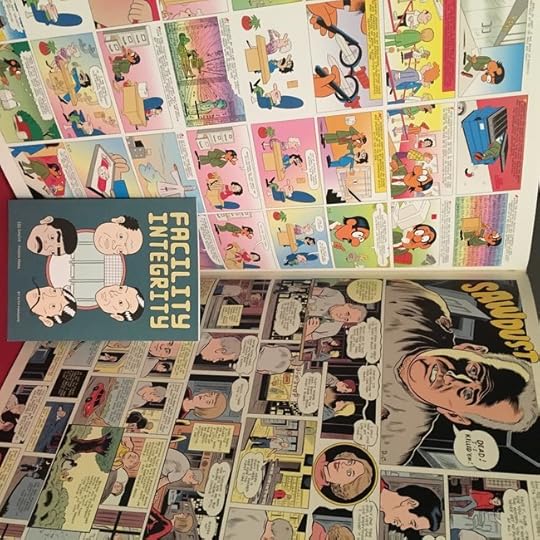
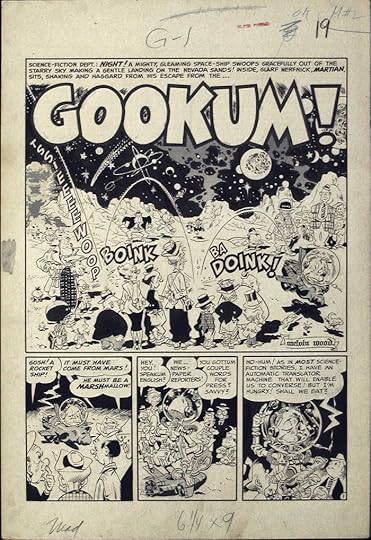
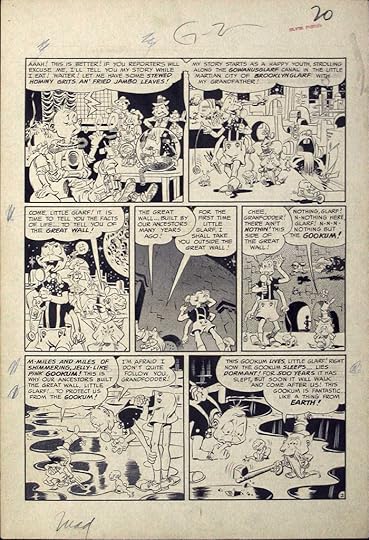
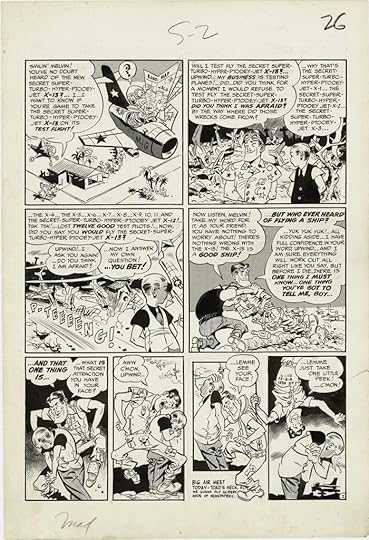
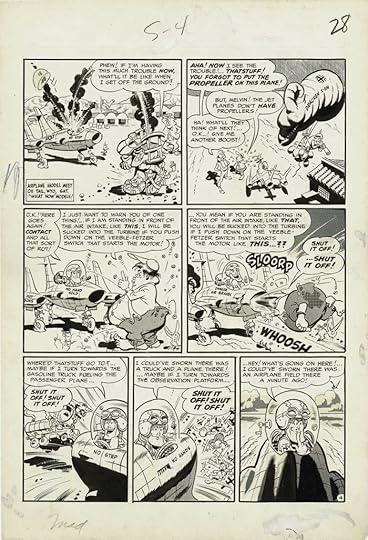
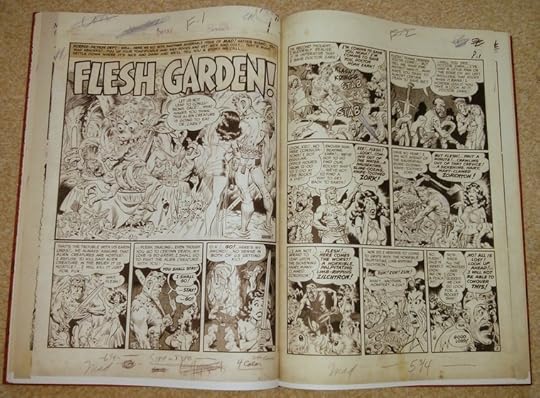
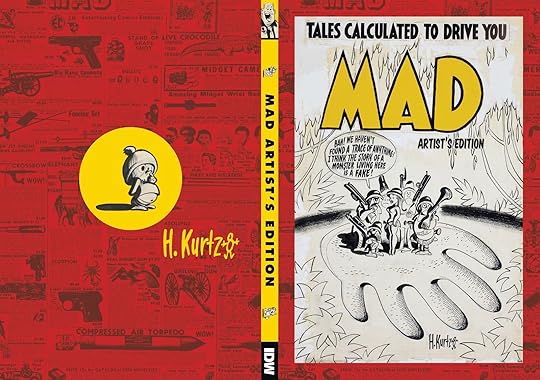
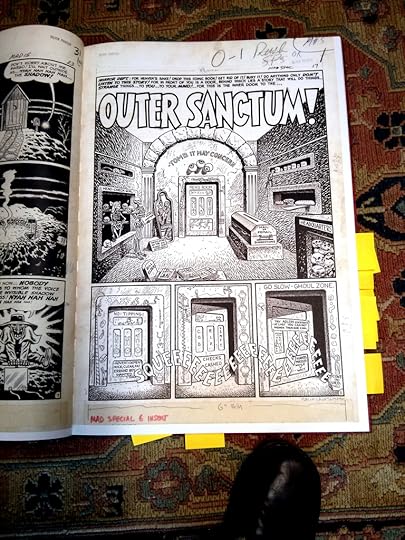
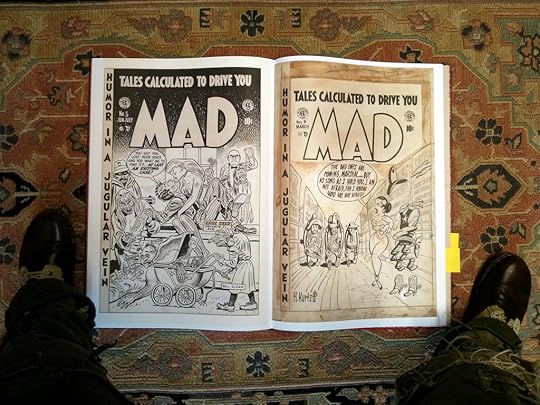
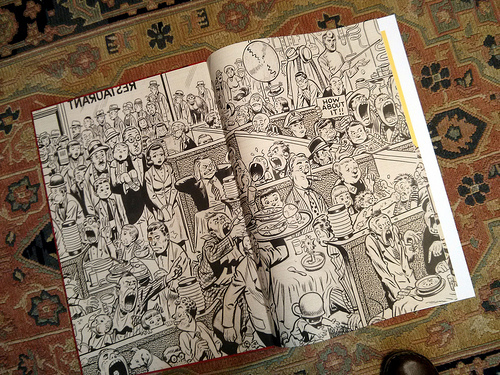
Celebrate the 60th anniversary of MAD in a BIG way! Before MAD Magazine was read in nearly every household, there was MAD Comics. Written and edited by the brilliant Harvey Kurtzman, and drawn by the best and most creative cartoonists of the time, including Wally Wood, Bill Elder, Jack Davis, and Basil Wolverton, MAD was the most innovative satirical publication ever unleashed upon the youth of America. This very special Artist's Edition features nearly 20 incredible stories and a dozen classic covers-Every issue of MAD from #1 to #18 is represented by either a cover or story (and often both!) and is scanned from the actual original art and printed same-size as drawn-A massive 15 x 22 inches! If you are a fan of MAD, or just great cartooning, this is the Artist's Edition for you!
Wallace Allan Wood was an American comic book writer, artist and independent publisher, best known for his work in EC Comics and Mad. Although much of his early professional artwork is signed Wallace Wood, he became known as Wally Wood, a name he claimed to dislike. Within the comics community, he was also known as Woody, a name he sometimes used as a signature.
He was the first inductee into the comic book's Jack Kirby Hall of Fame, in 1989, and was inducted into the subequent Will Eisner Award Hall of Fame three years later.
In addition to Wood's hundreds of comic book pages, he illustrated for books and magazines while also working in a variety of other areas — advertising; packaging and product illustrations; gag cartoons; record album covers; posters; syndicated comic strips; and trading cards, including work on Topps' landmark Mars Attacks set.
For much of his adult life, Wood suffered from chronic, unexplainable headaches. In the 1970s, following bouts with alcoholism, Wood suffered from kidney failure. A stroke in 1978 caused a loss of vision in one eye. Faced with declining health and career prospects, he committed suicide by gunshot three years later.
Wood was married three times. His first marriage was to artist Tatjana Wood, who later did extensive work as a comic-book colorist.
EC editor Harvey Kurtzman, who had worked closely with Wood during the 1950s, once commented, "Wally had a tension in him, an intensity that he locked away in an internal steam boiler. I think it ate away his insides, and the work really used him up. I think he delivered some of the finest work that was ever drawn, and I think it's to his credit that he put so much intensity into his work at great sacrifice to himself".
EC publisher William Gaines once stated, "Wally may have been our most troubled artist... I'm not suggesting any connection, but he may have been our most brilliant".
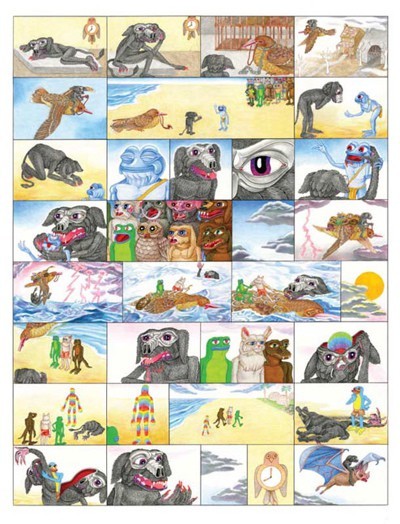
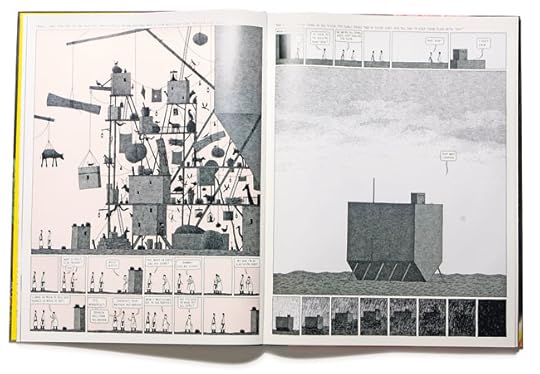
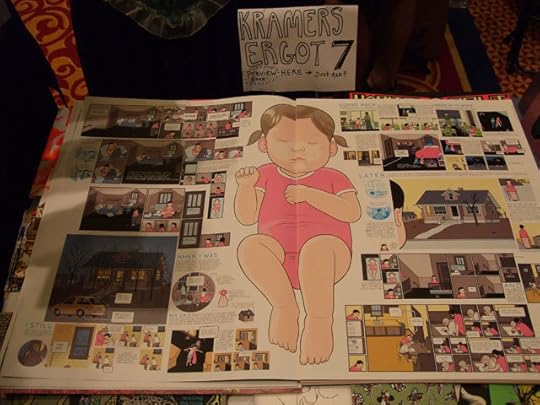
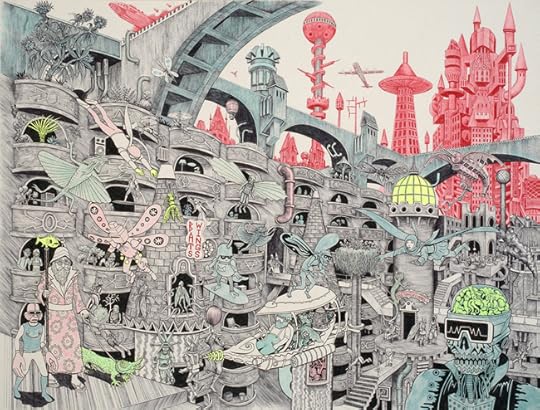
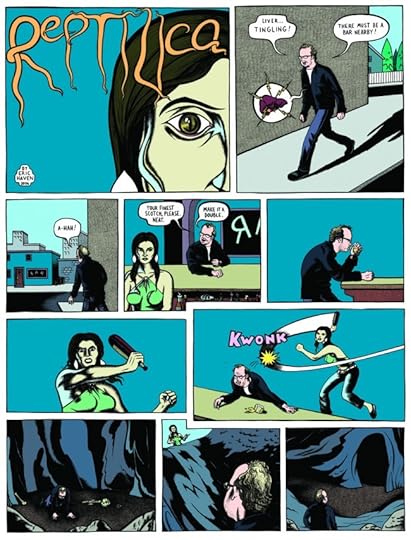
I'm kind of obsessed with these folio-sized Artist's Editions lately, though the obsession goes back to almost a decade. Kramer's Ergot 7 was a broadsheet format facsimile, a massive 16" x 21" hardcover anthology that drafted cartoonists like Dan Clowes, Stephane Blanquet, Jaime Hernandez, Chris Ware, Matt Furie, Anders Nilsen, Mat Brinkman, Gabrielle Bell, Joe Daly, Xavier Robel, and Will Sweeney; they followed editor and K.E. General Sammy Harkham into the most astounding stage of the Kramer's Ergot art-comix experiment, leaving the DMZ for enemy territory. He picked the right company for the mission: mostly pale, kind of doughy, but thoroughly bad-ass black-ink operators, all of them veterans of the comic-book battlefield, used to making high risk, low reward cartoons while superheroes were dropping from the sky all around them. They were going to create the first original sequential art in a hundred-fucking-years that would be illustrated on old-school Folio-sized art boards and reproduced at a 1:1 ratio, emulating the massive Broadsheet scale that comics were being printed at in the early 1900's. It was a ballsy move, and absolutely fucking glorious. Interestingly, the real standouts were mostly NOT the big names you'd expect to crush it, though there's not a single entry that doesn't make you stop and stare and smile like an idiot on quaaludes. Ware was one big name cartoonist to fully embrace the possibilities afforded by a page size 400% larger than usual, leaving a beautifully drawn life-size baby in the gutter* (*'gutter' is a term for the vertical meeting-point between the pages; 'gutter loss' refers to printed artistic details that are lost at the gutter-fold, usually when there's a 2-page spread without proper binding or formatting; the KE7 gutters are immaculate, perfectly reasonable and hygienic spot for dumping gutter-babies). The best contributions were by Will Sweeney, Anders Nilsen, Matt Furie, Tom Gauld and Eric Haven, who all killed their objectives with extreme fucking prejudice; but every fucking page is truly incredible.
From Kramer's Ergot 7, pages by (top to bottom) Matt Furie, Tom Gauld, Chris Ware, Will Sweeney, Eric Haven:
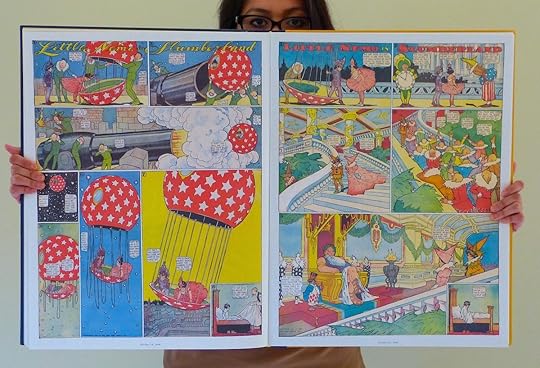
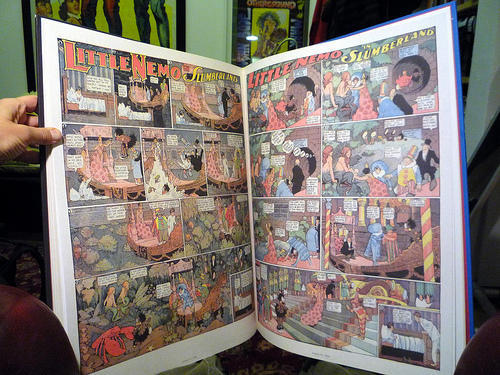
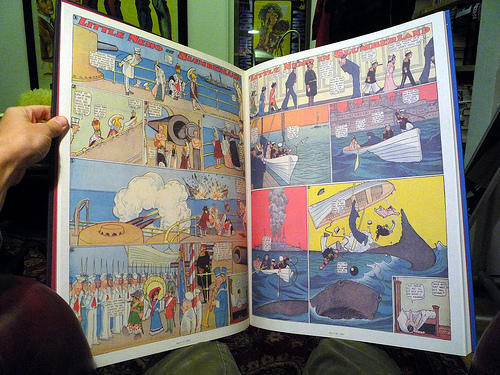
Harkham can't take all the credit for the KE7 format, and never tried to. Peter Maresca, editor and publisher of Sunday Press, started things in 2005, looking to celebrate the centennial anniversary of Winsor McCay's greatest strip, Little Nemo in Slumberland. Using the best extant Little Nemo Sunday Pages available, he wanted modern McCay fans to experience his artistic genius at the same Broadsheet format that readers did in 1905. His dedication was such that every copy had to be bound by hand... they couldn't find a book-printer with large enough machines to handle it. The extra work was worth it in the end, however; it was critically praised, sold out two back-to-back reprints, as well as foreign-language editions; it also lead to a second Nemo book, and established 'Sunday Book' as one of the best sources for facsimile reprints, adding Folio editions of Gasoline Alley, Little Sammy Sneeze, The Upside-Downs, etc.
From 'Little Nemo in Slumberland: So Many Splendid Sundays':
Then came the IDW line of 'Artist's Editions'. IDW has borrowed much of their business model from Dark Horse, selling comics that adapt popular cinematic franchises, toys and video games. They suck, but they pay enough for IDW to buy prestigious indie publisher 'Top Shelf', build a fantastic, multiple award-winning library of classic newspaper strips and comic-books -- the 'Library of American Comics' (or LOAC) -- and develop the critically acclaimed 'Artist's Editions'. Series editor Scott Dunbier took the 'Sunday Press' Broadsheet Facsimile format even further, stripping it naked to expose the original art-boards, reproduced at the same size and scanned at the highest resolution available.
FOOTNOTE: *(*'Gutter' is a term for the vertical meeting-point between the pages; 'gutter loss' refers to printed artistic details that are lost at the gutter-fold, usually when there's a 2-page spread without proper binding or formatting; the KE7 gutters are immaculate... a perfectly reasonable and hygienic spot for dumping babies.)
This entire review has been hidden because of spoilers.