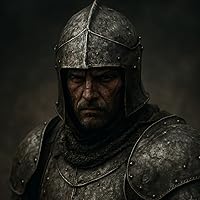
Историята на Нерон – последния император от Юлиево-Клавдиевата династия
Всичко започва с ръката на един мъж, стиснала гушата на друг. Император Тиберий премахва първо един предател. После цялото му семейство. А след това и всичките му приятели. Сякаш той никога не е съществувал. Това е римското правосъдие. На тази трескава сцена се ражда дете. Майка му е Агрипина, внучка на император Август. Но имперската им кръв не е никаква защита. Колкото по-близо си до сърцето на империята, толкова по-близо си до властта, интригите и опасността. Тя е изправена срещу войници, сенатори, съперници, сладкодумни претенденти, всеки от които се бори за положение.
Една грешка може да доведе до изгнание, затворничество, екзекуция. Или, най-лошото от всичко, загуба на невръстния й син. Защото Агрипина знае, че шансът винаги е налице, дори и в най-мрачните мигове. Синът й е всичко за нея. Тя може да издигне това момче, да го превърне в самия Рим - онзи, пред когото всички трябва да коленичат.
Но първо е необходимо да оцелеят...
Това е историята на раждането на Нерон и израстването му под бдителното и пресметливо око на майка му Агрипина - една жена, на която всички мъже се опълчват на свой собствен риск. Книга първа от „Трилогия за Нерон“.
I was born in the normal way in 1971, and vaguely remember half-pennies and sixpences. I have written for as long as I can remember: poetry, short stories and novels. It’s what I always wanted to do and read English at London University with writing in mind. I taught English for seven years and was Head of English at St. Gregory’s RC High School in London by the end of that period. I have enormous respect for those who still labour at the chalk-face. In truth, I can’t find it in me to miss the grind of paperwork and initiatives. I do miss the camaraderie of the smokers’ room, as well as the lessons where their faces lit up as they understood what I was wittering on about.
My mother is Irish and from an early age she told me history as an exciting series of stories – with dates. My great-grandfather was a Seannachie, so I suppose story-telling is in the genes somewhere. My father flew in Bomber Command in WWII, then taught maths and science. Perhaps crucially, he also loved poetry and cracking good tales. Though it seems a dated idea now, I began teaching when boys were told only girls were good at English, despite the great names that must spring to mind after that statement. My father loved working with wood and equations, but he also recited ‘Vitai Lampada’ with a gleam in his eye and that matters, frankly.
I’ve always loved historical fiction as a genre and cut my teeth on Hornblower and Tai-Pan, Flashman, Sharpe and Jack Aubrey. I still remember the sheer joy of reading my first Patrick O’Brian book and discovering there were nineteen more in the series. I love just about anything by David Gemmell, or Peter F. Hamilton or Wilbur Smith. I suppose the one thing that links all those is the love of a good tale.
That’s about it for the moment. If you’d like to get in touch with me leave a comment in the forum or you can tweet me @Conn_Iggulden. I’ll leave it there for the moment. If you’ve read my books, you know an awful lot about the way I think already. There’s no point overdoing it.
Conn Iggulden is one of my favourite authors of all-time. From his Conqueror series to The Gates of Athens, he has proven himself to be a writer of the highest calibre. Now, he turns his attention to the infamous figure of Nero, who I actually know very little about. All I do know is not very... flattering to him to say the least. This is historical fiction, Conn Iggulden, the Roman Empire, recommended by my brother. That is all I needed to know! And it was right to trust those pillars.
There is seamless political intrigue through the perspective of Nero's mother. There are other PoV's, but this story revolves around her. In a society dominated by patriarchy, it is magnetic and so tense watching Agripina use what little agency she has to protect her son.
This is a great first instalment in a new historical fiction series (I believe it will be a trilogy). Sets the political stage brilliantly, with characters that pop and twists that sent shivers down my spine. I was not as emotionally invested as I was in The Gates of Athens or Wolves of the Plain, but Nero sets a great foundation for what is to come. I look forward to picking up book 2, Tyrant. That title gives a little insight to what I'm in for...
This excellent historical novel is the 1st of a trilogy about Lucius Ahenobarbus, later on better known as Nero.
At the beginning of the book you'll find well-drawn maps, one of the Roam Empire in the 1st Century, and one of Rome in AD41, and there's a Julio-Claudian Family Tree, to make all clear.
Storytelling is superb, the author shows us a very realistic picture of Imperial Rome and its dangers, while all characters come splendidly to life in this tale about ruthlessness, animosity, tragedy, despair, and Rome with its tradition of cruelty and murder to maintain Imperial power.
This book is divided into three parts, starting with AD37, followed by AD41, and ending with AD43.
This 1st part is the beginning of the life story of a boy called Lucius Ahenobarbus, later known as Emperor Nero, and his conditions at home with an abusive and often drunken father, Gnaeus, and the formidable scheming and very ambitious mother called, Agrippina the Younger, while all around Rome several Emperors are eliminating adversaries who are a serious danger to the Imperial throne.
What is to follow as a whole is a great historical book about personal hunger for power, cruel and decisive action whenever necessary to get that power, and the will and luck to survive in a time when Imperial Rome is at its best and worst towards everyone and whatever the circumstances.
Highly recommended, for this is a wonderful start of this hopefully great trilogy, and that's why I like to call this 1st episode: "An Exhilarating Dark Conquering Begin"!
At the end of this book Nero is 5 years old. At this rate, I do not expect Nero to become Emperor until the third book of this trilogy. The subtitle should have been Agrippina and the Men in her Life. I usually like this author, and I didn’t hate this book, but I wasn’t looking for the Agrippina story. My favorite parts were about Caligula and Claudius. 3.5 stars
I received a free copy of this book from the publisher.
A Roman Borgias, with a batshit crazy cast brought to life, some truly jaw-dropping scenes of betrayal, violence and Roman-life, and the pace of a very zealous charioteer. I wasn't mad on the final third, but the incredibly strong and fascinating cast made this a great book.
P.S. Don't expect any 'Nero' stuff in this book. I know...
Reread 2025: 4.5 ⭐️ I reread this physically instead of through audio and I can absolutely confirm that’s the way to read this. This book is just too confusing with the amount of characters that are unfamiliar and the family tree was life changing. Doing this and knowing what to expect made me love this book more however it’s loaded with historical inaccuracies so I can’t give it 5 stars.
I really enjoyed this book but it’s very misleading on its title. There is very little of Nero in this book and instead is about his entire family before him. I very much loved all the politics of it but I just think the title should be changed.
Another issue I had was there are so many people whose names you have no idea who they are. I thought Nero was THE Nero but instead it was Nero’s uncle the whole time which really confused me. The correct Nero is instead called by his birth name which is Lucius. Without looking on google I would have been so confused on this and would have no idea why these other people are being talked about.
It’s crazy how wild actual history is and how it can be even more entertaining and brutal that any fantasy book you read. The machinations of Claudius, Tiberius, Gaius, Agrappina, Caligula and especially Messalina is wild. This is my first Conn book and I’m very interested in what else he’s got.
This was a fantastic blockbuster of a novel- how can I wait for the rest of the trilogy! of course the author has some amazing material to work with: Robert Graves and Racine have also used the rich history of the Imperial Roman Empire, but Iggulden’s is both the most accessible and entertaining. I did have to download a family tree of the Caesars’ reign as a memory aid though! Many thanks to Netgalley for an arc of this book.
Life was cheap in Roman times! The violence and brutality meted out mindlessly is horrific. Nevertheless, I was so excited to find that Conn Iggulden is writing another trilogy, this time on the life of Nero, as his books bring history to life more vividly for me than most.
This first book only takes us up to Nero’s (named Lucius) 10th year. He was born just a few months after the death of Tiberius, who was followed as princeps by Nero’s uncle, Caligula, and then by his great-uncle, Claudius. His mother, Agrippina, was ambitious for herself and her son and woe betide anyone who got in her way, whether they realised they were or not. This is a real page turner and if you don’t know your Roman history in detail, there are plenty of shocks and surprises along the way. Claudius’ invasion of Britain, told from both sides, is very well done.
4.5 not 5 stars for very minor reasons, including the too abrupt ending. I turned the page expecting more but I’ll just have to have patience and wait for Part 2!
With thanks to Michael Joseph / Penguin Random House and NetGalley for a review copy.
I found this hard to finish. I read Iggulden's Caesar series many years ago and enjoyed it, so was excited to see what he did with this period of Roman history. It's obvious that the book was well researched; but the constant insertion of facts, some of them repeated, meant that the writing didn't flow, it felt clunky. Paradoxically, the author then changed key parts of the historical narrative we have from ancient sources. Don't get me wrong, I'm all for changing things to drive the narrative, this is historical fiction and you expect departures from the sources to make a modern novel more readable. But in this case, they did nothing for the plot and I found myself asking why on earth you'd change things and make them LESS interesting that the historical sources. I mean, why include Messalina at all if you're not going to explore her mind boggling "marriage" to Silius!
I could understand why you'd want to start the story of Nero here (the book is the first of a trilogy and centres around his mother Agrippina). His upbringing is really interesting, and Agrippina is a particularly fascinating character. But she is a shadow of herself in this book. Sure she's scheming and apparently incapable of loving anyone (except Nero) but she just feels a bit robotic. When she's exiled by Gaius (Caligula), it's basically because she has a son; but the sources tell us she was involved in a plot with her sister and her lover/brother-in-law?! Way more interesting!
There's just so much potential here for a gripping read and sadly Nero is not it.
(2) Right now Agrippina, Nero's mother and her brother, the infamous Caligula, are the main characters, but we will see how things will turn out later!
(3) We would also find out how far would Agrippina go to make her son an emperor!
(4) I am totally looking forward to the next book!
(5) Because, in this book, Nero so the story focuses mostly on Agrippina, her older brother, the infamous Caligula (formally known as Emperor Gaius Julius Caesar Augustus Germanicus), the old emperor Tiberius, and later Claudius etc. Some readers might be disappointed by this development but I like it! It is nice to see how this murderous family history of the royal family! Assassination! Poisoning! Exile! Public executions! Wars against the minorities! You name them, they are all there!
(6) I was a bit shocked that Claudius but whatever. *rolls eyes*
(7) It is an enjoyable and entirely readable book! I hope you will also like this!
(8) I am not sure how I feel about Agrippina, I can appreciate that she was a woman with an unhappy marriage (her first husband) and she was struggling to survive the everchanging temper and favour of her uncle (?) and even her own brother. On the other hand, she can be quite ruthless when she was trying to secure her own interest?
(9) There is already tension between Agrippina and Nero, I want to see what will happen next!
Really enjoyed this book especially as it is the start of a trilogy about the life of NERO from his birth onwards and his cruel and dangerous family and how his mother managed to save him from them in order for him to become Caesar.
4.5⭐️ This book was fantastic. It had everything, intrigue, betrayal, action, twists, larger than life characters and a page turning quality that never let up.
This particular period of Roman history is well known, I would say most people have heard of Nero and Claudius maybe some of the others too, almost certainly the ancestors of these people, Julius Caesar and Augustus. But the quality of the writing and storytelling not only brought back the memories of these people from History lessons, programmes and books but brought them to life in a way that I found incredible and gripping. Also getting to see most of this through the eyes of Aggripina was a master stroke. She really took me through the full range of feelings.
Feeling what they felt and seeing the reasons behind why they acted the way they did was a huge rollercoaster of emotions in a terrifying and brutal time in Ancient Rome.
Conn Iggulden is one of my favourite authors and has been for many years. This is the first of a new series and it certainly reads like an introduction to a series.
The story is almost an exact retelling with very little additional story woven in. With this period of history the events are almost unbelievable so I guess there is no need to create huge amounts of fiction on top. It did however mean the book sometimes read as a history lecture.
As with all CI books, the pacing and delivery is controlled . The books goes through a clean and direct journey.
It's a shame this isn't realised until May 2024 because I'm ready for book 2 already!!
Nero is book one of the Nero Trilogy set in Ancient Rome.
This book covers the early years of the boy who will one day become the infamous emperor. When the story begins, we are introduced to his parents. His father is an ex-chariot racer, who now spends much of his time drunk, while his mother, Agrippina, is a descendant of the Emperor Augustus.
Rome is a politically dangerous place, particularly when the ailing Tiberius returns from Capri to clean Rome of usurpers. He brings with him Agrippina’s brother, the next heir to the imperial throne. It is to her brother that Agrippina turns when she needs a favour, but it becomes a costly deed in times of terror.
Upon the death of Agrippina’s brother, her uncle becomes the next emperor. With thoughts of her own son and his future, she is determined to keep close to her uncle, even travelling with him on his campaign in Britannia.
This was a good start to the series. The violence and back-stabbing of the era is expected, but it is balanced with other elements of the Roman years. I particularly enjoyed the latter part of the book with the journey to Gaul and the invasion of Britannia.
The author’s notes at the back of the book were also very helpful, explaining the liberties taken with the changing of names, to help the reader where real-life characters shared similar or the same names.
Just my sort of historical fiction. The first volume in a trilogy about the Roman Emperor Nero. It’s clear from this first volume that it’s going to be a broad sweep across his life and times. It starts with his mother, Agrippina, shortly before he’s born. Indeed, this first volume is more her tale than anyone else’s. Her first marriage to an abusive patrician; the birth of Nero (then known as Lucius); the complications of being the sister to the monster of an Emperor, Caligula; other entanglements; finally, her involvement with her uncle, the replacement for Caligula, Claudius. By the end of the book Nero/Lucius hasn’t reached his teenage years and Agrippina is moving onto a particularly important stage in her life.
It sounds quite an historical romp. Mostly it’s true to known history, from my later checks, and I was interested to see a final section where the author explains why he might have deviated slightly or filled in missing gaps from history. Like the best historical fiction it attempts to explain and expand on dry recorded events by creating the personalities, the social interactions, of the people behind them. Of course, the author may have got it wrong for all we know but I thought it seemed well done here. For example, Caligula as a damaged, fragile and insecure person after his time spent with his adoptive father, the Emperor Tiberius, in orgy ridden Capri rather than just presenting him as someone born as a monster (and he was a monster as an emperor, murdered eventually by his own Praetorian bodyguards); Agrippina who, despite a noble bloodline and connections, was as powerless legally in the patriarchal Roman system compared to the men who sought to control her. Her own renowned deviousness, even murderousness, described in the book, seems a natural reaction by her to create her own security, and for her son. Claudius as a more believable character than in Robert Graves fiction (eg I, Claudius), as someone bookish but still ruthless and imperialistic rather than a closet republican.
One aspect I thought unnecessary was involving Agrippina and Lucius in Claudius’ invasion of Britain, for which there’s no evidence. But at least we get a view of this event, possibly the most significant of Claudius’ time as Emperor.
I haven’t read much, as yet, by this author though I really enjoyed Wolf of the Plains about the young Genghis Khan, which was really about the difficult lives of Asiatic nomadic tribes and their horse dominated raiding lifestyles. This author will feature more in my TBA’s from now on.
Finally, I find I’m reading quite a bit about the old Roman Republic and Empire. Its arrogant Imperial but effective culture for waging war. Its leaders, some talented, some just thuggish bullies. And I just keep seeing everyday correspondences to all that in our contemporary world, 2000 years later. 5*.
As usual Conn didn't disappoint. Really loved the early years of Nero and his mother as well the invasion of Britannia. Great characters flashed out. cannot wait to continue.
🐞The book - 1st in the Nero trilogy - is a historical fiction that tells the life of Emperor Nero, from his birth till his first years through his mother Agrippina's perspective.
37 AD Rome. In the darker days of Emperor Tiberius's reign, Agrippina, granddaughter of Emperor Augustus gave birth to a boy who would become Nero. But her imperial blood is no protection against her drunken husband, maniac brother, lecherous uncle, and jealous aunt. She only has her great beauty and grace to navigate all the intrigue and danger that her family presents and stay close to the empire's power or risks facing exile, incarceration, and execution. Or, worst of all, the loss of her infant son.
🐞Conn Iggulden is one of my favorite authors. Similar to his other books, the plot of this one is also tightly knitted, the descriptions feel vivid, while the pacing and delivery are controlled and the multiple POVs make the narrative more engaging. However, you won't get to read any big battle scenes until the end as it mainly focuses on Agrippina and the man in her life. So it felt like a prelude book and should've been titled 'Agrippina' instead of Nero.
🐞All the characters feel real and authentic. The characterization of Agrippina as an ambitious woman was perfect, but it failed to portray the depth of her poisoned heart and cunning mind which is understandable since she is the protagonist. Other characters like her 1st husband Gnaeus, her brother Caligula, her 2nd husband Italus, her uncle Claudius, and her aunt Messalina are also worth mentioning as their stories equally contributed to her plot.
🐞The climax of the book was satisfactory. It ends with the conclusion of Claudius' successful invasion of Britain, and naming Agrippina's boy Nero, paving the way for the mother and son duo to rise to power.
Overall Nero was a good read, but it was certainly not Iggulden's best work. If you are into Roman history and love character-driven books then it was for you. One can also read it as standalone. Highly recommended.
There's a rich historical narrative that really brings to life elements of ancient Rome. Many of which are very dark, grim, and horrible. A lack of narrative and a story that feels like it needs to be together in one book instead of a part one prelude means that it's going to be easy to forget.
Το ιστορικό μυθιστόρημα είναι ένα είδος που συχνά ισορροπεί πάνω σε ένα λεπτό σχοινί. Από τη μία η ανάγκη για ιστορική ακρίβεια και από την άλλη η ανάγκη για μια συναρπαστική αφήγηση που θα κρατήσει τον αναγνώστη καθηλωμένο. Ο Conn Iggulden είναι ένας συγγραφέας που έχει αποδείξει πολλές φορές πως γνωρίζει πολύ καλά αυτή την ισορροπία και με το «Νέρων», το πρώτο βιβλίο της νέας του τριλογίας θα γνωρίσει και το Ελληνικό αναγνωστικό κοινό αυτό του το ταλέντο. Μας ταξιδεύει λοιπόν στην αγαπημένη του Αρχαία Ρώμη για να αφηγηθεί μία από τις πιο αμφιλεγόμενες ιστορίες εξουσίας που γνώρισε ποτέ η ανθρωπότητα.
Η ιστορία ξεκινά το 37 μ.Χ., σε μια Ρώμη που βυθίζεται στην παράνοια, τον φόβο και τις πολιτικές δολοπλοκίες. Ο αυτοκράτορας Τιβέριος βρίσκεται στα τελευταία χρόνια της ζωής του και η διαδοχή του θρόνου μετατρέπεται σε ένα αδυσώπητο παιχνίδι επιβίωσης. Μέσα σε αυτό το επικίνδυνο περιβάλλον γεννιέται ο Νέρων, γιος της Αγριππίνας, μιας γυναίκας που ίσως αποδειχθεί πολύ πιο φιλόδοξη και επικίνδυνη από όλους τους άνδρες που την περιβάλλουν. Η πλοκή δεν εστιάζει τόσο στον ίδιο τον Νέρωνα όσο θα περίμενε κανείς, αλλά κυρίως στα πρώτα χρόνια της ζωής του και στον τρόπο με τον οποίο διαμορφώνεται το περιβάλλον που θα τον οδηγήσει αργότερα στην εξουσία.
Αυτό είναι ίσως και το πιο ενδιαφέρον στοιχείο του βιβλίου. Ο Iggulden δεν ενδιαφέρεται να μας παρουσιάσει απλώς τον διαβόητο αυτοκράτορα που έμεινε στην ιστορία ως τύραννος. Αντίθετα, προσπαθεί να εξερευνήσει το ερώτημα που κρύβεται πίσω από τον μύθο. Γεννιέται κάποιος τέρας ή γίνεται; Η περίφημη φράση που συνοδεύει το βιβλίο στην αρχική του έκδοση, «Οι τύραννοι δεν γεννιούνται. Δημιουργούνται», διαπερνά ολόκληρη την αφήγηση και λειτουργεί ως θεματικός πυρήνας της ιστορίας.
Η Αγριππίνα είναι αναμφίβολα η μεγάλη πρωταγωνίστρια του βιβλίου. Πρόκειται για έναν χαρακτήρα που κλέβει συνεχώς την παράσταση, καθώς κάθε της κίνηση καθοδηγείται από την επιθυμία της να επιβιώσει και να εξασφαλίσει ένα μέλλον για τον γιο της. Δεν παρουσιάζεται ως ηρωίδα ούτε ως απόλυτη κακιά. Είναι μια γυναίκα που ζει σε έναν κόσμο όπου η αδυναμία τιμωρείται με θάνατο και η εξουσία αποτελεί τη μοναδική ασπίδα προστασίας. Ο συγγραφέας καταφέρνει να την κάνει ταυτόχρονα γοητευτική, υπολογιστική, ευφυή και συχνά τρομακτική. Κάθε σκηνή στην οποία εμφανίζεται αποκτά μια ένταση που δύσκολα περνά απαρατήρητη.
Παράλληλα, ο ίδιος ο Νέρων, ή Λεύκιος όπως τον γνωρίζουμε, βρίσκεται διαρκώς στο περιθώριο της δράσης, κάτι που θεωρώ απολύτως συνειδητή επιλογή. Ο συγγραφέας χτίζει προσεκτικά το υπόβαθρο του χαρακτήρα του, φυτεύοντας τους σπόρους εκείνου που θα εξελιχθεί αργότερα στον ιστορικό Νέρωνα. Δεν προσπαθεί να δικαιολογήσει τις μελλοντικές του πράξεις, αλλά να δείξει τις δυνάμεις που τον διαμόρφωσαν. Αυτό δίνει στο βιβλίο έναν ιδιαίτερο ψυχολογικό χαρακτήρα, παρόλο που πρόκειται για ένα έργο γεμάτο πολιτικές συγκρούσεις και ιστορικά γεγονότα.
Η Ρώμη λειτουργεί ως ένας ακόμη χαρακτήρας της ιστορίας. Οι δρόμοι, οι αγορές, οι συγκρούσεις μεταξύ συγκλητικών, οι ίντριγκες στα παλάτια και η διαρκής αίσθηση ότι κανείς δεν είναι πραγματικά ασφαλής δημιουργούν μια ατμόσφαιρα αποπνικτική αλλά ταυτόχρονα εξαιρετικά γοητευτική. Ο συγγραφέας έχει την ικανότητα να μεταφέρει τον αναγνώστη μέσα στην εποχή χωρίς να βαραίνει το κείμενο με ατελείωτες ιστορικές λεπτομέρειες. Η αφήγηση παραμένει γρήγορη, κινηματογραφική και γεμάτη ένταση.
Ένα από τα θέματα που ξεχωρίζουν περισσότερο είναι η φύση της εξουσίας. Στο «Νέρων» η εξουσία δεν παρουσιάζεται ως έπαθλο αλλά ως μια δύναμη που διαφθείρει, μεταμορφώνει και συχνά καταστρέφει όσους την πλησιάζουν. Ταυτόχρονα, το βιβλίο ασχολείται με την οικογένεια, την κληρονομιά, τη φιλοδοξία και τη σχέση ανάμεσα στη μητέρα και το παιδί της. Μέχρι ποιο σημείο μπορεί ένας γονιός να καθορίσει τη μοίρα του παιδιού του; Και πόσο επικίνδυνο γίνεται αυτό όταν το παιδί προορίζεται να κυβερνήσει μια αυτοκρατορία;
Αν θα είχα μια μικρή ένσταση, αυτή αφορά το γεγονός ότι ορισμένοι δευτερεύοντες χαρακτήρες δεν αποκτούν το ίδιο βάθος με την Αγριππίνα και τις κεντρικές πολιτικές φιγούρες. Σε ορισμένα σημεία η πλοκή προχωρά τόσο γρήγορα που κάποιοι χαρακτήρες λειτουργούν περισσότερο ως πιόνια της ιστορίας παρά ως ολοκληρωμένες προσωπικότητες. Ωστόσο, αυτό δεν επηρεάζει ιδιαίτερα την αναγνωστική εμπειρία, καθώς το ενδιαφέρον παραμένει αμείωτο από την πρώτη μέχρι την τελευταία σελίδα.
Συνολικά, το «Νέρων» είναι ένα καθηλωτικό ιστορικό μυθιστόρημα που συνδυάζει πολιτική ίντριγκα, οικογενειακό δράμα και ψυχολογική ανάλυση με τον τρόπο που μόνο ο Conn Iggulden φαίνεται να γνωρίζει. Δεν πρόκειται απλώς για την ιστορία ενός μελλοντικού αυτοκράτορα, αλλά για την ιστορία της δημιουργίας ενός μύθου ή ίσως ενός τέρατος. Αν αγαπάτε την Αρχαία Ρώμη, τις δυναστικές συγκρούσεις και τα βιβλία που εξερευνούν το πώς γεννιέται η εξουσία, τότε το «Νέρων» είναι μια εξαιρετική αρχή για μια σειρά που προμηνύεται ιδιαίτερα δυνατή.
i LOVED this book!! it is a bit bizarre that it’s titled Nero but i don’t think that really matters. Agrippina was a fascinating character to follow & I love the way Iggulden deals with characters that have undergone immense trauma. a great starting place for someone who doesn’t know anything about emperors, rome, etc - really keen to learn more of the actual history following this book.
I think this is some of the better historical fiction I have read and will be back for the authors other stories. This is the tale of a tyrant being raised by tyrants in a time where that was all that anyone respected. A good reminder that for all the power and amazing things Rome did, it was at a wild cost. I think this is a nice off ramp do the story of Nero. The authors ability to lay out a scene and describe in detail is really well done, but there are some things Nero gets into later that I really don’t need to read an interpretation of (justice for sporus)
This is really not technically about Nero. It is about his famous nasty relatives that come before him. As a matter of fact, Nero doesn’t even appear until near the final pages of the book, when he is born. Strange that Iggulden named the book Nero, unless he meant it to be a background for the next two books that will actually be about him. I am really looking forward to the next two books and will gobble them up when they finally get written.
This author is brilliant at making history come alive. Nero is exciting from the first page to the last. He writes great dialog making the characters realistic and fascinating. Although the author does a tremendous amount of research, he tries to put the story first and the history second. He explains the alterations at the back of the book. He does not write history books but excellent historical novels. Still, you will learn a lot of history through reading his novels and in an entertaining way.
While waiting for the next in his Nero series, I am reading his book, Lion: A Novel of Ancient Athens. I am not a lady that is very interested in battles and war, but I find I like the book anyway because of his exciting style of writing.
I wish I could have been in his literature class when he was teaching. It would have been my very favorite!
Characters you really care about in an incredibly interesting point in history. I thoroughly enjoyed the emperor series and this feels like the same calibre! Probably the most violent of this authors works but not in an excessive way. I thoroughly enjoyed this build up to what will be another great series.