

What do you think?

The Invention of Amsterdam: A History of Europe’s Greatest City in Ten Walks
An essential guide to one of the world’s most remarkable, and often misunderstood, cities by the author of Why the Dutch Are Different.
When Ben Coates injures his leg and needs to rebuild his strength by walking, he finds himself presented with an exciting to rediscover the city he has been working in for over a decade, at a slower pace. He devises ten walks, each demonstrating a different chapter of Amsterdam’s history, from its humble beginnings in the early 1200s as a small fishing community through two Golden Ages, fuelled by the growth of the Dutch colonial empire, two world wars, and countless reinventions.
Join Coates as he meanders past beautiful townhouses and glittering canals, dances at Pride celebrations, witnesses the King’s apology at Keti Koti, attends a WW2 memorial, gets high at a coffee shop, walks through the red-light district, and gazes in awe at Rembrandt paintings, all the while illuminating modern Amsterdam by explaining its past.
Blending travelogue and quirky history, The Invention of Amsterdam is an entertaining and sharply observed portrait of a fascinating and complicated city.
When Ben Coates injures his leg and needs to rebuild his strength by walking, he finds himself presented with an exciting to rediscover the city he has been working in for over a decade, at a slower pace. He devises ten walks, each demonstrating a different chapter of Amsterdam’s history, from its humble beginnings in the early 1200s as a small fishing community through two Golden Ages, fuelled by the growth of the Dutch colonial empire, two world wars, and countless reinventions.
Join Coates as he meanders past beautiful townhouses and glittering canals, dances at Pride celebrations, witnesses the King’s apology at Keti Koti, attends a WW2 memorial, gets high at a coffee shop, walks through the red-light district, and gazes in awe at Rembrandt paintings, all the while illuminating modern Amsterdam by explaining its past.
Blending travelogue and quirky history, The Invention of Amsterdam is an entertaining and sharply observed portrait of a fascinating and complicated city.
347 pages, Kindle Edition
First published March 13, 2025
About the author
Ben Coates
5 books61 followersBen Coates is the best-selling author of the books ‘The Invention of Amsterdam: A History of Europe’s Greatest City in Ten Walks’, ‘Why the Dutch are Different: A Journey into the Hidden Heart of the Netherlands’ and ‘The Rhine: Following Europe’s Greatest River from Amsterdam to the Alps’.
Ratings & Reviews
Friends & Following
Create a free account to discover what your friends think of this book!
Community Reviews
Displaying 1 - 21 of 21 reviews

September 14, 2025
fabulous lil book about the most amazing city on earth. can feel ben coates’ visceral love for amsterdam (which i can empathise with). god i miss it.

November 20, 2025
Brilliant travelogue/history that was both witty and informative. I read his earlier work _Why the Dutch Are Different_ covering the entire Netherlands so was excited to read this one from 2025 focusing on Amsterdam. The book was arranged around the idea author Ben Coates was doing a walking tour of Amsterdam as part of his physical therapy and along the way discuss the culture and history of the city. Though sometimes the chapters would stray from the chosen historical topic (such as say noting a location that appeared in a James Bond film), for the most part each chapter dealt with one historical period of Amsterdam after another from the city’s founding to very recent events.
Chapter one discussed the Old City Centre, the origins of Amsterdam, medieval trade, the Iconoclastic or Iconoclasm fury of the 16th century (Protestant destruction of Catholic church décor and religious images), the Alteration or Alteratie (the 1578 replacement of a Catholic government by a Protestant one), and my favorite thing, In’t Aepjen, a monkey-themed bar (translates to “In the Monkeys”) and is one of the city’s oldest pubs, its name stemming from a legend that sailors would settle bar tabs with monkeys they brought from overseas.
Chapter two was on the Dutch golden age of trade particularly the spice trade, historic Dutch warehouses, discussed how the Dutch ventured forth not for territorial conquest or missionary zeal but for commerce, Cornelius de Houtman (1565-1599; leader of first Dutch expedition to the East Indies and began the Dutch spice trade), Petrus Plancius (1552-1622; an important Dutch cartographer), one of the last windmills in Amsterdam, and the historic Saint Peter’s House.
Chapter three discussed Amsterdam’s canals in depth, the historic Jordaan neighborhood with its Rembrandt connections and historic Westerkerk church (just on the edge of the Jordaan).
Chapter four had a lot more on Dutch trade, the life and art of Rembrandt most especially the story of his _The Night Watch_ from 1642, one the most famous if not the most famous Dutch Golden Age painting, and the Amstel River.
Chapter five had a lot on the Dutch slave trade, Multatuli (real name Edward Douwes Decker, 1820-1887, his satirical novel _Max Havelaar_ was an anti-colonialism book on the Dutch East Indies or Indonesia), the decline in frugal Dutch merchant lords as they became replaced by status conscious rentier class, the French occupation of the Netherlands and rule by Louis Bonaparte (Napoleon’s brother) and his legacies including the foundations of the Dutch legal code and the Rijksmuseum.
Chapter six was the second Dutch Golden Age, Vondelpark, the Dutch hosting the Summer Olympics in 1928, Olympic Stadium, Van Gogh’s time here as well as the Van Gogh Museum, and a lot on Heineken including a factory tour.
Chapter seven was on the Jewish influences of Amsterdam including linguistically, a tour of historic Jewish buildings, quite a lot on Anne Frank, the Anne Frank House, her legacy, Otto Frank (her father, who survived the war and got her diary published), as well as a look at Amsterdam in World War II including the Holocaust, collaboration, the February 1941 protest strike, and the hunger winter of 1944-1945.
Chapter eight looked at the IJ (pronounced “Eye”) River, the famous blue and white free ferries that cross it, the IJ Film Museum, the Street Art Museum, and the story of public housing and the ship building industry in North Amsterdam.
Chapter nine looked at drugs, prostitution, and tourism in Amsterdam, how all became so important to the city, the dark side of these such as the rise of human trafficking in the Red Light District and how Amsterdam attracts drug suppliers from around the world that are very much criminal through legal loopholes in Amsterdam, how the city is trying to limit tourism now and phase out the Red Light District, and how Amsterdam handled Covid. The author discussed and visited the famous "coffee shops" that sell marijuana, discussed their legality, and noted if you want actual coffee you went to a cafe.
The conclusion had among other things (I don’t think it was in chapter nine) the El Al Flight 1862 crash in 1992 and what the crash revealed about social inequality in Amsterdam when it crashed into the Bijlmermeer neighborhood.
Pacing was great, loved the witty asides and occasional one or two sentence notes of such things as the role played in financing the Louisiana Purchase or a building with a connection to Brad Pitt (_Ocean's Twelve_ was partially filmed in Amsterdam).
Chapter one discussed the Old City Centre, the origins of Amsterdam, medieval trade, the Iconoclastic or Iconoclasm fury of the 16th century (Protestant destruction of Catholic church décor and religious images), the Alteration or Alteratie (the 1578 replacement of a Catholic government by a Protestant one), and my favorite thing, In’t Aepjen, a monkey-themed bar (translates to “In the Monkeys”) and is one of the city’s oldest pubs, its name stemming from a legend that sailors would settle bar tabs with monkeys they brought from overseas.
Chapter two was on the Dutch golden age of trade particularly the spice trade, historic Dutch warehouses, discussed how the Dutch ventured forth not for territorial conquest or missionary zeal but for commerce, Cornelius de Houtman (1565-1599; leader of first Dutch expedition to the East Indies and began the Dutch spice trade), Petrus Plancius (1552-1622; an important Dutch cartographer), one of the last windmills in Amsterdam, and the historic Saint Peter’s House.
Chapter three discussed Amsterdam’s canals in depth, the historic Jordaan neighborhood with its Rembrandt connections and historic Westerkerk church (just on the edge of the Jordaan).
Chapter four had a lot more on Dutch trade, the life and art of Rembrandt most especially the story of his _The Night Watch_ from 1642, one the most famous if not the most famous Dutch Golden Age painting, and the Amstel River.
Chapter five had a lot on the Dutch slave trade, Multatuli (real name Edward Douwes Decker, 1820-1887, his satirical novel _Max Havelaar_ was an anti-colonialism book on the Dutch East Indies or Indonesia), the decline in frugal Dutch merchant lords as they became replaced by status conscious rentier class, the French occupation of the Netherlands and rule by Louis Bonaparte (Napoleon’s brother) and his legacies including the foundations of the Dutch legal code and the Rijksmuseum.
Chapter six was the second Dutch Golden Age, Vondelpark, the Dutch hosting the Summer Olympics in 1928, Olympic Stadium, Van Gogh’s time here as well as the Van Gogh Museum, and a lot on Heineken including a factory tour.
Chapter seven was on the Jewish influences of Amsterdam including linguistically, a tour of historic Jewish buildings, quite a lot on Anne Frank, the Anne Frank House, her legacy, Otto Frank (her father, who survived the war and got her diary published), as well as a look at Amsterdam in World War II including the Holocaust, collaboration, the February 1941 protest strike, and the hunger winter of 1944-1945.
Chapter eight looked at the IJ (pronounced “Eye”) River, the famous blue and white free ferries that cross it, the IJ Film Museum, the Street Art Museum, and the story of public housing and the ship building industry in North Amsterdam.
Chapter nine looked at drugs, prostitution, and tourism in Amsterdam, how all became so important to the city, the dark side of these such as the rise of human trafficking in the Red Light District and how Amsterdam attracts drug suppliers from around the world that are very much criminal through legal loopholes in Amsterdam, how the city is trying to limit tourism now and phase out the Red Light District, and how Amsterdam handled Covid. The author discussed and visited the famous "coffee shops" that sell marijuana, discussed their legality, and noted if you want actual coffee you went to a cafe.
The conclusion had among other things (I don’t think it was in chapter nine) the El Al Flight 1862 crash in 1992 and what the crash revealed about social inequality in Amsterdam when it crashed into the Bijlmermeer neighborhood.
Pacing was great, loved the witty asides and occasional one or two sentence notes of such things as the role played in financing the Louisiana Purchase or a building with a connection to Brad Pitt (_Ocean's Twelve_ was partially filmed in Amsterdam).

May 25, 2026
Some travel books merely accompany a journey. The Invention of Amsterdam transforms one. I began reading Ben Coates’s book on my way to Amsterdam and finished the latter half wandering through the city itself, where entire passages seemed to rise from the page and materialize in front of me.
What makes Coates’s work so compelling is not simply his affection for Amsterdam, but his refusal to romanticize it. The book’s greatest strength lies in its willingness to dwell equally on the beautiful and the deeply uncomfortable parts of the city’s history. Reading his account of Dutch attitudes toward returning Jewish survivors after the war was genuinely galling, particularly because traces of that indifference still feel unsettlingly recent. One line quoted in the book lingered long after I closed it: “Too many of you came back.”
That history became even more jarring in person. Visiting Hollandsche Schouwburg, the former theater turned deportation center during the Holocaust, brought Coates’s observations into painful focus. It was startling to learn how long the city remained willing to reuse the building as a functioning theater before the local Jewish community intervened. The tension between remembrance and convenience, memory and civic discomfort, runs quietly beneath much of Amsterdam’s polished surface, and Coates captures it with remarkable clarity.
The book also excels as a companion piece to the city itself. After taking two walking tours, I found myself repeatedly recognizing details Coates had tucked into his narrative: hidden courtyards, overlooked streets, fragments of local lore. His descriptions are vivid without becoming sentimental, and the small recommendations scattered throughout the book feel genuinely lived in rather than curated for tourists. One café he mentioned in De Pijp was so good I had to return a second time.
The Invention of Amsterdam succeeds because it understands that great cities are contradictions. Amsterdam emerges here not as a postcard fantasy of canals and bicycles, but as a place shaped by commerce, tolerance, cruelty, reinvention, and selective memory. Coates walks through all of it with curiosity and honesty and, in doing so, gives readers one of the finest literary portraits of a city in recent years.
What makes Coates’s work so compelling is not simply his affection for Amsterdam, but his refusal to romanticize it. The book’s greatest strength lies in its willingness to dwell equally on the beautiful and the deeply uncomfortable parts of the city’s history. Reading his account of Dutch attitudes toward returning Jewish survivors after the war was genuinely galling, particularly because traces of that indifference still feel unsettlingly recent. One line quoted in the book lingered long after I closed it: “Too many of you came back.”
That history became even more jarring in person. Visiting Hollandsche Schouwburg, the former theater turned deportation center during the Holocaust, brought Coates’s observations into painful focus. It was startling to learn how long the city remained willing to reuse the building as a functioning theater before the local Jewish community intervened. The tension between remembrance and convenience, memory and civic discomfort, runs quietly beneath much of Amsterdam’s polished surface, and Coates captures it with remarkable clarity.
The book also excels as a companion piece to the city itself. After taking two walking tours, I found myself repeatedly recognizing details Coates had tucked into his narrative: hidden courtyards, overlooked streets, fragments of local lore. His descriptions are vivid without becoming sentimental, and the small recommendations scattered throughout the book feel genuinely lived in rather than curated for tourists. One café he mentioned in De Pijp was so good I had to return a second time.
The Invention of Amsterdam succeeds because it understands that great cities are contradictions. Amsterdam emerges here not as a postcard fantasy of canals and bicycles, but as a place shaped by commerce, tolerance, cruelty, reinvention, and selective memory. Coates walks through all of it with curiosity and honesty and, in doing so, gives readers one of the finest literary portraits of a city in recent years.
Want to Read
May 14, 2025An essential guide to one of the world’s most remarkable, and often misunderstood, cities by the author of Why the Dutch Are Different.
When Ben Coates injures his leg and needs to rebuild his strength by walking, he finds himself presented with an exciting to rediscover the city he has been working in for over a decade, at a slower pace. He devises ten walks, each demonstrating a different chapter of Amsterdam’s history, from its humble beginnings in the early 1200s as a small fishing community through two Golden Ages, fuelled by the growth of the Dutch colonial empire, two world wars, and countless reinventions.
Join Coates as he meanders past beautiful townhouses and glittering canals, dances at Pride celebrations, witnesses the King’s apology at Keti Koti, attends a WW2 memorial, gets high at a coffee shop, walks through the red-light district, and gazes in awe at Rembrandt paintings, all the while illuminating modern Amsterdam by explaining its past.
Blending travelogue and quirky history, The Invention of Amsterdam is an entertaining and sharply observed portrait of a fascinating and complicated city.
When Ben Coates injures his leg and needs to rebuild his strength by walking, he finds himself presented with an exciting to rediscover the city he has been working in for over a decade, at a slower pace. He devises ten walks, each demonstrating a different chapter of Amsterdam’s history, from its humble beginnings in the early 1200s as a small fishing community through two Golden Ages, fuelled by the growth of the Dutch colonial empire, two world wars, and countless reinventions.
Join Coates as he meanders past beautiful townhouses and glittering canals, dances at Pride celebrations, witnesses the King’s apology at Keti Koti, attends a WW2 memorial, gets high at a coffee shop, walks through the red-light district, and gazes in awe at Rembrandt paintings, all the while illuminating modern Amsterdam by explaining its past.
Blending travelogue and quirky history, The Invention of Amsterdam is an entertaining and sharply observed portrait of a fascinating and complicated city.

August 23, 2025
After reading Why the Dutch are Different and The Rhine, I found myself checking from time to time whether Mr Coates had written something new I could get my hands on. Imagine my delight during a recent trip to the Netherlands when I spotted his name on the “new releases” shelf in a bookshop in Amsterdam (specifically on Sint Antoniesbreestraat). How convenient! My only regret was not having seen it earlier in my trip, as I had only two days left in the city before flying back to Spain, and I wanted to discover all the hidden gems he suggested. This book was so worth it! I love his sense of humour (so similar to mine) and his remarkable gift for storytelling. Ben, if you ever read this comment and find yourself short of ideas, would you consider writing about your home country too?

April 29, 2025
I really enjoyed this book. I have a fascination with Amsterdam and I found the descriptions so vivid, and the love for the city the author has is evident. It was a real joy for me to experience this.
In my opinion, it’s really worth reading this with Google Maps open on a laptop (it took me half an hour to read 10 pages at times because I kept falling down rabbit holes).
Ben Coates is living my dream and I’m envious, but grateful for his writing!
In my opinion, it’s really worth reading this with Google Maps open on a laptop (it took me half an hour to read 10 pages at times because I kept falling down rabbit holes).
Ben Coates is living my dream and I’m envious, but grateful for his writing!

January 28, 2026
Nice book about Amsterdam, written in a clever way by doing separate walks and going over the history. Ben did a great job articulating his history lessons and tying it in with his walk and what he was seeing around him.
On a personal level though, I think I enjoyed his other book “Why the Dutch are Different” a little more.
On a personal level though, I think I enjoyed his other book “Why the Dutch are Different” a little more.

July 18, 2025
A really great read if you will be exploring Amsterdam. The background info and history of many of the seas and sights mentioned in the book add to the experience of visiting them.

October 31, 2025
An excellent collection of stories about Amsterdam. Even after living here for 10 years, I learned many new things.
January 9, 2026
Read this while in Amsterdam, must’ve been too stoned to actually recognise any of the places mentioned.

January 13, 2026
A delightful mix of nostalgia and new knowledge about the history of the city I used to call home
February 6, 2026
5 stars.
I love anything Ben coates writes - this one particularly interesting and has made me want to visit Amsterdam! I enjoyed the way this way spilt up.
Physical book.
I love anything Ben coates writes - this one particularly interesting and has made me want to visit Amsterdam! I enjoyed the way this way spilt up.
Physical book.
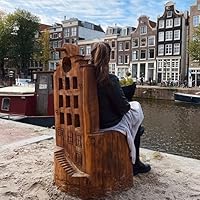
April 21, 2026
Wholesome journey wandering throughout Amsterdam
May 19, 2026
Beautifully written, entertaining and insightful. I definitely plan to follow in Ben’s footsteps the next time I visit Amsterdam.
July 11, 2026
Интересен поглед към Амстердам.Малко скучно на моменти.

July 24, 2026
I started this before leaving for my first visit to Amsterdam and finished it while in the city. I LOVED the concept and the writing is excellent.
September 18, 2026
Somewhat amusing companion for a walk through the city, especially if one finds themselves lucky enough to be blessed with a sunny day (and sometimes interrupted by a quick rain shower but we are not made of sugar, now, are we?). I thoroughly enjoyed learning a bit more about the city I will be calling home for the next few months! The only thing I’d say is that I might have preferred a different narrator but well I suppose het kan niet allemaal rozengeur en maneschijn zijn :’)

September 25, 2025
What a feast this book is for someone who loves both travel memoirs and history. Ben Coates has written a travelogue with a difference: it focuses not on a country but on one city – Amsterdam.
In attempting to build up his strength following an accident, Ben plots out ten different routes that include places and people of historical interest along the way. Combining these wonderful ‘did you know?’ accounts with observations on the locals he encounters and reflections on his own experiences, Ben weaves numerous fascinating tales into the history of Amsterdam that had me delighted and intrigued from the first to the last page. I loved the concept of these ten walks through the centre and the outskirts of the Netherlands’ capital, and I was warmed by his affection for both his adoptive country and for Amsterdam in particular.
I’ve lived in the Netherlands for 24 years and have never been a great Amsterdam fan. This book has encouraged me to explore it further and seek out some of the gems he has revealed. Thank you, Ben, for an absorbing and hugely enjoyable read.
In attempting to build up his strength following an accident, Ben plots out ten different routes that include places and people of historical interest along the way. Combining these wonderful ‘did you know?’ accounts with observations on the locals he encounters and reflections on his own experiences, Ben weaves numerous fascinating tales into the history of Amsterdam that had me delighted and intrigued from the first to the last page. I loved the concept of these ten walks through the centre and the outskirts of the Netherlands’ capital, and I was warmed by his affection for both his adoptive country and for Amsterdam in particular.
I’ve lived in the Netherlands for 24 years and have never been a great Amsterdam fan. This book has encouraged me to explore it further and seek out some of the gems he has revealed. Thank you, Ben, for an absorbing and hugely enjoyable read.
March 25, 2025
Really enjoyable account of one of my favourite cities arranged as ten walks. Made me want to go back to Amsterdam for a 4th visit to explore bits I haven’t seen yet.
Displaying 1 - 21 of 21 reviews