

What do you think?
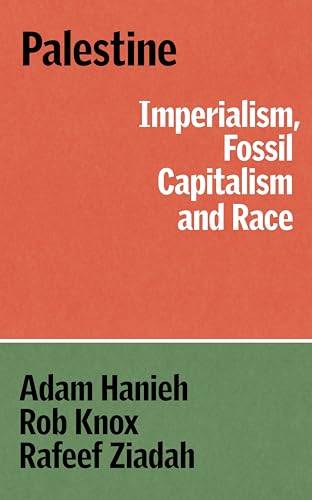
Resisting Erasure: Capital, Imperialism and Race in Palestine
Why does the West unwaveringly back Israel? This anti-imperialist critique from authors who are centrally involved in Palestine solidarity work offers a clear answer.
This essential read provides clarity on the intertwined relationships of global capitalism, energy politics, and racial oppression, and challenges readers to rethink their understanding of Palestine.
Dismantling the simplistic narratives that dominate mainstream discourse, the authors provide a material analysis of Israel's violence, its support from international states, and the various political responses of the Palestinian liberation movement. Historical and regional dynamics of Western imperialism, capitalist accumulation, and racialization form the core of their argument.
This book offers a thorough critique of the forces that sustain the Israeli settler-colonial project and the unwavering support it receives from Western powers.
This essential read provides clarity on the intertwined relationships of global capitalism, energy politics, and racial oppression, and challenges readers to rethink their understanding of Palestine.
Dismantling the simplistic narratives that dominate mainstream discourse, the authors provide a material analysis of Israel's violence, its support from international states, and the various political responses of the Palestinian liberation movement. Historical and regional dynamics of Western imperialism, capitalist accumulation, and racialization form the core of their argument.
This book offers a thorough critique of the forces that sustain the Israeli settler-colonial project and the unwavering support it receives from Western powers.
128 pages, Paperback
Published August 26, 2025
Ratings & Reviews
Friends & Following
Create a free account to discover what your friends think of this book!
Community Reviews
Displaying 1 - 30 of 55 reviews

July 8, 2025
I am not sure why this says it is not published, as I quite literally have a copy of it in my room and table.
I was already pro-Palestinian by the time I even encountered this book within a local store. I am deeply interested in the topics written on the cover and thus, purchased the book and got set to reading it after a few days. It consolidated knowledge I knew already but also expanded my ideas of the region, putting the modern-day oppression and murder of the Palestinian nation into a historical context that is both regional and industrious; it gave me hope to remember there is solidarity.
I was already pro-Palestinian by the time I even encountered this book within a local store. I am deeply interested in the topics written on the cover and thus, purchased the book and got set to reading it after a few days. It consolidated knowledge I knew already but also expanded my ideas of the region, putting the modern-day oppression and murder of the Palestinian nation into a historical context that is both regional and industrious; it gave me hope to remember there is solidarity.

January 12, 2026
razor sharp book, perfect as a pamphlet which goes beyond palestine 101 intro by giving readers a better understanding of economic context - within the occupied territories, between these and the Israeli economy, and the broader middle east and US/europe. I didn't get a ton out of it personally bc I guess I've read a lot of the arguments assembled here in the authors' other works. that said, definitely glad it exists.

January 2, 2026
One of the really interesting and exciting things in my academic world at the moment is that we’re exploring and unpacking nuance and difference in a recently developing concept, where about 25 years ago the long standing distinction we made between types of colony started to take form as distinct theory of settler colonialism. As happens with these things as we’ve begun to agree on what settler colonialism looks like. That means that we’ve begun to refine the theory through exploring its application in practice – so places like Australia and New Zealand, Canada, the USA and Algeria can be seen as similar, but not the same – and it’s the not-the-same that allows us to refine our analytical models and make better sense of the world we live in. A vital thing here is that historically these settler states are all quite recent, and in the case of one, Israel, came into being within living memory.
This valuable analysis takes that question of ‘what’s not the same’ in Palestine to begin to unravel Israel’s central place in contemporary global fossil capitalism, as the major capitalist power proxy foothold in West Asia, as essential to understanding the persistence of support for that state, the defence at all costs and of any action, and the practice of racialisation in the region. The argument, then, it in short that a grasp of the class dynamics of the occupation, dynamics in both settler and Palestinian worlds, is vital to understand history and politics of the region. This means that the all-too-common simplistic reduction of the issue to one of ‘race’ fails to recognise the specificities of ‘race’ in this setting. It also means that the authors argue, convincingly, that recognising the power of those tentacles of fossil capitalism helps account for Israel’s centrality other struggles in the wider region.
There’s a lot going on the few thousand words, and a lot going on behind those words across a range of disciplines – politics, economics, law, and history among others – that is lightly worn and illustratively (but not comprehensively, that’d make it a much, much bigger book) referenced. That makes this an important contribution that reaches out beyond the academy to wider audiences and activist groups; it’s there these ideas will be put into practice as the politics of struggle becomes enhanced and refined: that makes this all the more valuable.
This valuable analysis takes that question of ‘what’s not the same’ in Palestine to begin to unravel Israel’s central place in contemporary global fossil capitalism, as the major capitalist power proxy foothold in West Asia, as essential to understanding the persistence of support for that state, the defence at all costs and of any action, and the practice of racialisation in the region. The argument, then, it in short that a grasp of the class dynamics of the occupation, dynamics in both settler and Palestinian worlds, is vital to understand history and politics of the region. This means that the all-too-common simplistic reduction of the issue to one of ‘race’ fails to recognise the specificities of ‘race’ in this setting. It also means that the authors argue, convincingly, that recognising the power of those tentacles of fossil capitalism helps account for Israel’s centrality other struggles in the wider region.
There’s a lot going on the few thousand words, and a lot going on behind those words across a range of disciplines – politics, economics, law, and history among others – that is lightly worn and illustratively (but not comprehensively, that’d make it a much, much bigger book) referenced. That makes this an important contribution that reaches out beyond the academy to wider audiences and activist groups; it’s there these ideas will be put into practice as the politics of struggle becomes enhanced and refined: that makes this all the more valuable.

September 10, 2025
"Solidarity is not an act of charity – but a shared fight against the common structures that produce dispossession, repression, and exploitation across the region and beyond".
Well written and clear, informative and political.
I would recommend this book to anyone who wants to understand the context of the Palestinian struggle, but also to those who are already familiar with it, as it helps put events in order. The authors expose how, in a fossil fuel global order, Western powers (i.e. the States and Europe) created Israel. The book also provides an overview of how Israel's settler-colonial capitalism operates, as well as its link to a broader system of exploitation.
Well written and clear, informative and political.
I would recommend this book to anyone who wants to understand the context of the Palestinian struggle, but also to those who are already familiar with it, as it helps put events in order. The authors expose how, in a fossil fuel global order, Western powers (i.e. the States and Europe) created Israel. The book also provides an overview of how Israel's settler-colonial capitalism operates, as well as its link to a broader system of exploitation.

January 11, 2026
this was fantastic; i don't think it introduced me to any new concepts or arguments but presents a materialist analysis of the links between palestine, anti-palestinian racism, settler colonialism and global capitalism in a very succinct and compelling way. it's short too (more of a pamphlet than a book), so would make a terrific primer for anyone seeking to better understand the political economy and context of the ongoing genocide. the footnotes also contain references to some sources i intend to look at in more detail, including co-author adam hanieh's 'crude capitalism', an intellectual history of oil and capitalism.
going over my copy now, in the end i seem to have underlined like 40% of the book lol but my key takeaways are:
- the framing of palestinian suffering as a 'humanitarian crisis' and the turn to international law for redress/solutions serves to sap the palestininan struggle of its political content and present israel and palestine as rights-bearers operating on an equal playing field, which is nice in theory but totally divorced from the reality of how power has been distributed (including in the legal sphere). it also obscures israel's status as a settler colony with an essential role in the expansion of US-led fossil capitalism in the middle east.
- you can’t understand israel's special place in the the US's regional security framework without first understanding Israel’s internal nature as a settler colony (i.e. privileged settler class relying on militarism and violence to exploit, oppress and dispossess the indigenous population) - this is why settler colonies often have to rely on external support to maintain security in a generally hostile surrounding environment. in this way, israel is very much reliant on its western backers, particularly the US, for its continued existence as a settler colony, and so it’s inaccurate to say that israel or the israel lobby control or direct its western backers; in fact it’s very much the opposite. that said, pro-israel interest groups in the west do perform disciplining and consent-manufacturing functions crucial for the promotion and normalisation of anti-palestinian racism, which is embedded in the constitutional structure of israel and makes israeli settler colonialism possible.
- The most compelling part of this book for me was the examination of the conditions shaping the structure of the palestinian economy and leading to its total capture by israeli capitalism. from 1967 the occupation of the west bank and gaza strip further fragmented palestinian society and weakened local industry (esp through israel’s confiscation of water, arable land and building of settlements, etc). palestinian areas were flooded with israeli-produced foods and commodities (captive consumer base); and much of industrial activity was limited in size and the subject of israeli subcontracting. cheap palestinian labour fuelled an economic boom in Israel in the 1970s (especially in the construction industry; i think the way in which palestinians have been economically coerced into literally building their own prison - including the apartheid wall - is particularly disgusting) thus an entire class of palestinians living in the occupied territories became economically tethered to the military occupation, becoming increasingly proletarianised, and also politicised by palestinian resistance movements developing abroad in places like lebanon and jordan. after the first intifada, the effect of the oslo accords was to essentially set this system of economic subordination in stone under the guise of granting the palestinians a pathway to ‘self-governance’ through the PA, which in practice is a security contractor of the israeli government (and a major employer in the west bank).
- These conditions have set the stage for israel’s economic normalisation in the middle east, especially with the wealthy gulf states through the abraham accords, enabling israel’s access to new markets for its tech and military exports. oslo was essential in this process because it allowed israel to paint itself as a partner (rather than enemy) of palestine in the so-called peace process. this goal of regional economic integration will be pivotal for understanding what israel and its backers plan to do next with the decimated gaza strip through the establishment of the gaza-arish-sderot free trade zone. we're now squarely in disaster capitalism's 'reconstruction' phase, and we're here bc of the genocide, which was in turn made possible by oslo and the economic normalisation of israel, which states like saudi arabia and the UAE have enthusiastically greenlit whilst performatively demanding in exchange only the symbolic promise of 'palestinian statehood'. there's a reason why so many of israel's longstanding allies (EU, UK, australia, canada etc.) have been prepared to jump on the statehood bandwagon - it conveniently limits the question of palestine to a mere territorial dispute and creates political cover for the integration of israel into the global capitalist order, which continues apace.
reading the very lucid analysis in this book has been quite reinvigorating and helpful in reorganising my thoughts around the palestinian struggle in connection with fossil capitalism and other conflicts. 10/10 and i might try reading some of the other pamphets in this verso series (which i'm just realising now are the perfect size for xmas stocking stuffers......)
going over my copy now, in the end i seem to have underlined like 40% of the book lol but my key takeaways are:
- the framing of palestinian suffering as a 'humanitarian crisis' and the turn to international law for redress/solutions serves to sap the palestininan struggle of its political content and present israel and palestine as rights-bearers operating on an equal playing field, which is nice in theory but totally divorced from the reality of how power has been distributed (including in the legal sphere). it also obscures israel's status as a settler colony with an essential role in the expansion of US-led fossil capitalism in the middle east.
- you can’t understand israel's special place in the the US's regional security framework without first understanding Israel’s internal nature as a settler colony (i.e. privileged settler class relying on militarism and violence to exploit, oppress and dispossess the indigenous population) - this is why settler colonies often have to rely on external support to maintain security in a generally hostile surrounding environment. in this way, israel is very much reliant on its western backers, particularly the US, for its continued existence as a settler colony, and so it’s inaccurate to say that israel or the israel lobby control or direct its western backers; in fact it’s very much the opposite. that said, pro-israel interest groups in the west do perform disciplining and consent-manufacturing functions crucial for the promotion and normalisation of anti-palestinian racism, which is embedded in the constitutional structure of israel and makes israeli settler colonialism possible.
- The most compelling part of this book for me was the examination of the conditions shaping the structure of the palestinian economy and leading to its total capture by israeli capitalism. from 1967 the occupation of the west bank and gaza strip further fragmented palestinian society and weakened local industry (esp through israel’s confiscation of water, arable land and building of settlements, etc). palestinian areas were flooded with israeli-produced foods and commodities (captive consumer base); and much of industrial activity was limited in size and the subject of israeli subcontracting. cheap palestinian labour fuelled an economic boom in Israel in the 1970s (especially in the construction industry; i think the way in which palestinians have been economically coerced into literally building their own prison - including the apartheid wall - is particularly disgusting) thus an entire class of palestinians living in the occupied territories became economically tethered to the military occupation, becoming increasingly proletarianised, and also politicised by palestinian resistance movements developing abroad in places like lebanon and jordan. after the first intifada, the effect of the oslo accords was to essentially set this system of economic subordination in stone under the guise of granting the palestinians a pathway to ‘self-governance’ through the PA, which in practice is a security contractor of the israeli government (and a major employer in the west bank).
- These conditions have set the stage for israel’s economic normalisation in the middle east, especially with the wealthy gulf states through the abraham accords, enabling israel’s access to new markets for its tech and military exports. oslo was essential in this process because it allowed israel to paint itself as a partner (rather than enemy) of palestine in the so-called peace process. this goal of regional economic integration will be pivotal for understanding what israel and its backers plan to do next with the decimated gaza strip through the establishment of the gaza-arish-sderot free trade zone. we're now squarely in disaster capitalism's 'reconstruction' phase, and we're here bc of the genocide, which was in turn made possible by oslo and the economic normalisation of israel, which states like saudi arabia and the UAE have enthusiastically greenlit whilst performatively demanding in exchange only the symbolic promise of 'palestinian statehood'. there's a reason why so many of israel's longstanding allies (EU, UK, australia, canada etc.) have been prepared to jump on the statehood bandwagon - it conveniently limits the question of palestine to a mere territorial dispute and creates political cover for the integration of israel into the global capitalist order, which continues apace.
reading the very lucid analysis in this book has been quite reinvigorating and helpful in reorganising my thoughts around the palestinian struggle in connection with fossil capitalism and other conflicts. 10/10 and i might try reading some of the other pamphets in this verso series (which i'm just realising now are the perfect size for xmas stocking stuffers......)

February 8, 2026
Kontextuliserar och avmystifierar folkmordet i Gaza och relationen mellan Israel, USA och mellanöstern på ett lättillgängligt sätt för såna som jag som inte vet så mycket sen innan.

October 23, 2025
I read this as part of a reading circle and thought this was a really good introduction to Palestine, in less than 100 pages. Pushes against liberal and oversimplified discourses about Palestine, Israel and the US as well as the exceptionalization of Palestine, places Palestine within oil centered global capitalism and what is at stake in the Middle East, clearly explains US strategies of political and economic normalization of Israel in the region... Perhaps the introduction was not as strong a chapter as the rest of the book, but the list of references is really good and there are a few things I've bookmarked to read. This is a brilliant read and great for a reading circle because it is short, critical, packed with information, and super accessible.

December 28, 2025
As someone who knew NOTHING, not ONE things about the topic, this was a fantastic read. It recontextualises the genocide and explains the forces driving it, the relationship with capitalism, racism, climate change (fossil fuels), etc. Would recommend.

August 22, 2025
I grant you refuge in knowing that the dust will clear, and those who once fell in love and died together will one day laugh.
— Martyr Hiba Abu Nada
The book’s analysis situates Palestine within the broader intersections of global capitalism, energy politics, and racial oppression. It convincingly shows how Palestine is not an exception, but rather a concentrated site where empire, profit, and racialized dispossession converge. The strength of the book lies in this very specific framing - it refuses to treat the violence against Palestinians as an isolated conflict, instead placing it firmly within the infrastructures of colonial domination and global capital.
That said, I find myself pausing at one point of contention (an argument I strongly hold onto in any book discussing this point about Palestine, bear with me haha) The book suggests that the current violence in Palestine is not fueled by religious hatred. While it is true that to reduce the struggle to “religion” alone would be misleading, it is also true that religion has been a consistent element in both the ideological foundation and the lived practices of Zionist settler-colonialism. Consider the very infamous David Ben Gurion, Israel’s first prime minister… while he operated within secular politics, his project was deeply tied to his interpretation of Judaism -not Judaism as a faith, nor Jewish identity itself, but his particular mobilization of it as a political tool. From the very beginning, religious symbolism and justification were embedded into the settler-colonial logic. And believe me, this is the case for so many other Zionists.
We see the continuation of this dynamic today. The repeated burning and demolition of mosques in Gaza and the West Bank, or the April 2023 assaults at Qubat al Zakhra mosque, where women were beaten and detained during Ramadan prayers, are not merely incidental acts of war. They are attacks on faith, on sacred spaces, on the spiritual fabric of a people. To dismiss these acts as unrelated to religious hatred risks overlooking how central that hatred has become as fuel for the broader project of domination, quite literally.
Of course, the violence in Palestine cannot be reduced to religion alone - it is inseparable from land theft, racial hierarchies, and global capitalist interests. But religion, in this context, is not a side note… it is one of the engines. The book is right to stress the economic and racial structures that underpin the occupation, yet we must also recognize how religious hatred is mobilized within and alongside these systems to deepen the harm.
That said, I want to extend my thanks to NetGalley and Verso Books for granting me an early access to this eARC.
— Martyr Hiba Abu Nada
The book’s analysis situates Palestine within the broader intersections of global capitalism, energy politics, and racial oppression. It convincingly shows how Palestine is not an exception, but rather a concentrated site where empire, profit, and racialized dispossession converge. The strength of the book lies in this very specific framing - it refuses to treat the violence against Palestinians as an isolated conflict, instead placing it firmly within the infrastructures of colonial domination and global capital.
That said, I find myself pausing at one point of contention (an argument I strongly hold onto in any book discussing this point about Palestine, bear with me haha) The book suggests that the current violence in Palestine is not fueled by religious hatred. While it is true that to reduce the struggle to “religion” alone would be misleading, it is also true that religion has been a consistent element in both the ideological foundation and the lived practices of Zionist settler-colonialism. Consider the very infamous David Ben Gurion, Israel’s first prime minister… while he operated within secular politics, his project was deeply tied to his interpretation of Judaism -not Judaism as a faith, nor Jewish identity itself, but his particular mobilization of it as a political tool. From the very beginning, religious symbolism and justification were embedded into the settler-colonial logic. And believe me, this is the case for so many other Zionists.
We see the continuation of this dynamic today. The repeated burning and demolition of mosques in Gaza and the West Bank, or the April 2023 assaults at Qubat al Zakhra mosque, where women were beaten and detained during Ramadan prayers, are not merely incidental acts of war. They are attacks on faith, on sacred spaces, on the spiritual fabric of a people. To dismiss these acts as unrelated to religious hatred risks overlooking how central that hatred has become as fuel for the broader project of domination, quite literally.
Of course, the violence in Palestine cannot be reduced to religion alone - it is inseparable from land theft, racial hierarchies, and global capitalist interests. But religion, in this context, is not a side note… it is one of the engines. The book is right to stress the economic and racial structures that underpin the occupation, yet we must also recognize how religious hatred is mobilized within and alongside these systems to deepen the harm.
That said, I want to extend my thanks to NetGalley and Verso Books for granting me an early access to this eARC.

April 5, 2026
“The erosion of American dominance in the Middle East is not just a regional phenomenon, but closely tied to a reconfiguration of global capitalism, and with it, global power relations. Mainly the emergence of China and the wider East Asia region as rival zones of capital accumulation, industrial production, and financial strength. The Middle East has been pivotal to this eastward shift of the world market: the region’s energy supplies are the lifeblood of China’s economy, and today the great majority of the Middle East’s oil and gas exports flow eastwards, rather than towards Western countries. Beyond energy, a range if other economic interdependencies now link the Middle East, China and East Asia, spanning finance, so called ‘green’ technologies, AI, construction, and infrastructure investment.”
The response from the West has been to, “integrate Israel more fully into the broader regional order by deepening its political and economic ties with Arab states, especially Saudi Arabia and the other Gulf monarchies. It is about consolidating the region’s primary centres of wealth and power within a single bloc aligned with US interests.”
“The Gulf states, in close partnership with Western oil giants, are doubling down on hydrocarbon production, locking the planet into a trajectory of certain climate catastrophe. For the US, this deepening fossil fuel expansion - tied to its strategic alliance with the Gulf monarchies and their normalisation with Israel - is a crucial source of power at a time when American global dominance faces mounting challenges. There can be no dismantling of the fossil order, nor any genuine Palestinian liberation, without breaking apart these alliances. This is why Palestine is at its core a struggle against fossil capitalism - and why the battle for survival waged by Palestinians today, in Gaza and beyond, is inseparable from the fight for the future of the planet.”
The response from the West has been to, “integrate Israel more fully into the broader regional order by deepening its political and economic ties with Arab states, especially Saudi Arabia and the other Gulf monarchies. It is about consolidating the region’s primary centres of wealth and power within a single bloc aligned with US interests.”
“The Gulf states, in close partnership with Western oil giants, are doubling down on hydrocarbon production, locking the planet into a trajectory of certain climate catastrophe. For the US, this deepening fossil fuel expansion - tied to its strategic alliance with the Gulf monarchies and their normalisation with Israel - is a crucial source of power at a time when American global dominance faces mounting challenges. There can be no dismantling of the fossil order, nor any genuine Palestinian liberation, without breaking apart these alliances. This is why Palestine is at its core a struggle against fossil capitalism - and why the battle for survival waged by Palestinians today, in Gaza and beyond, is inseparable from the fight for the future of the planet.”

December 28, 2025
Short but clear, concise and easy to understand. A deep dive into fossil capitalism, the Settler colonial project, the racialization of Palestinians and the steps being taken towards the normalization of Israel - all of which play massive roles in the history and politics of Palestine.
Palestine is not just an isolated issue happening across the ocean - it very much is intertwined with global power dynamics and politics, especially those of our own. Capitalism and racism cannot be separated from Imperialism and settler colonialism - these are extremely important to take into account when understanding why Israel exists and how it operates.
The US needs an outpost in the Middle East to have control of oil production and distribution so they become Israel’s strongest allies. They then try to shack up with other Arab states through the normalization of Israel in the region - all of this whilst ironically painting Palestinians, the Indigenous people of the land, as terrorists and “national security threats” and “so backwards and uncivilized that they need to be colonized”. It’s a classic US tactic to play white saviour in order to justify the destabilization of governments and nations, just so they can get their hands on resources and exploited labour whilst keeping their hands clean.
Palestine is truly the center of the Middle East no matter how you frame it - its liberation and fight against colonialism and imperialism heavily impacts the nations around them. We can only truly be freed if all of us are.
Palestine is not just an isolated issue happening across the ocean - it very much is intertwined with global power dynamics and politics, especially those of our own. Capitalism and racism cannot be separated from Imperialism and settler colonialism - these are extremely important to take into account when understanding why Israel exists and how it operates.
The US needs an outpost in the Middle East to have control of oil production and distribution so they become Israel’s strongest allies. They then try to shack up with other Arab states through the normalization of Israel in the region - all of this whilst ironically painting Palestinians, the Indigenous people of the land, as terrorists and “national security threats” and “so backwards and uncivilized that they need to be colonized”. It’s a classic US tactic to play white saviour in order to justify the destabilization of governments and nations, just so they can get their hands on resources and exploited labour whilst keeping their hands clean.
Palestine is truly the center of the Middle East no matter how you frame it - its liberation and fight against colonialism and imperialism heavily impacts the nations around them. We can only truly be freed if all of us are.
This entire review has been hidden because of spoilers.

January 3, 2026
So important that these pieces continue to be written, having an awareness of the atrocities and how blatant the colonial project is in serving the capital interests of the western world, renders capitalism and the Israeli state indefensible. Thank you for the book Jackson!

July 14, 2026
This book is a non-negotiable must-read for anybody who considers themselves to be on the anti-imperialist left as the authors do an incredible job breaking down the political economy of genocide, dispossession, and ethnic cleansing happening historically and currently in Gaza by "Israel."

July 1, 2026
Incredibly sharp pamphlet. A perfect introduction for anyone looking.

November 3, 2025
Inhoudelijk heel sterk, maar echt zo ontzettend droog dat ik er weken over gedaan heb (ondanks dat het pamflet slechts 97 paginas telt).

September 9, 2025
Ongelooflijk droog geschreven zoals enkel academici dat kunnen, maar inhoudelijk een essentieel andere visie, een essentieel ander narratief, in een essentieel andere context, voor deze o zo belangrijke kwestie.

September 19, 2025
Really enjoyed this short but incisive and very readable book about fossil capitalism, settler colonialism and the central place of the Zionist state within the networks of global capitalism . And centering the struggle for Palestinian freedom as a struggle against fossil capitalism and for the future of the whole planet

February 22, 2026
To stand with Palestine is not merely an act of solidarity with a remote and unconnected struggle somewhere far away; it is a stance against the broader structures of domination that sustain exploitation and oppression at home and abroad.
A succinct and clear exploration of Palestine's place in our world and how its oppression is imbedded in broader imperialist structures. The authors aim to interrogate the Western powers' interest in Palestine and urge to look beyond humanitarian frameworks that focus on Palestinian suffering as well as purely scapegoating pro-Israel lobbyists. If you've already read several books on the topic, this won't necessarily contain any new information, but it's always refreshing to see history and politics be put into context. Resisting Erasure stresses the importance of viewing Palestine, and specifically the zionist occupation's genocide in Gaza, not in isolation but as one of many (anti-imperialist) struggles under the exploitative systems of our time. It recounts the history of settler-colonialism and its strong ties with extractive, expansive capitalism in the region, highlighting the racist structures that uphold and justify them. A useful read for expanding your own viewpoint and your sense of international solidarity.
Thank you to Netgalley for providing a digital copy of this book for review consideration.
A succinct and clear exploration of Palestine's place in our world and how its oppression is imbedded in broader imperialist structures. The authors aim to interrogate the Western powers' interest in Palestine and urge to look beyond humanitarian frameworks that focus on Palestinian suffering as well as purely scapegoating pro-Israel lobbyists. If you've already read several books on the topic, this won't necessarily contain any new information, but it's always refreshing to see history and politics be put into context. Resisting Erasure stresses the importance of viewing Palestine, and specifically the zionist occupation's genocide in Gaza, not in isolation but as one of many (anti-imperialist) struggles under the exploitative systems of our time. It recounts the history of settler-colonialism and its strong ties with extractive, expansive capitalism in the region, highlighting the racist structures that uphold and justify them. A useful read for expanding your own viewpoint and your sense of international solidarity.
Thank you to Netgalley for providing a digital copy of this book for review consideration.

June 5, 2026
A wonderful and timely read. It manages to be incredibly insightful, even without delving into all of the specifics of Palestine's history. I would recommend this to anyone interested in understanding the dynamic between Palestine and Israel; it does a wonderful job of contextualizing the Palestinians' struggle against the larger global and historical factors.
Especially valuable to read in 2026, where many are struggling to understand the dynamics between Israel and America. There is a real tendency of generally pro-Palestinian people to characterize the conflict as solely a Netanyahu problem, or an "Israel lobby" problem, with America as a duped, innocent party under Israeli control. This piece reminds us of the role Israel plays in America's larger aims (both historically and presently) of maintaining hegemony, destabilizing the Middle East for control over oil. Israel's rise would not be possible without the influence of the U.S. and relevant corporations.
Resisting Erasure is a must-read to help contextualize how the Palestinians' fight for the right to return fits into the global fight against domination, tribalism, nationalism, and the infinite-growth mindset of capitalism.
Especially valuable to read in 2026, where many are struggling to understand the dynamics between Israel and America. There is a real tendency of generally pro-Palestinian people to characterize the conflict as solely a Netanyahu problem, or an "Israel lobby" problem, with America as a duped, innocent party under Israeli control. This piece reminds us of the role Israel plays in America's larger aims (both historically and presently) of maintaining hegemony, destabilizing the Middle East for control over oil. Israel's rise would not be possible without the influence of the U.S. and relevant corporations.
Resisting Erasure is a must-read to help contextualize how the Palestinians' fight for the right to return fits into the global fight against domination, tribalism, nationalism, and the infinite-growth mindset of capitalism.

February 25, 2026
Thank you to NetGalley and the publisher for this ARC.
A short but fairly thorough book describing the interconnectedness of, especially, capitalism and the Palestinian struggle, the partition of Palestine and Israel becoming what it is today, written in essay-like chapters, each dealing with a different topic but each coming back to how various systems of domination (capitalism, imperialism, racism) eventually affect and interconnect in Palestine.
I do not think that there was a lot of new information in here for me personally, because I have already read other books dealing with similar topics (e.g. capitalism's role in Israel's position in the Middle East in "The Palestine Laboratory"). Still, these essays added on to the knowledge and information I already had, reinforcing the connections between the various systems. I would recommend this book, either as an introduction or as an additional source of perspectives and information, raising awareness of the nature of the Palestinian struggle and the various stakeholders as well as the history behind it all (oil, for example, is discussed surprisingly little in discussions about Palestine, Israel and the U.S. role).
A short but fairly thorough book describing the interconnectedness of, especially, capitalism and the Palestinian struggle, the partition of Palestine and Israel becoming what it is today, written in essay-like chapters, each dealing with a different topic but each coming back to how various systems of domination (capitalism, imperialism, racism) eventually affect and interconnect in Palestine.
I do not think that there was a lot of new information in here for me personally, because I have already read other books dealing with similar topics (e.g. capitalism's role in Israel's position in the Middle East in "The Palestine Laboratory"). Still, these essays added on to the knowledge and information I already had, reinforcing the connections between the various systems. I would recommend this book, either as an introduction or as an additional source of perspectives and information, raising awareness of the nature of the Palestinian struggle and the various stakeholders as well as the history behind it all (oil, for example, is discussed surprisingly little in discussions about Palestine, Israel and the U.S. role).

January 9, 2026
Resisting Erasure by Adam Hanieh is a short yet powerful book that situates Palestine firmly within the global systems of capitalism, imperialism, and the exploitation of labor and resources. With remarkable clarity and precision, Hanieh explains the laws, financial structures, and diplomatic mechanisms that have enabled Israeli settler-colonialism to persist over time. No word is wasted, each page offers new insights that help disparate pieces of knowledge about Palestine click into place within a broader global framework. As an accessible and deeply informative text, this book is an excellent starting point for anyone seeking to understand not only the current moment, but the historical and structural forces that have made it possible. It is a must-read, and one I will be recommending widely.

September 1, 2025
a solid and on-point breakdown of the role US and global fossil-fueled racist capitalism plays through settler colonialism in Israel’s genocide of Palestinians. not giving it a full 5 stars only cuz you can’t write off religious hatred as one of the drivers of Zionist violence.
It’s so true for Eastern European countries resisting Moscovia’s (later rebranded as the russian empire, then russia) millennia-long colonization, with the same aim of erasing nations other than russians. and the tools are all the same.
By deepening awareness of how capitalism [I’d add ‘and colonialism’] operates globally, we gain a greater understanding of how capitalism [again, ‘and colonialism’] works at home.
It’s so true for Eastern European countries resisting Moscovia’s (later rebranded as the russian empire, then russia) millennia-long colonization, with the same aim of erasing nations other than russians. and the tools are all the same.

February 18, 2026
If you’re looking for a straight forward read about Palestine and its history and ties with fossil fuel capitalism, imperialism, and racism, this is the book for you! It’s a very short read and gets straight to the point of how Palestine was set up for destabilization DECADES ago just to help imperialism and capitalism for the US. All this obviously being tied together with racism as well because that in itself cannot be separated from it all. It also reflects how Palestinian struggle is a universal struggle for all those who suffer under capitalism and imperial powers. I would even recommend this as a first time read for anyone who wants to know about Palestine.
June 12, 2026
Does exactly as the title says, frames the ongoing Palestine conflict in the context of capitalism, imperialism and race.
Provides an excellent and short history of the region, and presents a compelling argument particularly about the role of capitalism in oppressing nations both through historical evidence and an examination of how capitalism functions in occupied nations.
Strays occasionally from its wider goal, to frame Isreal as a hub of US foreign strategy (despite claiming that it’s more complex than this) but eventually ties its entire premise together well.
A fantastic less than 100 page must read, that sets out a well researched argument.
Provides an excellent and short history of the region, and presents a compelling argument particularly about the role of capitalism in oppressing nations both through historical evidence and an examination of how capitalism functions in occupied nations.
Strays occasionally from its wider goal, to frame Isreal as a hub of US foreign strategy (despite claiming that it’s more complex than this) but eventually ties its entire premise together well.
A fantastic less than 100 page must read, that sets out a well researched argument.

October 10, 2025
A good short marxist(?) analysis of Palestine which dispenses with appeals to humanitarian or legal ideals. Highlights are the discussions of Palestine’s role as a source of labor supply and demand for manufactures and food; normalization of Israeli occupation via international law; impotence of the Oslo-created PA. Shortcomings are the lack of direct historical links of Israel’s strategies to other mentioned regimes like South Africa etc., no discussion of Israel’s manipulating of religion and sectarianism to consolidate Apartheid. A great intro

March 29, 2026
An understandable read that requires general background in history and economics. This book is a great reminder of why history should continue to be studied as a dynamic, systemic process. The history of Palestine is complex and not just a static issue; this book highlights that importantly well.
Side note:The structure of the book is almost like a policy memo that requires some background knowledge. I kept my dictionary app open for some of the complex wording and historical systems I didn't know but besides that, it was understandable and truly not difficult to read.
Side note:The structure of the book is almost like a policy memo that requires some background knowledge. I kept my dictionary app open for some of the complex wording and historical systems I didn't know but besides that, it was understandable and truly not difficult to read.

September 8, 2025
Not as easy reading as the Andreas Malm pamphlet in this series, but still an important framing of the history of racism applied to the situation in Palestine since the early 1900s, way before the state of Israel was enacted in the land. This points out the critical interest of capitalist powers in the region that have superseded the human rights of peoples native to the land in the pursuit of unending expansion and “progress.”

September 12, 2025
كتاب جيّد ومهم؛ أظنّه كُتب لغير العرب ليكون مدخلاً حديثًا لتعريفهم بمعاناة غزة، جذورها وواقعها. تعجبني لغته الواضحة؛ فهو يسمّي الأمور بمسمّياتها: إسرائيل استعمارٌ استيطاني ورأسُ حربةٍ للمصالح الأمريكية في المنطقة، والتطبيع وسيلةٌ لإسرائيل ومن خلفها أمريكا لدمج الاحتلال سياسيًا واقتصاديًا في المنطقة؛ باختصار: تبيئة إسرائيل.
كنت أتمنى أن يتوسّع الكتاب ويستفيض في بعض الجوانب، خاصةً الجانب الاقتصادي المتعلق بدمج إسرائيل في اقتصاد دول مجلس التعاون الخليجي.
مجملاً، الكتاب جيّد ومهم كما ذكرت.
كنت أتمنى أن يتوسّع الكتاب ويستفيض في بعض الجوانب، خاصةً الجانب الاقتصادي المتعلق بدمج إسرائيل في اقتصاد دول مجلس التعاون الخليجي.
مجملاً، الكتاب جيّد ومهم كما ذكرت.

October 23, 2025
“There can be no dismantling of the fossil order, nor any genuine Palestinian liberation, without breaking apart these alliances (the Gulf monarchies, the United States, and Israel). This is why Palestine is at its core a struggle against fossil capitalism - and why the extraordinary battle for survival waged by Palestinians today, in Gaza and beyond, is inseparable from the fight for the future of the planet.”

November 9, 2025
I appreciated the sharpness and clarity of the writing. The third essay was the weakest imo and largely looked at racialization through general frameworks of islamophobia and war on terror and could have talked more on the many specifities of anti Palestinian racism, but that's in comparison to the rest which set the bar pretty high. I was glad to see that despite coming out recently this copy has obviously been borrowed and read many times.
Displaying 1 - 30 of 55 reviews