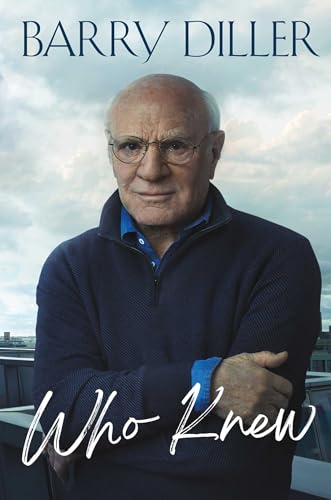
Barry Diller, one of America’s most successful businessmen, reveals himself here—his successes, failures, and struggles—with surprising candor and intimacy in a memoir rich in Hollywood lore and filled with business acumen.
Writing in his singular voice, Barry Diller delivers an astute business memoir, an unvarnished look at Hollywood, a primer on media, and a surprisingly frank coming-of-age story.
“I want to work in the mail room at William Morris.” So begins Diller’s show business life. Diller did not aspire to be an agent, nor was he a glove fit for William Morris, the legendary talent agency he describes as resembling a “Jewish Vatican.” But he was a good assistant and student and took it all in.
Before long, Diller was offered a job at ABC. His ascent was meteoric, launching ABC TV’s Movie of the Week at age twenty-seven, becoming CEO of Paramount Pictures at age thirty-two, and launching the Fox TV network at age forty-four. Along the way, Diller oversaw the production of classic films such as Saturday Night Fever, Raiders of the Lost Ark, and Home Alone (a film he credits with saving Rupert Murdoch’s career) and hit TV shows such as The Simpsons, Married…with Children, and Cops. He programmed and developed by instinct—not by research or data.
Diller’s media savvy changed the course of American culture. His championing of Alex Haley’s Roots put long-form miniseries on the map. He was never cowed by the talent—actors, directors, and producers—and worked with them all. Indeed, throughout his career, Diller championed “creative conflict,” encouraging argument in every business he managed (“I’ve never thought decision-making should be peaceful,” he writes). Diller also recognized our digital future, founding IAC and growing it into a billion-dollar constellation of brands, including Match, Tinder, and Expedia.
Moving beyond business, Diller recounts his family life, personal struggles, and regrets, his joyful marriage to Diane von Furstenburg, and where he has found fulfillment.
Intimate, candid, and moving, Who Knew is a different kind of business memoir, one that holds nothing back.
It must be difficult to write a memoir. The author has to examine his life - so far - and be honest about his relationships with family, friends, and the world at large. A good memoirist must intuit what he should include and what he should spare his readers. Far too many people who write memoirs think everything should be exposed.
However, Barry Diller, movie and television wonderkin, was judicious in choosing what to include in his memoir. The book’s title, “Who Knew” is a clever way to address the two questions most readers would want to know the answers to. The first would be Diller’s sexual orientation. “Who knew” if he was gay, straight, or “Diane”? He sensitively explores his life as a man who seems to have compartmentalized his interests, passions, work, and familial relations. His parents were indifferent to their two sons and his older brother was a drug addict who made life miserable to Barry as a child. Not a happy childhood, I think.
Diller opens up about his relationship with Diane von Furstenburg, which began in the 1970’s, and took a ten or so year breakup. He reunited with her in the 1990’s and the two married in 2001. They continue to share their lives, both on land and sea, and her family is his.
“Who knew”, too, about how he made his mark in the entertainment industry? He is open, self deprecating, and funny about the companies he ran, the movies he made, and the technology he embraced. And, of course, the people he met along the way.
I read many memoirs and Barry Diller’s is one of the best.
Fascinating and honest story, beautifully written. I was at Universal when Diller briefly took over - he was feared. This is a deeply vulnerable and introspective book. A whole new view.
Barry Diller does his best to whitewash and spin his notorious career but isn't very convincing as he blames his distant parents, hidden homosexuality, and jealous coworkers on his infamous reputation. This may be an attempt at an image makeover but it fails--in the midst of all the interesting stories it becomes very clear that Diller is egotistical, demanding, and hogs credit for ideas that belong to others or a group.
Details of his upbringing are refreshingly short and to the point. His rich Beverly Hills parents essentially ignored him and he was a total loser in high school among famous friends like Nora Ephron, Candice Bergen, and the children of many major movie/tv studio heads. The fact that he was practically adopted by the Danny Thomas family, then given his first job at a studio by Thomas despite him unable to do much more than put a stamp on an envelope, is proof that the uneducated guy didn't deserve the breaks he was given.
One after another he is appointed to jobs he isn't qualified for. Diller claims it's because he was good at "serving" and "not having an ego." Hard to believe based on the monster that he became. At age 22 he, with zero qualifications, is appointed assistant to the ABC television programming head and before you know it the inexperienced druggie that sleeps around with other network male employees is helping to decide what to put on prime time.
I appreciate his willingness to reveal how undeserving he was of his positions, but if he's looking for sympathy regarding his poor reputation he won't find it among readers. Diller was simply a rich kid who kissed up to older corporate executives, slept with a few of the right guys, and quickly was promoted despite lacking any real talent.
Then he unfairly takes credit for a few of the biggest moments in television history. First, he claims he came up with the concept of the TV movie. Totally false, of course--NBC had done it first, and all Diller did was push for the concept to be done as a weekly series. Then he says that by 1970, "No one had ever used advertising to sell television shows," an absurd falsehood that allows him to make the laughable claim that he was the first. Then he says he created the TV miniseries--"No television network had ever bought a novel" and turned it into a multipart series, he claimed, ignoring the fact that NBC again had beaten him to it when airing "The Blue Knight" a year earlier.
Along the way he falsely brags about being number one in ratings and being the one to put Roots on the air (failing to acknowledge new ABC programming chief Fred Silverman and others who had roles in getting it on TV). What else do you expect from a guy who never went to college and didn't know anything about the television jobs he was given? Of course he claims to be the first at things since he was so unaware of the history of the industry!
So by the middle of the book I had given up trusting that what he was saying was truth. He was spinning stories that either he knew to be lies or stored in his memory as his own accomplishments when he was just one player in network television groupthink.
His takeover of the movie studio is a funny story where again he acts like a Podunk know-nothing kid who was forced into a situation where he overnight ousted one of the most powerful men in Hollywood. What's odd about his story is that he fails to include the Mafia influence on Paramount in those days, which ultimately impacted his boss's decisions. Namely, like most things in this book, there's more to the story than the author is letting on. The key to Diller's eventual Paramount success is when he hires Michael Eisner and Jeffrey Katzenberg, who start cranking out hits, though the author is very careful to use the word "we" whenever anything happens so that he takes credit.
When it gets to the short section on his heading Fox, Diller rushes and blame-shifts, ignores a couple of major moments (like the Joan Rivers late night show), then takes credit for coming up with the idea for reality TV. You read that right, he states: "I did start the concept of voyeuristic television, which evolved into the endlessly repetitive reality shows that are now everywhere." He says he started it all with the show Cops.
In order to do that he has to ignore the history of television, such as Candid Camera, An American Family, Real People, That's Incredible and other shows that pointed cameras and just let them record real life. It's hard to believe that his uneducated ego is so huge that he takes credit for an entire genre that was already quite alive.
He makes many inaccurate and audacious claims. He takes credit for The Simpsons, wrongly calling it "the longest-running, most successful show in the history of television." He claims to have been the first to leverage a cable network for interactivity in 1992 when he bought into QVC (nope, Warner Cable was doing interactive cable in Columbus, Ohio, in 1977). He doesn't even know what an acronym is (calling QVC one, which of course it isn't because an acronym is initials pronounced as a single word).
All this book proves is that any dumb rich kid can "fake it until he makes it" and run giant media corporations not having a clue what he's doing. The weirdest part is that he repeatedly laughingly admits it in this text, all the way to the bank.
Along the way he ends up tossing everyone he works with under the bus (including Eisner) for lying, misrepresenting, and going back on signed deals. Well, that appears to be business as usual in Hollywood, and the more I read about these rich con men corporate leaders that act like Mafia Dons the more I realized how similar Donald Trump is in his approach to business.
There also are some weird political statements that will make everyone uncomfortable. For the 1972 Olympics, where his Village room was close to the Palestinian terrorists that murdered Israelis, the Jewish Diller states, "the Germans' mistakes had gotten the Israelis killed." Wow. And here I thought it should be blamed on the Palestinians holding the weapons that murdered the hostages!
Even liberals will not be happy when in another section he feels the need to insert, "I think the biggest crime of the Biden administration is that it came in with a pledge to restore a more civilized, selfless and uplifting manner of governance and instead let us all down with its progressive elitism, personal ego, and cynical behavior." Refreshingly true, but a surprise placed in the midst of the making of a 1970s TV movie about homosexuality.
Then there's his own sexuality. If he was confused, think how confounding it is for readers when the author makes numerous illusions to it but doesn't give specifics. All that I could figure out was that he says he started longing for men at age 7, after a childhood where his father lived away from home most weeks and his mother abandoned him at camp in a sad story that resulted in Diller putting up a huge emotional wall to all. He never really dated females, though he kissed a few and he did a little sleeping around with some fellow male employees (which may have been against company policy). He says he had only had one serious relationship (with Chorus Line creator Michael Bennett). But the plot twist, as anyone familiar with Diller knows, is that around the same time he was appointed movie studio chief and done with Bennett, Diller started a relationship with Diane von Furstenberg (who later became his wife).
The author confirms that it was "as strong in its heterosexuality as its opposite had been." Wow. This is where the "who knew?" of the title comes from. What will the gay community do with this, since it doesn't typically believe a homosexual can "change" and become heterosexual? You'll have to read the book to see if you think Diller's explanation is convincing.
The man is a mass of contradictions--he claims that money was NEVER his motivation for any decision. Ha! Is he serious? He also writes, "I had scarcely any ego to speak of, so little sense of self, that it was never even possible for me to act with arrogance." Is this guy delusional? I never worked for him but pretty much everyone (including numerous other books) say the opposite about the standoffish irate dictator.
No footnotes. No index for people to look up names. No outside voices to back up his claims. Then he wraps it all up 30 years ago with only a couple pages summarizing his last three decades? It's a frustrating work but certainly worth reading if you want to get his spin on why he thinks he's misunderstood. But in the end you'll conclude he's kind of an obnoxious jerk who lacks self-awareness. Who knew?
Diller's autobiography is fascinating, authentic and suprisingly humble. A rich but unloved kid from Beverly Hills, Diller parlays a relationship with the Danny Thomas family into a mailroom slot at William Morris, and the rest is history ABC (Movie of the Week), President of Paramount, creator of Fox TV, and finally, the incubator behind over a hundred digital brands (including QVC, Tinder, Expedia). In the book, Diller claims his great success came from a certain fearlessness in the industry, as nothing could possibly compete with the fear of being outed as a gay man (he was actually blackmailed). Along the way, Diller works with many of the leaders of the new media, most of whom come off as snakes. Diller's own reputation in the industry is somewhat different. He is known as a screamer, a self promoter, and an incredible money grabber -- his compensation packages set new precedents. In his public comments, he is also a major blowhard, and as he got older -- he is 83 -- he also got overly dismissive. But the book is well edited. He barely talks about money at all. While he is not especially likeable, and you don't feel a need to root for him, he does approach things with a level headedness, and you sense a maturity in him that not only led to business success, but also to $670 Million worth of philanthropy, including the creation of the High Line and Little Island in New York. The book is mostly focused on his TV and Hollywood years, and I would have liked to have seen more about the digital era. There are many more stories to tell! But there is plenty here, and unforgettable, balanced snapshots of many key players, including Sumner Redstone, Rupert Murdoch, Larry Tisch, Ted Turner, Ari Emanuel and Irving Azoff ("the snake of snakes"). There are also many self conscious shoutouts to various "beloved" friends like David Geffen and John Malone. There is also a series of detours here, as he discusses his homosexuality and explains, a little defensively, the very real relationship he apparently has with wife /best friend Diane Von Furstenberg.
Listened via audiobook! I worked for one of Barry Diller's companies (Vimeo at IAC) so was a little more interested in this because of that than the subject matter at hand. It's pretty deep in the entertainment/media world of business with a lot of name dropping, etc. Also woo boy a lot of money to be made! I found it overall interesting but would probably only recommend it if you're super interested in the entertainment/media world of the 1970s and beyond!
I saw Barry Diller on Bill Maher's show on HBO talking about his new memoir, and I picked up my phone and ordered the book from the public library while the interview was still underway. That Barry Diller is a great storyteller should come as no surprise. A California rich kid who loved the movies, Barry was drawn to "the industry" and at 18 got his first job, thanks to family friend Danny Thomas, as a mailroom boy at the William Morris talent agency. He masterfully tells his life story, including fascinating California and Hollywood history of the 1940s and '50s, his dysfunctional rich family, his personal life, his struggles as a homosexual, his marriage to fashion designer Diane von Furstenberg, and of course, his huge, consuming, professional life. In his first "big" job at ABC, he invented the movie of the week and then the miniseries. He ran Paramount. He started Fox as the fourth network along with Rupert Murdoch. Oh, the list goes on and on. Now 83 and with plans to never retire, Barry Diller is unique, a brilliant, dynamic titan whose influence is all over our American TV and movie culture. This memoir is a hell of a read.
Fake it, until you make it. That should have been the title bc he says it so many times. It was a book about his lucky career in the movie and tv industry. It was kind of cool to learn the inner workings until you learn it was a bunch of rich men with egos wanting to be the bigger owner. I became bored at the end. It felt like he was writing it to document his wins.. but maybe that is a lot of autobiographies. Overall I would not recommend it.
Audiobook - read by Barry Tiller. 4.5 stars! Completely entertaining and fascinating. I am particularly interested in the entertainment industry as my son works in it and I really don't know anything about it. This book is an interesting accounting of Barry's personal life and development, his demons and insecurities, loves, triumphs and failures. Also a great overview of major players, studios and changes to that industry - Peter is going to get a copy of this for Christmas! Shh!
One of the best reads for a book of its type. I am not sure I have ever given a book five stars here. Diller always seemed to be on the cutting edge of our digital future and still is. The surprising thing is that without education and, in some cases, experience, he was placed in positions of power and made significant contributions, always with integrity and success. Bravo, Barry!.
Easy read, amazing story of a series of serendipitous events and street smarts that made the man, the lifetime impact of his disfuncional family and then the love of his life
Very well written, and am close to giving this 5 stars. I wish there were more written on the IAC journey, to be honest. But for what is available here, and given the fact that Diller wants to tell a good general interest story, this is a good book.
I listened to an interview of Mr Diller and was fascinated by him in the interview. And indeed the first part of his book was fascinating. But I’m just not that interested in Hollywood, movie making or anecdotes. It’s not a terrible book it just wasn’t for me.
Barry was the first, and definitely the most terrifying, of the chairmen I worked for at Fox/Disney. After the initial shock of hearing his gravelly voice once again it was interesting to hear more about his life and what makes him tick.
Great and vulnerable storytelling. As a former media exec and entrepreneur, I love the people anecdotes (veritable who’s who of entertainment and beyond), personal and professional journey as a leader, and business perspective Barry puts forth. That said, this book lost some sheen for me as it wasn’t forthcoming around how feared he was and how he treated folks in meeting rooms (very harshly from what I’ve heard.)
What a journey. I watched him from afar in his paramount years, when he and Eisner famously built brands superior to the rest of Hollywood. I met him when he was first investigating the internet. Wish I’d known all his personal stories then, from childhood traumas to accidental successes and constant effort. He doesn’t capture what separated him from so many others, where his intuitions come from, but even objective biographers rarely capture genius. A good read, and very well read by the author on Audible.
This book started strong for me but it didn't continue to hold my interest to the initial level. I was completely aghast at Barry's description of his Mother's upbringing and it must certainly have been a factor to how Barry grew up.
I LOVED Chapter 7's description of his arrival and departure from Fire Island. I have visited Fire Island and frequently visit Sayville so his desciption of landing in Sayville as "a postcard for small-town Americana family life" was spot on for me.
What comes across clearly is how much this man shaped the trajectory of television programming, initially as a VERY young man given alot of influence. He accomplished this over the years after his ascent from the mailroom with attributions to lucky breaks and good fortune where, in his own words, sometimes the dominoes were positioned to fall into his lap. By Barry's admission he didn't start out very motivated to do much of anything, but he definitely had a knack for the business and, building on first understanding the history of the business and how things were done, he built on his successes, also developing and maintaining his business relationships.
This memoir is a fast-moving audiobook, read by the author. Hard to stop, eager to resume. Mr. Diller's fifteen year effort to record his story is remarkably compact. Re some of book's reception, note that despite the first chapter this is not significantly a book about homosexuality (not that there's anything wrong with that) and it's in no way lurid.
It has significance, if not always exact, as media history. Here's a first person media history, told by a participant rather than observer. Diller is a Zelig-like presence whenever technology shifts (VCRs. broadband etc.) and meaningfully alters our media choices. Diller's story takes you across these decades at high speed. Technology as protagonist. If you're looking for a book about film/TV storytellers, you may be disappointed. Barry Diller was one of the first to jump from screens telling stories to full consumer interactivity, demonstrating an instinct for form both superceding and becoming content. Marshall McLuhan would approve.
Luck, being in the right place (Beverly Hills) at the right time (before thousands of Boomers competed for positions in the industry) launches the Diller story. I wouldn't say "privilege" was his friend. He grew up with distant parents, a junkie brother, and sexual guilt culminating in a nervous breakdown. He gets lucky skipping college and pivots into the mailroom of a major talent agency, educating himself with years reading all the files and deal memos stored there. Industry wisdom is says it's a relationship business, but it's also a business business and what better place to learn it?
Finally he meets someone at a party and lands a job as an admin when shazam, timely happenstance gets his boss (Leonard Goldberg) an unexpected promotion to the top of ABC. Diller modestly admits to being just a very conscientious employee but of course he's an original thinker, a "think outside the box" guy, and well suited to a field where non-conformists could once rise fast.
A job negotiating ABC's acquisitions of movie reruns gives him a chance to meet the studio chiefs of that time. They put such high prices on their movies that Diller seizes an opportunity to put made-for-TV originals on the prime time schedule. I'm surprised that Mr. Diller doesn't talk more about the films of his little boutique studio, because many were quite good and they put up good numbers. One he does cite (with Pride) is "That Certain Summer", a breakthrough film about a family coming to terms with the coming out of a sympathetic gay family man. The film deserves to be seen more today. (The made-for-television movie genre had much to say in its early years, and shouldn't be judged alone by the 1990's Amy Fisher trifecta or today's Hallmark hall of tame.)
I do wish the author had shared more of his views on the nature of storytelling, the responses of various audience demographics, and the specifics of his own personal taste. He does mention that ABC rises to the top of the ratings, and when miniseries like "Roots" are counted in, Diller is indisputably a major reason for ABC's 1970's rise. Weekly series, however were what made ABC #1 most weeks. Fred Silverman's extraordinary executive team after Diller left deserves a mention. So do creatives like Aaron Spelling, whose shows were business partner Goldberg's finest "hours" in ABC's rise. Comedy series from Garry Marshall's company were also a major tentpole of ABC's weeknights. Either Barry Diller just doesn't like self-contained half-hours and hours (longform snobbery?) or maybe he just had the wisdom to entrust those profitable genres to others.
Later on, discussing feature films after his fast ascent in the movie business at Paramount, he's quite dismissive of audience research. If his complaint were based on inaccurate data he'd make a better case, but at no point anywhere in the book does he talk about the audience. He serves several generations of customers over the years, and it would be interesting to hear his thoughts on how the audience's taste evolved (or devolved!) during his years in what many now call "legacy" media.
Diller does know that good storytelling benefits from larger than life characters. Enter Charlie Bludhorn, poobah-in-chief of Gulf + Western, Paramount's owner. What a great character! (Bludhorn was a character in "The Offer" a recent Paramount miniseries set behind-the-scenes of "The Godfather.") While in no way a sophisticated cineaste, Charlie's sensible enough to keep still-young post-ABC Barry around long enough for his team to begin developing hit movies.
This is where the book becomes really interesting, and really incomplete. There's a passionate and well told story arc involving Diller's relationship with Diane (pronounced dee-AHN) von Furstenberg, in parallel to the career story. They "meet cute" (actually snoot) then get a second chance thanks to superagent Sue Mengers. Running Paramount and hanging out with DvF gets Diller to opening night at Studio 54, but not past its infamous doorkeeper, under instructions to admit only celebrities and the most beautiful. Diane and entourage get in, but not Barry. At the last second the owner comes running out apologizing, and Diller joins the elite inside. He's quickly in his element there. Sure enough, he goes on to encourage the development of "Saturday Night Fever." The film becomes a breakthough commercial success for Diller's team, while promulgating the disco phenomenon across the fruited plain. [As a mid-60s rock fan I consider disco a cultural wart on the tush of the American Century.] Whatever your view, know that Diller rarely discusses the social impact of the stories he gatekeeps. Later, at Fox, he even brags about hiring an executive infamous for shamelessly exploitative, low-aiming "reality" competitions ... but I digress.
The 1970's were, as Diller acknowledges, a great era in American cinema. He and his team (Eisner, Katzenberg, and many parties unnamed) did a great job, and some of the better titles are noted. However, we hear more about Bludhorn and his wicked successor Marvin Davis than about the movies. Diller's management style -- creative conflict, i.e. vociferous argument -- is mentioned. (Fear-inducing screamer or open-minded leader of a team of rivals -- you decide.)
I do wish he'd included the upgrades at Paramount TV during his time running the studio, and after. Eventually that division developed an historic academy of quality comedy there, a virtual ATM in rerun riches too, from the mid-1970's through the end of the century. If Diller hired Gary Nardino to run that shop, maybe a paragraph on how Diller supported the operation would have been worthy of inclusion. Diller acquaints us well with the corporate and social heights. A few more words about the organizational contributors to entertaining us in our homes would strengthen his history.
Then it's on to running Fox for Rupert Murdoch, after surviving another useless boss named Davis, the gluttony-prone Marvin. Diller makes the creation of the 4th major broadcast network sound like his own idea, and yes, he deserves plenty of credit. The acquisition of the Metromedia station group by Murdoch was key, and it's great to be inside meetings with the likes of John Kluge and Michael Milken. We don't hear about the preceding ad hoc networks (which Paramount supplied with miniseries) strung together by TeleRep's Al Masini, who also supplied the station satellite dishes for the daily syndication hit, "Entertainment Tonight." We don't hear about Ronald Reagan's deregulation regime, which made Fox's many formerly indie and UHF affiliates strong enough to build sizeable audiences in the 1980's. There are so many key pieces of broadcast history adjacent to Barry Diller's orbit, that perhaps it's unfair to ask him to map out all the context to his many wins.
Over at Fox we do learn key details about "Raiders of the Lost Ark", and Diller makes a point of mentioning his support of "Cocoon", an excellent film which, no surprise, one appreciates more and more as one ages. On the TV side the well-reported history of "The Simpsons" is once again told, and mention is made of the pivotal counterprogramming hit, "Married, With Children." The latter deserved more detail, not just about what went on behind the scenes but also on the key role played by a Michigan housewife who campaigned against an episode visiting a sex shop. This controversy exploded as a national media event, prompting many to ask the question, "Fox, what channel is that on?" Unreported in Diller's account of the fourth network's emergence is also the efficient, gripping and consequential early success on the network of "America's Most Wanted." In addition to strong ratings the show put away hundreds -- no, they're in the thousands now -- of bad guys. It's really worth a mention in the book's untold story of social consequences.
Diller's relationship with Mr. Murdoch is told with respect and admiration. Thankfully we don't learn Diller's perspective on Murdoch's highly profitable venture into counterprogramming cable news. Just as well Diller doesn't go there. Where he does go is off the Fox lot, and into the hinterlands of home shopping at QVC, so as to -- at long last -- have the last word, and work not for one mogul more as a top level underling. It's Ms. von Furstenburg who calls his attention to small but profitable Pennsylvania network as a showcase for her famous schmatas. She keeps turning up like a guardian angel in his story. Since their relationship takes such a unique path, her appearances encourage the reader to hope her next appearance will be more than a brief cameo.
In an era when Amazon delivers just about anything in hours not days, it's almost quaint to hear once again (the New Yorker did a piece long ago) of Diller's fascination with QVC's live, on air, interactive merchandising. Business students should pay close heed to this phase of Diller's career, and especially to his relationship and deals with John Malone, who Diller properly acknowledges as the smartest media giant of them. [Malone's autobiography is certainly next on my reading list.]
Either Simon & Schuster said "enough already" about Diller's internet enterprises, or the author just tired of writing about making money at this point. The closing chapters compress the most recent quarter century of Mr. Diller's business career into a fast-motion overview. I'd have liked to hear much much about his sojourn at USA Network/Universal, but at this point the perspective is mogul-to-mogul, and neither Mr. Bronfman of Seagram's nor the Vivendi group hold interest. A story about Universal's executives spurning budgetary efficiences for fear of cuts to the following year's production budget is a sorry but significant tale. Where Dr. Jules Stein and Lew Wasserman ruled, now MBAs bring Powerpoints. Sad.
There's barely a full hour of audiobook on how Mr. Diller became an internet multibillionaire leading ventures in concert tickets, travel booking, matchmaking, and swiping for hookups. I'm sure many younger readers may identify more with these efforts, and will thus be disappointed. So why so little on the details of those businesses here? Perhaps in the author's head, the tech superstar's AirPods play Ethel Merman belting out "There's No Business Like Show Business," and Mr. Diller knows she's right.
In a sense, the Barry and Diane love story is this memoir's triumphal final act, and deservedly so. Their love of each other, and of sailing around the world together, and also giving back to their adopted city of New York strengthens the bond with the reader. We even get to hear Diane's voice on the audiobook. No, the word "bisexual" is never uttered in this book. There's so much more to the central romance here than its (definite, discreetly mentioned) physical dimension. If the reader believes that the most important thing in life is love, which can suddenly (who knew!) surprise you and transform your life, then maybe their romance is the central story here, and one of the most amazing careers in business is a perfectly satisfying "B" story subplot.
I think I added this to my hold list due to his relationship with Diane. I was drawn in right away. When I realized he was a media mogul billionaire, I was wary about continuing because surely you don't reach that without being a giant jerk? But I listened to this on audiobook and the narration combined with the story was too compelling for me to quit. A part of me knows this is also probably ghostwritten and I'd like to research what this writer has also covered.
Also my dad's closest L.A. childhood friend (and funny story, his future stepbrother when they were adults) became a media executive based in NYC. He passed 20 years ago and during this reading, I found myself wishing I could get his take on Diller's story.
A good story of an interesting life. Obviously very selective — I would have loved to know lots more about IAC and get more anecdotes of his godfather role in the tech industry. And while he's got the moral compass you'd expect of a billionaire who feels he's earned his keep, he's reflective in the book of his luck and privilege throughout, and seems much more morally grounded than pretty much any of the tech billionaires prowling around the public consciousness these days.
The main foci of the book seem to be his role in pivotal moments in Hollywood and TV (and their role in his life), his relationship with DvF, and his sexuality. All of which makes sense, and his continual awe and admiration of DvF is pretty charming.
Like the author himself: one of a kind, unapologetic, and probably wearing a better shirt than you while writing it. I was shocked he wrote this—not because he’s lacking in stories, but because he’s definitely not hurting for cash. This isn’t a cash grab, it’s a truth bomb.
From his diamond-encrusted childhood to his “yes-I’m-talking-about-this” openness about sexuality and relationships, to casually reshaping entire industries like he’s just rearranging furniture—this book delivers. It’s like watching a power-lunch unfold in real time, but with better dialogue and fewer calories.
He does not hold back. Deals gone bad? Dragged. Industry titans? If they annoyed him, may God have mercy. He goes full scorched-earth in Prada loafers.
Whether he’s sinking a deal or sailing on his boat, it’s written so sharply and smoothly it’s like prose with a blow-dry.
Will update with quotes once I recover from the audacity of some of them.
I knew from the beginning I wasn’t really interested in this but gave it a try bc reviews were good & said he was very honest, which is rare in Hollywood tales & who doesn’t love gossip.
Barry IS refreshingly honest and self aware of his privilege, faults & failures. The behind the scenes of Paramount during the 70s just didn’t keep my interest. Stories of known stars and his relationship with Diane are interest peaking but don’t hold my attention, so then hearing tales of unknown studio heads, etc certainly don’t get me excited.
He really has led a fascinating life, this Barry Diller. Was excited to read his autobiography as soon as I heard of its existence. Thankfully, Mr. Diller did not disappoint. "Who Knew" takes the reader extensively through Barry Diller's personal and professional life over the course of his eighty-something years. His life's story is filled with trauma, disappointment, alienation, secrets and shame, heroes and villains, sheer luck and serendipity, friendship, success, hard work and broken trust, wealth, power as well as love and family.
It's true, Diller's life, as expressed in "Who Knew" has been filled with an unusual amount of not only high drama, but high-stakes drama as well. Growing up with a cruel and troubled older brother and a set of caring yet reserved and indifferent parents in San Francisco and Beverly Hills, Barry Diller spent most of his life hiding his homosexuality from his family and the world at large. His fear of exposure frightened Diller so much, that he was not afraid of anything else. This proved very helpful in the business world.
A poor student yet a voracious reader, Diller utilized his friendship with neighbor Danny Thomas and his children to gain a job in the William Morris mailroom, and later after moving up the ladder at William Morris as a junior agent, an assistant job at ABC network television. Fate would have Diller moving up the ABC television ladder in record time, eventually achieving great success in pioneering the Movie of The Week and the Mini-Series for television.
After convincing courtship by Gulf+Western leader Charles Bludhorn, Diller left ABC in 1974 to become the head of Paramount Pictures, overseeing and putting into production some of the great films of the 1970's. After Buldhorn died in 1983, Diller contended with a complicated power struggle which led to his jumping ship from Paramount to 20th Century Fox, where he oversaw and put into production another set of successful films as well as starting the Fox Network in the 1980s.
After another power struggle, Diller left Fox in the early 1990s, and jumped on board the QVC shopping channel with help from his billionaire telecommunications giant, John Malone. Not long after, Diller found himself enticed and caught up two giant deals to takeover first Paramount Pictures, then later CBS television. Due to a series of lies and betrayals, both giant deals fell apart, AND he lost QVC in the process. Eventually, with help from John Malone, Diller acquired the Home Shopping Network, merged it with Ticketmaster and the USA channel and eventually the television arm of Universal Studios to form USA Networks.
Yet that organization fell apart as well after Diller's Universal Studios partner (Edgar Bronfman, Jr.) wanted to expand and sold Universal to an unstable French company called Vivendi, which fell apart and had Diller run ALL of Universal Studios for a spell, until it was sold to Comcast NBC, after which Diller left for what he really wanted to do: grow his interactive business and take advantage of the growing technology of the internet and beyond. Today, Barry Diller's IAC inc. is worth billions of dollars, and is compromised of a multitude of digital corporations big and small.
Among villains that populate Diller's "Who Knew" book include his abusive and drug-addicted older brother, Donald for one, as well as Gulf+Western's chairman Martin Davis, billionaire owner of 20th Century Fox, Marvin Davis, and the legendary music manager and executive Irvin Azoff. There are others who didn't come off well in their various misbehaviors and betrayals, whom Diller later forgave and forgot.
The heroes of "Who Knew" include Danny Thomas, Marlo Thomas, various mentors at the William Morris Agency and the ABC Network, friends such as David Geffen and the sometimes contentious John Malone, as most of all...Barry Diller's soulmate and wife: fashion designer Diane von Fürstenberg. Their now fifty-plus year, on and off relationship has been the joy and sanctuary of Barry Diller's complex life. Together they've built both a life and an island together (Manhattan's "Little Island.")
What's clear throughout "Who Knew" is that Barry Diller's tremendous success in life was due to a healthy mixture of keen intelligence, acquired education and knowledge, street smarts, practicality, class, honor, foresight, drive, individuality, ambition and above all else: instinct. His book was an excellent and enjoyable read. Loved reading about all of the DRAMA involved with so many of his business adventures. Diller's personal life admissions were interesting, yet it was his great stories behind-the-scenes at William Morris, ABC, Paramount, 20th Century Fox, QVC and those failed bids for Paramount and CBS, as well as his tenure with USA Networks and Universal that really made the book a truly engaging read.
This entire review has been hidden because of spoilers.
Big brother was the heroin addict. Little Barry didn’t want to cause his parents any other problems. So he hid the way he felt about other boys. Locked it away from his folks, spent years aimlessly, and later focusing on work.
He went to high school with Candace Bergen, Nora Ephron, and Terry Melcher, but he was an indifferent and generally unimpressive student, loaded on Valium for a few years after a nervous collapse at 19.
No pressure from his rich parents, happy he wasn’t a bother. Little ambition either, before neighbor Danny Thomas got him a job in the mailroom of William Morris. He spent three years studying the files there, monographs of clients, deal by deal insight into the business.
“Who Knew?” could refer to his own surprise in developing a spine and drive and cunning in a meteoric rise. It also could refer to a surprising-even-to-himself kind of love for Dianne von Furstenberg and how they might emerge, as they had once overseen, another loving elderly couple, arm in arm, crossing Madison Avenue.
There is surprising little hubris in this memoir.
Diller acknowledges how little he knew as he ascended to jobs in the early days, how he would have been fired at Morris without the patronage of Thomas. It also recounts his uncharacteristic jaw-boning at age 23 with a legendary Paramount chief on a deal for movies to be aired on ABC. He acknowledges his lieutenant, Michael Eisner, pushed for “Raiders of the Lost Arc” when he was ho-hum, and calls his rejection of Pixar and “Toy Story” a dumb move.
He made plenty of smart ones, however, including the formulation of a fourth network at FOX and an early recognition of the vast potential of videotape sales, of QVC and HSN, and later, Match.com and Tinder. An animated break on an early FOX show became “The Simpsons,” the most successful series ever.
Regrets, he has a few—belatedly spotlighting and raising funds in the fight against AIDS, which claimed several former partners. He never really spoke of anything significant with his mother, who didn’t defend him from abuse from his big brother as a kid. His desire for control has been a double-edged sword.
He lioves challenges, but says he never had the stomach for “bet the house” mentality of Rupert Murdoch or Charlie Bluhdorn. He seemed pretty daring to me.
There are opportunities in life that are sometimes too good to pass up.
Barry Diller’s “Who Knew” is a great memoir that shows life flows in mysterious and serendipitous ways.
To get to the life and career success of Barry Diller many many events had to fall into place like being born at the right time and in the right place. Having said that, this is not to denounce his work ethic, persistence, and street smarts. I respect him for admitting his good fortune. He is the ultimate grinder that put himself in the position to have opportunities and maximized them. His introspection is a great account of self reflection and provides great life and career advice that is useful to any young professional or someone struggling with identity.
One of my biggest takeaways is how much one’s childhood impacts their identity. A loving and accepting family is really worth its weight in gold.
Secondly, success is in the eye of the beholder. At a certain point in Barry Diller’s career, it is undeniable that he achieved great career success - like becoming the CEO of Paramount and leading it to become the #1 studio. Nonetheless, in his eyes, he felt like he was still not good enough. This drove him to achieve even more successes at the cost of his peace of mind. It’s interesting that some failures, in his eyes, still allowed him to reap massive material windfalls like selling QVC.
His struggle with accepting his sexuality also gave me a new perspective. Mostly due to my ignorance of not being born during a time when sexuality was much more closeted, Google is not exist, and the AIDs pandemic was rampant..
Business wise, my biggest takeaway is do something you love. Equal partnerships are tough and can become a huge headache. There needs to be really incentive for someone to take action that overcomes the feeling of others potentially freeloading. Additionally, if you really want to own something you need to be a principal (equity holder). On top of that, people will break promises and do what is in their best interest if contractually allowed or unenforceable.
I usually read books recommended by Bill Gates because they push me out of my comfort zone—different industries, different lives, different ways of thinking. Who Knew by Barry Diller did exactly that: it’s a candid memoir that blends show business, ambition, and a deeply personal story about identity and resilience.
The book left me with three strong reflections:
1) Your starting point doesn’t have to define your ending. Diller describes a childhood marked by dysfunction, emotional distance, and bullying from his brother. He felt lost—“good for nothing,” unsure of what he would do with his life—and even dreamed of belonging to another family. Many people never escape that kind of beginning.
2) The cost of living in silence. Being gay in the 1960s wasn’t just “complicated”—it was taboo. He spent decades keeping his true feelings private, living carefully, and paying the psychological price of not being able to be fully seen.
3) Turning resentment into momentum. What impressed me most is that the pain didn’t harden into bitterness or paralysis. It became fuel. He built a remarkable career and developed a meaningful philanthropic dimension along the way. Yes, luck played a role—but he also recognized it and used it.
Two things, in my view, made the difference: • He was a reader. Reading gave him ideas, context, and confidence—even without a formal early career path. It helped him succeed in “show business” because he had already been learning through books. That’s a habit worth keeping for life. • Focus + continuous learning. He pursued work that was genuinely interesting and fun to him—work that made him grow. The moment you think you know everything is the moment decline begins. For Barry Diller, that moment hasn’t arrived.
If you’re an entrepreneur—or anyone who enjoys reflecting on success, identity, and the inner life behind public achievement—this book is for you.
Barry Diller's memoir offers a fascinating insider view of the power plays and mindsets of the big Hollywood studios and TV networks in their halcyon days of the late 20th century. It also traces his personal journey from a deeply fearful and closeted gay man in the 60s to being more open and accepting of his sexuality in later life. Though one could point out, perhaps uncharitably (perhaps not) that his late life fearlessness came with f*** you-billions and his marriage to Diane von Furstenberg, which puts him in an Establishment class that is way beyond consequences or discrimination. Diller's recollections of his rise and rise are as self-aggrandising as one might expect of an industry titan, even where his good fortune was self-evidently more luck than great management. He also makes some extremely scathing assessments of the character failings and moral shortcomings of many of his famous fellow titans, from Sumner Redstone to Ted Turner. Though, curiously, he has nothing but glowing praise for Rupert Murdoch. Which leads one to wonder which of Diller's own moral shortcomings he's not being quite so up-front about. The final chapters are devoted to his philanthropical ventures and musings on "giving back". All designed to leave us thinking "gee, what a nice guy". But, you know, for all the talk of corporate morality and personal integrity - and there's a lot - there's no mention of ethical questions around salaries and stock options that run into millions, even billions, or of the poor schmucks down the line who get screwed in the daring corporate raids and takeovers we're supposed to be awed by. In the end, Barry Diller's attempt to be honest about his corporate rollercoaster ride and his struggles with sexuality are more than somewhat over-shadowed by his failure to be honest with himself about just how entitled and oblivious he is.
Unless you're a TV or film fan, you may not be familiar with Barry Diller. For years, I had heard his name, but didn't know why he had attracted any fame. But, as a young ABC staffer in the 1960s, he developed the Movie of the Week, making his employer network the first of the original broadcast behemoths to create movies just for television. He followed that with the mini-series, giving audiences such blockbusters as Roots. In the mid '70s, he became CEO of Paramount, where he stewarded such noteworthy films as Saturday Night Fever, Raiders of the Lost Ark and against his personal judgment, Star Trek. Following those accomplishments, he created a fourth broadcast network, FOX, which over time offered such original entertainments as Married ... With Children and The X-Files. Later in life, he became an Internet entrepreneur and philanthropist, pursuits that, at age 83, he still follows.
And he writes about these accomplishments in a clear, sometimes breezy style that takes the reader through his memoir rather quickly.
He admits, though, that his early home life left him emotionally immature for decades, citing that his parents never inquired about or paid much attention to his personal life, which was just as well, he thought, because he realized early on he was homosexual during a time when it was still considered a disease. Perhaps because he lived so long compartmentalizing his life and keeping his secrets, he doesn't delve as deeply into his inner life in this memoir as he does his professional trials and successes. Nevertheless, beginning with his marriage - against the odds - to fashion designer Diane von Furstenburg in 2001, he seems to have found the happy family life for which he always longed.
If you're a fan of TV and film, this memoir is an educational read. If not, you might not find it that engrossing.
A good look into traditional broadcast TV and movie production from the lens of someone who made it from the mailroom to the top. It was an interesting and well-rounded look at Barry's evolution as a person and in business.
Key Takeaways: > Barry's introduction to the television world came from a family friend who was a higher-up. This made me think a lot about where his life (and others') would have been if powerful and successful people hadn't surrounded them. Not to diminish his hard work, but I do wonder where he would have been if he hadn't grown up in a nice section of Hollywood to a rather financially successful family. > As someone who works in advertising, I always wonder what similarities exist in television and movies. It seems that there is more money to be made, but also more costs and risk. Based on Barry's description of some of the characters he had to work with, it seems that the industry's financial incentives attract more sharks as well. Overall, I feel like this made me trust those I do business with less. > Great creatives can and do make subpar work as a part of their creative catalog. That's ok. > Certain people excel at building things from scratch. > Business success is heavily tied to being opportunistic and being in the right place at the right time. > You either own the company or you're a worker bee. No matter how high you go up as a worker. > People often fail to adhere to contracts. > As a creative making work, it's important to have a strong inner circle. > It's ok to have a strong personality in business if you do good work.