

What do you think?
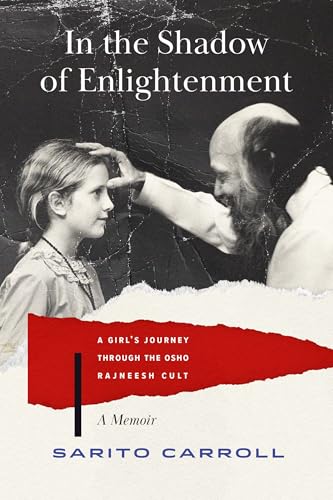
In the Shadow of Enlightenment: A Girl's Journey through the Osho Rajneesh Cult
In the Shadow of Enlightenment is the gripping story of Carroll’s childhood inside the Osho Rajneesh cult—one of the most controversial spiritual movements of the 20th century. While in the commune, Sarito was submerged in a world where devotion and freedom clashed with manipulation, sexual misconduct, and neglect. This was the life she knew until the movement collapsed amid scandal and criminal charges in 1985, when sixteen-year-old Sarito was thrust into a society she knew little about.
In 1978, nine-year-old Sarito Carroll’s life took an unexpected turn when her mother brought her to India to visit the ashram of guru Bhagwan Shree Rajneesh (later known as Osho). What was intended to be a brief trip over her summer vacation quickly became permanent when her mother decided they would stay and join the ashram. Three years later, when Rajneesh relocated to the United States, twelve-year-old Sarito arrived alone to Oregon, becoming one of the first thirty-five settlers at what would become Rajneeshpuram—a bold and controversial city built on the Big Muddy Ranch. The commune soon attracted thousands of devotees, lured by the guru’s promises of love, spiritual enlightenment, and a utopian society free from conventional constraints.
Now, decades later, after battling shame, fear, and self-doubt, Sarito breaks her silence to expose the abuse, exploitation, and disillusionment she endured in the Rajneesh community. She stands up against this formidable spiritual institution that promised liberation while concealing dark secrets behind its facade of love and joy. With raw honesty and heart-wrenching clarity, she recounts her fight to reclaim her identity, confront the community’s betrayal, and heal on her own terms. It is a powerful story of survival, resilience, courage, and hard-won freedom.
In the Shadow of Enlightenment is a profoundly moving exposé about the hidden dangers lurking behind charismatic leaders and spiritual movements. It will inspire and challenge you to question where you place your trust.
In 1978, nine-year-old Sarito Carroll’s life took an unexpected turn when her mother brought her to India to visit the ashram of guru Bhagwan Shree Rajneesh (later known as Osho). What was intended to be a brief trip over her summer vacation quickly became permanent when her mother decided they would stay and join the ashram. Three years later, when Rajneesh relocated to the United States, twelve-year-old Sarito arrived alone to Oregon, becoming one of the first thirty-five settlers at what would become Rajneeshpuram—a bold and controversial city built on the Big Muddy Ranch. The commune soon attracted thousands of devotees, lured by the guru’s promises of love, spiritual enlightenment, and a utopian society free from conventional constraints.
Now, decades later, after battling shame, fear, and self-doubt, Sarito breaks her silence to expose the abuse, exploitation, and disillusionment she endured in the Rajneesh community. She stands up against this formidable spiritual institution that promised liberation while concealing dark secrets behind its facade of love and joy. With raw honesty and heart-wrenching clarity, she recounts her fight to reclaim her identity, confront the community’s betrayal, and heal on her own terms. It is a powerful story of survival, resilience, courage, and hard-won freedom.
In the Shadow of Enlightenment is a profoundly moving exposé about the hidden dangers lurking behind charismatic leaders and spiritual movements. It will inspire and challenge you to question where you place your trust.
316 pages, Kindle Edition
Published November 11, 2024
About the author
Sarito Carroll
2 books17 followersIn 1978, nine-year-old Sarito traveled to India with her mother for what was meant to be a summer adventure—only to be swept into the infamous Osho Rajneesh movement, where she would spend seven years of her childhood deep inside the cult’s inner circle.
Her debut memoir, In the Shadow of Enlightenment, exposes the dark truths hidden beneath the façade of free love and spiritual awakening. What the world saw as liberation, Sarito experienced as neglect, sexual misconduct, and indoctrination. With unflinching honesty, she traces her journey to reconcile a past shaped by both trauma and a fierce longing to belong—navigating attachment, rage, and the complex bonds of a cultic childhood.
Drawing from her rare perspective as someone raised inside a spiritual commune, Sarito explores the tangled threads of belonging, betrayal, and the long road to self-acceptance. Her story delves into the intricacies of cult dynamics and the emotional cost of breaking free. Through themes of resilience, group psychology, and personal reclamation, In the Shadow of Enlightenment resonates with anyone who has faced an unconventional upbringing or fought to heal from a painful past.
Sarito lives in Colorado, where she is committed to telling the truth—even when it’s painful. She works as an acupuncturist and Realtor, and enjoys long walks, unplugging from the world, and listening to music.
Her debut memoir, In the Shadow of Enlightenment, exposes the dark truths hidden beneath the façade of free love and spiritual awakening. What the world saw as liberation, Sarito experienced as neglect, sexual misconduct, and indoctrination. With unflinching honesty, she traces her journey to reconcile a past shaped by both trauma and a fierce longing to belong—navigating attachment, rage, and the complex bonds of a cultic childhood.
Drawing from her rare perspective as someone raised inside a spiritual commune, Sarito explores the tangled threads of belonging, betrayal, and the long road to self-acceptance. Her story delves into the intricacies of cult dynamics and the emotional cost of breaking free. Through themes of resilience, group psychology, and personal reclamation, In the Shadow of Enlightenment resonates with anyone who has faced an unconventional upbringing or fought to heal from a painful past.
Sarito lives in Colorado, where she is committed to telling the truth—even when it’s painful. She works as an acupuncturist and Realtor, and enjoys long walks, unplugging from the world, and listening to music.
Ratings & Reviews
Friends & Following
Create a free account to discover what your friends think of this book!
Community Reviews
Displaying 1 - 30 of 46 reviews

October 31, 2024
#memoir #religiouscult
Nobody knows what hides behind closed doors of religious cults. Cheering masses on the streets welcoming their beloved leader in a shining Rolls-Royce, happy faces of hard-working people who want nothing to do with the outside world, and seemingly peaceful teachings —that's all can be a mirage. It took Sarito Carroll more than thirty years to find the courage to speak about sexual exploitation in Rajneeshpuram, a commune in Oregon, at the time when she was a teenager. What we would now call sexual abuse of a minor was considered a norm, her complaints dismissed, and the author had difficulty articulating what wrong had been done to her. During her seven-year stay in the commune, she felt faulty, worthless, undesirable; not that the world around her was in denial. The silence around the topic is still prevalent, with the current devotees of Osho admitting the flaws yet taking no responsibility for the actions of adult Rajneeshees in the 1970s-80s.
As of today, the Wikipedia article doesn't mention sexual exploitation and abuse of teens as the cause of any controversy around the international Osho movement. There is a brief mention of mothers abandoning their children in search of spiritual enlightening - the author saw children as small as four without parents - and forced sterilization to avoid pregnancies. I hope the situation will change after the publication of this book.
IN THE SHADOW OF ENLIGHTENMENT: A GIRL'S JOURNEY THROUGH THE OSHO RAJNEESH CULT is the author's rigorous exploration of her upbringing, not spiritual in any way. The author's openness and her ability to document the tiniest movements of her soul, every thought she had, masterfully convey the atmosphere of the Indian, and then Oregon communes. It's not a light read emotionally; yet, IN THE SHADOW OF ENLIGHTENMENT should be read and surveyed as a startling example of the hushed-up atrocities inside religious cults.
I received an advance review copy through Netgalley, and I am leaving this review voluntarily.
Nobody knows what hides behind closed doors of religious cults. Cheering masses on the streets welcoming their beloved leader in a shining Rolls-Royce, happy faces of hard-working people who want nothing to do with the outside world, and seemingly peaceful teachings —that's all can be a mirage. It took Sarito Carroll more than thirty years to find the courage to speak about sexual exploitation in Rajneeshpuram, a commune in Oregon, at the time when she was a teenager. What we would now call sexual abuse of a minor was considered a norm, her complaints dismissed, and the author had difficulty articulating what wrong had been done to her. During her seven-year stay in the commune, she felt faulty, worthless, undesirable; not that the world around her was in denial. The silence around the topic is still prevalent, with the current devotees of Osho admitting the flaws yet taking no responsibility for the actions of adult Rajneeshees in the 1970s-80s.
As of today, the Wikipedia article doesn't mention sexual exploitation and abuse of teens as the cause of any controversy around the international Osho movement. There is a brief mention of mothers abandoning their children in search of spiritual enlightening - the author saw children as small as four without parents - and forced sterilization to avoid pregnancies. I hope the situation will change after the publication of this book.
IN THE SHADOW OF ENLIGHTENMENT: A GIRL'S JOURNEY THROUGH THE OSHO RAJNEESH CULT is the author's rigorous exploration of her upbringing, not spiritual in any way. The author's openness and her ability to document the tiniest movements of her soul, every thought she had, masterfully convey the atmosphere of the Indian, and then Oregon communes. It's not a light read emotionally; yet, IN THE SHADOW OF ENLIGHTENMENT should be read and surveyed as a startling example of the hushed-up atrocities inside religious cults.
I received an advance review copy through Netgalley, and I am leaving this review voluntarily.

October 27, 2024
Just copying and pasting the review I posted on #netgalley yesterday here:
I paused all of my other reads as soon as I started reading this book.
Sarito Carroll survived the Rajneesh cult, and in this honest, reflective and engrossing memoir, she focuses on her years in the cult; how her foundation years outside of the cult were, her complicated relationship with her mother, the brief time in Hawaii, being one of the first 32 people to be accepted on the ashram in Pune, and what she suffered and witnessed in the cult from the age of 9 until 16, and the aftermath of the years in the cult. She talks about how she decided to tell the truth, raise awareness and hold her perpetrators accountable.
This is a book, despite its tragic contents, which can be read in a couple of sittings thanks of Carroll’s excellent writing.
She does not shy away from telling the sad but very real, truthful, raw details with her immense bravery.
I first encountered Bagwaan's teachings in the form of a book when I was in my early 20s - if I had ever heard of his cult before, I would not have remembered as I was very young. The book I found was one about creativity that had caught my attention with its minimalistic cover on the shelf of a trustworthy source (a respectable book store) of tasteful books from abroad. I soon found myself digging for more of the same language - seemingly, the language of creativity and freedom. I was an avid reader, but less experienced and aware than I was later and now.
After reading more, and some personal observations in India, and some more research, I came to know that the writer, whose books I had read, was not the author of the books himself, but they were often edited from his ‘teachings’, talks/discourses or rewritten by his followers. A couple of points felt contradictory in the books published under the name Osho; others repetitive, some helpful, mainly because the guru was inspired by some of the most influential philosophers, artists, and writers who have walked the Earth. Then, I learnt about the commune in Oregon and the terrifying experiences of the cult members.
Carroll’s book is one of the most eye-opening, honest and detailed telling of the cult. When I had come across Osho, especially because of the book on creativity and the insights on mindfulness, I never associated the content with a cult. Then, with every book read, and mind you, I read a lot of books by the Osho Foundation, I came to the realisation a bit more closer, and grew utterly suspicious. I believe almost every time masses idolise someone, the risks and dangers grow, erroneous behaviours increase, and then comes the overlooking of abuse. The cult leaders feed on this vulnerability. With that being said, they are always the main culprit. Those who witness anything abusive, unethical and wrong have the responsibility of speaking up for the victims and those affected too. Yet, the main blame and shame belong to the perpetrators. Please read this book to see what this particular cult did to children, what the members of the cult did to other members.
Out of a sense of duty, I wish to know more about what happened during this cult and others, and I hope the victims are seen, and future horrors are - at least (realistically speaking) somewhat - prevented from happening. As with many cults, manipulative movements, and conspiracy groups, Osho's teachings had some helpful aspects - but the harmful mindsets and doctrines were lurking behind the surface-level good ones. Conspiracists often mix some scientifically accurate or helpful information with their distorted views of the world. To put it in a very simplistic way, cults do the same. Some leaders, idols, popular people and groups do the same.
The book is a warning call about all past, present and future cults, mass cognitive dissonance, and the worshipping of others.
Part of me wanted to know what happened to all the children who were in the cult, and it hurts me that the perpetrators went on living normal lives without being held accountable for their actions, bar the vague and diplomatic apologies. But the apologies were at least something - although in a very minor way, they helped the author's road to more healing from PTSD. I am glad to hear that the author is leading a meaningful life and is helping children. I am so sorry for what happened to her and all the others at the ashrams.
Thank you to #netgalley, the publisher, and mostly, to the author for the eARC. I requested the book as soon as I read the blurb. It is an important book. The experiences of the survivors of Rajneesh ashrams must be heard.
I paused all of my other reads as soon as I started reading this book.
Sarito Carroll survived the Rajneesh cult, and in this honest, reflective and engrossing memoir, she focuses on her years in the cult; how her foundation years outside of the cult were, her complicated relationship with her mother, the brief time in Hawaii, being one of the first 32 people to be accepted on the ashram in Pune, and what she suffered and witnessed in the cult from the age of 9 until 16, and the aftermath of the years in the cult. She talks about how she decided to tell the truth, raise awareness and hold her perpetrators accountable.
This is a book, despite its tragic contents, which can be read in a couple of sittings thanks of Carroll’s excellent writing.
She does not shy away from telling the sad but very real, truthful, raw details with her immense bravery.
I first encountered Bagwaan's teachings in the form of a book when I was in my early 20s - if I had ever heard of his cult before, I would not have remembered as I was very young. The book I found was one about creativity that had caught my attention with its minimalistic cover on the shelf of a trustworthy source (a respectable book store) of tasteful books from abroad. I soon found myself digging for more of the same language - seemingly, the language of creativity and freedom. I was an avid reader, but less experienced and aware than I was later and now.
After reading more, and some personal observations in India, and some more research, I came to know that the writer, whose books I had read, was not the author of the books himself, but they were often edited from his ‘teachings’, talks/discourses or rewritten by his followers. A couple of points felt contradictory in the books published under the name Osho; others repetitive, some helpful, mainly because the guru was inspired by some of the most influential philosophers, artists, and writers who have walked the Earth. Then, I learnt about the commune in Oregon and the terrifying experiences of the cult members.
Carroll’s book is one of the most eye-opening, honest and detailed telling of the cult. When I had come across Osho, especially because of the book on creativity and the insights on mindfulness, I never associated the content with a cult. Then, with every book read, and mind you, I read a lot of books by the Osho Foundation, I came to the realisation a bit more closer, and grew utterly suspicious. I believe almost every time masses idolise someone, the risks and dangers grow, erroneous behaviours increase, and then comes the overlooking of abuse. The cult leaders feed on this vulnerability. With that being said, they are always the main culprit. Those who witness anything abusive, unethical and wrong have the responsibility of speaking up for the victims and those affected too. Yet, the main blame and shame belong to the perpetrators. Please read this book to see what this particular cult did to children, what the members of the cult did to other members.
Out of a sense of duty, I wish to know more about what happened during this cult and others, and I hope the victims are seen, and future horrors are - at least (realistically speaking) somewhat - prevented from happening. As with many cults, manipulative movements, and conspiracy groups, Osho's teachings had some helpful aspects - but the harmful mindsets and doctrines were lurking behind the surface-level good ones. Conspiracists often mix some scientifically accurate or helpful information with their distorted views of the world. To put it in a very simplistic way, cults do the same. Some leaders, idols, popular people and groups do the same.
The book is a warning call about all past, present and future cults, mass cognitive dissonance, and the worshipping of others.
Part of me wanted to know what happened to all the children who were in the cult, and it hurts me that the perpetrators went on living normal lives without being held accountable for their actions, bar the vague and diplomatic apologies. But the apologies were at least something - although in a very minor way, they helped the author's road to more healing from PTSD. I am glad to hear that the author is leading a meaningful life and is helping children. I am so sorry for what happened to her and all the others at the ashrams.
Thank you to #netgalley, the publisher, and mostly, to the author for the eARC. I requested the book as soon as I read the blurb. It is an important book. The experiences of the survivors of Rajneesh ashrams must be heard.
November 5, 2024
Wise and pithy sayings of the spiritual teacher Osho flood social media, and his books line the shelves of bookstores, but few are aware of the darker reality the lurks behind his image as an enlightened master. Sarito Carroll grew up in Osho's communes, while he was still known as Bhagwan Shree Rajneesh, first in India and then at Rajneeshpuram. The latter was made famous by the television documentary series "Wild Wild Country," which gave viewers a colorful glimpse of his Oregon cult and its antics, but which conspicuously lacked any perspective on the lives of those who resided there.
This memoir ably fills that gap. Powerfully written, it gives readers a chilling window on what happened out of public sight in the Osho movement. Sarito was one of the first to arrive at Rajneeshpuram, known to its residents as "the ranch," and her book documents its growth and eventual slide into conflict and criminality. At the same time she openly and honestly shares her own personal journey as a child in the commune.
Especially disturbing are her descriptions of what she experienced as an attractive young girl growing up in a commune known for its sexual permissiveness. And she brings us with her into the present, in her efforts to come to terms with what happened all those years ago, which is only now, forty years later, emerging into the light.
I highly recommend this book, not only for a deep dive into the dark side of a controversial cult that has heretofore remained well hidden, but for its intimate and moving description of a young girl's coming-of-age and struggle to grow up sane in a world gone mad.
This memoir ably fills that gap. Powerfully written, it gives readers a chilling window on what happened out of public sight in the Osho movement. Sarito was one of the first to arrive at Rajneeshpuram, known to its residents as "the ranch," and her book documents its growth and eventual slide into conflict and criminality. At the same time she openly and honestly shares her own personal journey as a child in the commune.
Especially disturbing are her descriptions of what she experienced as an attractive young girl growing up in a commune known for its sexual permissiveness. And she brings us with her into the present, in her efforts to come to terms with what happened all those years ago, which is only now, forty years later, emerging into the light.
I highly recommend this book, not only for a deep dive into the dark side of a controversial cult that has heretofore remained well hidden, but for its intimate and moving description of a young girl's coming-of-age and struggle to grow up sane in a world gone mad.
December 31, 2024
I am awed and feel grateful for the courage it took to write this deeply vulnerable memoir. To be an adult and enter a cult is one thing, but to be a child and brought into one is a travesty. I watched the Netflix documentary, Wild, Wild Country, before reading this book and I’m appalled that the documentarians did not do a deeper dive into the children’s experiences. What kind of people allow a 13-year old girl to bunk & share a bathroom with 10+ men? And she’s never allowed to lock the door to that bathroom. It’s astounding what was allowed in this cult and the droves of people who turned a blind eye to the myriad abuses these kids endured.
Caroll and all the other children were left to fend for themselves, with no adults checking in on any physical or emotional level. They were give no education. It is shocking she survived this and is now doing as well as she is. With the incessant gaslighting that happened there, how was Caroll expected to develop any internal compass around what is right for her?
Caroll does a brilliant job relaying the story. May this help close this despicable cult. I highly recommend this book. Carol gives a mature perspective into a child’s experience in a cult, where individuals are taught to not trust their feelings. It’s a fast and well documented book - don’t miss it!
Caroll and all the other children were left to fend for themselves, with no adults checking in on any physical or emotional level. They were give no education. It is shocking she survived this and is now doing as well as she is. With the incessant gaslighting that happened there, how was Caroll expected to develop any internal compass around what is right for her?
Caroll does a brilliant job relaying the story. May this help close this despicable cult. I highly recommend this book. Carol gives a mature perspective into a child’s experience in a cult, where individuals are taught to not trust their feelings. It’s a fast and well documented book - don’t miss it!

Read
November 3, 2024TW: rape, child abuse, sexual assault, violence, cult descriptions.
Deeply personal and emotionally charged, Carroll recounts her time in Rajneeshpuram. I had heard of this cult online and through various videos, but never knew the details of its origins and subsequent abuse and violence. Carroll was one of the original members, joining the cult back in India before it progressed and grew its expansion to Oregon and eventually the rest of the world.
She explores her childhood with sadness and grief. From a young age, she was abused and left to raise herself. I applaud her bravery in revealing these deeply upsetting parts of her life and her determination to reclaim her life and place the shame firmly on her abusers. It’s frustrating that her abusers and several members of the cult will never face justice for their horrific crimes, but hopefully Carroll’s story inspires more to come forward. A powerful memoir full of pain and growth.
Thank you to NetGalley and the publishers for kindly providing an ARC in exchange for an honest review. #InTheShadowOfEnlightenment #NetGalley. All opinions are my own.
Deeply personal and emotionally charged, Carroll recounts her time in Rajneeshpuram. I had heard of this cult online and through various videos, but never knew the details of its origins and subsequent abuse and violence. Carroll was one of the original members, joining the cult back in India before it progressed and grew its expansion to Oregon and eventually the rest of the world.
She explores her childhood with sadness and grief. From a young age, she was abused and left to raise herself. I applaud her bravery in revealing these deeply upsetting parts of her life and her determination to reclaim her life and place the shame firmly on her abusers. It’s frustrating that her abusers and several members of the cult will never face justice for their horrific crimes, but hopefully Carroll’s story inspires more to come forward. A powerful memoir full of pain and growth.
Thank you to NetGalley and the publishers for kindly providing an ARC in exchange for an honest review. #InTheShadowOfEnlightenment #NetGalley. All opinions are my own.
November 22, 2024
Kudos to Sarito Carroll. I highly recommend her brave and touching memoir. I think it is a triumph on many levels. I’m moved by her strength and courage in sharing her heartbreaking story of suffering and trauma. What madness. It’s sadly ironic that so many children were neglected and abused in the center of all that supposedly high consciousness living and loving. Abuse comes in many insidious forms and she does a thorough job of revealing the heavy burden of growing up manipulated by the myriad of hypocrisies that surrounded a so called spiritual movement. Her honest and well written account shines bright with light and genuine awareness. I admire her willingness to expose it all. I hope many will read her sincere book and bear witness to her story.
October 21, 2025
A important read shining truth on what happens not only in the shadows but tells what the headlines & documentaries didn’t.
Told from a survivor who witnessed it all & teaches us to keep an eye out for each other & being in a “spiritual community” might actually be the unsafest of all. Sometimes what’s the hardest to hear or read is the most important. Sarito’s story can be a lesson to us all. Seek Safely. Once you read this book share it with many.
Told from a survivor who witnessed it all & teaches us to keep an eye out for each other & being in a “spiritual community” might actually be the unsafest of all. Sometimes what’s the hardest to hear or read is the most important. Sarito’s story can be a lesson to us all. Seek Safely. Once you read this book share it with many.

July 20, 2025
I chose to read this book because I had seen the Netflix documentary when it came out a few years back. The author takes us through her personal experience going through her developmental years in a very unconventional environment. She holds nothing back and shares her fears, questions, joys and everything in between. Finally she relates how all the trauma impacted her adult life and how hard she has worked to overcome it. The author is one strong woman! Thanks to Netgalley, the author and publisher for an advanced copy in exchange for an advanced copy in exchange for my honest opinion.
August 10, 2025
I was drawn to this story because I lived in Oregon during the height of the Rajneesh movement—through high school and college—so I’m just a few years older than the author, Sarito Carroll. I could relate to her age and the era. At the time, this was a major daily topic across the state. It was impossible to ignore. That’s why, when Wild Wild Country came out and people were telling me about it like it was something new, I was shocked they had never heard of it. For those of us who lived through it, it was a huge deal, especially in classes like sociology and psychology at the University of Oregon.
The poisoning of a town alone was unprecedented—and terrifying. While Wild Wild Country did a good job exploring the politics and history, this book goes much deeper into what really went on behind the scenes. The absurdity of it all—the blind worship of a man who collected 97 Rolls-Royces—is still hard to fathom. I’ve always been fascinated by cults because I just don’t understand how people get pulled into them. This book helped answer that, but also revealed that the reality was far worse than I ever imagined. How the children had no choice in being there. I didn't even realize children were there.
What really stood out was the level of complicity—from those in power to the everyday members, including the "moms" who looked the other way. Or the parents who were no where around? That level of denial and willful ignorance is despicable. And the fact that the movement still exists today, still attracts followers, and still has money—that was another shocking revelation. They should absolutely be held accountable, financially and otherwise, for the harm they caused. It’s not just the rapists, but the cult as a whole bears responsibility.
The poisoning of a town alone was unprecedented—and terrifying. While Wild Wild Country did a good job exploring the politics and history, this book goes much deeper into what really went on behind the scenes. The absurdity of it all—the blind worship of a man who collected 97 Rolls-Royces—is still hard to fathom. I’ve always been fascinated by cults because I just don’t understand how people get pulled into them. This book helped answer that, but also revealed that the reality was far worse than I ever imagined. How the children had no choice in being there. I didn't even realize children were there.
What really stood out was the level of complicity—from those in power to the everyday members, including the "moms" who looked the other way. Or the parents who were no where around? That level of denial and willful ignorance is despicable. And the fact that the movement still exists today, still attracts followers, and still has money—that was another shocking revelation. They should absolutely be held accountable, financially and otherwise, for the harm they caused. It’s not just the rapists, but the cult as a whole bears responsibility.
December 15, 2024
A Life
I couldn't decide on any accurate title about this book or my feelings about Sarito's life. I applaud her courage in finally telling the story of sexual abuse she suffered in a commune or cult that should always have been an adult only place that allowed no children.
I felt sorry for the little girl whose mom lived off the grid and made no attempt to take care of her in a loving way. School and education did not seem to be a priority for her mom who eventually took her young daughter to India to be in this joyful cult of free love and where Sarita lived separate from her mom.
They soon moved to the US where this guru was establishing a new center for his followers in Oregon. Again Sarita was separated from her mom and lived with other boys and girls her age. None of the children had any educational opportunities and most had to work for the community. Adults regularly exchanged sexual partners and some of the local men and women preyed on the children and were not punished, but these acts seemed to be accepted.
I still ache for the little girl who only wanted some friends and the young teen who longed for a loving relationship.
Sarita graduated from college with honors and has been successful in a career. I respect her for telling this painful story and calling out the men who abused her.
I couldn't decide on any accurate title about this book or my feelings about Sarito's life. I applaud her courage in finally telling the story of sexual abuse she suffered in a commune or cult that should always have been an adult only place that allowed no children.
I felt sorry for the little girl whose mom lived off the grid and made no attempt to take care of her in a loving way. School and education did not seem to be a priority for her mom who eventually took her young daughter to India to be in this joyful cult of free love and where Sarita lived separate from her mom.
They soon moved to the US where this guru was establishing a new center for his followers in Oregon. Again Sarita was separated from her mom and lived with other boys and girls her age. None of the children had any educational opportunities and most had to work for the community. Adults regularly exchanged sexual partners and some of the local men and women preyed on the children and were not punished, but these acts seemed to be accepted.
I still ache for the little girl who only wanted some friends and the young teen who longed for a loving relationship.
Sarita graduated from college with honors and has been successful in a career. I respect her for telling this painful story and calling out the men who abused her.

November 29, 2024
I chose to read this book because I had seen the Netflix documentary when it came out a few years back. The author takes us through her personal experience going through her developmental years in a very unconventional environment. She holds nothing back and shares her fears, questions, joys and everything in between. Finally she relates how all the trauma impacted her adult life and how hard she has worked to overcome it. The author is one strong woman! Thanks to Netgalley, the author and publisher for an advanced copy in exchange for an advanced copy in exchange for my honest opinion.
August 4, 2025
I found this book deeply touching. It’s an honest and open telling of the life of a child and woman coming to terms with the living in a world / cult that did not prioritise the mental and physical care of its children.
I too was one of the children of this commune and it was soothing and confronting to hear her experience and remember my own.
Her life before the Ranch so clearly set the stage for her vulnerability to the advances and abuse of those who appeared to be the most caring of her.
The book gives a first hand experience of the life on the inside. From one perspective but I am sure it mirrors many others who were there. It does for me.
I too was one of the children of this commune and it was soothing and confronting to hear her experience and remember my own.
Her life before the Ranch so clearly set the stage for her vulnerability to the advances and abuse of those who appeared to be the most caring of her.
The book gives a first hand experience of the life on the inside. From one perspective but I am sure it mirrors many others who were there. It does for me.
November 14, 2024
It’s hard being a human being. Homo sapiens have been around for about 10,000 genealogical generations, surviving, sometimes thriving, inventing philosophies and religions to try to make sense of our lives and our deaths, seeking ways to find our way through traumas and dramas. Sarito Carroll’s compelling tale of survival and adventure as girl with a front row seat in one of the 20th Century’s classic cults is a modern microcosm of the human experience: feeling adrift and alone in a world of danger and deception, finding a sense of community and companionship in a tribe of orange-wearing adherents, but becoming prey for sexual predators who took advantage of her vulnerability in the name of “freedom” and “enlightenment”.
I met Sarito thirty years ago and learned snippets of her story— how she’d grown up in Hawaii and at the Rajneesh compound in India, and then was one of the first at the Big Muddy Ranch in the desert of Oregon, where she grew up as a teen and remained, witnessing first hard the rise and fall of Rajneeshpurem until the entire scene collapsed years later after considerable scandal and drama. But the full story, which she tells with clarity and passion, is even more epic and fraught than I imagined. Her resilience and strength shines through in her writing as she vividly describes her difficult journey from a wounded girl to a mature woman healing from traumas that are both hers and humanity’s.
I met Sarito thirty years ago and learned snippets of her story— how she’d grown up in Hawaii and at the Rajneesh compound in India, and then was one of the first at the Big Muddy Ranch in the desert of Oregon, where she grew up as a teen and remained, witnessing first hard the rise and fall of Rajneeshpurem until the entire scene collapsed years later after considerable scandal and drama. But the full story, which she tells with clarity and passion, is even more epic and fraught than I imagined. Her resilience and strength shines through in her writing as she vividly describes her difficult journey from a wounded girl to a mature woman healing from traumas that are both hers and humanity’s.

June 5, 2026
Such a tragic story.
A true story of one young ladies journey through life in an abusive cult, this book will reveal what happens when people abuse power under the guise of a world run by following your own happiness. Read with caution, understanding that there is language and descriptions of sexual encounters. May we all keep our eyes open to what is going on around us and share the truth of Christ, Who gives us a true path of truth to follow that does not abuse the innocent for the pleasures of power hungry adults.
A true story of one young ladies journey through life in an abusive cult, this book will reveal what happens when people abuse power under the guise of a world run by following your own happiness. Read with caution, understanding that there is language and descriptions of sexual encounters. May we all keep our eyes open to what is going on around us and share the truth of Christ, Who gives us a true path of truth to follow that does not abuse the innocent for the pleasures of power hungry adults.

May 3, 2025
Moving and beautiful memoir
Sarito’s voice is beautiful and her story so moving. This is a must read for anyone who loves random Osho quotes but has never taken the time to learn the true story/history.
Sarito’s voice is beautiful and her story so moving. This is a must read for anyone who loves random Osho quotes but has never taken the time to learn the true story/history.

November 4, 2025
I had never heard of this cult before and my life and holy shit! As an educator, the lack of care and abuse of the children was hard to read, but it’s so important for these traumas to be heard. I will also need to watch the Netflix documentary mentioned. Sarito is extremely brave for telling her story!!!
November 6, 2025
This was SO good. Moving, sad, enraging. I couldn’t put it down and finished it in just a couple days.
June 11, 2026
WOW!
Thank you for sharing your story. It was very powerful and very well written. I hope and pray that you have found the peace you so richly deserve.
Thank you for sharing your story. It was very powerful and very well written. I hope and pray that you have found the peace you so richly deserve.
May 20, 2026
Thank you Sarito for having the courage to share your very personal story, and raw and honest emotions of your life as a child growing up in a cult into adulthood. I was deeply touched. Your experiences and your bravery to speak out are helping others more than you could know🙏
August 8, 2025
Wow!
Un livre extraordinaire. J'ai lu beaucoup de livres de Osho et ce livre a ébranler tout ce que je croyais connaitre sur ce mouvement. Merci Sarito pour ce touchant témoignage. Je te souhaite tout l'amour que tu mérites!
Un livre extraordinaire. J'ai lu beaucoup de livres de Osho et ce livre a ébranler tout ce que je croyais connaitre sur ce mouvement. Merci Sarito pour ce touchant témoignage. Je te souhaite tout l'amour que tu mérites!
August 3, 2026
My heart goes out to Sarito
November 9, 2025
This is an extremely powerful read. I read it all in one day! There was something very familiar of her journey and mine. There was 4/5 year period of my life where I lived in and out of new age and "spiritual" communities, where abuses and boundary violations happened but under the guise of "spirituality" and "free of ego". I am so glad Carroll was able to see the community for what it really was: a playground for sexual abusers and spiritual narcassists that could be let off the hook because apparently that's "enlightened"... what happened to her was not her fault!
August 1, 2026
A heartbreaking, eye opening story.

July 26, 2026
a Personal Insight into a Movement
I so thoroughly appreciate this book and the authors insight into growing up in this movement, nee cult. The book gives a different perspective, sharing her personal experience growing up within the Osho community. So moving, and a real testament to the strength of the author to survive and thrive.
I so thoroughly appreciate this book and the authors insight into growing up in this movement, nee cult. The book gives a different perspective, sharing her personal experience growing up within the Osho community. So moving, and a real testament to the strength of the author to survive and thrive.
April 27, 2026
Wow, just wow!
What an amazing ride. Through such a series of disruptive and abusive relationships, to see the author emerge whole is an inspiring journey.
What an amazing ride. Through such a series of disruptive and abusive relationships, to see the author emerge whole is an inspiring journey.

July 12, 2026
Sarito keeps it real.
A truth teller, she survived a horrendous childhood. Her memoir lays down the facts. She should thank the people of Antelope and Wasco County as well as the officials of the attorneys in the state of Oregon, for being the only people willing to try and stop the evil Rajneesh cult.
A truth teller, she survived a horrendous childhood. Her memoir lays down the facts. She should thank the people of Antelope and Wasco County as well as the officials of the attorneys in the state of Oregon, for being the only people willing to try and stop the evil Rajneesh cult.

April 1, 2025
Very emotional and powerfully written book about the cult like of an adolscent who's youth and innocense is stolen and whose trust is abused by a shameless cult of abusive leaders. Worthwhile read, the author's strength is profound

Read
November 8, 2025It is really hard to write a review about this book because it was an account of the authors own experiences as a child within the Rajneesh cult. I thought it was really well-written and the author experienced a lot as a child and has a lot of wisdom and reflection about her experiences as an adult. It is amazing to see how far she has come in her schooling and her ability to write her moving story as the cult seemed to suppress traditional education at all costs. It was a really powerful read.
Please check trigger warnings before reading.
Thank you to #netgalley for this e-arc.
Please check trigger warnings before reading.
Thank you to #netgalley for this e-arc.

May 12, 2025
This book left me speechless. Warning: if you are sensitive to sexual abuse, child exploitation, or sexual detail in general, I would advise against reading this book. However- if you’re able to stomach the horrifying details, this memoir expands far beyond sex and deep into the worldview of the Osho Rajneesh Cult. Hearing the story of Sarito left me longing to express my love and sorrow for her experiences. Knowing that she was one of many victims and that this is still an ongoing group left me passionate for seeking activism against it. As a Christian, I was left feeling a deep sense of longing to see Sarito and the other victims of this cult come to Christ to heal their wounds and relieve their burdens. I think that it is important to expand our worldviews and understand these people groups so that we are better equipped to share the gospel and lead them out of their sin and into to the refuge and freedom that only Jesus can provide. Overall, this story left me clinging on the edge of my seat, reading at every spare moment, and desperate for answers and accountability.
June 2, 2025
I give it 5 stars because I loved hearing her side of things. I lived in Portland during this time and saw the Rajneeshes all over town frequently. I went to their disco, I went to their ranch and spent time in Antelope. I also spent time on the Bowerman ranch across the John Day River from The Big Muddy. The Bowermans had numerous stories of the harassment they endured by their Rajneesh neighbors. It was all fascinating to me.
Displaying 1 - 30 of 46 reviews