What happened when the terrifying Soviet dictator, Joseph Stalin, suddenly died? Everyone remembers the bumbling characters around Stalin's deathbed in Armando Iannucci's film Death of Stalin, but who knows what actually came next? Those bumblers from the Politburo, Stalin's heirs, immediately and efficiently launched into reforms across the board. Meanwhile, the West's vigilant Soviet-watchers almost completely missed the story ...
In this vivid, deeply knowledgeable short book, award-winning historian Sheila Fitzpatrick offers a new look at a crucial moment in history.
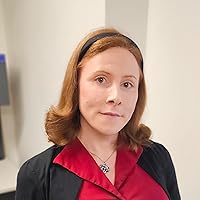
Sheila Fitzpatrick (born June 4, 1941, Melbourne) is an Australian-American historian. She teaches Soviet History at the University of Chicago.
Fitzpatrick's research focuses on the social and cultural history of the Stalinist period, particularly on aspects of social identity and daily life. She is currently concentrating on the social and cultural changes in Soviet Russia of the 1950s and 1960s.
In her early work, Sheila Fitzpatrick focused on the theme of social mobility, suggesting that the opportunity for the working class to rise socially and as a new elite had been instrumental in legitimizing the regime during the Stalinist period. Despite its brutality, Stalinism as a political culture would have achieved the goals of the democratic revolution. The center of attention was always focused on the victims of the purges rather than its beneficiaries, noted the historian. Yet as a consequence of the "Great Purge", thousands of workers and communists who had access to the technical colleges during the first five-year plan received promotions to positions in industry, government and the leadership of the Communist Party.
According to Fitzpatrick, the "cultural revolution" of the late 1920 and the purges which shook the scientific, literary, artistic and the industrial communities is explained in part by a "class struggle" against executives and intellectual "bourgeois". The men who rose in the 1930s played an active role to get rid of former leaders who blocked their own promotion, and the "Great Turn" found its origins in initiatives from the bottom rather than the decisions of the summit. In this vision, Stalinist policy based on social forces and offered a response to popular radicalism, which allowed the existence of a partial consensus between the regime and society in the 1930s.
Fitzpatrick was the leader of the second generation of "revisionist historians". She was the first to call the group of Sovietologists working on Stalinism in the 1980s "a new cohort of [revisionist] historians".
Fitzpatrick called for a social history that did not address political issues, in other words that adhered strictly to a "from below" viewpoint. This was justified by the idea that the university had been strongly conditioned to see everything through the prism of the state: "the social processes unrelated to the intervention of the state is virtually absent from the literature." Fitzpatrick did not deny that the state's role in social change of the 1930s was huge. However, she defended the practice of social history "without politics". Most young "revisionists" did not want to separate the social history of the USSR from the evolution of the political system.
Fitzpatrick explained in the 1980s, when the "totalitarian model" was still widely used, "it was very useful to show that the model had an inherent bias and it did not explain everything about Soviet society. Now, whereas a new generation of academics considers sometimes as self evident that the totalitarian model was completely erroneous and harmful, it is perhaps more useful to show than there were certain things about the Soviet company that it explained very well."
I’m often wary of ‘the shortest history of…’ formats but this didn’t have to cover a vast blanket of time, just the three decades of Stalin’s life in power.
Focussing on Stalin’s rise to leadership and subsequent policies from all things industrialisation to his use of gulag and terror, Fitzpatrick offers a well-rounded portrait of the guy in so few pages.
Not only his life but his death is well covered too. How the politburo saw him and was wary of his increasingly capricious temperament in the run-up to his demise is amusing stuff.
I enjoyed learning about his troubled legacy, on the one hand a strong nation-builder, on the other a merciless tyrant, leaving a lingering question mark today into Putin’s Russia.
Highly recommend for a quick injection of twentieth century Russian history.
Certainly left me better informed and, because so brief, wanting to know more on the different strands that it pulls together. And that it compares Western and Russian views on Stalin and what was happening is a good eye opener. That the Doctors plot was dismissed by the Poltiburo but not by general Russia’s is a surprise and there’s a bit that flows like that. The West want to view it one way, general Russians don’t go along with it the same. Brought at Paraparumu Paper Plus on 23/8/25.
The 2017 film The Death of Stalin is frequently used as a reference in this short account by Sheila Fitzpatrick. The film is one of the most funny films I have seen in recent years. There is nothing comical about Stalin's real life, death, and the period after his death. Fitzpatrick's attempts to introduce some nuances have not always succeeded. However, the analysis of the mechanisms that set in after his death are very convincing.Even Putin's current behavior is convincingly explained. A short account , but very interesting.
Well worth a read, so compact but in just over 90 pages one learns -- or at least I did -- so much about Uncle Joe and his cabal. Not at all preachy nor patronising it is a delightful and occasionally witty account of his death, a bit of what came before as relevant context, and a bit of what came after including how Putin is very much a Stalin man and not a Lenin one, and why. Beria Stalin's fellow Georgian and fearsome head of the secret police, who was to be the fall guy post his compatriot's death as his fellow Politburo members conspired against him, turns out astonishingly to be the spearhead of reform once JS has passed away. Not that it did him any favours. However, the image of him being Stalin's inseparable comrade and faithful executor is undermined wholly by his reaction when he tells his son Sergo in the early 1950's he might be in line to be done away with by JS. "It stunned me to learn that Stalin was preparing to get rid of my father. "Doesn't he realise that you are devoted to him?" I (Sergo) stammered. "Where did you get the idea I was devoted to him?" he replied." I would have given a five stars to this largely terrific book but for the poor editing which serves up some terrible errors and if I was the author I would be pretty upset about. It starts with the timeline and we are led to believe that in 1953 Harry S Truman was inaugurated president ...he had stepped down by then and it was Ike Eisenhower who was taking the oath of office. There is in the bios of key players a writer Andrei Sinyavsky, a lover of Stalin's daughter Svetlana, whose dates are given as 1925-67. Therefore it is a remarkable achievement to learn in his bio that he emigrated to France in 1973. In the text itself there is also the unfortunate reference with regard to the Communist witch hunt in the US of it being headed by Senator Eugene McCarthy...when it was Joseph...Eugene was to achieve fleeting fame a decade or so later when he was a leading critic of LBJ's and at one point looked like he might be nominated as the Democrat candidate for the presidency. These are very unfortunate but I would still heartily recommend this book.
I've been thinking about the deaths of leaders while reading Sheila Fitzpatrick's The Death of Stalin. Fitzpatrick is an eminent Australian historian of Soviet history, but this small book is written for a general audience.
The title echoes the Armando Iannucci movie of the same name, which Fitzpatrick admires. In 5 chapters she goes through Stalin's biography, the death of Stalin and its aftermath, the local reaction and change of policy internally after his death, the international reaction (and its lost opportunities) and finally, the legacy of Stalin....
There is a lot in this small book, which is presented so clearly that it can engage readers who are not particularly familiar with Russian history. The book provides a timeline spanning 1879 to 2000, and a full ten-page 'cast of characters' including not only Russian political and cultural personalities, but also Mao Tse Tung (Zedong), Winston Churchill, Franklin D. Roosevelt and Harry S. Truman. The book has endnotes, but they are not footnoted throughout the text.It is liberally illustrated, albeit in black and white (although that echoes the theme of the book quite well), and by bringing it right up to the present day and referencing the Iannucci film it has a contemporary edge. It's a good read.
This is worth your while, and it spurred me to rewatch the hilarious 2017 film with Steve Buscemi leading an all-star cast. As I made my way through this short history, I couldn't help but make comparisons to the idolatry of the Stalin regime with how Mar a Lardo's acolytes line up to kiss his ass. This deification, or at the very least canonization of a sitting political leader never ends well.
The difference being we still have an opposition in the USA, not that our political leaders are forming any meaningful counterattack at this point. When will that happen? The midterms? That may be too late.
The remarketing or repackaging campaign, the remaking of Stalin’s ghost is something the West must monitor a lot more closely, not that we can’t already read the writing on the wall. I found this the most interesting part of an interesting book.
Typically, we think of Stalin as analogous to Hitler; the classic totalitarian brute with blood on his hands. Though this is true, (as Sheila Fitzpatrick points out in this brisk, entertaining book about the Soviet leader’s death), there are other aspects to his legacy that perhaps we in the West tend to overlook. Indeed, 'The Death of Stalin' is a succinct and thoughtful summation of his career, his demise, and the aftermath of his rule. Moreover, this slender volume offers a context for understanding the ongoing appeal of Stalin in Russia, as well as the nationalist posturing of Putin. To be clear, Fitzpatrick is no apologist, but neither is she mired in Russophobia or wedded to Cold War binaries. The result is a lively and engaging read, and one that encourages us to zoom out from the ‘free world’ bubble that we so often take for granted.
This was a good abbreviated treatment of Stalin's life and death, balanced more or less equally between those two subjects. And it lies somewhere between popular history for its own sake, and academically rigorous history work, which suits me well, for my purposes, as a non-specialist in this area. An excellent overview, all in all, after the manner of Fitzpatrick's "The Russian Revolution 1917-1932".
This short book didn't tell me very much I haven't encountered elsewhere in one form or another, but I am very impressed with it's tight precision. That it provides such a solid overview in such a slender volume makes it hard to beat for a general overview and speaks to the authority of Fitzpatrick's knowledge.
This is a quick, succinct, well-written and very engaging history of the lead up to and impact of Stalin’s death on Russia and the world. It was thoroughly interesting and a great read for anyone, whether you know about the history of the USSR or not. The only issue was the copy I read had excruciatingly small font!
Entertaining albeit very condensed perspective on the final years of Stalin’s life and the subsequent period of collective leadership. A solid summary of the time after Stalin, seemingly best read by those who are familiar with the Stalinist era and want a simple conclusion and epilogue to those times. A definite must read for any fans of the comedy film by the same name.
Rather interesting, especially emphasis on the immediacy of reforms after Stalin’s death, spearheaded by Beria, that are usually written as Khrushchev’s Thaw.
Brief but interesting little book about the Stalin's death and the Soviet reaction to it. I didn't realize it was so short so it was an easy audiobook to finish in an afternoon.
A decent introduction to Russia’s modern history, the ideological currents of present-day Russia, and of course the life and death of Stalin. Often dry though, despite its short length.