Jump to ratings and reviews
Rate this book

Die Tage nach dem Pflaumenregen

Rate this book
Eine einzige Entscheidung kann das ganze Leben verändern.

1938: Suchi und der Nachbarsjunge Haiwen verlieben sich in den Straßen Shanghais. Als Haiwen sich jedoch heimlich zur Armee meldet, um seinen Bruder vor der Einberufung zu bewahren, bleibt Suchi allein mit seiner Geige und einer Nachricht zurü Verzeih mir.

Sechzig Jahre später treffen sich Haiwen und Suchi in Los Angeles zufällig wieder. Für ihn ist es eine zweite Chance, aber sie möchte nicht zurückblicken. Können die beiden die Liebe, die sie verloren haben, wiederfinden?

Die epische und mitreißende Geschichte einer Liebe, die alle Zeiten und Distanzen überdauert.

556 pages, Kindle Edition

First published January 7, 2025

2820 people are currently reading
140790 people want to read

About the author

Karissa Chen

5 books389 followers

Ratings & Reviews

What do you think?
Rate this book

Friends & Following

Create a free account to discover what your friends think of this book!

Community Reviews

5 stars
8,803 (39%)
4 stars
10,126 (45%)
3 stars
3,083 (13%)
2 stars
372 (1%)
1 star
101 (<1%)
Displaying 1 - 30 of 3,488 reviews
Profile Image for Sara Carrolli.
141 reviews163k followers
March 10, 2025
A goal of mine is to read more historical fiction (with some sort of romance subplot) this year, and this was exactly that! I don’t know much, if at all, about Chinese history so I’m glad to have read the things these characters endured & the politics within that I learned about. The storytelling was super creative, with our FMC’s pov from past to present & our MMC’s pov from present to past (over 60 years of history), and then intertwining eventually

Although I thought this one would break me (and I did feel many different emotions), it was more of a quiet story about choices made for the ones you love & regrets along the way, the hardships in these times and what so many families and people went through. It felt like sitting down and listening to a grandparent’s tale of their journey from a love they found at such a young age, and all the inbetween. The ending left me a BIT unfulfilled & the pacing slowed at moments - but I really enjoyed it!
Profile Image for Yun.
636 reviews36.6k followers
November 19, 2025
"We can never again be who we were . . . It's impossible. We've already missed each other."

I left Shanghai when I was nine. By the time I was able to make it back for a visit almost a decade later, the city of my birth and early years, along with the people I'd loved, were all inexorably changed.

Maybe that's why I'm always drawn to stories set in Shanghai. The city of my youth exists now solely in my memories, and I keep having this steadfast hope that, by reading about it, maybe somehow I'd be able to conjure up in my mind the place and all the people I loved that no longer exist.

In that way, Homeseeking feels like an inevitable read for me. My story somewhat mirrors Suchi and Haiwen's, though decades later and without the war and only a little bit of the famine. But we all left our beloved city behind, and it feels like we spend the rest of our lives trying to mend the holes in our hearts.

But I think to distill this down to simply Suchi and Haiwen's love story is to do a disservice to this epic tale. Yes, the story centers around the two of them and their encounters through the years. But it's also a story about resilience and hope and the complicated yet unconditional love for one's children and parents and family.

The structure here works particularly well. Told in alternative viewpoints between Suchi and Haiwen, Suchi's narrative goes forward while Haiwen's goes backwards. In this way, it allows us the readers to simultaneously experience all their hopes and dreams for the future while also seeing the memories and regrets that come with a lifetime already experienced and choices already made.

Some stories hit harder because they feel more personal, and this one definitely did for me. Karissa Chen's evocative prose means I could almost see the longtang where I grew up, envision the hustle and bustle of everyday life, and hear the familiar cadence of Shanghainese, my first and still most comforting language. The scene with the fortune teller explaining the meaning of "yun" seemed like it was written especially for me. By the time I reached The Coda at the end, I was bawling my eyes out.

Maybe the only thing I didn't love was Suchi's character at times. Even her son called her a martyr at one point and it was spot on. I wanted more for her, but perhaps her depiction is authentic to the culture and the trauma that she has experienced. It must be hard to remain courageous when you've faced a lifetime of heartache and pain.

This was such a riveting and poignant tale, at times heartbreaking and at times so hopeful. Its depiction of the love between parent and child, even in the face of agonizing choices, is so searing in its honesty. And it speaks to every immigrant's heart, that we all left behind something unbearably precious and all we can do is look forward and make a new home somewhere else.

~~~~~~~~~~~~
Connect with meInstagram

Profile Image for emma.
2,563 reviews92k followers
September 5, 2025
heaven is probably a long, character-driven book.

those are the kinds of books i find unputdownable — long, slow family dramas unfolding over decades, with characters that grow more layered with every page. 

this story begins with suchi in 1940s and her first love, haiwen, in 2000s california, then traces suchi forwards and haiwen back until they've found each other, across the world and across lives, over and over again.

i don't always love historical fiction, which i often find has a stiff and formal style, but i love generational family sagas. suchi's stubbornness and haiwen's amenability, their dreams, and their love for each other was such a lovely and simple way to place ourselves as readers through continents and historical events.

this audiobook is 17 hours long, but i inhaled it over two busy days. i don’t think the dual pov / opposite timeline structure was always the most logical choice for the story, but each character seemed real enough to jump off the page anyway.

bottom line: i liked this so much. 

(thanks to the publisher for the e-arc)
Profile Image for Rosh ~catching up slowly~.
2,383 reviews4,902 followers
October 6, 2025
In a Nutshell: A historical saga spanning six+ decades, focussing on two characters and their life through China, Hong Kong, Taiwan, and USA. Excellent characters, research, historical atmosphere, and story development. The reverse flow of the two timelines is brilliant. A bit too lengthy and dragged at times, but overall, a worthwhile read.

~~~~~~~~~~~~~~~~~~~~~~~

Plot Preview:
Suchi was just seven when she first met Haiwen in Shanghai. Newly shifted to the neighbourhood, Haiwen is somewhat reserved, but Suchi falls in love with his violin, and her peppy behaviour soon ensures a strong friendship between them. But as the years go by and the situation in China changes under its foreign rulers, the pair is forced to take some tough decisions, which may not bode well for their future together.
The story is spread across six+ decades, and comes to us from the lead characters’ alternating perspectives. Suchi’s POV begins in 1938 and moves chronologically ahead, while Haiwen’s POV begins in 2008 and moves in reverse order.
Bookish Yays:
😍 The most impressive feature of this book is the seamless way in which the two timelines go in opposite directions. We know Haiwen in 2008 and Suchi in 1938. We also see glimpses of Haiwen in 1938 and Suchi in 2008. The reconciliation of how each went from pt. A to pt. B and vice versa is brilliant. All pieces fit in like a clever jigsaw.

😍 The introductory note, talking about how character name pronunciations in the book change depending on time and place. Helpful, especially for the audio version, and a clever way of showing the variances in dialects.

😍 The lead characters. Complex, flawed, realistic, worth rooting for. I liked both Suchi and Haiwen, and even more, I loved how the story demonstrated their personalities and their changing bond over the years.

😍 The secondary characters. Though most of them play only second fiddle to the main duo, many of them leave a mark with their strong personality and courage even in times of trouble.

😍 The story does a remarkable job showing how external circumstances change our personality. We have all heard of nature vs. nurture, but outside influences can also shape our instinct and responses, which is cleverly depicted in this novel.

😍 A single story covering three ‘components’ of China: Taiwan, Hong Kong, and China itself, and presenting the truths about each with minimal bias. Impressive.

😍 Covering the tumultuous Chinese history across six decades without making the book seem like a history textbook? Also impressive.

😍 The historical content, spanning four countries and portraying a mostly realistic picture of the situation in most of those countries. The US segment is more ordinary compared to the rest, but this isn't a story about the USA anyway.

😍 The writing, which takes care to present not just the atmosphere and character development but also the dialectic variations accurately. There are several Chinese (Cantonese, Mandarin, Shanghainese) words included, which adds to the right feel.

😍 The significance of the title. It fits the book in so many ways. What is home? The home you were born in? The home you spent most of your life in? The country of your origin? The country that offered you a temporary or permanent shelter? Wherever your family is? Wherever your future is? All of these are explored through the story in some way or another.


Bookish Mixed Bags:
🤔 The contemporary USA storyline, especially at the start. The Chinese friends group seems a little stereotypical and some are annoying, especially as all their thoughts seem to revolve around dating and partnerships. I found this aspect tough to believe as originating from senior Asian characters, though it might very well be the case for present-day Asian-Americans.

🤔 The introductory overture has way too many characters, and I simply wasted my time listening to that chapter again and again to remember all of them. Didn’t need to do this at all as they are introduced gradually in the main plot. It is still a well-written start, just a bit too overloaded with names.

🤔 The ending. Good to some extent, but after that long investment in the characters, we deserved one more scene for perfect closure. If you read the book, you’ll know what I mean.


Bookish Nays:
🙄 The extended steamy scene. Way too detailed for a historical saga. We could have had the same scene without going into the telling of every step of the process.

🙄 Certain things get missed out because of the alternating timeline. I didn’t want every single detail, but I’d have liked to get a better idea of the fate of some key secondary characters.


🎧 The Audiobook Experience:
The audiobook, clocking at 17 hrs 13 min, is narrated by Katharine Chin and Kenneth Lee. Both of them do a commendable job, expressing all emotions at just the right level for Suchi and Haiwen respectively. Their pronunciation of the Chinese words sounded good enough to me. (A native speaker might be able to judge the accuracy better. I am only going by the accent and feel.)
While the production and narration quality of the audio version are impeccable, the timelines going in opposite directions might be a dealbreaker to a few listeners, especially those who aren’t attuned to audiobooks yet. The book is worth a read, so if you think you won’t be able to handle the complex storytelling on audio, stick to actual reading, or try immersive reading (audio in your ears and the physical/digital copy before your eyes.)


Overall, I mostly relished this reading experience. The story, the characters, and the historical elements all work in unison to create a memorable saga. The initial US chapters weren’t my favourite and the timeline jumps and unsaid portions did test my patience at times, but the rest makes up for this.

Definitely recommended to fans of historical fiction, OwnVoices writing, and family sagas. You might also call it an epic love story. (Which, as you might know, is very different from a romance.)

4.25 stars.


My thanks to Hodder & Stoughton and Sceptre for providing the DRC of “Homeseeking” via NetGalley. This review is voluntary and contains my honest opinion about the book.

~~~~~~~~~~~~~~~~~~~~~~~
Connect with me through:
My Blog || The StoryGraph || Instagram || Facebook ||
Profile Image for Qian Julie.
Author 4 books1,428 followers
January 10, 2025
My review for the Washington Post:

While Karissa Chen’s sweeping epic, “Homeseeking,” centers on war, love and family, more than anything it’s about the immigrant’s phantom limb — the longing for home and for the lives and loves left behind.

The book uses a wide lens, showing the upheaval of the Chinese Civil War, the tumult of the Cultural Revolution and the dissonance of immigration, while never taking the focus off the two lovers at the center of the story: Suchi and Haiwen, who meet as kindergartners and fall in love in their teenage years, as civil war rages. They suddenly lose each other when Haiwen secretly decides to enlist in the Nationalist army — a decision intended to help his family but that comes with lasting, unexpected repercussions. It is not until 2008 that Suchi and Haiwen reconnect in Los Angeles, where Suchi has moved to help raise her grandchildren and where Haiwen has recently become a lonely widower.

The novel follows the two in the intervening six decades as they separately make their way in the world, relocating across Shanghai, Taiwan, Hong Kong and the United States. The chapters alternate perspectives as well as timelines: Suchi’s account is told chronologically, beginning with the pair’s first meeting, while Haiwen’s moves backward beginning with their reunion in 2008. This daring choice is fitting, given that the years harden Suchi, who refuses to look back, while they soften Haiwen, whose memories bring him a semblance of companionship and home.

As the characters evolve and relocate, their names change, too. Suchi and her sister dodge the Cultural Revolution by moving to Hong Kong, but dire circumstances push Suchi to find work at a seedy nightclub, where she meets a wealthy but abusive man whom she has little choice but to marry. Her husband is so controlling that he dictates her language and her name, changing Suchi to Soukei to reflect the Cantonese pronunciation. Similarly, when Haiwen moves to California, he takes the name Howard in service of assimilation. “Easier for the Americans to pronounce,” he explains, to which Suchi responds, “Not so easy for a Chinese person to pronounce.”

In Soukei, we see the more fearful, timid sides of a once-bold Suchi. And in Howard, we see a split in Haiwen: the new self who has found joy and love with a wife in America, the old self who is still very much in love with Suchi, and — memorably, hauntingly — the in-between self who is racked with bittersweet grief when he returns to Shanghai and learns what remains of his family of origin. Chen wisely uses these shifts in identity to mimic the process of aging, of becoming traumatized and worn down by life, of healing and rediscovering joy. The Suchi and Haiwen we first meet become more dimensional, and even as they change names and develop new traits, the pair feels very much like the same people who met and fell in love as kids. Just as Chen’s prose in English seamlessly navigates between Mandarin, Shanghainese, Cantonese and Taiwanese, so too do the iterations of her protagonists naturally blend to inform the constancy in their sense of self.

The ambition and scope of “Homeseeking” are impressive enough before considering Chen’s craft and execution. It is impossible not to marvel at the many strands she has woven into this beating heart of a novel. Chen takes a risk in reversing the chronology of Haiwen’s narrative and opening with the pair’s reconnection in California. One might think that this creates spoilers about the central relationship in the book, but as we revel in the love and laughter Haiwen and Suchi still share six decades later, we are propelled forward by the mystery of what happened to change them into their 2008 selves, and what became of the families who informed their childhood and budding love.

There are moments when Chen’s messaging comes off a little heavy-handed, bordering on polemical, but when she takes aim at central emotional truths, which she does for most of “Homeseeking,” her storytelling is masterful.

It is rare that a 500-page book delivers on its weight, and even rarer that a book I’m asked to review becomes an all-time favorite. But as I tearfully turned the last page of “Homeseeking,” I knew that it had earned a place on my top shelf. For Chen has finally put into words the lifelong grief I have carried as an immigrant — grief for a childhood, a place, a home that no longer exist. As Suchi observes: “Home wasn’t a place. It wasn’t moments that could be pinned down. It was people, people who shared the same ghosts as you, of folks long gone, places long disappeared. People who knew you, saw you, loved you. When those people were far-flung, your home was too. And when those people were gone, home lived on inside you.”

What Suchi doesn’t say is that home can also live on inside a book. Just as I did, many readers are bound to find their home within the pages of Chen’s unforgettable debut.

(https://www.washingtonpost.com/books/...)
Profile Image for Nicole Pi.
140 reviews9 followers
July 5, 2024
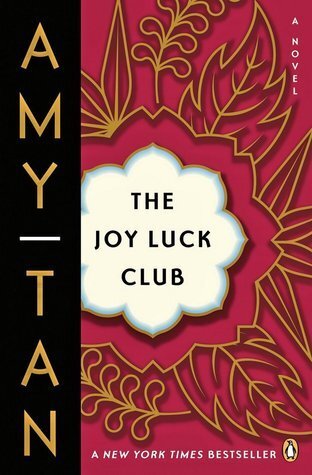
Oh dear, I hadn't ugly-cried to a book since "A Little Life." "Homeseeking" is reminiscent of "The Joy Luck Club," but follows the Suji and Haeven as they grow up in WWII International Settlement Shanghai and navigate the reckonings of the Chinese Civil War in the decades later. Beautiful, heart-wrenching story about family and the tough decisions we'd all make for the people we love most.
Profile Image for Jaime Fok.
245 reviews3,278 followers
May 14, 2025
Such a beautiful, authentic, character-driven book. This wasn’t as “in-your-face” emotional as I expected, but love the subtlety of this one.

The timeline was a bit disorienting for me overall, but totally get why the story was told this way.
Profile Image for Taury.
1,201 reviews198 followers
March 11, 2025
Homeseeking by Karissa Chen is a historical fiction novel that writes with themes of love, displacement, and the need to belong. The novel covers six decades, and follows Suchi and Haiwen from their early years in 1930s Shanghai, through the war and political upheaval, to their unexpected reunion in 2008 Los Angeles. The novel follows their lives through Taiwan, Hong Kong, California, and New York. I had difficulty with this debut novel. The author alternates between past and present. It can become confusing. I found it very slow and anticlimactic. I would find points of interest then it would drop.
Profile Image for Kara.
396 reviews35 followers
April 11, 2024
4.5 stars rounded up

I really enjoyed this story! Simultaneously a coming of age story and a story about reconnecting after years of separation, Homeseeking was an emotional and educational read. Thoroughly researched, I was impressed with Chen’s ability to portray the complexities of modern Chinese war and politics on the people in its wake. While the backdrop is war, Homeseeking is very much a story of family, connection, and disconnection.

Suchi and Haiwen are best friends growing up together in a longtang (lanes forming a community) in Shanghai. War separates them in their youth and takes their lives on completely different paths. Throughout the book, the author portrays how a single decision can alter the course of the characters’ lives.

The descriptions of the longtang and the characters’ dress, food, and environments were vivid and picturesque. It was eye-opening for me to learn how challenging it was for a female to build a life without the support of their family or a husband. I was particularly struck by how Suchi was expected to do well in school but not TOO well.

The book spans 7 decades and is written in alternating viewpoints; Suchi’s story is told linearly from childhood to adulthood while Haiwen’s story is told backwards from adulthood to childhood. I was surprised how seamless the transitions were and how it all came together quite easily. The author’s note scared me a bit when she described that the characters’ names would change as the story progressed. I was pleasantly surprised to find that I was not confused at all.

I found the older times to be a bit more compelling than the modern times. I also wanted to know more about their families’ experiences during the war. It was heartbreaking that so many left their families and never saw or heard from them again.

Thank you to NetGalley for the opportunity to read and review this advance copy.
Profile Image for Shantha (ShanthasBookEra).
453 reviews73 followers
January 18, 2025
Just wow! Homeseeking is a sweeping 60-year saga of childhood friends Haiwen and Suchi, who grew up together in Shanghai. Their amazing story is told against the backdrop of communist takeover, the Second Sino-Japanese War, the Chinese Civil War, and famine. It was a difficult period of history where people fled to Hong Kong, Taiwan, England, the United States, and more. When Haiwen enlists in the nationalist army, the young couple is separated.

Karissa Chen masterfully weaves the historical backdrop into the love story of the two main characters with themes of love, loss, grief, family bonds, racism, and what it means to be an immigrant or refugee in your own country. I loved her brilliant use of language, changing their names slightly depending on geographic location. It gives the reader insight into what it means to have a language barrier.

For historical fiction lovers, this is a must-read. It is a beautiful and poignant tale of 20th century China, shedding a light on how war and communist takeover have affected the people. An outstanding debut! Absolutely loved it and highly recommend. 🌟❤️
Profile Image for Hannah.
2,257 reviews471 followers
November 17, 2025
Anyone else feel like this was reminiscent of Yaa Gyasi's Homegoing? I loved that book too.

There's a lot of Chinese history in this book. I was glad to realize I remembered more than I would've thought from my Chinese history classes in college. That's saying a lot since those classes were over 30 years ago! It also reminded me that there is some shared history between my home country of Korea and China (Japanese occupations, civil wars, and overall political unrest), as well as because the characters are immigrants like me. So I felt connected to this story for several reasons, especially because I recently found a handwritten story from my mom regarding her early childhood in China during this time (it was part of one of her English homework assignments - she was constantly trying to improve her English skills, so much so that the community college finally told her to stop enrolling because there wasn't anything more for her to learn from them).

There was much angst throughout the book. Lots of sadness for sure, but it wasn't an entire-boxes-of-tissues sadness. The story was slow in that it took place over many years, but it was also fast in that the pace went quickly enough that I didn't really have time or need for those tissues, even though there was a lot of hardship throughout. In the end, I'm not sure I can call it the expected happy ending, but it was an ending I could be completely on board with and the ending I keep wishing for myself, in a way.

There is a lot of hopping around between the two protagonists and their respective timelines. So that could be a bit unsettling sometimes because it's easy to lose track and have to go back to see where in time and location the story is at any point.
Profile Image for Kristine .
999 reviews304 followers
February 5, 2025
This is a love story that begins in 1938 when 7 year old Haiwen Wang meets Suchi Zhang. Their lives seem destined to be together. Yet, life in China is not stable. Constant change occurs in Shanghai where they both lived as children. There are wars, shifting alliances, having to move, and who occupies China over the course of 6 decades. The certainty that each had during their youth and innocence fades away. It is such a beautiful story with rich and complex characters. I loved reading about both families and seeing the changes occurring in the background of their native land. Can you ever really go home just by placing your feet on the soil of the area you grew up in if that place has changed so dramatically? Or is more involved in finding Home? Can you really even think about all this when you are just trying to survive? The book addresses all these questions so eloquently.

So, the backdrop of life in China and its fluctuations are such a part of the story and it was excellent. I learned so much history that I was unaware of. I love epic stories that encapsulate both wonderful characters, ancestry, and awareness of a place.

Thank you NetGalley, Karissa Chen, and Penguin Group for an early copy of this book. I leave reviews of all books I read.
Profile Image for Bkwmlee.
472 reviews404 followers
March 23, 2025
Karissa Chen’s debut Homeseeking is a novel that resonated deeply with me, to the point that I’m honestly not sure where to begin in terms of writing this review. There is so much to unpack with this story, which is very aptly described as both simultaneously “epic” and “intimate” as it follows two childhood sweethearts across six decades and two continents.

The narrative begins with the inciting incident that essentially triggers the rest of the events that occur: in 1947 Shanghai, amidst the Chinese civil war, Wang Haiwen decides to secretly enlist in the Nationalist army in order to save his brother, leaving behind not only his family, but also his girlfriend and soulmate Zhang Suchi – a decision that ends up changing the trajectories of both lives in profound ways. The story then jumps to Los Angeles in 2008, where Haiwen and Suchi (now going by their American names “Howard” and “Sue”) are unexpectedly reunited when they bump into each other at the local 99 Ranch Market. As the two reminisce about the past, it becomes clear that they have both endured and survived circumstances that changed them – whereas Haiwen continues to hold his memories close to his heart, Suchi insists on only looking forward and letting the past stay in the past. From there, the narrative weaves back and forth in time, tracing the path of both characters’ lives within the context of Chinese history (i.e.: WWII and the Japanese occupation, the Chinese civil war, the Great Famine and the Cultural Revolution, etc.) to reveal the circumstances that led up to that reunion. Notably, the narrative not only alternates between both main characters’ points of view -- with Haiwen’s story moving backward in time, from the present to the past, while Suchi’s story moves forward from the past to the present, with both story arcs ultimately re-converging again in the present – it also follows them across continents, from Asia (Shanghai, Hong Kong, Taiwan) to North America (California and New York). Throughout their separate (and at times very disparate) journeys and despite the many changes that their lives undergo, one thing that remains constant in in terms of Haiwen’s and Suchi’s relationship is the determination to never lose sight of the meaning of home (including their parents and the sacrifices they made), which they continue to keep in their hearts no matter where they end up.

There was actually so much I loved about this book – the beautiful writing, the poignant, moving story arc, the authentic portrayal of history and culture, the complex structure that was executed near flawlessly, the wonderful character development (I honestly did not want to let go of these characters even after I finished reading the book), just to name a few. But what made this the ultimate reading experience for me was the fact that I was able to connect with the story on all levels, from the overarching themes to the minute details about the settings, language, culture, history, etc.

While on the surface, Homeseeking may appear to be a love story that highlights the enduring power of love to transcend time and place, I would argue that the story actually goes way deeper than that. Yes, there are indeed elements of a love story – specifically about two star-crossed lovers who are fated to find their way back to each other (given the epigraph, I don’t think it’s a coincidence that I found Haiwen and Suchi’s fated/fateful love relationship to be reminiscent of Shijun and Manzhen from Eileen Chang’s famous classic Half a Lifelong Romance ) – but for someone like me who grew up as part of the Chinese diaspora in Los Angeles, I found special meaning in this story that went beyond the romance / love story elements.

First, the setting – for the parts of the story that took place in Los Angeles, I loved seeing the mentions of so many places that I was familiar with – for example: Monterey Park and San Gabriel are usual haunts for most of us in the LA Chinese immigrant community (if you want the best authentic Chinese food in LA, those are the places to be) and of course, the 99 Ranch Market is as ubiquitous to us as H Mart is to the Korean community (I will admit that as I was reading, I did have one of those book nerd moments where I was tempted to research whether the 99 Ranch Market that Haiwen and Suchi meet at is the same one I frequent, LOL). I also got a kick out of the scenes about encountering rush hour traffic on the freeways and the mentions of how long it takes to get from one place to another in LA (story of my life right there, haha).

In terms of setting though, Los Angeles wasn’t the only connection for me to the story. I was born in Hong Kong, my mom is from Shanghai, and some of my relatives live in Taiwan, so those are all places that are more than familiar to me, whether from a history, culture, cuisine, language, geography, etc. aspect (it always elevates the reading experience when I’m able to recognize so many of the cultural, historical, etc. elements in a book).

With that said, one of the biggest things that made this book such a meaningful read for me was the way that the author, Karissa Chen, handled the language aspect. Not only does Chen not directly translate many of the Chinese words and phrases in the book (with the exception of the few instances where she added notes in the back of the book for context), she also incorporates the local language and/or dialect based on the region that those scenes are set in. For example, in the scenes set in Shanghai, the names as well as Chinese words and phrases are in Shanghainese (with some Mandarin depending on the situation), the scenes in Hong Kong are in Cantonese, the ones in Taiwan are in both Taiwanese and Mandarin. Even “Chinglish” was incorporated into some of the scenes set in Los Angeles! In her “Note on Languages” at the beginning of the book (which is an absolute must read in order to understand the structure of the story), Chen explains her approach in structuring the language in this manner as a way to faithfully represent both the different languages in Chinese-speaking communities as well as the lived experiences of those who have to navigate multiple languages on a daily basis:

“One of the challenges in writing an English-language story about the Chinese and Taiwanese diaspora is figuring out how to faithfully represent the different Sinitic languages spoken in different regions (and sometimes even within the same region). Because the Chinese written language uses a representational (versus phonetic) system, the same written word has many different pronunciations, depending on what language the speaker is using. This includes names. Given that my characters move within various Chinese-speaking regions of the world, I wanted to make sure to denote their code-switching in a way that would feel accurate. Therefore, each character may be referred to in a multitude of ways and may even broaden or change the way they think of themselves given a situation or over time. For this reason, chapters have not been labeled by character names, as our characters’ names evolve over time… For many people in the world, learning more than one language is a necessity, either because of migration or simply because the place they live in is a global one and survival dictates it. It is a skill that requires an ability to adapt and challenge oneself, and for many immigrants, it’s one of the most difficult, humbling, and uneasy parts of coming to a new country. If you, the reader, find yourself confused, I hope instead of giving up, you might take a moment to imagine what it must be like for those who have to navigate this on a daily basis, and then forge onward.”

I love and appreciate the fact that Chen not only pays such meticulous attention to language usage, but also makes a genuine effort to reflect our code-switching as well. In my case, it so happens that all the Chinese languages and dialects used in the book (Mandarin, Cantonese, Shanghainese, Taiwanese, and yes, “Chinglish,” which was actually the language of my childhood) are also ones that I’m familiar with due to being amongst a community of family, friends, and relatives who speak one or more of these languages on a constant basis. As an avid reader of English-language books about the Chinese diaspora, I can’t emphasize how rare it is to encounter a book that strives to represent the various Chinese-speaking regions in such a thoughtful and sincere way (though it’s not just the language – the historical and cultural elements are authentically represented as well). For me, this attentiveness to authenticity alone makes this an absolutely worthwhile read!

As this review is already quite long, I won’t go into every aspect of the book that made it such a personal and rewarding reading experience for me, but I have to mention one more thing: this book made me cry genuine tears – not just because of the moving story (though yes, that definitely played a role), but because the familiarity and personal connections I felt to so many aspects of the story made me feel seen and understood in a way that no reading experience has made me feel in a very long time; to encounter books like this one is one reason why I read!

Definitely pick this one up if you get a chance, as it’s a 5+ star read that’s well worth the time (especially highly recommended if you’re a fan of Eileen Chang’s works like I am).
Profile Image for melhara.
1,846 reviews90 followers
January 9, 2025
4.5/5

January 7, 2025 Update:
HAPPY BOOK RELEASE DAY! This book better get nominated for best debut or historical fiction of 2025.

November 5, 2024 Review:

Synopsis:
This story follows two characters with several names, with each name representing a different side of the character at a specific point in time (more on that later). For simplicity's sake, I'll just call them Haiwen and Suchi for most of this review.

Haiwen and Suchi, who grew up in the same neighbourhood in Shanghai, suddenly bump into each other at a market in LA after being apart for over 60 years. Spanning from 1945 Shanghai during the tail end of WWII and the resurgence of the Chinese Civil War, to 2008 Los Angeles (with other destinations in between), Homeseeking tells a heart-wrenching story of how the two met, how they were separated during the war, how they reconnected, and all the history that was left unsaid between the two of them during their time apart.

Review:
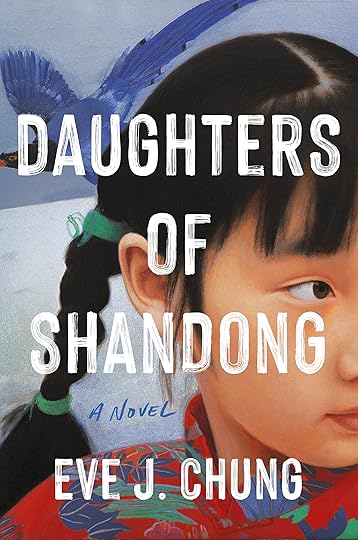
Homeseeking, much like Daughters of Shandong (which I highly recommend), depicts the hardship and displacement of many Chinese families during the Chinese Civil War. It's a story of how war tears families and loved ones apart by forcing people to make difficult decisions to protect their families, and how it destroys hopes and dreams. More importantly, it's also a story about survival and assimilation.

I loved how this book tackled these important themes while also telling the story of how Haiwen and Suchi found each other. Their story is tragic, beautiful, and feels so real. If you told me this was based on a true story, I would believe it.

I'd like to note that I loved the incorporation of various sinitic languages. Thankfully, I have the benefit of knowing Mandarin and Cantonese, with limited knowledge of Shanghainese (from my brief time living there) so I understood most of the words and intended pinyin/anglicization of the words that were incorporated in some of the dialogue. Despite my Mandarin having a Taiwanese accent, I unfortunately don't know any Taiwanese (although the word 'laupa' was easy enough to guess - I'm pretty sure it's Taiwanese for 老爸/dad or 'pops') so many of the Taiwanese words were left to guess work based on context. I imagine other readers (especially any readers who don't speak any Chinese dialects) will struggle with these aspects of the book. Although the notes section at the end of the book offers some explanations and translations, it doesn't provide a glossary for all the sinitic words and terms that were used throughout the book.

Finally, although I don't normally enjoy books that jump back and forth in time, I loved how it was done in this book. It made sense for Haiwen's narrative to move backwards in time since he's someone who always looks back and tries to remember the past in the hopes of keeping all his cherished memories and loved ones alive in his thoughts. Meanwhile, Suchi's narrative starts in the past on moves forward as she pushes forward to survive and refuses to dwell on the past and the painful memories that it brings up.

A note on Chinese names:
I loved how this book incorporated various languages and names to represent the different characters at different points of their lives.

For Suchi Zhang (this being the Mandarin pronunciation and the official language of China, so the language that they had to use at school), she also went by:
- Suji Tsan (Shanghainese - her native tongue, spoken at home with family),
- Susu (childhood nickname),
- Soukei Cheung (Cantonese - when she lived in Hong Kong), and
- Sue (English - when she moved to the USA)

For Haiwen Wang (Mandarin), he also went by:
- Haeven Waong (Shanghainese),
- Doudou (childhood nickname), and
- Howard (English).
- Note: If Haiwen ended up living in Hong Kong, his Cantonese name would likely be pronounced Hoiman Wong (this is based on the assumption that his Chinese name uses the following characters: 王海文)

This is a very authentic and what I believe to be a very accurate portrayal of what it was like to be Chinese then (and even now), where many of us have multiple names or different ways to pronounce our names depending on the number of dialects and languages that we speak. For example, my grandparents spoke Hakka when they grew up in China (and likely would have had to learn Mandarin if they had stayed there any longer), then spoke Cantonese when they fled to Hong Kong (in which their names would be pronounced differently in Cantonese), and spoke English when they immigrated to Canada with anglicized English names. They also ended up legally changing their English names when they joined the Catholic Church much later in life. So in total, my grandparents had 4 names that they went by, each representing a different era in their lives, similarly to how Haiwen and Suchi have different names to represent the different lives they've led.

TLDR/Final thoughts:
This was an impressive debut novel that portrays an important story about the Chinese diaspora that I'm certain will resonate with many Asian Americans of Chinese descent whose parents/grandparents/great-grandparents had fled to Taiwan and Hong Kong during the war before eventually immigrating to North America (much like my grandparents and countless others).

Perhaps this is just my greediness that's talking, but I really wanted more out of this book in terms of building up the reunion and rekindling the relationship between Haiwen and Suchi.

*All quotes are taken from an Advanced Readers Copy and may change prior to the release of the final copy.*

**I received an ARC from the publisher via NetGalley for review consideration, but all opinions are my own.**

___________________
If you like the following, then you might enjoy Homeseeking or vice-versa:
Daughters Joy
Profile Image for Tim Null.
349 reviews211 followers
October 31, 2025
"...you can't regret the past. You can only move forward." p. 476
Profile Image for Steph | bookedinsaigon.
1,621 reviews432 followers
December 13, 2024
Thank you to G.P. Putnam's Sons, Penguin Random House International, and NetGalley for the free e-ARC in exchange for an honest review. #PRHInternationalPartner

HOMESEEKING is an ambitious and mightily impressive debut novel spanning seven decades and four countries/territories. Some questionable writing choices meant it lacked the full emotional impact I usually want in my reads, but overall this is still one that I would recommend for readers seeking stories about this untold period of East Asian history.

First, what worked for me. It is clear that Chen did copious amounts of research for her novel, yet the historical information never overwhelms the narrative arc. I also have great admiration for how Chen manages to present so many different sides of the 20th-century East Asian political turmoil in such an empathetic and respectful manner: the Chinese Nationalists, the Chinese Communist party, the Cantonese people of Hong Kong who navigated British rule and their own unique culture, the local Taiwanese who were batted between oppressive governments for too long. It’s quite rare to find books that navigate this historical era without taking sides, let alone humanize the millions of civilians who had suffered all in their own separate ways. I was also absolutely on board with the way in which Chen changed the names of the main characters depending on which decade/country the chapter was set in, which was a simple yet powerful way of showing just how complex linguistic identity and politics were during this era.

Unfortunately, I’m not sure if the book’s key selling feature–that of the dual perspectives of Haiwen/Howard and Suchi each being told in a different order, Suchi’s chronologically and Haiwen/Howard’s in reverse–worked for me, as I felt that it instead made the pacing drag and gave us only “snapshots” of the two MCs instead of a full understanding of who they are. I felt like the way the chapters were arranged shook me out of my reading immersion every time one chapter ended and I fumbled to reorient myself to a new decade/country/perspective. It’s also strange because arranging the book in this way kind of took away from the reason to read it, since we already know that the two will meet one another again in their senior years. Furthermore, the chapters felt jumpy because each chapter was essentially Haiwen and Suchi taking turns talking to different people. It felt as if each chapter/decade was written out in scenes heavy on dialogue and lacking in any other narrative devices that would pull the plot along.

I felt bad because while I felt bad for Haiwen and Suchi, I didn’t like them all that much. I suppose that the point could be that war and political upheaval will shatter the lives of the ordinary, but both Haiwen and Suchi felt absolutely ordinary to me. Suchi in particular grated on my nerves because she spent so much time being stubborn, and I couldn’t tell if it was because she is simply a headstrong, albeit silly, woman, or if it was out of fear of possible repercussions, both personal and political.

And therein lies my biggest issue with HOMESEEKING: I don’t feel as if I get a clear sense of who Haiwen and Suchi are. I almost feel like the secondary characters are more clearly drawn than them. I found myself craving a more kaleidoscopic telling featuring multiple characters’ perspectives à la Pachinko, instead of simply following Haiwen and Suchi. By the end, I got thoroughly tired of following Haiwen and Suchi around while still not feeling like they have grown or learned anything from their lives.

I think comparisons to Pachinko may be overshooting things a bit; HOMESEEKING reminded me more of Yangsze Choo’s writing, if you’re into that. A little quieter. A little slower. A little more ordinary. Overall, a great introduction into the impact of 20th-century East Asian history on the lives of civilians, as long as you don’t go in wanting to fall in love with the two main characters.
Profile Image for Kristin.
299 reviews9 followers
January 19, 2025
This is largely a good book, and on every page you can feel the love the author has poured into it. I hope it makes a big splash.

I found it a little frustrating to read. The setting and the time period are so vibrant and alive and just utterly absorbing, but the characters grated after the halfway point—making the same turns and saying the same things over and over again: no change, no growth, regardless of their circumstances. They exist as a vessel for the story, really, and that strains the narrative to me.

At some point I also realized that the whole book would just tell us the stories of everything it set up in the first quarter of the book—which it did. So we end, after some very sentimental and unearned turns, where we began and that’s just a disappointment.

I loved the fluidity of the languages and the subtle signaling of language shifts via the characters’ names. While I found the book easy and pleasurable to read, by the last third the characters had grown so thin and their circumstances so spun out that the author starts to deploy a number of cliched phrases to convey their emotions, actual cliches (e.g., “she could see his face as a baby under the acne, and it melted her heart”) for these characters we have spent hundreds of pages with; I winced more than once and wished for a better editor, I said what I said.

Anyhoo, the story felt hackneyed and weighed down by the circular demands of its flashback structure, and the characters as constructed were not really strong enough vessels to carry the story to us.

In the end, the lack of forward momentum, and the piled-on sentimentality, left me crabby and restive, and that’s too bad. Maybe I wanted another story, which is not a fair critique in my view, but it is my strongest feeling right now. I would honestly have rather heard about Suchi and Howard’s present or their futures, instead of the endless, unresolved circling of their past.
Profile Image for JoJo_theDodo.
192 reviews61 followers
August 14, 2025
This is a somewhat big book, a brick sized print book I call them. Initially, I wasn’t sure I was in the mood to conquer a brick book about a culture I know next to nothing about. However, this book left me wanting to know even more about the characters endings and the future stories of their children. Every character felt real and I was fully invested in their story.
A full range of emotions throughout reading and I enjoyed this book all the way through.
All the Stars! ⭐️⭐️⭐️⭐️⭐️
Profile Image for Lynn Peterson.
1,180 reviews326 followers
March 7, 2025
I am an outsider on this book and I have to say perhaps at a different other time I would be able to absorb and enjoy this book much more.

I found it so beautiful in parts but other parts were just this river thru dates sad times and places that I just didn’t love. For me I think from start to finish would be better.
Profile Image for Jocelyn Chin.
272 reviews14 followers
January 26, 2025
I remember reading Pachinko in 2020 and thinking that it would be cool to one day write a book that was the Taiwanese version of Pachinko (Korean diaspora). Well, it's happened folks: Klarissa Chen got there first, and I'm glad she did. Note: this book isn't an intergenerational saga like Pachinko. It focuses mainly on two characters and alternates between their perspectives. But the way their lives were touched by war, and the way their stories were formed by the Chinese-Taiwan diaspora (Japanese colonialism both in the mainland and Taiwan, Western abuse, the Chinese Civil War, martial law in Taiwan) hit really, really close to home for me.

The first chapter actually didn't have me convinced. I almost put the book down bc I thought I wouldn't like reading it. The setting was Shanghai, 1947. There were too many names to keep track of and a lot of flowery description that felt over the top. There was a boy named Haiwen who was about to leave for the army. There was a girl named Suchi asleep in bed with her sister. There were their parents and siblings, and a boarder, in their respective bedrooms, and the neighbors in their tonglang, who get named one by one, and they were all either asleep or slowly waking, starting their day, pushing a cart along. Okay and?

Then WHAM second chapter had me hooked. we're in LA; it's 2008. An old Chinese man (Howard) and an old Chinese lady (Sue) recognize each other at the grocery. It's Haiwen and Suchi, with anglicized names, now both grandparents, in the US. Over the next few chapters, I truly grew to love these two characters, their flaws and all. Throughout the rest of the book, I found myself so, so invested in their lives. Also, cool narrative detail: for the most part, Suchi's chapters move forwards in time, while Haiwen's chapters move backwards in time.

I was bawling my eyes out pretty much every other chapter, which is to say, I've spent too much of this weekend hunched over little words sobbing, but I feel so full and human because of it. Some things that moved me:

— Music. Haiwen is a violinist. I'm not a musician, but I have so much awe for people who walk through this world with a world of their own in their minds, one that can only be expressed through notes. There were a few paragraphs that described how, after a lifetime of hearing brilliant classical music all the time in his mind, his private musical mind-world went silent sometime during or after fighting in the war, he didn’t even know when, and it was like he lost his language, and I wept uncontrollably for this loss. Humans are made for making art, and yet we continuously destroy each other.
— Sisterhood. Suchi and her sister Sulan taking care of each other throughout the years as refugees in Hong Kong made me sob. The sacrifices we make for the people we love...
- Longing for a return to home. All our displaced characters. The nationalists living in Taiwan, thinking they would be able to return to their homes on the mainland. Eventually, old immigrants in the US who haven't seen their own families since they were teenagers, separated by war.
— Aging. Time passing. What could have beens, only ifs.
— Hopelessness. When the UN removed Chiang's Republic of China (the Nationalists) and formerly recognized Communist China instead. When Chiang died. All the soldiers in the nationalist party still suffering from the trauma of war (many of them were forced to enlist, as very young men), all of them who left abruptly and hadn't seen their families in years, not knowing if they were even alive. Also family members being forced to turn upon each other, in attempts to protect each other.
— Goodbyes, or I suppose, lack thereofs.

What I am realizing is that, while this book doesn't read like a war book by any means (there are rarely passages that even discuss battles or violence itself straight-up), wartime is what shaped our characters' lives. But the truth is, this is a book about family and about love, and the people you call home. But then again, maybe that's what all war stories are about, at the end of the day.

The story of Suchi and Haiwen is truly a love story for the ages. It makes me believe in fated love even tho i don't believe in fated love. I am also a sucker for stories of old people attempting to find happiness after a lifetime of sorrow.

I know not everyone will love this story the way I did. I fear that this books risks losing readers because of the potential confusions and difficulty in reading. The author in her note on language in the beginning makes a good point though: for many people in the world, learning more than one language is a necessity, and for many immigrants, it's one of the most uneasy parts of a new country. Instead of giving up out of confusion while reading, it can help you empathize with these people. Anyhow! Many Sinitic languages are used (five). The author uses pinyin to express the mandarin, but also shanghainese, taiwanese, and cantonese. Having knowledge of the historical background would definitely help the reading happen more smoothly (all the way from the opium wars the West caused in China in the mid 1800s, to the massacres of intellectuals in Taiwan by the Nationalists during the 228 Incident -- and other incidents -- in 1947).

There has been exactly ONE other fiction book I've read in my entire life that has mentioned the martial law in Taiwanese history. I definitely had a leg up in this reading experience because the historical context is very Jocelyn-Chin-ancestry-coded. Shanghai is in Zhejiang, the province that my paternal grandfather grew up in until he was 12 and fled with the his family and Chiang Kai-shek's nationalist army to Taiwan. This book filled me with gratitude that I have history lovers in my family who have taught me these stories, who are interested in tracing our ancestry, who have tried to connect with family in the mainland, and been rejected by family because those people are afraid of getting in trouble with the Communist Party. I am grateful that for my grandparents, their families were all (to my knowledge) supporters of the Nationalists, and therefore had not suffered like soldiers who experience forced conscription and separation from all other family. I also appreciate that this book touched on the tensions between the Nationalists and the people already in Taiwan, who didn't see the Nationalists as liberators from Japanese occupiers but rather as a new dictatorship. AGH I have just never read a book that tells a story of people in a place that I can see my own ancestry in. I finally understand why some people fiend for certain books that connects with their ethnic heritage. I've had adjacent books, read lots of Asian American lit, but nothing beats actually having something hit so close to home, a story rich with details that feel so deeply familiar in my bones.

There were also very small details that made me feel seen in ways I didn't know I could be, when some sort of universal is being found in the specific. In Shanghai, elderly people walking along a river, swinging their arms and patting their legs. In an American restaurant, swapping ice water out for warm water. Random food mentioned, like youtiao, congee, turnip cakes. The newest Taiwanese generations believing in the island's independence. Ningbo, Zhejiang being mentioned, the city my paternal grandpa grew up in, the city I've lived in for four years.

This book was not short, and I literally finished it in less than 36 hours and lost so much sleep because I couldn't stop reading. I actually didn't really love the last chapter, which was mildly disappointing because I was looking forward to it jerking my last tears out, but I was more like: huh? But it's okay, it didn't detract from my overall appreciation for this book.
Profile Image for Isabel.
94 reviews35 followers
January 29, 2025
Earlyyyyyy contender for a fav of 2025. I love a well-researched book, y’all!! The historical and cultural depth explored through Haiwen and Suchi’s lives across six decades is as informative as it is impressive.

Confession: I received an e-arc of this about a year ago. Before reading a single page, I put it on the back burner and it got lost in endless tbrs. WHY. If I had only opened the first page, I would have been engrossed into a world of love and loss, complicated by the Japanese occupation of Shanghai and then the Chinese civil war.

Haiwen (Mandarin name; also: Haeven (Shanghainese) and Howard (English)) and Suchi (Mandarin name; also: Suji (Shanghainese), Soukei (Cantonese), and Sue (English)) are deep friends and star-crossed lovers, separated as teenagers when Haiwen sacrifices his future, and Suchi, for his family by enlisting in the Nationalist army. Unbeknownst to the young couple, the war will not end in time for their reunification. Haiwen and Suchi both experience joy and hardship over the next 60+ years, meeting again only once in their 30s and finally in their late 70s. Their loyalty to their families, new and old, good and bad, as well as to each other seeps out of every page. The characters and their lives are complicated, rich in spirit, and real.

This is Karissa Chen’s debut, too???? Someone put more paper in front of her! We. Need. More! I read every last word (even the acknowledgments). 5⭐️.

Thanks to the publisher for the e-arc.
Profile Image for Stephanie.
423 reviews118 followers
February 7, 2025
4/5 STARS!!!


Homeseeking is a beautiful nuanced book about a couple from Shanghai, brought together as children, who fall in love, and are separated by geopolitical reasons due to war and political discord. Shanghai to Taiwan, to Hong Kong, California, New York, and back, this story stretches across 60 years.While the time frames jump around, the reader is never confused by the story being told at that time, whether Haiwen is in Taiwan, or Suchi is in Hong Kong.
The story overall is a beautiful one - regardless of time and space, some love is always meant to be, even if it means randomly running into each other at 99 Ranch (Ranch 99 for us Bay Area people) 60 years later, or on a ferry boat across the Kowloon Peninsula.
Homeseeking is a quiet book. It doesn’t boast, doesn’t keep you on the edge of your seat, it simply tells the story of love regardless of location or nationality. Even during some of the most turbulent times of war, it's not meant to shock you.
I really enjoyed it, though let’s be real - the ending. No spoilers, but I feel a little unfulfilled.
Regardless, can’t wait to see what Karissa Chen writes next!
Profile Image for Desiree Reads.
805 reviews46 followers
January 27, 2025
OVERVIEW:
I’m so impressed with the structure of this novel. There is so much here - historical fiction, a love story, immersion in Chinese culture - but the layout of the tale really increases the intensity of all of the story lines. Having Haiwen tell the story from 2008 back to 1947, and Suchi from 1938 forward, adds multiple layers of mystery and suspense to the telling. The reader may know what has happened, but not how the character got there, subsequently one keeps turning the pages to find out.

Language is also key here. I am so glad author Chen chose to use multiple names, titles, and terms of respect or endearment for each character. The authenticity just really rings through and I didn’t find it confusing in the slightest.

In a phrase, this is a big novel with a whole lot of heart. Very well done, Ms. Chen - next please!

OF NOTE:
- A couple of moderately descriptive sex scenes.
- A bit of vulgar language.
- One supporting female character turns out to be in a same-sex relationship.

CONCLUSION:
Highly recommended. Historical fiction lovers and book club fans will fall in love with this one.
Profile Image for Diana.
508 reviews57 followers
March 19, 2025
3-1/2 Stars!

The writing in Homeseeking is beautiful:

“Light filtered through the clothes dangling on bamboo poles above her, offering uneven shade from the sun and casting fluttery shadows on her face.”

“A chorus of violins ushered Suchi into Howard’s life for the third and final time.”

We follow our main characters Suchi and Haiwen (Howard) throughout decades of their lives. They are actually school children when they first meet. Their heartbreaking tale is told in alternating perspective from each. Unfortunately for me, the jumping timelines were confusing and took away from my enjoyment of the story. I’m okay with multiple timelines but the random years seemed to have no rhyme or reason and caused lots of flipping back of pages to get my bearings.

Nonetheless this new-to-me author seems quite talented and I look forward to her future books.
Profile Image for Book of the Month.
317 reviews17.3k followers
Read
December 30, 2024
Why I Love It
By Gabrielle Viner

I am a firm believer that books are best enjoyed on a comfy couch, accompanied by tea. So, when I found that I couldn’t help but open Homeseeking on the subway, desperate to see how the pieces of the novel would come together, I knew it was an exceptional read. Homeseeking is delicate, grand, and harmonious. I never wanted it to end and, immediately after I finished the book, I wished I could read it again for the first time.

People say that first loves always linger. That is certainly the case for Suchi and Haiwen. They strike up a friendship in their first grade class in Shanghai and spend their teenage years plotting the rest of their lives together. But as China descends deeper into war, Haiwen leaves Suchi behind to enlist. The invisible string connecting them seemingly breaks that day, but, sixty years later, it brings Suchi and Haiwen back together in a LA grocery store.

Homeseeking covers vast territory, transporting us from Asia to the United States over the span of decades. It is also a vulnerable account of two intertwined lives, exploring how we find comfort in places, people, ourselves, and our stories. I can say with certainty that I found a little slice of home in this book. Like Suchi and Haiwen’s relationship, it is a story that will stay with me for a very long time.
Profile Image for Moonkiszt.
3,033 reviews333 followers
August 2, 2025
The title of Karissa Chen's book is all. . .a lyrical telling of a lifelong romance wherein both participants take separate paths when the road forks. Yet they never forget, they keep an inner dialogue and attention to the empty space next to them as they live lives around that vacuum. This is a story where love holds the heart of home, and is a deep bow in reverence to the immense work required when lovers must part - not by choice, but by circumstances outside their control.

There are books a reader knows they will seek out again. This is one of those for me - for that all my stars are given.

*A sincere thank you to Karissa Chen, Penguin Group Putnam, and NetGalley for an ARC to read and review independently.* #Homeseeking #NetGalley 25|52:39e
Profile Image for Phoebe.
4 reviews4 followers
October 21, 2024
Spectacular. Homeseeking is a testament to language, to history, and to the people who are made to actually live through history. To those who are frequently just a number or a passing name in a textbook

It felt like an honor to peek into Haiwen and Suchi's worlds, know their thoughts, sit in their hurt and love as they experienced it themselves. As their lives wove towards and apart from each other, I wanted to soak every last drop of their stories.
Profile Image for K.
117 reviews1 follower
January 19, 2025
it’s so hard to take any of the characters seriously when they are so terribly introduced. the present perspective reads like a bad introduction of a hallmark movie: a dim sum dinner with a bunch of oldheads (cantonese and shanghainese and taiwanese and mandarin, gotta have diversity right??) remarking about the war. not to mention the constant code switching and the anglicized chinese words—i had a hard time parsing this, so i cannot imagine someone unfamiliar to the language would appreciate it at all.

don’t even get me started on how haiwen and suchi reconnect. i don’t know about you, but if i met my childhood best friend-slash-lover-slash-girl i literally enlisted to prove my worth to—the girl whose photo i kept in my wallet to look at in the trenches, the girl whose body i picture in place of the army prostitutes, the girl who i never stopped thinking about for decades—i would absolutely not act like that!! Chen manages to write a pretty good love story told in the past and then completely undersells it in the present. she puts in all this effort to make the story so accurate from a cultural perspective, from the dialects to the foods to the honorifics, but the characters are so dry and bland and unbelievable that it just spoils the effort.

even the historical parts were a bit questionable. now i’m a sucker for teenage love (and i must say the early years of their romance were well written) but haiwen’s story after he enlisted kind of falls apart. he becomes written as a series of big events (like meeting his wife, his comrade’s suicide, etc) that leave Chen to fill in the gaps, usually by just directly speaking about the political fabric and leaving the reader to connect the dots. suchi was much more fleshed out (dare i say written more like a person instead of a plot device), at least her story covers her sister and her club work and her toxic marriage and her tensions with her son… with haiwen it’s just oscillating between “sad because i left home” and “sad because i can’t express to suchi what i really want to say” for about 200 pages.

2.5/5 rounded down for the ending—seriously, suchi is completely indifferent to seeing haiwen alive and well (in america, in california, in a supermarket…) but loses her shit when she learns of a rumor about her mother surviving? how does she spend a lifetime not looking back on her true love and then fold instantly to someone who hardly cared for her? maybe this book is intended to be one big cloud of grief and healing, but for me it’s just a stick of cotton candy: sparse and fluffy and of no substance at all.
Profile Image for Chrissie Whitley.
1,309 reviews138 followers
January 31, 2025
Between growing up together, feeling destined for each other, being pulled apart by circumstance and loyalty, and criss-crossing paths over the years, the beautiful story of Haiwen and Suchi broadened beyond the borders of a typical love saga.

Chen penned an epic tale that is as expansive as it is intimate, covering decades of Chinese history, culture, and the impact on families of three generations.

A story of sacrifice, survival, and determination, Chen has written and constructed this story through a basketweave of timelines, as she takes us in and around and through to pull together the complete picture.

Homeseeking gave me what I wanted out of Real Americans but didn't quite get, with a richly and patiently constructed backstory of Chinese immigrants and the carefully charted character development. The historical element here covers events surrounding the Chinese Communist Revolution (the end of it) rather than Real American's Cultural Revolution. Despite my takeaway from the latter, these two might make an interesting pairing — as the two events are distinctly connected eras in Chinese history.

This debut novel from Chen gently stole my heart, and I cannot wait to see what she produces next.

I received this book for free from the publisher via NetGalley in exchange for an honest review. This affected neither my opinion of the book nor the content of my review.
Displaying 1 - 30 of 3,488 reviews

Can't find what you're looking for?

Get help and learn more about the design.