What do you think?
Rate this book


345 pages, Paperback
First published January 1, 1963


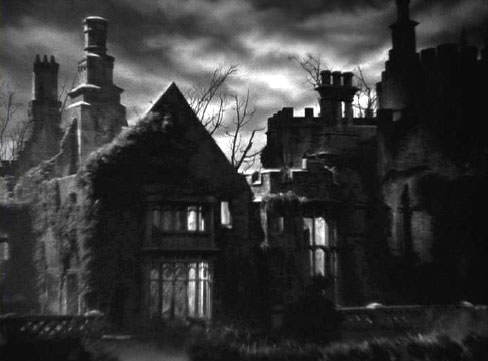
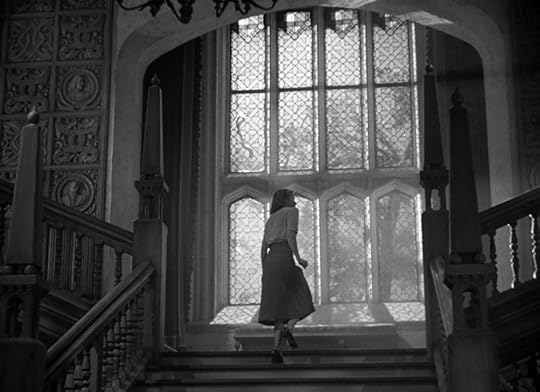
“[la institutriz] Recordó lo que le habían contado acerca de que tenía sangre de hada, y no supo discernir si el mundo donde ella había vivido era un mundo de bondad o de maldad; un mundo donde el sufrimiento poseía significado o un mundo que no era más que una travesura del diablo, una pesadilla violenta”.Al igual que Mariam Taylor, la institutriz que llega al castillo arrastrada por el deseo de dar un giro a su vida, terminé perplejo la lectura de esta inaudita y extravagante historia. Como me dijo una querida amiga, cada escena tomada de forma individual nos revela algo que podemos discernir, algo interesante, bello o sugerente. El problema viene cuando queremos abarcar el conjunto, cuando queremos desentrañar las relaciones y actuaciones cruzadas de estos personajes que muchas veces nos llegan a parecer inverosímiles, quizás porque se comportan más como ideas o símbolos que como personas de carne y hueso. Y a lo mejor este es el punto fuerte del libro, provocarnos este desconcierto, dejarnos con nuestros propios fantasmas, sin guías ni indicaciones, obligarnos a darle sentido, nuestro sentido.
“Ella es nuestra representación de la importancia del sufrimiento”Todo gira en torno a ella. Sin embargo, son los dos elementos foráneos, los dos individuos que se introducen en la enrarecida atmósfera del castillo, Mariam y el enamorado de Hannan, Effingham Cooper, los encargados de abrir y cerrar la historia, detonar la tragedia y salir de ella transformados. Ambos son incapaces de aceptar la realidad a la que se ha resignado Hannah, se rebelan ante todos aquellos que la mantienen en tal realidad y se resisten a creer que ella la haya aceptado libremente.
“¿La libertad? ¡Estúpida libertad! La libertad puede ser un valor en la política, pero no en la moral. La verdad sí. Pero no la libertad. Es una idea absurda, como la felicidad. En términos de moral, todos somos prisioneros, pero nuestra cura no es la libertad.”Y también de esto trata la novela, de la dificultad de tomar a las personas tal como son, de aceptar sus elecciones y de la necesidad que nos empuja a intervenir en sus vidas con el peligro que todo ello conlleva. Como dice otro de los personajes, Max, en cierta manera también exterior a la atmósfera del castillo y quizás el único que entendió a Hannah y lo que ella representaba:
“La gente tiene que sobrevivir y siempre inventa un modo de hacerlo, de ver tolerable su situación. Cuando Hannah podría haber sobrevivido odiándolos a todos, o estallando y haciendo todo pedazos, escogió volverse religiosa.”Siempre me ha intrigado esa para mí corrupta relación entre religión y sufrimiento. El culto a los mártires, el uso de cilicios y otros instrumentos de autotortura, los sacrificios con los que traficamos las ayudas que precisamos de nuestro dios. Pero no seré yo el que demonice el placer que no dudo que la gente encuentra en esta perversión, cada uno con sus cosas.
“Hannah era como nosotros. Amaba lo que no estaba allí, lo lejano. Eso puede ser peligroso. No se atrevía a amar lo que sí estaba presente. Quizá hubiera sido mejor que lo hubiera hecho. No podía amar de veras a la gente a la que veía, no se lo podía permitir, eso habría hecho demasiado dolorosas las limitaciones de su vida. Por ellas, no podía transformar en manejable la idea del amor, que persistió como algo destructivo y temible y por lo tanto ella se limitó a evitarla.”Una novela que no defraudará a los que como yo aman a esta autora y a sus sugerentes, enigmáticos y siempre encantadoramente presentados dilemas morales y filosóficos.
“Eso, entonces, era el amor: mirar y mirar hasta que uno deja de existir. Eso era el amor, que era lo mismo que la muerte. Miró y supo con una claridad que fue una con la creciente luz, que con la muerte del yo el mundo se convertía de inmediato en objeto de un amor perfecto.”
“Hay cosas que son aterradoras para los jóvenes porque creen que la vida tiene que estar llena de felicidad y libertad. Pero en realidad en la vida no hay felicidad y libertad, no de un modo hermoso. La felicidad es una cosa frágil y miserable, y puede que libertad no signifique nada. Existen grandes normas que se nos aplican a todos, y destinos que nos corresponden y que amamos incluso cuando nos destruyen.”
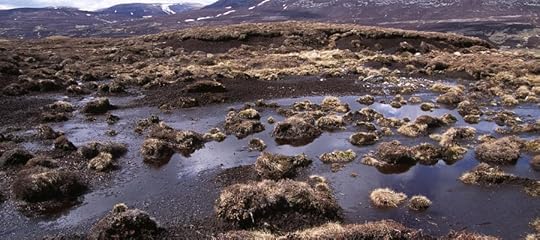
"Marian had read about the great cliffs of black sandstone. In the hazy light they seemed brownish now, receding in a series of huge buttresses as far as the eye could see, striated, perpendicular, immensely lofty, descending sheer into a boiling white surge.
"It was the sea here which seemed black, mingling with the foam like ink with cream."
"She is shut up by her husband because she deceived him and tried to kill him.
"He was, God forgive me if I am wrong. It was like this. He was a brute of a young man, though a charming one, a drinker and a runner after women and violent to his wife and other things more. It was not a good marriage. She was unhappy, and so it went on..."
"His death perhaps."
"I am not going to witness what happens next."
“Not a thing of beauty I’m afraid … Nineteeth Century of course”
“Marian was beginning to find the late evenings at Gaze rather hard to live through”
“This is an insane story ….. I don’t mean I don’t believe you. But it’s all mad …. Why does she put up with it, who doesn’t she just pack up and go away”
“Plato tells us that of all the things which belong to the spiritual world beauty is the one which is most easily seen here below.”
“Max’s oblivion of everything to do with Freud was one of the things which made Effingham love him”
“I know one mustn’t think of her as a legendary creature, a beautiful unicorn –
“The unicorn is also the image of Christ. But we have to do too with an ordinary guilty person ….. Guilt keeps people imprisoned in themselves”
“It was like a comedy by Shakespeare. All the ends of the story were being bound in a good way”
“You both feel you are sitting out the end of some tedious film, don’t you, where you already know what is going to happen …. But perhaps you don’t know what is going to happen, perhaps there are surprises, turns of the story …
“Perhaps Hannah is my experiment! I’ve always had a great theoretical knowledge of morals, but practically speaking I’ve never done a hand’s turn”
“Gerald had no theory about Hannah. Gerald not been paralysed by an allegory”
“Hannah had been to him the chaste mother-godess, the Virgin mother. The sin which Hannah was, through her own sinless suffering redeeming him for had been the sin of his own mother’s betrayal of him with her own father …… Because of his unconscious resentment of his own Mother’s sin of sex, he had been, he explained, unable to establish any satisfactory relations with women other than those of Courtly Love”
“The play is over, the Vampire Play let us call it”
“The spell is broken and the magic is all blown away”
“We were all the attendants up on that ceremony and we are now all dismissed. So we return to our real life and our real tasks”
“It has been a fantasy of the spiritual life, a story, a tragedy ….. He would hurry back to his familiar, ordinary world”
“His death rounded the thing off, gave it a tragic completeness which made it all the easier to cut free of it”
“He was now in a frenzy to be off, to have escaped”
“While you are playing ring-a-roses, others are working the machine”
“Her encounter with Denis, for all its surpisingness and oddness, had so much of the feeling of coming into real life ….. this would be the real business which one human being has with another”
Out on the terrace, the golden retriever came rushing up to Effingham, planting its paws upon his waistcoat and then rolling upon its back in a fluffy whirl of smiling mouth and waving paws”
“There was a roaring sound behind the rain which was perhaps the sea”