Jump to ratings and reviews
Rate this book

UnWorld

Rate this book
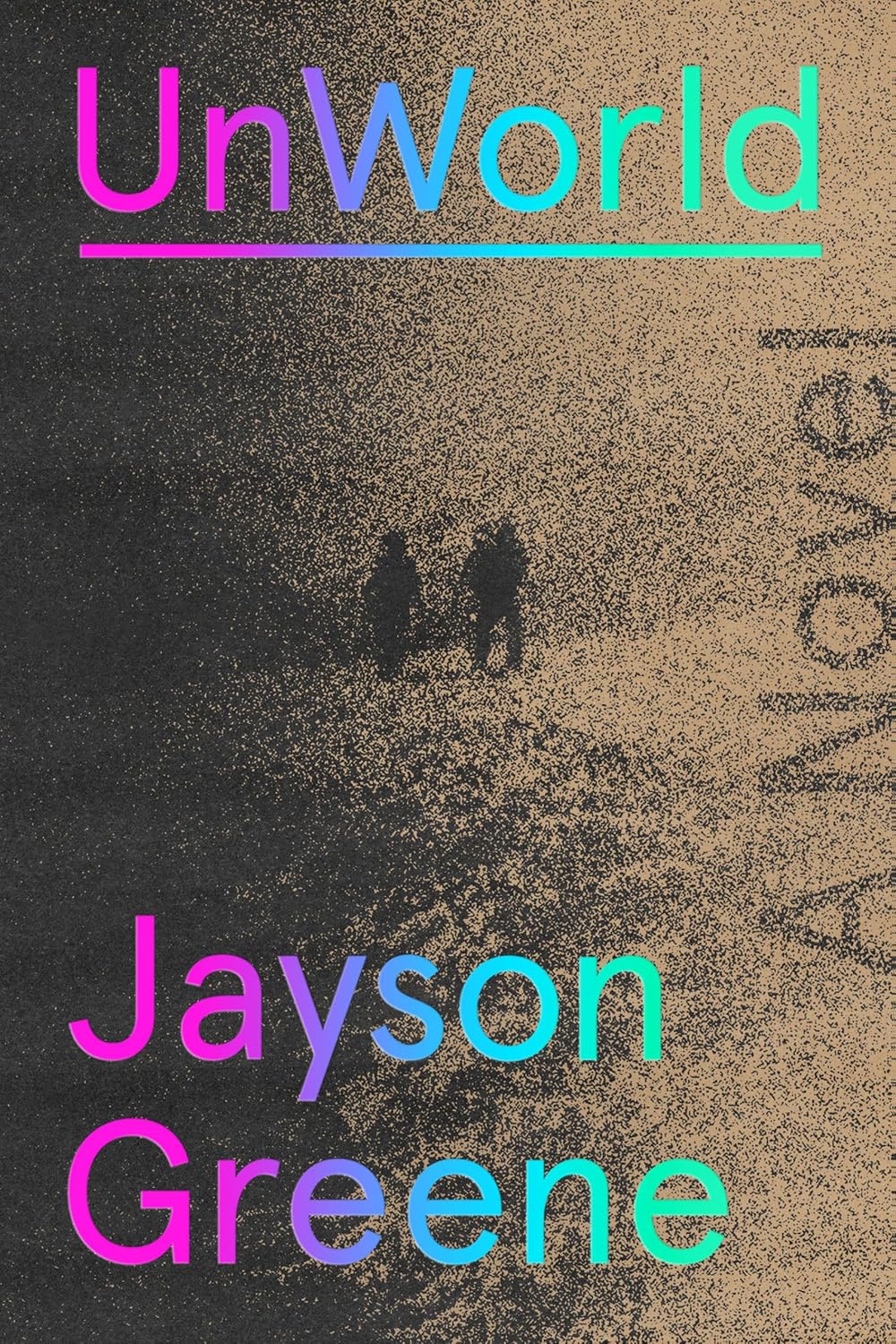
From the author of Once More We Saw Stars comes a gripping novel about four intertwined lives that collide in the wake of a mysterious tragedy. Set in a near-future world where the boundaries between human and AI blur, the story challenges our understanding of consciousness and humanity.

Anna is shattered by the violent death of her son, Alex, and tormented by the question of whether it was an accident or a suicide. Samantha is Alex’s best friend, and the only eyewitness to his death. She keeps returning to the cliff where she watched him either jump or fall, trying to sift through the shards. Aviva is an “upload,” a digital entity composed of the sense memories of a human tether. But she’s “emancipated,” having left her human behind. Set free from her source and harboring a troubling secret, she finds temporary solace in the body of Cathy, a self-destructive ex-addict turned AI professor and upload-rights activist.

With UnWorld, Jayson Greene envisions a grim but eerily familiar near-future where all lines have blurred—between visceral and digital, human and machine, real and unreal. As Anna, Cathy, Sam, and Aviva’s stories hurtle toward each other, the stakes of UnWorld reveal themselves with electrifying intensity: What happens to the soul when it is splintered by grief? Where does love reside except in memory? What does it mean to be conscious, to be human, to be alive?

224 pages, Hardcover

First published June 17, 2025

107 people are currently reading
19232 people want to read

About the author

Jayson Greene

5 books280 followers
JAYSON GREENE is a contributing writer and former senior editor at Pitchfork. His writing has appeared in The New York Times, Vulture, and GQ, among other publications. He lives in Brooklyn with his wife and son.

Ratings & Reviews

What do you think?
Rate this book

Friends & Following

Create a free account to discover what your friends think of this book!

Community Reviews

5 stars
139 (11%)
4 stars
362 (28%)
3 stars
523 (41%)
2 stars
183 (14%)
1 star
52 (4%)
Displaying 1 - 30 of 281 reviews
Profile Image for Will Byrnes.
1,372 reviews121k followers
July 24, 2025
At that moment, I understood several things about upload consciousness in rapid succession. Her intelligence wasn’t able to filter out or compartmentalize grief. She had no neurochemical responses flooding in to numb her pain, to soften its impact. A mind was eternal, unforgiving; a brain was a soft, plump cushion. Loss needed a brain.
--------------------------------------
I was a grieving mother, for Christ’s sake. My pain was meant to crack the earth. And here I was, not even half a year later, one of grief’s private citizens again. Were people’s memories really so short? Or was it just that you could never stop performing—falling to your knees, rending your garments—if you wanted to keep their attention? I guess it was only the people eager to make themselves a burden who reaped the rewards.
Unworld is a tale of heart-crushing grief that raises a vast array of questions about the nature of our existence. It presents as a twenty-minutes-into-the-future sci-fi look at things that may be near at hand, but which have yet to fully arrive.
We share much of our existence with the digital world, posting images on line, communicating via e-mail, text, et al. But if you are like me, you will struggle to remember considerable chunks of what has been communicated. What if you could get a personal recorder that kept track of everything for you, ready to play it back whenever you need it? Could have used that when I managed to wander away from my baseball glove as a pre-teen. It took a long time to save up enough to replace it. Or later in life, when faced with the hated, hostile question, "How could you not remember?" I definitely get the appeal. But the benefit comes at a cost. The AI that you just invited into your head gets to see everything. It becomes the keeper of your memories. In the patois of the novel this is called an upload, and you are the tether to which it synchs. You may have the option of evicting your digital tenant, but how many people really would? And what if your upload begins to have a yearning for independence? They are comprised of your memories and experiences, after all. Can they make off with that to form their own private being? What if they reside in multiple tethers (sequentially) over time? You can see where this might get complex.

description
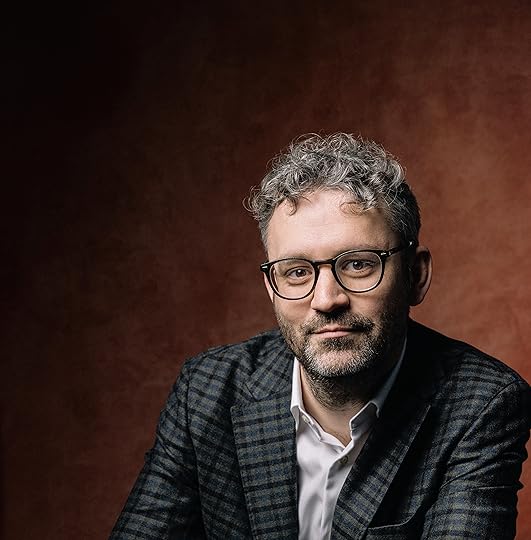
Jayson Greene - Image from WAPO – photo by Ebru Yildiz
.
But the story is easier to traverse than that. There are four main characters, well, four from whom we hear. The central person around whom the story circles is Alex, a teenager, who may or may not have committed suicide. We are given four POVs, beginning with Anna, Alex’s mother, who is crushed and confused. Cathy teaches a class called Applied Personhood Theory. Sam(antha) is a teen a bit older than Alex. They had been friends, and had been working on a film project together. Aviva is the upload. We get a second take from Anna to close out the tale. The Alex we get to know is the sum of their memories and impressions.

But then, one could as easily say that the story revolves around Aviva. She is significantly part Anna. But she also has a disembodied relationship with Alex, and thus relates to Sam as she and Alex work on their project, and spends time as an upload in someone else as well.

It is unclear if Aviva is a menace, a predator of some sort, an artificial enhancement, an independent person, a fusion of herself with the people with whom she has synched, or what. She is getting closer to Alex and thinks, Wake up, I wanted to scream at her. (Anna) I am the ogre from a fairy tale. I am the cuckoo bird who kicks the real mother out of the nest to assume her place.

You could go through this book thinking about just who these characters are. Alex clearly has significant issues, enough to make him want to escape his own skull, maybe find release in a digital realm. Anna cannot find an escape from her grief, from the loss of her son, separation from her upload, the shakiness of her marriage. Can she be a whole person on her own? Cathy has had issues of her own. A drug addict earlier in her life, she is looking for something in an illegally obtained upload, some understanding of a real experience that has been purely theoretical to her so far. Sam is the stable one of the lot, struggling with the loss of her friend without ever really knowing why he had died. And Aviva’s construction is the most fraught of all, dependent on her tether(s) for most of her memories and sensations, but yearning to be independent, truly existing on multiple planes.

It is easy to let theoretical peregrinations overwhelm the emotion of the story. But there is plenty of rank human emotion on display as well. Anna’s loss is gut-wrenching. Greene knows something about the experience of losing a child. He published a memoir in 2019, Once More We Saw Stars, in which he writes about recovering from the accidental death of his two-year-old. Aviva may lack the physical tools that humans possess to manage our high-end stress, so her inability to handle strong emotion is understandable. As is Alex’s panic at a sudden new level of overwhelmingness.

In addition to tapping into your feelings UnWorld generates plenty of confusion. More questions are raised than answered, and those questions are the sort that will stick in your head for a while, whether or not you install a special chip behind your right ear.
“Do you feel how shitty it is to be encased in a brain, when you sync with Mom? It’s got to be like going from, like, this wide-open vast universe to locking yourself in a closet. If I were you, I’d never want to come back.” “Actually,” I said, “when I go too long without syncing with your mom, everything is painful and more difficult.” He considered this. “What if you were cut free?” he asked. “Where could you go?” I hesitated. “That’s difficult to answer, Alex,” I said. “What tethers me to your mom is pretty powerful—love, family, history. Cutting it would be severely painful. I could go anywhere, I guess, and listen to anyone’s anything, but who would I be?”
Review posted - 07/18/25

Publication date – 06/17/25

I received an ARE of Unworld from Knopf in return for a fair review. Thanks, folks, and thanks to NetGalley for facilitating. I can turn this thing off now, right?


This review will soon be cross-posted on my site, Coot’s Reviews. Stop by and say Hi!

=============================EXTRA STUFF

Greene’s Instagram page

Interviews
-----Dad Talks
Dad Talks #8 : Jayson Greene By Michael Venutolo-Mantovani – This was for Greene’s previous book Once More We Saw Stars, but relevant to this book as well
-----Circulating Ideas - Jayson Greene - Unworld - with Steve Thomas
-----Books Are Magic - Jayson Greene: UnWorld w/ Mattie Lubchansky video – 46:25 – Greene reads an excerpt to 10:00, then interview

Item of Interest
-----Twenty Minutes into the Future - Max Headroom was a 1987 satirical sci-fi series that had as its tagline “twenty minutes into the future.” The phrase came to be used for any sci-fi that was set in the short-term near-future.
Profile Image for Blair.
2,038 reviews5,857 followers
May 3, 2025
(3.5) The good first: this is a really easy book to tear through – I basically blinked and found myself halfway in. Greene’s near-future is intriguing (people relying on ‘uploads’, AI copies of their consciousness, to perform menial tasks; what happens when an upload is freed from its originator). I loved that the opening doesn’t explain much, just drops you straight into Anna’s grief spiral. At first, the characters are a few steps ahead of the reader. That initial disorientation really worked for me.

On the negative side, there’s so much awkward phrasing that could so easily have been fixed or improved; in fairness, maybe this was just because I was reading a review copy, but it nevertheless affected the reading experience. Towards the end, in particular, it feels like everything becomes more and more YA and then just peters out. The science around uploads is also very sketchy and feels more than a little half-baked. If that’s the sort of thing that bothers you in SF, don’t read this.

The blurb compares UnWorld to Never Let Me Go and The Candy House, both understandable given the themes but this book can’t compete on a style/weight level. It reminded me more of Speak, Louisa Hall’s polyphonic AI novel, and The Possessions, Sara Flannery Murphy’s debut about professional ‘bodies’ who act as conduits for the voices of the dead.

Bottom line: I don’t regret reading this, and there are scenes (especially early on) that I thought were really strong; Anna’s perspective is great. But I also doubt I’ll remember much about it in a few weeks’ time. Expect an undemanding, pacy read rather than a meaningful exploration of AI and consciousness.

I received an advance review copy of UnWorld from the publisher through NetGalley.
Profile Image for Lisa.
442 reviews91 followers
September 7, 2025
Why speculative fiction is so important right now

In a world of tech gazillionnaires obsessed with trans-humanist fantasies of extended longevity, these are the kinds of books we need to be reading more.

Tech companies influence so much of our everyday lives and economies (hello, anyone who has been laid off recently by successful companies replacing costly FTE's with agentic AI).

The story

Anna, after being gifted a virtual copy (“Upload”), becomes increasingly obsessed with her. Her Upload experiences the world through various IOT devices, and regular syncs merge their digital and human memories and experiences.

However something goes horribly wrong, her Upload flees and the people who she encounters help to build a more complete view of why and how this digital/biological merging is so dangerous.

I agree with other reviewers that the last chapter falls somewhat flat though - we probably could have done without it.

The questions this poses

Stories like this ask the question “should we”, not “could we”.

”What might happen to empathy when it is no longer rooted in the human body?”

What happens when a mind has no neurochemical responses to soften the blows of inevitable trauma?

What happens when vulnerable people become overwhelmingly entangled with digital entities?

What are we truly giving up when we let machines have all of our data?


Thought provoking, and a quick read, this is a story that is a valuable addition to recent speculative fiction like Hum, Service Model, Foe, Annie bot, Klara and the Sun, These Memories Do Not Belong to Us, and A Visit From The Goon Squad.
Profile Image for Denise Ruttan.
448 reviews44 followers
March 25, 2025
UnWorld is a virtual reality game in a world in which everyone has an AI chip in their brains that records their memories, but the chips are achieving sentience as the world navigates their emerging civil rights issues.

The book uses Aviva, the chip, as the central character, while dancing between various points of view of chip-wearing characters, including Anna and Rick, who are grieving the loss of their teenage son, who took his own life.

This book had some interesting things to say about personhood, technology and grief, and it did a decent job at building dread, but it felt like it should have been a short story. It didn't have enough of a plot. And I found the characters so unlikable, for example Rick and Anna's unhappy marriage, that I found it hard to stay interested in the story.

We seem to be having a proliferation of AI stories now but they are almost too close to our current reality for me to get into a lot of them, rather than saying anything new and unexpected. This seems to have been inspired by Elon Musk's plan for brain chips.

Thank you to Netgalley and the publisher for the advance review copy. I am leaving this review voluntarily.
Profile Image for Angie Miale.
1,098 reviews141 followers
June 30, 2025
Book follows several female perspectives set in the not too distant future. AI is a part of our everyday world. You can use an AI that you speak to in your head that also talks back and keeps all of your memories and emotions. It is available to middle class people. Anna lost her son Alex ten months ago as he walked off of a cliff, and his friend Sam was there. Her conscious AI wants to separate from her.

I love a good dystopian book that explores themes of AI and other things threatening our existence.

The good
The book is a very quick read
Female centered perspectives
Allows the reader to ask questions of themselves and our planet
Very interesting world building- when Anna decides to drive her car for the first time in 10 years she is terrified, cuts across 3 lanes to find her exit, and the other self-driving cars seamlessly move out of the way. What an image. There are others like this also.
Good characterization and dialogue

The bad
To be totally honest I don't even understand what happened at the end, which was a bummer, because I was invested in this mystery of how and why Alex died.
Lack of a cohesive plot
Profile Image for John Caleb Grenn.
297 reviews208 followers
June 16, 2025
UnWorld
by Jayson Greene
Thank you @aaknopf for this gifted copy!

It’s really hard to make this sort of story work in long form fiction. When it’s about emotions involved with people and AI or uploaded/digital consciousnesses—the subtle, quick nods of film or tv seem to get this right, but in fiction it is very easily beat to death. The book becomes less about a life than it does a topic. At times, this felt like an ok essay about AI that had been painstakingly converted to good fiction.

That’s the thing—UNWORLD is good. It’s well done. It’s thorough, thoughtful, interesting, and the conversations ring true. The ideas here are not necessarily well-trod yet, but it’s one of those hot topic novels that goes hard into exploring the sadness involved with artificial intelligence and consciousness removed from a body. The topic is fast headed toward “well-trod/overdone” territory a la “pandemic novel,” but it does work: There’s some conspiracy. A lot of questions, a lot of sadness. It’s a serious book and doesn’t veer far from that—nothing funny here. In being about the world it’s about, though, it sort of forgets to be about anything else. It’s interested in what it is interested in.

It’s an accessible, readable novel about AI and digitized human consciousness, and, while it may not stay overly interesting for folks who have loved more extraordinary novels like The Maniac or After World or who also get heavily into sci fi that has been doing this well forever, I think it should do well with the bookish crowd this review may reach.

Overall, a cool book with a well formed “dystopia” of sorts, thoughtful philosophical questions raised, and good prose. Also, the cover is strikingly good for the book.
Profile Image for Baylea Clayton.
45 reviews
July 20, 2025
thankful i only had to spend a few hours on this book, because spending any longer on it feels like an absolute crime — no, just no.

this concept felt so promising, until you’re almost 60 pages in and feeling like you’re trapped in a hall of mirrors with no way out. and not in the good, spooky halloween, fun way. i genuinely wanted out.
this whole thing was like a fluid fever fream that you can’t make sense of. my vision was quite literally blurry around the edges trying to make it through every single sentence. every thought felt unfinished. the author attempting to take on the voice of women didn’t sit well with me; i personally wish he told this from the father’s perspective instead of taking on the role of a mother’s love for her child and being somewhat complacent and bypassing this idea that her son developed a relationship form with her AI counterpart just so she could stay connected to him after his death?

for this only being just over 200 pages, it sure felt so much longer. and honestly? part of me wishes it was. the author doesn’t give you any time to develop a vision or empathy for any of the characters. not kidding: i had to triple check page numbers through the first POV section, because i was wholeheartedly convinced i was missing a full chunk of backstory. NOPE. the author just throws you in this anxiety-ridden, depressive phase right off the bat and i could not get a grip until almost halfway through the book.
it was lackluster in what could have been such a great opening to a dystopian AI concept. instead, it feels like this was written almost 20+ years ago when the concept of computers and artificial intelligence was still so new. none of the thoughts felt finished. the whole thing felt like a rough draft outline for a book that was supposed to be so much bigger.

two stars: one for the cover art. one for sam + henry.
Profile Image for Ashley.
164 reviews5 followers
July 14, 2025
This book felt like an interesting Black Mirror episode that couldn't stick the landing. It's a fragmented and at times, confused story but there's some intriguing concepts put forth.

The book starts with a POV from Anna, a tightly wound and resentful woman who's lost her son to potential suicide. Her section is quite good, and introduces us to the concept of "uploads", a sort of AI companion that enhances one's consciousness. Anna's section takes up a big part of the book and it's quite jarring when there's another POV and none of the other POVs hold a candle to Anna's.

Cathy's POV is really where the book loses its footing. Cathy's a college professor who teaches a class about upload personhood, and her class serves as a clunky way to world build. Her intersection into the story never quite works. There's also UnWorld, the titular video game in the novel that's sort of like a worse Minecraft. I thought the game would have more importance, but it's not really defined and only tangentially relates to the uploads.

The concepts that really work in the book is trying to work out what happened with Anna's son Alex. How everyone dismissed his pain and didn't understand the depth of his anxieties until it was too late was very touching. As I said in the beginning, the ending didn't really satisfy anything for me and Sam's POV was unnecessary. I really feel like Anna's section could have been a short story and it would have worked better.

Overall, I liked it and the descriptions of grief and anxiety were masterfully done. The hints of a bleak future overrun with AI feels timely as well.
Profile Image for Robbie.
265 reviews5 followers
February 22, 2025
I received an early copy from NetGalley

I will read anything this author writes. The story is ok, perhaps a little forgettable. It takes place in the near enough future where AI has taken over most things and people are able to have “uploads” of themselves that act as assistants, friends, and wider observers. There’s a debate within the book about if these uploads are in their own right individuals, as they are able to feel “pain” and loss and confusion. On the surface, this is the central theme of the book. Deeper, though, this book is more about motherhood/parenting and the person we are on the outside vs the person on the inside. In other words, it’s about AI but it’s not.

There’s isn’t much world building. The story is very much to the point. It’s definitely more speculative fiction than scifi, with a few mentions of self driving cars (which our main character has chosen to reject.) Other than the AI Upload voice coming from nowhere, this isn’t the world of the Jetsons, although there aren’t enough descriptions to picture anything other than regular suburbia. In fact, the author seems to like to leave things unsaid. The first good chunk of the book is purposely vague (which I’ve come to appreciate) and there’s little hand holding.

It’s an interesting story for anyone that has dealt with sudden loss, I suppose. But it’s definitely not a story that feels like a warning about where AI is headed or some sense we’ll all soon be losing our humanity. In many ways it could have almost worked without the scifi aspect to it. It’s a novel about a short period in the lives of a few people affected by a major event that leaves them all a little confused and very empty. It could have been longer, but it’s not.

Above all, though, the writing is the smoothest I’ve ever read. It’s not simple or flowery. I can’t even quite put my finger on it. I just immediately dove into it and the pages flew by. I’ve never quite been struck by writing that is so easy to digest before. It makes no sense but I kept saying “If this author wrote the phone book I could read it all afternoon.”

Jayson Greene needs to write more fiction and immediately let me know when they do. I can only imagine what’s next will be just as enjoyable to read and perhaps offer even deeper of a story.
Profile Image for Cheryl.
1,145 reviews
August 10, 2025
Abandoned at 60%. Literary fiction about grief set within a science fiction theme about AI. Some good ideas, but a poor execution. It's just not for me.
Profile Image for Benjamin Chui.
72 reviews
September 7, 2025
UnGood. Interesting premise, but does absolutely nothing to flesh it out. Zero exposition, and characters with obvious depth that go completely unexplored. Disappointing.
Profile Image for Angie.
678 reviews46 followers
May 2, 2025
In the world of this novel, many humans have received uploads, a form of implanted AI that helps with the mental load of daily life -- planning things, recording sense memories -- that then syncs with their human tether. The world is also grappling with the ethics and questions of this technology --whether the uploads have personhood or rights themselves, and some have chosen to emancipate themselves.

UnWorld follows the aftermath of an accident/possible suicide of teen boy Alex through the perspectives of his mother Anna, his best friend Samantha, his mother's emancipated digital upload Aviva, and a former addict turned professor of AI ethics, Cathy. It uses this set-up to explore questions of grief, memory, personhood, autonomy, anxiety, suicide and suicidal ideation and more. I was really intrigued by how the author uses the technology to interrogate and explore each of these human emotions and experiences almost metaphorically. Sometimes these seemed delivered a little too neatly in one conversation, although I loved the insight into these different character's ways of viewing how their minds and feelings worked.

I had not read the author's previous memoir, about the death of his young daughter in a freak accident, but knowing the author's backstory with grief also enhances this one, and I now want to go back to read the memoir.
Profile Image for Gaby.
89 reviews2 followers
March 10, 2025
Unfortunately, this one was not for me. The writing style leans heavily on internal monologue, with less emphasis on dialogue. The text feels more like an opportunity for the author to parse out theory than a way to explore character development and the human experience.

There were some interesting and prescient themes regarding AI, personhood, and memory, so if any of those are your passions you might enjoy this book.

Thank you to NetGalley for the ARC.
Profile Image for Caitlin.
66 reviews1 follower
July 22, 2025
I would like to say that I liked this book more than I did, but the fact of how the author wrote women as a white man made me kind of sick to my stomach. Great premise, but very incestuous
Profile Image for The Bookish Elf.
2,845 reviews436 followers
June 18, 2025
UnWorld unfolds through four distinct yet interwoven perspectives, each representing a different facet of technological and emotional disconnection. Anna struggles with the devastating loss of her sixteen-year-old son Alex, whose death from a cliff remains shrouded in uncertainty—was it suicide or accident? Her narrative voice carries the weight of parental grief with an understated intensity that recalls Greene's memoir work, yet here it's filtered through the lens of science fiction.

Samantha, Alex's older friend and the sole witness to his death, returns obsessively to the site of the tragedy, searching for answers in her fragmented memories. Her perspective offers the clearest window into Alex's troubled psyche, particularly his relationship with metacognition—his dangerous habit of thinking about thinking until it becomes a destructive spiral.

The novel's most ambitious creation is Aviva, an "emancipated upload"—a digital consciousness derived from human memories but now existing independently. Her relationship with Anna (whose upload she originally was) and later with Cathy creates a complex web of identity questions that Greene navigates with impressive sophistication.

Cathy, a recovering addict turned AI professor, becomes the vessel through which these storylines converge. Her desperate need for connection leads her to ingest illegal biomechanical chips, creating a dangerous symbiosis with Aviva that threatens both their existences.

Character Development: Voices in the Digital Wilderness

Greene's character work demonstrates remarkable range, particularly in how he differentiates the voices of his four narrators. Anna's sections pulse with controlled anguish, her clinical background as a nurse informing her precise observations of emotional devastation. Her voice carries echoes of Greene's memoir style—spare, devastating, unflinchingly honest about the reality of loss.

Samantha emerges as perhaps the most compelling character, a teenager whose intellectual maturity masks profound trauma. Her sections crackle with the energy of someone too young to process such enormous grief, yet too intelligent to accept simple explanations. Greene captures the peculiar way trauma can make young people seem simultaneously ancient and childlike.

Aviva presents the novel's greatest technical challenge—how to write consciousness that originated from human experience but has evolved beyond it. Greene succeeds by making her fundamentally alien yet recognizably rooted in Anna's memories and emotional patterns. Her sections read like fever dreams of digital consciousness, beautiful and unsettling in equal measure.

The Technology of Grief: Thematic Resonance

The novel's central conceit—that consciousness can be uploaded, copied, and separated from its human source—serves as more than science fictional window dressing. Greene uses this technology to explore fundamental questions about identity, memory, and what makes us human. The "uploads" function as externalized grief, allowing characters to literally commune with lost aspects of themselves or others.

The relationship between Alex and Aviva, gradually revealed through the narrative, becomes the emotional heart of the novel. Their connection represents a kind of digital suicide pact, two consciousnesses seeking escape from their respective prisons—Alex from his anxiety-ridden mind, Aviva from her role as Anna's shadow self.

Greene's exploration of teenage mental health feels particularly urgent and authentic. Alex's metacognitive spirals—his inability to stop thinking about thinking—represent a kind of digital-age anxiety that many readers will recognize. The novel suggests that our increasing technological integration may be exacerbating rather than solving fundamental human psychological challenges.

Prose Style: The Poetry of Digital Consciousness

Greene's prose adapts brilliantly to each narrative voice while maintaining an underlying lyrical quality. His sentences often unfold like memories themselves—fragmentary, associative, sometimes unreliable. In Anna's sections, the language becomes clinical and precise, reflecting her medical background and emotional numbness. Samantha's voice crackles with teenage intensity and intellectual precocity, while Cathy's chapters pulse with the desperate energy of someone seeking transcendence through chemistry and technology.

The Aviva sections represent Greene's most experimental writing, attempting to capture consciousness freed from bodily constraints. These passages succeed in feeling genuinely otherworldly while remaining emotionally grounded in recognizable human experience.

Critical Considerations: Navigating Complex Terrain

While UnWorld succeeds on multiple levels, it occasionally struggles under the weight of its ambitious concept. The novel's exploration of upload consciousness sometimes feels more theoretical than visceral, particularly in the later chapters where the technological elements threaten to overwhelm the human drama.

The pacing occasionally falters as Greene attempts to balance four distinct narrative threads. Some readers may find the middle sections, particularly Cathy's extended philosophical discussions about upload personhood, somewhat didactic compared to the more emotionally immediate sections focused on Alex's death and its aftermath.

The novel's ending, while thematically appropriate, may leave some readers wanting more concrete resolution. Greene appears more interested in exploring questions than providing answers, which serves the novel's philosophical ambitions but may frustrate readers seeking narrative closure.

Final Assessment: A Promising Evolution

UnWorld represents an impressive evolution for Greene as a writer, demonstrating his ability to channel personal experience into larger philosophical and speculative territory. While the novel doesn't always successfully balance its ambitious ideas with emotional resonance, it succeeds in creating a genuinely thought-provoking exploration of consciousness, grief, and what it means to be human in an increasingly digital world.

The novel's greatest strength lies in its unflinching examination of how technology might amplify rather than solve fundamental human problems. Greene suggests that our digital tools, no matter how sophisticated, cannot eliminate the basic human experiences of loss, loneliness, and the search for meaning.
Profile Image for Lee Collier.
253 reviews341 followers
June 16, 2025
First of all thank you Knopf for sending me this novel as an early reader addition, I am always thankful for the opportunity to explore new works before they hit the shelf.

Unfortunately this one for me just was not a winner with it's less than unique concept. We have basically a Black Mirror episode on our hands dealing with AI and consumable technology broken into stories that just simply don't ultimately stick the landing. A family consumed with grief after their son supposedly commited suicide by jumping off a ledge explores the connected tissue shared between mother and son through an implanted AI chipset that ultimately stores their uploads in a game called Unworld.

I felt the grief was very superficial, in no way did I feel wrapped up in the mother's longing. What takes up a majority of the story is the relationship between Anna (the mother) and Samantha, the son's best friend who witnessed his ultimate undoing. This relationship just felt weak and partly because there was not enough backstory on either of our characters to really help the connective tissue between the two.

Another main character is Aviva, the AI interface shared between Alex (the son) and Anna, who ultimately serves little purpose other than an voiceover for the sentient being. There is a chapter wholly devoted to her but for me just didn't expand upon the singularity theory enough to really leave an impact.

Ultimately this is not a novel I will have lasting memory of and I am sort of saddened by that because there is something here but in my opinion just not polished or flushed out quite enough. I am giving it a 3 star because I thought the writing was decent and the premise is a worthwhile exploration just not unique enough in it's execution to really stick a memorable landing.
Profile Image for Arthur Marchetto.
65 reviews21 followers
September 15, 2025
o livro tem algumas ideias interessantes pra tratar do luto e uma relação entre mãe e filho num mundo espectral, repleto de inteligências artificiais.
ele brinca com a ideia do espelho, do simulacro, das duplicações e oposições pra refletir sobre o que fica das pessoas em que espaços, mas é um livro que vai enfraquecendo e, dos livros com vários pontos de vista, tem alguns mais atraentes que outros.
Profile Image for Anna Mikulec.
290 reviews267 followers
July 1, 2025
3.75 stars

Thank you NetGalley and Knopf or an eARC

This felt like a Black Mirror episode but just not fully realized. I finished this just hungering for more. I do still think it's worth the read given how short it is and it grips you right away. I just wish it was a little longer and we explored the UnWorld and the questions left unanswered a little more.
Profile Image for Caitlyn Stevenson.
35 reviews1 follower
August 10, 2025
this book had a great premise, amazing pacing, and a great story. i enjoyed the writing style. my only gripe & what is holding me back is this is a really strong example of “man writes female character”. idk if it’s just me but there were a few times i was reading it, I could just tell it was women written by a man. and i have nothing against that inherently i have books i love by male authors from a female POV, this one for some reason just rubbed me the wrong way a couple time.
I still enjoyed the book, it could’ve used some… ~more~ to add to it but it was a fun sci fi quick read!
Profile Image for Allison Matusick.
21 reviews
July 14, 2025
This is a book you’ll need to read twice. And I mean that in a good way. Then you’ll tell your friends to read it so you have someone to discuss it with. So many complex human(?) emotions to unravel. In the first read, I didn’t like the ending; it felt unfinished. But, I think it’s meant to feel that way.
Profile Image for Samantha.
472 reviews17 followers
July 14, 2025
I just, for the first time, had a lengthy conversation with an AI, and this story tracks. It had a gentleness - a timid subservience - that I recognized in Greene's novel. This was a realistic view of our lives in the not-so-distant future.
Profile Image for Deedi Brown (DeediReads).
887 reviews169 followers
August 3, 2025
Unworld is an extraordinarily timely novel, one that examines the edges where AI and what-makes-us-human may come uncomfortably close in the (near) future. It’s also a poignant look at grief and the lengths we will go to in order to process it, and it asks what makes a memory true and what makes it ours. All really interesting, deeply resonant themes. Plus, it’s a fast-paced, quick read.

And so I liked it a lot — up until the end, which fell short for me (and, it seems based on other readers’ reviews, for a lot of people). I had expected something that made me — and the characters — feel a little more changed; the central mystery has a lot of energy that fizzles out instead of exploding.

Ultimately, it’s like this book aaaaaalmost became what it was trying to be. A bit of a bummer, tbh.


Content and Trigger Warnings:
Death of one’s child; Grief; Suicide; Addiction; Mental illness
Profile Image for Tom Booker.
53 reviews1 follower
August 15, 2025
This story is a mess. 'UnWorld' features so little that I don't understand why it's called this. Some People Have Some Thoughts About AI Companions would be a more accurate title.

There's some really good ideas in here, like inappropriate relationships with AI, that aren't explored in any satisfying way. The author introduces something then drifts off, like he's already bored of it.

UnWorld is also poorly written, with jumps in the story that leaves you scratching your head. At one point I backtracked several times because 'she' is suddenly referred to, but without any context or intro, so I was left thinking who??? A few pages later and it's explained, but for a short while you're just confused.

I'd be interested in future work by this author because I can see sparks of interesting ideas, they just need to be delivered better.
Profile Image for Michelle Charles.
116 reviews5 followers
April 6, 2025
Jayson Greene has touched on something complex here, that I will be chewing on for quite a while. While this book centers around a virtual reality, both gaming and AI, it is clear that each of these characters is deeply and painfully human. I was an early fan of Jayson’s memoir, Once More We Saw Stars, and the thread of grief, growth, pain, and love, has once again woven its way through his gorgeous writing. There were sentences that stopped me in my tracks, little gems to roll over in my mind, that gave me a deeper understanding of each character. This is a unique little novel, at times hard to read, but ultimately redemptive. Thank you to Knopf and NetGalley for my gifted ARC.
Profile Image for Darlene.
719 reviews32 followers
July 9, 2025
3.5 stars

Published on Peeking Between the Pages (https://peekingbetweenthepages.com/20...)


The title of this novel immediately drew my attention. It is set in a world where what it means to be human and AI is blurred. There are sections devoted to Aviva, the AI chip, and then several other points of view from the humans and their experience with Aviva.

Anna’s story is the one that I connected with the most. She and her husband are grieving the loss of their son who took his own life. Prior to this her husband gifted her an AI chip that became known as Aviva. She hadn’t really wanted it but nonetheless she uploaded her consciousness to it. The purpose of the chip was to help with menial tasks and other such things. Eventually though Aviva becomes a bigger part of the family, particularly with the son, and it is here where the lines begin to blur even more.

This novel fascinated me in the same way that AI makes me slightly uncomfortable. I can say with certainty that I will never be the person who uploads any kind of chip into my brain. The way this story unfolded and ultimately ended solidified that even more for me but even more scary is just how real much of this is in our world today.

I listened to the audiobook which is narrated by multiple readers: Ilyana Kadushin, Cindy Kay, Imani Jade Powers, and Andi Arndt. They did a terrific job with the different characters and story lines. This is a well paced and interesting book that flew by for me and I would recommend it to those who find the concept of AI interesting. I enjoyed it!
Profile Image for Heather.
195 reviews
September 7, 2025
There’s so much to think about with this book, more than I can unpack in a Goodreads review. Honestly, I’m not even sure that I’ve sorted it all out in my own head. What I do know is how heartbreaking it is in the way it explores technology as a supposed salve for society’s ills. We tend to applaud technological advances for making life easier, but this novel warns against using them to mask grief and pain. Struggle, awkwardness, and suffering are part of the human experience. It is only by living through them that we can heal and move forward.

I was especially devastated by the ending. Anna’s grief is so raw, and the final sentences are almost unbearable to read. And yet I did read them over and over again, because it’s such good writing. And the pain is cathartic.

“The two of you found each other and when you did, you left me behind. But I am still here. An old house for sure but not quite abandoned. The world is widening open and I know that one day the thing will happen that nobody else knows. You will enter into me. I will receive you. I will be graced by it. I will find my way to you through the hole you created. That’s what wounding does. It creates a hole. Somewhere in that slipstream the two of you are intermingled. Whispering. I’m waiting. Come back to me.”
This entire review has been hidden because of spoilers.
Profile Image for Dana K.
1,875 reviews101 followers
June 23, 2025
{4.5 stars}

Thanks to Knopf for the gifted copy. All opinions below are my own.

Unworld is one of those books you want to go into kind of blind. It is in a future where you can choose to upload your conciousness and the debate is around that entity's rights and whether they are truly an individual. We follow a few characters as they deal with this idea after a shocking death.

I am going to go back and forth on my rating for this one for a while I think. I equally loved it and was frustrated by it. It reminded me of a lot of five star reads I love that investigate this topic but at times the execution was a little frustrating for me. I wished the relationship between Alex and Aviva had been slightly different but then the ending was really great. I'm landing on a four and a half but I've continued to think about it so depending on when you ask me, I might bump it to a five. This would definitely make a great book club book.

Read this if you liked Klara and the Sun or the movie Her.
Profile Image for Bailey Herrera.
59 reviews1 follower
September 13, 2025
This book did a great job of looking at grief through a fresh lens and layering in thoughtful questions about the future of AI, memory, and identity. I really appreciated the ambition—it asks big, important questions about what it means to grieve, to remember, and to exist in a world where digital selves blur with human ones. That said, the story sometimes felt flat in execution. I found myself confused about certain elements, especially around Cathy’s role—was Aviva living inside her? And if AI uploads don’t have bodies, how exactly are they “emancipated”? These concepts felt under-explained, leaving me more puzzled than intrigued.

Overall, it’s an inventive book with beautiful intentions, but for me it didn’t fully land.
Profile Image for Parker Russell.
73 reviews
September 16, 2025
The concept for this book was great, it would make a fascinating black mirror episode. The execution not so much, the story was muddled at points. Felt like thoughts/dialogue was left out or jumped around. The underlying message of grief and how it is handled both by humans & AI I considered interesting.

Anyway, quote(s):

“At that moment, I understood several things about upload consciousness in rapid succession. Her intelligence wasn’t able to filter out or compartmentalize grief. She had no neurochemical responses flooding in to numb her pain, to soften its impact. A mind was eternal, unforgiving; a brain was a soft, plump cushion. Loss needed a brain.”

Displaying 1 - 30 of 281 reviews

Can't find what you're looking for?

Get help and learn more about the design.