Russia’s war on Ukraine has not only destroyed millions of human lives, it has also been catastrophic for the environment. Forests and fields have been burned to the ground, animal and plant species pushed to the brink of extinction, soil and water contaminated with oil products, debris, and mines. On a single day in June 2023, the breached Kakhovka Dam flooded thousands of kilometres of protected natural habitat, as well as villages, towns, and agricultural land. The devastation of biodiversity and ecosystems across Ukraine has been immeasurable, long-lasting and its consequences stretch beyond national borders.
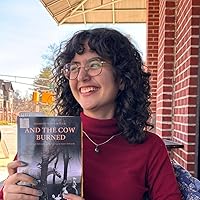
In this poignant book, Ukrainian researcher Darya Tsymbalyuk offers an intimate portrait of her beloved homeland against the backdrop of Russia’s war and ecocide. In elegant and moving prose, she describes the damage to the country’s rivers, the grasslands of the steppes, animals, insects, and colonies of birds, as a result of Russia’s ground and air operations. Alongside the everyday experiences of people in Ukraine living with the environmental consequences of the war, we share Tsymbalyuk’s own reckoning with the changing nature of cherished places and the loss of familiar worlds caused by the ongoing Russian invasion.
I will keep along the lines of the author to write this review. I am sad this book has to exist, the reason for the authors work is heartbreaking, devastating. And those living through it have been brought even closer because of the author's telling of their story. I am quite familiar with Ukraine, but at every turn I found something I didn't know, about its history, people, nature, and of course the effects of the war on these. I see the war in a new way and Ukraine itself in, I hope, a way closer to the way her people do.
I highly recommend this recent book by Darya Tsymbalyuk. It brilliantly weaves the story of what is happening to the environment in the context of war with what is happening to the meanings that humans make of their lived environment - a prime example of what environmental humanities can look like. I won't say it's an easy read in terms of subject matter - but stylistically it makes every effort to be an easy read, opting against the stylistic traditions of heavy academic prose.
Tsymbalyuk organizes her narrative into sections dedicated to water, land/soil/ground (zemlia), air, plants, bodies (human and non-human animals'), and energy, while clearly signaling that the stories cannot be easily confined to these boxes, but spill over them, emphasizing the interconnectedness of everything in the lived environment. I also appreciated that she didn't take the destruction during the war out of broader context, juxtaposing the slow death of climate change with the quick death of military attacks, and evoking the contexts of colonial and capitalist exploitation of nature in previous decades.
(I bought an ebook version from the publisher when I realized I wouldn't be able to get a library copy for a while, and I have to say it's not a very convenient option. They sell access through the Wiley reader app which is not very user-friendly. Just saying. A paperback is only 3 euros more expensive.)
As hard as it is to read this book, I would recommend it to everyone.
Simultaneously personal and dealing with the weight of the destruction of a whole nation, culture and environment, this really hammers home how terrible war is (and specifically how terrible Russia's war in Ukraine is). By calling out names of people, animals or species of plants that have been touched and mutilated by the war (and the decades and decades of pain inflicted on them by Russia and others before it), all the numbers we hear on the news (or used to hear back when Russia's war was still a trending enough topic) hit home even harder. By including actual academic and factual evidence and sources, this book elevates itself above just a personal memoir, a subjective experience. Simultaneously it meanders and gives meaning to those numbers in an almost poetic and immersive way, that made it sometimes hard to read because it made my heart sank too much. Luckily the book is divided into chapters which are divided into seperate sections, so if something is too heavy it is easy to put the book away for a few hours or a night before resuming it.
In the end, I am faintly comforted by the hope this carries as well: that there is still people with heart and care for the land, for all the animals, vegetation and indeed people who live on and with it. But still, my heart aches for them all the same.