In the shadowy corners of Paris, a man embarks on a quest through enigmatic a famed cemetery, a bar where the damned linger, an underground city of the dead, and a magnificent estate captured in a painting. These places, immortalized by those he seeks, hold the answer to a single, desperate question. The fact that these people are long gone is of no consequence to him.
As he searches for answers, he crosses paths with four other souls on their own a lounge singer lost in delusions of grandeur, a brilliant painter paralyzed by self-doubt, a fallen violin prodigy haunted by the echoes of a vanished life, and a troubled street performer who uses his art to reach beyond the veil of death.
In The Lights That Dim, a tragic and surreal epic unfolds, intertwining the fates of these characters. This fantastical tale explores the ghosts of both the living and the dead, capturing the struggle of artists weighed down by their influences, facing inevitable failure, and grappling with dreams that may never be realized.
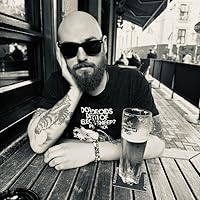
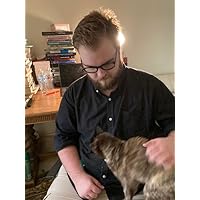
Jack Moody is a novelist and short story writer whose work includes Miracle Boy, Buying the Ostrich Farm, The Lights That Dim, and The King of Everything. He is a former contributor for Return Magazine, The Bel Esprit Project, and Brick Moon Fiction, and his stories have appeared in various publications, most notably The NoSleep Podcast and The Saturday Evening Post. He lives in Portland, Oregon.
I’ve recently come to the work of Jack Moody and am sold. Put me down for stock on this writer. It’s only going to be worth a s**t ton of $$$
Whether it’s in the short pieces of The Absence of Death or the insane clarity of Miracle Boy there are few writers around that feel original and are taking risks. And there is NO OTHER writer I know that writes about life and death and the ghosts of both (???) You want surreal ? Ok. Done. But, if there is a writer that you want to explore and feel alive then seek out Jack Moody. Please. Your mind needs to read writing like his. Available where you buy awesome books. Or just go here… (I’m just trying to steer you in the right direction.)
Jack Moody’s ‘The Lights That Dim’ … or perhaps Jack Moody’s ‘Tortured Poet’s Department’ … (and no, this isn’t a Swift reference). It’s oh so fitting that he chose Paris as the setting; Rimbaud, Baudelaire, even Genet would feel at home, perhaps even understood, amongst these pages.
I was a big fan of Jack’s ‘Miracle Boy’, released earlier this year, so was happy to spread the word and pleased to see so many others pick it up. I was a little sceptical when he announced another release so soon, but was nonetheless very appreciative that Jack took the time and effort to post a copy over the pond to me in London. And I can confirm it lives up to expectations.
Jack Moody is a talented young writer who deserves attention. Amongst other things, he is strikingly good at characterisation. In ‘The Lights That Dim’, his charmingly flawed, beautifully failing artists are surrounded in Paris by some of art history’s greatest influences and exports – Cézanne, Monet, Dali, Oscar Wilde, Saint-Saëns, Edith Piaf and even Jim Morrison are all either referenced or make an appearance from beyond the grave; which tortures Moody’s artists. Why even bother when surrounded by such genius?
Questions of beauty within art, perceptions of it, and what we do (or don’t do) with it, are central here. There are moments too when Moody’s prose itself is just stunning:
“Some things, no matter their beauty or significance, transmute into the mundane when one is so accustomed to their presence. It is all relative. Art and legacy and history are meaningless things to some, always. This can breed humility even in greatness, or it can infect an already troubled soul with the mind of a nihilist. But both things can be true. They have to be. Each and every achievement in all fields is work towards a pointless conclusion and total ascension beyond the absence of purpose. Whether these twin realities conjoin to create hope or despair is a subjective decision entirely up to each individual.”
Moody’s tortured artists are risen in their seemly endless pursuit of recognition, but the real questions lie within their own souls. And I can’t help but wonder how much of his character’s search for answers and self-acceptance is autobiographical? Well, after reading this second work of his, yes Jack, you are good enough.
Picked this up at Powell’s because I wanted to read a local author and I was not disappointed. Moody’s prose bowled me over, I don’t understand how he isn’t widely read. There are great bouts of surrealism that might take a second reading to unravel but the through-line of the story is simple enough to clearly deliver its message. There is no goal to art, it is a life of its own: a process through which meaning is developed and not a mechanism toward some goal. The pursuit of succeeding in art is the same as conquering a castle of sand. It is breathing. It is breath. Respiration. Spiritual. A second spirit, betimes parasitic and at time symbiotic.
This book tells the story of an unnamed solo traveller visiting Paris, searching for connection, validation and inspiration. The search for these things becomes a nightmarish yet enlightening journey, and this modern-day travelogue turns into a ghost story and a heartbreaking character study. Moody perfectly captures what it's like to travel alone in today's world, where cities of history and culture have become cities of just selfie sticks and old stones and where the true heart of the city has become commodified and dulled into oblivion.
As our unnamed traveller wanders around the streets of Paris, he crosses paths with a few residents, and we follow their lives as they search for the same things as our tortured tourist. We witness the madness and sadness that can plague artists. He also comes into contact with the dead residents. It's in these meetings and interactions that Moody's power and potency come into full effect. As we ebb and flow between the time of candlelight to gaslight back to phone backlight, we see the full scope of the novel's purpose. It's in these conversations with artists long gone where instead of "Midnight in Paris," it becomes "The Dark Night of the Soul in Paris," where dead artists and a living one have conversations about legacy and immortality. It's the dreamed-up dead artist dinner party you've always wanted that slowly becomes a nightmare. The living and the dead are thrown into this hallucinatory melodrama, making this novel a must-read.
There were many passages and moments in this book that truly floored me, one in particular is when the traveller speaks to the grave of a famous painter, the only dead artist that doesn't appear from the ether. It's a heartwrenching monologue that I myself have often felt and feared. It's the thoughts that keep you up at night or the ones pondered when you don't feel good enough. At that moment, the book and character fell away, and perhaps I was having my own dark night of the soul. Sometimes, these feelings while reading can be overwhelming and scary, but in retrospect, they are necessary.
It's a release of some sort that makes the reading experience and perhaps your life all the better. As you read The Lights That Dim, you'll feel it's coated in a certain brand of nihilism, but at its core, it's a story of hope and resilience. Perhaps it's a giant conversation on whether or not to give up the ghost.
Jack Moody has created an impressive work which dredges the fathoms of artistry, sanity, culture, and that which makes us immortal. At once haunting and hopeful, it is an odyssey which, in the tradition of Homer, takes us to the very edge of ourselves.