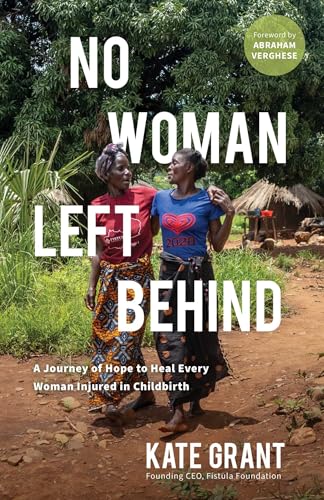
For inspiration on how to create a life of purpose, No Woman Left Behind is the unlikely story of how one woman leaves Madison Avenue to tackle the global maternal health crisis head on.
The day a woman gives birth is also the day she is most likely to die or suffer severe injury—a sobering reality that comes into sharp focus when Kate Grant visits the Addis Ababa Fistula Hospital in Ethiopia’s capital. There, she sees row after row of beds occupied by young women afflicted with obstetric fistula, a childbirth injury that leaves them incontinent and too often shunned by their communities, modern-day lepers. She soon learns that surgery is the only way to end their suffering.
In No Woman Left Behind, Grant recounts her decision to abandon a promising advertising career, and the ups and downs of building Silicon Valley–based Fistula Foundation from a modest start-up into the global leader in fistula treatment. Through vivid firsthand accounts of surgeons toiling in remote corners of Africa and Asia, we see inside the fight to restore hope to some of the world’s most vulnerable women.
A compassionate army of donors spanning nearly 70 countries makes such life-changing care possible. Grant demonstrates the profound power of individual action to change lives at scale, since Fistula Foundation takes no government money. No Woman Left Behind is a compelling personal journey and a how-to guide for anyone looking to make a lasting difference in the lives of others.
100% of the author’s net proceeds from No Woman Left Behind will go to Fistula Foundation’s Love a Sister program to fund free surgeries for women with childbirth injuries.
No Woman Left Behind sheds light on the important work and story behind obstetric fistula. Kate’s story is one that was impacted by women who suffer from this condition and it forever changed the trajectory of her life.
Inspiring! I’d recommend this. It was cool to journey through Kate’s professional evolution to nonprofit leadership and to see an inside view of how they grew the foundation
No Woman Left Behind: A Journey of Hope to Heal Every Woman Injured in Childbirth by Kate Grant is the poignant and important telling of the author’s personal and professional journey she took to make childbirth-related fistula less deadly for women around the world, but especially in Asia and Africa.
There’s no sugar-coating it. Fistula is a medical condition that can occur during childbirth, where tears happen inside the body that cause continuous urine and feces leakage. It’s such a heartbreaking, devastating condition that some marriages and relationships are ruined, women are rejected or ostracized, fall into clinical depression–or worse, they and possibly their newborns face death from lack of medical care and corrective surgery. This rarely happens in countries like the United States and other medically equipped countries.
In her book, Grant goes into intriguing detail about how her life transitioned from a 1980’s Me-Generation advertising professional to a humanitarian and crusader for better health for women around the world. It sounds like an impossible undertaking, trying to save the lives of millions of women who are at-risk or have already suffered from fistula, but this autobiography describes each step she took that led to the formation of The Fistula Foundation, which provides real help to these women in need: surgery. Surgery is the best solution to the problem.
The author’s account is gripping and heartfelt, and Grant relays her story and the stories of women in maternity crisis with the descriptive, energetic, and compassionate prose you would find in an exceptionally well-conceived novel. But it is full of medical information and even topics and questions at the end for discussion, making this the perfect addition to a book club or classroom. As you read, you feel her shift from an advertiser seeking meaning from her work and life, to a woman who found her purpose through helping those who can’t help themselves. This is the kind of story that deserves a wider audience and would make an excellent documentary or film.
This book is replete with personal anecdotes. Some will have you smiling, like the dedicated doctors she met while visiting countries most affected by fistula (over 30 of them!). And some will have you in tears, like the women themselves who were in need of these life-saving surgeries. Grant’s story shows how one person can truly make a difference and save lives.
If you need inspiration to make a bold move in life or want to reach out and help those in need, let No Woman Left Behind: A Journey of Hope to Heal Every Woman Injured in Childbirth” by Kate Grant be your guiding light.
I seldom give a book 5 stars. This one deserves it for several reasons. I have been a supporter of Fistula Foundation for many years. After seeing Dr Catherine Hamlin on Oprah decades ago, I was moved to support her work through the Fistula Foundation, and have been impressed with what they’ve accomplished in the years since. So I was sold before I started reading.
What I didn’t know was Kate Grant’s story, how she came to lead the organization and her journey in growing it. This book tells that story honestly, including both the incredible strides made and the personal struggles and failures. I found it intensely interesting and very inspiring.
Each chapter begins with a quotation, but my favorite begins the first chapter: “If you can see your path laid out in front of you step by step, you know it’s not your path. Your own path you make with every step you take. That’s why it’s your path.” -John Irving
Here’s to Kate Grant for forging a path that has changed the lives of tens of thousands of women in the poorest countries of the world. And to a book that inspires me to do better.
3.5 rounded up to 4. I had no idea the scale of women with fistula and the impact on their lives, so I appreciated the important work the author and her team are doing to raise awareness and money for the life-changing surgery. I also thought the author did a good job interweaving her personal story and having the book read like a memoir.
Unfortunately, the book could have used a tighter edit and was riddled with grammatical errors throughout (errant commas, missing words, schilling/shilling in the same paragraph, etc.).
An interesting look at the author’s transition from the corporate to the non profit sector, with a narrative of the growth of The Fistula Foundation. Eye opening to learn more about this particular woman’s issue. Recommended for anyone interested in: women’s issues, particularly in the third world, the “business” of developing a non profit to meet specific needs, philanthropic issues in general.
Definitely an eye-opening book! It would have been a 3 star review if it hadn’t been for the awareness she brings to fistula. How had I never heard of this? Why aren’t Christians doing more about this?
Side note: it’s interesting reading a first-person secular perspective of humanitarian work.
Kate Grant's remarkable journey driven by her determination , marketing skills and dedication to ensure no woman is left untreated due to childbirth-related fistula injuries. Despite numerous challenges, she perseveres, moving forward with unwavering positivity to make her vision a global reality.
A deeply inspiring book about the decades spent building an effective global health non-profit. Contrary to something like Mountains Beyond Mountains or many other global health books, this is NOT a book about Grant’s work on the ground. Rather, it focuses primarily on how she built the Fistula Foundation and the struggles that she faced over the years as a leader and the challenges of working in the non-profit space. I think this perspective in particular is especially needed in this genre. We see a lot of books about what people do in the field, but rarely get an almost “how-to” guide for how to get there. Grant is clearly a gifted leader and I really appreciated the reverence with which she talked about her colleagues, the women they help, and the donors that support their work.
No Woman Left Behind: A Journey of Hope to Heal Every Woman Injured in Childbirth is a powerful and deeply moving memoir by Kate Grant, founding CEO of the Fistula Foundation. Grant traces her unexpected path from a career in advertising to global development, including work at USAID and other institutions, and ultimately to becoming the passionate leader of one of the most impactful maternal health organizations in the world. Today, the Fistula Foundation is the leading funder of fistula surgeries across Africa and Asia, helping women reclaim their dignity and health after devastating childbirth injuries.
For anyone interested in working in global health, particularly with women as the sole focus—No Woman Left Behind offers rare, behind-the-scenes insight into nonprofit leadership, management, and fundraising. Grant is candid about both the successes and the missteps of running a nonprofit, and she explains how shifting circumstances pushed the Fistula Foundation from working exclusively in Ethiopia to partnering with trusted hospitals across Africa and Asia. The result is a realistic, instructive look at what it takes to scale impact responsibly.
The memoir also serves as a revealing critique of the global development industry itself. Grant does not shy away from discussing uncomfortable truths about foreign aid, including how funding can remain in the United States for overhead, consulting fees, and salaries, or be tied to American goods that are shipped abroad only to rot in ports. While acknowledging that this is not always the case, these realities shaped Grant’s resolve to build the Fistula Foundation as a lean organization, one where the vast majority of funds go directly to life-changing fistula surgeries for women who have often suffered in silence for years.
One of the most compelling aspects of No Woman Left Behind is Grant’s discussion of major donor funding. Some of the Foundation’s largest supporters remain anonymous, but their contributions dramatically increased the number of surgeries performed. These gifts also required organizational growth: what began as a four-person operation had to expand into a larger team capable of responsibly managing and maximizing large-scale donations.
With increased funding came a greater willingness to take calculated risks, including purchasing advertisements in The New York Times. Despite the steep price tag, the ads generated donations that far exceeded their cost, ultimately funding even more surgeries. Throughout the memoir, Grant emphasizes that increasing the number of fistula surgeries is always the end goal. She repeatedly highlights the collaborative nature of the global health community, where a single phone call to a colleague can connect the Foundation with doctors and hospitals urgently in need of funding to continue caring for women living with obstetric fistula.
As Grant notes, securing large donations from wealthy individuals and institutions is no small undertaking. She offers a detailed account of the rigorous process behind the Fistula Foundation’s largest gift to date. After being contacted by Bridgespan, the consulting firm that advises philanthropist MacKenzie Scott, Grant, her team, and the board embarked on months of Zoom calls and the creation of an entirely new strategic plan. This effort was followed by three months of silence until Grant received the call confirming a transformative $15 million donation. It was a moment that underscored both the uncertainty and the immense potential of high-impact philanthropy.
In an interview with Social Good Moms a few years ago, Kate Grant said about the grant from Scott, “We’ve been at this a long time, so we take this spending money side of this endeavor very carefully. If we are better at spending that money, that will enable us to help more women. It’s really that simple. That motivates a kind of tough-mindedness to do what we do. $15 million puts an internal pressure on us to spend that money well, but also relatively quickly. Why quickly? If I had a hole in my vagina that’s leaking urine and sometimes feces, I would want that problem fixed like today. Not a month from now. Not a year from now.”
While Grant highlights the remarkable growth in the number of surgeries the Fistula Foundation has funded and the countless women whose lives have been transformed, she also candidly addresses the obstacles she faced along the way. She writes about the misogyny that, at times, slowed the Foundation’s progress and forced her to rethink and pivot her leadership approach. Grant is equally honest about the personal toll of the work, including how her intense dedication to fistula patients affected her health and led to difficult realizations about a leadership style that, at times, alienated some staff members.
This level of candor is one of the memoir’s greatest strengths. Grant makes clear that serving the most vulnerable is never as straightforward as it may appear. Yet despite these challenges, her commitment to women never wavered. That perseverance has helped the Fistula Foundation reach a remarkable milestone: more than 100,000 life-changing surgeries performed to date.
No Woman Left Behind I want to express my heartfelt gratitude for the opportunity to read No Woman Left Behind. The memoir weaves a powerful narrative that resonates profoundly, showcasing Kate’s transformative journey and admirable dedication to uplifting women around the globe. A particularly striking aspect of the memoir is her evolution from a successful advertising executive to a global advocate for women affected by obstetric fistula. Kate’s story embodies the strength of reinvention and reflects a meaningful quest for purpose that transcends traditional career milestones. I truly appreciated her honesty in recounting her experiences, especially her discontent in corporate life. This propelled her towards a more impactful role in supporting women suffering from childbirth-related injuries. The book shines a vital light on the often-ignored issue of obstetric fistula through compelling firsthand accounts from women she encountered and through her unwavering work with the Fistula Foundation. The memoir raises significant awareness about the immense suffering caused by this preventable condition. Her vivid storytelling provides a glimpse into the struggles faced by women in areas with limited healthcare access, highlighting the transformative power of surgical care in restoring dignity and hope. I was particularly moved by the story of Abay, who went through a deeply traumatizing experience but was given a second chance at life through surgery, becoming a symbol of hope for many others. I was also intrigued by the stories of Edna, Sarah Omega, and Hawi. Edna, a survivor of female genital mutilation (FGM), not only overcame the physical and emotional scars of FGM but also rose to become a strong advocate against the practice. Her relentless efforts earned her the prestigious Templeton Prize in 2023, underscoring her unwavering commitment to women’s rights and effective advocacy. Similarly, Sarah Omega, who became a champion for women’s health after her recovery, and Hawi, whose experiences highlight the profound emotional and physical toll of obstetric fistula, and the transformative power of healing and empowerment. Their journeys reflect the far-reaching effects of recovery and advocacy, showcasing the lasting impact of Kate’s work on individual lives and entire communities. Kate’s leadership journey stands out as an inspiring example of resilience. Her determination to break through systemic barriers and challenges of leading the Fistula Foundation was motivating and humbling. She not only established the foundation but also became a beacon of hope for many. Her insights into fundraising and the significance of partnerships in tackling global health issues were particularly eye-opening, offering a valuable insider’s perspective on the hurdles and triumphs. The emotional connections she built with those whose lives were transformed are a testament to the influence of Kate’s work. I was especially touched by the chapters featuring Hawi and Abay, whose life-changing experiences with critical surgery illustrated that Kate’s mission goes beyond organizational goals; it is a movement dedicated to restoring human dignity. The stories of the Fistula Ambassadors, women who now act as advocates after their healing, demonstrate the ripple effect of empowerment that arises from individual recoveries. What resonates most with me about the book No Woman Left Behind is its compelling call to action. The memoir nudges readers to contemplate healthcare disparities while inspiring personal contributions toward global change. Kate’s portrayal of the ongoing work has motivated me to explore how to make a more impactful change in the fight against obstetric fistula. The book is an invaluable resource for anyone looking to grasp global health challenges and the collective efforts required for meaningful change. The dedication and mission of the Fistula Foundation stand as an inspiring source of motivation for all of us who are committed to this cause. In summary, No Woman Left Behind is a profound and transformative memoir that sheds light on the devastating effects of obstetric fistula and serves as a rallying cry for collective action. Kate’s unwavering commitment to enhancing women's lives globally resonates deeply, offering hope and a clear path toward change. As we continue our collaborative efforts at the Sustainable Family Healthcare Foundation alongside the Fistula Foundation and other partners, Kate’s story remains a guiding light in our shared mission to ensure no woman is left behind. Thank you, Kate, for crafting such an impactful work that educates and empowers us all to take meaningful steps toward a future where every woman can live with dignity and hope.
Peters – Ogunmayin Executive Director Sustainable Family Healthcare Foundation
I want to be clear that my review is not of the Fistula Foundation itself, an organization I've followed and supported for many years. They do crucial, and often life-saving, work for many women who otherwise could never access the care they need and deserve. Living with the permanent damage of untreated fistula is a horror no woman, whatever her net worth or geographic location, should have to endure, and I'm incredibly glad that this organization is able to fund the hospitals, doctors, and procedures that ensure every woman afflicted with fistula can have her life back. Too often, women of color in under-resourced nations are an afterthought for most people. But each of those women has as much worth and value as anyone else on the planet, and all of them deserve to live in comfort and health and peace.
And there were some really lovely moments in this book when we get to visit the hospitals and meet some of the women who are being helped and hear a bit about the impact finally getting this needed surgery is having on their lives and mental states. Also seeing how the hospitals work with the local communities, training people there to work as nurses or assistants, and showing respect for the culture and customs of the places they're in was really good to see. Much of the time, NGOs run by mostly white Westerners don't always get those things right. I can't say that Fistula Foundation does every single time, but it certainly seems like that is a key concern of theirs and that's gratifying to see.
However...as a reading experience, I found this book a bit lacking. It falls into the trap of many books of this type, which is that the author thinks we're reading the book because she wrote it, not because of what she is writing about. I don't want to sound mean here, but like...I don't really care much about your personal life? We got a rather long beginning chunk of the book that's just all about Grant's life prior to joining the foundation -- her work in advertising, her schooling, her relationships, etc. And I just was not interested in that. All of it could've been boiled down to maybe 8-10 pages, just giving the reader a brief understanding of what led her to the work she does now. I did not need to know, for example, about your cheating boyfriend gaslighting you about the woman who was leaving him flirty voicemails.
And while, as I said, we do get to see some of the work being done thanks to the foundation's support, the majority of the book is not about "the work the foundation enables" but rather "the work of running the foundation" which was, I'm sorry, pretty boring. We sit in on multiple meetings and watch multiple conversations and arguments and plan-designing and fundraising and so on and so forth, and it was dry and dull. It's also a pet peeve of mine in memoirs or similar nonfiction works when numerous long, multi-person conversations are recounted to us years or even decades after the fact as though they just happened yesterday. You do NOT remember every single word of every single board meeting you've attended, and it irks me when authors want us all to just pretend like they do. A lot of this bean-counting and T-crossing left me skimming down the pages, waiting for something of actual interest and meaning to happen again. I had thought that the lion's share of the book would be about the hospitals, the doctors, the patients, etc. It was not.
So I very much appreciate the foundation's mission, but this book wasn't what I expected it to be, and doesn't really do what I assumed it aimed to do.
No Woman Left Behind is a powerful and deeply compassionate memoir about discovering a profound purpose and turning that realization into meaningful action. Kate Grant recounts her remarkable transition from a promising career on Madison Avenue to confronting one of the world's most devastating maternal health crises and building an organization dedicated to restoring dignity and hope to women injured in childbirth.
One of the book's greatest strengths is the personal journey at its center. Grant's decision to leave the advertising world after encountering women suffering from obstetric fistula gives the story an immediate sense of purpose. Her experience at the Addis Ababa Fistula Hospital becomes a turning point, transforming an encounter with unimaginable suffering into a commitment to create lasting change.
The book also succeeds because it connects individual stories to a much larger humanitarian challenge. Through firsthand accounts of patients, surgeons, donors, and advocates, Grant demonstrates how a seemingly overwhelming global problem can be approached through focused action, persistence, and community. The result is not simply a memoir about one woman's career transformation, but an exploration of how ordinary individuals and organizations can contribute to extraordinary change.
Another compelling element is Grant's account of building the Fistula Foundation from a modest beginning into a major force for fistula treatment. Her experiences offer readers an inside look at the challenges involved in creating and sustaining a mission-driven organization, while also illustrating the importance of leadership, fundraising, perseverance, and strategic action.
At its heart, No Woman Left Behind is a story about dignity. The women Grant encounters have suffered not only devastating physical consequences from childbirth injuries but also rejection and isolation within their communities. By bringing their experiences into the foreground, the memoir encourages readers to consider maternal health not simply as a medical issue but as a matter of human dignity, opportunity, and social justice.
For readers drawn to inspirational memoirs, humanitarian nonfiction, women's issues, global health, philanthropy, social entrepreneurship, and stories of individuals creating meaningful change, No Woman Left Behind offers a particularly compelling reading experience. It combines personal transformation with a larger mission, making it relevant to readers interested in both lived experience and practical approaches to creating social impact.
The book's message is ultimately hopeful: meaningful change can begin with one person choosing to respond to suffering rather than simply look away. Grant's journey demonstrates how conviction, compassion, and sustained action can grow into an international movement capable of changing lives.
Kate Grant’s No Woman Left Behind is part personal memoir, part global health crusade, and all heart. It follows Grant’s journey from an ad executive climbing the corporate ladder to a relentless advocate for women suffering from obstetric fistula—a devastating childbirth injury that ruins lives and is almost entirely preventable. With striking honesty and compassion, Grant details how she helped transform the Fistula Foundation into a global force, funding over 100,000 surgeries across Africa and Asia. Along the way, we meet the incredible women she fought for, the trailblazing doctors she partnered with, and the deeply human messiness of finding purpose.
What struck me most was how personal this book felt. Grant doesn’t sugarcoat her path. She begins in the glossy world of 1980s advertising, full of cocktail parties and leather tile floors, but inside, she’s unraveling. The chapter “Let’s Go Crazy” hit me especially hard—her life literally cracked open by the 1989 San Francisco earthquake and a crumbling relationship. She’s raw, vulnerable, and funny in that self-aware way that makes you feel like you’re hearing this over coffee, not reading a polished memoir. The moment she walked into the Fistula Hospital in Addis Ababa and met Dr. Catherine Hamlin, my heart broke and healed at the same time. That scene with Hanna, a teenage girl who lost her baby and was abandoned by her husband due to fistula, will never leave me.
I also loved how the book balances tough realities with hope. Grant takes a problem most of us have never heard of—one affecting millions of women—and brings it front and center. But she doesn’t stop there. She shows how change can happen. In “Smile Train of Vaginas,” she cheekily but cleverly compares her mission to the well-known cleft surgery nonprofit, and it works—because it should be that recognizable. Her passion is contagious. At one point, she says, “They will break your heart,” speaking of the women with fistula. And yes, they do. But Kate Grant will also make you want to do something about it.
If you’ve ever wondered whether one person can make a difference, this book answers that with a resounding yes. It’s for anyone who’s ever felt lost and hoped their pain might lead somewhere better. For nonprofit leaders, aspiring change-makers, or people craving more meaning in their work—this is your read.
100% worth your time. Like many others I first heard about Fistula Foundation after reading Peter Singer's The Life You Can Save. I appreciate the way Kate Grant describes the growth of the foundation, giving due credit to the many people who gave of themselves to see it grow, expand, and change the lives of so many women, the kind way she speaks of those who contributed even if for a short time. I loved the touching personal moments spent with patients in various hospitals and in their homes after they recovered (loved the chicken). Having worked for non profits for a bigger part of my life I know that numbers and outcomes matter, but when it comes to tugging on heart strings nothing beats a personal story of an individual touched in an intimate way. I appreciate the careful addition of personal family details. There is just the right amount of that, the good and the bad, to engage personally with the author. Kate Grant is a remarkable woman. To be honest before reading this books she was the name on the newsletter I receive. I never took the time to learn more about the foundation itself. I am humbled by the sheer enormity of the operation and its' far reaching effects. I am impressed with Kate's courage, determination, and perseverance. Fistula Foundation will most certainly remain my charity of choice.
I received this book as a gift from the Fistula Foundation as a long-time supporter. I was a little surprised, because I know from Charity Navigator and reading their reports sent to donors that they are a frugal organization. That's one reason I feel comfortable supporting them. As I read the book, my appreciation of The Fistula Foundation - already high - grew even more. This organization expanded exponentially in the short time it's been around, and Kate's abilities and confidence as a non-profit CEO developed right along with the organization. What's best about this story is that Kate does not hold back on relating the difficult parts, in fact I think they are the best parts of the book. She openly describes her own struggles along with the growing pains of the organization. And there definitely have been rough times. In the end, I feel confident that my small contributions are well-spent, and confident continuing to support this organization even more. You might say that by sending these books to donors, Kate's showing that she learned the value of resisting her frugal instincts, because I am a more committed supporter than ever. The Fistula Foundation is truly in it to end it.
I received this book in the mail as a gift and was not sure what to expect. I usually do not read non-fiction. But I was blown away! Kate Grant’s personal journey from the corporate world, where she did not find meaning, to becoming CEO of Fistula Foundation, when it was just a start-up, allowed me to experience the Foundation’s amazing growth and success in helping women suffering from fistula throughout the world. Kate’s first-hand account drew me into the story. I enjoyed learning about her personal life as well as her professional life, because it helped me see how ordinary people can do extraordinary things. I was inspired by all the people who demonstrated their unwavering care for women whose lives have been hurt by this horrible condition. Because of this book, my appreciation for the Fistula Foundation and the work it is doing to help women experiencing fistula has grown in leaps and bounds. I’ve been donating to this organization for over a decade, and I hope this book will encourage others to donate as well. Thank you, Kate, for allowing me to be a part of your journey.
As a supporter of the Fistula Foundation since the early 2000s I was so excited to see this book hit the shelves. But as someone who loves the Ethiopian culture and many Ethiopian friends of mine would never condone what is done to women with fistula, I worry about what will happen if this is read by individuals who will make an overarching judgement of Ethiopian men-that they would abandon a woman to die because of fistula, or a community made up of people like my best friends and their families would ostracize a woman for birth trauma and what it does to her body. People need side notes-we still do. We’re not ready to read or hear broad statements and be able to see individuals as part of a collective who may have their own ways of thinking and living. I love what the foundation does and it changed my life in so many ways, but I am scared for my friends and their communities here.
I received this book from Kate Grant after I made a donation to the Fistula Foundation. What led me to this foundation was an article by Nicholas Kristof titled "Is there a better $600 investment?" Previous to this article, I didn't even know what a fistula was.
This book describes Kate Grant's journey from working at an ad agency to becoming the CEO of the Fistula Foundation. I learned through reading this book what a fistula was (it's a hole that develops from prolonged, obstructive labor that leaks urine or stool or both) and how awful life is for a woman who has one. It made me realize that if I lived in a poor country, I could have suffered from a fistula when I delivered my second child. Instead, I had an emergency cesarean.
The story Kate tells of helping women by fundraising and working with other doctors in poor countries is also very interesting and uplifting.
This is a memoir by the woman who runs the Fistula Foundation, to help poor African and Asian women get surgery to repair the damage from difficult childbirths. She talks about how she got involved, problems along the way, the help the foundation received from many people. They decided early on to mark their success by the number of surgeries performed, to become the "Smile Train of Vaginas." They recruited local doctors and when the foundation grew, set up teaching centers so those doctors could train other local doctors. They also set up health centers and hired outreach workers - the goal is to make health access closer and to let women know the services are available.
a reading list and discussion questions at the end 100% of the profits from the book sales go to the foundation
Excellent! Kate Grant’s drive to grow Fistula Foundation shines through in her engaging book No Woman Left Behind. Kate shares how she found her life’s path—a journey of meaning and purpose—how her values, work ethic, and mistakes shaped and guided her, and how her strategies and the team she built produced ever-increasing numbers of life-altering surgeries for suffering women. Though Kate sometimes stumbles, this page turner demonstrates her unwavering belief that the global problem of woman suffering with fistula is fixable. Kate Grant is indeed “in it to end it.” Everyone could learn more about Fistula. Read No Woman Left Behind and like me, you will enthusiastically pass this book on to the next reader.
Powerful, Compassionate, and Deeply Purpose Driven No Woman Left Behind is a moving and courageous work that blends personal transformation with global impact. Kate Grant writes with clarity, humility, and urgency, illuminating a devastating yet often invisible maternal health crisis while showing what sustained compassion and determination can achieve. What stands out most is the balance between firsthand human stories and practical action, making the book both emotionally resonant and profoundly motivating. This is not just a memoir, but a call to conscience and proof that individual purpose can restore dignity and hope to women who have been forgotten by the world.
Kate is a remarkable woman. The passion she showed in creating a foundation to help women. It amazed me all that she accomplished.
I never heard of Fistula, a childbirth injury that leaves women incontinent. I took for granted that nature guided women in birthing babies having no idea it could cause harm. When complications arise, all women should have access to medical care.
If medical care didn't exist at the time of a woman's injury, I glad the foundation is available to heal her. Ostracizing women for their injury broke my heart. The story about the woman's bladder the doctor couldn't repair made me sad.
I loved this book! As a longtime donor to The Fistula Foundation, I appreciated how Kate's candor allowed a look behind the scenes. The tirelessness it took to advance the organization's coverage in Africa and Asia blew my mind. Anyone running a nonprofit, domestic or international, would benefit from reading No Woman Left Behind. I love how Kate's self awareness grew--how she could look at how she was raised to be frugal and how that impacted her leadership--and then how she could change and enlarge the scope of her vision.
No Woman Left Behind is a powerful memoir by Kate Grant, CEO of the Fistula Foundation, chronicling her transformation from a disillusioned advertising executive to a global advocate for women suffering from obstetric fistula—a devastating childbirth injury that affects millions in low-resource countries. The book, praised as "part memoir, part global health crusade, and all heart”, intertwines Grant’s personal journey with stories of resilience from women healed by the Foundation’s work.
I have been a member of The Fistula Foundation for over ten years. This book will tell you why . There is passion for this cause that is evident in everything that Kate Grant pursues. Her selflessness is mind boggling. And then there is the compassion shown by everyone towards the women who have experienced this affliction. There are new beginnings for these women where there was once hopelessness. This is a must read book for everyone.
Really shows the work and effort for those searching for funding and Kate's follow through in starting the Fistual Foundation. How wonderful to close the book with her foundation being the recipient from Mckenzie Scott of $15,000,000 All hard work. Nice to expand the knowledge of fistulas and how prevalent they are in Africa and Asia. Glad there are more hospitals where surgeries can be done to repair.