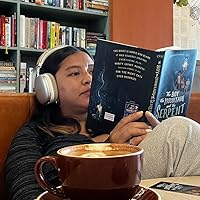
Exploring the role of the artist in troubled times, The Balikbayan Artist follows Vance Igorta who returns to the Philippines as a ‘balikbayan’ after nearly fifty years in the United States. He is a member of the Manong generation, the largest diaspora of Filipinos who worked physically demanding jobs, mostly in California’s agricultural fields.
After coming home to a country on the brink of becoming a dictatorship, the farm-laborer-turned-artist shifts his paintings from abstractions to didactic political art to better reflect the rebellion that he eventually joins. Didacticism also facilitates his meditations on the impact of leaving his birthland to become a powerless Manong and then impoverished artist of color in New York.
The Balikbayan Artist takes readers from the early 20th century to the present day where Vance Igorta’s art is being discovered anew. His legacy is validated for allowing his art to address the tensions of his time instead of keeping it solely entrenched within aesthetic concerns. The artist’s choice reflects what Vance Igorta learned as a voraciously self-educated that in circumstances where power corrupts, what makes anyone and everyone dangerous is love.
This novel is inspired by and dedicated to Venancio C. Igarta (1912-2000), the real-life leading artist of the Manong generation.
Eileen Tabios (born 1960) is an award-winning Filipino-American poet, fiction writer, conceptual/visual artist, editor, anthologist, critic, and publisher.
Born in Ilocos Sur, Philippines, Tabios moved to the United States at the age of ten. She holds a B.A. in political science from Barnard College and an M.B.A. in economics and international business from New York University Graduate School of Business. Her last corporate career was involved with international project finance. She began to write poetry in 1995.
Tabios has released eighteen print, four electronic, one CD poetry collections, an art essay collection, a poetry essay/interview anthology, a novel, and a short story book. Tabios has created a body of work melding transcolonialism with ekphrasis. Inventor of the poetic form called "hay(na)ku," she has had her poems translated into Spanish, Tagalog, Japanese, Italian, Paintings, Video, Drawings, Visual Poetry, Mixed Media Collages, Kali Martial Arts, Modern Dance and Sculpture.
Tabios has edited or co-edited five books of poetry, fiction and essays released in the United States. She also founded and edits the poetry review journal, "GALATEA RESURRECTS, a Poetry Engagement".
She is the founder of Meritage Press, a multidisciplinary literary and arts press based in St. Helena, California.
In addition to recipient of the Philippines’ National Book Award for Poetry, her poetry and editing projects have also received numerous awards including the PEN Oakland/Josephine Miles Literary Award, The Potrero Nuevo Fund Prize, the Gustavus Meyers Outstanding Book Award in the Advancement of Human Rights, Foreword Magazine Anthology of the Year Award, Poet Magazine's Iva Mary Williams Poetry Award, Judds Hill's Annual Poetry Prize and the Philippine American Writers & Artists’ Catalagan Award; recognition from the Academy of American Poets, the Asian/Pacific American Librarians Association and the PEN/Open Book Committee; as well as grants from the Witter Bynner Foundation, National Endowment of the Arts, the New York State Council on the Humanities, the California Council for the Humanities, and the New York City Downtown Cultural Council.
What I love about this book: I am usually a fast reader, but I took time with The Balikbayan Artist. Its didactic method lent each chapter a lesson about color. Inspired by real-life artist Venancio Igarta, the protagonist Vance Igorta drew diptychs, one painting showing what he saw and the other what he predicted if the country were under a dictatorship. I loved the cleverness in using language. For example, the leader of the neighboring country, Maharlika, has Napoleonic tendencies and is named Tao Maliit (Small Person). Surat’s main politician was Mayor Titty (sounds like a man’s genitals) and the Philippine president was named Caasi (translates to mercy). This play on words weaves the irreverent threads of resistance. The novel takes place in the fictional town of Surat, which means letter in Ilokano. The real-life artist was born in Sinait, the northernmost town in Ilocos Sur. Many Ilokanos jokingly call the town Sinal-it, an affectionate transformation of the curse word sal-it. In the novel, Vance Igorta returned to his hometown, a dusty place with magnificent sunsets. His artwork becomes a love letter to his motherland.
all I knew as I began reading this book was that it was about a farmer/artist who went back to the Philippines after living in the United States for a long period of time. safe to say, the story was a whole lot more than that.
The Balikbayan Artist was inspired by the life of Venancio Igarta, the real-life artist of the Manong Generation. he was deeply involved in studying color theory, and this book touches on it a lot especially in describing how our main character uses color in his art and in his thoughts.
marketed as historical fiction, if you're a filipino reading this, you would definitely be able to uncover most of the references. with themes of politics, art, and resistance - this is a story worth sharing.
taking a line from the author's note: "The Balikbayan Artist seeks to present Kapwa through a book whose fiction is not separate from reality and not just offer present reality but also the past and future concurrently."
This was the 2nd book I read written by a Filipino author and that is a Filipino historical fiction novel. I found Tabios' writing style to be vivid and engaging. I thought that how she described the artworks of the main character Vance Igarta to interest and excite me despite not having visual aids.
I learned more about the experiences that early Filipino immigrants in the use that worked in the CA agriculture sector experienced. How there were Filipinos not allowed in certain public spaces and they were forbidden to marry outside of their own race by law. It also reminded me of the tragedy of needing to flee your own home because of turmoil such as a poor economy or a dictatorship regime. The diaspora is a tragedy and it makes me reflect on how I am also a child of that diaspora through my grandparents and how hard it must have been for them to choose to leave their home to an unknown country.
Eileen Tabios seamlessly tells the story of an artist of the Manong generation returning to the Philippines after being an agricultural worker in CA, being "discovered" as an artist and returning to the Philippines after decades in the US. The character shares his perceptions and processes of art; uses art as political commentary and provides historical context related to the Philippine history over the past 50 years. Most importantly, the novel introduced me to Filipino painter Venancio Igarta whom the novel is loosely based on.