

What do you think?

A Granite Silence
A Granite Silence is an exploration - a journey through time to a particular house, in a particular street, Urquhart Road, Aberdeen in 1934, where eight-year-old Helen Priestly lives with her mother and father.
Among this long, grey corridor of four-storey tenements, a daunting expanse of granite, working families are squashed together like pickled herrings in their narrow flats. Here are Helen's the Topps, the Josses, the Mitchells, the Gordons, the Donalds, the Coulls and the Hunts.
Returning home from school for her midday meal, Helen is sent by her mother Agnes to buy a loaf from the bakery at the end of the street. Agnes never sees her daughter alive again.
Nina Allan explores the aftermath of Helen's disappearance, turning a probing eye to the close-knit neighbourhood - where everyone knows everyone, at least by sight - and with subtlety and sympathy, explores the intricate layers of truth and falsehood that can coexist in one moment of history.
Full of echoes, allusions and eerie diversions, A Granite Silence is an investigation into a notorious true crime case, but also a stylish, imaginative inquiry into who gets to tell a story, how it is told, and why .
352 pages, Kindle Edition
First published April 10, 2025
Ratings & Reviews
Friends & Following
Create a free account to discover what your friends think of this book!
Community Reviews
Displaying 1 - 19 of 19 reviews

April 12, 2025
Oh I loved this. I mean, I fully expected to; Nina Allan is my favourite writer, after all. But at the same time... I was slightly sceptical! I got to know, and love, Allan as a writer of speculative fiction, of sci-fi and horror, whereas this is a historical novel based on a real-life crime. A departure of sorts, and less interesting to me in theory. Thankfully, her distinctive ‘fractured novel’ approach to writing around a theme works perfectly here. As I read, I realised this isn’t a pivot so much as a culmination: everything she’s been circling since
The Rift
comes to full fruition here. The commitment to narrative as a site of breach and bleedthrough is still fully intact.
So yes: A Granite Silence is about the mystery that surrounds the disappearance of Helen Priestly, an 8-year-old girl from a working-class family, in Aberdeen in 1934. But also it isn’t. It’s a novel about writing about Helen Priestly. It’s about the Helen Priestlys that can be made and unmade in fiction.
If you’re the kind of reader who needs a clear, linear narrative and a sense of how everything connects, this book is not for you. Characters step in and out of focus, names uncannily recur across timelines, people blur into each other and out again – all this will be familiar to anyone who’s read Allan’s previous work but here, in a story about a real person, it takes on a greater significance. Not just clever (although it is) but meaningful too.
What Allan is doing here (and what I think she’s been gradually leaning into more and more from The Good Neighbours onwards) is probing the scaffolding of story itself. Why do we make sense of horror by narrativising it? What does it mean to take a real girl’s suffering and spin it into literature? Where’s the line between remembrance and exploitation, and is it ever really possible to stay on the right side of it?
In recent years, I’ve read so many novels that dabble in true crime discourse and ultimately say little beyond ‘wow, kind of fucked up that we like this stuff’. A Granite Silence, on the other hand, is about the idea of the true crime novel as much as it is an actual true crime novel, moving beyond overdone debates about ethics to play with autofiction and authorship. How it feels to write a story like this, what it means for the writer.
On that note, the writing is as brilliant as ever. Even when Allan is being oblique, she’s never opaque. Many of the chapters work as well out of context as within (‘The Stormy Petrel’ was my favourite). A Granite Silence is slippery and haunted and astute, capable of being reverent of the genre at the same time as critiquing it. A book of the year, for sure. One of those novels that reminds you fiction can still be strange, serious and new.
So yes: A Granite Silence is about the mystery that surrounds the disappearance of Helen Priestly, an 8-year-old girl from a working-class family, in Aberdeen in 1934. But also it isn’t. It’s a novel about writing about Helen Priestly. It’s about the Helen Priestlys that can be made and unmade in fiction.
If you’re the kind of reader who needs a clear, linear narrative and a sense of how everything connects, this book is not for you. Characters step in and out of focus, names uncannily recur across timelines, people blur into each other and out again – all this will be familiar to anyone who’s read Allan’s previous work but here, in a story about a real person, it takes on a greater significance. Not just clever (although it is) but meaningful too.
What Allan is doing here (and what I think she’s been gradually leaning into more and more from The Good Neighbours onwards) is probing the scaffolding of story itself. Why do we make sense of horror by narrativising it? What does it mean to take a real girl’s suffering and spin it into literature? Where’s the line between remembrance and exploitation, and is it ever really possible to stay on the right side of it?
In recent years, I’ve read so many novels that dabble in true crime discourse and ultimately say little beyond ‘wow, kind of fucked up that we like this stuff’. A Granite Silence, on the other hand, is about the idea of the true crime novel as much as it is an actual true crime novel, moving beyond overdone debates about ethics to play with autofiction and authorship. How it feels to write a story like this, what it means for the writer.
On that note, the writing is as brilliant as ever. Even when Allan is being oblique, she’s never opaque. Many of the chapters work as well out of context as within (‘The Stormy Petrel’ was my favourite). A Granite Silence is slippery and haunted and astute, capable of being reverent of the genre at the same time as critiquing it. A book of the year, for sure. One of those novels that reminds you fiction can still be strange, serious and new.

December 25, 2025
(3.5 rounded up to 4) In A Granite Silence the author takes a very different approach from many other historical novels based on true crime cases. Although, in fictional form, the facts of the case from the crime itself through the investigation, identification of the culprit and eventual trial are described, there’s great inventiveness in the way this is done.
The author takes the reader on a series of journeys exploring the social environment, the early lives of Helen’s mother and father, as well as those who interact in various ways with the Priestly family such as neighbours, teachers, etc. These are a combination of fact and fiction in varying degrees. In some cases they are almost completely a flight of the author’s imagination perhaps sparked by a particular real life character, an object or event.
As well as the author’s own commentary on her research, three other female characters with an interest in the case appear, a theme common to all being that of digression. There’s Rose, a journalist who moves into an Aberdeen apartment hoping to write a book about the Priestly case but who becomes intrigued by the story of the apartment’s previous occupant. Then there’s Pearl who, like the author, has set out to write a historical novel about Helen’s death but becomes distracted by the need to resolve a personal mystery. Lastly there’s Susana, a Russian author for whom the Priestly case inspires a work of experimental fiction.
I admired the author’s inventive approach although there were times the book went off at too much of a tangent for me and I struggled with its disjointed structure. For example, I confess to skimming a lengthy chapter about Robert Burns’s epic poem Tam o’ Shanter just because Helen wore a blue tam o’shanter hat. Characters come and go, some storylines finish in dead ends and the narrative moves back and forth in time. That’s either going to spark your interest or test your powers of concentration, possibly your patience.
As the investigation progresses, particularly the forensic analysis, details of the crime emerge that are shocking in nature. Is it prurient to want to know this sort of detail? Would we, like so many people at the time, jump to a conclusion about the person responsible? Would we treat a refusal to answer questions – the ‘granite silence’ of the book’s title – as evidence of guilt?
At one point, the author acknowledges her desire for knowledge, albeit in a different context but I think applicable to her approach in this book. ‘As always, I want to know more. I want to discover the personalities and predicaments at the heart of the case, to get to know their history at a level that does them justice.’
A Granite Silence is not a novel with a linear structure. Think of it more as an exploration of the different ways in which true crime stories can be told.
The author takes the reader on a series of journeys exploring the social environment, the early lives of Helen’s mother and father, as well as those who interact in various ways with the Priestly family such as neighbours, teachers, etc. These are a combination of fact and fiction in varying degrees. In some cases they are almost completely a flight of the author’s imagination perhaps sparked by a particular real life character, an object or event.
As well as the author’s own commentary on her research, three other female characters with an interest in the case appear, a theme common to all being that of digression. There’s Rose, a journalist who moves into an Aberdeen apartment hoping to write a book about the Priestly case but who becomes intrigued by the story of the apartment’s previous occupant. Then there’s Pearl who, like the author, has set out to write a historical novel about Helen’s death but becomes distracted by the need to resolve a personal mystery. Lastly there’s Susana, a Russian author for whom the Priestly case inspires a work of experimental fiction.
I admired the author’s inventive approach although there were times the book went off at too much of a tangent for me and I struggled with its disjointed structure. For example, I confess to skimming a lengthy chapter about Robert Burns’s epic poem Tam o’ Shanter just because Helen wore a blue tam o’shanter hat. Characters come and go, some storylines finish in dead ends and the narrative moves back and forth in time. That’s either going to spark your interest or test your powers of concentration, possibly your patience.
As the investigation progresses, particularly the forensic analysis, details of the crime emerge that are shocking in nature. Is it prurient to want to know this sort of detail? Would we, like so many people at the time, jump to a conclusion about the person responsible? Would we treat a refusal to answer questions – the ‘granite silence’ of the book’s title – as evidence of guilt?
At one point, the author acknowledges her desire for knowledge, albeit in a different context but I think applicable to her approach in this book. ‘As always, I want to know more. I want to discover the personalities and predicaments at the heart of the case, to get to know their history at a level that does them justice.’
A Granite Silence is not a novel with a linear structure. Think of it more as an exploration of the different ways in which true crime stories can be told.

Read
September 30, 2025Is A Granite Silence peak Nina Allan? Having spent years poking and prodding at the foundations and scaffolding of narrative, going as far back as her first collection The Silver Wind, has she now reached an apotheosis? In exploring the outer boundaries of genre fiction*, has she found the limits of conventional narrative?**
No. Of course not. I can’t imagine a world where Allan stops poking at the rules and conventions of Western literature. But I do feel A Granite Silence is a culmination of sorts, a bringing together of themes and concepts that started with her 2021 novel The Good Neighbours, where she blurred the line dividing fiction and non-fiction. A Granite Silence begins as the sort of true-crime journalistic enterprise the great Gordon Burns would be proud of, then veers in multiple directions—some of which end in dead ends, others of which smudge the boundary between truth-telling and story-telling. Autofiction meets speculative fiction meets metafiction meets nonfiction.
I know how pretentious that sounds. For some readers, that will be the case, especially if they expect a fictional retelling of a true story: the 1934 disappearance and murder of eight-year-old Helen Priestly, abducted from Urquhart Road, Aberdeen, after purchasing a loaf of bread. Because while Allan never loses sight of Helen, and the circumstances that led up to and followed her death, her approach is anything but linear, or even non-linear. There are moments when, in a bid to dig deeper, to better understand the motivations of Jeannie Donald, Helen’s next-door neighbour and murderer, Allan is compelled to look elsewhere, to reframe and then reconstitute her narrative.
This includes Susana, a Russian émigré and writer whose experimental saga The Ice Dragon is only hailed a masterpiece after her death, and who happens to be in Aberdeen during the time of the Priestly case (an event that influences her work). Or Rose, a London journalist who, against her editor’s wishes, moves into an Aberdeen apartment to research and possibly write a book about Helen’s murder. Or Pearl, who, much like Allan, sets out to write a historical novel about Helen’s death. In both the Rose and Pearl narratives, other threads emerge: Rose becomes intrigued by the previous tenant of her apartment, with strong suspicions that the husband killed his wife before returning to South Africa, while Pearl is drawn back into the mystery of her brother’s disappearance years earlier in the Malaysian rainforests. Each of these stories is compelling in its own right—side stories that mine our fascination with true crime narratives.
The most remarkable of these tangents involves Professor John Glaister, a forensic scientist who played a key role in tying Jeannie Donald to Helen’s death. In a chapter/novelette entitled “The Stormy Petrel”, Allan weaves biographical details of Glaister’s posting to Gaza during WW1, where he treated repatriated soldiers, with fictional elements featuring the enigmatic archaeologist Edna McRae and a mysterious metallic object discovered beneath the sand three days out of Riyadh. It’s a remarkable act of pure imagination, toggling between Gaza and Aberdeen as Glaister gives evidence for the prosecution against Jeannie Donald.
All these digressions and tangents—including Allan chronicling her trip to Aberdeen, where she visits Helen Priestly’s grave—reminded me of John Darnielle’s Devil House, which similarly is both a true crime novel and a deconstruction of the true crime genre. Both works play into the idea that truth is a slippery commodity. But for Allan it’s more than just a question of fidelity; it’s also about experimenting and testing different modes of storytelling, recognising both the limits and the boundless possibilities of narrative. Importantly, it’s still very much a true crime novel that never, ever forgets that Helen Priestly was a child who was brutally murdered, that her death was a tragedy that shattered multiple lives. This acknowledgement is embraced in the final chapter, a moving, beautiful account of a life not lived.
A Granite Silence is proof of an author at the absolute height of her powers. May Allan only climb higher.
*Look, I also loathe genre debates about taxonomy. I feel like we only have them to justify which book slots into which award category. For all that, I am curious to see how the novel is treated toward the end of the year as award season comes around. How will Locus classify it (probably Science Fiction, but only if you squint really hard)? Will it be genre enough for the Clarke Award (I mean, I hope so, but still)? And so on.
**By conventional, I mean that Allan nominally works within the traditional rules of fiction. Yes, she can be “tricksy” and metatextual, but she doesn’t resort to Oulipo-like constraints or modernist techniques. She is always seeking to engage the reader, to entertain and enliven.
No. Of course not. I can’t imagine a world where Allan stops poking at the rules and conventions of Western literature. But I do feel A Granite Silence is a culmination of sorts, a bringing together of themes and concepts that started with her 2021 novel The Good Neighbours, where she blurred the line dividing fiction and non-fiction. A Granite Silence begins as the sort of true-crime journalistic enterprise the great Gordon Burns would be proud of, then veers in multiple directions—some of which end in dead ends, others of which smudge the boundary between truth-telling and story-telling. Autofiction meets speculative fiction meets metafiction meets nonfiction.
I know how pretentious that sounds. For some readers, that will be the case, especially if they expect a fictional retelling of a true story: the 1934 disappearance and murder of eight-year-old Helen Priestly, abducted from Urquhart Road, Aberdeen, after purchasing a loaf of bread. Because while Allan never loses sight of Helen, and the circumstances that led up to and followed her death, her approach is anything but linear, or even non-linear. There are moments when, in a bid to dig deeper, to better understand the motivations of Jeannie Donald, Helen’s next-door neighbour and murderer, Allan is compelled to look elsewhere, to reframe and then reconstitute her narrative.
This includes Susana, a Russian émigré and writer whose experimental saga The Ice Dragon is only hailed a masterpiece after her death, and who happens to be in Aberdeen during the time of the Priestly case (an event that influences her work). Or Rose, a London journalist who, against her editor’s wishes, moves into an Aberdeen apartment to research and possibly write a book about Helen’s murder. Or Pearl, who, much like Allan, sets out to write a historical novel about Helen’s death. In both the Rose and Pearl narratives, other threads emerge: Rose becomes intrigued by the previous tenant of her apartment, with strong suspicions that the husband killed his wife before returning to South Africa, while Pearl is drawn back into the mystery of her brother’s disappearance years earlier in the Malaysian rainforests. Each of these stories is compelling in its own right—side stories that mine our fascination with true crime narratives.
The most remarkable of these tangents involves Professor John Glaister, a forensic scientist who played a key role in tying Jeannie Donald to Helen’s death. In a chapter/novelette entitled “The Stormy Petrel”, Allan weaves biographical details of Glaister’s posting to Gaza during WW1, where he treated repatriated soldiers, with fictional elements featuring the enigmatic archaeologist Edna McRae and a mysterious metallic object discovered beneath the sand three days out of Riyadh. It’s a remarkable act of pure imagination, toggling between Gaza and Aberdeen as Glaister gives evidence for the prosecution against Jeannie Donald.
All these digressions and tangents—including Allan chronicling her trip to Aberdeen, where she visits Helen Priestly’s grave—reminded me of John Darnielle’s Devil House, which similarly is both a true crime novel and a deconstruction of the true crime genre. Both works play into the idea that truth is a slippery commodity. But for Allan it’s more than just a question of fidelity; it’s also about experimenting and testing different modes of storytelling, recognising both the limits and the boundless possibilities of narrative. Importantly, it’s still very much a true crime novel that never, ever forgets that Helen Priestly was a child who was brutally murdered, that her death was a tragedy that shattered multiple lives. This acknowledgement is embraced in the final chapter, a moving, beautiful account of a life not lived.
A Granite Silence is proof of an author at the absolute height of her powers. May Allan only climb higher.
*Look, I also loathe genre debates about taxonomy. I feel like we only have them to justify which book slots into which award category. For all that, I am curious to see how the novel is treated toward the end of the year as award season comes around. How will Locus classify it (probably Science Fiction, but only if you squint really hard)? Will it be genre enough for the Clarke Award (I mean, I hope so, but still)? And so on.
**By conventional, I mean that Allan nominally works within the traditional rules of fiction. Yes, she can be “tricksy” and metatextual, but she doesn’t resort to Oulipo-like constraints or modernist techniques. She is always seeking to engage the reader, to entertain and enliven.
Did Not Finish
April 6, 2026Ever listened to a person tell you a story that is supposed to be funny or fascinating but the person is awful at storytelling so the story rambles on and on with so many asides the story loses all steam and you lose all interest? Yeah, like that.
I understand the wish to deconstruct the historical crime genre, lord knows we had enough of perfectly mediocre by-the-numbers novels. It's just that I don't believe this book here succeeds in any of that. Instead of clinging to a classic story structure, the author chose a mishmash of recounting the events matter of fact and inventing several characters who interact with the crime case. You might read the inventory list of a police raid at one page only to find the narrator telling you about a character they invented on the next page. Because of course the author went the extra mile and has the narrator tell the reader explicitly that these characters are just invented. The result is one rambling pile of ideas that ultimately amounts to nothing.
Is the book giving you a unique insight into the historical setting? Not really, what information on the case there is could be ripped from a Wikipedia page.
Is the book giving you psychological insight into how different people are affected by this case? ? Not really because the author wanted to be extra and broke the 4th wall. Nothing is worse for building an empathic connection to a fictional character than the narrator going: "Here's a fictional character I invented, isn't she amazing? There is some interesting background info but I haven't decided yet so maybe later"
Is this a mood piece, maybe even some kind of expressionist experiment like Berlin, Alexanderplatz? No because honestly, the passages that are meant to invoke a sense of place could have been taken from TripAdvisor or any other touristy website.
Gave this one an honest try but eventually lost interest.
I understand the wish to deconstruct the historical crime genre, lord knows we had enough of perfectly mediocre by-the-numbers novels. It's just that I don't believe this book here succeeds in any of that. Instead of clinging to a classic story structure, the author chose a mishmash of recounting the events matter of fact and inventing several characters who interact with the crime case. You might read the inventory list of a police raid at one page only to find the narrator telling you about a character they invented on the next page. Because of course the author went the extra mile and has the narrator tell the reader explicitly that these characters are just invented. The result is one rambling pile of ideas that ultimately amounts to nothing.
Is the book giving you a unique insight into the historical setting? Not really, what information on the case there is could be ripped from a Wikipedia page.
Is the book giving you psychological insight into how different people are affected by this case? ? Not really because the author wanted to be extra and broke the 4th wall. Nothing is worse for building an empathic connection to a fictional character than the narrator going: "Here's a fictional character I invented, isn't she amazing? There is some interesting background info but I haven't decided yet so maybe later"
Is this a mood piece, maybe even some kind of expressionist experiment like Berlin, Alexanderplatz? No because honestly, the passages that are meant to invoke a sense of place could have been taken from TripAdvisor or any other touristy website.
Gave this one an honest try but eventually lost interest.

November 11, 2025
I really enjoyed the unusual approach to telling a historical true crime. The changes in character/time/style had me constantly on my toes questioning the truth of everything. Very well done.

April 1, 2025
Discover the locations in the novel here
A heart-breaking account of a missing girl found murdered. She went to the shop one lunch time for bread and never returned. We meet her mum and family, her devasted friends and neighbours and it's a harrowing tale. I was so invested in this community and wanted to hug them all. So insightful and carefully done. I think Helen and her family would be proud her story is being told in this way.
December 21, 2025
I really enjoyed this book - it was an usual telling of the historical true crime of the murder of Helen Priestly, an 8-year-old girl from a working-class family in Scotland. The changes in character had me constantly on my toes.
My only criticism of this book is that there are a few tangential chapters – one which tells a story about Harry Houdini (which seemed out of place in the book). Another tells of Robert Burns’s “Tam o’ Shanter” to no obvious end. Also the inclusion of two other author figures besides Susana was in my opinion two too many. The author herself is already a presence in the book.
My only criticism of this book is that there are a few tangential chapters – one which tells a story about Harry Houdini (which seemed out of place in the book). Another tells of Robert Burns’s “Tam o’ Shanter” to no obvious end. Also the inclusion of two other author figures besides Susana was in my opinion two too many. The author herself is already a presence in the book.

Did Not Finish
August 8, 2026I had to DNF this which kills me as I normally push through. But I just couldn't get into the story despite being 21% in. The story sounded interesting to me knowing it was based on a true crime case, but the writing style bothered me and I was trying to keep up with what was fact and fiction. Life is too short!
May 5, 2026
I really loved Nina Allan's The Rift, and while I liked it slightly less than that book, I also really enjoyed The Race. Rubywas her third book and to be honest, the short story format isn't for me, so finding her fourth book, another full length novel, I was happy to borrow it.
Unfortunately this book fell quite flat for me. I get what the author was TRYING to do - telling a story and exploring the impact of stories, how everyone ends up a part of it and how it spans far and wide, but it felt to me like the author was way too in love with the concept and didn't put enough thought into what serviced the narrative.
For instance, the book opens up with a pompous, unknown narrator talking about the crime. Then she segueways off into rambling on about Aberdeen for a while, and to be honest it sounded like a particularly long brochure than a book. With a sci-fi or fantasy world, long discussions about the setting is necessary for worldbuilding purposes, but I don't know how much worldbuilding you need to do of one that already exists.
Granted, the parts actually focused on the case where it details Helen's whereabouts before she died, the frenzy of the public in the aftermath of the murder, the police investigation narrowing down on the potential killer based off clues and witness accounts, all of that was genuinely interesting and I kept getting annoyed when the narrator would derail it to talk about the history behind the wool that made Helen's hat, or rambling on about the Robert Burns poem, or talking about Jeannie and her fucking ceramic cream bowl. And half the time she admits some of the stuff she narrates didn't even happen or she embellished it. There's one bit when a little boy makes up seeing a man who abducted Helen, and the narrator says some crap about "he may have invented this stranger, this dark man, but he's as real now as the loaf of bread" (paraphrasing) - except no he isn't, the little boy made the man up. He didn't take Helen anywhere and it had no bearing on anything except to waste the police's (and my) time. I don't really like following a clue the author tells us in advance will lead nowhere because Helen was killed close to home. Also, for someone such a stickler for rambling on about unimportant details, a character is described as having "an English accent". This clears up nothing. I get maybe it's because this book is set in Scotland in the 1930s, so Rose likely doesn't know all the different English accents, but for god's sake, even someone from a very remote area can tell you that someone from, say, Birmingham sounds very different from someone from Cornwall. Hell, London alone has several accents coexisting. I know this is SO nitpicky, but since I had to sit through an incredibly nitpicky book, I feel justisfied. (Also, Nina Allan is British, she knows that accents are a big deal here.)
(Also, the sense of time in this book is kind of frustrating. The omnipotent narrator is from present day because she references things like Covid, but Rose's POV is during the 1930s, so are Jeannie's section, but then you have Pearl who seems to be from the present day or maybe a couple of years before now, and then you have a totally irrelevant story about some guy called Tommy and there's never an indicator of what time period any of these people are from until they start narrating, it gets very confusing at times. Also, again, Pearl's subplot about her missing brother kind of doesn't go anywhere except to explain why she cares so much about a random little girl who was murdered like eighty plus years ago. Sure, it's a tragedy, but there are lots of cases like that, why is this one in particular the one she wants to write her book about?)
But my biggest gripe of all about this book is WHY is the narrator so quick to pile on the empathy for Helen's killer?? so the narrator trying to "understand" the crime pissed me off. Who cares about why? Doing something that bad stops me from giving a damn about extenuating circumstances. I don't care if the character was caught up in mob mentality - the murder still happened because of them!
Anyway, for all my griping I did enjoy the crime parts of the novel and the parts with the doctor reminiscing about his time on an expedition and how his experiences there shaped him into the man doing the victim's autopsy, I just don't think the concept of all these irrelevant side characters all having their own unrelated stories to tell worked for me, especially not considering the victim and the awful things that were done to her. I just don't really care about wool processing or the city of Aberdeen in the face of the abduction, and murder of a child.
Rating: 2.5/5
Unfortunately this book fell quite flat for me. I get what the author was TRYING to do - telling a story and exploring the impact of stories, how everyone ends up a part of it and how it spans far and wide, but it felt to me like the author was way too in love with the concept and didn't put enough thought into what serviced the narrative.
For instance, the book opens up with a pompous, unknown narrator talking about the crime. Then she segueways off into rambling on about Aberdeen for a while, and to be honest it sounded like a particularly long brochure than a book. With a sci-fi or fantasy world, long discussions about the setting is necessary for worldbuilding purposes, but I don't know how much worldbuilding you need to do of one that already exists.
Granted, the parts actually focused on the case where it details Helen's whereabouts before she died, the frenzy of the public in the aftermath of the murder, the police investigation narrowing down on the potential killer based off clues and witness accounts, all of that was genuinely interesting and I kept getting annoyed when the narrator would derail it to talk about the history behind the wool that made Helen's hat, or rambling on about the Robert Burns poem, or talking about Jeannie and her fucking ceramic cream bowl. And half the time she admits some of the stuff she narrates didn't even happen or she embellished it. There's one bit when a little boy makes up seeing a man who abducted Helen, and the narrator says some crap about "he may have invented this stranger, this dark man, but he's as real now as the loaf of bread" (paraphrasing) - except no he isn't, the little boy made the man up. He didn't take Helen anywhere and it had no bearing on anything except to waste the police's (and my) time. I don't really like following a clue the author tells us in advance will lead nowhere because Helen was killed close to home. Also, for someone such a stickler for rambling on about unimportant details, a character is described as having "an English accent". This clears up nothing. I get maybe it's because this book is set in Scotland in the 1930s, so Rose likely doesn't know all the different English accents, but for god's sake, even someone from a very remote area can tell you that someone from, say, Birmingham sounds very different from someone from Cornwall. Hell, London alone has several accents coexisting. I know this is SO nitpicky, but since I had to sit through an incredibly nitpicky book, I feel justisfied. (Also, Nina Allan is British, she knows that accents are a big deal here.)
(Also, the sense of time in this book is kind of frustrating. The omnipotent narrator is from present day because she references things like Covid, but Rose's POV is during the 1930s, so are Jeannie's section, but then you have Pearl who seems to be from the present day or maybe a couple of years before now, and then you have a totally irrelevant story about some guy called Tommy and there's never an indicator of what time period any of these people are from until they start narrating, it gets very confusing at times. Also, again, Pearl's subplot about her missing brother kind of doesn't go anywhere except to explain why she cares so much about a random little girl who was murdered like eighty plus years ago. Sure, it's a tragedy, but there are lots of cases like that, why is this one in particular the one she wants to write her book about?)
But my biggest gripe of all about this book is WHY is the narrator so quick to pile on the empathy for Helen's killer?? so the narrator trying to "understand" the crime pissed me off. Who cares about why? Doing something that bad stops me from giving a damn about extenuating circumstances. I don't care if the character was caught up in mob mentality - the murder still happened because of them!
Anyway, for all my griping I did enjoy the crime parts of the novel and the parts with the doctor reminiscing about his time on an expedition and how his experiences there shaped him into the man doing the victim's autopsy, I just don't think the concept of all these irrelevant side characters all having their own unrelated stories to tell worked for me, especially not considering the victim and the awful things that were done to her. I just don't really care about wool processing or the city of Aberdeen in the face of the abduction, and murder of a child.
Rating: 2.5/5

January 26, 2026
More like 4.5*
Intricately constructed novel that revolves around a true-crime story of a child's murder in 1930s Scotland, but which is much more than the sum of its many moving parts. Allan's prose is graceful and compelling as usual. The occasional nods to tropes from the novels of Allan's recently deceased partner, Christopher Priest -- twins, escapism, glamour in the magic sense -- are touching and a little heartbreaking for those who admired his work too.
Intricately constructed novel that revolves around a true-crime story of a child's murder in 1930s Scotland, but which is much more than the sum of its many moving parts. Allan's prose is graceful and compelling as usual. The occasional nods to tropes from the novels of Allan's recently deceased partner, Christopher Priest -- twins, escapism, glamour in the magic sense -- are touching and a little heartbreaking for those who admired his work too.

October 5, 2025
True crime blended with speculative fiction set in ABERDEEN
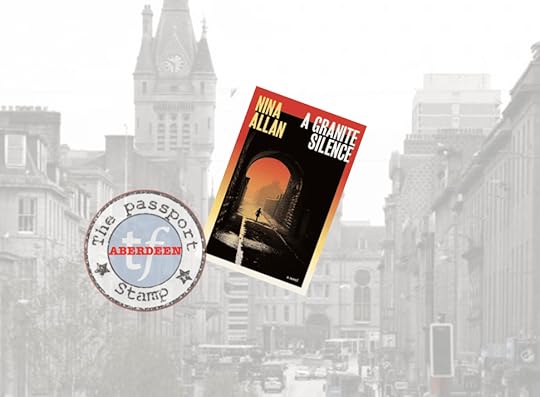
The book opens with the author travelling in post covid times up to Scotland. As the train trundles north, she shares her thoughts and inspiration for choosing the subject at the heart of the story. It is the true story of how eight year old Helen Priestly was murdered, in 1934, in Urquhart Street in the city of Aberdeen. She had gone out to buy bread during her lunch break, sent on the errand by her mother. She never returned and all too soon her body was found in a canvas flour sack, printed with the insignia “Boss”, a brand of flour that had come from Kansas via Canada. It was a very uncommon brand, yet the clues were few and far between. That bag with body had been deposited in the communal hallway of the tenement flats where she lived. Before long a pair of suspects where arrested and only one of them went to trial over in Edinburgh, where the heat of feeling around the child’s death was assumed to be less toxic.
The author has crafted a clever Netflix-style documentary – only in words – as she examines the case through a variety of different eyes. She sets the whole case within its historical context, looking at what was happening locally and internationally in the run-up to eventual war, and the lingering effect Helen’s death has had on a wider community.
She sets out her own research, she looks at the the forensic conclusions, the journalists assigned to the case (notably a female from London, for one, who had to fight to follow developments up in the North of the country, deemed of insignificant interest to Southern readers). She fuses fact and fiction to make a cohesive story, bringing this part of the city to life and positioning her characters in and around the buildings, moving them about so that the era comes to vivid life. She looks at events through records taken at the time, through witness statements and logs, she then blends what went on through a modern lens, moving around the case with an acutely observational eye. There is a real sense of her ‘camerawork’ as she slides her focus this way and that.
And perhaps at base, a deeply rooted spat between families, living in close proximity lay behind the murder…..
An interesting and well constructed way to revisit an old case.
The book opens with the author travelling in post covid times up to Scotland. As the train trundles north, she shares her thoughts and inspiration for choosing the subject at the heart of the story. It is the true story of how eight year old Helen Priestly was murdered, in 1934, in Urquhart Street in the city of Aberdeen. She had gone out to buy bread during her lunch break, sent on the errand by her mother. She never returned and all too soon her body was found in a canvas flour sack, printed with the insignia “Boss”, a brand of flour that had come from Kansas via Canada. It was a very uncommon brand, yet the clues were few and far between. That bag with body had been deposited in the communal hallway of the tenement flats where she lived. Before long a pair of suspects where arrested and only one of them went to trial over in Edinburgh, where the heat of feeling around the child’s death was assumed to be less toxic.
The author has crafted a clever Netflix-style documentary – only in words – as she examines the case through a variety of different eyes. She sets the whole case within its historical context, looking at what was happening locally and internationally in the run-up to eventual war, and the lingering effect Helen’s death has had on a wider community.
She sets out her own research, she looks at the the forensic conclusions, the journalists assigned to the case (notably a female from London, for one, who had to fight to follow developments up in the North of the country, deemed of insignificant interest to Southern readers). She fuses fact and fiction to make a cohesive story, bringing this part of the city to life and positioning her characters in and around the buildings, moving them about so that the era comes to vivid life. She looks at events through records taken at the time, through witness statements and logs, she then blends what went on through a modern lens, moving around the case with an acutely observational eye. There is a real sense of her ‘camerawork’ as she slides her focus this way and that.
And perhaps at base, a deeply rooted spat between families, living in close proximity lay behind the murder…..
An interesting and well constructed way to revisit an old case.
February 1, 2026
I had seen this book recommended and as a true crime fan living near Aberdeen I thought I should read it. The cover draws you in and fits well with the location.
I’ve never read anything by this author before so I’m not sure if this is her usual style or not. The book is fictional but based on the real life murder of an eight year old girl in Aberdeen in the 1930s. I’d never heard of the case before but it doesn’t seem to be much spoken about.
It started off well and held my interest, the sense of place is good and the author seems to have spent a lot of time researching the case and the location. About a third of the way through I found it lost its way and I found it hard to follow. Other characters were introduced and I didn’t know if they were real or not and I lost interest.
I think I was expecting a more factual retelling of the case and I didn’t get on with this book. Despite this it has inspired me to find out more about the case and what happened.
2.5 stars rounded to 3.
I’ve never read anything by this author before so I’m not sure if this is her usual style or not. The book is fictional but based on the real life murder of an eight year old girl in Aberdeen in the 1930s. I’d never heard of the case before but it doesn’t seem to be much spoken about.
It started off well and held my interest, the sense of place is good and the author seems to have spent a lot of time researching the case and the location. About a third of the way through I found it lost its way and I found it hard to follow. Other characters were introduced and I didn’t know if they were real or not and I lost interest.
I think I was expecting a more factual retelling of the case and I didn’t get on with this book. Despite this it has inspired me to find out more about the case and what happened.
2.5 stars rounded to 3.
March 26, 2026
I often imagine authors in front of a mental or real storyboard where they make notes of ideas and storylines that they use in their creative process. This book felt a lot like a total sweep of such a board without some selection or editing effort taking place to integrate the different pieces. The book starts as a podcast of a crime that actually happened in the thirties in Aberdeen but then is "lost" with different stories, some of which relate to the main events that took place at the time, some that explore as fiction life stories of people involved in those events and others that have characters that are completely unrelated but have taken an interest in the story. Many of these stories go absolutely nowhere, which is not necessarily bad in a book but not good either if there is no focus and the reader is left wondering what was all this about .... Timelines span from the early twentieth century to the present and Aberdeen features often but again, detailed descriptions of locations, especially of the present day, become waffly and do not add much, even if the intention is to provide some contrast with what the city and social structures were like at the time of the crime.
OK, not all was bad .... I thought that how the author imagined some of the main and "secondary" characters of the crime that took place was very well written and the last chapter poignant and emotional. I felt however, that I was reading something without clear intention and no matter how good the writing the whole was underwhelming.
OK, not all was bad .... I thought that how the author imagined some of the main and "secondary" characters of the crime that took place was very well written and the last chapter poignant and emotional. I felt however, that I was reading something without clear intention and no matter how good the writing the whole was underwhelming.
April 25, 2026
https://fromtheheartofeurope.eu/my-bsfa-votes-part-2-the-longer-stuff/
It’s an fascinating and well-written book, about the murder of a child in Aberdeen in 1934; Nina Allan takes us in and out of the investigation and weaves different facets of herself into the story, including several breaking-the-fourth-wall moments.
It’s an fascinating and well-written book, about the murder of a child in Aberdeen in 1934; Nina Allan takes us in and out of the investigation and weaves different facets of herself into the story, including several breaking-the-fourth-wall moments.
September 13, 2025
I’m not sure how I feel about this book. I loved a lot of it but wasn’t compelled to pick it up for a long time. However it was delicate and thought provoking and creative in ways I loved when it grabbed me. 3.75

November 29, 2025
Inspired by a child murder, this factional account of the people involved in the killing and subsequent trial is both imaginative and evocative
December 30, 2025
An interesting blend of true crime and fiction. I enjoyed it immensely.
May 16, 2026
A disturbing true story, portrayed in a novel. Set in Aberdeen. It captures the atmosphere of the era really well. I enjoyed reading it and is an example of how evil usually hides in plain sight.
Displaying 1 - 19 of 19 reviews