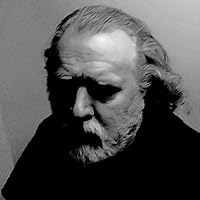
Blood, Money, & Power exposes the secret, high-level conspiracy in Texas that led to President John F. Kennedy’s death and the succession of Lyndon B. Johnson as president in 1963. Attorney Barr McClellan, a former member of L.B.J.’s legal team, uses hundreds of newly released documents, including insider interviews, court papers, and the Warren Commission, to illuminate the maneuvers, payoffs, and power plays that revolved around the assassination of Kennedy and to expose L.B.J.’s involvement in the murder plot. In addition to revealing new information, McClellan answers common questions surrounding the assassination of our thirty-fifth president. Who had the opportunity, motive, and means to assassinate J.F.K.? Who controlled the investigation and findings of the Warren Commission? This historically significant book is proof that absolute power, money, blood, corruption, and deception were at the heart of politics in the early 1960s, and it represents the very best investigative journalism has to offer.
I found this book to be a valuable resource on the JFK assassination. The fact that the author personally knew and worked for Ed Clark was an invaluable source of insider insight. I had long believed LBJ was involved in the assassination, so this book was not a surprise to me. It was helpful to have some explanations and insights as to how things happened. The book focuses more on Ed Clark than on LBJ himself, but that's the author's connection, so that makes sense.
I think there are some other pieces to the puzzle than simply LBJ and Clark fixing up a hit in Dallas, but this book explains the LBJ piece quite well. I don't think the author understood much about Oswald at all, sticking more to the "kind of a lone nut" explanation without recognizing much at all about the important layers to Oswald, such as his military intelligence operative role and his work as an FBI informant (roles that in my view have a good deal of circumstantial evidence.) There are points in the narrative where the author takes off his "attorney" hat and puts on a a "novelist" hat, inventing dialogue between Mac Wallace and Lee Oswald (I didn't find that part of the book convincing at all) and then between LBJ and Clark. I didn't care for that approach and think the straightforward narration was better.
In my view, this book is an important contribution to the JFK assassination literature. Overall, it is thorough and enlightening.
A really great analysis of the involvement of LBJ & Ed Clark in the murder of JFK. One of the best books in the genre. Barr calls for reform of the entire American political system, reform of the Attorney-Client Privilege rules, more direct democracy, public finance of political campaigns, & the release of all of the files on the assassination still held by LBJ's lawyers & psychologists. I have read about 50 books on this subject. The only issue that I see with this book is the fact that it is lacking on the issue of the Bannister faction of the CIA framing Oswald in Mexico City & New Orleans. I believe that Oswald was completely framed by the CIA. Other researchers such as Jim Garrison, Robert Groden, Harrison Livingstone & Fletcher Prouty have already proven this. You may want to look at their books, the film "Executive Action" (1973) & the movie "JFK" (1991). Dr. James Fetzer focused heavily on the CIA "Black Op." in Dealey Plaza & the massive photo evidence of this in Dealey. There is a big body count in the case. George HW Bush, Ed Clark, Ed Lansdale, & Nixon set up the murder & kept people quiet via the CIA via more murders. All the info is out there if you do the research. Barr's "Junior" in the book is Jack Ruby in my opinion. Barr's "Billy Yates" is Bernard Barker of Watergate fame in my opinion. He claims "Junior" was 1 of the many shooters. Basically, LBJ killed JFK because he was heading to jail in re to many scandals he was involved with in the 50's/60's. The Kennedys were going to dump him from the '64 ticket. Others were involved for diverse reasons: money, hatred of JFK, & career advancement, etc.....The major reasons, in my view, JFK was killed & why they got involved in LBJ's plot are the following: A) JFK was going to get rid of the FED, back $$ by Silver & give control of the economy back to the Dept. of Treasury & thus the people, B) JFK was going to terminate the CIA, C) He was going to get rid of the Oil Depletion Allowance, D) JFK was going to get out of Vietnam & that was a "Money Pile" worth about $300 billion to the War Industry. Do the research, & you will probably agree with me. A few other caveats of interest: Fletcher Prouty exposed a plot to assassinate Presidential Candidate George McGovern in 1972 due to his proposed policies to heavily tax the rich/Big Oil & get out of obviously Vietnam. Prouty exposed that this plot also involved the Texas Oil Machine. Remember LBJ was a liar. He did not support McGovern in '72. A guy by the name of Carr saw Mac Wallace (a paid killer for LBJ) leave the TSBD right after the assassination. There were many attempts on Carr's life from 1963-'78. He later moved. Wallace got in a tan station wagon owned by Jack Ruby to exit the TSBD. A similar car was seen by a witness parked directly behind the Grassy Knoll. The only thing missing from the evidence chain is the transitionary pieces of evidence of Clark/LBJ recruiting the gunmen/CIA Republicans. Other than that Barr has written a really good & paramount book on the subject. Some of the info I provided here is not in the book but based on my own research dating back to 1988 & 1992. It's a complex labyrnith of info. Read this book. If you want more info on the photos of GHW Bush in Dealey. Google "Familiar Faces in Dealey." Also, look at the Altgens 6 photo of Dealey Plaza. It's all on the internet. The most important photo is the Dal-Tex Hit Team Photo which includes GHW Bush, Tony Izquierdo, & other unidentified men. Based on the book "Double Cross" by Giancana & the look of the man in it. 1 of the men in this photo could be G. Gordon Liddy of Watergate fame. But that is all conjecture & he denies it. Fetzer refers to these photos a lot in his research. All Americans should read this book. The Deep State still exists.
This is a lazy, deceitful, and poorly researched book (if there was any research at all). I have read many books about the JFK assassination, including more than one that set out a case for LBJ’s involvement in a conspiracy to murder the President. Despite the title, this book is barely about the assassination at all. Having briefly worked for Clark, LBJ’s trusted attorney/fixer, the author perhaps over-heard office tittle-tattle and used that and his own assumptions to decide he knew enough to write a book on the assassination. That’s quite a leap of faith because, as becomes increasingly apparent as you progress, the author knows nothing about the killing that is not already in the public domain. Indeed, he is very selective in what he includes in his narrative. Another possible motive for wishing to associate Clark with a heinous crime is revealed towards the end of the book when he describes his own legal battles with Clark’s firm. The first half of the book concentrates on Johnson’s early political career and his connections to ‘big money.’ There’s no doubt that Johnson was a deeply unpleasant man; obsessed with power and money who lied and cheated his way to political power, and had some very unsavoury associates (though few matched him for greed and ruthlessness). If you want to know about Johnson, you should read Robert A Caro’s masterful biography. I would not be surprised if Caro was a source for much of this book, and McClellan at least cites Caro’s work as being useful. Having established LBJ as a villain, the author has a problem; he has nothing else to say, no proof, no sources for his claims, nothing. Rather than throw his manuscript into the bin, which would have been sensible, he instead invents evidence. Much of the latter part of the book consists of verbatim accounts of discussions between the main protagonists in the conspiracy; e.g. a conversation between Oswald and another shooter in the moments before the assassination, and the moment when Johnson told Clark that Kennedy was a problem that needed to be ‘fixed.’ Not only does he tell us what was said, he describes the thoughts and emotions the men were experiencing as they spoke. This is the meat on the bones of the author’s assertion that LBJ was the driving force behind the assassination and that Oswald, acting with others, did the deed. There’s only one problem with these reports of meetings and conversations; it’s all utter bullshit. If any of these encounters ever happened (he provides no evidence that they did), they were not witnessed, nor did he ever speak to any of the participants afterwards. In other words, he made it all up. You don’t need to be a detective to figure this out, so why did the author invent so much of his book? If he so brazenly fabricates his key evidence, is anything else in the book reliable? If the author’s intention was to make some money from his tangential connection to one of the keys players in Johnson’s circle, perhaps he succeeded, or perhaps, as mentioned earlier, he wanted revenge for perceived slights during their legal contretemps. I cannot think of another reason for writing such a dreadful book; I’ve read more convincing fairy tales. Or, perhaps the author is still on the payroll of Johnson’s clique. What better way to debunk any allegations of his involvement in the assassination than to associate them with such a pathetic and amateurish indictment?
The author presents his case to the reading public that Lyndon B. Johnson was behind the killing of John F. Kennedy. He uses his inside knowledge (he was a former lawyer for LBJ) and interviews of associates to both Johnson and himself to help make his case. He explains why on several points he is filling in missing data with suppositions. I felt that there were too many legal cases off of the main point, but then I am not a lawyer. Perhaps his conclusions are correct.
Starting this book, I assumed this would be just another speculative fiction from an author with an axe to grind...it’s so much more. There is an unavoidable mountain of circumstantial evidence that says Oswald was telling the truth when he cried “I’m a patsy”.
The insider knowledge juxtaposed with the dozens and dozens of references will make you question the Warren report more than ever before.
If this had been the first book I’d read on the assassination, it might have had greater impact. It is a coherent, common-sense narrative about people with motive, means and opportunity to kill President Kennedy, and how they realized them on November 22, 1963. Johnson certainly had the motive and, based on his wide-ranging, deep influence in Texas at the time of the murder, probably the means and opportunity too. I have no trouble believing LBJ may have been a de facto accomplice to the assassination, and his actions in the immediate aftermath pointed unmistakably to complicity. To dismiss the notion that he was a culprit is irresponsible.
Unfortunately, after the author has finished giving an extensive first-person account of the grotesque corruption through which Lyndon Baines Johnson and his cronies rose to power in Texas in the two decades or so prior to the killing of JFK, he launches into a detailed explanation of how the crime was specifically carried out, right down to identifying the gunmen, where they were and how they escaped, as if he knows this is what happened. This is where the book begins to fall apart.
In short, the book hypothesizes that the JFK assassination was a purely "local" affair. Johnson was in trouble: rumor had it Kennedy would dump him from the ticket in 1964, thus exposing him to prosecution for a series of crimes under investigation, including the murder of an Agriculture Department official. Johnson's lawyer Edward Aubrey Clark (for whose high-powered law firm the author worked as a young attorney) had too much to lose if this happened, and too much to gain if Kennedy were eliminated. Ergo, the theory goes, Ed Clark organized the assassination of JFK.
To his credit, the author doesn’t accept the "Single Bullet Theory.” He explains that two gunmen (Oswald and Mac Wallace, LBJ's local hit man) were firing at the motorcade from the sixth floor of the Book Depository, while another fired from behind the picket fence atop the Grassy Knoll. While it is hardly worth debating this (the autopsy was so flawed as to be worthless in determining the number of bullets and their trajectories), it is also ridiculous to posit (as the author does) that the bullet that hit Kennedy in the back also exited his throat. This is nonsense. We don't know where the throat wound came from, but to assume it is an "exit wound" caused by a bullet in the back seems very silly to anyone who has studied the assassination in depth. The author speculates that Governor Connally's wounds were caused by a single bullet, which is vaguely possible, but that this bullet did not hit Kennedy first. The kill shot, McClellan claims, came from the Grassy Knoll.
The real problem, however, arises with regard to Oswald and his exit from the Depository. Supposedly Mac Wallace fled the sixth floor and left poor Lee Harvey behind, so that the "patsy" was left looking for his co-conspirator, only to find him gone, panic, hide his rifle, and race down the stairs. The author also thinks Wallace exited that way too, only that he made his getaway seconds earlier. Then Wallace supposedly rendezvoused with another conspirator behind the Depository, brandishing Secret Service credentials to ward off police. Then they made their getaway while Oswald headed to the Oak Cliff section of Dallas to shoot and kill Dallas police officer J. D. Tippit.
I am too deep into the assassination to buy into this pat account, especially when it's just a case of the author trying to put together a neat, coherent version without proper research. It is doubtful that the man known publicly as Lee Harvey Oswald, who was ultimately gunned down in the Dallas police station by Jack Ruby, was either on the sixth floor at the time of the shooting or was ever at the scene of the Tippit killing. There are a host of reasons for this, and, suffice to say, even a fairly cursory reading among authoritative authors exonerates Oswald of murder. So that part of the book feels old and stale, even if it at least dissents from the official history of the assassination.
This book's merit is in the insight and detail provided with regard to the murderous corruption of Lyndon B. Johnson and the credibility afforded to the notion that LBJ was at least aware that the assassination would happen. Personally, I think any cabal planning to kill the President would have seen the utility of giving LBJ advance notice. LBJ and his "business associates" in Texas were notoriously connected to the Mafia, which contributed to LBJ's campaigns to a significant degree.
Yet the Mafia (meaning the regional mobs controlled by Santo Trafficante, Carlos Marcello, Sam Giancana et al) is not even mentioned in this book. Nor, for that matter, is the CIA, even though - to paraphrase former Senator Richard Schweiker - any examination of Oswald reveals the "fingerprints of intelligence" all over him. All of this is a great disappointment. However, anyone wanting to know just how crooked high-powered Texas lawyers were in the period up to and after the assassination will find a lot of illuminating material between the covers of this book.
I have read a ton of JFK assassination books with theories all over the place. This probably makes as much sense as any. Motive, means and most to gain.