In SOFAR, poet-naturalist Elizabeth Bradfield, one of our most important writers on the natural (especially the maritime) world, explores her longtime queer love, her midlife body, and a lifetime working on the water with wit, yearning, and linguistic delight.
In SOFAR, poet-naturalist Elizabeth Bradfield attends our current ecological and historic moment, her decades-long queer love, a life time of work on boats, and her body’s shifting currents with wry yearning and linguistic delight. SOFAR is an acronym for the “sound frequency and ranging channel,” a deep layer of oceanic water that enables sound to travel vast distances, and, drawing upon her deep knowledge and experience of the sea, Bradfield plumbs what can be heard by listening across the vast distances of our lives—within our memories and larger histories, between strangers and beloveds, and to the more-than-human world. Bradfield’s work as a naturalist gives an earned intimacy and nuanced authority to her eco-grief, field observations, and metaphoric leaps as she regards whales, cusk eels, and storm petrels. These are the poems of a woman unafraid of navigating the depths and rip currents she moves through.
Elizabeth Bradfield is the author of Toward Antarctica (Boreal Books/Red Hen, 2019) Once Removed (Persea, 2015), Approaching Ice (Persea, 2008), and Interpretive Work (Arktoi Books/Red Hen Press, 2008). She is also co-editor of two anthologies: Cascadia Field Guide: Art, Ecology, Poetry (Mountaineers Books, 2023) and Broadsided Press: Fifteen Years of Poetic/Artistic Collaboration, 2005 - 2020 (Provincetown Arts Press, 2022).
Liz is editor of Broadsided (http://www.broadsidedpress.org), a modern incarnation of the traditional broadside. Her poetry been published in such journals as The New Yorker, The Atlantic Monthly, Poetry, The Sun, and elsewhere.
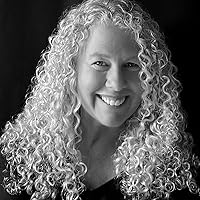
Bradfield grew up in Tacoma, Washington, has received a Stegner Fellowship, a Bread Loaf Scholarship, the Audre Lorde Prize. She lives on Cape Cod, works as a naturalist, and teaches at Brandeis University.
4.5! Bradfield does a wonderful job of placing readers directly behind her eyes and asking us to truly see through them, first with empathy and understanding and later with comprehension of her difference of experience from readers as well as her difference from those she has that experience with. This is one I would definitely love to reread when I have the time to really digest every intentional word.
We think of the ocean as lulling. We design sound machines around the white noise of waves. We sing “My Bonnie” to babies. While most of the poems in SOFAR are set in or near the sea, Elizabeth Bradfield does not rock us gently to sleep with these lyrics. Instead, she is the master of interruption, creating scattershot dialogue ("is that really they/ must be so where are they going can/ you imagine") and stopping mid-sentence: “Sometimes I—ahh, fuck it. Listen. We were fooling/ ourselves, even then.” But as often as Bradfield disorients, she also orients, with helpful epigraphs and notes (“Errata” is glacially deposited rock, a “dog-watch” is a short shift on a ship, and the book’s title is an acronym for the Sound Fixing and Ranging channel). These are poems about language at play with physicality—the environment and the human body. Bradfield is a deep-sea diver plumbing word roots, seascapes, and literal and figurative landscapes, leading us from cusk eels to the early years of the AIDS epidemic within a few stanzas. And even though the poems aren’t lullabies, they are musical. Take “Cleat” which offers one-stop shopping for a prosody lesson:
The first time I held a wrist-fat multistrand line and flopped it down (cross tuck cross) over a shin-long cleat
the sense of motion, pattern, right-doing was almost sexual—as different
from the thumb-thick rope I’d used until then as a parent’s sweet peck is from a lover’s mouth.
(Appropriately, when I typed “cleat,” Autocorrect changed it to “clit.”) Each poem in SOFAR is equal parts eco and echo, with science and memory bouncing off each other like sonar. In the ars poetica “Tender,” Bradfield writes, “What/ can I tend? Attendant, I offer/ not money (coin for care)/ but notice, regard. Tension/ of gaze, unwavering.” No matter the object of Bradfield’s gaze—the marine world, queer desire, a coyote’s penis—she finds poetry in this tension and attention. I’m eager to see what she tends next.
As I wrote when I first started reading, the poems just open and open here. I turned down page corners on “Considering the Hadal Zone.” “Tender:,” “Touchy,” “Intergenerational,” “From Sea, Toward Sea,” “First Love,” “Imago.” “Held/Treasured/Secret.”
She teaches and explores, defines and enlarges definitions, creates a boat-sea-love world that shimmers on its own, reality or fata morgana. And the book asks this question. Problematizes, probes, stands back, appreciates. I think Bradfield would count herself in the community of confessional poets; SOFAR feels naked, flayed, poignant, real.