The life, dramatic reign, and enduring legacy of the pharaoh Ramesses the Great, with lessons for the present, from internationally acclaimed Egyptologist Toby Wilkinson
“The author succeeds in bringing this distant age to life through telling detail and insightful analysis. . . . Whenever he can, the author takes advantage of opportunities to peer beneath the mask.”—The Economist
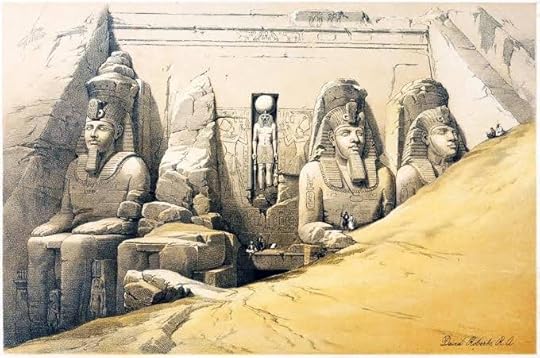
Ramesses II ruled the Nile Valley and the wider Egyptian empire from 1279 to 1213 B.C., one of the longest reigns in pharaonic history. He was a cultural innovator, a relentless self-promoter, and an astute diplomat—the peace treaty signed after the Battle of Kadesh was the first in recorded history. He outbuilt every other Egyptian pharaoh, leaving behind the temples of Abu Simbel; the great hypostyle hall of Karnak; the tomb for his wife Nefertari; and his own memorial, the Ramesseum.
His reputation eclipsed that of all other pharaohs as he was decried in the Bible as a despot, famed in literature as Ozymandias, and lauded by early antiquarians as the Younger Memnon. His rule coincided with the peak of ancient Egypt’s power and prosperity, the New Kingdom (1539–1069 B.C.).
In this authoritative biography, Toby Wilkinson considers Ramesses’ preoccupations and preferences, uncovering the methods and motivations of a megalomaniac ruler, with lessons for our own time.
Dr Toby Wilkinson joined the International Strategy Office in July 2011, working with the Pro Vice Chancellor (Jennifer Barnes) to support the schools, faculties and departments in their international engagements, and to develop the University's international strategy, particularly with regard to research collaborations and relationships with the EU, US, India and China. Prior to this, Dr Wilkinson was the Development Director at Clare College as well as Chairman of Cambridge Colleges Development Group.
As an acknowledged expert on ancient Egyptian civilisation and one of the leading Egyptologists of his generation, Toby Wilkinson has lectured around the world. He has excavated at the Egyptian sites of Buto and Memphis. He is a member of the editorial board of the Journal of Egyptian History and has broadcast on radio and television in the UK and abroad, including BBC’s Horizon and Channel 4’s Private Lives of the Pharaohs, and was the consultant for the BBC’s award-winning documentary on the building of the Great Pyramid.
Upon graduating from the University of Cambridge he received the University’s Thomas Mulvey Prize and was elected to the prestigious Lady Wallis Budge Junior Research Fellowship in Egyptology. He is a Fellow of Clare College, University of Cambridge and an Honorary Research Fellow in the Department of Archaeology at the University of Durham.
The legend of Ramesses is greatly enhanced by the retelling of the mythical Moses story in the Bible and repeated in modem media sources as corresponding to the reign of Ramesses II (the Great). But there is absolutely no contemporaneous record of a historical Moses in any Egyptian textual or archaeological archive. This holds true regardless of the pharaoh or timeline chosen, whether it is the 13th-century BCE reign of Ramesses II or the 15th-century BCE reigns of Thutmose III and Amenhotep II. There are no hieroglyphic inscriptions, court papyri, or administrative texts from the New Kingdom period that mention a leader named Moses leading a slave revolt or managing a massive migration. This specific biblical character did not appear in the records of the contemporaneous Egyptian bureaucracy. The shattered visage is that of Moses, Moses, Moses.
The War Mongers Shape History
This is a counterfactual, or an alternative might have been, history of Egyptian-Hittite war and diplomacy. When Tutankhamun died, his widow, Ankhesenamun, with no heir to Tutankhamun, offered herself in marriage to a Hittite prince. The diplomatic record indicates that the Hittite king agreed and dispatched one of his sons to Egypt. But the Hittite prince never arrived, he was most likely assassinated by Egyptian agents who wanted nothing to do with an Egyptian-Hittite partnership. The beneficiary of the power vacuum was Horemheb, an army general who established a new dynasty. This was followed by decades of conflict between the Egyptians and Hittites rather than a unified Egyptian-Hittite civilization. This new dynasty led to Ramesses II, and more war. Once again, the war mongers shape history and receive the sobriquet of “The Great” for the violence and destruction they cause. But ironically, some 34 years later Ramesses married a Hittite princess who became his third primary wife and royal consort leading to the first recorded non-aggression treaty in history.
The Making of Ozymandias
It is noteworthy that The Great Pyramids of Giza were already well over 1,000 years old when Ramesses II came to power. “Ozymandias” comes from “Osymandyas” which is the Greek rendering of “Usermaatra”, the official throne name of Rameses II. A legend results when the textual and archeological record overwhelmingly consist of formulistic paeans of praise and highly structed formal letters with a paucity of private correspondence and personal anecdotes. A Pharaoh cloaked in a veil of divinity cannot help but look like a god to his people and legend to subsequent generations. But Ramesses added to this and made himself a legend in his own time with relentless self-promotion which goes a long way in establishing a legacy and a legend in making the king of kings. For example, the Battle of Kadesh was at best a tactical draw and even a strategic political defeat for the Egyptians, but it became a famous victory for Ramesses II with a post battle propaganda campaign of unprecedented scale and scope. Sounds a bit like the MAGA God King Donald Trump and his war in Iran. No sycophant dares contradict either God King, ancient or modern. But at least the scribes of Ramesses could compose lines of metered epic poetry. Modern sycophant scribes are limited to 256 characters.
The Creation of Trumpmandias
Ramesses, like Trump, had a fetish for building monuments to himself and putting his name on older monuments usurped from past pharaohs. Both Ramesses and Trump have a fetish for stone, on the part of Ramesses this is understandable, but on the part of Trump? The parallel here is really quite striking. Ramesses was determined to make his name last for eternity, never to be surpassed by succeeding generations and to be seen by succeeding generations as the greatest pharaoh. It is truly amazing to see this same dynamic played in the 21st Century. This shows how little we have progressed in our politics since the 19th Dynasty of New Kingdom, 13th century BCE. For example, how is Trump renaming the Kennedy Center any different from Rameses carving his name over the names of previous pharaohs on existing structures and using statues of previous pharaohs for himself as well as claiming the deeds of the past for himself? This is how Ozymandias was made and how Trumpmandias is being made in the making of self-deification and in the pursuit of megalomania mega architecture, e.g., the Trump arch. Such megalomania may have been appropriate or even expected for an ancient god king, but there is no place for it in a leader in the 21st century. Or perhaps this shows that political and social progress are not possible owing to some unfortunate constants and tendencies in human nature. . "Look on my works, ye Mighty, and despair!" Well, I despair each time I look upon the works of Trumpmandias.
The Making of the First Theocracy
What is important to understand about ancient Egypt is the extent to which it was a thoroughgoing theocracy. Life was all about preparing for the afterlife so no sacrifice in the natural life was too great to secure the afterlife. The most important aspect of a pharaoh’s reign was his fulfillment of his contract with the gods. The pharaoh honored the gods and in return the gods favored the pharaoh and protected Egypt. The wonderous monumental building projects of ancient Egypt had a theological purpose. Ancient Egyptian religion was a primitive form of worship which consisted of human doing things to honor the gods in the natural world in return for divine favors and protection in natural world as well as immortality on the afterworld. The point was to propitiate the gods and place the pharaoh in the company of the gods. The pharaoh gains mastery over the natural world in the bargain. The pharaoh’s ability to create monumental and extravagant architecture was part of this mastery.
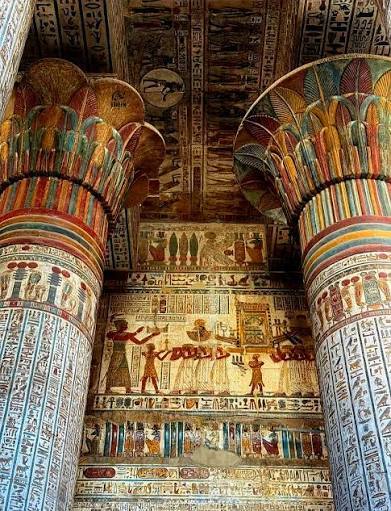
Egyptian building as such was primarily about pageantry and signaling. The pharaoh was a dual monarch, head of government, the state and military on the one hand and the object of divine worship on the other. The Egyptian pantheon was not unlike that of the Greeks with petulant and capricious gods endowed with the same virtues and vices observed in humans. The ancient Egyptians built some of the greatest and most extensive religious complexes in the world. Politics, ideology, and religion were all highlighted through monumental architecture. Ramesses passed from life into death yes, but more importantly, he passed into sculpted stone, his real eternal life, at least for now. The predominant theme of inner wall displays was religious scenes. So complete was the social immersion in the afterlife beliefs that many architects, stone masons, sculptors and painters made a career of preparing tombs for the pharaohs and their families and flatterers. The royal tomb was the biggest and most important project for the pharaoh, even more so than war, trade and diplomacy. The tombs were built with the presumption that they would last forever to match the pharaoh’s eternal life. With this thinking, it made sense to devote a life’s work and accumulated wealth to such a project. No price is too high to pay for eternal life, I guess. One life sentence in the prison of existence is enough for me, thank you.
Bulgarian review first, followed by the English translation below
И до днес гостите на древен Египет са гости предимно на Рамзес II, наричан Велики (с колко основание е донякъде спорно).
Великолепният храм на Абу-Симбел с огромните статуи на фараона и една от главните му съпруги Нефертари, както и монументалният храм в Луксор са само две от архитектурните емблеми на управлението му.
Величието на Рамзес със сигурност има нещо общо и с рядкото му дълголетие. Той е на трона цели 66 години и умира почти 90 годишен. През тези 66 години неговият Египет е буквално построен наново и обсипан с огромни храмове и религиозни комплекси, голяма част от които обожествяват самия Рамзес.
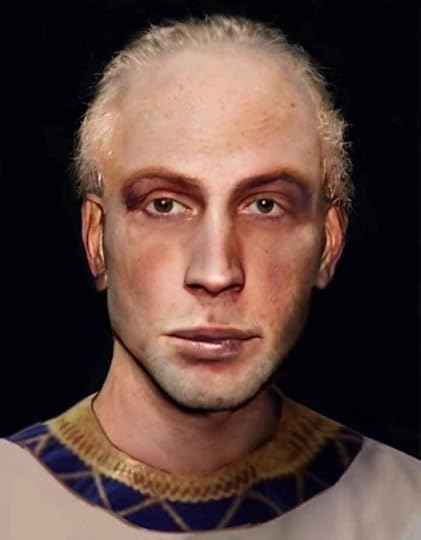
Началото на династията му не е бляскаво - тя произхожда от военните пълководци, изплували на върха след края на фараона-еретик Ехнатон с неговата Нефертити и отричането им на дотогавашните религиозни догми. Династията на Рамзес очевидно не е била и “местна” - били са бели и червенокоси, доста рядко явление в онези земи и епоха.
Въпреки военната си кариера, самият Рамзес II е бил по-скоро добър дипломат, отявлен мегаломан (твърдящ, че е подчинил земните стихии и белязал всяко кътче с огромен свой храм или поне немислимо огромна статуя) и най-вече майстор на саморекламата. Прочутата му битка за Кадеш, изобразявана като велика победа над хетите, е била в най-добрия случай патова ситуация. Но когато фараонът повели, безрезултатната битка се оказва увековечена за поколенията славна божествена победа.
Рамзес надживява много от около стоте си деца и поне трима от престолонаследниците си, както и всичките си близки главни съпруги. По негово време, наред с обичайната диктатура, яростното възкресяване и налагане на религиозните догми и грандоманското (дори за египетските стандарти) строителство, в Египет все пак е царувал мир цели 66 години. Така че прозвището “Велики” вероятно е поне донякъде заслужено.
Тоби Уилкинсън се придържа към известните в египтологията факти. А, уви, те са предимно под формата на камък - храмове, гробници, каменни надписи. И макар да е открито и тялото на самия фараон, то също не може да даде по-добра представа кой и какъв е бил човекът зад титлата. Затова легендата остава, както и фактът, че наистина е успял да увековечи името си и то да достигне до нас.
3,5⭐️
Even today, if you visit Ancient Egypt, you’re basically a guest of Ramesses II—the one they call "the Great" (though exactly how much he earned that title is up for debate).
The stunning Abu Simbel, with those massive statues of the Pharaoh and his main wife Nefertari, and the monumental Luxor Temple are just two of the architectural "signatures" of his time on the throne.
Ramesses' "greatness" definitely had something to do with his incredible stamina—he ruled for 66 years and lived to be nearly 90. During those decades, he basically rebuilt Egypt from the ground up, dotting the landscape with huge temples and religious complexes, many of which were built to worship... well, Ramesses himself.
His dynasty didn’t start out with much glitz—it came from military stock, commanders who climbed to the top after the "heretic pharaoh" Akhenaten and Nefertiti crashed and burned with their religious overhaul. Interestingly, the family wasn’t exactly "local"—they were fair-skinned and red-haired, which was a pretty rare sight in that part of the world back then.
Despite his army background, Ramesses II was more of a smooth diplomat, a total megalomaniac (he literally claimed to control the elements and stamped his name on every corner of the land), and a world-class master of self-hype. Take his famous Battle of Kadesh: it’s always shown as this epic win over the Hittites, but in reality, it was a tie at best. But hey, when you're the Pharaoh, a boring draw gets rewritten as a glorious, divinely-guided victory for the history books.
Ramesses ended up outliving many of his roughly one hundred kids, at least three of his heirs, and all of his main wives. But through the usual dictatorship, the aggressive return to old-school religious dogmas, and the construction projects that were over-the-top even for Egypt, he did manage to keep the peace for 66 years. So, maybe that "Great" label is somewhat earned after all.
Toby Wilkinson sticks to what we actually know from Egyptology. Sadly, most of that evidence is carved in stone—literally. Temples, tombs, and inscriptions. And even though we have the Pharaoh's actual mummy, it still doesn't tell us much about the guy behind the crown. So the legend lives on, along with the fact that he really did manage to make his name stick for thousands of years.
A sparkling short bio of Ramesses II, part of the Yale Ancient Lives Series, Wilkinson does a fine job placing the pharaoh in his time and place, looking back at the catastrophic end of the 18th Dynasty and the choice faced by Horemheb in selecting a successor; in picking the soldier Ramesses I he was reassured that there was a son (Seti I) and a grandson (Ramesses II) in the offing so he could die somewhat secure. His choice was good; Ramesses I didn't live long, but Seti proved an excellent king and Ramesses II followed him with the longest reign of any Egyptian pharaoh, punctuated by wars, building - and a lasting peace treaty with the Hittites, which suggests Ramesses was as good a diplomat as he was a builder (he was a somewhat indifferent soldier in spite of his reputation and enthusiastic warlike wall carvings).
Wilkinson faces the problem biographers deal with with all ancient figures - there's really not enough there to give a good idea what the man was like, although he does his best. Somewhat hilariously, a brief section on Ramesses' son and long-time crown prince Khaemwaset suggests he was a considerably more interesting person!
Well worth reading; here's a chance to put a bit of substance behind the endless statues.
" I met a traveller from an antique land Who said: "Two vast and trunkless legs of stone Stand in the desert. Near them on the sand, Half sunk, a shattered visage lies, whose frown And wrinkled lip and sneer of cold command Tell that its sculptor well those passions read Which yet survive, stamped on those lifeless things, The hand that mocked them and the heart that fed, And on the pedestal these words appear: 'My name is Ozymandias, king of kings: Look upon my works, ye mighty, and despair!' Nothing besides remains. Round the decay Of that colossal wreck, boundless and bare, The lone and level sands stretch away." - Percy Bysshe Shelley, "Ozymandias"
Ramses II. Ramses the Great. Egyptian Pharoah of the Nineteenth Dynasty ruled from 1303 BC – 1213 BC. Along with a small handful of Pharaohs (Thutmose II, Tutankhamun, and Akhenaten) is likely one of the most well-known of them all.
While it is very hard to reconstruct the details of his life due to the passage of time and the paucity of original source material, so many of the ideas come from the interpretation of archeology and hieroglyphs. Toby Wilkinson does an excellent job of giving us a historical look at Ramses and his remarkable achievements in the development of monuments that would outlast his life by many millenniums. In ancient Greek sources, he is called Ozymandias derived from the first part of his Egyptian-language regnal name: Usermaatre Setepenre. Ramesses was also referred to as the "Great Ancestor" by successor pharaohs and the Egyptian people.
Wilkinson takes us on a deep dive into the architecture, religious rites, and Ramses' extensive family. One of the best historical books Ive read about one of the most famous of Pharaohs.
What was it about Ramesses II that set him apart from the many Pharaohs of ancient Egypt? What made him “Great”? These are the questions Toby Wilkinson presents as the premise for his writing about Ramesses the Great.
The book opens in 1322 B.C. with the sudden death of a teenage King, Tutankhamen. Having had no children, his passing marked an end to a dynasty that ruled Egypt for over two centuries. From here you learn how the military would influence who came into power next and how Ramesse’s grandfather, Paramessu (Ramesses I) would ultimately gain the throne, setting his family on a path that would shape Egypt’s future.
Wilkinson does a great job breaking down the Battle of Kadesh and explaining how Ramesses built a superior military complex. He also goes into great detail about the first three years of Ramesses reign and his hyper focused need to build monuments that would solidify his and his father’s legacies.
A short read, this was a good starting point for learning about Ramesses the Great.
A nice, concise orientation to the life and reign of Egypt's longest-reigning Pharaoh, full of as many details about his military career, monumental achievements, diplomatic efforts, family life, and legacy as can reasonably be determined from the extant evidence. Although we can't possibly know the man, this book pulls together all the threads that help us get as close an idea of him as we'll likely ever get.
Quick little history of one of the most iconic Pharaohs of Egyptian history. It was well written, succinct and felt balanced in its approach of the ruler. Discussed the archeological record, that which is guesswork and the modern interpretation of all of the above.
Toby Wilkinson always finds a way to keep things approachable, enjoyable and well balanced while still finding time to discuss alternative ideas and perspectives.
The de Young museum in San Francisco had a really cool exhibit on Ramesses the Great a few years ago - ever since then I've wanted to learn more about the King of Kings, Ramesses II of Egypt's 19th dynasty. I found this to be a super accessible, very interesting account of what we know about Ramesses the Great - his upbringing, political career, building projects (including the very famous Abu Simbel), diplomacy, progeny and over sixty year reign! There's also discussion in here as to his legacy (not a lot of rulers are called "the Great") and influence in the modern world. Would definitely recommend if you're a layperson interested in Egyptian history!
Read this for my western civilization class. Super interesting to learn how Ramesses The Great established his legitimacy and made a name for himself. He was one of the first pharaohs in the 19th dynasty, which was started by a commoner that rose to power.
I was checked out when reading this book. It deserved better from me. When I’m in Luxor I am sure I’ll wish I’d given more to this book. Then again, why do I feel guilty because I didn’t enjoy a book, especially a dry-ass history book? Most of you read dick-all before going to Egypt. The more educated amongst you know King Tut (Batman) and Cleopatra (Liz Taylor) and younger people may know Ramses from a video game, so, on second thought, I’ve put in my work.
I leave for Egypt in 25 days. Hamas attacked Israel last Friday and I’m scared to go because I just got a warning from the State Department, so maybe standing up to the bad guys, the killers, and the warmongers by going on my trip is more important than memorizing the life history of a guy that I only want to remember via a Shelley poem.
That being said, this is my third Toby Wilkinson book and he is a great author of history, especially Egyptian history. Toby, I wish you would accompany me. I’ll ride a camel in your honor. More importantly, I hope that everyone else is scared and I have the sights to myself. Then we’ll talk.
Toby Wilkinson hasn’t failed to exhilarate and illuminate his readers thus far, making this book another excellent read.
If you’ve read his other book, The Rise and Fall of Ancient Egypt, you would have already gotten the important bits/highlights on the reign of Ramses. Hence you will immediately get the sense of an expansion and further in-depth analysis and narrative of his chapter on Ramses the 2nd for this book, which further elaborates and really goes into detail of his reign, giving the reader an even more in-depth understanding of the life, thoughts, ambitions and emotions of this once great king.
I thoroughly enjoyed this book. Toby’s narrative is always engaging and fully emotive, and I really appreciate the way he segments and carries along the reader throughout the book. It really feels like a conversation I’m having with a friend.
Given our limited information, this book can't tell us much about Ramsses the man. But it gives a sense about his historical importance, which was not nonexistent. He is most famous for building statutes of himself, and did not win major wars or establish lasting institutions. However, he did make peace with the Hittites, which was a useful if boring thing to do.
The book makes some interesting minor points as well. Wilkinson discusses the antiquarian interests of one of Ramsses's sons, Kaemwaset. For example, this prince added inscriptions to various then-ancient monuments, such as a statute of the son of a king from a millenium earlier.
This book by a noted English Egyptologist covers ancient Egypt’s most well-known pharaoh. In his preface, he asks, "Why is Rameses called the Great?” He then proceeds to provide much information about this pharaoh but leaves the question to the reader. Even for the dedicated armchair Egyptologist, there is much here. He builds his information well, and in a manner that anyone can easily follow his excellent prose. An odd quirk is that the chapter titles are the titles of well-known books. If you have an interest in ancient Egypt I recommend this to you
This is a fairly short book, at about 240 pages (of small format). Hence it should not be expected by any reader to be a lengthy in-depth academic treatise on the subject. The real question becomes how does it perform for its size? The answer would be fairly well, at least as an introduction to the novice. There is nothing really new, deep or profound in the book but it still serves as good introduction to that audience. The performance of the audiobook is also fairly decent, not great but not bad either.
Very interesting little book, with mostly inscriptions that were found on many of his monuments, and he lived an extraordinary long time in which to build them, as primary sources. His insistence on stamping his mark on current and future times makes the cult of personality of 20th century dictators look tame. I would have given it 4 stars but for the almost complete lack of illustrations or diagrams, which makes the descriptions of his monuments fail to give the full impression they deserve.
Was Ramesses II the greatest pharaoh Egypt had? Or was he just a master of propaganda and strategy?
Toby Wilkinson dives into the life of Ramesses II, and the enigma of this long-reigning pharaoh. I enjoyed this read, and the fantastic information that was shared. Ramesses II is one of my favorite pharaohs, but there is so much information shared in such a short book, and you will enjoy the journey.
biografia do que é considerado por muitos o maior faraó de todos. com a morte prematura de tutankhamon e a inevitável extinção da décimo-oitava dinastia, surge uma família de militares que ocupa e mantém o poder. o segundo ramesses (usermaatra, que os gregos deturparam para ozymandias) foi um deus-vivo durante seis décadas e, com ele, a perpetuação do poder um exercício permanente. fascinante nos tempos actuais.
Another great book in the ancient lives series, so far these have not disappointed me in any way. Ramesses the Great is a good biography on a well-known pharoh. I feel like this series could do with a few more figures that aren't Greek or Roman. The content was great, engaging, well written, and educational. I've learnt a lot about such a dominating figure. Chapters did feel a bit long at times, but otherwise, I have no complaints. Would certainly recommend.
Ramesses the Great by Toby Wilkinson is a fine representation of Ramesses II and offers great insight into the life and legacy of Ramesses II. One thing I particularly enjoyed was that nearly all the images in the book were taken by the author himself, which I personally love as it adds a unique touch. However, the book can feel a bit heavy at times due to the long descriptions of all his buildings and monuments, but i get why it is needed.
Wilkinson writes about Ancient Egypt in a very accessible way, and this book is similar in many regards. But because this book has a narrower scope, focused on just one pharoah, Wilkinson is able to dive a little deeper. I greatly appreciated the inclusion of so many quoted primary sources, as well as the significant attention paid to art and architecture. A fast but information packed read.
Wilkinson’s style is always clear and engaging and Ramses is an old favorite of mine, so I was really looking forward to this book. All around it was good, but I personally didn’t learn anything new from it.
Not much is known about Ramesses, so the content of the book is pretty thin. Lots of descriptions of temples etc, since that’s about all there is to talk about. The author does what he can with what he’s got.
Toby Wilkinson is an admirable author but biographies based on Ancient personae are nearly impossible to conclude satisfactorily. For those already familiar with the exploits of Ramesses the Great, this work doesn’t break new ground.
Once you start learning about Ramesses the Great you realize that he was a megalomaniac. No surprise there, but it reminded me so much of an orange, tiny handed, rapist, pedophile, grifter, psychopath that I just couldn't take any more. Yes he is a part of history AND he was a real asshole.
A fascinating insight to the most significant king in Egyptian history. With the scarcity of primary sources it is difficult to create a clear picture of the man’s life but the author does a good job weaving a narrative.