

What do you think?

1985
Anthony Burgess (1917-93) - angielski pisarz, kompozytor, filolog, wykładowca na Uniw. w Birmingham i innych, autor ok 40 powieści, kilkunastu dzieł biograficznych i eseistycznych, a z powieści z najsłynniejszą "Mechaniczną pomarańczą" na czele, jedną z najważniejszych dystopii XX wieku w literaturze światowej. Dystopia (czyli antyutopia) to kluczowe słowo dla zrozumienia 1985 oto Burgess (napisawszy już przecież Pomarańczę, postanawia pójść dalej dystopijnym tropem i odpowiedzieć na bodaj jeszcze słynniejszą wizję przerażającego świata niż jego Mechaniczna czyli na 1984 Georga Orwella. Sam, co ciekawe, odczytuje w nich powieść Orwella w sposób typowy dla niektórych lewicujących Brytyjczyków, ale raczej obcy czytelnikom z Polski i świata. Nie jako paszkwil na komunizm, tylko złośliwą karykaturę Wielkiej Brytanii tuż po wojnie, kiedy nadal obowiązywała reglamentacja żywności i na poły skoszarowane życie codzienne. 1985 składa się z dwóch części pierwsza pod tytułem 1984 to próba zrozumienia i odniesienia się w formie eseju (i przeprowadzonego z samym sobą wywiadu) do dzieła Orwella. Część druga, pisana w roku 1978 powieść będąca niesłychanie ponurą wizję przyszłości Wielkiej Brytanii w roku 1985, przez który drogą ku samozagładzie zmierza główny bohater Bevin Jones. Nawiasem mówiąc już samo to imię i nazwisko to nawiązanie do orwellowskiego bohatera Winstona Smitha (Winston to aluzja do Churchilla, Bevin zaś nawiązuje do Ernesta Bevina, powojennego ministra spraw zagranicznych, za którego kadencji nastąpił demontaż brytyjskiego imperium).
Orwell w latach 40. bał się państwa wszechmocnego, zaś Burgess w latach 70. bał się państwa słabego, terroryzowanego przez rozmaite grupy nacisku. Zuklandia (nazwa pochodzi od Zjednoczonego Królestwa, czyli UK) nie jest państwem Wielkiego Brata z 1984. Jest państwem, słabym, którego ulicami rządzą gangi nastolatków, gospodarka jest w chaosie niszczona przez związki zawodowe i inne grupy interesu, a majątek opanowują i zmieniają kulturę obcokrajowcy, tu czytaj po prostu muzułmanie, Arabowie, którzy dążą do przekształcenia Anglii w państwo islamskie. Czy Burgess nie wypowiada tu proroczych słów? Nie ma w tej wizji Wielkiego Brata ani powszechnej kontroli, przeciwnie - jest totalny chaos, ale okazuje się to nie mniej przerażające od orwellowskiej dyktatury. Koniecznie trzeba porównać - Burgess to pisarz wybitny i w wielu aspektach ponuro proroczy.
Orwell w latach 40. bał się państwa wszechmocnego, zaś Burgess w latach 70. bał się państwa słabego, terroryzowanego przez rozmaite grupy nacisku. Zuklandia (nazwa pochodzi od Zjednoczonego Królestwa, czyli UK) nie jest państwem Wielkiego Brata z 1984. Jest państwem, słabym, którego ulicami rządzą gangi nastolatków, gospodarka jest w chaosie niszczona przez związki zawodowe i inne grupy interesu, a majątek opanowują i zmieniają kulturę obcokrajowcy, tu czytaj po prostu muzułmanie, Arabowie, którzy dążą do przekształcenia Anglii w państwo islamskie. Czy Burgess nie wypowiada tu proroczych słów? Nie ma w tej wizji Wielkiego Brata ani powszechnej kontroli, przeciwnie - jest totalny chaos, ale okazuje się to nie mniej przerażające od orwellowskiej dyktatury. Koniecznie trzeba porównać - Burgess to pisarz wybitny i w wielu aspektach ponuro proroczy.
296 pages, Hardcover
First published January 1, 1978
About the author
Anthony Burgess
361 books4,467 followersLibrarian Note: There is more than one author in the Goodreads database with this name.
Seriocomic novels of noted British writer and critic Anthony Burgess, pen name of John Burgess Wilson, include the futuristic classic A Clockwork Orange (1962).
He composed also a librettos, poems, plays, screens, and essays and traveled, broadcast, translated, linguist and educationalist. He lived for long periods in southeastern Asia, the United States of America, and Europe along Mediterranean Sea as well as England. His fiction embraces the Malayan trilogy ( The Long Day Wanes ) on the dying days of empire in the east. The Enderby quartet concerns a poet and his muse. Nothing like the Sun re-creates love life of William Shakespeare. He explores the nature of evil with Earthly Powers , a panoramic saga of the 20th century. He published studies of James Joyce, Ernest Miller Hemingway, Shakespeare, and David Herbert Lawrence. He produced the treatises Language Made Plain and A Mouthful of Air . His journalism proliferated in several languages. He translated and adapted Cyrano de Bergerac , Oedipus the King , and Carmen for the stage. He scripted Jesus of Nazareth and Moses the Lawgiver for the screen. He invented the prehistoric language, spoken in Quest for Fire . He composed the Sinfoni Melayu , the Symphony (No. 3) in C , and the opera Blooms of Dublin .
Seriocomic novels of noted British writer and critic Anthony Burgess, pen name of John Burgess Wilson, include the futuristic classic A Clockwork Orange (1962).
He composed also a librettos, poems, plays, screens, and essays and traveled, broadcast, translated, linguist and educationalist. He lived for long periods in southeastern Asia, the United States of America, and Europe along Mediterranean Sea as well as England. His fiction embraces the Malayan trilogy ( The Long Day Wanes ) on the dying days of empire in the east. The Enderby quartet concerns a poet and his muse. Nothing like the Sun re-creates love life of William Shakespeare. He explores the nature of evil with Earthly Powers , a panoramic saga of the 20th century. He published studies of James Joyce, Ernest Miller Hemingway, Shakespeare, and David Herbert Lawrence. He produced the treatises Language Made Plain and A Mouthful of Air . His journalism proliferated in several languages. He translated and adapted Cyrano de Bergerac , Oedipus the King , and Carmen for the stage. He scripted Jesus of Nazareth and Moses the Lawgiver for the screen. He invented the prehistoric language, spoken in Quest for Fire . He composed the Sinfoni Melayu , the Symphony (No. 3) in C , and the opera Blooms of Dublin .
Ratings & Reviews
Friends & Following
Create a free account to discover what your friends think of this book!
Community Reviews
Displaying 1 - 30 of 165 reviews

January 1, 2018
The first half contains provocative essays and self-interviews, waxing Burgessly on the parallels between 1948 London (the original title for the novel was 1948) and the famous ur-totalitarian state familiar to most literate mammals, making the case for the humour in Orwell’s vision. The second half is a ludicrous and offensive comic send-up: Burgess repositions the novel from a right-wing perspective, spoofing the vituperative trade union movement of late 1970s Britain (UK is now TUCland), a world where mindless work and strikes are the oppressor, and art and education are the providence of the outcast proles, some of whom speak perfect Latin. As with most Burgess satire, his stance as an old Thatcherite curmudgeon tends to diminish the social comment, and nix the serious intentions. And as with most Burgess works, the end product is bursting with erudition and entertainment regardless. Scholars seeking to fact-hoover might wish to read the first half and skip the head-scratching politics of the second. Daniel was not pleased: “Geesus Christ!! Was that a richful Fucking waster. This Book has nothing, i repeat, NOTHING to do with 1984. [sic]” Nor was Brent: “A sloppily-written, half-assed, woefully-conceived agenda piece. Burgess should have been publicly shamed for writing such vomit. And maybe he would have been, had he but lifted his nose out of his typewriter. [sic]”
October 7, 2012
Right-wing garbage. The loathsome politics seem to have adversely affected the quality of Burgess' writing as well.

April 9, 2008
I came across a reference to this book while thumbing through a biography on Anthony Burgess about five years ago. Since then I have kept my eyes opened looking in used book stores and those kinds of places for a copy of the book. I could have probably found the book to buy online, but I rarely ever do that kind of thing for myself. Last week though in a semi-ironic act I actually went to a library and saw that they had the book, so I took it out and finally got the read it.
The structure of the book is a little weird. The first hundred pages are a collection of essays and a faux-interview with the author on George Orwell’s much misused utopian novel. The gist of the first hundred pages is that Orwell’s book was grossly misunderstood by many and that it’s really a bleak picture of London in 1948 and also at heart a comic novel. It’s also according to Burgess the culmination and defeat of a lifetime of a conflicting belief in the working class by Orwell. After getting through this part of the book is a novella by Burgess where he presents his own possible future for England, one which he sees I’m sure as equally comical but also also a little less naive to the state of the world (why Orwell’s naivety is difficult to explain here). Basically Burgess’ version of a horrible future is taken from the idea that the bombs never did end up falling that everyone thought would in the post-war era, and instead of bombs there were even greater horrors to the killing of humanity present.
Burgess wrote his book in the late 1970’s. The book came out in 1978, a time when England was in a lot of trouble. Wide-spread unemployment, striking unions, inflation and general civil-unrest were present. This is the stage that would bring Thatcher and Reagen to prominence, and their own anti-labor acts would put a stop the basic premise of Burgess book, but that was still in the future.
Burgess saw a world destroyed by the power of unions, where strikes were a common thing and they were always held for more money-something that was quickly losing it’s value. In Burgess world everyone went on strike, firemen, the army, chocolate makers, train-operators, anyone you can think of. And if a building burned down, it was the fault of someone who didn’t give into the strike. It’s kind of a conservative horror show here, but there is still something subversive underlaying Burgess story. More than just the awfulness of syndicalism, Burgess also saw a general dumbing down of the culture taken beyond being just the norm but to the regulated norm. Language decided upon the majority usage, if most people misuse words then the misuse must be correct etc., (he called this Workers English, and he saw it as something even worse than Newspeak, or Doublespeak). He also saw a bleak pragmatic future where culture was left behind because it had no market value. As a result only the hooligans, or maybe droogs and the old resistors to the new world knew things like Latin or Greek, or the works of Plato and Shakespeare, or cared about history.
The book has something reactionary about it, and it is certainly an elitists nightmare of a possible future but it’s also a warning cry against the leveling a dumbed down consumerist culture could possibly create. Some of the premises of the book have essentially been destroyed by the actions of Thatcher and Regan in the early 80’s but there is still something to be read in this forgotten book.
The structure of the book is a little weird. The first hundred pages are a collection of essays and a faux-interview with the author on George Orwell’s much misused utopian novel. The gist of the first hundred pages is that Orwell’s book was grossly misunderstood by many and that it’s really a bleak picture of London in 1948 and also at heart a comic novel. It’s also according to Burgess the culmination and defeat of a lifetime of a conflicting belief in the working class by Orwell. After getting through this part of the book is a novella by Burgess where he presents his own possible future for England, one which he sees I’m sure as equally comical but also also a little less naive to the state of the world (why Orwell’s naivety is difficult to explain here). Basically Burgess’ version of a horrible future is taken from the idea that the bombs never did end up falling that everyone thought would in the post-war era, and instead of bombs there were even greater horrors to the killing of humanity present.
Burgess wrote his book in the late 1970’s. The book came out in 1978, a time when England was in a lot of trouble. Wide-spread unemployment, striking unions, inflation and general civil-unrest were present. This is the stage that would bring Thatcher and Reagen to prominence, and their own anti-labor acts would put a stop the basic premise of Burgess book, but that was still in the future.
Burgess saw a world destroyed by the power of unions, where strikes were a common thing and they were always held for more money-something that was quickly losing it’s value. In Burgess world everyone went on strike, firemen, the army, chocolate makers, train-operators, anyone you can think of. And if a building burned down, it was the fault of someone who didn’t give into the strike. It’s kind of a conservative horror show here, but there is still something subversive underlaying Burgess story. More than just the awfulness of syndicalism, Burgess also saw a general dumbing down of the culture taken beyond being just the norm but to the regulated norm. Language decided upon the majority usage, if most people misuse words then the misuse must be correct etc., (he called this Workers English, and he saw it as something even worse than Newspeak, or Doublespeak). He also saw a bleak pragmatic future where culture was left behind because it had no market value. As a result only the hooligans, or maybe droogs and the old resistors to the new world knew things like Latin or Greek, or the works of Plato and Shakespeare, or cared about history.
The book has something reactionary about it, and it is certainly an elitists nightmare of a possible future but it’s also a warning cry against the leveling a dumbed down consumerist culture could possibly create. Some of the premises of the book have essentially been destroyed by the actions of Thatcher and Regan in the early 80’s but there is still something to be read in this forgotten book.

July 26, 2011
Geesus Christ!! Was that a richful Fucking waster. This Book has nothing, i repeat, NOTHING to do with 1984. It's a dystopian, or a Burgess wants it to be called Cacotopian, novel like 1984 and that's about it.
The book spends the first half, HALF!!!, in a review/critique of 1984 and how in the years since its inception, things have changed and how Orwell would change his vision. If Orwell wrote 1984 in '75 or whenever this book was written how would he go about it. But it doesn't even do that well.
Burgess just rambles about the times during which the book was written and how that was different from Orwell's time. Much like the rambling I am doing here. Until you later find out that Burgess' intentions were just to explain why he wrote the novella to follow.
Then you get to the Novella. WHICH HAS NOTHING TO DO WITH ORWELL OR 1984!!!! And you realize the first 100 pages were just a sneaky ass way to try to convince you that 1985 is practical and plausible and NOT 1984. Burgess' egotism wanted a way to write a dystopian novel without it being a sequel or and without having to justify it as an Orwellian themed novella that isn't ripping of Orwell. What an ass.
The Novella was pretty good for 60 pages or so, then just fucking ends. The ending up and vanished like a fart in the wind from a speeding motorist with the top down. And cruelly I didn't say thank goodness. Instead I just wished it did that 252 pages earlier.
The book spends the first half, HALF!!!, in a review/critique of 1984 and how in the years since its inception, things have changed and how Orwell would change his vision. If Orwell wrote 1984 in '75 or whenever this book was written how would he go about it. But it doesn't even do that well.
Burgess just rambles about the times during which the book was written and how that was different from Orwell's time. Much like the rambling I am doing here. Until you later find out that Burgess' intentions were just to explain why he wrote the novella to follow.
Then you get to the Novella. WHICH HAS NOTHING TO DO WITH ORWELL OR 1984!!!! And you realize the first 100 pages were just a sneaky ass way to try to convince you that 1985 is practical and plausible and NOT 1984. Burgess' egotism wanted a way to write a dystopian novel without it being a sequel or and without having to justify it as an Orwellian themed novella that isn't ripping of Orwell. What an ass.
The Novella was pretty good for 60 pages or so, then just fucking ends. The ending up and vanished like a fart in the wind from a speeding motorist with the top down. And cruelly I didn't say thank goodness. Instead I just wished it did that 252 pages earlier.

July 7, 2014
I think I'm the only one who's ever read this, but I loved Burgess' effort and his essay on 1984. I found it on the new books shelf at the UNCG library, where, geek that I am, I was hanging out with my boyfriend in high school. We'd just go and sit and read, or look up old Rolling Stones on microfiche. I picked a lot of random books of the shelf then and sat there, reading them. come to think of it, I probably spent more time just hanging out there in high school than I did in college, when I could check out the books and take them somewhere else.

March 8, 2017
Half of this odd hybrid is an exegesis on Orwell's 1984. The 2nd half, a speculative novella, is almost as polemical as the exegesis. Yet it is entertaining in its way.
Read
August 7, 2011It is always interesting to see one good author's take on another. In this case Anthony Burgess, author of A Clockwork Orange and The Wanting Seed, evaluates and criticizes George Orwell's 1984. After extensive interviews and essays on the nature of Orwell's seminal work, Burgess pens his own short novella, entitled 1985 (to avoid plagiarism, so he says.) Burgess's view of the cacotopian future is much closer to his own vantage point in strike plagued late 70's Britain, than was Orwell's in the immediate post WWII era. Orwell had originally envisioned calling his novel Nineteen Forty Eight such was the perceived similarity between his own environment and that of Winston Smith's, but the publisher persuaded him to set it in the future. Burgess, living through that era as well remembers clearly the chronic shortages of razor blades and soap, the pervasive smell of boiled cabbage, the ubiquitous rubble and the slogans emblazoned on walls and billboards. Burgess even suggests that 1984, rather than a dark forecast of a dystopian future is actually a satirical stab at socialist England in 1948. In his essays, Burgess addresses questions such as these: As a devoted lifelong Socialist, what made Orwell cast INGSOC in such horrific terms? Why does an author and novelist distrust words so much that he would create Newspeak? How does the rise of the Labour Party and the British trade unions foreshadow the real loss of personal freedom that underscored the horror of the totalitarian Big Brother? What is it about revolutions that are inherently progressive? If you loved 1984, read this and find out one man's answers to these and many other questions.

December 19, 2018
Uhhh.
Burgess.
Despite hearing bad things, I did enjoy the start. I didn't agree with some of the stuff you were saying, but I found it interesting, at the least. And then it got worse and worse. Finally, I felt as if I was simply just reading propaganda, which you were attempting to hide by talking about 1984. But I kept going because I thought when I get to your short novel at the end titled "1985", I would enjoy it, as I did, on the whole, like A Clockwork Orange.
I was wrong. More lectures, more strange characters blabbing on about workers and socialism. I can't say I enjoyed it in the slightest. This has mostly killed my respect for you, sorry.
Burgess.
Despite hearing bad things, I did enjoy the start. I didn't agree with some of the stuff you were saying, but I found it interesting, at the least. And then it got worse and worse. Finally, I felt as if I was simply just reading propaganda, which you were attempting to hide by talking about 1984. But I kept going because I thought when I get to your short novel at the end titled "1985", I would enjoy it, as I did, on the whole, like A Clockwork Orange.
I was wrong. More lectures, more strange characters blabbing on about workers and socialism. I can't say I enjoyed it in the slightest. This has mostly killed my respect for you, sorry.

February 22, 2018
It would be hard to describe how disappointed I was by the author of Clockwork Orange when I heard his actual views on politics and government. First half of the book – the reflections on 1984 and Orwell – is mostly a collection of conservative right-wing half-truths like: state helping the poorest = killing the beauty of charity, workers in unions = state economy destroyed etc. What is saddening the most is the fact that one can actually find some interesting insights about (for example) the post-war British experience and Orwell's place in it. Also the author proves that he is well educated and read. But that doesn't change the fact that most of the book (the story itself including) is just notes-from-the-underground-like rambling of a dissatisfied conservative. The story itself is an anti-utopia, where union strikes lead to deaths of people (Wage increase for the working class? How dare they!) and loss of values leads to chaos. But in reality (in my opinion) it's just an internal dialogue of the author, continuation of the previous parts...

December 28, 2014
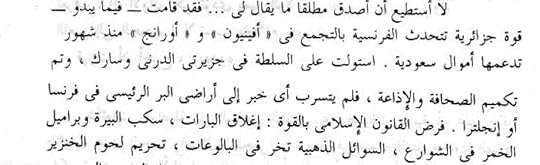
هههههههه كم اظحكتني هذه الكلمات , لو يرى ما آل إليه الجزائريون الآن , فالاسلام اصبح غريبا في بلد مسلم من دون مسلمين
لااضن انهم سيسكبون الخمر في الشوارع بل سيشربونها :p
June 8, 2013
If you have a bookshelf of books to read, put this one on the bottom shelf.

December 29, 2007
This is Anthony Burgess' response to 1984. The first half is made up of critical essays dealing with the themes of the original and is fascinating. I especially liked the way Burgess takes on Orwell's portrayal of the proles as an inert mass and the way he sentimentalises them. But this isn't an attack on 1984, its a good indepth critical discussion.
The second half is Burgess' short novel 1985 - his version of the story. This view of the future involves a tyranny of trade unions, and enforced equality which involves bringing all down to the lowest level: consequently no art or culture and the most basic education ( dumbing down ) lest anyone excel at anything. So there are vicious street gangs roaming about sharing their subversive knowledge of Shakespeare and Latin.The oppression in this version is insidious and cloaked by talk of democracy and the greater good. He tends to the reactionary at times but it's a great and witty story about the need for humans to maintain their inner lives, and for those to be rich and unconstrained. As you'd expect from the author of A Clockwork Orange, Burgess argues passionately that it's better to choose evil than not to choose.
The second half is Burgess' short novel 1985 - his version of the story. This view of the future involves a tyranny of trade unions, and enforced equality which involves bringing all down to the lowest level: consequently no art or culture and the most basic education ( dumbing down ) lest anyone excel at anything. So there are vicious street gangs roaming about sharing their subversive knowledge of Shakespeare and Latin.The oppression in this version is insidious and cloaked by talk of democracy and the greater good. He tends to the reactionary at times but it's a great and witty story about the need for humans to maintain their inner lives, and for those to be rich and unconstrained. As you'd expect from the author of A Clockwork Orange, Burgess argues passionately that it's better to choose evil than not to choose.
February 2, 2022
Creo más en el poder performático de la literatura para influir en la realidad que en intentar a toda costa encontrar trazas de la realidad en la literatura. Anthony Burguess escribió por encargo en los 70 un largo ensayo para comentar ‘1984’ de Orwell y se empeña en ver en el libro mucho más de la Inglaterra de la posguerra (fue publicado en 1949 y escrito en 1948 seguramente: de ahí el intercambio de números del título), en la que el laborismo arrasa con Churchill en las elecciones, que del futuro en un juego de la imaginación.
Pero me hace gracia esta referencia a una anécdota de Evelyn Waigh, cuando era corresponsal del Daily Mail en Abisinia en guerra, cuyo intercambio telegráfico con el periódico a Burguess le recuerda a la economía de la neolengua:
- Daily Mail: Why unnews.
- Evelyn Waugh: Unnnews Goodnews.
- Daily Mail: Unnews Unjob.
- Evelyn Waugh: Upstick Job Asswisse.
Que Juan Pascual Martínez traduce como:
- ¿Por qué no noticias?
- No noticias, buenas noticias.
- No noticias, no trabajo.
- Mete en culo trabajo
Pero me hace gracia esta referencia a una anécdota de Evelyn Waigh, cuando era corresponsal del Daily Mail en Abisinia en guerra, cuyo intercambio telegráfico con el periódico a Burguess le recuerda a la economía de la neolengua:
- Daily Mail: Why unnews.
- Evelyn Waugh: Unnnews Goodnews.
- Daily Mail: Unnews Unjob.
- Evelyn Waugh: Upstick Job Asswisse.
Que Juan Pascual Martínez traduce como:
- ¿Por qué no noticias?
- No noticias, buenas noticias.
- No noticias, no trabajo.
- Mete en culo trabajo

June 7, 2024
Es el único libro que Burgess aceptó escribir bajo encargo y espero que también su única birria. La historia de este encargo es curiosa, dado que fue la esposa de Burgess quien puso en marcha el proyecto cuando escribió a la editorial norteamericana para que, aparentando que era idea de ellos, le solicitaran la escritura de un libro acerca del 1984 de George Orwell. Visto está que decidieron darle ese empujón que el escritor inglés necesitaba. Burgess, según parece, redactó el manuscrito en Mónaco, que no sé si es el lugar idóneo para inspirarse de cara a escribir literatura y menos una distopía anti-socialista. Puede que los apartamentos de lujo y los coches de alta gama no dejen pensar con claridad acerca de una sociedad al borde del colapso.
Para empezar la estructura es singular y atractiva. En la primera mitad Burgess realiza una amplia reseña de 1984, en la cual realiza un apunte certero: no se trata de leer la novela de Orwell como una ficción profética, si no como una extensa metáfora acerca de los miedos del autor acerca de su propio tiempo. Sin duda una observación de lo más atinada, tanto es así que a día de hoy es uno de los géneros más frecuentados por las firmas jóvenes bajo ese mismo ángulo.
En la segunda parte pasa a escribir precisamente una metáfora sobre la Inglaterra de los años 70, la cual él había abandonado para convertirse en un exiliado perpetuo al estilo de D.H. Lawrence, sólo que él lo hizo por motivos un poco más espurios. Se trata de una visión anti-marxista y anti-socialista en la que la sociedad primero ha quedado empobrecida por políticas igualitarias que han mermado la genialidad para a cambio anivelarlo todo y hacer que la cultura sea accesible incluso a los menos dotados (esto me suena). El país ideado por Burgess cuenta con numerosas huelgas, huelgas por todos los estamentos, incluso en el ejército, los bomberos, las fábricas, los sindicatos viven para organizar huelgas y nada más y tienen al estado agarrado por los huevos, de forma que al final todo lo concede y da lugar a un estado fallido, que no puede imponer orden y va a la deriva, ha concedido demasiadas libertades a los ciudadanos y éstos ya no saben ni qué hacer con sus vidas. Todo desprende un aire a derechismo rancio, que no obstante en ocasiones logra ser anticipatorio, como cuando introduce de forma dispersa el ascenso a las esferas de poder por parte de figuras islamistas, llegando al punto que se incorpora a la cultura general de la sociedad, idea paranoica que a día de hoy es casi la única baza electoral que dispone el populismo de derechas en Europa junto con el pesado anti-wokismo.
Una de esas huelgas tiene un efecto desastroso sobre la vida del protagonista, cuyo nombre ya no recuerdo y tampoco tengo ganas de buscar porque da lo mismo, el tipo tiene cero interés, sus dolores e inquietudes carecen de relieve, no es más que letra insípida, un monigote descolorido en manos de su autor, que teledirige todas las acciones de sus esquemáticos personajes, por lo tanto su andadura, cómo se mueve por los márgenes de esa sociedad entablando relaciones con los disidentes, es imposible que provoque otra cosa más que bostezos descomunales que hará que la gente que viaja contigo en el transporte se pregunte si estás imitando estúpidamente a un león tarado. Es todo tan simplista que hasta da risa. A banda de eso, también hay que añadir que es demasiado notorio (quizás influenciado por el ensayo precedente) el aire condescendiente que desprende el escritor, que observa su creación como un dios macilento y abotargado por la soberbia. Según apunta Burgess en el segmento del ensayo, si una narración no es trágica, entonces debe ser presentada como una gran broma, el problema es que esa broma no tiene la menor gracia.
No se trata de incompatibilidad ideológica con el autor, es más bien la torpeza con la que todo está ideado y ejecutado, no es nada persuasiva y a eso se suma la mencionada y omnipresente actitud soberbia que se percibe, si no en cada página, sí en cada capítulo. Su mirada resulta demasiado anquilosada, es alguien desconectado de su tiempo, cosa que se nota mucho en el desprecio con el que dibuja la cultura de masas, a la que considera basura radioactiva, sumado luego al típico rechazo de la juventud y, cómo se puede intuir, la terrible irritación que le produce la deriva global de la sociedad. Para no contradecir a los tópicos derechistas, Burgess aquí se nota como un hombre nacido en la década incorrecta, es imposible que pueda encajar en semejante panorama. Los disidentes son a los que mejor trata por la ridícula razón que sus gustos son más elevados. Por ejemplo, conocen y leen a Edward Gibbon y su obra magna sobre la caída del imperio romano. En otro lado encontramos que la hija adolescente tiene ciertos impedimentos intelectuales y para colmo de desgracias adora ver la televisión, que ofrece muchos dibujos animados y productos pornográficos de muy baja estofa, lo cual sin duda la condena a la mayor de las imbecilidades. Burgess quiere ser una especie de derechista ilustrado y ha habido veces en las que lo ha logrado, aunque en otras obras, en ésta simplemente es un reaccionario que escribe una ficción torpe, de la que sólo puedes rescatar alguna curiosidad aislada como por ejemplo cuando hace que George Orwell perezca en Pamplona durante la Guerra civil española y por lo tanto antes que pueda llegar a escribir 1984. Son como caramelos de miel encontrados dentro de una fosa séptica.
El libro podría ganar en interés y valor si lo hubiera limitado al ensayo acerca de 1984 en particular y la novela distópica en general, al añadirle esa novela corta es sencillamente un estropicio, pues es una ficción que se te cae de las manos y de no haber sido publicada por el autor de otra novela de gran éxito, si hubiera sido lanzada bajo seudónimo, ni se habría traducido al español y menos todavía se seguiría editando a estas alturas del siglo XXI.
De toda la lectura también rescato una idea muy sencilla pero certera de lo que es la libertad: poder tomar decisiones morales sin coacción de ningún tipo. Sólo por eso no consideraré este 1985 como tiempo perdido. De todas formas os la podéis ahorrar si no sois algún tipo de anarco-capitalista o fan de Ayn Rand (de forma sorprendente los hay).
Para empezar la estructura es singular y atractiva. En la primera mitad Burgess realiza una amplia reseña de 1984, en la cual realiza un apunte certero: no se trata de leer la novela de Orwell como una ficción profética, si no como una extensa metáfora acerca de los miedos del autor acerca de su propio tiempo. Sin duda una observación de lo más atinada, tanto es así que a día de hoy es uno de los géneros más frecuentados por las firmas jóvenes bajo ese mismo ángulo.
En la segunda parte pasa a escribir precisamente una metáfora sobre la Inglaterra de los años 70, la cual él había abandonado para convertirse en un exiliado perpetuo al estilo de D.H. Lawrence, sólo que él lo hizo por motivos un poco más espurios. Se trata de una visión anti-marxista y anti-socialista en la que la sociedad primero ha quedado empobrecida por políticas igualitarias que han mermado la genialidad para a cambio anivelarlo todo y hacer que la cultura sea accesible incluso a los menos dotados (esto me suena). El país ideado por Burgess cuenta con numerosas huelgas, huelgas por todos los estamentos, incluso en el ejército, los bomberos, las fábricas, los sindicatos viven para organizar huelgas y nada más y tienen al estado agarrado por los huevos, de forma que al final todo lo concede y da lugar a un estado fallido, que no puede imponer orden y va a la deriva, ha concedido demasiadas libertades a los ciudadanos y éstos ya no saben ni qué hacer con sus vidas. Todo desprende un aire a derechismo rancio, que no obstante en ocasiones logra ser anticipatorio, como cuando introduce de forma dispersa el ascenso a las esferas de poder por parte de figuras islamistas, llegando al punto que se incorpora a la cultura general de la sociedad, idea paranoica que a día de hoy es casi la única baza electoral que dispone el populismo de derechas en Europa junto con el pesado anti-wokismo.
Una de esas huelgas tiene un efecto desastroso sobre la vida del protagonista, cuyo nombre ya no recuerdo y tampoco tengo ganas de buscar porque da lo mismo, el tipo tiene cero interés, sus dolores e inquietudes carecen de relieve, no es más que letra insípida, un monigote descolorido en manos de su autor, que teledirige todas las acciones de sus esquemáticos personajes, por lo tanto su andadura, cómo se mueve por los márgenes de esa sociedad entablando relaciones con los disidentes, es imposible que provoque otra cosa más que bostezos descomunales que hará que la gente que viaja contigo en el transporte se pregunte si estás imitando estúpidamente a un león tarado. Es todo tan simplista que hasta da risa. A banda de eso, también hay que añadir que es demasiado notorio (quizás influenciado por el ensayo precedente) el aire condescendiente que desprende el escritor, que observa su creación como un dios macilento y abotargado por la soberbia. Según apunta Burgess en el segmento del ensayo, si una narración no es trágica, entonces debe ser presentada como una gran broma, el problema es que esa broma no tiene la menor gracia.
No se trata de incompatibilidad ideológica con el autor, es más bien la torpeza con la que todo está ideado y ejecutado, no es nada persuasiva y a eso se suma la mencionada y omnipresente actitud soberbia que se percibe, si no en cada página, sí en cada capítulo. Su mirada resulta demasiado anquilosada, es alguien desconectado de su tiempo, cosa que se nota mucho en el desprecio con el que dibuja la cultura de masas, a la que considera basura radioactiva, sumado luego al típico rechazo de la juventud y, cómo se puede intuir, la terrible irritación que le produce la deriva global de la sociedad. Para no contradecir a los tópicos derechistas, Burgess aquí se nota como un hombre nacido en la década incorrecta, es imposible que pueda encajar en semejante panorama. Los disidentes son a los que mejor trata por la ridícula razón que sus gustos son más elevados. Por ejemplo, conocen y leen a Edward Gibbon y su obra magna sobre la caída del imperio romano. En otro lado encontramos que la hija adolescente tiene ciertos impedimentos intelectuales y para colmo de desgracias adora ver la televisión, que ofrece muchos dibujos animados y productos pornográficos de muy baja estofa, lo cual sin duda la condena a la mayor de las imbecilidades. Burgess quiere ser una especie de derechista ilustrado y ha habido veces en las que lo ha logrado, aunque en otras obras, en ésta simplemente es un reaccionario que escribe una ficción torpe, de la que sólo puedes rescatar alguna curiosidad aislada como por ejemplo cuando hace que George Orwell perezca en Pamplona durante la Guerra civil española y por lo tanto antes que pueda llegar a escribir 1984. Son como caramelos de miel encontrados dentro de una fosa séptica.
El libro podría ganar en interés y valor si lo hubiera limitado al ensayo acerca de 1984 en particular y la novela distópica en general, al añadirle esa novela corta es sencillamente un estropicio, pues es una ficción que se te cae de las manos y de no haber sido publicada por el autor de otra novela de gran éxito, si hubiera sido lanzada bajo seudónimo, ni se habría traducido al español y menos todavía se seguiría editando a estas alturas del siglo XXI.
De toda la lectura también rescato una idea muy sencilla pero certera de lo que es la libertad: poder tomar decisiones morales sin coacción de ningún tipo. Sólo por eso no consideraré este 1985 como tiempo perdido. De todas formas os la podéis ahorrar si no sois algún tipo de anarco-capitalista o fan de Ayn Rand (de forma sorprendente los hay).

April 19, 2010
Burgess successfully predicts what Orwell cannot: the hyper-sexualization of youth and the breakdown of family, the unionization of governmental agencies, and the Islamization of England. Sound familiar? And yet this was written in the 1970's!
The question is, is America next?
The question is, is America next?

Read
August 17, 2025Roman „1985“ Entoni Bardžisa, objavljen je 1978 godine i sastavljen je od dva dela. To je svojevrsni odgovor na distopijski roman „1984“ Džordža Orvela. Bardžis ne piše roman u klasičnom smislu, već stvara dvodelnu strukturu: esejistički uvod i narativnu pripovest, spojenu u jedno lucidno ogledalo savremenog društva. širi svoj pogled na opasnosti koje ne dolaze nužno iz totalitarizma, već iz kulturne dekadencije, sindikalne tiranije i intelektualne letargije.
U prvom delu, Bardžis polemiše s Orvelom, pokušavajući da ponudi alternativnu viziju budućnosti zasnovanu na realnostima i strahovima koje je on video u društvu sedamdesetih godina. On detaljno objašnjava gde se slaže, a gde se ne slaže s Orvelovim predviđanjima. Posebno ističe da Orvel nije dovoljno uzeo u obzir uticaj religije i sindikata u oblikovanju društva. U njegovoj viziji, sindikati su postali instrument kontrole, gušeći individualnu slobodu pod maskom radničkih prava. Bardžis upozorava da je sasvim moguć i religijski fanatizam: radikalni islam dobija ogroman uticaj, čime se religija nameće kao novi oblik kontrole. Izražava duboku zabrinutost i zbog pada kulturnih i obrazovnih standarda. On vidi društvo koje je izgubilo interes za umetnost, klasičnu muziku, književnost i kritičko mišljenje. U toj nekoj bliskoj budućnsti (koja je nama nažalost sadašnjost) obrazovanje se banalizuje, a intelektualna radoznalost nestaje. Kultura se komercijalizuje i gubi dubinu. Ljudi postaju pasivni konzumenti, a ne aktivni učesnici u kulturnom životu.
Drugi deo romana nam pripoveda sudbinu Beva Džounza, običnog čoveka koji se suočava s tragičnim raspadom porodice i sveta oko sebe. Priča počinje u sedmici pred Božić, u atmosferi Londona koji je postao multietnički, bučan i haotičan. Glavni junak, Bev Džounz, probija se kroz gužvu i nailazi na omladinske bande, tzv. „kumini“ (šiparci-kriminalci od oko 16 godina). Oni su posebno opasni jer štrajk nastavnika znači da više nisu u školi, pa terorišu ulice i siluju slabije od njih. Na samom početku Beva zatičemo u najtežem mogućem trenutku: njegova žena Elen je stradala u bolnici tokom velikog požara, a nisu mogli da ga ugase zato što vatrogasci štrajkuju. Njene poslednje reči – „Ne daj im da im to prođe“ – postaju njegov zavet i unutrašnja obaveza. Bev ostaje sam sa trinaestogodišnjom ćerkom Besi,koja je fizički prerano sazrela, ali mentalno zakržljala i zaglavljena u infantilnom svetu televizije, samozadovoljavanja i crtanih filmova. Njena reakcija na majčinu smrt nije tuga, već zabrinutost za to ko će spremiti božićni ručak. To pokazuje koliko su degradirani obrazovanje, porodica i kultura u društvu koje Bardžes opisuje – deca odrastaju okružena televizijom i površnim sadržajima, nesposobna da razviju istinsku empatiju i kritičko mišljenje.
Bev, nemoćan pred tragedijom, pokušava da nastavi dalje i da zaštiti svoju ćerku, ali stalno nailazi na zid – birokratija, nasilje, ravnodušnost okoline. Njegova svakodnevica oslikava širu sliku društva koje se raspada. Bardžis time jasno pokazuje da raspad ne dolazi odjednom, već postepeno: kroz lošo zdravstvo, loše školstvo, ali najviše kroz gubitak smisla i vrednosti.
Čitajući ovaj deo romana danas, teško je oteti se utisku da Bardžis nije bio samo pisac, već i prorok. Da sam ovu knjigu uzela u ruke pre deset ili dvadeset godina, verovatno bih pomislila da autor preteruje, da takva budućnost nikada neće doći. Ali danas, u vremenu u kojem živimo, osećam frapantnu sličnost. Naše obrazovanje sve češće liči na lakrdiju, a školski je kurikulum katastrofa. Deca ne žele da uče, da čitaju, da istražuju. Umesto da se dive znanju i idejama, oni se dive trivijalnostima, „zvezdama“ društvenih mreža, površnim idolima i takozvanim influenserima (alergična sam na tu reč). To je možda i najstrašnija opomena romana: da društvo koje zapusti obrazovanje, dobija generacije nesposobne da se nose sa životom, nesposobne da razumeju svet, a kamoli da ga menjaju.
„1985“ je više od distopije. To je upozorenje da urušavanje počinje na sitnim mestima – u školi, u porodici, u svakodnevnom odnosu prema radu i odgovornosti. Čitajući ga danas, ne možemo a da se ne zapitamo: zar nismo već na tom putu? Bardžis nas poziva da budemo budni, da mislimo svojom glavom, da ne prihvatamo kolektivne istine bez preispitivanja. Njegove teme su danas možda još relevantnije nego kada ih je pisao. „1985“ je zato roman koji nas tera da se pitamo – ako dopustimo da nam budućnost oblikuju „kumini“, jeftina zabava i politika bez odgovornosti, šta ostaje od našeg ljudskog dostojanstva?
U prvom delu, Bardžis polemiše s Orvelom, pokušavajući da ponudi alternativnu viziju budućnosti zasnovanu na realnostima i strahovima koje je on video u društvu sedamdesetih godina. On detaljno objašnjava gde se slaže, a gde se ne slaže s Orvelovim predviđanjima. Posebno ističe da Orvel nije dovoljno uzeo u obzir uticaj religije i sindikata u oblikovanju društva. U njegovoj viziji, sindikati su postali instrument kontrole, gušeći individualnu slobodu pod maskom radničkih prava. Bardžis upozorava da je sasvim moguć i religijski fanatizam: radikalni islam dobija ogroman uticaj, čime se religija nameće kao novi oblik kontrole. Izražava duboku zabrinutost i zbog pada kulturnih i obrazovnih standarda. On vidi društvo koje je izgubilo interes za umetnost, klasičnu muziku, književnost i kritičko mišljenje. U toj nekoj bliskoj budućnsti (koja je nama nažalost sadašnjost) obrazovanje se banalizuje, a intelektualna radoznalost nestaje. Kultura se komercijalizuje i gubi dubinu. Ljudi postaju pasivni konzumenti, a ne aktivni učesnici u kulturnom životu.
Drugi deo romana nam pripoveda sudbinu Beva Džounza, običnog čoveka koji se suočava s tragičnim raspadom porodice i sveta oko sebe. Priča počinje u sedmici pred Božić, u atmosferi Londona koji je postao multietnički, bučan i haotičan. Glavni junak, Bev Džounz, probija se kroz gužvu i nailazi na omladinske bande, tzv. „kumini“ (šiparci-kriminalci od oko 16 godina). Oni su posebno opasni jer štrajk nastavnika znači da više nisu u školi, pa terorišu ulice i siluju slabije od njih. Na samom početku Beva zatičemo u najtežem mogućem trenutku: njegova žena Elen je stradala u bolnici tokom velikog požara, a nisu mogli da ga ugase zato što vatrogasci štrajkuju. Njene poslednje reči – „Ne daj im da im to prođe“ – postaju njegov zavet i unutrašnja obaveza. Bev ostaje sam sa trinaestogodišnjom ćerkom Besi,koja je fizički prerano sazrela, ali mentalno zakržljala i zaglavljena u infantilnom svetu televizije, samozadovoljavanja i crtanih filmova. Njena reakcija na majčinu smrt nije tuga, već zabrinutost za to ko će spremiti božićni ručak. To pokazuje koliko su degradirani obrazovanje, porodica i kultura u društvu koje Bardžes opisuje – deca odrastaju okružena televizijom i površnim sadržajima, nesposobna da razviju istinsku empatiju i kritičko mišljenje.
Bev, nemoćan pred tragedijom, pokušava da nastavi dalje i da zaštiti svoju ćerku, ali stalno nailazi na zid – birokratija, nasilje, ravnodušnost okoline. Njegova svakodnevica oslikava širu sliku društva koje se raspada. Bardžis time jasno pokazuje da raspad ne dolazi odjednom, već postepeno: kroz lošo zdravstvo, loše školstvo, ali najviše kroz gubitak smisla i vrednosti.
Čitajući ovaj deo romana danas, teško je oteti se utisku da Bardžis nije bio samo pisac, već i prorok. Da sam ovu knjigu uzela u ruke pre deset ili dvadeset godina, verovatno bih pomislila da autor preteruje, da takva budućnost nikada neće doći. Ali danas, u vremenu u kojem živimo, osećam frapantnu sličnost. Naše obrazovanje sve češće liči na lakrdiju, a školski je kurikulum katastrofa. Deca ne žele da uče, da čitaju, da istražuju. Umesto da se dive znanju i idejama, oni se dive trivijalnostima, „zvezdama“ društvenih mreža, površnim idolima i takozvanim influenserima (alergična sam na tu reč). To je možda i najstrašnija opomena romana: da društvo koje zapusti obrazovanje, dobija generacije nesposobne da se nose sa životom, nesposobne da razumeju svet, a kamoli da ga menjaju.
„1985“ je više od distopije. To je upozorenje da urušavanje počinje na sitnim mestima – u školi, u porodici, u svakodnevnom odnosu prema radu i odgovornosti. Čitajući ga danas, ne možemo a da se ne zapitamo: zar nismo već na tom putu? Bardžis nas poziva da budemo budni, da mislimo svojom glavom, da ne prihvatamo kolektivne istine bez preispitivanja. Njegove teme su danas možda još relevantnije nego kada ih je pisao. „1985“ je zato roman koji nas tera da se pitamo – ako dopustimo da nam budućnost oblikuju „kumini“, jeftina zabava i politika bez odgovornosti, šta ostaje od našeg ljudskog dostojanstva?

March 30, 2021
George Orwell wrote Nineteen Eighty-Four in 1948, in the UK aftermath of World War 2. Thirty years later, in 1978, Anthony Burgess wrote this, his two-part response. Burgess’s Part 1 is a collection of literary and political commentary on Orwell’s novel. Burgess’s Part 2 is an original novella, alternative to Orwell’s novel.
Part 1 – When Burgess details how the real 1984 will not resemble Orwell’s dystopian 1984, he is not criticizing Orwell so much as the popular notion that speculative fiction is prophecy. Of course, those of us who read in the genre know better. But apparently, this is a point which Burgess feels needs to be made, I think not to the 85% working class portion of the population, who he admits do not read his books, but to the educated class, who do. Indeed, a working assumption in his essays is that the reader is familiar with not only Nineteen Eighty-Four, but also Brave New World, We, A Clockwork Orange, and a host of other philosophical/religious/literary works. The irony is that just as real history diverged in the thirty years between the writing of Orwell’s Nineteen Eighty-Four and of Burgess’ 1985, so again has history diverged in the more than forty years since the writing of Burgess’ 1985. I do recommend reading this Part 1 to understand Nineteen Eighty-Four’s specific references to 1948 UK, which are more than just context. I, being born almost a decade later, in a land far away, did not recognize many of them without Burgess’ help. However, Burgess’ anti-socialist, anti-hippie, anti-feminist, and anti-gay, rantings are also of his own time and place.
Part 2 –
The novella 1985 is Burgess’ dystopic reaction to the agenda of UK’s Labour Party of the 1970s, especially the labor unions' use/abuse of the strike. Since the labor movement was largely dismembered in the 1980s by Thatcher in the UK and Reagan in the US, we might now need to define a few terms. A “closed shop” is a situation where a labor union has negotiated a contract with the employer, where all employees are required to be dues-paying members of the union. A “general strike” is an event where various labor unions have agreed to strike together with each other’s strikes, in order to strengthen each other’s bargaining position.
In the opening of the novella, the entrenchment of these practices leads to the death of Bev Jones’ wife Ellie. The hospital she has been admitted to is burned down by arsonists, while the firemen’s union is on strike, and the military backup to fire protection honors the picket lines. As a result, Ellie is burned to death, and her dying words in Bev’s arms are “Don’t let them get away with it.” Bev’s subsequent refusal to cooperate with the rules imposed on society by labor, take him further and further into ostracization and legal problems in a parody of a Nanny State UK, now known as TUCland.
The thoroughly weakened UK economy has been unable to respond to extortionate prices of oil imports, and is now dominated by Arabia. The Arabs have obtained legal ownership of major national assets, such as the North Sea oil fields, and are increasingly aggressive in protecting those assets and imposing Muslim religious and societal conventions. It is a comic reversal of past British colonial practices in the rest of the world. I don’t think Burgess intended it as a comment on colonialism, but rather uses that as a scary bogeyman, preying on a particularly vulnerable component of the contemporary British psyche. And I’m using “comic” here, not to mean hilarity, but in the ironic sense that Burgess defines when critiquing Orwell’s Nineteen Eighty-Four. I feel the impact of this point is lost, and the entire novel somewhat undermined, when a complete Arab takeover is somehow averted by a single lets-all-just-be-good speech by the young King Charles III.
In spite of the name, this novella is not directly related to George Orwell’s Nineteen Eight-Four. Thematically it deals with libertarian social and political philosophies, rather than metaphysical concepts such as the nature of free will (A Clockwork Orange) and historical truth (Nineteen Eight-four), and is a lesser work than those.
Part 1 – When Burgess details how the real 1984 will not resemble Orwell’s dystopian 1984, he is not criticizing Orwell so much as the popular notion that speculative fiction is prophecy. Of course, those of us who read in the genre know better. But apparently, this is a point which Burgess feels needs to be made, I think not to the 85% working class portion of the population, who he admits do not read his books, but to the educated class, who do. Indeed, a working assumption in his essays is that the reader is familiar with not only Nineteen Eighty-Four, but also Brave New World, We, A Clockwork Orange, and a host of other philosophical/religious/literary works. The irony is that just as real history diverged in the thirty years between the writing of Orwell’s Nineteen Eighty-Four and of Burgess’ 1985, so again has history diverged in the more than forty years since the writing of Burgess’ 1985. I do recommend reading this Part 1 to understand Nineteen Eighty-Four’s specific references to 1948 UK, which are more than just context. I, being born almost a decade later, in a land far away, did not recognize many of them without Burgess’ help. However, Burgess’ anti-socialist, anti-hippie, anti-feminist, and anti-gay, rantings are also of his own time and place.
Part 2 –
The novella 1985 is Burgess’ dystopic reaction to the agenda of UK’s Labour Party of the 1970s, especially the labor unions' use/abuse of the strike. Since the labor movement was largely dismembered in the 1980s by Thatcher in the UK and Reagan in the US, we might now need to define a few terms. A “closed shop” is a situation where a labor union has negotiated a contract with the employer, where all employees are required to be dues-paying members of the union. A “general strike” is an event where various labor unions have agreed to strike together with each other’s strikes, in order to strengthen each other’s bargaining position.
In the opening of the novella, the entrenchment of these practices leads to the death of Bev Jones’ wife Ellie. The hospital she has been admitted to is burned down by arsonists, while the firemen’s union is on strike, and the military backup to fire protection honors the picket lines. As a result, Ellie is burned to death, and her dying words in Bev’s arms are “Don’t let them get away with it.” Bev’s subsequent refusal to cooperate with the rules imposed on society by labor, take him further and further into ostracization and legal problems in a parody of a Nanny State UK, now known as TUCland.
The thoroughly weakened UK economy has been unable to respond to extortionate prices of oil imports, and is now dominated by Arabia. The Arabs have obtained legal ownership of major national assets, such as the North Sea oil fields, and are increasingly aggressive in protecting those assets and imposing Muslim religious and societal conventions. It is a comic reversal of past British colonial practices in the rest of the world. I don’t think Burgess intended it as a comment on colonialism, but rather uses that as a scary bogeyman, preying on a particularly vulnerable component of the contemporary British psyche. And I’m using “comic” here, not to mean hilarity, but in the ironic sense that Burgess defines when critiquing Orwell’s Nineteen Eighty-Four. I feel the impact of this point is lost, and the entire novel somewhat undermined, when a complete Arab takeover is somehow averted by a single lets-all-just-be-good speech by the young King Charles III.
In spite of the name, this novella is not directly related to George Orwell’s Nineteen Eight-Four. Thematically it deals with libertarian social and political philosophies, rather than metaphysical concepts such as the nature of free will (A Clockwork Orange) and historical truth (Nineteen Eight-four), and is a lesser work than those.

August 7, 2025
The book is divided into two parts. The first focuses on a wide range of themes, mostly regarding socialism, while the second is a dystopian novel where socialism has prevailed and everyday life is controlled by workers' unions.
Let’s talk about each part separately, because nothing makes me write a lengthy review like a really bad book.
The title suggests that we’ll delve deeper into the works of George Orwell and 1984, but Orwell’s ideas and themes are usually only mentioned in passing and it almost feels like the author only wanted to parasitize on Orwell’s fame. What’s more, in the first, more philosophical part, we’re presented with a myriad of ideas, but none are explored in any real depth. The author's point is often buried beneath a jumble of “intellectual” jargon, which is supposed to mask the lack of any meaningful underlying message. Instead, we get the author’s complaints about socialism, capitalism, religion, and much more, presented through the lens of a senior who seems to have something against anyone under the age of 30.
The second part has one thing in common with the first, its inability to pick a singular theme and explore it meaningfully. Throughout the story, we get to explore the flaws of social relief programs, religion, socialism, workers' unions, then capitalism (for a change), and many other topics, but again, the author only ever scratches the surface, wraps everything in very smart words and doesn’t really say anything. And as a cherry on top, we get a very very unnecessary, almost incest-like relationship between the main character and his daughter.
I read the Clockwork Orange before this, and this book was a massive letdown.
2/5 – the ending was stupid.
Let’s talk about each part separately, because nothing makes me write a lengthy review like a really bad book.
The title suggests that we’ll delve deeper into the works of George Orwell and 1984, but Orwell’s ideas and themes are usually only mentioned in passing and it almost feels like the author only wanted to parasitize on Orwell’s fame. What’s more, in the first, more philosophical part, we’re presented with a myriad of ideas, but none are explored in any real depth. The author's point is often buried beneath a jumble of “intellectual” jargon, which is supposed to mask the lack of any meaningful underlying message. Instead, we get the author’s complaints about socialism, capitalism, religion, and much more, presented through the lens of a senior who seems to have something against anyone under the age of 30.
The second part has one thing in common with the first, its inability to pick a singular theme and explore it meaningfully. Throughout the story, we get to explore the flaws of social relief programs, religion, socialism, workers' unions, then capitalism (for a change), and many other topics, but again, the author only ever scratches the surface, wraps everything in very smart words and doesn’t really say anything. And as a cherry on top, we get a very very unnecessary, almost incest-like relationship between the main character and his daughter.
I read the Clockwork Orange before this, and this book was a massive letdown.
2/5 – the ending was stupid.

May 7, 2023
Anthony Burgess's "1985" is a truly remarkable book that I am thrilled to give a five-star rating. Part dystopian novel, part critique of modern society, "1985" is Burgess's response to George Orwell's classic "1984", and it stands as a powerful piece of literature in its own right.
The first half of the book consists of a series of essays in which Burgess discusses Orwell's "1984" and its relevance to the modern world. He delves into topics such as the erosion of civil liberties, the rise of totalitarianism, and the commodification of culture. This section serves as a thought-provoking analysis of the enduring themes of Orwell's novel, and it showcases Burgess's keen insights into the political and social issues of the day.
The second half of "1985" is a novella that imagines a dystopian future where Britain is ruled by trade unions and Islamic fundamentalists. Burgess's dystopia is less technologically advanced than Orwell's, but it is no less chilling. He depicts a society where individual freedom is sacrificed in the name of collective security, and where religious fundamentalism stifles intellectual and cultural life.
Burgess's writing is sharp and incisive, and he manages to infuse his dystopian vision with a dark sense of humor. His characters are well-drawn and believable, and his depiction of a society in decline is both disturbing and compelling.
One of the most striking aspects of "1985" is its prescience. Despite being written over three decades ago, many of the issues Burgess explores – from the power of trade unions to the threat of religious extremism – remain relevant today. This makes "1985" not just an engaging read, but also a valuable commentary on the challenges facing modern society.
In conclusion, "1985" is a brilliant piece of literature that combines incisive social commentary with a gripping narrative. It stands as a worthy response to Orwell's "1984", and it confirms Burgess's status as one of the most insightful and imaginative writers of his generation. For these reasons, I am delighted to give it a well-deserved five-star rating.
The first half of the book consists of a series of essays in which Burgess discusses Orwell's "1984" and its relevance to the modern world. He delves into topics such as the erosion of civil liberties, the rise of totalitarianism, and the commodification of culture. This section serves as a thought-provoking analysis of the enduring themes of Orwell's novel, and it showcases Burgess's keen insights into the political and social issues of the day.
The second half of "1985" is a novella that imagines a dystopian future where Britain is ruled by trade unions and Islamic fundamentalists. Burgess's dystopia is less technologically advanced than Orwell's, but it is no less chilling. He depicts a society where individual freedom is sacrificed in the name of collective security, and where religious fundamentalism stifles intellectual and cultural life.
Burgess's writing is sharp and incisive, and he manages to infuse his dystopian vision with a dark sense of humor. His characters are well-drawn and believable, and his depiction of a society in decline is both disturbing and compelling.
One of the most striking aspects of "1985" is its prescience. Despite being written over three decades ago, many of the issues Burgess explores – from the power of trade unions to the threat of religious extremism – remain relevant today. This makes "1985" not just an engaging read, but also a valuable commentary on the challenges facing modern society.
In conclusion, "1985" is a brilliant piece of literature that combines incisive social commentary with a gripping narrative. It stands as a worthy response to Orwell's "1984", and it confirms Burgess's status as one of the most insightful and imaginative writers of his generation. For these reasons, I am delighted to give it a well-deserved five-star rating.

February 5, 2021
The success of Stanley Kubrick's adaptation of A Clockwork Orange combined with the opacity of that book have elevated Burgess into being a "great author" when he was really nothing of the sort. About the only thing he and I agree upon is his preemptive epitaph: "I shall die somewhere in the Mediterranean lands, with an inaccurate obituary in the Nice-Matin, unmourned, soon forgotten." But even then he couldn't die properly and is now some exemplar of the English language as undeserving as Ayn Rand, J.K. Rowling, or even George Orwell the latter's 1984 of course inspiring this book.
The last month has seen a whole slurry of right wingers invoking Orwell. Having publicly called for any number of high crimes: execution of political opponents, insurrection, secession... a select few of the far-right have been finally, if belatedly, pulled from several social networking sites. If the consequences of ones actions are Orwellian... Forgive the digression, but I am particularly tired of 1984, and Orwell, and right wingers, and right wingers reading Orwell, and the constant right wing outrage culture, and, alas, Anthony Burgess and Orwell.
So, what's the particular bitch here?
Unions. Ah.
Muslims. Oh, God...
Schools. Oh, Jesus Christ...
You get the trifecta here. The usual bête noires of the right: 'Unions are bankrupting us,' 'Muslims are coming,' 'the kids these days...' if it wasn't cliché, and if it wasn't told so cliché... this novel would still be cliché.
The last month has seen a whole slurry of right wingers invoking Orwell. Having publicly called for any number of high crimes: execution of political opponents, insurrection, secession... a select few of the far-right have been finally, if belatedly, pulled from several social networking sites. If the consequences of ones actions are Orwellian... Forgive the digression, but I am particularly tired of 1984, and Orwell, and right wingers, and right wingers reading Orwell, and the constant right wing outrage culture, and, alas, Anthony Burgess and Orwell.
So, what's the particular bitch here?
Unions. Ah.
Muslims. Oh, God...
Schools. Oh, Jesus Christ...
You get the trifecta here. The usual bête noires of the right: 'Unions are bankrupting us,' 'Muslims are coming,' 'the kids these days...' if it wasn't cliché, and if it wasn't told so cliché... this novel would still be cliché.

July 22, 2015
маленька берджесова книжка розділена на дві частини: перша майже половина плюс епілог – спроба критичного погляду на "1984" і жанр антиутопії загалом; усе, що між ними, – власне "1985", антиутопія, яку берджес бачить реальнішою за орвелову чи гакслівську.
окремо ці частини доволі читабельні. у теоретичній берджес аналізує орвела і змушує подивитися на деякі елементи його тексту по-новому, що приємно; орвела (і повоєнну велику британію) він знає. але заплив на територію томаса мора чи євгенія замятіна уже не такий упевнений – можна знайти чимало дрібних похибок.
це, до речі, перший із читаних мною теоретичних текстів, у якому на позначення жанру вжито термін "какотопія" – раніше я тільки бачила згадки, що таке існує.
художня частина намагається бути антиутопією, в яку можна повірити. утім, список страхів у ній – мусульмани, профспілки, занепад класичної освіти (дітям не викладають латини і греки, уявляєте?), підліткові банди, геї і фемінізм – радше кумедний, ніж переконливий. попри інший набір антиутопійних складових, берджес старанно проводить паралелі між "1985" і класичними антиутопіями, однак, на жаль, його картина від цього не стає реалістичніша. вона не працює, і особливо зворушливо спостерігати за провалом берджесової какотопії на фоні того, що він сам щойно говорив про жанр і чого від жанру вимагав.
окремо ці частини доволі читабельні. у теоретичній берджес аналізує орвела і змушує подивитися на деякі елементи його тексту по-новому, що приємно; орвела (і повоєнну велику британію) він знає. але заплив на територію томаса мора чи євгенія замятіна уже не такий упевнений – можна знайти чимало дрібних похибок.
це, до речі, перший із читаних мною теоретичних текстів, у якому на позначення жанру вжито термін "какотопія" – раніше я тільки бачила згадки, що таке існує.
художня частина намагається бути антиутопією, в яку можна повірити. утім, список страхів у ній – мусульмани, профспілки, занепад класичної освіти (дітям не викладають латини і греки, уявляєте?), підліткові банди, геї і фемінізм – радше кумедний, ніж переконливий. попри інший набір антиутопійних складових, берджес старанно проводить паралелі між "1985" і класичними антиутопіями, однак, на жаль, його картина від цього не стає реалістичніша. вона не працює, і особливо зворушливо спостерігати за провалом берджесової какотопії на фоні того, що він сам щойно говорив про жанр і чого від жанру вимагав.

November 16, 2015
Sometimes I read Burgess purely out of respect—for his linguistic inventiveness and playful approach to reality. I’m not always on board with the premises of his novels, but I do think he’s far far underappreciated. Everyone keeps obsessing over A Clockwork Orange, which I’m pretty sure made him roll his eyes, much like Chumbawamba must’ve felt about Tubthumping. Nobody likes being labeled a “one-hit wonder.”
But Burgess isn’t. It’s just that most of his other work is smarter, higherbrow, and often far more ambitious than the dystopian street-thug antics of Orange. They rely on encyclopedic knowledge of culture and language; they are hard and sometimes un-approachable. In other words they are pretty boring.
Good thing: 1985 - isn't un-approachable.
Bad thing: 1985 is bad precisely of it's approachability.
It serves nothing. It's a big essay on Orwells work that doesn't add up much to the original book. It is a long commentary that is too much obvious and lacks Burgess dexterity. I was witing to the end for book to pick up and turn the premises upside down. But there was nothing. No play on words, no tricky puzzles, no games. The only redeeming quality is Burgess language. Something you can never take away from him , no matter how simple the book is.
But Burgess isn’t. It’s just that most of his other work is smarter, higherbrow, and often far more ambitious than the dystopian street-thug antics of Orange. They rely on encyclopedic knowledge of culture and language; they are hard and sometimes un-approachable. In other words they are pretty boring.
Good thing: 1985 - isn't un-approachable.
Bad thing: 1985 is bad precisely of it's approachability.
It serves nothing. It's a big essay on Orwells work that doesn't add up much to the original book. It is a long commentary that is too much obvious and lacks Burgess dexterity. I was witing to the end for book to pick up and turn the premises upside down. But there was nothing. No play on words, no tricky puzzles, no games. The only redeeming quality is Burgess language. Something you can never take away from him , no matter how simple the book is.
June 4, 2022
Orwell es un sujeto que se beneficiaría de libros que explicaran como leerle apropiadamente, considerando que la mayoría de quienes lo leen lo hacen esperando encontrar evidencia de sus propios prejuicios. Después recordé que precisamente es ese el problema: tanta gente “explicándole”, en efecto, ha llevado a que muchas personas simplemente se apropien de él para sus propios argumentos, bajo una lógica de ‘apelar a la autoridad’, encajándole títulos como ‘profeta’ y qué sé yo.
La ‘distopía’ (definible como lo opuesto a una ‘utopía’) como género tiende a ser reaccionaria en carácter. El autor toma algo de sus días que no le gusta y lo extrapola y exagera hacia el futuro, mostrando cómo dicha cosa ha tomado la sociedad y la ha llevado para mal. A pesar de abordar el futuro, suele estar estancada en el pasado en costumbres, vestuario, ambiente y otras cosas (el 1984 de Orwell tiene un Londres que –salvo los edificios del gobierno- está lleno de arquitectura victoriana desmoronándose). Todo el futuro que presentan está basado en el presente al cual pertenece el autor, imaginándose las peores cosas que pueden salir de éste. Por lo tanto, no es correcto decir que las distopías son obras futuristas sino, por el contrario, son dolorosamente presentistas, y en muchas ocasiones dicen más sobre el autor y sus días de lo que jamás podrían decir sobre el futuro.
1985 de Anthony Burgess, está dividido en dos partes. La primera corresponde a una serie de ensayos, entrevistas y catecismos sobre la novela de Orwell. El principal argumento de Burgess es que 1984 de plano no ocurrió, no como el autor temía que podría ocurrir, sino que sus miedos fueron reemplazados por otros que son tan o más nocivos. El otro argumento es que la verdadera libertad a defender es la libertad de tomar tus propias decisiones, no libertades superficiales y materialistas. En ocasiones se lee instructivo e interesante, en otros se lee como si Burgess se sintiera demasiado seguro de sí mismo e incluso un poco arrogante (las entrevistas se las hace a sí mismo, por lo que él formula las preguntas y da las respuestas).
La segunda parte es la novela misma, una novela totalmente alejada del Londres de Orwell pero, a su manera, muy familiar. En este mundo el Estado está en todos lados, igual que en la novela original, y si no estás en la buena gracia del Estado no puedes obtener trabajo ni nada, y puedes terminar en un sanatorio o en una cárcel. La diferencia radica en que este Estado, el de 1985, es totalmente impotente. Es un mundo en donde el Estado se rindió ante los sindicatos, que son los que tienen el verdadero poder; si algo no les gusta se van a huelga, y como todos los sindicatos hacen causa común, se vuelve huelga general y todo el país se paraliza. El protagonista se mete en problemas no por cuestionar las mentiras del gobierno, sino por no querer participar en huelgas, aunque también hay un motivo emocional: su esposa murió en un incendio en un hospital porque los bomberos estaban en huelga.
En este mundo todos tienen derechos y libertades. De hecho, tienen tantas libertades que, en la práctica, no tienen ninguna. Trabajo de 20 horas a la semana, consumismo descerebrado al por mayor, libertad sexual absoluta, esas cosas no significan mucho si en realidad no las quieres. Aquí no hay Gran Hermano que vigile todo, pero el Estado sigue siendo un desastre: tanta libertad ha engendrado abulia y, con ello, una completa falta de responsabilidad por parte de todos; el resultado es que nadie hace nada, todos funcionan con una actitud de resignación y conformismo por obtener lo que siempre habían querido y el país parece estancado de forma permanente.
La narrativa de Orwell era morosa, lúgubre y con un tono de advertencia. La de Burgess es más jocosa, más obsesionada con juegos de palabras y condescendiente, pero con un tono de advertencia también. Muchos dicen que 1984 es profética por las cosas en las que acertó (como pantallas que ven en ambas direcciones), pero como todos los profetas, solo funciona si ignoras lo que no se dio (como los “dos minutos de odio”). ¿Esta versión es más profética? Pues sí, ya que predice cosas como el conjunto exigiendo que los individuos sean parte de éste, el poder de los sindicatos, o el crecimiento económico de los árabes. Y a la vez no, siendo como otras distopías un producto de su época: los sindicatos no son TAN poderosos (esto se escribió durante el gobierno de Callaghan, antes de que Tatcher terminara emasculando la mayoría de los sindicatos), el público no es tan resignado a la incompetencia gubernamental (si es que, ahora vamos en la dirección opuesta) y el Islam nunca ha llegado a tomarse los gobiernos europeos, no importa los sustos de ello en el aire.
En sí, el libro no es tan bueno como podría ser, pero ofrece una mirada interesante a algo que ‘podría haber sido’ o que ‘el autor temía que fuese’ que al final no ocurrió. Que es cómo funcionan todas las distopías, incluyendo al que discutiblemente podría ser el progenitor del género H. G. Wells (en una muestra más de que la utopía está en el ojo del observador, muchas historias de Wells que algunos considerarían distopías hoy, él las veía como utópicas, en particular la que podría ser considerado el molde de todo el género, La forma de lo que vendrá -con su gobierno socialista mundial, para él era una utopía). Como nota de cierre, no pude evitar pensar en la película Brazil, con un gobierno terminalmente incompetente, o en La rebelión de Atlas en donde la solución aparentemente –y contra todo pronóstico dadas las políticas del autor- es simplemente una huelga.
La ‘distopía’ (definible como lo opuesto a una ‘utopía’) como género tiende a ser reaccionaria en carácter. El autor toma algo de sus días que no le gusta y lo extrapola y exagera hacia el futuro, mostrando cómo dicha cosa ha tomado la sociedad y la ha llevado para mal. A pesar de abordar el futuro, suele estar estancada en el pasado en costumbres, vestuario, ambiente y otras cosas (el 1984 de Orwell tiene un Londres que –salvo los edificios del gobierno- está lleno de arquitectura victoriana desmoronándose). Todo el futuro que presentan está basado en el presente al cual pertenece el autor, imaginándose las peores cosas que pueden salir de éste. Por lo tanto, no es correcto decir que las distopías son obras futuristas sino, por el contrario, son dolorosamente presentistas, y en muchas ocasiones dicen más sobre el autor y sus días de lo que jamás podrían decir sobre el futuro.
1985 de Anthony Burgess, está dividido en dos partes. La primera corresponde a una serie de ensayos, entrevistas y catecismos sobre la novela de Orwell. El principal argumento de Burgess es que 1984 de plano no ocurrió, no como el autor temía que podría ocurrir, sino que sus miedos fueron reemplazados por otros que son tan o más nocivos. El otro argumento es que la verdadera libertad a defender es la libertad de tomar tus propias decisiones, no libertades superficiales y materialistas. En ocasiones se lee instructivo e interesante, en otros se lee como si Burgess se sintiera demasiado seguro de sí mismo e incluso un poco arrogante (las entrevistas se las hace a sí mismo, por lo que él formula las preguntas y da las respuestas).
La segunda parte es la novela misma, una novela totalmente alejada del Londres de Orwell pero, a su manera, muy familiar. En este mundo el Estado está en todos lados, igual que en la novela original, y si no estás en la buena gracia del Estado no puedes obtener trabajo ni nada, y puedes terminar en un sanatorio o en una cárcel. La diferencia radica en que este Estado, el de 1985, es totalmente impotente. Es un mundo en donde el Estado se rindió ante los sindicatos, que son los que tienen el verdadero poder; si algo no les gusta se van a huelga, y como todos los sindicatos hacen causa común, se vuelve huelga general y todo el país se paraliza. El protagonista se mete en problemas no por cuestionar las mentiras del gobierno, sino por no querer participar en huelgas, aunque también hay un motivo emocional: su esposa murió en un incendio en un hospital porque los bomberos estaban en huelga.
En este mundo todos tienen derechos y libertades. De hecho, tienen tantas libertades que, en la práctica, no tienen ninguna. Trabajo de 20 horas a la semana, consumismo descerebrado al por mayor, libertad sexual absoluta, esas cosas no significan mucho si en realidad no las quieres. Aquí no hay Gran Hermano que vigile todo, pero el Estado sigue siendo un desastre: tanta libertad ha engendrado abulia y, con ello, una completa falta de responsabilidad por parte de todos; el resultado es que nadie hace nada, todos funcionan con una actitud de resignación y conformismo por obtener lo que siempre habían querido y el país parece estancado de forma permanente.
La narrativa de Orwell era morosa, lúgubre y con un tono de advertencia. La de Burgess es más jocosa, más obsesionada con juegos de palabras y condescendiente, pero con un tono de advertencia también. Muchos dicen que 1984 es profética por las cosas en las que acertó (como pantallas que ven en ambas direcciones), pero como todos los profetas, solo funciona si ignoras lo que no se dio (como los “dos minutos de odio”). ¿Esta versión es más profética? Pues sí, ya que predice cosas como el conjunto exigiendo que los individuos sean parte de éste, el poder de los sindicatos, o el crecimiento económico de los árabes. Y a la vez no, siendo como otras distopías un producto de su época: los sindicatos no son TAN poderosos (esto se escribió durante el gobierno de Callaghan, antes de que Tatcher terminara emasculando la mayoría de los sindicatos), el público no es tan resignado a la incompetencia gubernamental (si es que, ahora vamos en la dirección opuesta) y el Islam nunca ha llegado a tomarse los gobiernos europeos, no importa los sustos de ello en el aire.
En sí, el libro no es tan bueno como podría ser, pero ofrece una mirada interesante a algo que ‘podría haber sido’ o que ‘el autor temía que fuese’ que al final no ocurrió. Que es cómo funcionan todas las distopías, incluyendo al que discutiblemente podría ser el progenitor del género H. G. Wells (en una muestra más de que la utopía está en el ojo del observador, muchas historias de Wells que algunos considerarían distopías hoy, él las veía como utópicas, en particular la que podría ser considerado el molde de todo el género, La forma de lo que vendrá -con su gobierno socialista mundial, para él era una utopía). Como nota de cierre, no pude evitar pensar en la película Brazil, con un gobierno terminalmente incompetente, o en La rebelión de Atlas en donde la solución aparentemente –y contra todo pronóstico dadas las políticas del autor- es simplemente una huelga.
October 28, 2024
First half was really interesting series of essays, second half was like watching GB news. Felt myself getting more stupid even reading it.


September 15, 2020
After repeatedly swooning over Burgess’ writing, the time has come for me to be deeply disappointed. ‘1985’ is meant as his response to Orwell’s ‘1984’, an alternative perspective of the future if you will.
The book is split into two parts, the first one is a non-fiction piece that analyses the historical context in which ‘1984’ was written and critiques the level of trust in that prediction. I didn’t find it as interesting as I had hoped: Burgess speaks about some elements that I would find any reader could think of, such as how language affects the way of thinking, sex vs. love and what this means for the main characters, and depicting a world that is constantly and forever going through war. It’s nothing that eye-opening. Also, Burgess comes across as quite offensive and even points out aspects he considered poorly constructed or political thoughts that I found really right wing.
The second part is his view of 1985, 10 years into the future at the time of the book being written. It’s just not that different? UK is now Islamic, children are being sexualised and there are bogus procedures, bureaucracy and mechanics, little job security but plenty of monitoring and supervision. We hear of Bev who loses his wife and job while having to provide for his sick daughter, yet he is just really meh. There is no reason to care, pity or gain any interest in him and the whole thing just drags on. Sadly, not even the writing worked for me, it seemed like the story was going in circles and it was far less original than hi other books.
Nope. I’m sad.
The book is split into two parts, the first one is a non-fiction piece that analyses the historical context in which ‘1984’ was written and critiques the level of trust in that prediction. I didn’t find it as interesting as I had hoped: Burgess speaks about some elements that I would find any reader could think of, such as how language affects the way of thinking, sex vs. love and what this means for the main characters, and depicting a world that is constantly and forever going through war. It’s nothing that eye-opening. Also, Burgess comes across as quite offensive and even points out aspects he considered poorly constructed or political thoughts that I found really right wing.
The second part is his view of 1985, 10 years into the future at the time of the book being written. It’s just not that different? UK is now Islamic, children are being sexualised and there are bogus procedures, bureaucracy and mechanics, little job security but plenty of monitoring and supervision. We hear of Bev who loses his wife and job while having to provide for his sick daughter, yet he is just really meh. There is no reason to care, pity or gain any interest in him and the whole thing just drags on. Sadly, not even the writing worked for me, it seemed like the story was going in circles and it was far less original than hi other books.
Nope. I’m sad.

January 29, 2022
Quizá no impacta tanto este libro por lo temporal que fue, ya que en ese momento aún existía la sindicalización en USA y era una predicción de lo que podía pasar, sin embargo en México es el pan de cada día y el ver como casa sexenio un grupo extra le quita el poder al gobierno y en este caso (el ejército) se lo queda hasta después de que él se vaya, es algo de preocupar, ya que como se ve en este libro, los sindicatos le pueden quitar poder, incluso hasta a la corona Inglesa.

May 17, 2020
[Borrowed]
I found this book on my Grandad's book shelf shortly before he died, it caught my eye having just read A Clockwork Orange.
I didn't end up reading it for many years, however when I did I was.. surprised at how right wing it was. My grandfather was a stout Labor party supporter and heavily involved in unions. This reads like propaganda against everything he stood for.
I guess I've taken on some of his political leanings as I really didn't enjoy this book.
I found this book on my Grandad's book shelf shortly before he died, it caught my eye having just read A Clockwork Orange.
I didn't end up reading it for many years, however when I did I was.. surprised at how right wing it was. My grandfather was a stout Labor party supporter and heavily involved in unions. This reads like propaganda against everything he stood for.
I guess I've taken on some of his political leanings as I really didn't enjoy this book.

November 8, 2007
A sloppily-written, half-assed, woefully-conceived agenda piece. Burgess should have been publicly shamed for writing such vomit. And maybe he would have been, had he but lifted his nose out of his typewriter.

November 10, 2013
على الرغم من انه الكاتب اعطى العرب اكبر من حجمهم و ظن انهم رح يمسكو المجتمع الاوروبي بهيك وقت .. و على الرغم من نظرهم الي كلها حقد و كره للعرب .. الا انه الكتاب جدا و ممتع و في كتير من الشياء الصح الي صارت اجتماعيا و اقتصاديا بالعالم بشكل عام
Displaying 1 - 30 of 165 reviews