

What do you think?
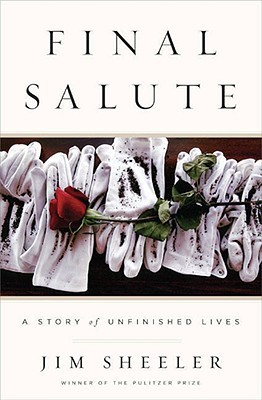
Final Salute: A Story of Unfinished Lives
Based on his Pulitzer Prize-winning story, Jim Sheeler’s unprecedented look at the way our country honors its dead; Final Salute Is a stunning tribute to the brave troops who have lost their lives in Iraq and Afghanistan and to the families who continue to mourn them
They are the troops that nobody wants to see, carrying a message that no military family ever wants to hear. It begins with a knock at the door. “The curtains pull away. They come to the door. And they know. They always know,” said Major Steve Beck.
Since the start of the war in Iraq, Marines like Major Beck found themselves thrown into a different kind of mission: casualty notification. It is a job Major Beck never asked for and one for which he received no training. They are given no set rules, only impersonal guidelines.
Marines are trained to kill, to break down doors, but casualty notification is a mission without weapons. For Beck, the mission meant learning each dead Marine’s name and nickname, touching the toys they grew up with and reading the letters they wrote home. He held grieving mothers in long embraces, absorbing their muffled cries into the dark blue shoulder of his uniform. He stitched himself into the fabric of their lives, in the simple hope that his compassion might help alleviate at least the smallest piece of their pain. Sometimes he returned home to his own family unable to keep from crying in the dark.
In Final Salute, Pulitzer Prize–winning journalist Jim Sheeler weaves together the stories of the fallen and of the broken homes they have left behind. It is also the story of Major Steve Beck and his unflagging efforts to help heal the wounds of those left grieving. Above all, it is a moving tribute to our troops, putting faces to the mostly anonymous names of our courageous heroes, and to the brave families who have made the ultimate sacrifice for this country. Final Salute is the achingly beautiful, devastatingly honest story of the true toll of war. After the knock on the door, the story has only begun.
They are the troops that nobody wants to see, carrying a message that no military family ever wants to hear. It begins with a knock at the door. “The curtains pull away. They come to the door. And they know. They always know,” said Major Steve Beck.
Since the start of the war in Iraq, Marines like Major Beck found themselves thrown into a different kind of mission: casualty notification. It is a job Major Beck never asked for and one for which he received no training. They are given no set rules, only impersonal guidelines.
Marines are trained to kill, to break down doors, but casualty notification is a mission without weapons. For Beck, the mission meant learning each dead Marine’s name and nickname, touching the toys they grew up with and reading the letters they wrote home. He held grieving mothers in long embraces, absorbing their muffled cries into the dark blue shoulder of his uniform. He stitched himself into the fabric of their lives, in the simple hope that his compassion might help alleviate at least the smallest piece of their pain. Sometimes he returned home to his own family unable to keep from crying in the dark.
In Final Salute, Pulitzer Prize–winning journalist Jim Sheeler weaves together the stories of the fallen and of the broken homes they have left behind. It is also the story of Major Steve Beck and his unflagging efforts to help heal the wounds of those left grieving. Above all, it is a moving tribute to our troops, putting faces to the mostly anonymous names of our courageous heroes, and to the brave families who have made the ultimate sacrifice for this country. Final Salute is the achingly beautiful, devastatingly honest story of the true toll of war. After the knock on the door, the story has only begun.
288 pages, Hardcover
First published January 1, 2008
Ratings & Reviews
Friends & Following
Create a free account to discover what your friends think of this book!
Community Reviews
Displaying 1 - 30 of 179 reviews

December 28, 2008
This book pretty much broke my heart.
Sheeler spent a lot of time with a Marine Corps casualty assistance officer, whose job it was to notify the families of soldiers who died in combat, and then followed up with those families (just as the CAO did) in the months ahead as the bodies came home for burial, and parents, spouses, and children tried to carry on with their lives. The book does not play politics where the war in Iraq is concerned, but it is a powerful reminder for every American of the sacrifices so many soldiers have made for us. (As the Marine officer points out, it's become easy for many people to become "detached" from this war, in the sense that they don't know anyone serving; Sheeler's reportage underscores the emotional cost of the deaths, forcing readers to confront the homefront realities thousands of families have already faced.)
Sheeler spent a lot of time with a Marine Corps casualty assistance officer, whose job it was to notify the families of soldiers who died in combat, and then followed up with those families (just as the CAO did) in the months ahead as the bodies came home for burial, and parents, spouses, and children tried to carry on with their lives. The book does not play politics where the war in Iraq is concerned, but it is a powerful reminder for every American of the sacrifices so many soldiers have made for us. (As the Marine officer points out, it's become easy for many people to become "detached" from this war, in the sense that they don't know anyone serving; Sheeler's reportage underscores the emotional cost of the deaths, forcing readers to confront the homefront realities thousands of families have already faced.)

May 22, 2008
I grew up in a small town in southern New Hampshire (Merrimack) and looking back on it now, a rather politically conservative town. Most of those political ideals were held in the hearts of the adults of the community and subsequently passed down on to their children. Though my parents were (are) fairly liberal in their views, my father being a conscientious objector during the Vietnam War. Upon graduating high school, several of my good friends decided that the military was the right decision for their lives, and soon after, 9/11 happened, and soon after that, war happened. I moved away soon after graduating and regrettably, in the seven years I been gone, I have not kept in touch with most of those friends. On January 26, 2005, Tim Gibson, 23, was killed near Ar Rutbah, Iraq, in a helicopter crash. Tim was from Merrimack and a friend of mine, a friend with whom I had shared both laughter and beer. While reading this book, I thought of Tim.
The author weaves a loose narrative sparked by the deaths of various soldiers, via the war in Iraq. He latches onto Major Steve Beck, a Marine casualty notifications officer. The book details the entire process, from notification, to bringing each body home, to burial, to the months and years afterward, documenting the effect of war on families and friends. The author doesn't seem to have any political agenda, and for the most part, neither do the families. It is primarily a meditation on national grief. I read many passages through blurred vision, though at times, I felt the author was leaning toward the maudlin, and rather than let the subject or situation carry itself (which it clearly can), he prodded it with unnecessary sentimentality, which I feel cheapened certain passages. But I also believe that this sentimentality was unintentional. He was walking a fine line and sometimes he crossed it, a fault that should be more attributed to his editor than him.
I think this book, as it has been previously stated in other reviews, is an important book for all Americans to read. I don't think it will change whatever view point you have of the war, but it will most certainly remind you of the consequences of war. And that is what this book aims to do: remind the United States that there is still a war going on, and that people are still dying, on both sides, civilians and soldiers, and that is something we should never forget. For those who have chosen to support this war, they should be reminded of the cost. For those who have chosen to object to this war, they should be reminded of their reason for that objection. For those who don't care either way, they should be reminded that they should care, because people are dying in a foreign land in the name of them and their country. And as hard as that is to comprehend, I mean really, truly understand, this book helped me cut through the desensitization, the numbing effect, that has taken hold of this country, and helped me actually feel something, to make this war real, to make its consequences real, to make death real, and not just a number in a newspaper article, or flickering light on a tv screen, but something that makes me think of Tim Gibson, spinning uncontrollably in the Iraqi air, heading toward a certain, fiery death, for me.
"The unintended consequence is a further detachment of the populace not seeing their fallen service member come home...I think that in many ways the people in this country are detached from the war---financially detached, emotionally detached. With the exception of their political stance---that's how they're attached---is what party they belong to. That young lance corporal, his politics don't mean anything. He's fighting for the guy next to him and for us."
-Major Steve Beck (pg 147)
The author weaves a loose narrative sparked by the deaths of various soldiers, via the war in Iraq. He latches onto Major Steve Beck, a Marine casualty notifications officer. The book details the entire process, from notification, to bringing each body home, to burial, to the months and years afterward, documenting the effect of war on families and friends. The author doesn't seem to have any political agenda, and for the most part, neither do the families. It is primarily a meditation on national grief. I read many passages through blurred vision, though at times, I felt the author was leaning toward the maudlin, and rather than let the subject or situation carry itself (which it clearly can), he prodded it with unnecessary sentimentality, which I feel cheapened certain passages. But I also believe that this sentimentality was unintentional. He was walking a fine line and sometimes he crossed it, a fault that should be more attributed to his editor than him.
I think this book, as it has been previously stated in other reviews, is an important book for all Americans to read. I don't think it will change whatever view point you have of the war, but it will most certainly remind you of the consequences of war. And that is what this book aims to do: remind the United States that there is still a war going on, and that people are still dying, on both sides, civilians and soldiers, and that is something we should never forget. For those who have chosen to support this war, they should be reminded of the cost. For those who have chosen to object to this war, they should be reminded of their reason for that objection. For those who don't care either way, they should be reminded that they should care, because people are dying in a foreign land in the name of them and their country. And as hard as that is to comprehend, I mean really, truly understand, this book helped me cut through the desensitization, the numbing effect, that has taken hold of this country, and helped me actually feel something, to make this war real, to make its consequences real, to make death real, and not just a number in a newspaper article, or flickering light on a tv screen, but something that makes me think of Tim Gibson, spinning uncontrollably in the Iraqi air, heading toward a certain, fiery death, for me.
"The unintended consequence is a further detachment of the populace not seeing their fallen service member come home...I think that in many ways the people in this country are detached from the war---financially detached, emotionally detached. With the exception of their political stance---that's how they're attached---is what party they belong to. That young lance corporal, his politics don't mean anything. He's fighting for the guy next to him and for us."
-Major Steve Beck (pg 147)

October 29, 2008
First, let me start by saying that I could not read more than one chapter on the train home from work. After a few pages, the tears would start falling and I would have to put the book away.
There was one page that I reread a few times since it really made me think...
"....The unintended consequence is a further detachment of the populace not seeing their fallen service member come home, he said. I think that in many ways the people in this country are detached from the war - financially detached, emotionally detached. With the exception of their political stance - that's how their attached - what party they belong to. That young lance corporal, his politics don't mean anything. He is fighting for the guy next to him and for us....We consider these men and women who go forward to fight for us the lifeblood of our country, national treasures. When we lose something, we lose something important and we should feel it. If you don't feel this loss in some way, I am not sure you're American, frankly, he said. When I hand that flag to them and say, "On behalf of a grateful nation", it is suppose to mean something. If (the public) is emotionally detached in some way, I don't know how grateful they really are. Politics aside, is the nation grateful for that loss? If they're emotionally detached, its almost - it's almost criminal..."
I do not know anyone personally that is fighting in the war, I am going on day by day pretty much uneffected in my every day life. Yes, I follow the news...and yes, I just made a donation to the RI Care Packages fo Troops. But,really...I am detached from it...
After reading this book, I was able to see the sacrifices these men and women AND their families make on a daily basis. I don't have lie in bed night after night hoping that I don't get that knock on the door. I don't know how these families do it day after day...night after night.
God Bless them...and may they all come home soon.
There was one page that I reread a few times since it really made me think...
"....The unintended consequence is a further detachment of the populace not seeing their fallen service member come home, he said. I think that in many ways the people in this country are detached from the war - financially detached, emotionally detached. With the exception of their political stance - that's how their attached - what party they belong to. That young lance corporal, his politics don't mean anything. He is fighting for the guy next to him and for us....We consider these men and women who go forward to fight for us the lifeblood of our country, national treasures. When we lose something, we lose something important and we should feel it. If you don't feel this loss in some way, I am not sure you're American, frankly, he said. When I hand that flag to them and say, "On behalf of a grateful nation", it is suppose to mean something. If (the public) is emotionally detached in some way, I don't know how grateful they really are. Politics aside, is the nation grateful for that loss? If they're emotionally detached, its almost - it's almost criminal..."
I do not know anyone personally that is fighting in the war, I am going on day by day pretty much uneffected in my every day life. Yes, I follow the news...and yes, I just made a donation to the RI Care Packages fo Troops. But,really...I am detached from it...
After reading this book, I was able to see the sacrifices these men and women AND their families make on a daily basis. I don't have lie in bed night after night hoping that I don't get that knock on the door. I don't know how these families do it day after day...night after night.
God Bless them...and may they all come home soon.

August 7, 2008
There are no words to describe how I felt reading this book. I read it over two days traveling home to RI for a visit...I was crying at home, in the airport and on the plane. I had read Jim Sheeler's article and seen the pictures that accompanied it and I knew I had to read this book. Not just about Marines who had given their lives, but service members from other branches as well. We see everything from the knock on the door of a young pregnant wife, to how the casualty assistance officer feels at night with his own family, to a visual of a young sailor escorting his best friend's casket off an airplane...because his friend's request was if something happened to him that his best friend be the first to take him home...
I gave this to my father, a retired Marine, to read and although he said it was 'tough stuff' I don't think he had the same impression I did. I felt like I could truly feel everything happening to each family member and it was beautifully written. I knew it would be an emotional read, but I think it's not only a must for any military family - but for everyone.
I gave this to my father, a retired Marine, to read and although he said it was 'tough stuff' I don't think he had the same impression I did. I felt like I could truly feel everything happening to each family member and it was beautifully written. I knew it would be an emotional read, but I think it's not only a must for any military family - but for everyone.
June 29, 2009
This was one of those books that makes me think that we don't just choose books, but they choose us. I read the cover at the BX, and almost got all choked up right in the aisle. This book is about the deaths of soldiers in Iraq and Afghanistan and the echoes of that pain through the lives of their families. I believe death is the mirror that shows us who we are most faithfully, and this book reaffirmed that. I don't think I have ever read a book that made me cry this much. The writing was absolutely beautiful and painful. My Dad is now crying his way through it, and once Katie is done with it, I'm going to send it to Kevin at Marine Corp Officer Candidate School so he can see what he's getting himself into. Recommended in the strongest terms to all my friends.
September 12, 2021
In the Author's Note at the end, Jim Sheeler writes about anticipating meeting Major Beck and wondering how they would relate, as their backgrounds were dissimilar. "An editor at the news paper pointed out a crucial similarity she said she saw in both Beck and myself [Sheeler]. "You have caring in common," she said."
This book is full of caring, especially for those left behind and for preserving the memory of the brave who have fallen. We need to continue to remember those who have given their lives for our country. Major Beck says this about medals awarded posthumously, "It's not an ending. It's not a period at the end of their lives. It's a semicolon. The story will continue to be told."
This book is full of caring, especially for those left behind and for preserving the memory of the brave who have fallen. We need to continue to remember those who have given their lives for our country. Major Beck says this about medals awarded posthumously, "It's not an ending. It's not a period at the end of their lives. It's a semicolon. The story will continue to be told."

July 15, 2008
In Final Salute, the author writes about a topic so sensitive and emotionally upsetting that you'll need a box of tissue to read this book. The topic is casualty notification in which a military officer has to knock on the door of a family whose loved one has died in the war. The author has interviewed both Major Beck (whose job is casualty notification) and the families who had to answer his knock on the door. They talk about how their lives have become affected by the news they received and I'm glad this book was written because I feel this is the part of the war that fails to get enough attention. These soldiers have made the ultimate sacrifice for our country with their lives and I think there is not enough we can do for their families.

October 15, 2024
Sort of like "With The End in Mind", this one hits hard emotionally. That being said, I still had a few takeaways from this one both quotes from these casualty officers AND some stats that jumped out to me. Great book, highly recommended.
- Every door is different. Some are ornately hand-carved hardwood; some are hollow tin. Some are protected by elaborate security systems, some by flapping screens. The doors are all that stand between a family and the message.
- Although no firm instructions can be given to cover the varied and sometimes difficult situations that may arise when making personal notifications, the following guidance applies:
1. The visit may last as long as necessary; however, remain cognizant of the next of kin (NOK)’s right to privacy and do not remain longer than necessary2. Before beginning notification, verbally verify that the correct person is being addressed.3. If the NOK does not offer entrance into the home, ask permission to enter. It is helpful if the NOK is seated prior to delivering the news.4. Use good judgment and do not pass gory or embarrassing details.5. When addressing the casualty’s family, make every effort to display an understanding and helpful demeanor which will give comfort to a bereaved family6. Speak naturally and at a normal pace. An overly formal approach or a flippant manner may seriously damage the Marine Corps’ reputation with the family, and possibly an entire community. The following is suggested and may be modified as appropriate: DEATH CASES: "The Commandant of the Marine Corps has entrusted me to express his deep regret that your (relationship), John, (died/was killed in action) in (place of incident) (city/state or country) on (date). (State the circumstances.) The Commandant extends his deepest sympathy to you and your family in your loss.”
- He watched as an unborn child-lost to a miscarriage shortly after the baby’s father was killed in action-was buried in a grave they had to reopen, so the baby and the soldier could be buried together. At night one of the dead Marines’ brothers would sneak in and lie down for hours on the freshly turned soil.
- Nine months after her husband’s death, she logged on to a Web site called fallenheroesmemorial.com, where people from around the nation have posted tributes to her husband. Alone in the basement that night, she began to type: Jesse, hey baby...just when I think it’s going to get a little better it starts to hurt so bad again.... Dakota and I talk about heaven and I tell him you are there waiting for us, he wanted you to ask God that when he gets to go there if he can be a little boy again so you can give him piggy back rides. He also asked if they have parks there so the two of you can play. He told me that he was sorry he wasn’t being good the last time you took him to the park. I tell him it’s ok and you understand and he can tell you when he gets there.... Through my tears I can’t see to type anymore....
- ’Everywhere you go, you’re there for a reason,’ ” she said. " ’You’re either there to help somebody, or they’re there to help you.’ ”
- "We consider these men and women who go forward to fight for us the lifeblood of our country, national treasures. When we lose something, we lose something important, and we should feel it. If you don’t feel this loss in some way, I’m not so sure you’re an American, frankly,” he said. "When I hand that flag to them and say, ’On behalf of a grateful nation,’ it’s supposed to mean something. If {the public} is emotionally detached in some way, I don’t know how grateful they really are. Politics aside, is the nation grateful for that loss? If they’re emotionally detached, it’s almost— It’s almost criminal.”
- At the beginning of World War II, corpsmen and Army medics wore red crosses on their uniforms. That stopped when the enemy began using the crosses as targets, knowing that the servicemen would do anything to save their medics. These days the corpsmen wear the Marines’ digital camouflage and carry full weaponry while in combat zones. Still, as the tombstones reflect, they remain primary targets. Since September. 11, 2001, Navy corpsmen have comprised more than one-third of all Navy casualties.
- Every door is different. Some are ornately hand-carved hardwood; some are hollow tin. Some are protected by elaborate security systems, some by flapping screens. The doors are all that stand between a family and the message.
- Although no firm instructions can be given to cover the varied and sometimes difficult situations that may arise when making personal notifications, the following guidance applies:
1. The visit may last as long as necessary; however, remain cognizant of the next of kin (NOK)’s right to privacy and do not remain longer than necessary2. Before beginning notification, verbally verify that the correct person is being addressed.3. If the NOK does not offer entrance into the home, ask permission to enter. It is helpful if the NOK is seated prior to delivering the news.4. Use good judgment and do not pass gory or embarrassing details.5. When addressing the casualty’s family, make every effort to display an understanding and helpful demeanor which will give comfort to a bereaved family6. Speak naturally and at a normal pace. An overly formal approach or a flippant manner may seriously damage the Marine Corps’ reputation with the family, and possibly an entire community. The following is suggested and may be modified as appropriate: DEATH CASES: "The Commandant of the Marine Corps has entrusted me to express his deep regret that your (relationship), John, (died/was killed in action) in (place of incident) (city/state or country) on (date). (State the circumstances.) The Commandant extends his deepest sympathy to you and your family in your loss.”
- He watched as an unborn child-lost to a miscarriage shortly after the baby’s father was killed in action-was buried in a grave they had to reopen, so the baby and the soldier could be buried together. At night one of the dead Marines’ brothers would sneak in and lie down for hours on the freshly turned soil.
- Nine months after her husband’s death, she logged on to a Web site called fallenheroesmemorial.com, where people from around the nation have posted tributes to her husband. Alone in the basement that night, she began to type: Jesse, hey baby...just when I think it’s going to get a little better it starts to hurt so bad again.... Dakota and I talk about heaven and I tell him you are there waiting for us, he wanted you to ask God that when he gets to go there if he can be a little boy again so you can give him piggy back rides. He also asked if they have parks there so the two of you can play. He told me that he was sorry he wasn’t being good the last time you took him to the park. I tell him it’s ok and you understand and he can tell you when he gets there.... Through my tears I can’t see to type anymore....
- ’Everywhere you go, you’re there for a reason,’ ” she said. " ’You’re either there to help somebody, or they’re there to help you.’ ”
- "We consider these men and women who go forward to fight for us the lifeblood of our country, national treasures. When we lose something, we lose something important, and we should feel it. If you don’t feel this loss in some way, I’m not so sure you’re an American, frankly,” he said. "When I hand that flag to them and say, ’On behalf of a grateful nation,’ it’s supposed to mean something. If {the public} is emotionally detached in some way, I don’t know how grateful they really are. Politics aside, is the nation grateful for that loss? If they’re emotionally detached, it’s almost— It’s almost criminal.”
- At the beginning of World War II, corpsmen and Army medics wore red crosses on their uniforms. That stopped when the enemy began using the crosses as targets, knowing that the servicemen would do anything to save their medics. These days the corpsmen wear the Marines’ digital camouflage and carry full weaponry while in combat zones. Still, as the tombstones reflect, they remain primary targets. Since September. 11, 2001, Navy corpsmen have comprised more than one-third of all Navy casualties.

October 12, 2011
This review originally appeared in the International Cemetery, Cremation & Funeral Magazine.
Interviewed on a TV talk show last year, First Lady Laura Bush said that “no one suffers more” over Iraq that she and her husband do. Someone should send her FINAL SALUTE: A Story of Unfinished Lives by Pulitzer Prize winning author Jim Sheeler. The stupendous suffering of those who have lost loved ones in Iraq is overwhelming, to the point where this is a hard book to read. No matter what your political stance is, it is important to acknowledge the price that some Americans have had to pay. “I’ve had people tell me to get over it,” a bereaved mother says. “I politely tell them, ‘How about if I chop off your finger and see if it grows back?’”
An in-depth account of five Marines killed in combat and their families, from their demise through the funerals, this book is sensitive and personal, exhibiting the full force of the Marine ethos that no Marine is ever left behind. The officers who work with the families to organize the funerals are as good as any professional funeral director or cemetarian. Occasionally you read reports in the media of neglected military families, or dicey handling of soldiers’ remains. None of these slipups appear in this book, which instead focuses on when everything is right.
An officer helping with a funeral reflects, “’Even some of our Marines say, ‘Why are we doing this to the families? Why do you have to keep reminding them?’ [His reply is,] ‘This isn’t about reminding them. This is about reminding you.’”
Although people think of military ceremonies as highly ritualized, the enormous variety and personalization of military funerals can be seen here. None of these funerals are alike: the Lakota Sioux ceremonies which last a full year; the pregnant wife sleeping for the last time in the viewing room beside her husband’s casket.
This is a superb book that every American should read. And the thoughtful cemetery and funeral professional could derive a lot of inspiration from the care that the military gives to its own.
Interviewed on a TV talk show last year, First Lady Laura Bush said that “no one suffers more” over Iraq that she and her husband do. Someone should send her FINAL SALUTE: A Story of Unfinished Lives by Pulitzer Prize winning author Jim Sheeler. The stupendous suffering of those who have lost loved ones in Iraq is overwhelming, to the point where this is a hard book to read. No matter what your political stance is, it is important to acknowledge the price that some Americans have had to pay. “I’ve had people tell me to get over it,” a bereaved mother says. “I politely tell them, ‘How about if I chop off your finger and see if it grows back?’”
An in-depth account of five Marines killed in combat and their families, from their demise through the funerals, this book is sensitive and personal, exhibiting the full force of the Marine ethos that no Marine is ever left behind. The officers who work with the families to organize the funerals are as good as any professional funeral director or cemetarian. Occasionally you read reports in the media of neglected military families, or dicey handling of soldiers’ remains. None of these slipups appear in this book, which instead focuses on when everything is right.
An officer helping with a funeral reflects, “’Even some of our Marines say, ‘Why are we doing this to the families? Why do you have to keep reminding them?’ [His reply is,] ‘This isn’t about reminding them. This is about reminding you.’”
Although people think of military ceremonies as highly ritualized, the enormous variety and personalization of military funerals can be seen here. None of these funerals are alike: the Lakota Sioux ceremonies which last a full year; the pregnant wife sleeping for the last time in the viewing room beside her husband’s casket.
This is a superb book that every American should read. And the thoughtful cemetery and funeral professional could derive a lot of inspiration from the care that the military gives to its own.

August 5, 2010
If you have not heard of the book, you might recall hearing about the author. His name is Jim Sheeler, the winner of the 2006 Pulitzer Prize for Feature Writing. When I picked up this book I immediately recognized it was the same Major Steve Beck that I had read about a few years ago, in my Sunday paper. Major Beck, a causality assistance calls officer in the US Marine Corp, had organized “Remembering The Brave” ceremony for the families in honor of their fallen loved one.
When you first pick this book up, chances are you will be drawn to the photographs. But once you start reading, connecting the names, the places and the people that this book is about , that is when you will understand why I had to read this book in stages. The stories are so personal that no reader will be able to continue with tear filled eyes. So be prepared to put the book down quite a bit.
I would recommend this as required reading for every American. It does not matter if you are for or against the war.This book is about the lives of those that protect ours. Please read this book.
When you first pick this book up, chances are you will be drawn to the photographs. But once you start reading, connecting the names, the places and the people that this book is about , that is when you will understand why I had to read this book in stages. The stories are so personal that no reader will be able to continue with tear filled eyes. So be prepared to put the book down quite a bit.
I would recommend this as required reading for every American. It does not matter if you are for or against the war.This book is about the lives of those that protect ours. Please read this book.
July 16, 2009
Heartbreaking and powerful and definitely worth the read. The book captures the devastating cost of going to war. It removes the politics of war and exposes the raw emotions experienced by the military families of fallen soldiers. It's a shame how little the American public recognizes the sacrifices our soldiers and their families make. After reading this book, I am now more consciously aware of the sacrifices and have a deeper appreciation for what the servicemen/women do.

May 25, 2015
Had no idea this guy is in my backyard. Based on his Pulitzer-winning newspaper stories about how the U.S. buries its military dead, this book is a gut punch and highly recommended for anyone who wants to know the process and understand better the pain military families experience when their soldier loved ones die.

Read
November 8, 2025A sobering look at the invisible burden carried by both those who deliver and receive the haunting “knock.” Highly recommend in advance of Veterans Day.

January 18, 2011
Final Salute was a very emotional read of soldiers from Colorado who had died in action in Iraq whose remains were brought home with military escorts to be buried and remembered. The author, Jim Sheeler, a reporter with Denver's Rocky Mountain News, won a Pulitzer prize in Feature Writing for this book, and his sincerity and focus in following officers assigned to tell the news to families, escort the body through transit, funeral, and burial was telling. He then followed certain families up to a year or more later in describing how they coped as time passed.
While I'd rate the content four or five stars, it was marred by a somewhat bewildering skipping from one setting to another and back again and again. I think it was because many of these chapters were perhaps originally presented as serial offerings in the newspaper, and pulling it into a more seamless narrative just didn't quite come together.
That aside, what gives this book such power is that these individuals are not "public" personalities. Most often, they are from modest backgrounds, with families left to cope without real assets to fall back on. Being young, it is tragic that their lives' trajectories are cut short, and often small children and babies are left without one of their parents. These stories then are glimpses into a non-glamorous level of society we don't normally see on TV, or at least be given celebrity status, so it is bypassed except for the circumstances of loss. Similar to one not realizing how many folks live in trailers except when a tornado roars through a community and we see the aftermath on the news.
One group I don't know well are American Indians, and many soldiers in Colorado come from nearby reservations. Their culture's recognition of "warriors" and an "afterlife" were powerfully described, perhaps even more sharply brought into focus when the rituals and care shown are set against all the social ills found on reservations. In one sweat lodge ceremony providing a farewell to one soldier - "In the Lakota language, there is no word for good-bye" - an elder pointed to the rocks that were heated, then covered with water to create steam, and in the process, some cracked. "In some ways, the rocks are like people ... You can only use them a certain amount of times before they break."
While I'd rate the content four or five stars, it was marred by a somewhat bewildering skipping from one setting to another and back again and again. I think it was because many of these chapters were perhaps originally presented as serial offerings in the newspaper, and pulling it into a more seamless narrative just didn't quite come together.
That aside, what gives this book such power is that these individuals are not "public" personalities. Most often, they are from modest backgrounds, with families left to cope without real assets to fall back on. Being young, it is tragic that their lives' trajectories are cut short, and often small children and babies are left without one of their parents. These stories then are glimpses into a non-glamorous level of society we don't normally see on TV, or at least be given celebrity status, so it is bypassed except for the circumstances of loss. Similar to one not realizing how many folks live in trailers except when a tornado roars through a community and we see the aftermath on the news.
One group I don't know well are American Indians, and many soldiers in Colorado come from nearby reservations. Their culture's recognition of "warriors" and an "afterlife" were powerfully described, perhaps even more sharply brought into focus when the rituals and care shown are set against all the social ills found on reservations. In one sweat lodge ceremony providing a farewell to one soldier - "In the Lakota language, there is no word for good-bye" - an elder pointed to the rocks that were heated, then covered with water to create steam, and in the process, some cracked. "In some ways, the rocks are like people ... You can only use them a certain amount of times before they break."

December 22, 2008
Heartbreaking book about the reality of our troops not coming home, Casualty Notification and the aftermath for the soldiers families and friends. Marine Staff Sergeant Kevin Thomas was quoted in the book to say "You always here all these statements like "Freedom isn't free." You hear the President talking about all these people making sacrifices. But you never really know until you carry one of them in the casket. When you feel their body weight. When you feel them, That's when you know. That's when you understand." For most people reading this book will be the closest they get to understanding. It will make you realize how disconnected you are from the war going on right now and hopefully make you think of "What can I do?" Final Salute is a must read for every American and should be required reading for every President. No matter what we think about the war in Iraq, we need to remember the troops. We need to support them and honor them.
August 20, 2021
How do you handle the job of being the Marie officer charged with visiting families in person to tell them that their loved-one has been killed in combat? Major Steve Beck relates the gut- wrenching stories of the families he visited. Parents who lost a son- Pregnant wives whose children will never know their father- Acts of unappreciated heroism.
Since many of the casualties occurred in Iraq and Afghanistan, this narrative takes on an added meaning as we currently are dealing with the abrupt end of American presence in Afghanistan.
What about the 2500 men and women who died during that 20 year conflict?
This book in some way is a tribute to them it should go on from here. These are, as author Jim Sheeler notes are" unfinished lives."
Since many of the casualties occurred in Iraq and Afghanistan, this narrative takes on an added meaning as we currently are dealing with the abrupt end of American presence in Afghanistan.
What about the 2500 men and women who died during that 20 year conflict?
This book in some way is a tribute to them it should go on from here. These are, as author Jim Sheeler notes are" unfinished lives."
July 31, 2009
My youngest brother is a US Marine, and I read this book earlier this year, just before I learned he was going to be deployed to Afghanistan. The author follows a Marine officer whose job it is to make that horrible, dreaded knock on the door to notify a family of their Marine's death; he chronicles the officer's involvement in that family's life, as well as paying tribute to their fallen Marine. It's very well done; touching without sounding hollow in the least. I read it with tears running down my face for a good two-thirds of the book. I've since passed it on to another brother of mine and would highly recommend it to everyone who says they support our troops.

August 5, 2011
At times this book can leave you heartbroken and a bit emotionally drained, but it is definitely worth the read. Throughout the war, I never even imagined the soldiers who have to notify families of their loved ones death. This book follows an upstanding marine on notification duty and at least four families of fallen soldiers. I appreciated reading about the respect given to fallen soldiers as they are escorted home to their final resting place. This book allowed me to see a different side to the war, which made me humble and very thankful for the sacrifices that are made in the name of freedom.

June 15, 2014
I'm not even sure how to review this book. It was hard to read. Really hard. I could only go a few pages at a time before I had to put it down so I could keep myself from crying. I probably could have stomached it before I had children, but as a mother I cannot read about soldiers dying without imagining my own boys coming home in boxes.
Worthwhile? God, yes. In fact I think anyone considering serving should have to read this before signing up. I think anyone who votes should probably read this book. You wanna know what the cost of service is? The cost of war? Sheeler's captured it right here.
Worthwhile? God, yes. In fact I think anyone considering serving should have to read this before signing up. I think anyone who votes should probably read this book. You wanna know what the cost of service is? The cost of war? Sheeler's captured it right here.

July 13, 2009
Regardless of how one feels about the war in Iraq, this book makes compelling reading and prompts reflection on the human cost of the conflict, at least from the American perspective. Simply yet movingly written, this is a collection of stories about the military officers charged with the unenviable task of notifying the next-of-kin when a service member is killed. I bought it in the hardbound edition, could hardly put it down, will probably reread it at some point, and have recommended it to my 15-year-old daughter, who is only now discovering the benefits of reading.

September 26, 2012
Snowy weekend book #2: Final Salute: A Journey of Unfinished Lives by Jim Sheeler. If you plan on reading this, make sure you have a box of tissues at hand because it’s an emotional ride of a book. Sheeler gives a detailed look at the people who have to deliver the worst possible news and what happens to the grieving families in the aftermath of receiving the news that nobody wants. It’s a glimpse into an experience I don’t wish on anyone, but one that I’m glad I’m a bit more aware of, if only so I can be more understanding.

April 28, 2009
So I cried throughout the whole book as I was driving and listening at the same time.
I really appreciated the stories and the people behind the stories, just felt a little obligated to like the book. Not sure how to review this book and remain politically correct. Not some of my favorite writing.
I really appreciated the stories and the people behind the stories, just felt a little obligated to like the book. Not sure how to review this book and remain politically correct. Not some of my favorite writing.
October 11, 2011
Well, based on the content of the book, I would give it 5 stars, but based on the way it was written 3 stars. The way the book was organized made it hard to follow the story of each fallen soldier. I wish the sections had been split up by person instead of jumping around. This was definitely an emotional read and a story that needed to be told.

October 6, 2012
This book is not particularly well written but that said, I am glad I listened to it. Warning -- it is sad. The unfinished lives are those of US military personnel killed in the Middle East. The authors uses interviews with the soldiers who deliver the news to the families, the families, and, occassionally, someone who served with the deceased.

January 9, 2010
This is an interesting book, and theoretically a good one... but you will need a nearly bottomless appetite for schmaltz, and not an atom of cynicism in your body, if you hope to get through it without a hearty dose of forehead slapping and/or eye rolling to accompany all of the tear jerking.

December 28, 2011
This is a solid book. The subject matter is very moving and (unfortunately) overlooked. (I suspect the HBO movie Taking Chance was inspired by this book.) I would recommend first reading The Good Soldiers (by David Finkel) and In a Time of War (by Bill Murphy, Jr.).
September 18, 2014
I could not read this book until my son came home from his second tour in Afghanistan. Anyone who does not appreciate the sacrifices of our military and their families should read this book, then maybe they would not go around protesting military funerals.
May 29, 2008
A must read by anyone who wants to get a close look at the tragedy within the families, friends, and soldiers of our fallen soldiers in this wasteful war this country is in.
June 2, 2008
It doesn't matter how you feel about war, this book gives us a view into the price families pay and how some soliders have reached out to those families. Really a moving perspective on war.
November 17, 2009
If you don’t feel honor and respect for in living in the U.S.A. after this book, you should probably move. Stopped reading many times to fight back the tears.
Displaying 1 - 30 of 179 reviews