نک و نال از بهترین رمانهای ایرلندی قرن بیستم «یکوقتی تو این شهرستان مردی زندگی میکرد به اسم سیتریک اُساناسّا. شکارچی خیلی خوبی بود. خیلی هم دستودلباز بود و هر چی اخلاق خوب هست که به آدم عزت و احترام بدهد، سیتریک داشت. ولی حیف! سیتریک به یک چیز دیگر هم معروف بود، اینکه تهِ فقر و نداری و گرسنگی و بدبختی بود. خیلی دستودلباز بود؛ حتا کمترین چیزش را هم با همسایهها قسمت میکرد، ولی یادم نمیآید اصلاً چیزی داشته باشد. حتا آن یکخرده سیبزمینی را هم که لازم است که با آن روح و تن آدم به هم وصل بماند، نداشت. وضعاش جوری بود که تو کوردکادوراگا که همه تا سر تو نداری غرق هستند، به او میگفتیم صدقهبگیر و بیچاره. آقای شیکوپیکی که با ماشین از دوبلین آمده بود که به آسوپاسهای اینجا سرکشی کند، از سیتریک بهخاطر نداری و فقر گِیلیاش حسابی تعریف میکرد و میگفت تا حالا کسی را ندیده که اینقدر گِیلی واقعی باشد و اینقدر نداشته باشد که بخورد. یکی از آقایان محترم بطری آب کوچک سیتریک را شکست چون میگفت داشتن آن یک بطری میزند وجههٔ ندارش را خراب میکند. چون تو کل ایرلند هیچکس بهقدر سیتریک اُساناسّا ندار نبود.» (از متن کتاب)
His English novels appeared under the name of Flann O’Brien, while his great Irish novel and his newspaper column (which appeared from 1940 to 1966) were signed Myles na gCopaleen or Myles na Gopaleen – the second being a phonetic rendering of the first. One of twelve brothers and sisters, he was born in 1911 in Strabane, County Tyrone, into an Irish-speaking family. His father had learned Irish while a young man during the Gaelic revival the son was later to mock. O’Brien’s childhood has been described as happy, though somewhat insular, as the language spoken at home was not that spoken by their neighbours. The Irish language had long been in decline, and Strabane was not in an Irish-speaking part of the country. The family moved frequently during O’Brien’s childhood, finally settling in Dublin in 1925. Four years later O’Brien took up study in University College Dublin.
Flann O'Brien is considered a major figure in twentieth century Irish literature. Flann O'Brien novels have attracted a wide following for their bizarre humour and Modernist metafiction.
The café and shop of Cultúrlann McAdam Ó Fiaich (www.culturlann.ie), at the heart of the Belfast Gaeltacht Quarter, is named An Ceathrú Póilí ("The Fourth Policeman"), as a play-on-words of the title of O'Brien's book The Third Policeman.
I have quite the man-crush on Flann O’Brien. Call it a bro-mance if you wish. I’m making my way through all his work, including his newspaper columns. There’s something so anti-twenty-first-century about his use of multiple pseudonyms and personas in our look-at-me-age of “FACEBOOK STATUS: Pooping right now.” Here we have Brian O’Nolan who wrote his novels as Flann O’Brien and his newspaper column as a character Myles na Gopaleen (think mid-century Stephen Colbert). He even allegedly wrote letters to the editor under further pseudonyms complaining about his own writing.
He was a civil servant helping to support 10 brothers and sisters, and I believe never married. I picture him in grimy pubs, listening quietly to the voices around him as he drinks far too many tumblers of whiskey and smokes his teeth to the gums before walking steadily home, one foot in front of the other.
Above all, O’Brien is so goddamn funny he breaks the rules of goddamn respectable literature. Middle finger to conformity! And yet Joyce loved him. I think one element of his humor is a stoic acceptance of the unacceptable. Life is just so fucked up, and yet the likes of it shall never be seen again. Another element is a keen eye for the ridiculous in human nature.
Another quality that endears me to O’Brien: He was a risk-taker. He was an experimentalist who somehow kept one foot grounded in dirty reality. Most of his novels have meta-fictional qualities that pre-date post-modernism (or post-date pre-modernism, as the case may be.) Whether it’s acknowledging the author, reusing scenes or characters from previous novels, having characters who admit they’re fictional, or fictionalizing real people, O’Brien pushed the boundaries. Realistic narratives and characters are difficult to pull off, yes, great job. But I admire even more the author who can pull off an original form…i.e. ART…without being cold, abstract and irritatingly confusing.
He was also a lover of language who crafts his grammar and language with precision. The book in question here, The Poor Mouth, was originally written in (so the translation indicates) beautiful Gaelic. There is an effable quality of the punch in the mouth from O’Brien. His love and anger come across in every sentence. And yet, there is a sense of humility as well. That steady walk home that we all take, walking steadily to our deaths.
The Poor Mouth is one of O’Brien’s less meta-fictional novels although it definitely exceeds realism into a state of satire. It’s couched as the autobiographical story of one of the poorest Gaels in all of Gaeltacht, one Bonaparte O’Coonassa. Although, everyone in town is so poor that …well, that they’re Irish. It’s ridiculously funny until at the very end when the weight of the poverty sinks into tragedy at the hands of the English. It rains every day and night, they sleep with the pigs and cows, and they eat nothing but spuds. It’s a Gaelic life for me.
Here is a sample to whet your appetite:
I was born in the West of Ireland on that awful winter’s night—may we all be healthy and safe!—in the place called Corkadoragha and in the townland named Lisnabrawshkeen. I was very young at the time I was born and had not aged even a single day; for half a year I did not perceive anything about me and did not know one person from the other. Wisdom and understanding, nevertheless, come steadily, solidly and stealthily into the mind of every human being and I spent that year on the broad of my back, my eyes darting here and there at my environment. I noticed my mother in the house before me, a decent, hefty, big-boned woman; a silent, cross, big-breasted woman. She seldom spoke to me and often struck me when I screamed in the end of the house. The beating was of little use in stopping the tumult because the second tumult was worse than the first one and, if I received a further beating, the third tumult was worse than the second one. However, my mother was sensible, level-headed and well-fed; her like will not be there again.
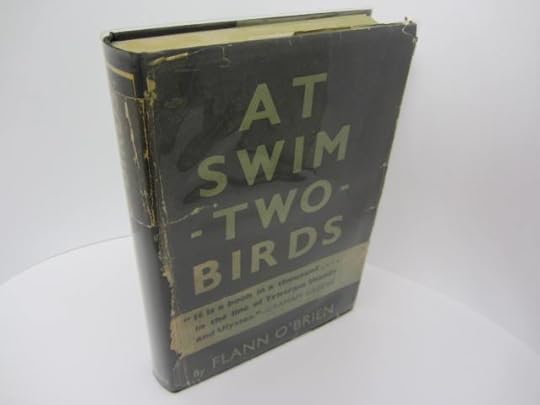
I leave you with the same recommendations I made in my other O’Brien review (http://www.goodreads.com/book/show/98...). If you only have time for one book, At Swim-Two-Birds is his masterpiece. If I could read them all over again like a virgin, touched for the very first time—I’d read The Dalkey Archive first, followed by The Third Policemen (where he gets supremely weird), followed by At Swim. The Hard Life is quite hilarious too…oh, see I can’t stop.
This tiny funny bitter black book is a parody of some stuff none of us are likely to have read but that doesn’t matter at all. At one point in Ireland there was an idea that the purest most Irish of all Irish people were the ones who still spoke Gaelic and didn’t speak any English at all; and since all Irish people were tragically poor and ate only potatoes these Gaelic people were naturally even poorer than other Irish people and ate even more potatoes. There was a craze for Dublin people to visit and condescend to these hapless Gaels who of course lived in the most remote western part where it rained torrentially every single day instead of every other day as in the rest of Ireland. So this is a tale of extreme poverty and extreme Irishness.
Here’s a flavour of the kind of acidulous humour in this cruel little tale. Our narrator’s first day of school does not go well. The teacher bawls at him in English “What is your name?”. A kid kindly translates this for him.
I looked politely at the master and replied to him: - Bonaparte, son of Michaelangelo, son of Peter, son of Owen, son of Thomas’s Sarah, grand-daughter of John’s Mary, grand-daughter of James, son of Dermot… Before I had uttered or half-uttered my name, a rabid bark issued from the master and he beckoned me with his finger. By the time I had reached him, he had an oar in his grasp. Anger had come over him in a flood-tide at this stage and he had a business-like grip of the oar in his two hands. He drew it over his shoulder and brought it down hard upon me with a swish of air, dealing me a destructive blow on the skull. I fainted from that blow but before I became totally unconscious I heard him scream: - Yer name, said he, is Jams O’Donnell! …He continued in this manner until every creature in the school had been struck down by him and all had been named Jams O’Donnell. No young skull in the countryside remained unsplit that day. Of course, there were many unable to walk by the afternoon and were transported home by relatives.
4 stars – this was my kind of thing. But may I add that if you’re going to read one book by Flann O’Brien it should be At Swim-Two-Birds, that one is genius.
Yesyesyes! Flawless, hilarious, scathing, blistering satire* of Irish/English colonialism of the Gaels and the Gaelic tongue. The funniest book you will read this or any other day. Not a rib-tickler or a knee-slapper but a whole body- and soul-shaker. Books like this make you glad to be a human being, alive and well and of unsound mind. Can you tell I liked it? Read this book. It's not even very long. Laughter destroys empires and pierces little lethal holes in the armor of imposed ideologies, languages, cultures.
Not long ago I met a man in the end of my house named Jams O’Donnell, and upon reading The Poor Mouth he laughed himself right out of his breeches and rolled about the rushes that were the makings of my wretched floor. Later, after a time wandering the beauteous country and hills of vast Erin, it occurred to me that this was no man at all, but a pink pig dressed up in someone’s Sunday finest. I thought to myself, “The likes of this Jams O’Donnell will never be seen again.”
*For a similar attack/approach, but aimed at the New York art scene, see Gil Sorrentino’s Imaginative Qualities of Actual Things. It’s the only comparably sustained, hilarious satire that comes to mind. I think Sorrentino learned a great deal from this here Poor Mouth.
Флэнн о'Брайан - один из столпов ирландской литературы, наряду с Джойсом и Бэккетом. Но понять его, в частности "Поющие Лазаря или На редкость бедные люди" дано не каждому, а лишь тому, кто хорошо знаком с национальной литературой (намного глубже, чем только Джойс и Бэккет), культурой, историей и, пожалуй, состоянием общества. Жизнеописание Бонапарта о'Кунаса в деревне Корка Дорха - это едкая сатира, если не издевательство над событиями и авторами, работавшими в рамках "Гэльского возрождения". О данном движении я узнала только после прочтения романа и ощущения, что я не поняла о чем он. Я отдаю должное языку и стилю, но не могу судить о том, что является предметом насмешек романа. Поэтому моя оценка, очевидно, необъективна по отношению к самому произведению, она лишь отражает то смятение, которое вызвало во мне это невладение ситуацией, незнание ирландских реалий в сфере возрождения Гэльского языка и культуры. Возможно, следует прочитать те произведения, на которые даются отсылки о'Брайаном. "Нет ни одной вещи на свете, столь же милой и столь же ирландской, как истинные истинно ирландские ирландцы, беседующие на истинно ирландском языке на тему самого что ни на есть ирландского ирландского языка."
Flann O'Brien (Brian O'Nolan) is better known for his first two novels At Swim-Two-Birds and The Third Policeman, which are still the best starting points for anyone who has never read him. This comic novella was written in Gaelic and first published in 1941, but was not translated into English until after his death.
The Poor Mouth is a parody of the Gaelic novels that were fashionable in De Valera's Ireland, and as such is full of the cliches of the genre - starving peasants living in houses shared with pigs and cattle, eating nothing but potatoes and fish and being subjected to never-ending rain, while preserving their ancient and often outrageously exaggerated storytelling traditions. To a modern reader unversed in the source material and the political climate of the day, this is charming but loses much of its edge - as always with O'Brien it is surreal, inventive and often very funny, but one senses it was kept short out of necessity.
It almost certainly loses much in translation, and for me Ralph Steadman's illustrations are of tangential interest only and if anything distract rather than add to the narrative.
I do not think that its like will ever be there again!
More nutritious and delicious than a pot'o'potatoes!
'Tis is the way of the world and the bad luck of all Gaelic Gaels, as told by Bonaparte O'Coonassa from that poor village of Corkadoragha, where a poor Gael from the real Gaeltacht gets drenched day and night in that water downpouring from an always bleak sky stretching all over Ireland, the island where the poor Gaels who speak the true Gaelic Gaelic live among pigs and their stench and go'a'hunting in other poor Gaels' homes to delay the departure of their soul from their bodies by putting some potatoes in their poor mouths.
The Poor Mouth is a hilarious yet melancholy satire of the true Gaelic Gaels who wrote epics about the Gaeltacht during the Gaelic revival, and this guid buik has dully been written in Gaelic by that Gaelic potato-eater Flann O'Brien, and has been translated into English by Patrick C. Power, and its like will never be seen again in literature!
“There is nothing in this life so nice and so Gaelic as truly true Gaelic Gaels who speak in true Gaelic Gaelic about the truly Gaelic language”--Flann O’Brien
The title of the Poor Mouth (1941), by Flann O’Brien (or Myles na Gopaleen, or Brian O’Nolan, also the author of At Swim Two Birds and The Third Policeman), refers to an act of pretending things are worse than they really are in order to gain sympathy. The chief object of satire in this very funny book is the Gaelic revival movement, seen supported by two Irish writers/novels I have not read, who get quoted or referenced repeatedly in this book, Tomás Ó Criomhthain's The Islandman, and Peig Sayers's "Peig," from which the phrase "our like will not be seen again," appears constantly in The Poor Mouth.
In both of these novels, I understand, the poverty of the Irish is gloomily romanticized, but I really don’t think you necessarily have to read them before reading this. The satire comes through, as the misery of the Irish--and particularly those who are associated with the Gaelic revival--is clear. It rains on them constantly, they only eat potatoes, they sleep in shacks with their animals. The heart of this short book is a sort of shaggy dog story, with many farcical elements, some of them references to the above novels or the long-suffering Irish character itself.
The main character here is Bonaparte o’Coonassa, his teacher is Osborne O’Loonassa, a friend Martin O’Banassa, a neighbor Sitric O’Sanassa, and so on. The grandfather is known as Old-Grey-Fellow, Bonaparte has a mother, and he is put in jail late in the book (unjustly), which is one thing the plot leads to (something to do with Maeldoon O’Poonassa).
“If the Gaels could get food out of the sky’s rain, I don’t think there would be a thin belly in the area.”
“. . Gaelic (as well as holiness of spirit) grew in proportion to one’s lack of worldly goods. . “
“--good Gaelic is difficult but the best Gaelic is well-nigh unintelligible.”
“. . . the ill-luck and evil that had befallen the Gaels (and would always abide with them) . . .” “Upon my soul!” “God bless us and save us!”
*The head master (who splits all of the children’s skulls with a paddle), names all of the children Jams O’Donnell (which put me to mind of Ionesco’s The Bald Soprano, where all the people in one family are called Bobby Watson. . . or the boxer George Foreman, who named all of his children George).
*One faction in opposition to Gaelic is of course in part the English, who pay a kind of reward for every English-speaking person in the house, so when the mostly blind and deaf assessor comes by, they dress all the animals in clothes and claim the sounds they make are English.
*They raise a pig in the house that gets so big that he can’t get through the door, which they need him to do because the stench is so horrible, from all the other animals that share their beds, but principally the pig. The solution to the problem of the pig is expectedly farcical. The illustrations for this 1988 reprint were done by Ralph Steadman (who is best known for his work with Hunter Thompson), sketchy and smudgy.
“A real writer with the true comic spirit”--James Joyce
Beklentimin altında kalan bir metin oldu. Patates güzellemeleri ve sefaletin arşa çıkarılması ironisi bir yerden sonra göze sokulan aşırı tiyatral bir havaya dönüştü benim için. Bir şeyleri kaçırmış veya coğrafyanın geleneğinden bihaber de olabilirim fakat İskoç ve İrlanda'nın İngiliz sızlanmaları haklı bile olsalar beni bir yerden sonra bu tür dil ve edebiyat çıkışıyla yakalayamıyor.
Az, aki azt állítja, hogy a könyvben szereplő keltáknál keltább keltákat látott, illetve a könyv keltizmusainál keltább keltizmust tapasztalt valahol, hitemre mondom, vagy hazudik, vagy festi magát. E regény bízvást számíthat mindenki szimpátiájára, aki szereti, ha egy szövegben minél több burgonya és sertés található, illetve az éves csapadékmennyiség (mm-ben számolva) meghaladja Amazóniáét. Merthogy e szöveg szereplői számos alkalommal áznak a zuhéban, hisz kénytelenek voltak kihurcolkodni a házból, mert a disznók szagát már nem bírták elviselni, illetve az alapján választanak maguknak feleséget, hogy jól főzi-e a krumplit. (Szakácskönyv keltáknak: „1001 fantasztikus étel CSAK krumpliból és esővízből”) És ezen kívül is még számos módon élik meg cifra nyomorúságukat, ami olyan mérhetetlenül nagy nyomorúság, hogy külön jelzője is van: kelta nyomorúság. És mindennek tetejébe olyan kacifántosan nyakatekerik a beszéd fonalát, mintha most léptek volna ki egy 15. századi ír nemzeti eposzból.
Bizonyos, hogy Flann O'Brien (alias Myles na Gopaleen) könyve akkor adja ki minden ízét, ha eredeti nyelven olvassuk, de hát nem születtem írnek, így erről lecsúsztam. (Bár krumplit és disznót azért láttam már, nem tudom, ez számít-e.) Bizonyos – de hát ez a kötet már így is olyan örömökben részeltetett, hogy nem is tudom, el tudtam volna-é viselni többet. (Ide most egy szmájlit kell elképzelni. Csak értékelésben nem használok olyat.) O'Brien nem szimpla komédiát írt az írekről a népszínművek modorában, hanem nacionalizmus-paródiát, a „balsors-akit-régen-tép”-életérzés karikatúráját – olyan szöveget, amitől összeugrik kicsit minden sovén gyomra. És még keltának sem kell lenni hozzá. Remélem.
A proper yarn, a fable of epically Gaelic proportion (the heroes travel kilometers!), and some running gags about pigs and a certain name—these are but a few of the substantial charms of The Poor Mouth. In ol’ Ireland, where the sun is a mere rumor, the potato the national flower, and the rain only stops long enough to replenish itself with a glass or three of rye, this brutal farce unfolds and takes to task the pride that goes with nationalism and excessive cultural pride.
I can only begin to imagine that the ration of shit this book caught upon publication must have been seismic. Good thing it remained only in Gaelic for so many years, depriving a good portion of Irish readers (all three) the ability to see just how mercilessly they had been satirized by O’Brien. Goddamn it is hilarious, hitting on every Irish stereotype (and probably inventing a few) and exploiting them past the point of good taste and into the sublime.
For some reason, likely the framing, this is not dissimilar to Alexander Theroux to me. The fantastical yarn abutting a plain vicious streak on the author’s part (along with a penchant for incredible names, à la The Headache, The Lively Boy, The Gluttonous Rabbit, The Temperate Munsterman) makes me recommend it to anyone who enjoys Theroux’s more Snickupian leanings. This is, of course, a recommendation of the highest order.
Kacagós szórakoztatásra számítottam, de keserű humort kaptam. Ez persze nem a könyv hibája, mégis csalódást okozott. A nagyobb problémám az volt vele, hogy a stílus, a bevett fordulatok, az ír (nagyon kelta) szegénység sztereotip képének kifigurázása az első pár fejezetig volt szórakoztató (a kelta fesztivált mindenképpen ideértve), utána csak egy túl sokáig húzott poénnak éreztem. Untatott, na. (Mondjuk mostanában nem ez az egyetlen, amivel így jártam, úgyhogy simán lehet az én készülékemben a hiba.) Talán a „mai felgyorsult világban” már nincs türelme az olvasónak ilyen hosszan nyújtott szatírához. Elég lenne belőle mondjuk öt A4-es oldalnyi, mint az A Modest Proposal… 1729-ből (Jonathan Swift javaslata az ír szegénység helyzetének megoldására , itt olvasható: ).
A végjegyzeteket sokkal jobban élveztem olvasni, mint a főszöveget, ami azt a gyanúmat igazolja, hogy a lényeg sajnos elveszett a fordítás során (nem a fordító hibájából, hanem mert egyszerűen visszaadhatatlan). Mindenesetre az ötletet, az eredetiséget díjazom, akkor is, ha a magyar változat (az elveszett, és csak a helyenként igazán megmosolyogtatóan felkiáltó végjegyzetekben felbukkanó nyelvi finomságok miatt, valamint mert az utalások is magyarázatra szorultak) számomra nem volt igazán szórakoztató. Tervezek még olvasni a szerzőtől, de lehetőleg angolul (ha már a legkeltább keltául nem tudok).
A Strong and Unsteady Book, Better Than a Well-Constructed One
There are many ways to encounter this book. Some people found it in its original Irish, and many more in its 1973 translation. Here are some coordinates of my own, written in a pastiche of O'Brien's prose:
1. I read it finally, probably thirty years after I first heard of it. Those thirty years correspond fairly well to my marriage to Margaret MacNamidhe, who comprises 100% of the Irish portion of our marriage. 2. At the beginning of that period I attempted one summer's worth of Irish classes in a Gaeltacht. They sometimes involved driving at night, down extremely narrow winding deserted country roads, in pelting rain. I abandoned those lessons in a state of awed bewilderment. 3. Also in that period I read English versions of two books that absolutely have to be read before "The Poor Mouth," because otherwise a reader will entirely fail to laugh at the appointed times. They are: Tomás Ó Criomhthain's "The Islandman," in which, among other things, a man plasters a wound caused by a seal bite with meat taken from the seal, and, among other things, the author says without irony and with a fair measure of pride "our like will not be seen again," which is repeated incessantly in "The Poor Mouth"; and Peig Sayers's "Peig," in which everyone dies, as most people do in "The Poor Mouth." The darkness of O'Brien's satire absolutely cannot be appreciated without an experience of the humorless, portentous Catholic suffering expounded in "The Islandman" and "Peig." 4. The reason I read "The Islandman" and "Peig" was because I was trying to gain a better understanding of my wife's formation, something that I now realize was hopeless, mainly because she disliked those books because they were in Irish, because they were required, and, I think, because they were humorless, whereas O'Brien disliked them because their suffering was very close to his but their self-awareness was a galaxy apart. 5. It is one of the most rermarkable facts of cultural development in any nation that "The Islandman" was written only 12 years before "The Poor Mouth." I would have guessed centuries. 6. This year I finally found time to read "The Poor Mouth" as part of an attempt to read all of O'Brien's work. This time my motive isn't marital harmony or cultural curiosity but an interest in novels that are irrational. "The Third Policeman" is crazy in many ways, and "The Dalkey Archive" crazier in some other ways, and "Cruiskeen Lawn" (his newspaper columns) extremely funny and bitter... so I still have no clear sense of who he is, or how often his imagination became as spectaculary disarranged as it does in "The Third Policeman" or "The Dalkey Archive."
This is by way of saying anyone who sits down to read this without thinking of its various contexts will miss it almost entirely, which will not at all decrease its brilliance.
And may I note that this is book is not a satire in the normal sense of that word, which supposes an author in control of his viewpoint and his pen? "The Poor Mouth" more often rudderless than it is Swiftian. It has funny stretches and short stories, and some bitter satire about Gaels and people like Tomás Ó Criomhthain. But it veers, at the end, suddenly into maudlin bathos and tragedy, and it seldom manages a steady keel between the Scylla of sniping social commentary and the Charybdis of bottomless suffering. So let's do it the favor of not calling it a satire: it's much more interesting than that.
Kitabın başındaki çeviri önsözü, aslında metnin Türkçeleştirilmesinde büyük kayıplar yaşadığının haberini veriyor. Orijinalini okuyamadığımdan bu konuda net bir şey diyemeyeceğim ama biçimsel açıdan yazarın bu Türkçe versiyonda bir numarası olmadığını söyleyebilirim. (Ya da olan numaraların aktarılamadığını.) Muhtemelen O'Brien bu kısa kitapta yazarlık marifetini, içerikle örtüşen son derece kendine has o yerel dile yüklemiş fakat bu da çeviri de yitip, gitmiş. Haliyle elimizde salt içerik kalmış. Orada da kurulan evrenin hafif abartılarla ve sürreal olaylarla süslü anlatımı beni okurken keyiflendirse de, bittiğinde eksik kalmış hissinden kurtulamadım. Belki de yazarın bütün eserlerini okuduktan sonra onları tamamlamak için okunabilecek bir 'derinleştirme' kitabı olarak görebiliriz "Fakirlik Edebiyatı"nı. İyi okumalar.
Pretty much perfect weird, short satire of the wretchedly poor turn-of-the-20th-century rural Irish life. Every meal is potatoes, every day is a downpour, and no one knows anything about the outside world.
Flann O'Brien's writing is tough to describe - it's funny without really being comic, surreal but about daily life. This one is less plotted than his longer novels, but it's a good intro to O'Brien, too, at just over 100 pages.
This was a satire about the Irish life told by narrator Bonaparte O'Coonassa (what a name!). There are LOTS of references to potatoes, poverty, drunkenness, perpetual rainfall and the Gaelic language issue. It's a very grim book but manages to be quite funny because of the narrator's writing style. A very good introduction to Flann O'Brien, in my opinion.
En boca pobre tenemos como protagonista a una familia de 3 generaciones, el abuelo, la madre y el hijo, sobreviviendo en un famélico pueblo llamado Corca Dorcha en Irlanda 🇮🇪, sus méritos son: que se habla el gaélico, llueve siempre y hay hambre para dónde voltees, el único alimento son las papas 🥔 y cuando escasean, la muerte merodea, el máximo placer es compartir algunas gotas de alcohol.
Uno se pregunta quien bajo estas condiciones puede escribir una historia tan cómica, hay párrafos que realmente arrancan sonrisas, uno de los grandes méritos de Flann O’Brien es que maneja el humor mordaz de una manera magistral, pisa callos y lo hace escribiendo como nadie.
Hay escenas que desbordan imaginación, como cuando un forastero llega al pueblo y ve asombrado como los habitantes duermen con sus animales dentro de la casa, entonces les sugiere construir un cobertizo, pero la cosa no sale nada bien:
“Alabaron la sugerencia, y antes de una semana habíamos construido un hermoso cobertizo en las proximidades de mi casa. Pero, ay, las cosas no son siempre como uno imagina. Cuando mi abuela, dos hermanos míos y yo mismo llevábamos dos noches en el cobertizo, estábamos tan helados y profundamente empapados que fue un milagro que no desapareciéramos para siempre; ”
También hay crítica, cuando el nieto acude a su primer día de escuela, le rompen literal la cabeza por no saber inglés, cuando se queja, esta es la respuesta:
“¿no comprendes que son los gaélicos quienes ocupan esta parte del país y no pueden escapar a su destino? Siempre se ha dicho y escrito que a todos los pobres niños gaélicos se los pega en su primer día de colegio porque no entienden inglés ni las formas extranjeras de sus nombres, y que nadie los respeta por ser gaélicos hasta la médula. ”
Me ha parecido una obra que desborda creatividad y buena escritura, conocimiento de Irlanda, y sobre todo que plasma de una manera sencilla pero muy explícita los problemas que Irlanda sufrió en el siglo XX: la pérdida de su identidad a través de la pérdida de su idioma, la pobreza, las condiciones del clima extremo, el beneficio de unos pocos, la separación de su nación, la intervención británica.
Quien la lea no quedará indiferente, y cumple con el objetivo de entretener y al mismo tiempo te sacude con las desigualdades, con las carencias y sobre todo esa indiferencia ante la pobreza que nos vuelve tan inhumanos sin darnos cuenta.
💡 Por momentos me recordó ciertas actitudes, paisajes y costumbres presentadas en la película Los espíritus de la isla.
Fakirlik Edebiyatı klişelerle dolu harika bir parodi. İrlandalı köylülerin maruz kaldığı açlığı ve zorlukları abartılı bir şekilde anlatıyor. Anlatıcı çok komik ama gülerken hafifletmekten ziyade daha ağır bir his bırakıyor. Bonaparte O’Coonassa rahatça bizim lüzumsuz adam dediğimiz stereotipe dahil edilebilir. Patates ile beslenmekten hiçbir anlamda sağlıklı kalamayan bir insanın aristokratik davranışlara öykünmesi her zaman hüzünlü gelir bana. Anlatılacak çok bir öyküsü olmadığı için de bu otobiyografik roman kısacık. Karakterin tembelliklerine bulduğu bahaneler büyük yer kaplıyor. Yoksulluğun ağırlığını, insanı kendine yabancı kılışını çok komik bir şekilde gösteriyor.
Flann O’Brien is sinisterly funny in his short novel about the life of Bonaparte O'Coonassa. The story is based in a rural area in the West of Ireland and it is home to the most Gaelic residents known to Ireland. O’Brien satirizes the Gaelic roots of these residents by using the carnivalesque to exaggerate their living conditions. All of the residents of Corkadoragha are extremely poor and they only have potatoes to eat. They share their homes with animals even though they cannot stand the smell of them simply because they don’t know any better. The weather conditions of Corkadoragha are also carnivalesque in that it rains so much, you can swim to different parts of the town. O’Brien is satirizing not only the poor uneducated people of the west coast but is also frowning up the people of Dublin and of the English. The Dubliners for instance have a yearly feis where the townspeople get to show off their Gaelic-ness by dancing and speaking Gaelic. Crowds come from all over to experience what seems to be the last of the traditional Gaelic community of Ireland. The President of the feis scorns the villagers in a silly speech where he warns that it is not only necessary to speak Gaelic but you must also speak of the Gaelic language itself to be truly Gaelic. He says, “There is no use in having Gaelic, if we converse in it on non-Gaelic topics. He who speaks Gaelic but fails to discuss the language question is not truly Gaelic in his heart; such conduct is of no benefit to Gaelicism because he only jeers at Gaelic and reviles the Gaels. There is nothing in this life so nice and so Gaelic as truly true Gaelic Gaels who speak in true Gaelic Gaelic about the truly Gaelic language” (O’Brien). The feis goes on for days in which some of the villagers lose their lives because of the mandatory Gaelic dancing. Many of them faint because they have not eaten anything for days. O’Brien is satirizing and sneering at the Gaelic Revivalists because they don’t really know or care what it’s like to be hungry and uneducated. It is almost as though they are live figures in a museum that are not allowed to feel human, only Gaelic. O’Brien talks about the death of a baby that belongs to the main character and it is because of their seclusion, miseducation and poverty that the little baby dies. It is the only part of the novel where O’Brien uses a serious tone and reveals his true thoughts and feelings about the whole foolishness of the nationalist sentiment. One of the characters in the novel, the village beggar, Sitric O'Sanassa is made the exemplary Gael by the Dubliners and the tourists because he is so poverty stricken and so hungry, that he can barely stand up. His attitude towards life is amazingly happy though, as if being Gael and poor is a blessing instead of an affliction. Again, this is O’Brien’s way of mocking the whole revivalist attitude. He is trying to express his disappointment in how the Gaelic speaking people of the west are treated by both the Irish and English governments. The residents are given meager aid and education and are expected to be thankful for it. For example, in the novel the main character goes to school to learn English and is beaten by the English schoolmaster for not answering correctly about what his name was. Bonaparte was told that his name was to be “Jams O’Donnell,” the same as everyone else in the class. Throughout the novel, it is the only bit of English Bonaparte ever learns and in the end finds his father that amusingly has the same name. O’Brien also mocks the traditional roles of the other members of the family. Bonaparte’s father is in jail because he was accused of something he didn’t do. His mother is an idiot that takes everything literally and his grandfather is an old coot who is constantly thinking of ways to make money. The Old Grey Fellow, as Bonaparte would call him, puts himself in charge of the money made from the humiliation of the residents by the Dubliners and tourists at the feis. O’Brien’s novel touches deeply upon the serious and sensitive matters of the Gaelic speaking people of Ireland and how they are viewed by the rest of Ireland. Yet it also satirizes the way of living from within the Gaelic community. Overall, I feel there are two ways you can read this novel. You can read it as a laugh-out-loud satire which lightheartedly and lovingly mocks the ways of the Irish or you can see it as a cry for justice and change in the attitudes of the world in regards to the Gaelic speaking citizens of Ireland. Only O’Brien is witty enough to have written something so obscure as famine, poverty and humiliation in a humorous way.
’La boca pobre’ es un puro disparate. Desde el primer momento, Flann O’Brien te introduce en un juego caracterizado por la parodia, llegando al ridículo en muchos casos, de las costumbres y tradiciones más típicas del folclore irlandés. En esta historia, los irlandeses se alimentan solo de patatas, que además es el único alimento que les apetece; les gusta ser pobres, se regodean en sus miserias, porque el buen gaélico asume lo que la vida le trae; viven en el campo, dando más importancia a sus cerdos que a ellos mismos; buscan tesoros y cuentas leyendas; se pelean por ver quién es más gaélico; y, por supuesto, siempre está lloviendo.
De esta manera, parodiando aquellos libros publicados en Irlanda a principios del siglo XX, donde se describía a los buenos irlandeses, Flann O’Brien nos muestra la verdad desde la reflexión, la sátira y su mordacidad a la hora de plasmar la verdad de un país.
La novela está llena de sinsentidos y de historias estrafalarias, que te hacen esbozar una sonrisa en muchos momentos, como el primer día de clase del protagonista, o la historia de unos estudiosos que haciendo uso de gramófonos, recorren los caminos en busca de aquellos ancianos que hablan el verdadero gaélico. En suma, no es el libro que más me ha gustado de Flann O’Brien, aunque resulta original e interesante.
A dark comedy/satire. Mostly making fun of how previous books saw the irish of the gaeltacht and how they were treated.
The gaeltacht, is the region of ireland where they still today speak the most irish on daily basis. I am irish but from dublin. Schoolkids who are good at the language or want to be better still visit the gaeltacht today to improve it. I did the requisite 12 years or so but still don’t barely speak a word ‘Conas atá tu?’, (i also did 7 years of french, don’t speak any of that either ;) ).
Anyway.. being irish i got a little bit more from this I’m sure but it is from the 1940’s so it wasn’t too much help. What was much more help where the endnotes that came with it (i’m reading the complete novels of Flann in the Everyman Library edition).
Originally written in irish the comedy stands up really well so props to the translator. Anyway, short , dark and handsome.
This is the second novel I have read by Flann O'Brian. I'm trying to think how I discovered him. I know it was by accident, looking for one author, came across him, perhaps on eBay or the book exchange club I belonged to. I have discovered a lot of authors that way. For me discovering new authors (that I like, mind you) is comparable to archeologists machete-ing their way through the jungle and arriving at the ruins of some unknown civilization.
Well, that's probably an extravagant comparison, but I do get excited when I discover new authors.
Flann O'Brian was an Irish writer who is considered a key figure in post-modern literature. The first book I read by him, At Swim-Two Birds, was strange and hard to follow. Whether I caught on to his surreal style or not, I found The Poor Mouth comprehensible and quite funny.
The Poor Mouth is a story about a young Irish boy and his coming of age in Ireland. He lives with his mother, his grandfather, whom he refers to as the Grey Fellow or the Old Man, and a herd of pigs, all in the same hovel. Yes, the pigs live inside the house.
The book was written in Irish Gaelic and later translated by Patrick C. Power. The title comes from an Irish expression, "an béal bocht a chur ort" ("to put on the poor mouth") which means to exaggerate one's hard circumstances.
The protagonist, Bonaparte O'Coonassa, tells us about his hard life, starting with his birth. We see his grinding poverty, the hardship of his mother and grandfather, and yet also their humor and wit in dealing with all bad situations.
All the characters are colorful and we learn more than a few Gaelic customs that are performed at birth, marriage and death-all of which involve more than a little drinking (surprise, surprise). We meet the woman he marries and his baby, both of which die soon after being introduced into the story.
Really, the timeline is not interesting at all, it is how O'Brian tells the story. It is really very funny and each trial O'Coonassa encounters takes on a surreal experience because of its absurdity.
He lightly mocks the Gaelic lovers who come from Dublin to learn the real language but soon leave because they can't abide the impoverished conditions of this tiny Irish country (it is called Corkadoragha). He less lightly mocks the assault on the Irish language and customs when, as a boy, he is made to go to school and beaten because he has not conformed to a more Anglicized version of his culture.
In the end he must go to prison for murdering someone (which he did not do, he just came across the body and took his gold seeing as the dead man would no longer need it). While entering the prison a man is leaving after a thirty year sentence. It is his father. They meet for the first time, hug and promise to meet again when the son is free, which will be in another thirty years. The good news is that he will no longer be starving.
I cannot capture the color or the humor in the rich story of Irish parody. I suggest you read the story for yourself.
Eserin tercüme adı ilk etapta çok klasik bir hikayenin başlangıcını muştulasa da kitabın başında bulunan üç farklı önsöz hem adının nereden geldiğine dair kısa ve doyurucu bazı bilgilerle hem de romanın geneline yayılacağı vadedilen mizahi dille bu endişeleri gidermeye çabalıyor.
İrlandanın açlık ve kıtlıklarla sınanan tarihine dair beylik bilgilerin kendi adıma son derece yetersiz kaldığını daha ilk satırlardan anlamaya başladığımı belirtmeliyim. Kahramanın gözünden aktarılan hayatın, acımasızlığı ve sıradanlığı nüktedan bir lisan ile tebessüm ettirmeyi, hep kapalı ve yağışlı İrlanda havasına inat hikayeyi naif ve sıcak kılmayı başarıyor.
İngilizlerin ve ingilizcenin tahakkümü altında geçen uzun senelerin nesiller değiştikçe tahammülü zor bir eşiğe geldiği anlaşılıyor. Bununla birlikte İrlandalının İrlandalıya propagandası niteliğindeki pasajlarda oluşan ironik hava, gerginliği güldürüye çeviriyor.
Anlatının tümüne hakim olan kara mizah, katlanılması güç kimi sahnelerin bile nispeten kolay hazmedilmesini sağlıyor, yaşamın karşıtlıklarla dolu gerçeklerinin her zaman her yerde geçerli olduğunu yumuşak geçişlerle işliyor. Denizin, tuzun, domuzların ve de patateslerin bolca arzı endam ettiği romanın kıtlık dönemlerine ve yoksulların makus talihlerine yaptığı göndermeler insanın içini buruyor.
Although much of the American public may be unaware of the incredible talent that was Myles naGopaleen, Brian O'Nolan, Flann O'Brien (he wrote under many, many pseudonyms) I sincerely think that anyone who loves humour, surrealism, etc. is missing out if you don't at least sample this man's writing.
It's been said many times that O'Nolan (I believe that's his birth name)and his good friend, James Joyce, used to sit with each other for hours, without uttering a word. I don't know if this is true, but it's a crying shame that O'Brien doesn't get much credit next to Joyce - and hjis work is much, much more readable. (and funnier!)
This particular book was given to me by my former brother in law, who was from Derry. In Irish. Luckily, this friend took the time to translate the book for me and, although not as good as "Third Policeman" or, "At Swim Two Birds," I have a truly strong attachment to it.
The "poor mouth" of the title is, of course, a person who constantly complains about virtually everything. The fact that the narrator shares his cottage with his pig, is one of the funniest stories I can ever remember reading.
Again, you owe it to yourself to try some of this incredible writer. Last year was his centenary, the 100th anniversary of his birth.
Inspired lunacy, pitch-black satire, and prose worthy of Beckett. Plus unforgettable personages such as Jams O'Donnell and The Sea-Cat. A friend described it as a parody of "Angela's Ashes" avant la lettre and there does seem to be a challenge to see how many times the words "rain," potato," and "pint" can be used in each chapter and in varied combinations. It's also one of the funniest books I've ever read. Narrower in scope than "At-Swim-Two-Birds" or "The Third Policeman," but it belongs in their hallowed company.
In this comic work, Flann O’Brien satirizes the "Gaeltacht autobiography", a literary genre that was popular in Ireland in the first half of the twentieth century, and which emphasized misery and impoverishment. In works such as these, the speaker will give voice, explicitly or implicitly, to doubts that anyone could have experienced worse conditions than those he or she is describing (Angela's Ashes comes to mind as a recent instance of this sort of narrative).
In this fictional memoir, O’Brien undermines and subverts the conventions of this literary genre--reminding the reader that it is a genre and that has its own particular techniques and devices. For instance, O'Brien exaggerates the folk-dialect the characters employ. As well, he calls into question the characters' complaints about their mean conditions insofar as he represents them doing little to escape those conditions.
Acquired Dec 27, 2003 Owl Used Book Store, Fredericton, New Brunswick
Biraz hayalkırıklığı yaşattı. Fakir İrlanda köylüleri, İrlandaca ve sefalet üzerine olan çok da ilgi çekici olmayan bir hikaye. Bazı yerleri komikti ama. Tavsiye edemiyorum, benim gibi merak ediyorsanız okuyun.