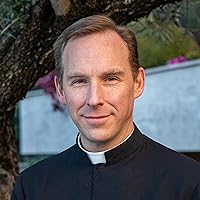
Pope Francis (Latin: Franciscus; Italian: Francesco; Spanish: Francisco; born Jorge Mario Bergoglio, 17 December 1936) was the 266th Pope of the Roman Catholic Church, a title he held ex officio as Bishop of Rome, and Sovereign of the Vatican City. He chose Francis as his papal name in honor of Saint Francis of Assisi. Francis was the first Jesuit pope, the first from the Americas, the first from the Southern Hemisphere and the first non-European pope since the Syrian Gregory III, who died in 741.
Born in Buenos Aires, Argentina, Bergoglio worked briefly as a chemical technologist and nightclub bouncer before beginning seminary studies. He was ordained a Catholic priest in 1969 and from 1973 to 1979 was Argentina's provincial superior of the Society of Jesus. He was accused of handing two priests to the National Reorganization Process during the Dirty War, but the lawsuit was ultimately dismissed. He became the Archbishop of Buenos Aires in 1998 and was created a cardinal in 2001 by Pope John Paul II. He led the Argentine Church during the December 2001 riots in Argentina, and the administrations of Néstor Kirchner and Cristina Fernández de Kirchner considered him a political rival. Following the resignation of Pope Benedict XVI on 28 February 2013, a papal conclave elected Bergoglio as his successor on 13 March.
Throughout his public life, Pope Francis had been noted for his humility, emphasis on God's mercy, concern for the poor, and commitment to interfaith dialogue. He was credited with having a humble, less formal approach to the papacy than his predecessors, for instance choosing to reside in the Domus Sanctae Marthae guesthouse rather than in the papal apartments of the Apostolic Palace used by his predecessors. In addition, due to both his Jesuit and Ignatian aesthetic, he was known for favoring simpler vestments void of ornamentation, including refusing the traditional papal mozzetta cape upon his election, choosing silver instead of gold for his piscatory ring, and keeping the same pectoral cross he had as Cardinal. He maintained that the church should be more open and welcoming. He did not support unbridled capitalism, Marxism, or Marxist versions of liberation theology. Francis maintained the traditional views of the church regarding abortion, euthanasia, contraception, homosexuality, ordination of women, and priestly celibacy. He opposed consumerism, irresponsible development, and supported taking action on climate change, a focus of his papacy with the promulgation of Laudato si'. In international diplomacy, he helped to restore full diplomatic relations between the U.S. and Cuba.
I believe this is one of the most important works I’ve read in my life.
Francis’ description of the human heart felt like it put to words many concepts which I knew to be true but was unable to fully articulate. It delves into deep truths which are applicable to the experience of all men. The text is so rich that I feel like I was only able to receive a small portion of its immense depths— and yet it’s still so impactful and beautiful.
I anticipate coming back to Dilexit Nos throughout my life and look forward to the deep truths that the Lord has to reveal to me about his heart.
“…He will renew you in his love; he will exult over you with loud singing” (Paragraph #99, Zeph 3:17)
No tenía conocimiento de ésta encíclica hasta que el sacerdote de mi localidad la utilizó para trabajar en la novena al sagrado corazón de Jesús. Estructurada en cinco capítulos, en las primeras páginas, Francisco no hace otra cosa que mostrarnos la verdad de la sociedad de hoy: Falta corazón, “en este mundo líquido es necesario hablar nuevamente del corazón, apuntar hacia allí donde cada persona, de toda clase y condición, hace su síntesis; allí donde los seres concretos tienen la fuente y la raíz de todas sus demás potencias, convicciones, pasiones, elecciones. Pero nos movemos en sociedades de consumidores seriales que viven al día y dominados por los ritmos y ruidos de la tecnología, sin mucha paciencia para hacer los procesos que la interioridad requiere. En la sociedad actual el ser humano «corre el riesgo de perder su centro, el centro de sí mismo». «El hombre contemporáneo se encuentra a menudo trastornado, dividido, casi privado de un principio interior que genere unidad y armonía en su ser y en su obrar. Modelos de comportamiento bastante difundidos, por desgracia, exasperan su dimensión racional-tecnológica o, al contrario, su dimensión instintiva». Me movilizó mucho. Es muy MUY hermosa ésta encíclica, muy dulce, bellamente escrita. Luego, la carta se centra en dos aspectos fundamentales que deberían reunir la devoción al Sagrado Corazón: la experiencia espiritual personal y el compromiso comunitario y misionero. En el primero, se relatan testimonios de santos que se han encargado de difundir la devoción al sagrado corazón de Jesús, entre ellos Santa Margarita María Alacoque que es quien recibió las revelaciones del Sagrado Corazón de Jesús y de aquí nace la devoción: Jesús le reveló cuán grande es su amor por cada ser humano y cuánto sufre por los pecadores. En el segundo aspecto, ahonda en la dimensión comunitaria, social y misionera de toda auténtica devoción al Corazón de Cristo. Porque al mismo tiempo que el Corazón de Cristo nos lleva al Padre, nos envía a los hermanos, en los frutos de servicio, fraternidad y misión y así se cierra el círculo: Dar fruto y compartirlo. Esta unión entre la devoción al Corazón de Jesús y el compromiso con los hermanos atraviesa la historia de la espiritualidad cristiana. Lo mejor de ésta encíclica es encontrarme con la relación del Sagrado Corazón de Jesús y los Ejercicios de San Ignacio de Loyola, en cuyo Sagrado Corazón está encerrada una expresión simbólica de lo más profundo del espíritu ignaciano. Incluso Juan Pablo II conocía “los íntimos lazos que hay entre la devoción al Corazón de Cristo y la espiritualidad ignaciana, ya que el deseo de «conocer íntimamente al Señor» y de «mantener un diálogo» con él, corazón a corazón, «es característico, gracias a los ejercicios espirituales, del dinamismo espiritual y apostólico ignaciano, todo él al servicio del amor del Corazón de Dios»” Recomendado para aquellos devotos de ésta imagen y para todo aquel curioso deseoso de saber más.
No escondo en absoluto mi devoción al Sagrado Corazón de Cristo y aquí se explica de una manera sublime. El por qué, su anclaje en el Evangelio, la dimensión personal, la social... 10/10 porque además no se hace denso ni difícil de comprender.
Guys this was good… really good!! Who would have guessed that being 22 would include reading an encyclical for fun?! Ok let’s be real, some of y’all might have guessed that. I found this beautiful and deep while also being accessible! My favorite parts were the sections about St. Therese and her love for the Sacred Heart!!
Here are a bus load of quotes for me to come back to someday:
“The heart has often been ignored in anthropology… perhaps this is due to the difficulty of treating it as a ‘clear and distinct idea,’ or because it entails the question of self-understanding, where the deepest part of us is also that which is least known” (10)
“We become ourselves only to the extent that we acquire the ability to acknowledge others, while only those who can acknowledge and accept themselves are then able to encounter others” (18)
The heart is the place where things come together and are stored up — like Mary
“It follows that, in contemplating the meaning of our lives, perhaps the most decisive question we can ask is, ‘Do I have a heart?’” (23)
“Indeed, ‘the heart of Jesus Christ, hypostatically united to the divine Person of the Word, beyond doubt throbbed with love and every other tender affection” (61)
“Saint John Paul II could say that ‘the whole of the Christian life is like a great pilgrimage to the house of the Father’…When the Son became man, all the hopes and aspirations of his human heart were directed towards the Father…Jesus’ life among us was a journey of response to the constant call of his human heart to come to the Father” (71-72)
“As Saint John Paul II once said, Christ’s heart is ‘the Holy Spirit’s masterpiece’” (75)
St. Therese’s poem: “I need a heart burning with tenderness, Who will be my support forever, Who loves everything in me, even my weakness… And who never leaves me day or night… I must have a God who takes on my nature, And becomes my brother and is able to suffer!… Ah! I know well, all our righteousness Is worthless in your sight… So I, for my purgatory, Choose your burning love, O heart of my God!” (135)
“Those moralizers who want to keep a tight reign on God’s mercy and grace might claim that Therese could say this because she was a saint… yet this astute Doctor of the Church reduces them to silence and directly contradicts their reductive view in these clear words: ‘if I had committed all possible crimes, I would always have the same confidence; I feel that this whole multitude of offenses would be like a drop of water thrown into a fiery furnace’” (137)
[St. Therese about reading sacred scripture] “‘Then all seems luminous to me; a single word uncovers for my soul infinite horizons, perfection seems simple to me. I see that it is sufficient to recognize one’s nothingness and to abandon oneself like a child into God’s arms” (141).
“The natural desire to console Christ, which begins with our sorrow in contemplating what he endured for us, grows with the honest acknowledgment of our bad habits, compulsions, attachments, weak faith, vain goals and, together with our actual sins, the failure of our hearts to respond to the Lord’s love and his plan for our lives. This experience proves purifying, for love needs the purification of tears that, in the end, leaves us more desirous of God and less obsessed with ourselves” (158)
“In contemplating the heart of Christ and his self-surrender even to death, we ourselves find great consolation. The grief we feel in our hearts gives way to complete trust and, in the end, what endures is gratitude, tenderness, peace; what endures is Christ’s love reigning in our lives” (161)
I feel like I didn’t hear much about this encyclical when it released or in the aftermath. It is a beautiful, encouraging, and inspiring collection of meditations on the heart of Christ. Both personally for Francis, reviewing the tradition of the Saints and what that all means for the Church today. Seriously awesome and I would highly recommend to anyone who has passed over it!
I read this on my flight to Rome for Pope Francis' funeral.
I really liked how he weaved his critique of the coldness of modern life with a call to rediscover our devotion to the Sacred Heart of Jesus. Through the lives of the saints, he explains how this can serve as a source of renewal and redemption not just for ourselves but for the entire world. Ultimately it's a call to open our hearts to Christ's boundless love and mercy. It's a very moving piece, and I think it represents the best of the Catholic message. With June being the month of the Sacred Heart, I'll definitely be returning to this encyclical.
Definitely, the most 'traditional' encyclical letter written so far by Pope Francis. While little novelty is to be found, Dilexit Nos serves as a reminder of the infinite value of each individual loved by the Divine and human heart of Jesus Our Savior.
Let us never forget that our hearts are not self-sufficient, but frail and wounded. They possess an ontological dignity, yet at the same time must seek an ever more dignified life. [23] The Second Vatican Council points out that “the ferment of the Gospel has aroused and continues to arouse in human hearts an unquenchable thirst for human dignity”. [24] Yet to live in accordance with this dignity, it is not enough to know the Gospel or to carry out mechanically its demands. We need the help of God’s love. Let us turn, then, to the heart of Christ, that core of his being, which is a blazing furnace of divine and human love and the most sublime fulfilment to which humanity can aspire. There, in that heart, we truly come at last to know ourselves and we learn how to love.
Gran texto de Francisco. Las últimas 10 páginas son una clara exhortación a seguir y anunciar a Cristo. Me gusta como Francisco sabía plasmar su saber teológico de una forma más sencilla y entendible para cualquiera, con un mensaje muy claro y directo, tanto en esta Encíclica como en todos sus textos: vale la pena seguir a Cristo y no hay que tener miedo para hacerlo ya que Él camina junto a nosotros. Siempre de alguna forma u otra Francisco nos recuerda este "No tengan miedo". Muy linda encíclica, la recomiendo
¡Hay secciones muy buenas! Otras un poco lentas y teóricas.. Unas de mis frases favoritas:
- El corazón hace posible cualquier vínculo auténtico, porque una relación que no se construya con el corazón es incapaz de superar la fragmentación del individualismo. - El Corazón de Cristo es éxtasis, es salida, es donación, es encuentro. En él nos volvemos capaces de relacionarnos de un modo sano y feliz, y de construir en este mundo el Reino de amor y de justicia. - - - La misión, entendida desde la perspectiva de la irradiación del amor del Corazón de Cristo, exige misioneros enamorados, que se dejan cautivar todavía por Cristo y que inevitablemente transmiten ese amor que les ha cambiado la vidNuestro corazón unido al de Cristo es capaz de este milagro social.
Descubrir al Papa Francisco, quizás algo tarde, pero un regalo!!! Enamorado de Cristo y eso es lo que quiso transmitirnos
Acudamos al Corazón de Cristo, ese centro de su ser, que es un horno ardiente de amor divino y humano y es la mayor plenitud que puede alcanzar lo humano. Allí en ese corazón es donde nos reconocemos finalmente a nosotros mismo y aprendemos a amar.
[Li a impressão portuguesa, das edições Paulinas, não disponível no Goodreads.]
O Papa Francisco dirige-se às pessoas de boa vontade e aos católicos, apresentando-nos a 4.ª Encíclica do seu Pontificado, designada “Dilexit Nos” (sobre o amor humano e divino do coração de Jesus). O texto começa por lembrar a importância do coração. Aí faz uma breve abordagem sobre a sua importância desde a Antiguidade, com os gregos antigos a considerarem-no “a parte mais íntima dos animais e das plantas” (§3). É aí que se centra a intimidade, com manifestações físicas concretas: o coração acelerado, ou mais lento, frio ou quente, incluindo consoante aqueles de quem estamos próximos. O texto aborda de seguida o problema: «Neste mundo líquido, é necessário voltar a falar do coração; indicar onde cada pessoa, de qualquer classe e condição, faz a própria síntese; onde os seres concretos encontram a fonte e a raiz de todas as suas outras potências, convicções, paixões e escolhas. Movemo-nos, porém, em sociedades de consumidores em série, preocupados só com o agora e dominados pelos ritmos e ruídos da tecnologia, sem muita paciência para os processos que a interioridade exige». Lembra-se que o problema não é exclusivo da nossa era e são-nos indicados gestos concretos de Jesus, que se manifestaram quer em palavras, quer no olhar. A partir deste ponto, o Papa Francisco recorre a santos e doutores da Igreja que tomaram especial atenção ao Coração de Jesus, para mais tarde concluir, através da aproximação ao Evangelho, sobre a experiência espiritual pessoa e o compromisso comunitário e missionário. O mote é não nos preocuparmos com resultados (“deixa isso para o Senhor, que trabalha no segredo dos corações” - §216) ao mesmo tempo que somos exortados a agir no mundo naquela que procura ser uma Encíclica que dá unidade aos aspetos sociais de “Laudato si” e de “Fratelli tutti” (para não surgirem desligados do amor).
Listened to an audio version that I think was AI with an Australian accent??? Nevertheless, this was good good with lines that struck me to the core & invited me to deeeep humility and pondering.
From #188, “We should never think that acknowledging our sins before others is somehow demeaning or offensive to our human dignity. On the contrary, IT DEMANDS THAT WE STOP DECEIVING OURSELVES and acknowledge our past for what it is, marred by sin, especially in those cases when we caused hurt to our brothers and sisters.” (Emphasis added by me but it might as well have been in all caps based on how it affected me when I heard it) 🫳🏾🎤
This was the most recent line that got me, but there were many more before that. All in all, this was: 👩🏾🍳🤌🏾❤️
I don’t know if I’m qualified to rate this. Dilexit Nos was a challenging read, in a way that demands to be revisited. This book has strong potential when taken personally. For now, you could say that I am still reading and still learning.
An Encyclical apt for the ptesen times in a world that has got so lost in staying online but ignoring the affective aspect of building friendships. Pope Francis points out beautifully the primacy of the heart in every human bonding and how we need to stay connected to the heart of Christ to avoid the dissolving of the essence of humanity. Using examples of the saints who have gone before us, Pope Francis shows how a relationship with Christ and a devotion to the Heart of Christ makes us better individuals capable of empathising with the other.
I liked very much the quotes from saints of all ages about the devotion to the Heart of Jesus, and the last section of the letter, on consoling his Heart and rebuilding relationships.
“Encuentra su máxima expresión en Cristo clavado en una cruz. Esa es la palabra de amor más elocuente. Esto no es cáscara, no es puro sentimiento, no es diversión espiritual. Es amor. Por eso cuando san Pablo buscaba las palabras justas para explicar su relación con Cristo dijo: «Me amó y se entregó por mí» (Ga 2,20). Esa era su mayor convicción, saberse amado. La entrega de Cristo en la cruz lo subyugaba, pero sólo tenía sentido porque había algo más grande todavía que esa entrega: «Me amó».”
Una encíclica que nos acerca más al misterio del Amor, a la inmensidad de Su corazón
Papa Francesco ci regala un altro piccolo gioiello in vista del giubileo del 2025 per aiutarci a contemplare il cuore di Cristo e scoprire la tenerezza e la misericordia che lo riempe. Un aiuto per conoscere e risvegliare il nostro cuore.
I loved Evangelii gaudium, but this one is incredible. In his last encyclical, Pope Francis—in line with his Ignatian tradition—uses everyday stories from his childhood, examples from literature, and Scripture to demonstrate the way that God loves and invites us to love and “return to the heart” in the ordinary activities of life. He relies heavily on the spirituality of St. Therese and the references to Dostoevsky made me super happy. In other words, everyone should read it??
“Whenever a person thinks, questions and reflects on his or her true identity, strives to understand the deeper questions of life and to seek God, or experiences the thrill of catching a glimpse of truth, it leads to the realization that our fulfilment as human beings is found in love. In loving, we sense that we come to know the purpose and goal of our existence in this world. Everything comes together in a state of coherence and harmony. It follows that, in contemplating the meaning of our lives, perhaps the most decisive question we can ask is, ‘Do I have a heart?’”
My prediction is that Evangelii Gaudium and Dilexit nos will be recognized in history as Pope Francis's most significant encyclicals. I found Dilexit nos a joy to read. The phenomenological introduction may not appeal to everyone, but as for me ... he had me at Dostoevsky. The main contribution, I believe, is his authoritative summary of the main strains of the devotion to the Sacred Heart of Jesus throughout history adding his own remarkable synthesis through the mouth of Saint Therese of Lisieux. Anyone who wants to paint Pope Francis as overly concerned with social justice issues, too political, and devoid of true piety, he should read this encyclical. It brims with a supernatural yet approachable worldview, without falling into saccharine or mawkish piety. When treating the failings of the human heart, it maintains realism without falling into permissiveness.
With the Pope we can all pray, Heart of Jesus, make my heart more like yours.
As a child of the Sacred Heart I enjoyed this encyclical! I wrote all over my copy- it’s worth a revisit later. Somethings I really resonated with concepts (or rather I have in the past I’m in a bit of a spiritual dry spell at the moment) others not so much… I found the concept of consolation for Jesus fascinating and worth a try and the definition of reparation a little confusing. Overall it was well organized and easy enough to follow.
I had a feeling that Pope Francis published this because his social encyclicals were a little less traditionally theological- I think I am right because of a note at the end where he’s essentially saying this is the theology behind my other encyclicals.
Hermoso libro que te invita a reflexionar sobre tu comportamiento con Jesús y con el prójimo.
Uno muchas veces cree que tiene que hacer obras extraordinarios ,como entregar la propia vida, para compensar el sacrificio de Jesús . En este libro Francisco nos demuestra que lo único que Jesús nos pide a nosotros y por lo cual Él se dio por nosotros, es para que realmente aceptemos y estemos abiertos a su amor .Y al recibirlo, poder ser portadores de él y llevarlo a los otros.
Te invita a ser fiel reflejo de ese amor de Jesús.
Underrated... just look at the Wikipedia summary for this encyclical vs Magnifica Humanitas--almost no attention given to what is a very profound meditation on the human heart and the Sacred Heart of Christ. The questions about "What is the heart?" have occupied me for a long time. Is the heart emotions? The will? Something else? This question and the broader question of anthropology and interior science is something I wish the Church would attempt to answer especially in the age of AI where so many people think humans are just "meat computers". This encyclical is a great first step in that direction.
Een warm stuk theologie dat, zij het met een ietwat brave structuur en een hier en daar loshangende aanpak, de onuitputtelijke liefde van het Hart van Christus hapbaar weet te verkondigen. Ik durf te zeggen dat weinigen naast Paus Franciscus deze liefde zodanig op papier kunnen zetten, dat de lezer inderdaad het boek sluit wetend dat Hij ons liefheeft.
"De wijze waarop Christus ons liefheeft, is iets dat Hij ons niet al te veel heeft willen uitleggen. Hij heeft het in zijn gebaren laten zien. Wanneer wij Hem zien handelen, kunnen wij ontdekken hoe Hij ieder van ons behandelt, ook al kost het ons moeite om dit te bevatten."