Russian writer Aleksei Maksimovich Peshkov (Russian: Алексей Максимович Пешков) supported the Bolshevik revolution of 1917 and helped to develop socialist realism as the officially accepted literary aesthetic; his works include The Life of Klim Samgin (1927-1936), an unfinished cycle of novels.
This Soviet author founded the socialist realism literary method and a political activist. People also nominated him five times for the Nobel Prize in literature. From 1906 to 1913 and from 1921 to 1929, he lived abroad, mostly in Capri, Italy; after his return to the Soviet Union, he accepted the cultural policies of the time.
"And this, you see, was because the agony of a dying person is much more natural and violent than the most minute and picturesque descriptions of death."
It’s a story of a young man who finds himself without shelter & food on a cold “Autumn Night” in Moscow & he meets with his same age women & then story starts
"امتزج صوت المطر برذاذه، وبدا أن تنهدًا طويلًا يطفو فوق القارب المقلوب - تنهد الأرض المتعب الذي لا نهاية له، المصاب والمستنزف بالتغيرات الأبدية من الصيف المشرق والدافئ إلى الخريف البارد الضبابي الرطب. كانت الريح تهب باستمرار على الشاطئ المقفر، وكان النهر الرغوي يهب ويغني أغانيه الحزينة"
قصة جميلة ومؤثرة عن كيف يمكن أن تغير أشياء بسيطة وكلمات دافئة نظرتنا للحياة في لحظة، وتفتح أعيننا، سرد غني بروح الخريف، ونظرة ملموسة لصورة الحياة في المجتمع الروسي في فترة كتابة القصة، قراءة مثالية لليلة خريف باردة في أكتوبر أحببتها 🍁🍂🧡
One of the best short stories ever !!. This is what Maxim Gorky's capable of doing and nobody else can do it like him. He can show us how miserable human beings are in real life. It’s a touching tale of a young man who finds himself without shelter or food on a cold “Autumn Night” in Moscow. The strong opening lines of the narrator set the stage nicely: “Once in the autumn I happened to be in a very unpleasant and inconvenient position. In the town where I had just arrived and where I knew not a soul, I found myself without a farthing in my pocket and without a night’s lodging.”
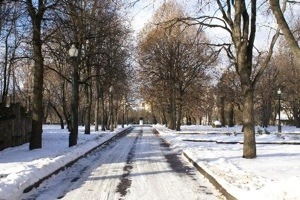
I also found an image of Moscow’s Gorky Park. The description says it was taken in a morning after a late Autumn Night.
"I looked at her, and pain wrenched my heart. I looked into the dark in front of me, and it seemed to me as the ironic phiz of my destiny were smiling at me enigmatically and coldly..."
Quite an entertaining short tale... One cold autumn night the narrator, who's really down on his luck, meets a young woman who helps him out and passes the night with him...
Fosse perguntado aos leitores do russo Máximo Gorki qual palavra escolheriam para definir o seu estilo, é bastante provável que a maior parte deles usasse “ternura”. E este parece ser realmente o termo mais adequado para definir a sua escrita sensível e recheada de personagens das mais baixas camadas sociais da Rússia – operários, vagabundos, prostitutas. Era este submundo que interessava a Gorki porque foi precisamente dentro dele que esteve durante toda a sua juventude. Disso nasceria uma literatura de forte cunho autobiográfico.
Mesmo quando faz deliberadamente ficção é de se imaginar que suas narrativas tenham sido bastante influenciadas pelas experiências que passou. Um dos poucos livros de Gorki publicados no Brasil – ele ainda está longe de ter a fama de outros russos – é a coletânea “Certo dia de outono e outros contos”. Já a partir do conto inicial, que dá nome ao livro, as páginas são carregadas desse sentimento de ternura e de tensão social. A narrativa, em primeira pessoa, é a de um jovem andarilho que se encontra por acaso com uma prostituta que tentava invadir um casebre em busca de comida. Os dois compartilham seus desesperos, mas é ela quem o consola.
É de se imaginar que em “Konoválov”, conto mais longo e também em primeira pessoa, Gorki tenha se servido de experiências que teve enquanto trabalhava como auxiliar de padeiro, assim como o narrador da história. É neste ambiente que conhece o personagem-título do conto, um sujeito que bebia muito porque tinha crises de nostalgia e a quem o narrador lia histórias de aventuras que ele acreditava firmemente terem acontecido de verdade. É uma história bonita mas não tão tocante quando “O aleijado”, em que o narrador encontra uma mulher embriagada fazendo escândalo na rua, ajuda-a a ir para casa e lá encontra o seu filho, um moleque aleijado. Conversa um pouco com o menino, descobre a sua coleção de insetos, fica sabendo da história dos dois, se comove e decide voltar no dia seguinte trazendo comida e insetos para a coleção. A mãe, em agradecimento, oferece o próprio corpo em pagamento pela alegria trazida ao filho.
Mas em termos de estrutura, construção dos personagens e fluência narrativa, o conto mais elaborado do livro é “O sapateiro”, ainda que não seja um conto da maturidade do escritor. Nele um casal de sapateiros vive de forma medíocre e sem grandes ambições, sofrendo pela ausência de filhos e pela violência do homem contra a mulher, além do seu alcoolismo (como escreveu Gorki, os pobres homens russos são sempre engolidos pela enorme bocarra de uma taberna). A vida deles muda quando se oferecem para trabalhar num hospital que atendia vítimas do cólera. Essa mudança, no entanto, não apaga o ciúme do marido nem o seu sentimento de inutilidade diante do mundo. Na mulher há uma transformação maior e pela primeira vez ela ousa enfrentar o marido que ama perdidamente. Toda a trama se passa de maneira envolvente – e terna.
Em “O sapateiro” também não há excessos nas descrições espaciais e geográficas, coisa a que Gorki de vez em quando cedia e que foi motivo de queixa do próprio Tchékhov em correspondência com o autor. O melhor exemplo disso são os parágrafos iniciais de “O pomo da discórdia”, um dos contos mais longos do livro. A despeito das descrições bucólicas, a história do conto em si também é bem elaborada e envolve uma briga de pai e filho pela mesma mulher. Como em todo o livro, há neste conto muitos dramas pessoais, muitas dúvidas e inquietações. Até a violência neste conto, retratada por Gorki, é bonita.
“Certo dia de outono e outros contos” conta ainda com “Caim e Artem”, criativo conto sobre um pacto entre um judeu franzino e humilhado e o vilão da aldeia que botava medo em todos, e “O avô e o netinho”, retratando dois mendigos que chegam em uma aldeia nova para pedir suas esmolas. Também neles há personagens bem reais e que insinuam questionamentos existenciais. Também eles possuem a mesma carga emotiva e afetuosa que caracteriza a produção de Gorki.
I read One Autumn Night by Maxim Gorky (1895) March 12, 2025 4*. It was well done. The author writes well using literary devices. There is one cliche in the story. Hungry people are looking to steal a loaf of bread. Yet, this may be one of the stories that established the cliche in the first place. There is one assertion Maxim makes that I disagree with. In the story the character states, "In our present state of culture, hunger of the mind is more quickly satisfied than hunger of the body. ... Well, well, the mind of a hungry man is always better nourished and healthier than the mind of a well-fed man; and there you have a situation from which you may draw a very ingenious conclusion in favour of the ill fed."
This flies in the face of all my experience as a teacher in the United States. It is considered an unassailable truth that a hungry child cannot learn. Multiple times throughout the day all children are given opportunities to eat, and everyone eats whether they are paying for lunch or not. We have programs to insure that. - Perhaps you can tell that I believed we perhaps spent a little too much time each School day on eating. But it is also true that hungry children cannot concentrate well.
When I first read this I thought that the author or at least the narrator was being sexist and its clear that the protagonist is at least at first. But I don't think Gorky shares this idea with his protagonist. From reading some other works by him he often has characters who grow and become more open-minded and here this story is a moment of growth for the protagonist where they may have come out of this experience becoming much less misogonystic but we couldn't see this growth if it wasn't established what they were before. The narrator gains a strong connection to someone who they at first due to their ignorance passes judgment on but now he may be questioning this. The protagonist himself is 18 and had little previous experience with women so this story to me is about his growth and maturing. in a way that's sort of self-deprecating from the protagonists perspective, although after all it wouldn't surprise me if he was actually sexist and im overanalyzing it.
This entire review has been hidden because of spoilers.
It's amazing what a little conversation, kindness, and understanding can do for a person's outlook.
In our present state of culture hunger of the mind is more quickly satisfied than hunger of the body.
Well, well, the mind of a hungry man is always better nourished and healthier than the mind of the well-fed man; and there you have a situation from which you may draw a very ingenious conclusion in favour of the ill fed.
A man gets hungry, goes for a walk, meets a girl, and cries. It's not in the root motifs or plot beats themselves that interesting stories are written or read, as One Autumn Night would have disappeared entirely forgotten into the aether in that regard, but in the manner you tell the story that makes it compelling, the strength of dictating apparently mundane events in evocative means; in short to show, not tell. An art, based on recent trends in literature, apparently fading.
Μια σύντομη, μελαγχολική ιστορία για έναν νεαρό άντρα, γεμάτο μεγάλες ιδέες για τον εαυτό του (αλλά εντελώς άφραγκο), που συναντά μια άγνωστη γυναίκα καθώς και οι δύο ψάχνουν απελπισμένα κάτι να φάνε. Καταλήγουν να μοιραστούν ένα πρόχειρο καταφύγιο, και μέσα σε αυτή τη φθινοπωρινή νύχτα ο Γκόρκι δείχνει πώς μια τυχαία ανθρώπινη επαφή μπορεί να γκρεμίσει αυταπάτες και να γεννήσει μια πιο αληθινή κατανόηση της ζωής. Μικρό και λιτό διήγημα, αλλά πραγματικά ανθρώπινο.
Ne aşağılık bir hayat! Dedi. Fakat bir yakınma değildi bu. Bir yakına için fazla umursamazlık vardı bu sözlerde. Bir insan, aklı yetebildiğince düşünmüş, belirli bir sonuca varmış, sonra yüksek sesle açıklamıştı bunu. Karşı çıkmak gereksizdi
Really liked the atmosphere the author created for the plot The description given for the charecter, whom the protoganist deals with, was also really good✍🏼
Overall...... liked it, not a super interesting one or anything🌺
3.5 Very raw and vulnerable, incredibly well written. I gave it a “low” review all because I wish it was at least a little longer with more exchange between characters so we could get to know the profoundness of Natasha.
A traveller arrives in a town with no money and seeks shelter under a canoe. He meets a woman who is in a similar state. They are hungry. After fighting they come together.
A short story that really goes nowhere. It felt like a set up for a story that just stop.