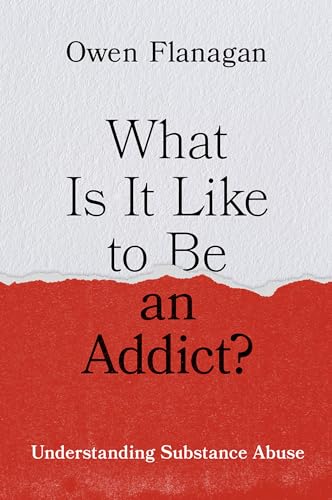
A powerful and important exploration of how addiction functions on social, psychological and biological levels, integrated with the experience of being an addict, from an acclaimed philosopher and former addict.
What is addiction? Theories about what kind of thing addiction is are sharply divided between those who see it purely as a brain disorder, and those who conceive of it in psychological and social terms. Owen Flanagan, an acclaimed philosopher of mind and ethics, offers a state-of-the-art assessment of addiction science and proposes a new ecumenical model for understanding and explaining substance addiction.
Flanagan has first-hand knowledge of what it is like to be an addict. That experience, along with his wide-ranging knowledge of the philosophy of mind, psychology, neuroscience, and the ethics and politics of addiction, informs this important and novel work. He pairs the sciences that study addiction with a sophisticated view of the consciousness-brain/body relation to make his core that substance addictions comprise a heterogeneous set of "psychobiosocial" behavioral disorders. He explains that substance addictions do not have one set of causes, such as self-medication or social dislocation, and they do not have one neural profile, such as a dysfunction in dopamine system. Some addictions are fun and experimentation gone awry. Flanagan reveals addiction to be a heterogeneous set of disorders, which are picked out by multifarious cultural, social, psychological, and neural features.
Flanagan explores the ways addicts sensibly insist on their own responsibility to undo addiction, as well as ways in which shame for addiction can be leveraged into healing. He insists on the collective shame we all bear for our indifference to many of the psychological and social causes of addiction and explores the implications of this new integrated paradigm for practices of harm reduction and treatment. Flanagan's powerful new book upends longstanding conventional thinking and points the way to new ways of understanding and treating addiction.
I'm not sure if this is really a five-star book, but I feel the need to push back against some of the misguided bad reviews it's gotten. This is an excellent book. But it's a book by an academic philosopher. If that's not your cup of tea, then you're probably not going to like it. But that's not the book's fault.
If, on the other hand, you're looking for a thoughtful, philosophically and scientifically informed analysis of addiction, combined with the personal experience of someone who's lived a life of addiction himself, then I think you'll find this a terrific read. I was previously familiar with some of Flanigan's academic work in the philosophy of mind. But I didn't realize that he'd struggled with fairly serious addictions to alcohol and benzodiazepines. That experience, along with a sensitive attention to the subjective phenomenology of addiction, both supplements and strengthens the academic analysis.