

What do you think?
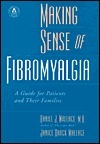
Making Sense of Fibromyalgia
This year, six million Americans--most of them women--will go to their doctors, complaining of an illness they have no name for. The majority will be turned away or treated for depression; the few who persist will go to an average of four doctors before they receive the correct diagnosis: fibromyalgia.
In Making Sense of Fibromyalgia, noted medical writer Janice Wallace and Dr. Daniel Wallace, a leading expert on this disorder, provide a comprehensive guide--for both patients and professionals--to this little known and poorly understood syndrome. The authors offer detailed information in a clear and accessible style, taking readers through the steps of diagnosis, all the established forms of treatment, and alternative therapies that have yet to be proven effective. Fibromyalgia, they explain, is a pain amplification, brought on by abnormal interactions between hormones, the immune system, neurotransmitters, and the autonomic nervous system. Sometimes the syndrome occurs spontaneously; in most cases, the authors write, it is associated with trauma, stress, such conditions as lupus and hypothyroidism, and over forty microbes, from hepatitis to Epstein Barr to Lyme disease. They draw on actual cases to illustrate their points and to break through the isolation that patients often feel when doctors misdiagnose or simply ignore their symptoms.
When Dr. Wallace wrote The Lupus Book, he brought hope and relief into the lives of countless Americans, in a book that sold through many printings. In Making Sense of Fibromyalgia, the authors address a desperate need for information and reassurance, in a groundbreaking book.
In Making Sense of Fibromyalgia, noted medical writer Janice Wallace and Dr. Daniel Wallace, a leading expert on this disorder, provide a comprehensive guide--for both patients and professionals--to this little known and poorly understood syndrome. The authors offer detailed information in a clear and accessible style, taking readers through the steps of diagnosis, all the established forms of treatment, and alternative therapies that have yet to be proven effective. Fibromyalgia, they explain, is a pain amplification, brought on by abnormal interactions between hormones, the immune system, neurotransmitters, and the autonomic nervous system. Sometimes the syndrome occurs spontaneously; in most cases, the authors write, it is associated with trauma, stress, such conditions as lupus and hypothyroidism, and over forty microbes, from hepatitis to Epstein Barr to Lyme disease. They draw on actual cases to illustrate their points and to break through the isolation that patients often feel when doctors misdiagnose or simply ignore their symptoms.
When Dr. Wallace wrote The Lupus Book, he brought hope and relief into the lives of countless Americans, in a book that sold through many printings. In Making Sense of Fibromyalgia, the authors address a desperate need for information and reassurance, in a groundbreaking book.
- GenresHealthNonfictionMedical
256 pages, Hardcover
First published January 14, 1999
About the author
Daniel J. Wallace
28 books10 followersDaniel Jeffrey Wallace is an American rheumatologist, clinical professor, author, and fellow. Wallace has published 400 peer reviewed publications, 8 textbooks, and 25 book chapters on topics such as lupus, Sjögren syndrome, osteoarthritis, and fibromyalgia. He has the largest cohort of lupus patients in the United States (2000).
A full professor of medicine (Cedars-Sinai Medical Center, David Geffen School of Medicine at UCLA), he is associate director of the Rheumatology Fellowship Program at Cedars-Sinai. His seminal contributions to research include being an author of the first paper to demonstrate vitamin D dysfunction and the importance of interleukin 6 in lupus, conducting the first large studies of apheresis in rheumatoid arthritis and lupus, and insights into the mechanisms of action of antimalarials.
Wallace's research accomplishments also include conducting many clinical rheumatic disease trials, examining the role of microvascular angina and accelerated atherogenesis in lupus, and work on anti-telomere antibodies which have garnered him 5 papers in The New England Journal of Medicine. Wallace's monograph, The Lupus Book, has sold over 100,000 copies since 1995.
A full professor of medicine (Cedars-Sinai Medical Center, David Geffen School of Medicine at UCLA), he is associate director of the Rheumatology Fellowship Program at Cedars-Sinai. His seminal contributions to research include being an author of the first paper to demonstrate vitamin D dysfunction and the importance of interleukin 6 in lupus, conducting the first large studies of apheresis in rheumatoid arthritis and lupus, and insights into the mechanisms of action of antimalarials.
Wallace's research accomplishments also include conducting many clinical rheumatic disease trials, examining the role of microvascular angina and accelerated atherogenesis in lupus, and work on anti-telomere antibodies which have garnered him 5 papers in The New England Journal of Medicine. Wallace's monograph, The Lupus Book, has sold over 100,000 copies since 1995.
Ratings & Reviews
Friends & Following
Create a free account to discover what your friends think of this book!
Community Reviews
Displaying 1 - 2 of 2 reviews

February 25, 2019
This book had a lot of good information, but I only understood about half of it - it seems like this book is geared more towards medical providers than patients.

May 1, 2014
had to return to library
Displaying 1 - 2 of 2 reviews