In the summer of 1944 returning soldiers Canning Christie and his father Michael arrive in South Australia from the desert sands of North Africa.
Canning carries the trauma of war and a fractured memory of a terrible event, while charismatic Michael resumes his womanising ways, intent on concealing his own secret wound.
Inexplicably drawn to a vineyard on their land, Canning dreams of producing his own wine. And a chance meeting with Grace Huntley, daughter of the local landowner, offers him hope for that future.
But dormant memories keep rising his childhood with his mother, the years traversing the interior with his father and his time at the front.
Soon, viniculture becomes an obsession - one he suspects lies in a hazy recollection of a night in battle. To move forward Canning must reconcile the past, even if that means working with Italian POWs and accepting help from an immigrant German . . .
. . . And ultimately taking a stand against his own father, whose increasingly reckless behaviour is threatening to destroy their new life.
Nicole Alexander is the author of eleven novels: The Bark Cutters, A Changing Land, Absolution Creek, Sunset Ridge, The Great Plains, Wild Lands, River Run, An Uncommon Woman, Stone Country, The Cedar Tree and The Last Station.
The Limestone Road will be published March 2025.
Awards: The Bark Cutters - short-listed for an Australian Book Industry Award.
Non-fiction includes; Poetry: Divertissements: Love. War. Society. - a Anthologies: Dear Mum / Great Australian Writers
Have you ever wondered how soldiers felt, coped and fitted back into society when they returned to Australia after serving and being wounded in World War Two and author Nicole Alexander explores this in her latest novel The Limestone Coast?
Canning Christie can’t remember a lot about what happened during the last campaign in North Africa, he sustained a leg injury and Michael his father does and they served in the same unit and he won’t tell him. They arrive in Lampana and it’s a small town in the south east of South Australia and have been granted land and as part of the Soldiers Settlers scheme.
Michael is set on growing tobacco and Canning discovers an old vineyard on the property and he wants to make his own wine and all he needs to do is work out how? He becomes obsessed with viniculture, Canning thinks it has something to with his last night in battle at El Alamein and a friend called Luke.
Canning meets Bastian Meyer, he’s of German origin and in hiding and knows a lot about growing and harvesting grapes and making wine and they become friends. Italian POW’s are send to the area to clear forests and work on farms and Canning needs the help, his dad isn’t reliable, he likes chasing women and drinking. At the start Canning finds it hard and he begins to see the Italian men as people, who miss home and not the enemy.
I received a copy of The Limestone Coast from Penguin Random House Australia and NetGalley in exchange for an honest review. I am so grateful to Nicole Alexander for writing this book and bringing unknown things to my attention, it explores topics such as, father and son relationships and estranged families, the trauma of war and they were suffering from the medical condition we call PTSD, the Soldier Settlement scheme and the treatment of POW’s and internees during the 1940’s.
A must read for those who are interested in the Limestone Coast and Mount Gambier and nearby small towns where ex-soldiers settled and it's full of information and insights about what it was like to be a returned veteran, when the war wasn't over and there was no counselling back then. I really liked Canning and Michael was a better father than he seemed and I would like to know what happens next, please write a sequel and five stars from me.
Canning Christie and his father Michael returned home to South Australia after both being injured during battle. It was 1944 and the sands of North Africa would take a long time to become a distant memory. Canning was traumatised, had been cared for by those who professed to know - but still the nightmares came. Arriving at the property they had been allocated by the government, they saw a tobacco crop as well as a small vineyard; Michael saw money in the tobacco industry, but Canning was enthusiastic about creating his own wines.
While Canning carried his own demons, Michael suppressed his as well as the wound which would dictate his life. It wasn't long before Michael was back to his old ways with the local women but Canning did his best, both for his father and with their property. Meeting up with Bastian caused Canning pain and confliction, but Bastian would help Canning and soon they were friends. Slowly, gradually, Canning began to heal...
The Limestone Road is another well written historical novel by Aussie author Nicole Alexander which tells of two men's lives after their time on the front line, but before the war ended, as they tried to return to "normal". Not hugely likeable characters, especially Michael, but Canning grew on me. Set in the south east of South Australia, there was mention of many places I know, as I lived in the area from age 7 until 18 years old, so it's very familiar. Recommended.
With thanks to NetGalley & Penguin Random House AU for my digital ARC to read and review.
Big thanks to Penguin for sending us a copy to read and review. It’s been some time since a Nicole Alexander book has enriched our lives. Now, the historical fiction master is back with a new sublime read. The Limestone Road is well written, beautifully structured and vividly descriptive. Canning Christie and his father Michael are soldiers who have returned from war to settle in South Australia on land purchased by Michael. Inside they hide the trauma and horrors of war and their memories are vague. Michael wants to farm tobacco and Canning wants to fix up the vineyard that’s part of their land. The memories keep rearing their ugly head and affecting everyday life and after meeting local Grace Huntley, it seems there’s promise for the future. But his father’s mindset and actions is rocky and he needs to make peace with the past……. An extensive post war saga with flashbacks that feature the past developments for the characters. Bloated with history content, family legacies, emotional fields and elevated dialogue. Nicole has the ability to expand the reader’s experience with her extra attention to research making it authentic and draws you into the story. Run, don’t walk to get your copy now….
Canning and Michael Christie, with their respective injuries and memories, return from the desert of World War II to take up a soldier/settler farm on the Limestone Coast of South Australia. Michael, father of Canning, had taken his son at the age of twelve to live the life of the wanderer Michael had always been, hard working and hard living. When war broke out, father and son enlisted together and fought together. Now trying to settle to a stationary life on the farm, the closeness of the Italian POW camp to their farm and the questionable existence of a man who is hiding from the authorities, Michael and Canning agree to disagree regarding exactly what they will do with their land. Michael is happy to continue with the growing of tobacco but when Canning discovers vines growing on the land, he is interested in wine growing but it also plummets him back to his memories of the war and the friends he lost. Both Michael and Canning have their secrets and lost memories that haunt them. I loved this new book by Nicole Alexander. It is a study of the effect of war from many angles and it highlights the relationship between a father and his son. I highly recommend this story to other readers.
When 2 soldiers return from war, they set up in a community that welcomes them. Especially Michael, the father. Canning, the son, wants to fade into the background and work the land. Especially the grapes he found.
The father and son duo, both have different ways of life and farming the land they have. They also have different thoughts on women, the help they receive and the farm in general.
In this story, both men must find a way that is suited to them even if it means a few arguements between them.
Soldiers, father and son, wounded and returning home to South Australia attempt to begin a new life. A beautiful historical tale about trauma and healing.
I found this book quite difficult to get into, but I think maybe it was more a case of it wasn't the right time for me to read the book rather than anything wrong with the book itself. I had expected to really enjoy the South Australian setting, yet, for some reason, it didn’t fully capture my interest.
I did appreciate the focus on Canning and Michael, having returned home from war rather than focussing on the soldiers still on the front lines. However, at times, I found myself forgetting that the war was still ongoing overseas. There were flashbacks to both pre-war and wartime moments, which added depth to the story.
Canning and his father, Michael, both wrestle with demons from their past, but it manifests differently. It was interesting to see how they each tried to confront and navigate their struggles and live a new kind of normal.
This is a dark story, one that introduces the effects of war neurosis, known as PTSD. Michael and Canning Christie, the main protagonists, father and son are living with PTSD.
The book takes the reader on the journey that many returned soldiers in Australia took, allotments given to them from the government that in time proved useless for the immense amounts of land required as farming turned into a major production. Although the Christie’s property is larger than those received by returning soldiers from WW1, their land will only be large enough to make a living through a co-operative for which Canning in the end comes to that decision.
Canning was taken away from his mother by his father when he was twelve, for no other reason other than that. Since that time Michael has dragged his son to places most people would shun, only the strong willed with a certain toughness survive the Australian outback. However, Canning has a completely different personality to that of his father. Michael, is tough, belligerent, a womaniser and quite obviously an alcoholic. He has the experience of the two wars, WW1 and WW2 but the author gleans to infer that the fighting experience at Passchendaele, Ypres, WW1 [the sea of mud] had the most profound effect on him. (areas I have visited, deep sadness). Both were injured in WW2, North Africa, however, Canning deeply traumatised as well as having had physical injuries even after hospitalisation and terrible mental health hospitalisation continues to have nightmares and mental blackouts.
Michael is of one mind only, to grow tobacco, even though a previous experience saw him fail in this sort of venture. Canning on the other hand has a mind for wine making after he discovers grape vines on the property. An unlikely ally turns up, a runaway German/Australian, determined not to be interned as an enemy of Australia has a hidden shack in the forest nearby. Naturally, at first Canning is guarded and suspicious of Bastian, the German but it doesn’t take long before he realises that this man knows what he is talking about regarding wine making and for whom Canning takes advice from. Naturally, Bastian cannot be found out by Michael.
As the book progresses, the two men have a difficult relationship with the small town they now live in. Michael is often on a bender with all the consequences of such action and Canning makes some fatal judgements that don’t assist in his mental well being. It’s only when introduced to the interned Italian labourers that the truth of Canning’s nightmares are brought out in the open and for him to really begin to forgive himself and to recover.
THE LIMESTONE ROAD by Nicole Alexander is published in 2025. Review by Lorraine Parker Have you ever wondered how soldiers felt, coped and fitted back into society when they returned to Australia after serving and being wounded in World War I or II? Author, Nicole Alexander explores this in her latest novel The Limestone Road.
Canning Christie can’t remember a lot about what happened during the last campaign in North Africa, he sustained a leg injury and Michael his father does remember, (too much). Christie and Michael served in the same unit, however Michael refuses to enlighten him. They arrive, courtesy of the government in Lampana, a small town in the south east of South Australia. They have been granted land and as part of the Soldiers Settlers scheme. A condition is productivity.
Michael is set on growing tobacco. Canning discovers an old vineyard on the property. He wants to care of the promising vines and make his own wine. All he needs to do is work out how? He becomes obsessed with viticulture, Canning thinks it has something to with his last night in battle at El Alamein and a friend called Luke.
Canning meets, and befriends, Bastian Meyer. He is of German origin and in hiding. Canning soon realises Bastian knows a lot about growing, harvesting grapes and making wine. Canning knows it is best to keep this from his father. Italian POW’s are sent to the area to clear forests and work on farms. Canning needs their help. His dad isn’t reliable, and likes chasing women and drinking in the nearby town. Canning finds it hard to accept the ‘prisoners’ but soon begins to see the Italian men as people, who miss home and not the enemy. Canning has the responsibility of harvesting and drying the tobacco leaves. While his father, Michael is off into the town with his guitar, love of alcohol and women, the burden of work falls to Canning. Two ladies of his age, daughters of a long established wealthy, influential landowner and his wife, become known to Canning. A fascinating web.
Nicole Alexander brings to our attention, estranged families, father and son relationships, with the not so hidden effects of PTSD, (un-named then), the Soldier Settlement scheme and the treatment of POW’s and internees during the 1940’s. I loved the surprising twists and turns, the elements of suspense, loyalties, ambition, snobbery, cover-ups, lies and eventual truths revealed in this historical work of realistic fiction. A must read for all Australians and those who appreciate history. Parallels can be made worldwide.
During the World Wars, Australia held internees of German and Italian heritage as well as POWs captured in the Northern African campaigns. Internees were "enemy aliens" from countries at war with British allies, including Australia. Most were civilian men, but some women and children were also interned. Internees were held in regional camps around Australia. The terms ‘prisoner' and ‘internee' were often used for both groups, but they had different rights and authorities treated them differently.The south-east wood camps were managed by the South Australian Department of Woods and Forests, which was enduring a labour shortage due to a workforce at war, such as Nangwarry Wood Camp near Mount Gambier.There were two programs running; one was the wood camps and the other was the on-farm labour scheme, where the Italian men worked on farms that were in need of workers due to local men being away at war.Some of the farming families who had Italian POWs on their properties, described them as hardworking and very family orientated.Some farm families even sponsored the men to return to Australia as migrants years later.But not all experiences were positive, as some locals were warmongers, and racist.
The Soldier Settlement Scheme was a program established in various Australian states to assist returning soldiers, specifically focusing on providing them with land and resources to establish farms. It aimed to address the challenges faced by returning soldiers, including physical and mental injuries, and to contribute to the growth of rural communities. Many settlers faced difficulties, including limited financial resources, the need for specialised skills, and harsh conditions.
The Larundel psychiatric institution in Bundoora, Melbourne, was part of a larger mental health complex known as Mont Park, and Heidelberg Repatriation Hospital in Melbourne, and they both cared for soldiers,to varying degrees and results.
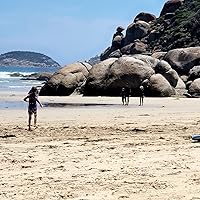
The Limestone Coast is a region located in the southeast of South Australia, which immediately adjoins the continental coastline and the Victorian border.The name is also used for a tourist region and a wine zone in South Australia.
Awash with the drama and beauty of the Australian landscape itself, The Limestone Road is a powerful story about one man's search for peace in the aftermath of WWII. As with all of Nicole Alexander's novels, there is a profound sense of place on every page. Life on the land - with all of its highs and lows - is rendered both accurately and beautifully. And while there are many novels written about the relationship between mothers and daughters, there seem to be far fewer written about fathers and sons, especially by female authors, which makes Alexander's subtly nuanced depiction of Canning Christie and his father Michael all the more compelling. So too Canning's and Michael's respective forays into love, both of which are depicted with subtlety and a refreshing absence of predictability. A quintessentially Australian story, The Limestone Road is in my opinion a modern day classic.
A father and son return together from WWII, both injured, and attempt to make a new life in South Australia. Their experiences are different, as are their personalities, yet Michael, the father, has raised his son alone since he was the age of 12, so the boy has had a tough and unusual upbringing. They enlisted together for the second war despite Michael being a WWI veteran. Despite both physical and mental wounds, they both look forward to life on their 'soldier settlement' block, but even the nature of the crop is a difference between them.
It is 1944 and the war goes on. Australia is far from the action but the people are feeling their losses.
This is a beautifully written tale of adjustment to civilian life on the outskirts of a small town and the harshness of life in the Australian climate.
Enjoyed the book and the insights gained for what,it was really like when Australians came back from war. Everyone came back scarred and had to find their own way of coping often detrimental to their own welfare. The fear that noise brought the damage physically emotionally and spiritually was horrific. Being put in an asylum given shock treatment and no form of counselling or families even told what was going on!! I enjoyed this book because I felt it was honest and showed humanity at its worst and best and we all have different coping mechanisms. Our Aussieswere great are great and all very courageous a big thank you from me to anyone inwar or working the land keeping things going in homes without husbands fathers etc
This was my first book by Nicole and I thoroughly enjoyed it. I will keep an eye out for her backlist books when I have depleted my huge tbr pile!
This book covered so many themes, from what soldiers experienced both during and after the war, relationships between father and son, son and mother, men and women, the treatment of returning soldiers and the stigma of mental illness.
Without giving any spoilers, I like how we uncover, piece by piece, what happened to shape Canning into the man he is when he returns from the front, enabling the reader to understand why he has reacted the way he has in certain circumstances.
I felt that the ending kind of left this open to the possibility of a sequel, as there is so much left to be explored.
Slow to start, set in Australia during WW2. Father and son setting up home and business post service on allotted land in SA. Both wrestling with their demons, war experiences, ptsd, relationships with each other, themselves and others. Particularly enjoyed the growing friendship and trust between Bastian and Canning, that whole aspect of returning soldiers and the impact of war on EVERYONE and the breaking down of prejudices and truth. Jumps around a fair bit and sometimes I wished the narrative was in sequence, however, finds its feet in the last half of the book. Interesting historical fiction.
Not my usual type of book .It’s wartime 1944 Michael and Canning father and son decide to enlist .They have both been injured and sent home .After leaving hospital the government has given them land and a fresh start .Michael is set in his way and Canning follows his father’s lead .Canning is struggling with trauma from the war and lapses of memories.While Michael hides behind womanising and binge drinking to deal with things his way .The town people welcome with open arms until Michael and Canning put people off side .They struggle to settle into normal life and socialise.Canning falls for one of the Huntley twins and this is the beginning of mixed communication and hurt feelings .
I think I may be the exception to the rule with this one, but it just didn’t grab me. Now don’t get me wrong, I didn’t hate it and the writing was good, but the story and characters were just average, and it made it quite difficult for me to get into.
It was full of potential, and Nicole’s descriptions of the locations were fabulous, and I’ll admit that I enjoyed Canning’s interactions with Bastian a lot. However, for the most part it was all quite confusing and the story jumped around too much. I would just start to get into it and then all of a that particular part would stop, but not really finish, and then it was another part starting.
I will say that the second half of the book worked better for me, but sadly not enough to let me come away with that satisfaction of reading an amazing story.
I suggest checking it out for yourself, maybe you’ll be one of the readers that love it.
Michael and his son, Canning, return from WWII, both with mental and physical injuries. They’re granted land with a tobacco crop but Canning stumbles on an established vineyard and chooses to turn his focus towards wine production. An informative tale of the deprivations and hardships of soldiers in wartime as well as upon their arriving in a small country town. It looks at the complexities of relationships, father & son, men & women, returned soldiers & POWs, different hierarchies within the community.
Nicole Alexander’s The Limestone Road is a sweeping tale of love, loss, and resilience, set against the stark beauty of the Australian landscape and the shifting desert sands of North Africa. At its heart, it is a poignant exploration of the bond between father and son. With prose that is both lyrical and evocative, Nicole’s storytelling is as powerful as it is compelling. The Limestone Road is a novel that will remain with you long after the last page is turned.
Another amazing historical novel from Nicole Alexander. The book is well written and the story is beautifully executed. It is about a father and son who comes home from war after the two of them served as soldier during WWII. I highly recommend this book. Thank you NetGalley and to the publisher Penguin Random House Australia for the ARC.
Thanks to NetGalley, Penguin Random House Australia, and the author for the chance to read this book.
I struggled to get through this book - I felt frustrated by the characters at times, and it just didn't grip me. I didn't really understand the relationship between father and son. I did enjoy the last few chapters and was glad that I had persevered.
Although long, this historical story was interesting and believable. The depiction of life during and following the world wars of the 1900's in Australia was well-researched and the story both heartbreaking and heartwarming. I enjoy a book set in outback Australia and if you do too, this is one not to miss.
Bit of a tedious read. Usually enjoy books about Australia and this time period of wars but this just fell flat. Didn't particularly like any of the characters. The relationships between characters just seemed to be lacking. Was hoping it would improve but even ending was blah...
Having lived not far from where this book was set, I felt a connection from the title alone. Was such a fascinating perspective, and I enjoyed learning even more about what our returning soldiers had to contend with.
I found this one a bit slow and hard to get in to. Story of father and son returned from war and starting a new adventure in Australia growing tobacco and grapes for wine. Both have their own issues to deal with. The end was a bit up in the air. No complete finish
Nicole sums it up in her author's note: I was reminded of both the courage required to engage another soul in battle and of the futility of war. Humanity, it seems, never learns from the past. Very apt in these current times.
A beautiful story. But at times was long winded. A beautiful historical story of service men returning home after enduring trauma on behalf of a nation.
I’m not sure where to start with this one. I’m not sure if I liked it or not. It’s not my usual style of book and I have never read this author before. It was a bit all over the place for me.